 |
 Visitors Book gone!
 24 July 2013 | by
 They say that to err is human, to really foul things up you need a computer. And I have been fouling a lot of things up recently. The latest thing that I fouled up is the G4ILO’s Shack visitors book.
On the site I also have a contact log. This runs from a backup of my KComm (MixW format) log file. KComm automatically backs up my log to the web server, in order to create an off-site backup of my log. As a bonus, I have a PHP script that reads this backup file and displays the contents in a human-readable format.
What I stupidly did, when re-configuring KComm after my computer troubles a couple of weeks ago, was put the guest book file name log.dat for the backup file name, instead of what it should have been: g4ilo.log. So when KComm uploaded my contact log backup it overwrote the guest book data file instead. I only discovered this after wondering why the contact log on the site wasn’t updating.
I looked back in the site backups maintained by the hosting service but they only go back a couple of weeks. I must have made the error before then. All I have managed to salvage is the most recent 3 entries. I’m rather upset about that, because the guest book contained comments made over many years from the early days of the site, which I had painstakingly preserved over various versions of guest book script.
At least I didn’t lose my contact log going back to 2001. That would have been a disaster!
Julian Moss, G4ILO, is a regular contributor to AmateurRadio.com and writes from Cumbria, England. Contact him at [email protected].
Readymade antenna adapters for RTLSDR dongles
I’d made up a cheap and cheerful antenna adapter using a spare connector for the RTLSDR dongle, but I hadn’t been overwhelmed with its performance. I suspect it was a bit lossy!
When I was reading up on something the other day, I discovered that the antenna socket on the RTLSDR dongle is an MCX connector, of which, I confess, I had not heard previously. In the course of my investigations, I discovered that MCX male to SO-239 adapters are available readily (and pretty reasonably priced) on Amazon
The adapter arrived yesterday and I hooked the RTLSDR up to the 50/144/432MHz collinear. I ran up SDR# and it worked well. Happily there was a 50MHz Es opening going on at the time and I heard several LA stations on CW and SSB. On 144 and 432MHz, the performance was definitely better than my rather lossy arrangement. Airband too was working much better than when I’d tried it before and several transmissions were easily identified on the display.
A small but worthwhile investment.
Tim Kirby, G4VXE, is a regular contributor to AmateurRadio.com and writes from Oxfordshire, England. Contact him at [email protected].
K3 vs KX3 on 6m
There was a good opening on 6m this morning which lasted until early afternoon. I’d just been reading some list traffic on how good the KX3 receiver is so I thought I would plug it in to the antenna and see what I could do. After all, Six is the magic band, who needs 100 watts?

Listening on the two receivers was like night and day. On the KX3 the band sounded much more lively. Stations that were only peaking an S7 on the K3 were S9 plus.
On the KX3 with just 10 watts, just because a station was loud it didn’t mean I could work them. I got some 59 reports but with several stations they didn’t hear me even if I had no competition. The loudest stations had a lot of callers and they just didn’t hear me over the crowd. You wouldn’t think 9dB would make all that much difference but it does!
I’ve seen comments about the K3 being deaf on 6m, or even 10m, but I had never really bothered about it until now. If I can hear them on the K3 I can usually work them even though I generally limit the power to 80 watts.
But I ended up a bit dissatisfied with the K3’s receive performance on one of my favourite bands. The simple solution – fit a preamp between RX IN and RX OUT – isn’t an option for me as I need those ports to plumb in the MFJ noise cancelling device. It’s a pity no-one has come up with a mod to boost the K3’s fairly useless internal preamp on 50MHz.
Julian Moss, G4ILO, is a regular contributor to AmateurRadio.com and writes from Cumbria, England. Contact him at [email protected].
Lighter, Easier to Pack, Telescoping Pole
I found, through KT5X, a supplier of Japanese made carbon fiber, telescoping fishing poles. It telescopes to 21 feet, weighs 7 oz. and collapses down to 25 inches. Brilliant. Now, these are a little pricey, from $75 -$120, but if you are carrying it for a few miles, the price amortizes nicely:-).
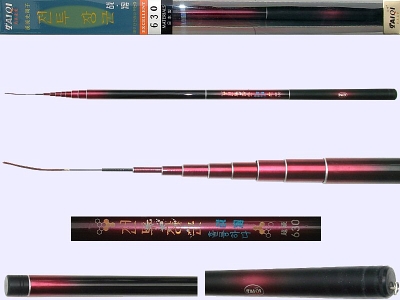
Mike Crownover, AD5A, is a regular contributor to AmateurRadio.com and writes from Texas, USA. Contact him at [email protected].
LHS Episode #110: GIMP’n
 July has been a bit of a rough month for Linux in the Ham Shack. Pete, our illustrious Canadian cohort, takes an extended break with his family during this time, leaving him little room for podcasting. That is to say, none at all. In the meantime, Russ has been dealing with a series of health problems which has kept him away from the microphone and editing computer. Despite this, Episode #110 is finally done and coming to you now. In this episode, the guys chat a bit about Canada Day and the 4th of July (two holidays now long past for this year). Then there's stuff about Field Day, The GIMP, Manjaro Linux and more. And yes, there IS a winner of the illustrious Beaglebone Black. If you weren't around for the live drawing, now you can find out who won. Thanks for keeping the faith, dear listeners. We'll be back on track soon. Promise.
73 de The LHS Guys
Russ Woodman, K5TUX, co-hosts the Linux in the Ham Shack podcast which is available for download in both MP3 and OGG audio format. Contact him at [email protected].
Sizzling hot!
Not the weather (for once) although, it’s still pretty warm. No, I meant 15 Meters at lunch time was sizzling hot!
Besides telling you who I worked, let me tell you about “the one that got away” a bit later. (As if I ever stood a chance!). First things first, though. I got to the car and set up the station. A quick scan of 17 Meters left me feeling – “meh”. 20 Meters was a little better, but not all that much to write home about, either. That’s when I got the inspiration to check out 15 Meters.
At 1614 UTC, I heard and worked a very loud OL2013CM from the Czech Republic. Later, when I looked OL2013CM up on QRZ, it turned out to be a very big deal for this Ham, considering my background. You see, OL2013CM is one of several Special Event Stations from the Czech Republic honoring the 1150th anniversary (Yes, the 1150th!) of the arrival of Saints Cyril and Methodius to that area.
Saints Cyril and Methodius were the two men responsible for bringing Catholicism to the Slavic nations. Today this area includes the following countries – Bulgaria, Croatia, Belarus, the Slovak Republic, the Czech Republic, Belarus, Russia, the Ukraine, Macedonia, Lituania and Latvia, Estonia, and yes, Poland – the land of my ancestors.
There is a big seminary in Orchard Lake, Michigan named after Saints Cyril and Methodius. Almost all the priests that were in the Polish ethnic parish that I attended while growing up, graduated from that seminary. For me, working OL2013CM held a lot of sentimental value, and was a big deal.

And as always, there’s a diploma that’s available for working stations associated with the Special Event. For the details, you can visit: http://award-cm.ok2kyd.cz/en/award-rules.html Now, time for a bit of trivia. Besides introducing Catholicism to that part of the world, this duo also developed the Glagolitic alphabet, which was used to transcribe the Gospels into the Slavonic languages. While that alphabet is no longer in use today – one of its descendant scripts is still very much in use today – the Cyrillic alphabet. Wonder where they got that name !!!
After working OL2013CM, I also worked 4O/UA3RF in Montenegro and HA8QZ in Hungary. Indeed,
15 Meters was open and very hot to Europe. Three solid QSOs to Europe in the span of minutes. Priceless!
But now for the one “that got away”. Down towards the bottom of the band (just above where CO8LY was calling CQ), I heard a very loud (extremely loud!) BY4IB/4. China! Holy cow, I never heard a station from China so loud. 599+ loud! Insanely, I thought I stood a chance. He was working split, and with the KX3’s Dual Watch feature, I was very handily able to figure out the split, in no time. I was determined to keep on throwing my call out until either:
1) I worked him
2) He faded away
3) I had to break down to go back inside to work.
Well, Door Number Two opened first, as he slowly faded away into oblivion. And I never made contact, despite my best efforts. But if I had, how cool would that have been? NJ to China on 5 Watts with a Buddistick! I’d still be doing the ecstatic dance (never mind the happy dance) if I had been able to pull that off!
72 de Larry W2LJ
QRP – When you care to send the very least!
Larry Makoski, W2LJ, is a regular contributor to AmateurRadio.com and writes from New Jersey, USA. Contact him at [email protected].
Ham radio and software……….
1. It's no good as it's not supported.
2. Since it's free it must be very simple and buggy
3. I am sure it's not updated.
As for the software for a price I have heard and read......
1.It's way over priced.
2.Why pay when free software is out there?
3. Someone is just trying to make a buck.
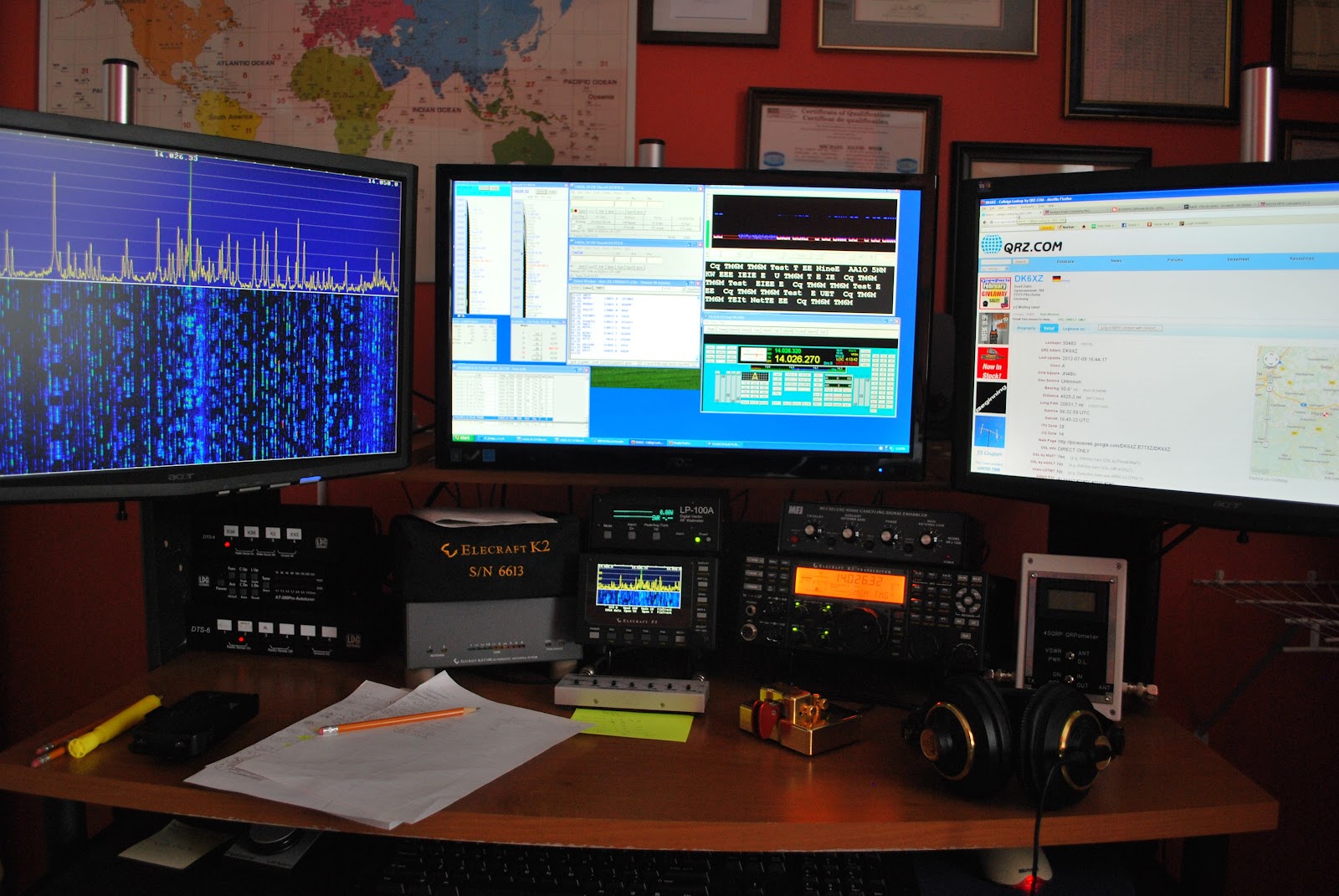
I have both free and software I had to paid for and am very happy with both products. My software is not the be all and end all but it's what works for me. There is some fantastic software out there that can make you grow in your ham radio journey. I hope to just excite you to look to see what is out there.
Here is what I use and as most ham I know they love free stuff and here is the free software I use.
1. DXlabs for my every day radio adventures I am sold on DX Labs! This software has rig control, logging, world map view of DX, QRZ (and many more) look up feature and much more. With this software and with the click of a mouse able to use many features of my K3. At a glance I am able see on a world map DX spots, I am told if I worked this country before....on what band.....and what mode. There is a huge amount this free software can do. As for updates it seems that it's almost daily this software is improving. Oh and as a side note updates are a breeze to instal and no need to jump through hoops to get the latest and greatest upgrade. If you are not sure about a feature or if the software does not seem to be doing what it should, support is fast and readily available on the internet.
2. If you are into contesting (like me) then once again the free stuff comes to the rescue. N1MM seems to be one of the staples for contesting. Again it has rig control features, CW and SSB features, VFO A and B control, spotting networks this is just to name a few things this amazing software can do.
There are regular updates and bugs are very few and far between. Again if you have troubles the support is there and it's fast.
Ok lets talk crazy now.....paying for ham software
1. When contesting I said I use N1MM but I also use a rig control program by N4PY and it's not free but WOW does it enhance my contesting. (now this software is not only for contesting I just chose to use it this way) This program allows me to adjust most of my Elecraft K3 controls with the mouse or keyboard. I can used my K1EL keyer, this program allowed me to use my Flexcontrol knob.
2. Another program I dished out some coin for and never looked back is MRP40 cw decoding program. Now I know what your thinking "there are lots of free CW decoding programs out there" This is true I have tried them and they are good BUT MRP40 is GREAT. In contesting when the speeds get to what I call "crazy speeds" this program has no trouble at all decoding them.
Lets say you want to have multiple programs work together without a hitch.........
3. Then LP Bridge or VSP manager come to the rescue. These are free programs and will allow your computer to set up virtual ports thus having multiple programs working at the same time and talking to each other. These programs work like a dream and as far as my needs go no bugs at all.
4. If you are into the digi modes like I was and in the near future hope to be there is a free program called Quickmix. This program will remember all the audio settings you use for each digi mode, so for example when operating PSK and you want to now switch to WSJT-X which has new audio settings for you PC. You no longer have to remember them Quickmix can in the blink of an eye adjust the sound card to the new settings for the selected digi mode!!
Mike Weir, VE9KK, is a regular contributor to AmateurRadio.com and writes from New Brunswick, Canada. Contact him at [email protected].
 Ham Radio Deluxe |
 W5SWL Electronics |
 Ham Radio Prep |
 KB3IFH QSL Cards  Hip Ham Shirts  HamRadioAuctions HamRadioAuctions Reliance Antennas Reliance Antennas Enigma Shop Enigma Shop |  morseDX  Ni4L Antennas  R&L Electronics R&L Electronics antennas.us antennas.us QRV QRV |
- Matt W1MST, Managing Editor
