 |
 Amateur Radio Newsline Report 1878 August 9 2013
 8 August 2013 | by
 Hamradioprojects.com
If you fancy trying your hand at Arduino or Picaxe projects and need to ask a clever person (Don’t look at me,I’ve already put a couple of thicko questions on) then the companion website to the ARRL book is up and running. The code for the projects is on the site too so if you’re not a fan of typing then cut and paste

Alex Hill, G7KSE, is a regular contributor to AmateurRadio.com and writes from Cumbria, UK. Contact him at [email protected].
Quick Outing to the Winnipesaukee River
Today my wife, Judy and I took a quick bike ride along the Winnipesaukee River. I stopped in a beautiful spot and operated for 15 minutes. I worked Macedonia, Croatia, the Czech Republic, and Italy.

What a glorious summer afternoon. The fields and farm land engulfed us as we rode along the trail in the warm sun. We stopped across from a small pond and walked into the woods and sat down on some rocks right at the river’s edge.

I heaved a 33 foot wire over some branches and set up the KX3 on the rocks. I operated on both 17 meters and 20 meters. There were plenty of strong stations on both bands. Here’s my log:
7 Aug-13 1950 14.010 Z320G CW 599 599 Macedonia
7 Aug-13 1955 14.009 9A2AJ CW 559 599 Croatia
7 Aug-13 2000 18.068 OK2AN CW 579 599 Czech Rep
7 Aug-13 2001 18.083 9A2YM CW 599 599 Croatia
7 Aug-13 2005 18.072 IK2SND CW 599 599 Italy

After making several QSOs, I packed up and got ready to head back. I’ve operated from this spot perhaps a half a dozen times. I’ve enjoyed it each time. I head up the hill to the bicycle and ride back.

Jim Cluett, W1PID, is a regular contributor to AmateurRadio.com and writes from New Hampshire, USA. Contact him at [email protected].
Back home
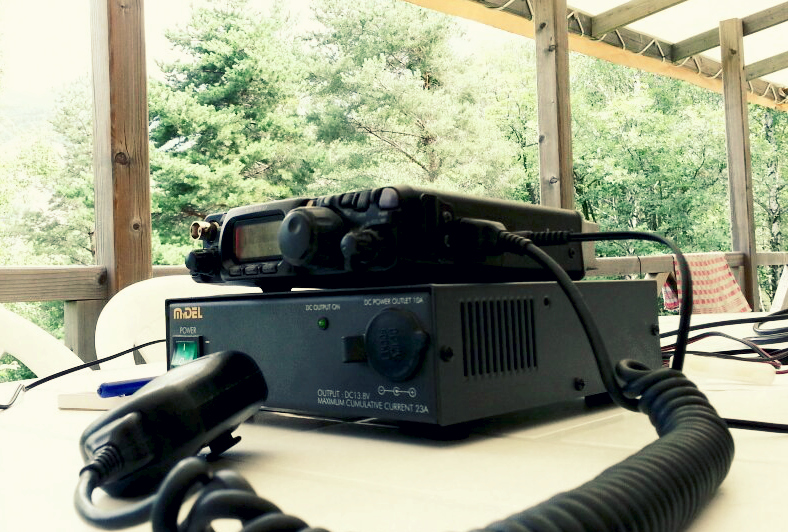

Paul Stam, PC4T, is a regular contributor to AmateurRadio.com and writes from the Netherlands. Contact him at [email protected].
Great weather and contesting.
One observation I made before surrendering to the great weather outside was in Ontario our section is no longer ON. This changed a short time ago when the province was divided into 4 sections Ontario North (ONN), Ontario East (ONE), Ontario south (ONS) and finally greater Toronto area (GTA) In the contest I would attempt to send ONS but most of the time I could only get to ON....my "S" was interrupted with TU.
This is really was not the fault of the contester as I found N1MM auto filled my section as ON and not ONS. Not sure if my N1MM is up to date and that change has been made but it was tough getting the ONS across during the contest. My contest effort stopped about an hour into the it. I made 17 contacts but the weather was calling my name. I figured the good weather days are going to become limited and soon the snow and cold weather will be here.....then lots of time to spend on the radio.
This coming weekend is the Skeeter hunt contest. This is the second running of the contest. I found it was a nice way to spend 4 hours of your Sunday afternoon. You are encouraged to get out into the out of doors for this contest. This year if you can operate beside a body of water you get bonus points!! I have scouted out two locations close to home were water (river) is....have to make my mind up as to where I will be heading. I had a look at the long range forecast today and Sunday is looking great!
Mike Weir, VE9KK, is a regular contributor to AmateurRadio.com and writes from New Brunswick, Canada. Contact him at [email protected].
I guess it is working!
My mag mount, I mean. After working on it on Sunday, I gave it the shakedown cruise yesterday and today at lunchtime. Unfortunately, the bands seemed to be in less than stellar condition – thanks Ol’ Sol! But yesterday netted me a contact with XE1XR, David in Mexico and KG9HV, John in Indiana.
Today, I heard even less on the bands. After perusing 15 and 17 Meters and not hearing much of anything, I decided to go to 20 Meters to see if I could hear any SOTA stations. Pfft! Nada in New Jersey. So then I made the decision to call CQ.
I was answered by Burke N0HYD, who hails from Wichita, KS. Turns out that he’s a reader of this blog and has started blogging himself. I have added his blog to the blogroll. His blog is entitled “N0HYD – QRP & Portable Exploits”. Sounds like Burke is a man after my own heart! Burke describes himself as a “QRP Addict”. How could I not add the blog to the blogroll when a guy describes himself like that? Anyway, it was a great but all too short QSO. I hope we have the chance to hook up again, soon. It was not only a 2X QRP QSO, but also a 2X KX3 QSO – thanks for the QSO, Burke, Oh, and by the way, your rig sounded superb!
I have also done a little bit of blogroll maintenance tonight. Any blogs that haven’t been updated within the last 12 months have been moved to the “Gone but not forgotten” area. That includes Chas, W5PG’s blog. Gosh, it’s just a little over a year now that Chas became a silent key. He was a good blogger friend, and even though he’s gone, I just can’t bring myself to delete his blog – so as long as it’s on the Web, the link will remain.
Just a reminder – this Sunday is the Skeeter hunt! Don’t wait until the last second to get your Skeeter number.
72 de Larry W2LJ
QRP – When you care to send the very least!
Larry Makoski, W2LJ, is a regular contributor to AmateurRadio.com and writes from New Jersey, USA. Contact him at [email protected].
Yagi-Uda the III.
No, this is not the name of another royal baby… it’s about my third attempt to build a 2m antenna for my SOTA activations. In my earlier iterations I was unable to strike the balance between size/weight and usability.
What happened so far:
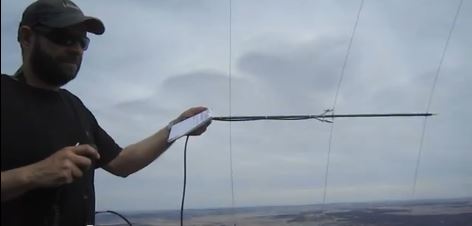 My first attempt to build a Yagi-Uda antenna was based on a design by Paul/KD5IVP. It worked, but had some crucial flaws for my endeavors. It was a 3-element antenna made out of piano wire and a carbon fiber arrow as a boom. Very small and lightweight indeed but in high winds/gusts the elements were flapping like a seagull during take-off. It’s demise came on it’s second outing… the arrow broke in half while bushwhacking up a mountain and I lost some of the piano wires in the woods. To read more about it and to see it in action check out this post.
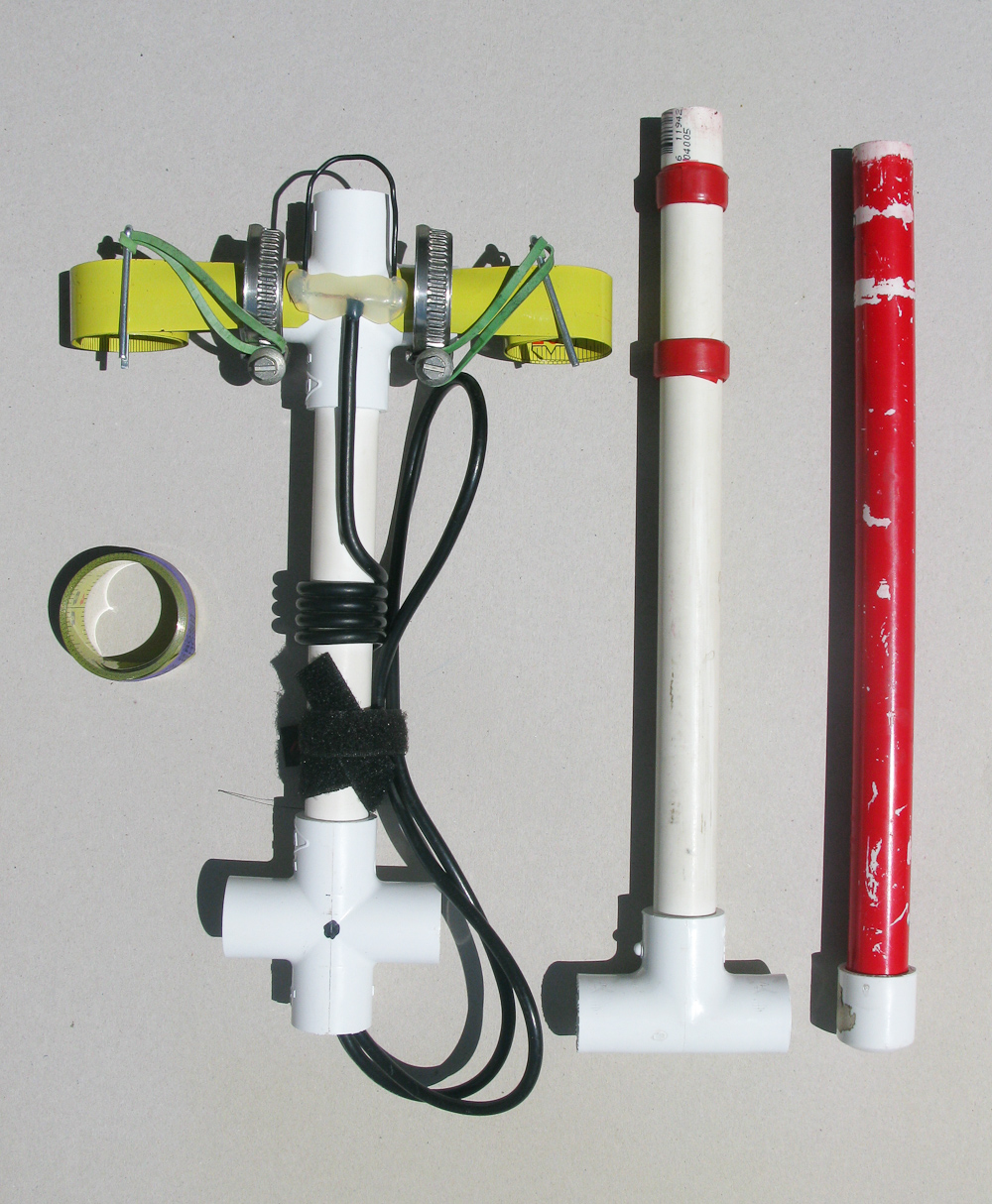 I then moved on to a tape measure 3-element antenna based on a design by Joe/WB2HOL. It worked well and accompanied me on several activations – even a few 14ers (Summits higher than 14’000 ft / 4267m). My main gripe with this antenna is that it is delicate to transport as well. The steel tape gets kinked easily since the antenna is strapped to the outside of my backpack. It’s rather easy to replace the director and reflector, but soldering the coax to the steel radiator is another story. It turned out that this design is also vulnerable to high winds and your arms start to feel the weight after a few minutes without support. You can see the antenna in action in this video, around 3:30 into the clip.
The one?
I continued my research for a suitable 2m Yagi-Uda which would fit my requirements:
- Lightweight (but sturdy enough to withstand high winds)
- Easy and save to transport
- Easy to build (even for me)
I eventually stumbled onto IZ2UUF’s Website – an Italian radio amateur who enjoys hiking and playing with radios as well. He designed an 4-element Yagi-Uda weighing only 80 grams (~2.9 ounces)!! All elements fit into the fiberglass boom (fishing rod) for easy transport with no matching network necessary. The description to build the antenna focused on the critical parts with excellent pictures to support the instructions.
Davide/IZ2UUF modeled the antenna with 4NEC2, a free antenna modeling software package. Since he shared his input file with me, I took the opportunity to download the free SW and to learn more about antenna modelling. After a few more e-mail exchanges with him I was convinced by his design and started to source all the parts.
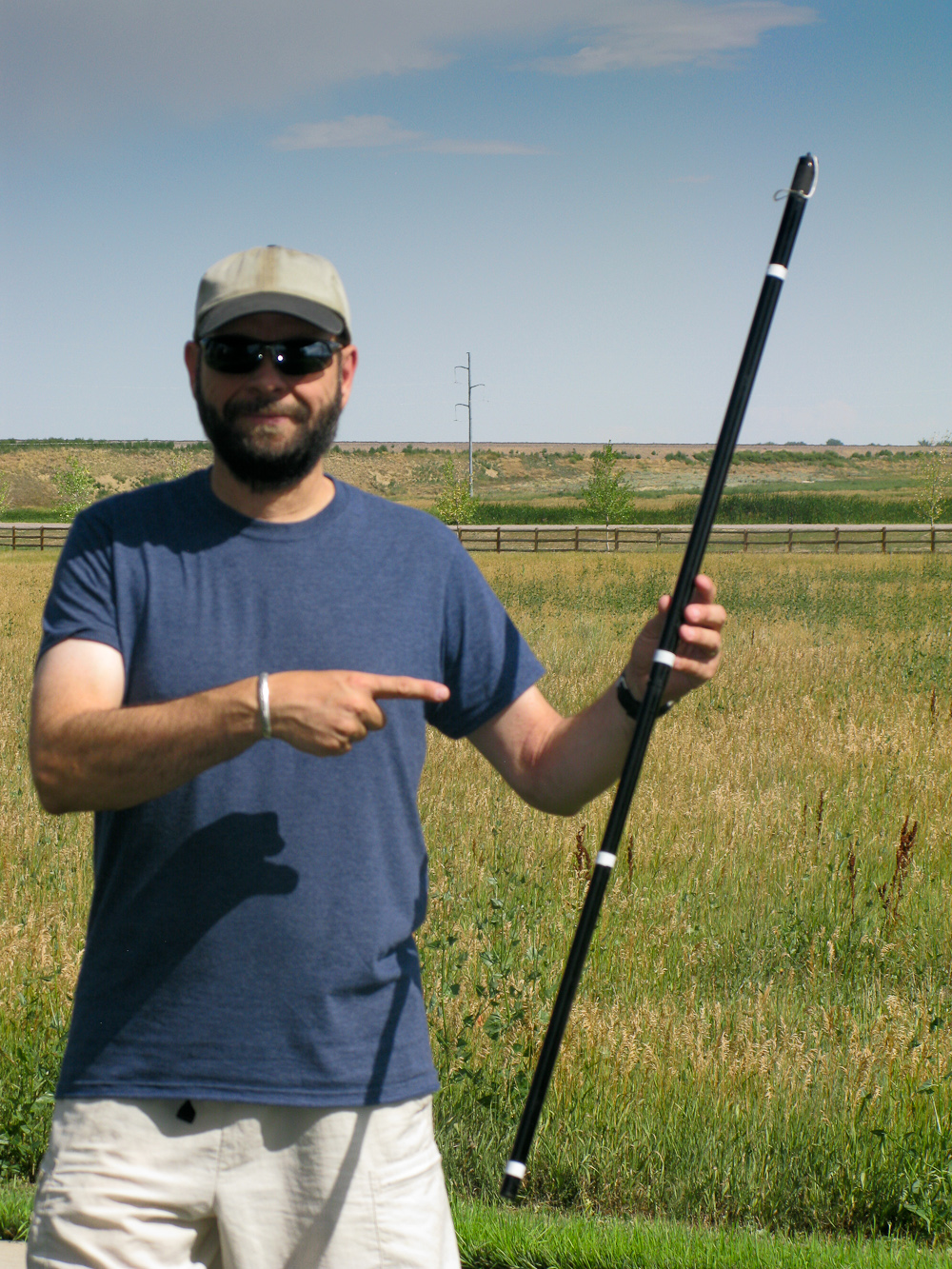 I did not have afiberglass fishing pole available and opted to use a plastic one I had lying around. Davide is using aluminum welding rods for his elements which I could not find at the desired length/diameter here in the US. I therefore ordered aluminum alloy 6061 rods instead (1/8″ x 6′ ) from a supplier in IL (for details see the resource section below). My build also differs in the connector (BNC instead SMA). All these changes resulted in a slightly heavier (194 g / 6.8 ounces) first version compared to Davide’s antenna. My boom alone is heavier than Davide’s complete antenna (96 g / 3.4 oz). However, I am planning to improve/reduce the weight in version two.
I had a chance to use the antenna over the week-end during the CO-14er event. All I can say so far is that it worked well and that the weight is not an issue at all… huge improvement to the tape-measure version.
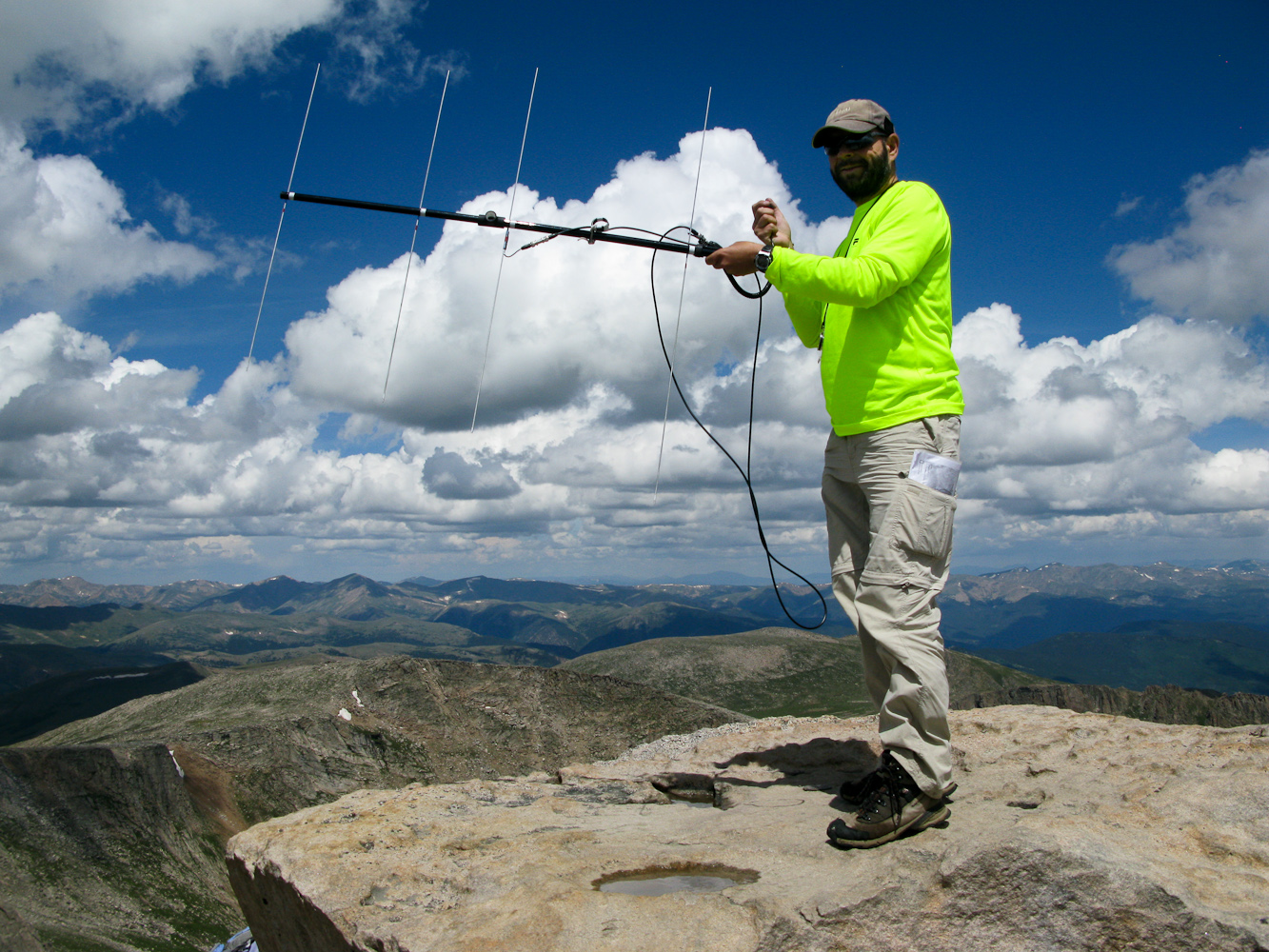
For more pictures, a weight comparison and resources head over to my blog.
73, Matt/KØMOS
Matt Schnizer, KØMOS, is a special contributor to AmateurRadio.com and writes from Colorado, USA. Contact him at k0mos at schnizer.com.
 Ham Radio Deluxe |
 W5SWL Electronics |
 Ham Radio Prep |
 KB3IFH QSL Cards  Hip Ham Shirts  HamRadioAuctions HamRadioAuctions Reliance Antennas Reliance Antennas Enigma Shop Enigma Shop |  morseDX  Ni4L Antennas  R&L Electronics R&L Electronics antennas.us antennas.us QRV QRV |
- Matt W1MST, Managing Editor
