 |
 The excitement is palpable!
 26 August 2013 | by
 I saw this posted on QRP-L today and decided to share it here, for those of you who might not be subscribers. This was a post by Grayson Evans, KJ7UM/TA2ZGE. It describes his recent encounter with QRP. You can almost feel his excitement and joy from his post!
Sorry, I have to admit that I’m not much of a QRPer. Not because I don’t like it or not interested, it is just that I haven’t had much luck at it. I have a hard enough time trying to make a contact with 100W out of my Kenwood something-or-other. Part of the problem (well, probably all of the problem) is my QTH. Very urban in the middle of Ankara, the capital city of 6 – 8 million. S7 background noise on 20 on a good nite. And my apartment is on the bottom floor of a 6 story concrete building surrounding on all sides by equally tall solid concrete buildings. I have tried all sorts of antennas out the window and in the small garden, but they all seem to work equally poorly. I currently have an end-fed “zepp” sort of thing strung between two street lights. It seems to work the best until a big truck takes it out.
Anyway, I have two MFJ QRP rigs I bought second hand a few years ago. One is 20M CW and SSB, 5W, the other is 40M CW only, 5W. I did make a few contacts with them when I lived in the U.S., so at one time I know they worked.
My family (wife and 11 year old son) have started doing some camping around Turkey (not a popular activity here). So I thought it would be a good idea to try some portable QRP operating in the forests. Never done it before. The first time a tried, I had all sorts of problems, nothing seemed to work. Back to drawing board.
Last weekend I tried again, took more parts, two antennas (a new 20M dipole), two batteries, etc. tuner with SWR, dummy load, and a good supply of 807’s (youngsters probably not familiar with “807s”).
This time everything seemed to work, but I could only get 1 watt out of the MFJ 20M rig (SSB and CW). OK, 1.2 watts. Also the key input didn’t work. I figured a no-go again.
Also it was a contest weekend. No surprise, there is some sort of contest every weekend here. _____ “QSO party” (fill in the blank with any european or eastern european country…they are not QSO’s, and not a party). I am not a contester but I have to admit they are good for testing antennas/rigs.
BUT, I got a big shock (emotional kind)!
First of course, zero background noise. Those little rigs have a nice receiver. I could even hear myself think with headphones on.
Second (and this is the SHOCK), if the calling station was S5+, I could work em. EVERY TIME.
I have no idea what contest I was working (the usual call sign, phony 5/9, and a sequence number), but I worked over 80 stations in a 2000 km radius over a 2-3 hr time. I haven’t had time to look up all the screwy prefixes (“DX” to you is the norm here of course), but I recognized Romania, Central Russia, Slovenia, Poland, Germany, Spain, Portugal, netherlands, Denmark, Belgium, Slovakia, Slodowneya, etc. etc.
AND, when I mentioned I was actually running 1 Watt, I got a few stations to give me a real signal report. and they were never less than S4. I got a few S8 and S9’s. how could this be?
I am impressed. This RF stuff is amazing.
I gotta try this again!
Photo is here:http://s838.photobucket.com/user/WA4GVM/media/Misc/qrpin_zpsb02e80f4.jpg.html
73, Grayson TA2ZGE/KJ7UM
(sorry this rambled)
Follow my hollow-state blog at hollowstatedesign.tumblr.com

Thanks, Grayson, for sharing. You’ll find out that most QRPers are happier for their fellow QRP’ers success, rather than their own! I hope you’ll be doing this again, and often! (Hint! I still need Turkey via QRP!)
72 de Larry W2LJ
QRP – When you care to send the very least!
Larry Makoski, W2LJ, is a regular contributor to AmateurRadio.com and writes from New Jersey, USA. Contact him at [email protected].
Kansas QSO Party – 2013

As I have mentioned before, in May we moved our family from the Kansas City area to Wichita, KS. While everything is unpacked and pretty well settled in, there is still some organizing that needs to be done.
Burke Jones, NØHYD, is a regular contributor to AmateurRadio.com and writes from Kansas, USA. Contact him at [email protected].
N4W Special Event Station
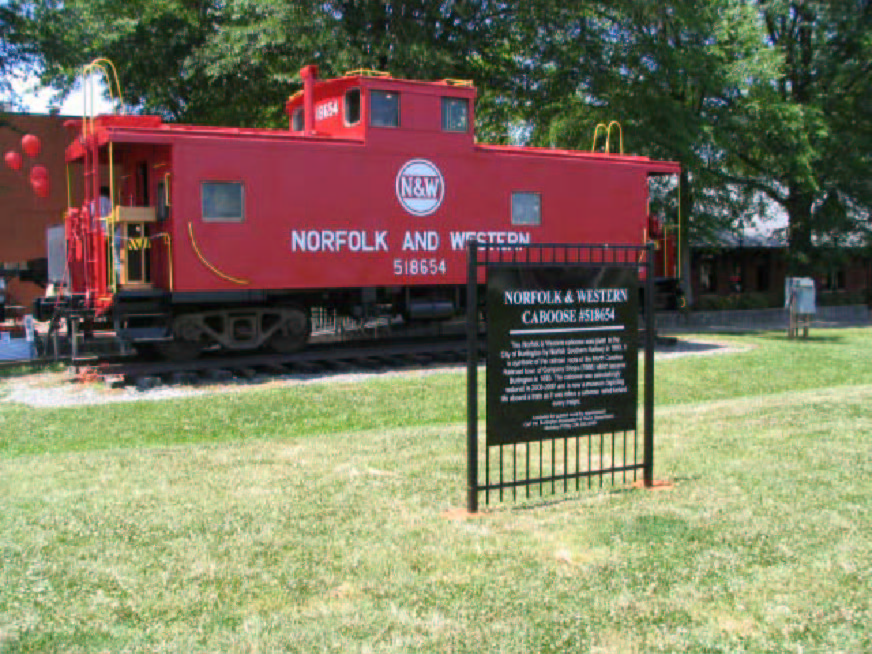
I always enjoy working special event stations. I found this one operating from an old “railroad caboose” in Burlington, NC. (N4W) I worked Randy on a 40 meter CW frequency.
The caboose (now a thing of the past) was always the last car in a long string of railroad cars and held the workers while they gathered and dropped off “cars” along a long railroad route. In the world of today, the caboose has been eliminated and you see nothing but a “flashing light” on the last car of a long train.
Speaking of trains; West Virginia has an interesting train which is located at the Cass Scenic Railroad State Park This old “Shay” steam locomotive climbs a very steep grade to the top of a mountain which is a little over 4,700 feet elevation.
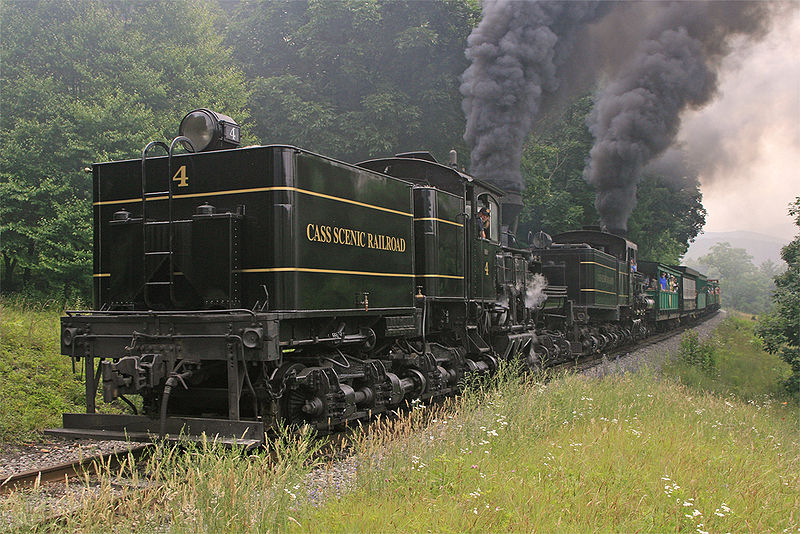
Although not a good place to transmit because of the Green Bank Telescope (This area is part of a “quite zone” which shields the enormous radio telescope) in the valley below, it’s a great place to “monitor” all kinds of other radio broadcasts, and it’s a great place to watch the stars and listen to the sounds of nature.
And…..on top of the mountain, on a “side spur” towards the old logging town of Spruce; there’s a railroad caboose ! Popular with campers and hikers, this railroad caboose is an interesting place to spend the night. It’s rustic, but functional, and I can’t think of many places which are better for star gazing and listening for long distance radio stations.
John Smithson, Jr., N8ZYA, is a regular contributor to AmateurRadio.com and writes from West Virginia, USA. Contact him at [email protected].
Testing out WSJT-X v1.2 – preparing for autumn..
I tend to joke, although it’s not really so much of a joke that my basic operating pattern is to operate VHF/UHF over the summer months and then HF datamodes, specifically JT65A and JT9 over the winter months. There is more flexibility in this really, but when VHF isn’t doing much, it’s HF JT65 and JT9 that I find interesting.
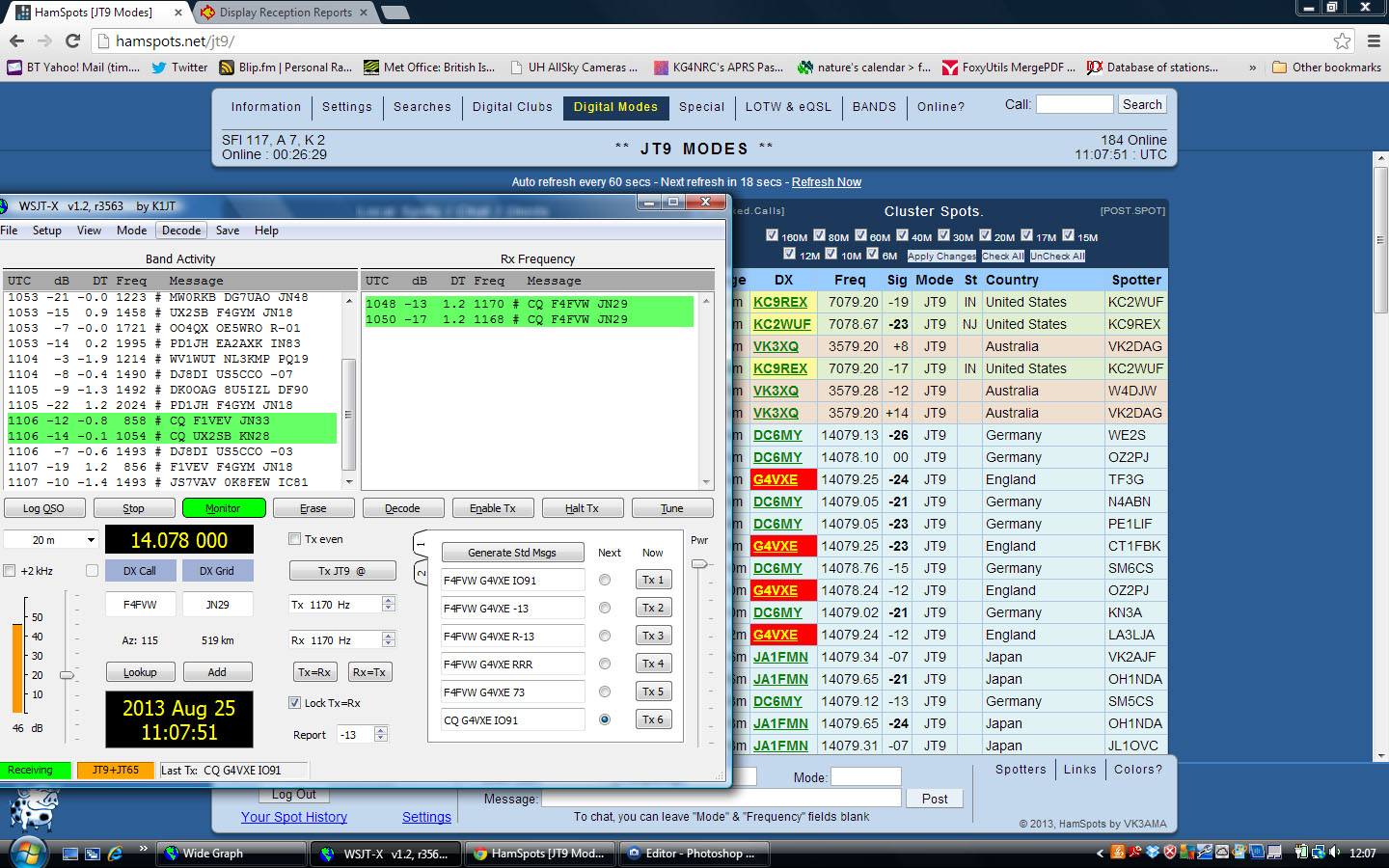
This morning dawned so autumnal and there was nothing to be heard on 50MHz that I decided some JT65 was probably in order. I fired up WSJTX v1.1 which I installed a few weeks ago and had a couple of nice 14MHz QSOs with CT3DL and EA7CHS to prove it all still worked.
After breakfast, I noticed that there was a beta release of WSJTX v1.2 so I downloaded it. I installed it and initially my heart sank – as there didn’t seem to be an option to select the Direct X sound drivers on transmit. You may remember if you have been reading the blog for a while that I found I needed to select these in order to transmit intelligible JT9.
I decided to go ahead anyway and if I needed to, I could rollback a version. Fortunately, this was not necessary. I had a quick listen on the monitor receiver as I transmitted both JT65A and JT9 and the signal sounded good. So, whatever there was before that was causing this problem, Joe K1JT seems to have sorted it out! I was also pleased to see that both my JT65A and JT9 transmissions were picked up by other people – so it must be decoding ok. I was particularly pleased to have my JT9 transmission picked up by TF3G in Iceland.
Initial impressions of v1.2 are good. I can see some JT65A decodes which look a bit suspect to me, but we’ll see how those go! On the positive side, I like the new power slider on the right hand side of the screen, which allows you to tweak the power down. I think this will be particularly valuable on JT9, which is exceptionally good for low power QSOs.
Tim Kirby, G4VXE, is a regular contributor to AmateurRadio.com and writes from Oxfordshire, England. Contact him at [email protected].
ICQ Podcast S06 E17 – QSLing (25 August 2013)
Series Six Episode Seventeen of the ICQ Amateur / Ham Radio Podcast has been released. The latest news, Listener Mailbag, Ed Durrant (VK2JI) discusses Full Wave Horizontal Loop Antenna, Frank Howell (K4FMH) reports from North America and Chris Howard (2E0CTH) discusses QSLing.
- Ham Radio software is made Open Source
- MacLoggerDX Version 5.48 released
- Amateur Data Interchange Format (ADIF) Standard 3.0.4 released
- MultiScan 3B SSTV made for Mac
- Thailand's first ham radio satellite
- Youngsters try ham radio
- Teacher helps students earn amateur radio licenses
- 80m ham radio band used for wideband video/data
Colin Butler, M6BOY, is the host of the ICQ Podcast, a weekly radio show about Amateur Radio. Contact him at [email protected].
Series Six Episode Seventeen – QSLing
Series
Six Episode Seventeen of the ICQ Amateur / Ham Radio Podcast has been
released. The latest news, Listener Mailbag, Ed Durrant (VK2JI)
discusses Full Wave horizontal Loop Antenna, Frank Howell (K4FMH)
reports from North America and Chris Howard (2E0CTH) discusses QSLing.
- Ham Radio software is made Open Source
- MacLoggerDX Version 5.48 released
- Amateur Data Interchange Format (ADIF) Standard 3.0.4 released
- MultiScan 3B SSTV made for Mac
- Thailand’s first ham radio satellite
- Youngsters try ham radio
- Teacher helps students earn amateur radio licenses
- 80m ham radio band used for wideband video/data
Ed Durrant (VK2JI) The Full Wave horizontal Loop antenna (pdf)

Colin Butler, M6BOY, is the host of the ICQ Podcast, a weekly radio show about Amateur Radio. Contact him at [email protected].
Profiles in QRP – Volume 2 – Todd Fonstad N9NE
One of the nicest things about participating in the QRP Fox Hunts, is the people that you get to meet, get to know, and get to become friendly with. Some of the nicest folks on this blue marble that we call the Earth, participate in those Hunts.
Early on, I noticed there was always one station in particular that would ALWAYS blow my ears out – whether I was serving as Fox, or even when I was hearing him in the pack as a fellow Hound. I would think to myself, “Just who is this N9NE guy? Where the heck is he and what’s with that killer signal?!?” I also thought that Todd’s signal was the loudest QRP signal I had ever heard!. Whenever Todd came on the air, I always felt like the guy in the radio control room from that episode of the Little Rascals – “The International Silver String Submarine Band”.
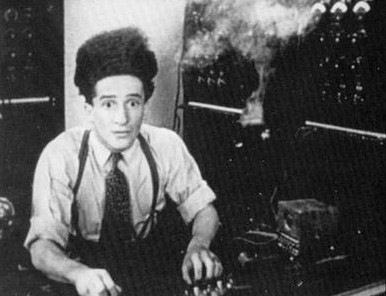
If I didn’t get the cans off my ears, I was certain to have a temporary hearing loss for at least a couple hours! I got to know Todd over the years from the Hunts, from e-mails and one-on-one QSOs on the air. Todd is one of the good people and one of the best QRPers that I know. So without further ado:
1) How did you first become interested in Amateur Radio?
My father bought me a Knight Kit ‘Ocean Hopper’ regenerative receiver for Christmas in 1957. I had to assemble it. Little did he ever imagine what a gift that would turn out to be! I had a neighbor, W9DPN, who was a ham, and he helped me along and let me listen to his conversations.There was a W0 station who used to send MCW practice on 40M, and I used to copy him, along with W1AW. The code came naturally to me. Our little city of 3500 had an active ham radio club of almost 40 members, and in 1958, there were a number of us middle and high-schoolers who got our novice and conditional licenses. No internet then! My grandfather gave me his 1928 vibroplex ‘bug’ (he had been a telegrapher on the ‘Soo Line RR’, and I started using it immediately.) I never had a hand key until years later.
2) How long have you been licensed?
March, 1958 as KN9LWV (55 years).
3) What drew you to QRP?
A friend lent me one of the first Ten-Tec QRP rigs back around 1972 or so, and I took it to the lake cottage. I was amazed at the stations I could contact. BTW, when I first got my conditional in 1959, I contacted Houston, TX with my Heathkit VF-1 VFO! I imagine there were some harmonics involved. When Heathkit came out with its HW-8, I bought and assembled it and used it portable from a number of locations as well as on some Field Days back in the 1970s. This was before there was a QRP division in contests. For me, the challenge of QRP keeps me interested: QRO (except for DX on 160M) is just too easy!
4) Who has been your biggest QRP influence?
(Hard to answer. I’m going to hve to leave a lot of deserving folks out of this 😉 Local friends (some SK now) and folks I’ve run QRP FD with in ‘exotic’ locations: K7RE in 2001 or so in a National Forest campground in NE WY (we took first place), and N0UR on his MN farm 2009 (class 2B2B which we also won). But I’d have to say Doc, K0EVZ who was my first motel-to-fixed station QSO (he was in ND, and I was vacationing in south TX). He was probably the one who interested me initially in the Fox Hunts and has been an online friend and advocate for the hunts for years. Current influences come mainly from my fellow online Fox Hunters with whom I keep in touch via e-mail and Facebook. That is real camaraderie!
5) What is your favorite QRP activity?
No problem with this one: the Fox Hunts! But I also am quite competitive in other QRP contests: 160M, ARRL SS CW and Phone, QRP-ARCI, FYBO, state QSO parties.
6) What’s your favorite piece of QRP gear (past or present)?
My QRP K2 which I built in 2000. This said, I use my K3 now in the main unless I am portable when I use my K2.
7) Describe your current QRP station.
K3 dialed down to 5W or less. I often put the Elecraft Step Attenuator inline to drop my output into the low milliwatt range if signals are strong. There’s that challenge again! I still use the K2 in the field, and have the HW-8 at the ready. Good antennas are the key to doing well with QRP: all of mine are home-brewed or modified except for my Force 12 C-4SXL 40-10M beam up 70′. (four years ago, I dug the five foot hole by hand and concreted the first 20 feet of Rohn 25 tower, also by hand … then had back surgery a year later, LOL!) I also have a 176′ doublet hanging from below the beam that really does wonders on 80M, and a 52′ high ‘vertical tee’ with 80 ground radials for 160M. It helps to have 2 acres out in the country where I have room and little noise.
8) What is your fondest QRP memory.
Three stand out:I was leading a field trip of college students to the Gulf, and we were camped on Galveston Island, TX. I had arranged a sked on 15M with my daughter (N9IJY) who was in middle school at the time. She had the use of my home station in WI, while I had a 15M dipole up 10 feet, and my HW-8 powered by a motorcycle battery. We had a near-perfect CW contact for about 20 minutes! Second, K4BAI was a fox in last summer’s 20M hunt, and the conditions were superlative. Using the Elecraft Step-attenuator, he and I hooked up with 500 microwatts of output! (the beam came in handy to say the least!). And third, I was able to complete a quick contact with Namibia (V5/DL3XX) this past winter with 5W on 160M CW just as the sun was rising on him.
9) What other hobbies/interests do you enjoy when you’re not on the radio?
Genealogy (I scan family photographs and documents), cycling, swimming, running-jogging-walking (I ‘usta’ run marathons and ultra-marathons which my disintegrating body make it impossible to do anymore!), canoeing, camping, computer use, word games, being with my son and daughter and grand kids! Am active in a small church which is my family out here in the sticks of central WI. Enjoy traveling (son lives in OR, and my late wife’s sisters and families live in OK, so I drive the 1,000 miles there quite often). I still attempt to keep up with my professional interests (I taught geography and earth sciences at a regional university) but am falling behind with all the new technology out there!.
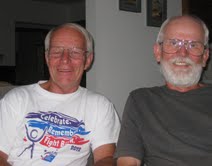
Here’s a photo of two superlative QRPers – That’s Todd N9NE on the left and Dave AB9CA on the right. Both are EXCELLENT Fox Hunters!
Todd was also kind enough to send along a post he has sent to the QRP-L e-mail reflector from back in 2005. The thread (and I remember it well!) was about “Memories of Morse Code Examinations”.
“These stories are great!
I grew up in a small community in central Wisconsin. My father (SK) bought me a Knight Ocean Hopper regenerative receiver kit for Christmas, 1957 when I was 13. I had it together in a few days and was soon getting those beautiful QSL cards from Radio Moscow and Radio Habana Cuba. There was a little ‘door’ in the top of the receiver where one would change band coils. The valves were from England. I can still remember the smell of those hot little tubes. My across-the-street neighbor was a dentist, W9DPN. I had learned the code by rote in Boy Scouts, but Doc showed me his station and how he actually communicated on CW with his Viking Ranger, HQ-129X, and a trap vertical. Within a few weeks, I passed the novice exam and had to wait about 8 weeks (forever) to get my ticket, KN9LWV, on March 19, 1958.
I then had to wait another two months before I could get the money together to buy a used Heath DX-20, sans meter! I recall stringing an 80 meter dipole and a 40 meter folded dipole above our small yard, between neighbors’ trees. My ‘TR switch’ was a DPDT ceramic hand switch, and I ‘tuned’ the transmitter by placing a light bulb between the two center contacts of the switch while holding the key down, and dipping and loading for maximum brilliance. I was probably running QRP into the antennas for the remainder of 12 months then given to Novices.
Using that Knight regenerative was a real education! Every time I would key the rig, the receiver would blank out and, of course, there was no side tone. I lost many contacts either by touching the front panel or by getting my hand too close to it, thereby changing the frequency. Later, my dad found out that a WWII veteran in town had a Hammarlund BC-779A ‘Super Pro’ receiver in his warehouse, and I was given it on permanent loan. Despite its musty smell, it served me well for several years before it died.
1958 was right at or after the greatest peak among modern solar cycles if I recall correctly. I would run home from high school, get on 15 meters (yes … the Super Pro only went up to 20 Megacycles, but I was able to ‘pull’ it up to get above 21 MCS), work several Europeans, eat, and run back to school, all in one hour. What excitement! BTW, my first DX QSL card was from G3BRA. As a 14-year old, I was so embarrassed
By the time I had finished my Novice stint, I had earned the ARRL CW Proficiency Receiving award at 20 wpm. I never had a hand key. My grandfather had been a telegrapher on the “Soo Line’ RR, and I inherited his 1928 Vibroplex bug.
Within that year, I passed my conditional exam, and some years later (in the late 1960s), I took the Chicago and Northwestern passenger train (SK!) from downtown Oshkosh to within a few blocks of the Federal Building in downtown Chicago.The train was scheduled to get there by about noon, but due to some sort of problem, it arrived at 2 pm. I had studied for the Extra, and now had less than 3 hours to pass the CW and technical exams for the General, Advanced, and Extra. I got to the Extra with 20 minutes to spare … passed the code, but had to rush the exam such that when ‘The Man’ corrected it, he stated in a loud voice “You fail!”.
I finally passed the Extra in Dallas in the early 1970s while a graduate student at the University of Oklahoma. My wife and I drove from Norman to the Federal Building there, and I took the code test in a small room. Receiving was no problem, but I hadn’t touched a hand key much, and sending at 20 wpm was a real trial. The written exam was taken in a large room, filled with thirty or forty persons. The answers were coded onto an answer sheet (no written answers or schematics by then!), and I took it to the glass-enclosed office where a young lady corrected it by hand. I was confident I had passed and was astounded to see her check one answer after another as incorrect with her red pencil! She looked at me and said “I’m sorry, but you failed.” I was so upset and said ‘what?’ so loud that most of the heads in the examining room raised to see what the ruckus was! I told her that it was possible that I had failed, but not by that many questions. She re-examined my answer sheet, then sheepishly told me that she had just used the wrong exam master! The correct one exonerated me, and rest is history.
I changed K9LWV to N9NE soon after that because it sounded nice on CW. If you ‘Google’ N9NE, you will find some real surprises!”
Thanks, Todd for taking the time to answer my questions and for providing the extra history. This is the part of Ham Radio that I love the best – the personal histories and the stories – everyone has them!
72 de Larry W2LJ
QRP – When you care to send the very least!
Larry Makoski, W2LJ, is a regular contributor to AmateurRadio.com and writes from New Jersey, USA. Contact him at [email protected].
 Ham Radio Deluxe |
 W5SWL Electronics |
 Ham Radio Prep |
 KB3IFH QSL Cards  Hip Ham Shirts  HamRadioAuctions HamRadioAuctions Reliance Antennas Reliance Antennas Enigma Shop Enigma Shop |  morseDX  Ni4L Antennas  R&L Electronics R&L Electronics antennas.us antennas.us QRV QRV |
- Matt W1MST, Managing Editor
