 |
 In the beginning……
 26 September 2013 | by
  … there was Hugo Gernsback. Here are a few of his contributions:
– Established one of the first companies to sell equipment to radio amateurs in 1904.
– Founded the Wireless Association of America in 1909.
– Published two amateur radio oriented magazines: Modern Electrics in 1908 and The Electrical Experimenter in 1913.
– Initially proposed the idea of allocating 200 meters and down to amateur radio in 1912.
Why don’t we know more about Hugo Gernsback and his early contributions to the hobby? At what point did the momentum shift from Hugo and his Wirless Association of America to Hiram Maxim and his ARRL? … and why?
Hugo made a huge contribution to science fiction but it seems his contributions to amateur radio have been overlooked.
Scott Hedberg, NØZB, is a regular contributor to AmateurRadio.com and writes from Kansas, USA. Contact him at [email protected].
In the beginning……
… there was Hugo Gernsback. Here are a few of his contributions:
– Established one of the first companies to sell equipment to radio amateurs in 1904.
– Founded the Wireless Association of America in 1909.
– Published two amateur radio oriented magazines: Modern Electrics in 1908 and The Electrical Experimenter in 1913.
– Initially proposed the idea of allocating 200 meters and down to amateur radio in 1912.
Why don’t we know more about Hugo Gernsback and his early contributions to the hobby? At what point did the momentum shift from Hugo and his Wirless Association of America to Hiram Maxim and his ARRL? … and why?
Hugo made a huge contribution to science fiction but it seems his contributions to amateur radio have been overlooked.
Scott Hedberg, NØZB, is a regular contributor to AmateurRadio.com and writes from Kansas, USA. Contact him at [email protected].
Callbook Wars
Last year QRZ.com made accusations that callsign database sites HamQTH.com and QRZCQ.com stole QRZ callbook data, citing planted fake callsigns in the QRZ database appearing in their databases. Both HamQTH and QRZCQ denied the claims. QRZ appears to have recently upped the ante, having contacted at least one software developer, N3FJP, requesting him to remove HamQTH support from his logging program, claiming “Programs that facilitate the use of HamQTH.com are, in legal terms, are participating in “contributory infringement.” HamQTH on Facebook continues to deny copying QRZ data, though it’s been noted that the site accepts publicly submitted data, so the possibility of QRZ lifted data exists. HamQTH founder, Petr, OK2CQR, in a Facebook post quoted from a private email exchange QRZ founder Fred AA7BQ, “Your service does not offer anything to the amateur radio community that isn’t available elsewhere, which makes you a parasite, enjoying the benefits of the hard work of others.” The comment struck me as ironic as Petr has no advertising on the HamQTH website and he also contributes to the community the free CQRLog logging program, which is open source software. To people who know what Petr has done, he is hardly a parasite. QRZ, on the other hand, generates revenue by hosting content others write.
Several times I have run comparison queries between QRZ and HamQTH and have yet to find any unique QRZ data in HamQTH query results. I’m not saying QRZ data doesn’t exist in HamQTH, it’s just that I haven’t found it and I haven’t seen evidence that the copying, if it occurred, is prevalent. On the Facebook thread it was mentioned that email addresses have appeared in HamQTH profiles that may have come from QRZ.
After the claims by QRZ last year, the QRZ callbook listings for HamQTH founder OK2CQR (1) and QRZCQ founder DO5SSB disappeared. DK5TX claims his QRZ profile was repeated edited without his knowledge when he linked to his HamQTH profile page. (OK2CQR’s QRZ callbook entry reappeared a few days ago.)
While I should be concerned about copyright infringement, I have difficulty siding with QRZ in this dispute. The information in QRZ is mostly information in the public domain and user contributed profile information was created by users, not QRZ personnel, though they created the system to store it and charge for XML access. Email addresses of active radio amateurs can be easily harvested on the Internet by anyone and collected in a database. Furthermore, I find the alleged QRZ manipulation of database data in retaliation disturbing. As I indirectly attempted to illustrate in this satire piece earlier this year, QRZ is considered the de facto amateur radio callbook these days, and essentially has a monopoly. QRZ’s dominant position dates back to the times when government agency radio amateur database data was difficult to acquire and process, before the Internet became mainstream and online query tools to government data became commonplace. With this monopoly comes a responsibility, beyond generating paychecks for employees, but a responsibility to the community. In my opinion it’s time to get this data in more open databases, and on sites that are not concerned with web clicks and revenue or those that host forums with often vitriolic exchanges that do not reflect well on amateur radio.
(1) http://hamqth.com/news.php, Posting from 20 June 2012

Anthony, K3NG, is a regular contributor to AmateurRadio.com.
2m – a Band of Two Parts
Like the incoming tide washing away a beautifully constructed and elegant sandcastle, bit by bit, this week’s tropospheric ducting crumbled away with equal inevitability.
At its height, this radio superhighway, formed by different layers of air density and temperature, ‘hotwired’ parts of Europe together on 2m and above like they were connected with RG45 coax itself.
The opening was heralded, accurately, by William Hepburn’s tropospheric ducting forecast (see http://www.dxinfocentre.com/). This site also explains various propagation modes on VHF and above, in a clear and informative manner.
Let me tell you a little about my 2m station here in North Wales. I have a lovely Icom IC-910HX and my antenna is an HB9CV. Yes, you heard right, a peashooter. Two small elements phased together and put up on a pole on the side of the house. You see, I’m starting modestly because our national culture demands that we never do things the easy way. Added to the equation of difficulty, I have a range of 3000ft mountains not too far away from me. Did I mention the HB9CV was fixed? It points plaintively towards the south-east in cold, metallic expectation of flux. It points towards the long, golden beaches of the low countries, the rolling fields of northern France, the great cities of Western Europe and finally, the snow-capped Alps and beyond. But it also has a ‘heart’, a cardiod footprint in fact. The characteristics of the HB9CV trade-off a modest gain with quite a wide beam-width, with a sharp null behind it, giving it its heart shape.

The humble HB9′
You need good hearing. The receive gain is lacking for weak-signal work, but work it does. And this week I worked a station (OE2XRM) in Salzburg, Austria. 5,5 both ways! The pure magic of hearing a man who may be wearing lederhosen over what is normally a line-of-sight form of communication, is thrilling! A couple of stations from Bavaria followed and I was then content to listen as the chatter of stations from France and the Netherlands filled the band.
Later in the afternoon, fuelled by electromagnetic excitement, I ventured onto a local hill (178m/584ft.) with my lovely FT-817 and a 9-element 2m yagi. I also took along a 70cm yagi for fun. A quick scan through the beacons bought in HB9HB in Switzerland! The Alps, the chocolate and cuckoo clocks! Unleashing my 5W on Europe didn’t produce much, unfortunately – just a couple of cheery calls from the UK, so I thought I’d swing the beam round to Spain. Now, the DX cluster was not showing any propagation in this direction and I wasn’t hearing any of the beacons on the north Spanish coast. But suddenly, out of nowhere, and at 5,9+, came a signal booming in. Danny, EB1LA, on the northern Spanish coast was stunned to hear me at 5,9 with my humble five Watts. What a result! I can only conclude that the beacons may have been situated too high to ‘tap in’ to the duct. How many people in the UK and Ireland must have been beaming away from Spain that day having assumed that no beacon = no path? I wonder. A quick scan on 70cm revealed no traffic, but I did receive the Netherlands beacon PI7CIS. Quite a trip for UHF.

My hilltop station
The two metre band can be sublime, but comes in two parts. The FM part of it is like an amateur ‘pub’. It seems the place where people gather in the evening to discuss their day and engage in chat (For example, one QSO I heard earlier this year was despairingly on the subject of “my favourite biscuits”). But the lower portion of the band has the elegance and sophistication of a Grand Cru. It’s as if it’s optimised in terms of antenna size, required power and number of users to give you a fighting chance of achieving glory in the aether. And I did.
Rob Law, MW0DNK, is a regular contributor to AmateurRadio.com and writes from Anglesey, Wales. Contact him at [email protected].
My 12th Contact into Bulgaria
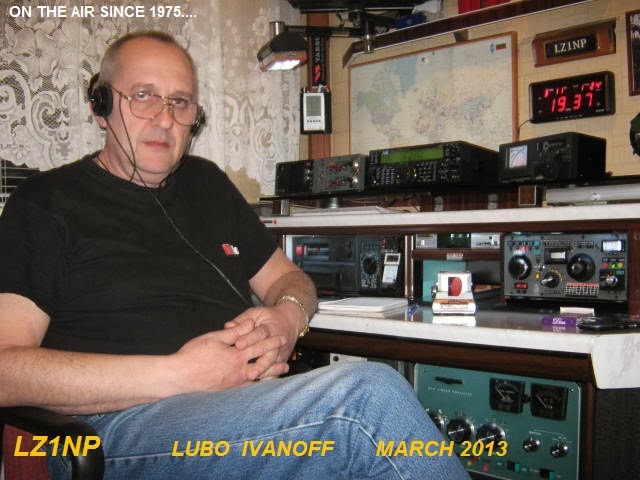
I’ve worked Lubo (LZ1NP) in Bulgaria before; but last night he was 599 into the valley. I’ve also worked eleven other stations in this country. There seems to be a “pipeline” from here to there. I’ve heard other QRP stations here on the east coast mention the same phenomenon. They’ve got great ears over there!
All these contacts are over 5,000 miles from here; some of them are very weak but they still hear my 3 watt signal from the valley floor. I congratulate them all….
I also found openings into the Netherlands (PA4VHF) and in the southerly direction, PV8ADI in Brazil.
The Brazil logbook comes in with fifteen contacts. The Netherlands comes in with seven contacts. Despite my success with some of these DX stations, I still feel an excitement every time I work a new one.
John Smithson, Jr., N8ZYA, is a regular contributor to AmateurRadio.com and writes from West Virginia, USA. Contact him at [email protected].
Not much
Not much is going on here. A lot of non radio issues. I made only 3 qso last week. I saw this very nice low profile video by NG9D, so I wanted to share this with you. Very nice, isn't it?
Paul Stam, PC4T, is a regular contributor to AmateurRadio.com and writes from the Netherlands. Contact him at [email protected].
Sweden SM5COP
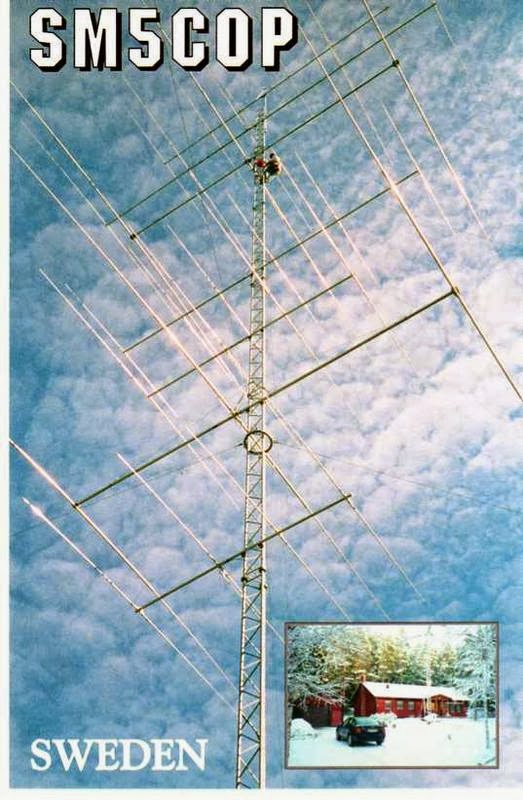
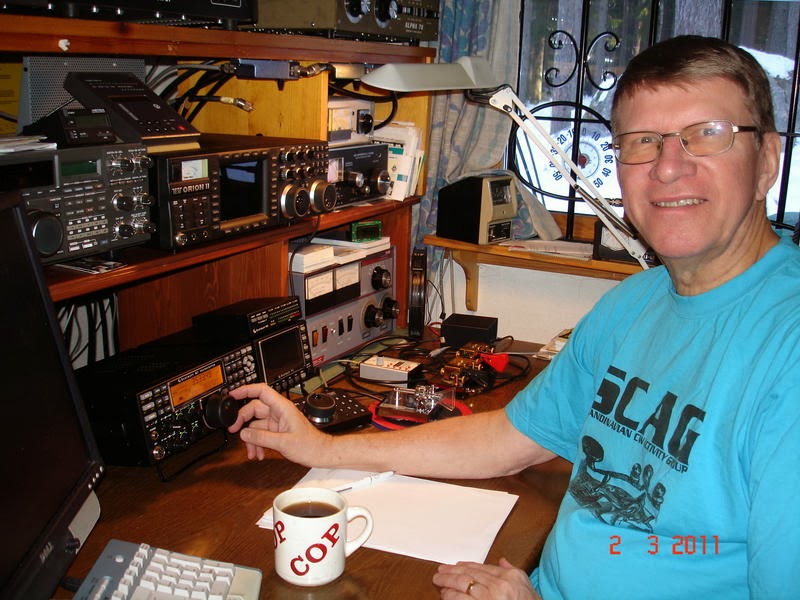
I worked a new station in Sweden this morning on the 15 meter band. Rune (SM5COP) was my fourth contact into this country and doing a fine job into this valley; something not unexpected with this antenna array. I always enjoy a new contact and this one was in the mid-morning “sunlight” hours.
He’s using a TenTec Orion for his station and we talked briefly about the weather. This was an actual QSO instead of the usual 559 exchange.
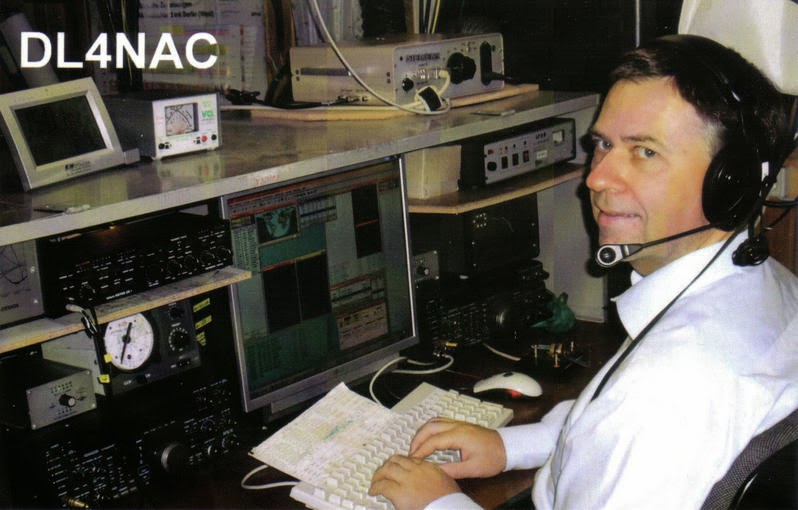
I’m still enjoying some “early morning” contacts also. By this I mean “after midnight”. Recently I’ve worked EA6NB and EA7AJR in Spain and also DL4NAC in Germany.
I’m looking forward this the cool fall weather season. It makes me want to get out and do some outdoor operating. I plan to do so soon….
John Smithson, Jr., N8ZYA, is a regular contributor to AmateurRadio.com and writes from West Virginia, USA. Contact him at [email protected].
 Ham Radio Deluxe |
 W5SWL Electronics |
 Ham Radio Prep |
 KB3IFH QSL Cards  Hip Ham Shirts  HamRadioAuctions HamRadioAuctions Reliance Antennas Reliance Antennas Enigma Shop Enigma Shop |  morseDX  Ni4L Antennas  R&L Electronics R&L Electronics antennas.us antennas.us QRV QRV |
- Matt W1MST, Managing Editor
