 |
 Series Six Episode Twenty – Use PC as Test Equipment
 6 October 2013 | by
 Series Six Episode Twenty of the ICQ Amateur / Ham Radio Podcast has been released. The latest news and Martin, M1MRB & W9ICQ discusses using a PC as test equipment.
- VK amateurs win reprieve for 2300-2302 MHz
- FCC dismisses ‘Encryption’ petition
- YL Activity Week
- Guantanamo Bay
- School to launch 434 MHz balloon
- The question is: …. “Explain amateur radio?”
- Amateur Radio well underway in Kosovo
- Turkish Special Event
- Swedish Radio Hams on 472 kHz
- White House recognizes Radio Ham as ‘Champion of Change’

Colin Butler, M6BOY, is the host of the ICQ Podcast, a weekly radio show about Amateur Radio. Contact him at [email protected].
When the kids leave….you down size but what about the shack!!
You know what folks, me and my family have our health which is HUGE to me! Overall we are not doing bad at all so the real big picture is not what is going to happen to ham radio..... that will always be there just in a different way. Each night I watch the news and peoples lives change in ways I could never imagine or handle. As for me my little world it's just a change in ham radio and that is just plane old peanuts!
Mike Weir, VE9KK, is a regular contributor to AmateurRadio.com and writes from New Brunswick, Canada. Contact him at [email protected].
From eastern Kansas to the California Sierra Nevada – QSO with KD6EUG
Back in December of 2011 I got this email from my dad, Larry (KD6EUG) about the severe storm damage to his cabin in Mi-Wuk, California – located in the Sierra Nevadas:
The big pine tree that is located at the corner of the back deck, the one that we used as the center for all our antennas, split in two and about 90 ft of it landed on the back deck and cabin/garage. All the dining room windows and sliding doors are blown out. There is a 6″ separation between the garage and the kitchen. The PG&E power meter and feed lines to the power pole are ripped out. The wind had gusts of over 35mph.
Dad
Here are a few of the picture I received over the next few days showing the destruction:


My dad and I had a great field day from the cabin back in 2009. It was quite a blow to see what nature had delivered.
It has been a long path since December 2011. Through diligence and perseverance, my dad was able to revive the cabin. The work was finally completed this past summer.


We had another scare with the Rim Fire back in August and September. The fire actually came within a few miles of the cabin but fortunately the firefighters were successful in stopping it before it could do any damage.
My dad is now up there enjoying the California QSO Party from the cabin in Tuolumne County (…sometimes a pretty hard-to-get county in the CQP).
We have tried on several occasions to attempt HF QSOs while he has been at the cabin and I have either been here in Kansas or when I was stationed in Virginia. We never had much luck and have primarily used my EchoIRLP node as the best way to chat (IRLP Node 3553/EchoLink Node: KI4ODI-L 518994). Well, our luck changed today. We decided to give it a go prior to the CQP and started at 10Ms and worked down until we got to the 15M band. On 21.400 MHz we had brilliant success in carrying on an HF QSO. I’ve already send out the QSL card to confirm the contact.

With my coming retirement from the Army, I am going to have the opportunity to head back out to the California Sierra Nevadas this next June for Field Day 2014. I am looking forward to that!

Scott Hedberg, NØZB, is a regular contributor to AmateurRadio.com and writes from Kansas, USA. Contact him at [email protected].
From eastern Kansas to the California Sierra Nevada – QSO with KD6EUG
Back in December of 2011 I got this email from my dad, Larry (KD6EUG) about the severe storm damage to his cabin in Mi-Wuk, California – located in the Sierra Nevadas:
The big pine tree that is located at the corner of the back deck, the one that we used as the center for all our antennas, split in two and about 90 ft of it landed on the back deck and cabin/garage. All the dining room windows and sliding doors are blown out. There is a 6″ separation between the garage and the kitchen. The PG&E power meter and feed lines to the power pole are ripped out. The wind had gusts of over 35mph.
Dad
Here are a few of the picture I received over the next few days showing the destruction:


My dad and I had a great field day from the cabin back in 2009. It was quite a blow to see what nature had delivered.
It has been a long path since December 2011. Through diligence and perseverance, my dad was able to revive the cabin. The work was finally completed this past summer.


We had another scare with the Rim Fire back in August and September. The fire actually came within a few miles of the cabin but fortunately the firefighters were successful in stopping it before it could do any damage.
My dad is now up there enjoying the California QSO Party from the cabin in Tuolumne County (…sometimes a pretty hard-to-get county in the CQP).
We have tried on several occasions to attempt HF QSOs while he has been at the cabin and I have either been here in Kansas or when I was stationed in Virginia. We never had much luck and have primarily used my EchoIRLP node as the best way to chat (IRLP Node 3553/EchoLink Node: KI4ODI-L 518994). Well, our luck changed today. We decided to give it a go prior to the CQP and started at 10Ms and worked down until we got to the 15M band. On 21.400 MHz we had brilliant success in carrying on an HF QSO. I’ve already send out the QSL card to confirm the contact.

With my coming retirement from the Army, I am going to have the opportunity to head back out to the California Sierra Nevadas this next June for Field Day 2014. I am looking forward to that!

Scott Hedberg, NØZB, is a regular contributor to AmateurRadio.com and writes from Kansas, USA. Contact him at [email protected].
Frankenrotator
I have published a page on my Frankenrotator project, a cheap homebrew azimuth and elevation rotation system using a Yaesu rotator mated with a Radio Shack TV rotator. The brain of the unit is an Arduino Mega and complete schematics are provided.

The project illustrates how to build a power supply for both DC and AC rotators, replacing commercial rotator controllers. The main control unit powers and controls both rotators and interfaces to a computer using the Arduino native USB port. Logging and control programs command the system via Yaesu GS-232B emulation. The project also demonstrates the use of a remote slave microcontroller. A small waterproof box located at the rotator senses azimuth and elevation. The remote microcontroller is periodically queried by the master unit via a serial link.
I still have to build some antennas to rotate with this system, which I hope to complete before winter sets in here in Pennsylvania. Hopefully I’ll get to chase some satellites in between ice fishing!

Anthony, K3NG, is a regular contributor to AmateurRadio.com.
Better Than Duct Tape
Whenever you get a bunch of guys together to build, fix or mess with something, duct tape seems to be a universal tool. Sometimes though, one of The Guys chimes in with the comment about “well, duct tape is OK but gaffer tape is much better.” See the Wikipedia entry for Gaffer Tape.
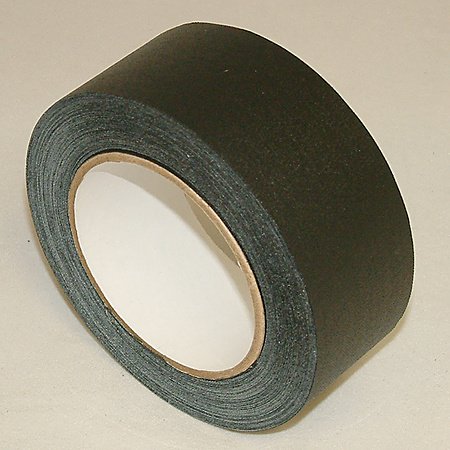
Well, I finally listened to those guys and bought some gaffer tape on Amazon.com. I used this at a recent ham radio event to secure cables, support various masts and lash things together. You know, basic duct tape stuff.
I have to admit that this gaffer tape is really, really good. It is more cloth and less vinyl than duct tape and the adhesive does not leave a residue. Yes, it is more expensive than duct tape. Funny, how that always seems to be the case for higher quality products.
- 73, Bob K0NR
Bob Witte, KØNR, is a regular contributor to AmateurRadio.com and writes from Colorado, USA. Contact him at [email protected].
October at Knox Mtn – Denmark and Germany

This afternoon I hiked up to Knox Mountain with my wife and daughter. It’s a beautiful fall day. I worked two German stations and a station from Denmark. The trail was covered with dried leaves and as we walked along, we enjoyed the familiar crunching sound and the pungent smell of the season. We reached the pond after hiking 25 minutes or so.

I set up the KX3 under a cherry tree near the pond. I operated only on 20 meters. I tossed a line 50 feet over a branch and pulled up the 10 meter wire. First I heard Soren, OZ0JX in Denmark. What a beautiful signal. He gave me a 559 and we said goodbye.
A few minutes later I heard Rolf, DL3AO in Germany. We have worked a half dozen times before. Rolf was a 599 and he gave me a 559. He told me that he still hikes with his K2 at 80 years old! How wonderful to hear him again. As I finished the QSO Joerg DL2DSL called and we had a quick contact. He was a strong 599 and gave me a 559.

This is a wonderful time of year to hike in the hills. Today it was 21C and sunny. Very warm in the sun. It’s supposed to rain for the next few days, but I certainly plan to come back before the leaves are all gone.
Jim Cluett, W1PID, is a regular contributor to AmateurRadio.com and writes from New Hampshire, USA. Contact him at [email protected].
 Ham Radio Deluxe |
 W5SWL Electronics |
 Ham Radio Prep |
 KB3IFH QSL Cards  Hip Ham Shirts  HamRadioAuctions HamRadioAuctions Reliance Antennas Reliance Antennas Enigma Shop Enigma Shop |  morseDX  Ni4L Antennas  R&L Electronics R&L Electronics antennas.us antennas.us QRV QRV |
- Matt W1MST, Managing Editor
