 |
 MGM 1939 film: Radio Hams / More than a Hobby
 11 November 2013 | by
 “Radio Hams” do more than play with their machines. They are also invaluable in relaying vital information during times of tragedy and disaster.
Here is a mildly entertaining look at radio hams, those amateurs sending and receiving coded messages during the late thirties when films first dealt with the subject of “radio hams.” In this case, the ham operators manage to be helpful during situations of stress, using their abilities with code to help someone in distress and to seek aid for pilots flying a missing plane.
The humorous ending has the family gathered around the radio listening to someone speaking Chinese while the narrator tells us how impressed the family was to be hearing someone across the world on their radio set.
http://www.youtube.com/watch?v=bZi7LiPNMt8
This little vintage film, a rather more serious film than many of Pete Smith’s other presentations, takes a look at how ham radios can become priceless aids during emergencies. The two stories shown, one dealing with sickness, the other with a missing plane, are bookended by a humorous look at a typical three-generation family’s fascination with their ham radio.
Of course, amateur radio, or “ham radio”, is alive and doing very well, in our modern times. Using satellites, moon-bounce communications, repeater networks, as well as shortwave, mediumwave, and longwave telecommunications technology, amateur radio continues to provide emergency services in times of need, from hurricanes, tornadoes, earthquakes, and even during such times as the infamous 9/11 atrocity. But, amateur radio also breeds invention and experimentation, always at the cutting edge of science. It is a hobby worth investigating, having room for a wide-range of interests. Preppers, science lovers, experimenters, and those with a passion to meet people from all over the world by way of radio waves, all together make up the radio hobby of amateur radio.
Clayton Moore, later famous as the Lone Ranger, appears uncredited as a ship radio operator.
Directed by Felix E. Feist
Writing Credits Buddy Adler (screenplay) (as E. Maurice Adler)
Cast (in alphabetical order)
Barbara Bedford – Mrs. Crane (uncredited)
Eleanor Counts – Miss Mulligan, Jimmy’s Sister (uncredited)
Jack Daley – Pa Mulligan (uncredited)
Robert Homans – Lighthouse Keeper (uncredited)
Clayton Moore – Ship Radio Operator (uncredited)
Alonzo Price – Clyde DeVinna (uncredited)
Jason Robards Sr. – Pilot in Distress (uncredited)
Pete Smith – Narrator (voice) (uncredited)
Harry Strang – Man in Montage (uncredited)
Phillip Terry – Co-Pilot (uncredited)
Dorothy Vaughan – Ma Mulligan (uncredited)
Produced by Pete Smith – producer (uncredited)
Music by David Snell (uncredited)
Cinematography by Robert Pittack
Film Editing by Philip W. Anderson (as Philip Anderson)
Music Department Jack Virgil – orchestrator (uncredited)
Other crew Douglas Smith – technical advisor
According to https://archive.org/details/wwIIarchive this film is in the Public Domain.
Creative Commons copyright.
Visit, subscribe: NW7US Radio Communications and Propagation YouTube Channel
EA2LU QRP from Knox Mountain
I made a quick hike to Knox Mountain this afternoon. It was a typical, bleak November day. But I had a great time working my old friend Jorge EA2LU from Spain. He was also running 5 watts. As I approached the pond three wild ducks took off from the quiet water.

It was a cold misty day. Last night it had snowed a half an inch. The snow had all melted by this afternoon. The walk was invigorating…

Because everything was wet, I set up on the cabin porch. I had tossed a 10 meter wire over a branch and hooked up the KX3 with the internal tuner. There were a few DX stations working split with big pileups, so I went up to 14.060 and called CQ.
EA2LU, Jorge came right back, and it was so good to hear him. We’ve had nearly 20 QSOs since 2008. Most of them were 2-way QRP.
Just as Jorge said his weather was ugly with rain, it started to sprinkle. I could see the rain drops on the pond.

“UR KX3/10M wire are doing a great job,” he sent. He gave me a 569 and he was a 579.

After the QSO with Jorge, I packed up and hiked the mile and a half back to the car. It’s supposed to snow again tonight.
Jim Cluett, W1PID, is a regular contributor to AmateurRadio.com and writes from New Hampshire, USA. Contact him at [email protected].
1920 film: How the Telephone Talks (A Silent Film)
This is for you vintage science film buffs: here is a circa 1920 film: How the Telephone Talks (A Silent Film).
This is an educational film from 1920 that explained the “modern” telephone. The concepts are still relevant to today’s modern versions, including the cell phone, which is both radio and telephone.
From Wiki:
A telephone, or phone, is a telecommunications device that permits two or more users to conduct a conversation when they are not in the same vicinity of each other to be heard directly. A telephone converts sound, typically and most efficiently the human voice, into electronic signals suitable for transmission via cables or other transmission media over long distances, and replays such signals simultaneously in audible form to its user. The word telephone has been adapted into the vocabulary of many languages. It is derived from the Greek: τῆλε, tēle, far and φωνή, phōnē, voice, together meaning distant voice.
First patented in 1876 by Alexander Graham Bell and further developed by many others, the telephone was the first device in history that enabled people to talk directly with each other across large distances. Telephones became rapidly indispensable to businesses, government, and households, and are today some of the most widely used small appliances.
The essential elements of a telephone are a microphone (transmitter) to speak into and an earphone (receiver) which reproduces the voice of the distant person. In addition, most telephones contain a ringer which produces a sound to announce an incoming telephone call, and a dial used to enter a telephone number when initiating a call to another telephone. Until approximately the 1970s most telephones used a rotary dial, which was superseded by the modern Touch-Tone push-button dial, first introduced by AT&T in 1963. The receiver and transmitter are usually built into a handset which is held up to the ear and mouth during conversation. The dial may be located either on the handset, or on a base unit to which the handset is connected by a cord containing wires. The transmitter converts the sound waves to electrical signals which are sent through the telephone network to the receiving phone. The receiving telephone converts the signals into audible sound in the receiver, or sometimes a loudspeaker. Telephones are a duplex communications medium, meaning they allow the people on both ends to talk simultaneously.
A landline telephone is connected by a pair of wires to the telephone network, while a mobile phone, such as a cellular phone, is portable and communicates with the telephone network by radio transmissions. A cordless telephone has a portable handset which communicates by radio transmission with the handset base station which is connected by wire to the telephone network.
The telephone network, consisting of a worldwide net of telephone lines, fiber optic cables, microwave transmission, cellular networks, communications satellites, and undersea telephone cables connected by switching centers, allows any telephone in the world to communicate with any other. Each telephone line has an identifying number called its telephone number. To initiate a telephone call the user enters the other telephone’s number into a numeric keypad on the phone.
Although originally designed for simple voice communications, most modern telephones have many additional capabilities. They may be able to record spoken messages, send and receive text messages, take and display photographs or video, play music, and surf the Internet. A current trend is phones that integrate all mobile communication and computing needs; these are called smartphones.
Visit, subscribe: NW7US Radio Communications and Propagation YouTube Channel
Another transatlantic 10m AM QSO
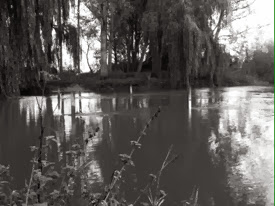
Late in the afternoon today, I decided to drive down to the hamlet of Duxford a mile or so from where we live. There’s a nice peaceful part of the River Thames there which I enjoy a walk around.
As I was descending the hill towards the river, I had the Anytone rig running on 29.010MHz AM when I heard a weak ‘W0TDH testing’. I dropped my call in and was totally surprised when I got a response.
Tom’s in the mountains of North Carolina and we had a nice QSO, despite my comparatively weak signal there. Good ears, Tom – thank you.
After I finished my walk and I returned home, I looked up Tom on QRZ.com – he’s got some lovely looking vintage equipment. We swapped emails and Tom said it was a while since he’d heard any mobiles coming through.
AM QSO number 3 and the best DX so far!
Tim Kirby, G4VXE, is a regular contributor to AmateurRadio.com and writes from Oxfordshire, England. Contact him at [email protected].
Liviu YO4FNG’s talk on ‘4300km on 144MHz’
Paul G4DCV posted another video that he took at the recent RSGB Convention. This time, it is the excellent presentation from Liviu, YO4FNG. Although it is titled ‘4300 km on 144MHz’, it tells the story of how he evolved his VHF station in Romania.
It is full of fascinating stories, charm and gentle humour and I thoroughly recommend it to you.
Thanks again to Paul G4DCV for the excellent video production.
Tim Kirby, G4VXE, is a regular contributor to AmateurRadio.com and writes from Oxfordshire, England. Contact him at [email protected].
If you’re a QRPer
then I am willing to bet that you know, have worked, or at the very least, heard of one or more of these fine individuals.
From Jim W4QO:
“Travel plans are set for the fifth “Buddies in the Caribbean” (BIC) mini-DXpedition to St Lucia (J6). Eight operators, some of whom have never experienced the “other side” of a pileup, will be operating from Chateau Devaux on the NE side of St. Lucia from December 1st through 9th, 2013.
This “Suitcase DXpedition” will operate QRP to 100-watt radio stations using backpackable Buddipole antennas to make contacts from the villa, the surrounding mountains, and (of course) from St. Lucia’s superb beaches.
The eight operators are Jerry—N9AW, Craig—NM4T, John—W5EXJ, Joe—K3JDB, Rick—AA4W, Jim—W4QO, Chris—W6HFP, and Budd—W3FF (J68FF). Ops will preface their own calls with “J6/”.
Team members will operate several CW, SSB, and/or Digital Mode stations on 160-10 Meters from the villa while others make contacts with portable set-ups from other J6 locations.
Per tradition, meeting and operating with local hams while on J6 is one of our key goals.
Details for obtaining contact confirmations from the operators can be obtained by checking www.QRZ.com. The BIC team members will confirm contacts via LOTW and/or QSL cards.”
Got to hand it to these gents – they know when to make an escape to the Caribbean, eh? Just as the really cold weather settles in, they’ll be on the beach, enjoying the balmy breezes and having drinks with little umbrellas from coconut shells. And enjoying Amateur Radio to boot! Have fun, guys …. I’ll be listening for you!
72 de Larry W2LJ
QRP – When you care to send the very least!
Larry Makoski, W2LJ, is a regular contributor to AmateurRadio.com and writes from New Jersey, USA. Contact him at [email protected].
Some QRP work

Paul Stam, PC4T, is a regular contributor to AmateurRadio.com and writes from the Netherlands. Contact him at [email protected].
 Ham Radio Deluxe |
 W5SWL Electronics |
 Ham Radio Prep |
 KB3IFH QSL Cards  Hip Ham Shirts  HamRadioAuctions HamRadioAuctions Reliance Antennas Reliance Antennas Enigma Shop Enigma Shop |  morseDX  Ni4L Antennas  R&L Electronics R&L Electronics antennas.us antennas.us QRV QRV |
- Matt W1MST, Managing Editor
