 |
 New QSL Card for 2014
 15 November 2013 | by
As part of my 2014 challenge to have at least one QSO each day (as I successfully accomplished in 2012), I decided my old QSL card (which I’ve used for five years) needed a facelift. Without hesitation I contacted Randy Dorman, (KB3IFH QSL Cards). Randy does excellent work printing QSL cards. His services are quick and reasonably priced. If you are looking to have cards printed, contact Randy. You’ll be pleased.
I wanted my new card to represent Colorful Colorado as I’m always proud to represent the centennial state when I take to the airwaves. However, I do truly lack in creativity and imagination. This is really where Randy made it easy for me. He helped me find this postage stamp image, he cleaned it up a bit and I’m very pleased. A Colorado postage stamp QSL card. I love it! If you want one of these, catch me on the bands starting in 2014.
As I have stated before, I really enjoy collecting QSL cards. So much so that it’s really made me re-evaluate my QSL policies. For the past several years I’ve almost always sent along an SASE (self-addressed stamped envelope) with my QSL card. But in the early days I didn’t send that many cards and when I was first licensed, first class postage was a whopping 5 cents cheaper.
Now don’t misunderstand me, my decision is not based on the rising cost of postage. If it were, I would just stop QSL’ing all together and only use the online services. Which by the way, I do use both eQSL and LoTW…but the excitement factor just isn’t the same as when I walk to the mailbox and find an envelop with a QSL card from a nearby or far away location.
Really what has driven my decision is what appears to be a duplication of effort between most of the hams I work on the bands. What do I mean by this?
First, if I’m going to send a QSL card…I typically do this within a day or two (at the most) of the QSO. I have discovered, the majority of the stations I work also do the same. Many times our QSL cards must pass each other in the USPS sorting process. If I’ve sent along an SASE and the other station has done the same thing…then we’ve both received an envelope with a stamp which may or may not be useable again. But sadly, I’ve found many stations do not send SASE.
Yes, I understand why some stations may request an SASE and I understand why most DX stations will want a greenstamp or two to help cover postage. But for most of the average US based stations and for casual QSO QSL’ing I will gladly cover the return postage should you want to exchange cards with me.
I’m not going to change the minds of everyone, and I’m not going to try. If you absolutely require an SASE and I want your card bad enough, then I’ll comply. However, I believe my new process will certainly equal things out a little bit. The paper QSL card process is part of the old customs of amateur radio that I truly hope will never go away.
Now I must take a short walk to the mailbox and drop off a few outgoing QSL cards and fingers crossed, I have some incoming cards waiting. I truly hope to work you either in the remaining days of 2013 or certainly in 2014. YES, I QSL 100% and absolutely no SASE is required.
Until next time…
73 de KD0BIK (Jerry)
Jerry Taylor, KD0BIK, is a regular contributor to AmateurRadio.com and writes from Colorado, USA. He is the host of the Practical Amateur Radio Podcast. Contact him at [email protected].
Hey, My Yaesu Beeps When I Transmit!
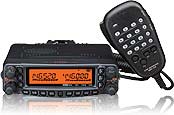 I own a variety of Yaesu ham radio transceivers and like them a lot. Except for that one little annoying feature that the FM rigs have: WIRES.
About once every two weeks, one of the local radio hams gets on the repeater with a DTMF beep at the start of every transmission. We’ve come to expect it now, so the first question to the ham is “are you by chance using a Yaesu radio?” They always say “yes” and then we talk them through the process of turning off the WIRES “feature.”
The WIRES function sends a DTMF signal at the start of every transmission for use with Yaesu’s version of internet repeater linking (which is not used much in the US). The problem is that it is very easy to bump the wrong button on your radio and accidently get it into this mode. This means that this is mostly a nuisance feature in the US.
I recently came across a way to disable this feature on your Yaesu radio so that it won’t sent the DTMF tone even if you activate it by accident. Basically, you set the WIRES tone to be empty, so nothing is transmitted if you accidentally turn on WIRES. I did not come up with this clever hack…in fact, I am not sure who put this together. (If you do, let me know and I’ll give them credit.) Take a look at this pdf file and follow the instructions to de-WIRES your radio: Turn Off Wires
73, Bob K0NR
Bob Witte, KØNR, is a regular contributor to AmateurRadio.com and writes from Colorado, USA. Contact him at [email protected].
AmateurLogic.TV 60: FreeDV, JT65 & Pi

AmateurLogic.TV Episode 60 is now available for download.
George looks at FreeDV, Digital Voice for HF. Peter operates JT65 for weak-signal communications. Tommy builds a Raspberry Pi file server.
And a Major Award, the ALTV 8th Anniversary Giveaway… We give away the ultimate mobile setup from Icom, GigaParts, Diamond and MFJ to one very lucky viewer.
1:13 of AmateurLogic Goodness
View in web browser: YouTube
George Thomas, W5JDX, is co-host of AmateurLogic.TV, an original amateur radio video program hosted by George Thomas (W5JDX), Tommy Martin (N5ZNO), Peter Berrett (VK3PB), and Emile Diodene (KE5QKR). Contact him at [email protected].
A good day
is one where I can rack up at least 4 QSOs during lunchtime. Today was such a day.
PJ6/W4VAB – Hugh in Saba, St Eustatius on 15 Meters. DX contact
IK2SND – Danny in Italy on 17 Meters. DX contact – Danny was 599+ in NJ.
K9WIS – Brian in Waterford, WI on 20 Meters. Short ragchew.
N4KGL – Greg in Panama City, FL on 20 Meters. Very short ragchew.
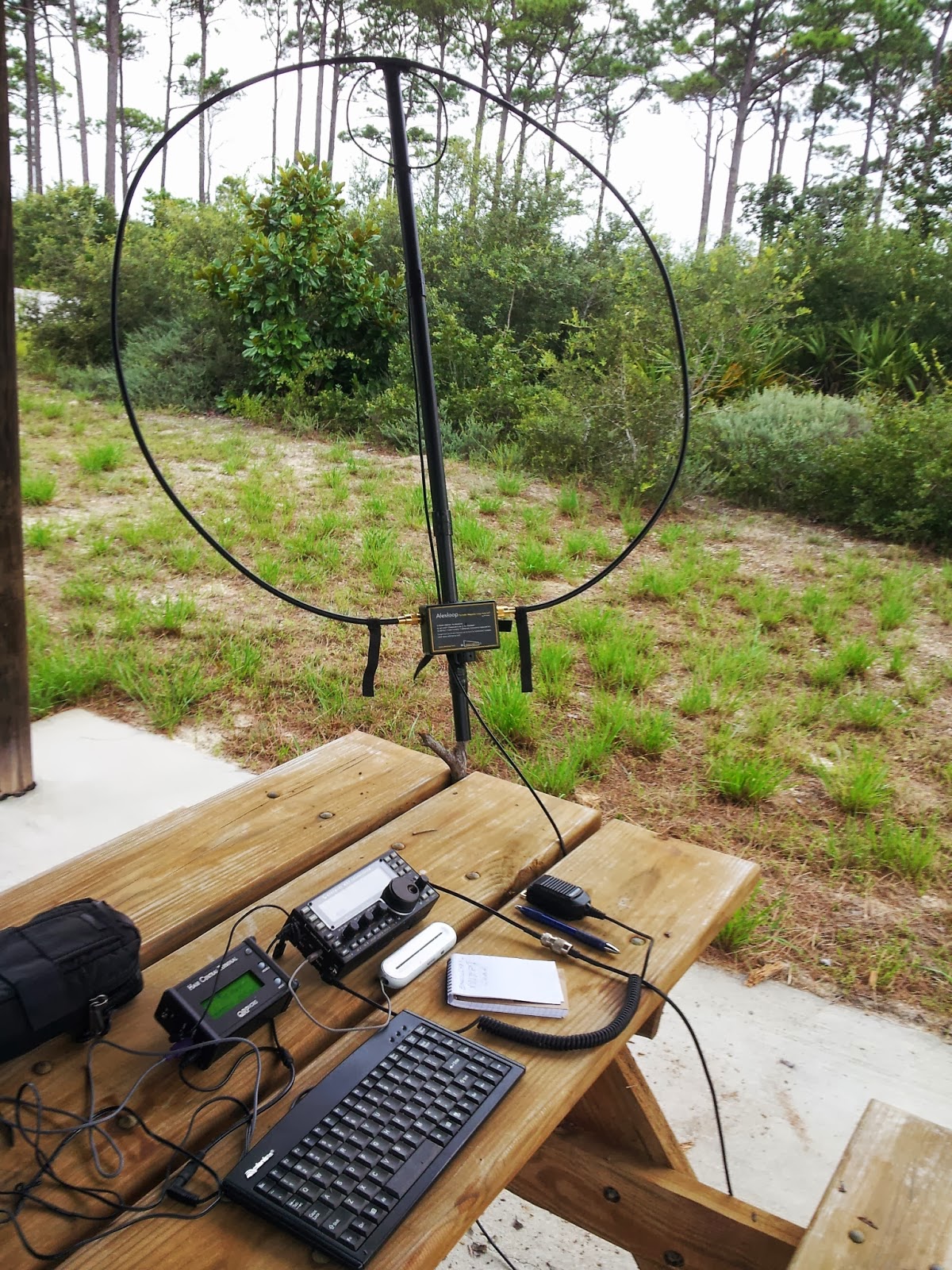
The QSO with Greg N4KGL intrigued me. Greg also does the lunchtime QRP portable ops thing, and we have hooked up several times. He uses a KX3 to an Alex Loop. He was a good 579 / 589 into New Jersey and the Alex Loop was doing a superb job getting his 5 Watts up here in good shape. I may have to look into magnetic loops as a serious option for QRP portable ops.
On another note, sometimes, when you collect a lot of Ham paraphernalia over the years, you forget some of the stuff you already have. I am a case in point. The other day, I was in correspondence with a fellow Ham who was looking for a very small, miniature straight key. I e-mailed him that I had one and was willing to part with it. In turn, I received an e-mail back, asking for a photo. I was searching the shack for it last night, for picture taking purposes, only to suddenly remember that I sold that very key along with my K1. It was part of the package that I had put together, back when I was trying to raise funds for my KX3. I sheepishly informed the inquiring Amateur that I no longer had it (losing your memory is a terrible thing!), and was feeling bad for having given him inaccurate information. I was relieved as everything turned out all right. He informed me that a friend of his had actually given him exactly what he was looking for, and that it met his needs very well.
But during my search for the straight key, I came across a Viz Key that I had purchased about 7 years or so ago. I had totally forgotten that I had it
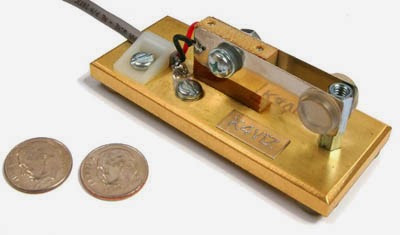
And that was a fortuitous discovery, as for a while now, I have been trying to settle on a key to stick in with my KX3 in my portable QRP ops bag. I was originally using an American Morse “Dirt Cheap Paddle”. It was very good and had an excellent feel, but was just a bit too light for my hand. When I’m doing these lunchtime ops, I like to hold the paddle in my left hand and squeeze the levers with my right hand. Call me crazy, call me weird but that’s what works best for me. When I would try to find the “sweet spot” for the DCP in my hand, I seemed to always accidentally squeeze the paddle levers at the wrong time and would send out a string of inadvertent dits. Next I tried a TE-NE-KEY, but I just couldn’t get used to the feel of that at all. I ended up making more mistakes with it than I do when I am on a bug! So I had resorted to using a White Rook MK-33 single lever paddle that I had. That was actually too light also, but I overlooked that, as I absolutely love single lever paddles.
The Viz Key is an iambic paddle, but it’s a bit heftier than what I have been using, without being too hefty (it weighs in at 8 oz. or just 1/2 pound). It’s just the right weight for me, whether it is in my hand or on whatever table I happen to be sitting at. It is stable without being cumbersome. If I was hiking for a long period of time, I’d probably switch back to the White Rook, but the small amount of weight savings is not a concern for me right now. I used the Viz Key for my QSOs today, and it took a few minutes of getting used to again. But very quickly, my sending became less error prone and I was able to make the QSOs that I did make without sending the Hams on the opposite end into a messy Morse Code frenzy.
72 de Larry W2LJ
QRP – When you care to send the very least!
Larry Makoski, W2LJ, is a regular contributor to AmateurRadio.com and writes from New Jersey, USA. Contact him at [email protected].
Amateur Radio Newsline Report 1892 November 15 2013
- Ham radio responds as Typhoon Haiyan devastates the central Philippines
- ISS Expedition 37 crew brings the Olympic Torch home from space
- Laccadive Islands on the air between November 20th and December 10th
- BBC on-line news magazine highlights ham radio
- ABC’s Last Man Standing now boasts 17 hams on its crew
JT65 is the winner
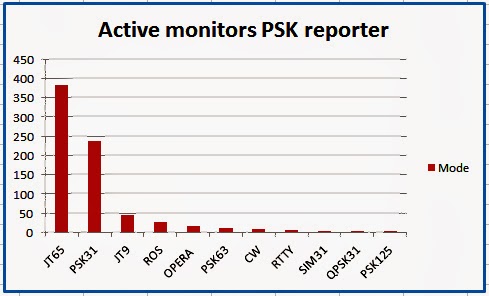
Update: I jumped to conclusions too fast, I am afraid. Not all digi software supported PSK Reporter said G4EST and he is right of course. Maybe it shows only a trend. On 10 meter yesterday the JT65 bandwidth was crowded. About 12 stations were QRV, and only 3 PSK63 and 1 PSK31 station. BX2ABT reports: No reports doesn't mean no activity . He is daily active with Olivia on 20 meter. I will look for him. ;-)
Another great repoter site is Hamspots. (Sorry I forgot) I checked digi mode activity for the last 2 minutes at 10 h UTC. JT65: 70 stations; PSK31: 21 stations; JT9: 8 stations; and RTTY; 1 station. I heard Olivia on 14.106 QSO G0MGM with EI9FV. I heard Hell sometimes last week. And agian I see a certain trend. JT65 is really the most used digi mode at the moment and PSK31 is a good for a second place.
Paul Stam, PC4T, is a regular contributor to AmateurRadio.com and writes from the Netherlands. Contact him at [email protected].
Roger, G3XBM – get well soon
I was enormously pleased to see a new post from my fellow blogger Roger, G3XBM Roger is recovering from a severe stroke and facing difficulties I can only imagine. I’m sure I’m not the only one missing his posts about QRP projects nd accounts of his low power activities. Get well soon, Roger.
Julian Moss, G4ILO, is a regular contributor to AmateurRadio.com and writes from Cumbria, England. Contact him at [email protected].
 Ham Radio Deluxe |
 W5SWL Electronics |
 Ham Radio Prep |
 KB3IFH QSL Cards  Hip Ham Shirts  HamRadioAuctions HamRadioAuctions Reliance Antennas Reliance Antennas Enigma Shop Enigma Shop |  morseDX  Ni4L Antennas  R&L Electronics R&L Electronics antennas.us antennas.us QRV QRV |
- Matt W1MST, Managing Editor
