 |
 Back in the Saddle Again
 6 January 2014 | by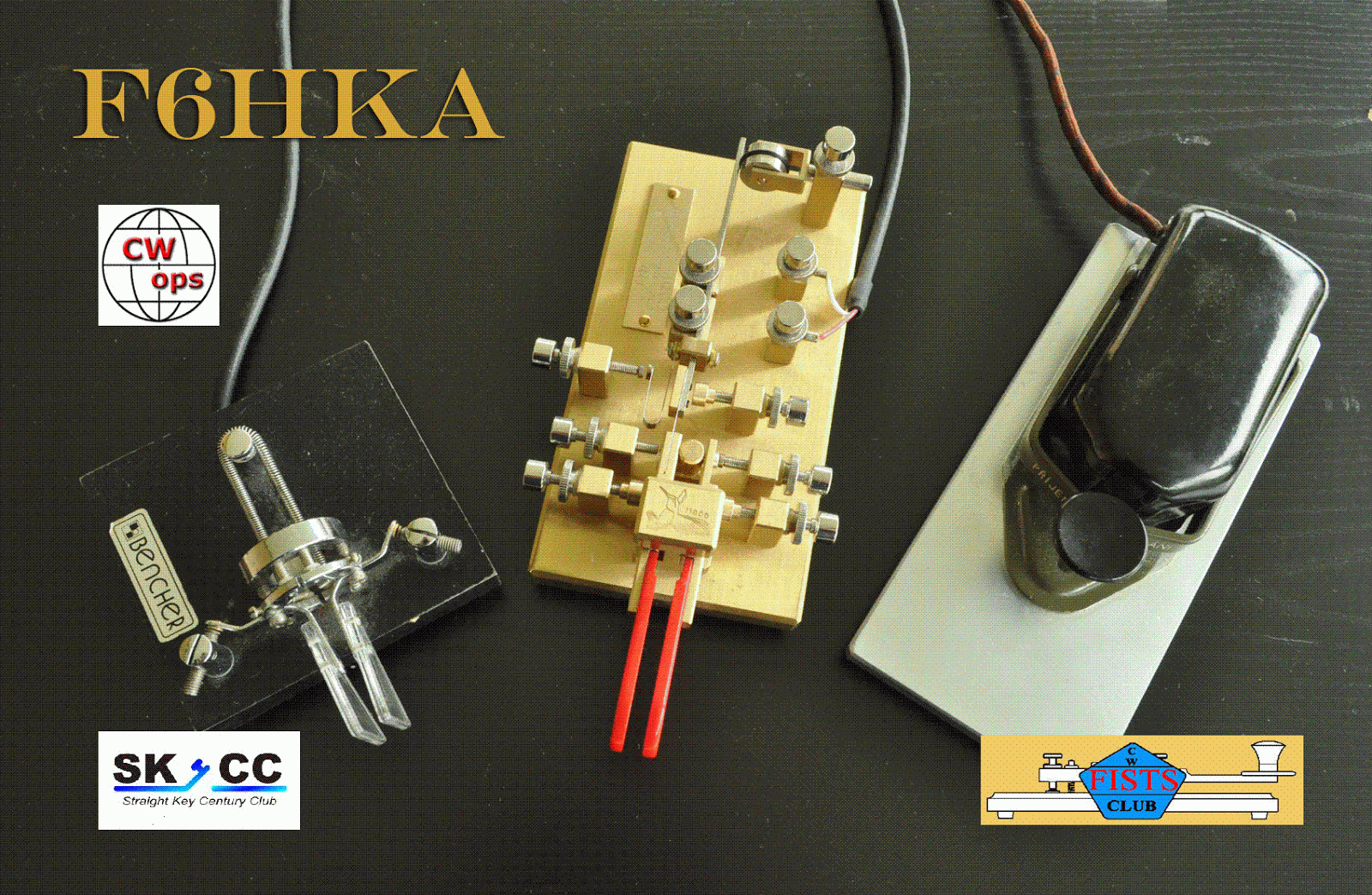
It’s always a pleasure to work Bert (F6HKA) in France but especially so this morning when I heard the familiar strong signal here on the east coast. He always has a 599 signal. This morning I worked him on 10 meters. I’ve been very busy since the beginning of the new year and Bert was my first DX contact for the 2014 log book. He was sending K3Y/EU but I knew exactly who he was when I hear him. We’ve worked 9 different times now and he always takes a few extra moments to say hello and how are you? He’s a true gentleman and he enjoys working QRP stations.
I was skipping across the bands now and I worked the next station who was in Madrid and on 12 meters. This contact into Spain was much more difficult but I finally worked EC4DEX after several attempts.

I now dropped down to 15 meters and caught this station (IQ2CJ) in Northern Italy. It was also difficult to copy but we finally managed to exchange call signs and move onward to other stations. I was hearing a station in Ireland but couldn’t work him.
It’s freezing cold this morning. The temperature is -11 Celcius and the wind is blowing at 32 kph. We’re expecting a low tonight of -20 Celcius with a wind chill of -39 C. BBBBrrrrrrrrr……….
As I continued to travel towards the lower bands; I stopped on the 30 meter band and threw my call out on the QRP frequencies. I was answered by Hal (KA4SDU) in nearby Louisville Kentucky. He lives next to the Ohio River and enjoys watching the barge traffic as it moves downstream. We both being Navy Veterans, we had a delightful talk about several different things.
Hal loves to play with antennas and produces a really neat one called Hal’s Bamboo Beast
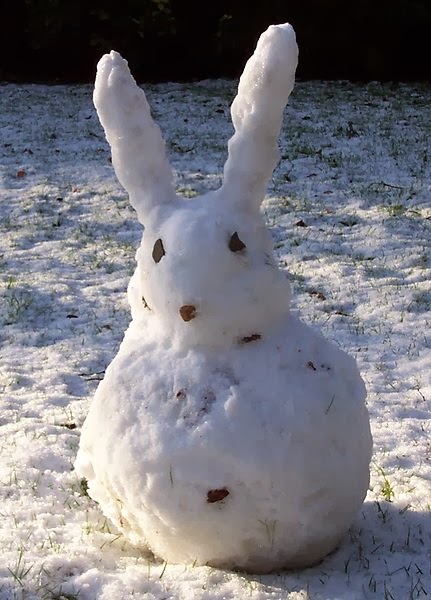
The month of December brought NO outside activity for the WV Chapter of the NAQCC Club and I doubt for the next couple of months. I don’t want to end up like that frozen rabbit in the upper picture.
Our monthly club breakfast, at the Charleston downtown restaurant, is this coming Wednesday. A few days later Eric (AC8LJ) will drive to a fellow CW operators home to see a variety of different keys. I’m assuming the weather will be a little warmer at that time.
Don’t want to end up like that frozen rabbit……
John Smithson, Jr., N8ZYA, is a regular contributor to AmateurRadio.com and writes from West Virginia, USA. Contact him at [email protected].
Cycling Around the World and Discovering True Amateur Radio Spirit

I received a note from Thomas Andersen, OZ1AA, sharing some information about his around-the-world bike trek:
This is the story of an adventure across countries, continents and cultures, enriched by the spirit of Amateur Radio.
Apart from ham radio I have been interested in cycling since I was a kid. I also love to travel so it was somewhat natural for me to combine my passions in life into a perfect match. I first did some shorter bike trips in Europe including a three week ride through the Balkans in 2007. A year later in the middle of the financial crisis, the startup company I was working for suddenly went bankrupt. I wasn’t slow to hit the internet and look for a cheap flight ticket to a warm place. I spent the next 2 months cycling from South India to Delhi and had an amazing time. After the trip I decided to plan for “The Big Ride”, but first I needed to earn more money.
When I came home from India a got a job on Faroe Islands. Apart from the fact that the beer up there is incredible expensive, I figured it would be a good place to save up some cash as there wouldn’t be a lot of other things to spend money on. During a long and dark winter I managed to make 28000 QSOs as OY3AA and save up the money I needed. In the beginning of October 2010 I came back to Denmark and one week later I was saying goodbye to friends and family on the central square in Copenhagen.
After more than 20,000 km and three years on the road, I learned that there is always a radio amateur around, ready to give a helping hand. I have now reached South America and started cycling north from Ushuaia. The goal is to reach Canada within a year.
I think it would have been possible to do what I am doing without being a radio amateur, but there is no doubt in my mind that it would be a much more boring trip. I can’t honestly think of any other hobby where you can show up in any town in any part of the world and be welcomed like I have been. I have realized this is unique because my non-radio friends simply can’t understand how I can know so many people. They think I am the world’s best networker, but all I can tell them is: Become a Ham and you will have 1 million friends around the world as well.
A sincere thank you to all hams who helped making this possible. Amateur radio spirit is alive!
Follow his ride via cyclingtheglobe.com or via Twitter. Also, if you’re on his route (the North American portion is mostly Eastern U.S./Canada), consider showing him some local ham hospitality! 🙂
Matt Thomas, W1MST, is the managing editor of AmateurRadio.com. Contact him at [email protected].
75% Chance of M-class Flares, 30% For X-class
Solar Flare Alert:
Active Sunspot Region 11944 has a 75% chance of producing an M-class flare, and a 30% chance of producing an X-class flare, in the next 24 hours. Smaller flares are also possible.
We are expecting a glancing blow from a Coronal Mass Ejection (CME) sometime in the next 24 hours.
The Earth’s polar regions are under a proton event (Polar Cap Absorption, or PCA, event). This is degrading HF communications over polar regions.

(Live data and more info at https://Facebook.com/spacewx.hfradio or http://SunSpotWatch.com/ )
Visit, subscribe: NW7US Radio Communications and Propagation YouTube Channel
Wouxun.us stops selling Wouxun radios
In a surprise announcement tonight, Ed Griffin of Import Communications (Wouxun.us) has abruptly ended sales and support of the popular Wouxun radios.
As one of the largest Wouxun distributors, Import Communications was selling as many as 500 radios per month, according to the company.
In an email to customers, Griffin indicated that he had been having difficulty dealing with the manufacturer in China. He also claimed that all Wouxun radios contain an “internal defect” which the factory is unwilling to address.
Griffin’s description of the lost memory problem / reverting to speaking Chinese matches my experience with two of my Wouxun radios.
Griffin wrote that he would continue to sell Wouxun accessories and is in the process of importing a new dual-band HT manufactured by Anytone.
Matt Thomas, W1MST, is the managing editor of AmateurRadio.com. Contact him at [email protected].
Car keys in the 70 cm band
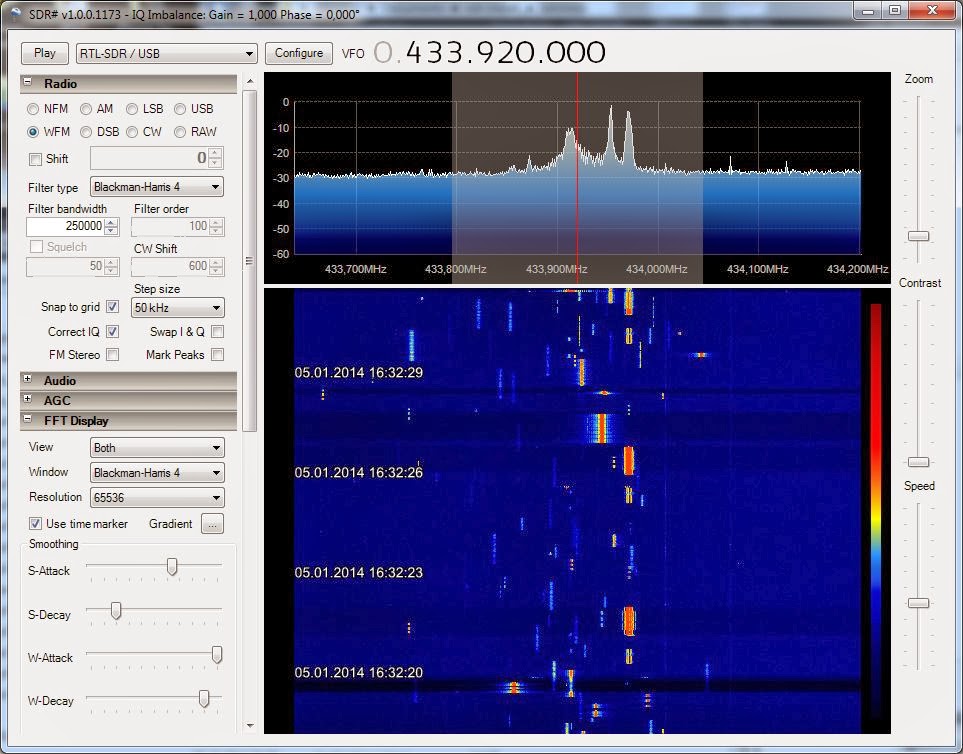 |
| Press image for a larger view |
Related posts:
- “Not so busy 70 cm ISM band” showing the status on a late Monday night
- “Video of busy 70 cm ISM band due to car key fobs“
Sverre Holm, LA3ZA, is a regular contributor to AmateurRadio.com and writes from Norway. Contact him at [email protected].
First contact – new DXCC
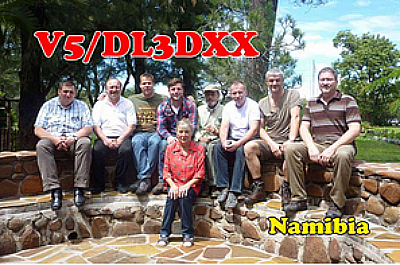
My first contact in the new year is immediately a new DXCC. On 12 m I heard V5/DL3DXX Namibia - Africa with CW. With 35 wpm I could work him.
48 American soldiers died at the crossing on September 20, 1944. Now they made a new bridge at that place, still remembering those brave soldiers who died there.
Paul Stam, PC4T, is a regular contributor to AmateurRadio.com and writes from the Netherlands. Contact him at [email protected].
Top Five K0NR Blog Posts for 2013
 Here’s the top 5 blog postings for 2013 on the K0NR Blog, based on number of views.
1. The Updated Incomplete List of Ham Radio iPhone Apps – my short list of preferred iPhone apps for ham radio use
2. Digital Voice at Pacificon – a report on a few of the presentations at the Pacificon ham radio convention in Santa Clara
3. Yet Another HT From China (Baofeng UV-B5) - a look at one of the best low cost HTs from China
4. A Great Bag for the FT-817 – description of a really good bag for the Yaesu portable QRP rig
5. When All Else Fails or SHTF? – a discussion of “preppers” getting interested in amateur radio for emergency use
Also, these articles continue to get a large number of hits, even though they are a bit older:
FM/VHF Operating Guide – a guide to ham radio activity on 2m FM and other bands
Choose Your 2m Frequency Wisely – an explanation of the 2 meter band plan with Colorado emphasis
— 73, Bob K0NR
Bob Witte, KØNR, is a regular contributor to AmateurRadio.com and writes from Colorado, USA. Contact him at [email protected].
 Ham Radio Deluxe |
 W5SWL Electronics |
 Ham Radio Prep |
 KB3IFH QSL Cards  Hip Ham Shirts  HamRadioAuctions HamRadioAuctions Reliance Antennas Reliance Antennas Enigma Shop Enigma Shop |  morseDX  Ni4L Antennas  R&L Electronics R&L Electronics antennas.us antennas.us QRV QRV |
- Matt W1MST, Managing Editor
