 |
 The best KX3 case
 8 February 2014 | by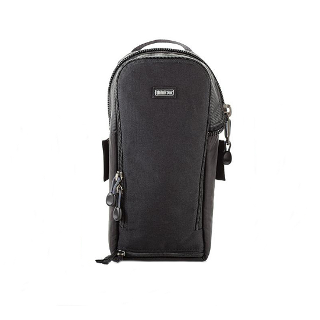
When giving the video tour of my latest QRP pack I was asked by a few fellow KX3 owners what case it was that I was using.
Ive created another YouTube clip that shows off the Think Tank Strobe Stuff Pouch. Which was recommend to me by G4ILO on his blog.
Anyway I hope the review shows you how the pack fairs up.
Dan Trudgian, MØTGN, is a regular contributor to AmateurRadio.com and writes from Wiltshire, England. He's a radio nut, IT guru, general good guy and an all round good egg. Contact him him here.
50 States
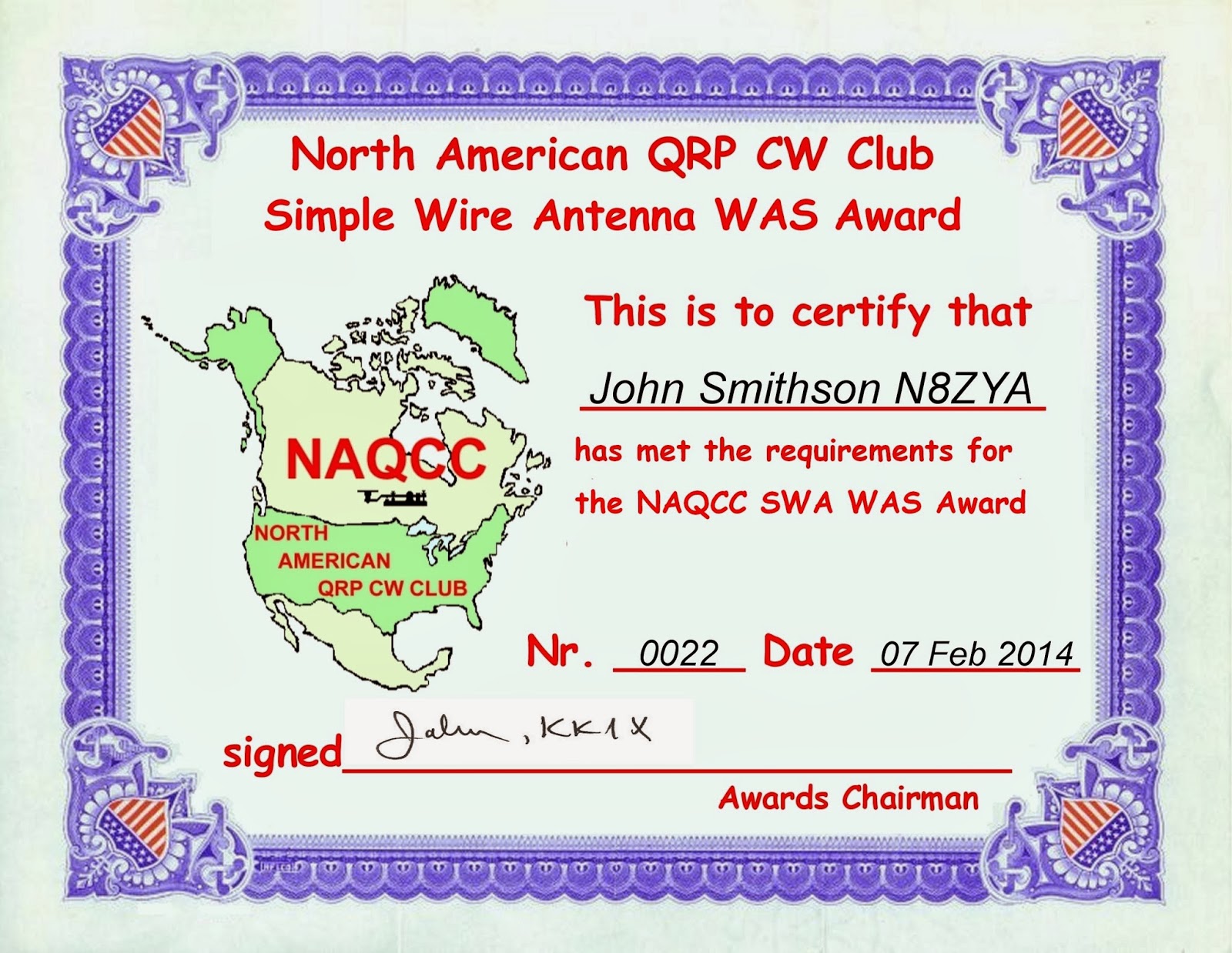
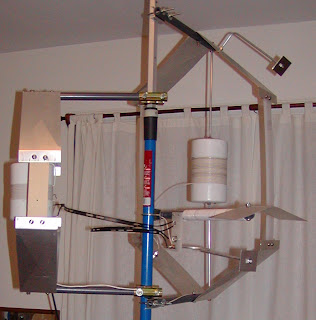
Here’s a certificate I’m very proud to add to my NAQCC folder. The majority of my 50 state contacts were made with my indoor mounted Isotron antennas on either 40 meters or 20 meters. Alaska and Hawaii were two states I had doubts of ever working from my city location considering I’m forced to operate with stealth antennas. I worked those last two states with a 50 ft indoor random wire.
I’m also within a very short distance of my DXCC award now with 95 countries showing on the QRZ.com log book. I need to count all those in my “personal” log book since I started that log book a year or so before the QRZ book.
John Smithson, Jr., N8ZYA, is a regular contributor to AmateurRadio.com and writes from West Virginia, USA. Contact him at [email protected].
Amateur Radio Newsline Report 1904 February 7 2014
- The Dayton Hamvention announces its 2014 award winners; the
- FCC opens a short window to comment on WRC 2015 preparations
- An FCC reform measure is introduced in the United States Senate
- Think-tank says its time to merge the FTC with the FCC
- Russian Special Events Station celebrates the 2014 Winter Olympics
- New ham radio video podcast will be coming soon from the UK
- CQ Editor W2VU answers questions about the future of publishing
FT5ZM with QRP
I can't say enough about the quality of this team and their operating plan. Amsterdam is antipodal to my QTH and yet these guys have been workable on most bands, I have worked them on six bands using my battleship sized station and yes, I worked them yesterday QRP with my FT-817 on 20m. Over 2,000 miles per watt! It's ironic, but there is power in QRP. There was a small pile-up, relatively speaking, covering 2-3 KC's but my 5 watt signal travelled almost exactly half way around to the world to be copied by a station almost 12,000 miles away. Very cool.
The QRP contact was the first good news of the day, the second was a bonus. The common grayline/shared darkness with FT5 and my QTH in W5 is about 30 minutes. Yesterday around 0028z, with still some faint sunlight, the FT5ZM signal came out of the mud on 3.523 listening up 2. I use only an inverted L on 80m at about 55 feet at its apex, so we aren't talking about a superior antenna. Their signal was in the 339 - 449 range. Very light copy, but solid. I was excited just to copy them. I am usually confident when I jump in a pile-up, but not this one, figuring the east coast would drown me out. However on about the fourth call I could hear faintly but solidly, AD5A 599, I went back, de AD5A 599 599 bk.......AD5A 599 599. Oh no, he didn't hear me come back.....de AD5A 599 599 599 bk.......AD5A 599 TU UP.....Yesssss! An unexpected bonus and a short victory dance and another short one when the QSO was verified in the online log today.
There are so many ways to enjoy radio and yesterday was another fun day in this wonderful hobby of ours.
Mike Crownover, AD5A, is a regular contributor to AmateurRadio.com and writes from Texas, USA. Contact him at [email protected].
Light weight power for QRP
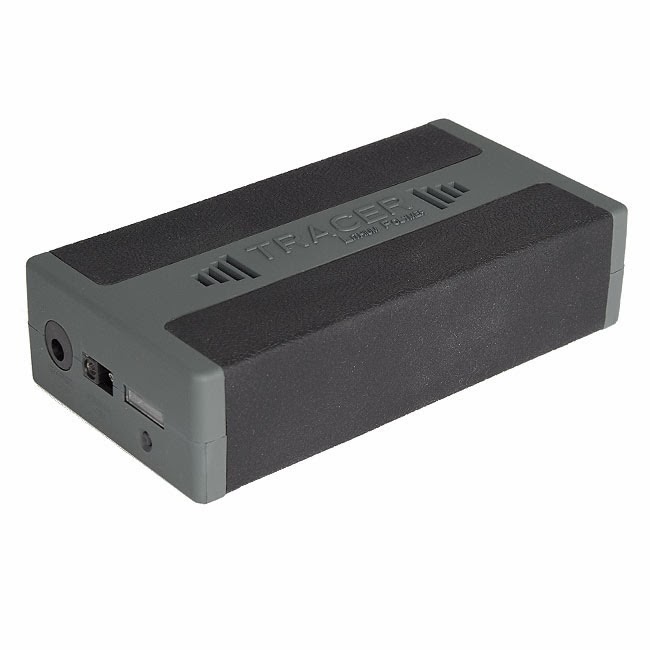
Some time ago I created a battery pack that used a 7.2Ah Sealed Lead Acid battery as its base. All is well with that power pack except its colossal weight. Weighing in at nearly 2.5Kg it’s a hell of a thing to but in your backpack. So I have invested in a Li-Po battery pack.
I have filmed a quick tour of the power pack ( link to the power pack is in the description of the clip) have a look. So far the pack has performed flawlessly and I cannot recommend it enough.
Dan Trudgian, MØTGN, is a regular contributor to AmateurRadio.com and writes from Wiltshire, England. He's a radio nut, IT guru, general good guy and an all round good egg. Contact him him here.
Second contest, getting the hang of it.

I was a bit more organised than the 50MHz contest last week. I got the computer running the Minos logging program. Just before 8pm I raised the antenna and double checked the VSWR and had a quick listen around on the band before the start and heard a few operators setting up. All looked good and then before I knew it we were off!
Due to my inexperience I operated in 'search and pounce' mode rather than calling CQ. I kept going outside and turning the antenna in a new direction and then spent several minutes searching up and down listening out for CQ calls.
I soon made a few contacts and fumbled along but my confidence increased as I got the hang of the exchange required.
I was jotting down the information and almost made the mistake of relying on the computer logging till I made an error and when attempting to correct it end up in a total mess due to my unfamilarity with the software. Thankfully I was able to sort out the log and carried on, but lost some time doing so.
Thankfully the rain held off but the wind was blowing quite strongly and the antenna was waving about a little so didn't have it at full height, not that full height was particularly high anyway and more often than not I suspect my antenna was pointing in the wrong direction!
At the end of the night I only managed 10 contacts, but was pleased none the less, scoring 930 points.
I have made a map of my QSOs and as expected they are limited by my surroundings
View UKAC 144MHz - 4 Feb 2014 in a larger map
Many years ago I experimented with a PMR eQSO gateway (detailed here) and when doing that I created a couple of terrain maps were created using GEOG. Geog is a suite of programs written by Andy Talbot (G4JNT), some of which make reference to a database of UK terrain heights, to provide useful information for radio amateurs (and others interested in point-point working) The software is still available on Andy's new site


Interestingly the contacts appear to follow the direction of the Trent valley, while the surrounding hills have a masking effect. The contacts to the west in the Peak District are probably due to their height!
Roll on next week for the 432Mhz contest.. another antenna I have to sort out properly.
Andrew Garratt, MØNRD, is a regular contributor to AmateurRadio.com and writes from East Midlands, England. Contact him at [email protected].
Spot the difference
We all know those “before” and “after” photos where you have to spot the differences, right? Well, here are two for you to dissect.
BEFORE

AFTER

No no no, the Chinese medicinal hair growth tonic didn’t really work: my amount of hair is still the same. But a trained ham’s eye had no problem in spotting the change on the desk, not?
When my TS-440S broke down – again – a couple of months ago I was pretty upset. I was just getting back into DXing on long- and medium wave and winter was coming, which means more fun on 160 meters. My semi-QRP TS-130V was just not up to the task, so I had a tough decision to make. After telling myself “carpe diem“, “you only live once” and “come on, ease your mid-life crisis a bit” for a week I finally sold some of my mutual funds and ordered a KX3 kit. Being a very responsible husband and father I had bad feelings about diverting some family funds for my own pleasure. But boys need toys and I just don’t feel right without a decent rig (or some wheels, a guitar and Dutch cheese for that matter).
Now you just can’t let Elecraft send over a transceiver to Taiwan, because the customs people just don’t allow that. Importing transmitting equipment is strictly regulated and quite a serious matter to the government of Taiwan. Importing papers have to be arranged and customs forms signed, money has to be paid and stamps stamped on a multitude of documents and receipts. So, the average Taiwanese ham doesn’t bother with it and neither did I. Elecraft sent the KX3 to a good friend in Colorado who repacked it and send it in two shipments to Taiwan. The replacements parts for my “weather station” arrived safely and a couple of days later I had my KX3 ready and was back on the air.
Happy happy happy, but then I started to feel the limitations: the KX3 can only put out 12 Watts and even less if you want to do digital modes. Elecraft has a 100 Watt amp in their product line and it looks very nice……only its price not so much. And I am not a QRPer. I need some powerrrrr to compensate for my lousy antenna system. Most ham equipment over here is imported from Japan and so I started to look for a decent (read “cheap”) QRO amp. I first tried the second-hand market, but I ended my search at Amazon.co.jp where the ICOM IC-7200 was being discounted 31% to only 72,800 Japanese Yen. That translates to 720 US dollars and is in my opinion the bargain of the century. You can hardly get a decent second-hand amp, let alone rig, for that amount. And why buy an amp if you can get a whole new radio for such a nice price? So I ordered one, my good friend JA1RZD tested it in his shack in Tokyo and an acquaintance then brought it with him on a visit to Taiwan.
Now I am the happy owner of two very modern rigs. It’s quite a culture shock compared to the old Kenwoods I have, but I am beginning to feel the advantages of having DSP, computer control, very narrow filters and independent pass bands control. And you know what? The remainder of my mutual funds did so well since I sold a portion that I already have “earned” back the IC-7200. All’s well that ends well.
Hans "Fong" van den Boogert, BX2ABT, is a regular contributor to AmateurRadio.com and writes from Taiwan. Contact him at [email protected].
 Ham Radio Deluxe |
 W5SWL Electronics |
 Ham Radio Prep |
 KB3IFH QSL Cards  Hip Ham Shirts  QRV QRV Reliance Antennas Reliance Antennas |  morseDX  Ni4L Antennas  R&L Electronics R&L Electronics antennas.us antennas.us |
- Matt W1MST, Managing Editor
