 |
 Series Seven Episode Two – 150th Episode International Roundtable (26 January 2014)
 26 January 2014 | by
 Series Seven Episode Two of the ICQ Amateur / Ham Radio Podcast has been released. The latest news, Martin (M1MRB) and Colin (M6BOY) discuss the e-licencing and Ed Durrant VK2JI and Frank Howell K4FMH join us for an International roundtable discussing the issues in Anateur / Ham Radio.
- Solar activity delays CubeSat launch
- Ulster Amateur Radio Foundation Course
- New Eastbourne Radio and Electronics Club
- Ham Radio growth in the US 2013
- W5KUB Streaming Video
- UK team for Youngsters On The Air 2014
- DMR Digital Voice repeaters licenced
- Australian tour
Colin Butler, M6BOY, is the host of the ICQ Podcast, a weekly radio show about Amateur Radio. Contact him at [email protected].
The captcha has finally arrived!
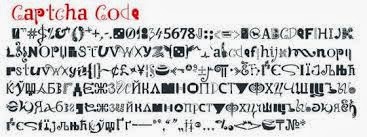 |
| Out with the old |
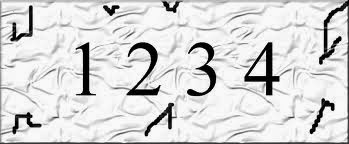 |
| In with the new and may it stay! |
Mike Weir, VE9KK, is a regular contributor to AmateurRadio.com and writes from New Brunswick, Canada. Contact him at [email protected].
Playing with the portable satellite gear on SO-50 and FO-29
Yesterday, the weather was good enough (just) that I felt like taking the gear out into the garden to try and use the satellites. I was particularly interested in FO-29, which is one of the SSB satellites.
Shortly before Christmas, a very kind benefactor gave me a diplexer and I was keen to give that a whirl, connecting up both the FT817, FT790 and using the both on the Elk antenna.
So, out into the garden we go, with the FT817 and Palm Paddle, for 2m transmit, the diplexer, the FT790 for 70cms receive, the Elk antenna and a Lead Acid battery! I got it all setup prior to the pass and started to have a listen around. Signals started coming through on 70cms, which was good. However, there was obviously a poor connection somewhere, as when I try to send a few dits on 2m, there were a lot of crunchy noises on 70cms. It sounded like a connector not done up properly, as I was able to make it go away – mostly.
By this time I’d missed much of the pass, but I did just manage to find myself on the satellite downlink. However, I did discover that it is not possible to hold and aim the antenna, tune the 70cms downlink and send dits all at the same time! Patrick, WD9EWK suggested that I could probably send dits and tune the TX with one hand which is probably the way to go.
For the next pass of FO-29 which was quite a low one (12 degree elevation) I decided that I wouldn’t lug everything back out into the garden (especially as it was starting to gently rain at this stage), so I just took the FT817, the battery and the Elk out.
Ages ago, Pete 2E0SQL had suggested to me that if I transmit on 145.945 up it would come out on around 435.862 at the start of the pass. So I decided to make it a half duplex pass and give that a go. Despite the rather weak signals from the low pass – and the fact that it was mostly behind the lime tree at the end of our garden, I was pleased to be called by F6CTW with whom I was able to make a scratchy QSO. We’ll do it better another time, I’m sure. It was good to make an FO-29 QSO again and I’m excited to try it again, be it full duplex, which will be much better of course, or a cheap and cheerful half duplex. If you hear me gently drifting down the transponder, that will be why.
Later in the afternoon, I thought I would get on SO-50. I particularly wanted to look out for Ken G0PPM who has been working on getting QRV and I wondered if he would be able to be on. I decided to use my trusty Baofeng UV-5R. In some respects the UVB-6 is nicer, but there’s something a bit strange about the squelch that I couldn’t quite set completely off. Must have a look at that.
The satellite seemed to take ages to ‘arrive’, but it did and as it was a nice overhead pass, signals were great. First station heard was Dave M0SAT – not far away, near Watford (we last worked on 70MHz). I signed with Dave and heard G0PPM’s call, so was delighted to be able to work Ken, who had a great sounding signal from his portable location. Ken is often on the road, so it will be fun to work him from various locations around the south and south-west of England and occasionally, South Wales. R1AO then put a call through and worked a couple of stations – I was delighted to be able to catch him for a new country on the satellite. With DG0BBE and an OE6 coming through, but not worked, I was pleased to be able to work Branko 9A3ST just before the pass was over.
A really exciting satellite day and a good bit of encouragement for me to get on a bit more often – when the weather allows!
Tim Kirby, G4VXE, is a regular contributor to AmateurRadio.com and writes from Oxfordshire, England. Contact him at [email protected].
Still no access to the new QRZ logbook
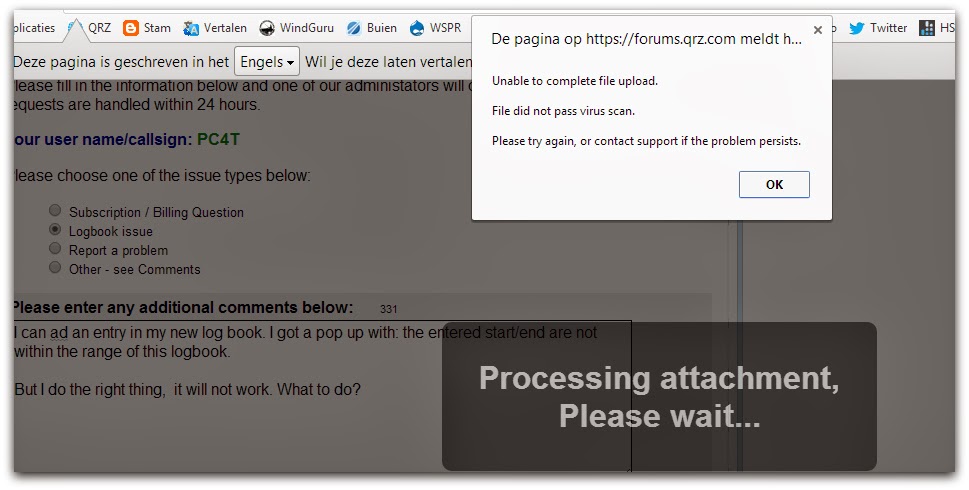
Still no access to the new logbook of QRZ.com and it was not possible to attach a jpeg picture. They wrote to me that they don't accept jpeg's. Huh? Jpeg the most used photo file in the world. I am back to my old system: my log book in Excel. Still works great.
Paul Stam, PC4T, is a regular contributor to AmateurRadio.com and writes from the Netherlands. Contact him at [email protected].
Who introduced you to ham radio?
 I was at a church meeting the other night and I happened to have my HT clipped to my belt, although it was somewhat hidden under my shirt. The bottom of it was showing when I sat down on the couch and a friend of mine asked me, “dude, is that a pager??” A pager. Right. I unclipped the Baofeng UV82-1 and showed it to him, and he asked if it was a ham radio, to which I said yes. Then he proceeds to ask the standard questions (he knew I was into ham radio because of my Facebook posts, so he didn’t guess this on his own)
That small conversation got me to thinking about the fact that most people have heard of ham radio, but they know little more than just the term. The main question I am asked when someone sees my HT is “hey, can that thing talk around the world?” Most people don’t understand the difference between HF/VHF/UHF or at least they aren’t aware that ham operators can use the higher frequencies.
Ham radio isn’t one of those hobbies that is chosen by people who wake up one Saturday morning and say,” hey, I think I want a radio license.” Most people are introduced to it by another ham operator. My exposure came from an older gentleman who has now gone Silent Key, whom I actually met over the CB Radio. (Yes, I worked CB when I was in high school and college) Had I known what ham radio was back then, I would have definitely studied for my license earlier than I did, but as it is now I got my first license at the age of 20.
So this older gentleman, whose name was Nelson, brought up the topic of Ham Radio one day, so I asked him what that was. After he explained it, we decided to study together and take our tests. I got my callsign of KC5HWB in July of 1994, and he got his just a couple of weeks later of KC5JMY. Back then the Denton Club was very active, which I believe it still is, and we worked those machines up in Denton and Lewisville areas. The main repeater I was on during that time was the N5GEJ repeater at the Texas Instruments plant in Lewisville on 145.170MHz.
So how did you hear about Ham Radio? Who do you have to thank for finding this cool hobby for you?
Jason Johnston, KC5HWB, is a regular contributor to AmateurRadio.com and writes from Texas, USA. Contact him at [email protected].
Miscellania
As I type this on my tablet, it is -2F (-19C) outside. The furnace is running its little heart out and I just can’t wait for the next utility bill. On second thought, instead of complaining, I’ll just be happy that it’s warm inside! Although I do get tempted every now and then to dream of what Amateur Radio goody that I could buy with the money that is literally going up in flames.
A little bird brought to my attention that congratulations are in order, as a milestone has been reached. Charles Moizeau, W2SH is celebrating his 80th birthday. Chas, as he is affectionately known, is a fellow New Jersey QRPer. He is very active and very successful in the QRP Fox Hunts. Charles is also quite active in NAQCC activities as well as being a regular check in in many QRP CW nets. Happy birthday, Charles, with wishes for many more!
Speaking of the Fox Hunts, last night was a success as I managed to work both Foxes. The surprise of the evening was working Dale WC7S in Wyoming on 80 Meters. Dale was at ESP levels for most of the night. I could tell where he was, but that was about it. Towards the end, the band started going long and Dale’s signal grew stronger. With less than 15 minutes to go, Dale actually approached 599 levels (I confess that I turned my AGC off, so that I could hear him better. I know ….. risky move!) and I was able to sneak into his log.
The QRP ARCI Fireside Sprint is this weekend. I might give it a go. I have never participated in it before, as it is an SSB sprint. But I do have a microphone for the KX3, and the weather outside is supposed to be less than stellar, so maybe I’ll try something different.
72 de Larry W2LJ
QRP – When you care to send the very least!
Larry Makoski, W2LJ, is a regular contributor to AmateurRadio.com and writes from New Jersey, USA. Contact him at [email protected].
A bug in the new logbook
There is a bug in the new QRZ.com logbook. I cannot add an entry in the log, so a pop up message appear that told me something is wrong. I sent QRZ.com an email and they will try to fix the problem.
Paul Stam, PC4T, is a regular contributor to AmateurRadio.com and writes from the Netherlands. Contact him at [email protected].
 Ham Radio Deluxe |
 W5SWL Electronics |
 Ham Radio Prep |
 KB3IFH QSL Cards  Hip Ham Shirts  HamRadioAuctions HamRadioAuctions Reliance Antennas Reliance Antennas Enigma Shop Enigma Shop |  morseDX  Ni4L Antennas  R&L Electronics R&L Electronics antennas.us antennas.us QRV QRV |
- Matt W1MST, Managing Editor
