 |
 Light weight power for QRP
 5 February 2014 | by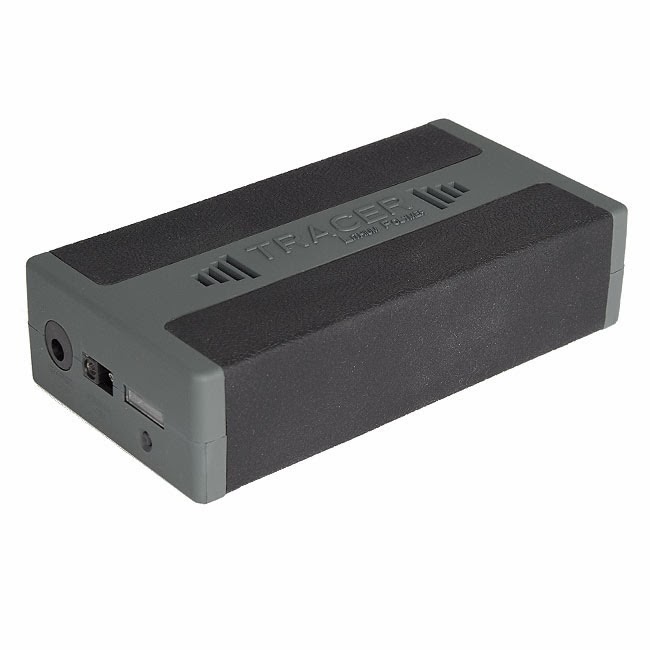
Some time ago I created a battery pack that used a 7.2Ah Sealed Lead Acid battery as its base. All is well with that power pack except its colossal weight. Weighing in at nearly 2.5Kg it’s a hell of a thing to but in your backpack. So I have invested in a Li-Po battery pack.
I have filmed a quick tour of the power pack ( link to the power pack is in the description of the clip) have a look. So far the pack has performed flawlessly and I cannot recommend it enough.
Dan Trudgian, MØTGN, is a regular contributor to AmateurRadio.com and writes from Wiltshire, England. He's a radio nut, IT guru, general good guy and an all round good egg. Contact him him here.
Second contest, getting the hang of it.

I was a bit more organised than the 50MHz contest last week. I got the computer running the Minos logging program. Just before 8pm I raised the antenna and double checked the VSWR and had a quick listen around on the band before the start and heard a few operators setting up. All looked good and then before I knew it we were off!
Due to my inexperience I operated in 'search and pounce' mode rather than calling CQ. I kept going outside and turning the antenna in a new direction and then spent several minutes searching up and down listening out for CQ calls.
I soon made a few contacts and fumbled along but my confidence increased as I got the hang of the exchange required.
I was jotting down the information and almost made the mistake of relying on the computer logging till I made an error and when attempting to correct it end up in a total mess due to my unfamilarity with the software. Thankfully I was able to sort out the log and carried on, but lost some time doing so.
Thankfully the rain held off but the wind was blowing quite strongly and the antenna was waving about a little so didn't have it at full height, not that full height was particularly high anyway and more often than not I suspect my antenna was pointing in the wrong direction!
At the end of the night I only managed 10 contacts, but was pleased none the less, scoring 930 points.
I have made a map of my QSOs and as expected they are limited by my surroundings
View UKAC 144MHz - 4 Feb 2014 in a larger map
Many years ago I experimented with a PMR eQSO gateway (detailed here) and when doing that I created a couple of terrain maps were created using GEOG. Geog is a suite of programs written by Andy Talbot (G4JNT), some of which make reference to a database of UK terrain heights, to provide useful information for radio amateurs (and others interested in point-point working) The software is still available on Andy's new site


Interestingly the contacts appear to follow the direction of the Trent valley, while the surrounding hills have a masking effect. The contacts to the west in the Peak District are probably due to their height!
Roll on next week for the 432Mhz contest.. another antenna I have to sort out properly.
Andrew Garratt, MØNRD, is a regular contributor to AmateurRadio.com and writes from East Midlands, England. Contact him at [email protected].
Spot the difference
We all know those “before” and “after” photos where you have to spot the differences, right? Well, here are two for you to dissect.
BEFORE

AFTER

No no no, the Chinese medicinal hair growth tonic didn’t really work: my amount of hair is still the same. But a trained ham’s eye had no problem in spotting the change on the desk, not?
When my TS-440S broke down – again – a couple of months ago I was pretty upset. I was just getting back into DXing on long- and medium wave and winter was coming, which means more fun on 160 meters. My semi-QRP TS-130V was just not up to the task, so I had a tough decision to make. After telling myself “carpe diem“, “you only live once” and “come on, ease your mid-life crisis a bit” for a week I finally sold some of my mutual funds and ordered a KX3 kit. Being a very responsible husband and father I had bad feelings about diverting some family funds for my own pleasure. But boys need toys and I just don’t feel right without a decent rig (or some wheels, a guitar and Dutch cheese for that matter).
Now you just can’t let Elecraft send over a transceiver to Taiwan, because the customs people just don’t allow that. Importing transmitting equipment is strictly regulated and quite a serious matter to the government of Taiwan. Importing papers have to be arranged and customs forms signed, money has to be paid and stamps stamped on a multitude of documents and receipts. So, the average Taiwanese ham doesn’t bother with it and neither did I. Elecraft sent the KX3 to a good friend in Colorado who repacked it and send it in two shipments to Taiwan. The replacements parts for my “weather station” arrived safely and a couple of days later I had my KX3 ready and was back on the air.
Happy happy happy, but then I started to feel the limitations: the KX3 can only put out 12 Watts and even less if you want to do digital modes. Elecraft has a 100 Watt amp in their product line and it looks very nice……only its price not so much. And I am not a QRPer. I need some powerrrrr to compensate for my lousy antenna system. Most ham equipment over here is imported from Japan and so I started to look for a decent (read “cheap”) QRO amp. I first tried the second-hand market, but I ended my search at Amazon.co.jp where the ICOM IC-7200 was being discounted 31% to only 72,800 Japanese Yen. That translates to 720 US dollars and is in my opinion the bargain of the century. You can hardly get a decent second-hand amp, let alone rig, for that amount. And why buy an amp if you can get a whole new radio for such a nice price? So I ordered one, my good friend JA1RZD tested it in his shack in Tokyo and an acquaintance then brought it with him on a visit to Taiwan.
Now I am the happy owner of two very modern rigs. It’s quite a culture shock compared to the old Kenwoods I have, but I am beginning to feel the advantages of having DSP, computer control, very narrow filters and independent pass bands control. And you know what? The remainder of my mutual funds did so well since I sold a portion that I already have “earned” back the IC-7200. All’s well that ends well.
Hans "Fong" van den Boogert, BX2ABT, is a regular contributor to AmateurRadio.com and writes from Taiwan. Contact him at [email protected].
First QSO with the Begali
was with Hiram who was operating W1AW/4 in Georgia. Actually, it was with John Laney K4BAI, who was using the ARRL Centennial W1AW/4 call in tonight’s 40 Meter QRP Foxhunt. Instead of sending “John” as his name, he was sending Hiram. It was fun to work “The Old Man”, kinda sorta.
The Begali is a sweet piece, and I still have to play with the adjustments some. But where I have it right now, it’s pretty silky smooth. It’s definitely heavy enough to stay put in one place without walking. Once I finally get it where I want it, it will be the primary key.
One thing that surprised me though. They supply a three conductor cable with two male stereo plugs. You have to lop one end off, strip and bare the wires, and solder them in place. Not that soldering is a big deal, but for some reason, I thought the key would come pre-cabled.
72 de Larry W2LJ
QRP – When you care to send the very least!
Larry Makoski, W2LJ, is a regular contributor to AmateurRadio.com and writes from New Jersey, USA. Contact him at [email protected].
The Huntington Museum of Radio and Technology
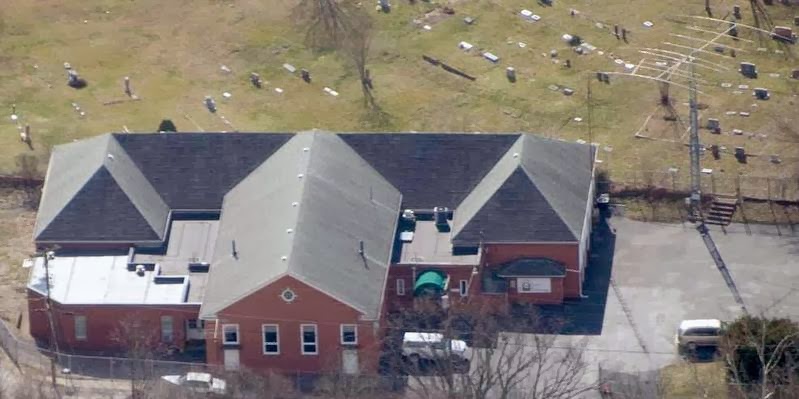
I’ve kept a link to the Museum of Radio and Technology on the right side of this blog since I began writing about ham radio. Its a fantastic organization and only about an hours drive from Charleston. There is no charge for admission but they have a voluntary donation box is located in the hallway. Official membership is an annual fee of $25 dollars.
This museum is one of the biggest (10,000 square feet) and best of it’s type in America. This is the site of the Radio and Technology WV8MRT club station and the club station for the Tri-State Amateur Radio Association . My gratitude goes to both these fine organizations which are allowing me to operate my QRP station from there.
The video at the top portion of the Museums opening page shows a workable “spark gap” transmitter and there are several pages of the web site devoted to hams who have lived in my home town of Charleston WV.
Al Hicks (W8AH) worked an amazing 362 countries on the 40 meter band. “A feat nobody else anywhere has ever matched”. Those QSL cards are on display at the Museum. His call sign is now used by the West Virginia DX Association .
A friend of mine, and also a silent key, Bernie Clark (W8PNR) built an amplifier which was so large that he enclosed in an an old refrigerator which is on display at the Museum. I never heard it on the air but I understand he was always 599 on every contact. One of our WV Chapter club members (W8GDP) and I always talked with Bernie on the Kanawha Amateur Radio Club repeater on our morning commute to work.
We will be transmitting on, on close to, all the standard QRP frequencies from 40 meters to 10 meters. I’m looking forward to this “special event” from the Museum of Radio and Technology. I’ll send an “electronic card” to those who request them.
This is primarily a NAQCC event but it’s open to everyone. The exchange will be Call, Name, State and either NAQCC number, or if not a club member, your power level.
If I hear you, I’ll work you.
72’s
John Smithson, Jr., N8ZYA, is a regular contributor to AmateurRadio.com and writes from West Virginia, USA. Contact him at [email protected].
Antenna up ready for UKAC 144MHz
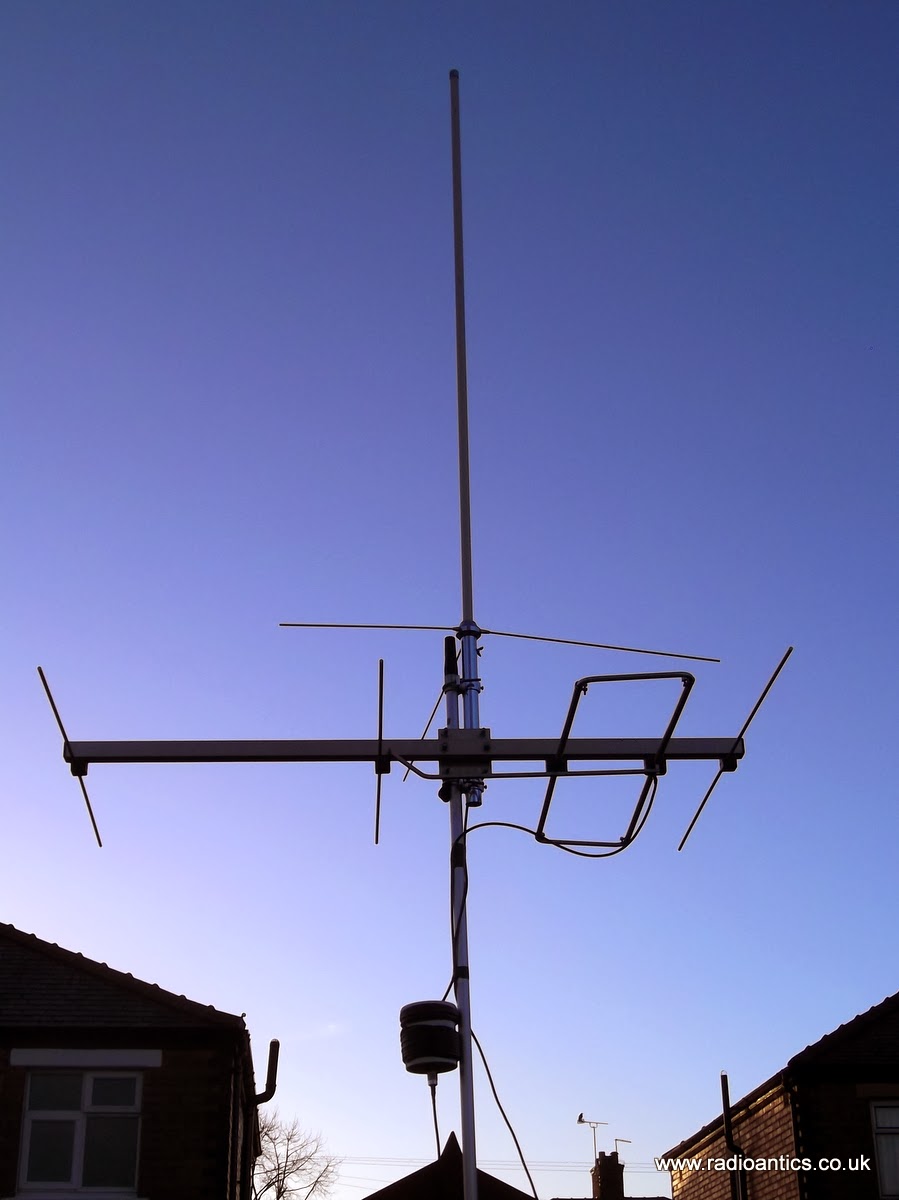 |
| The antenna this morning |
I should say my brother has took his foundation exam and has the callsign M6GTD, so am expecting him to ask for his antenna back at some stage! ;-)
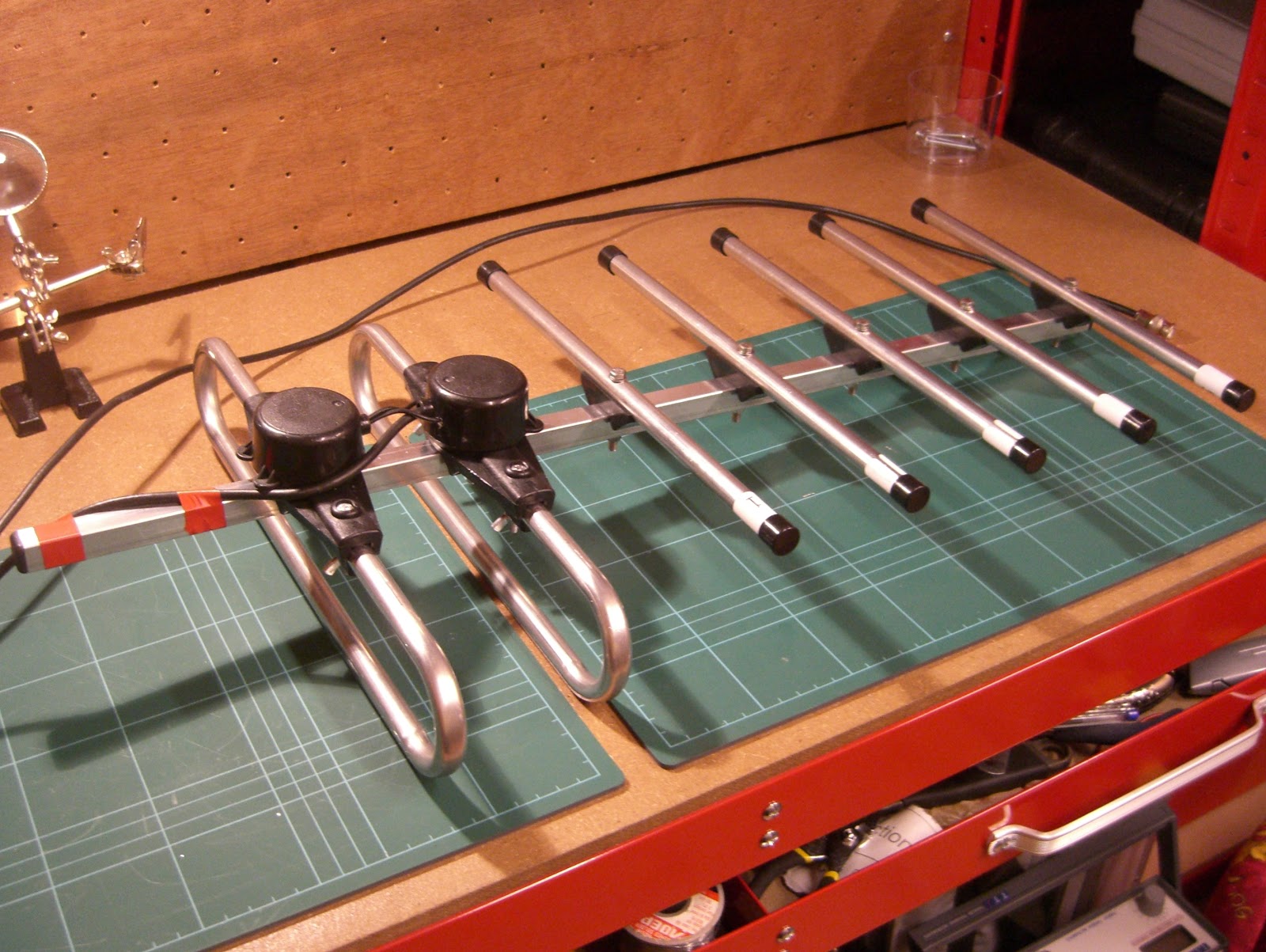
This evening is this months 144MHz UKAC contest and I spent yesterday evening getting the antenna set up properly so I could take part. Unfortunately the antenna was damaged just before Christmas and I have now replaced the boom insulators and straightened the bent director element.
It took a while to get the antenna VSWR down to a satisfactory level, not due to any fault but simply I had the adjustable sections of the active element loop too far out. They are now almost fully in, but at 144MHz the VSWR is a little over 1:1 and across the entire 144-146MHz the maximum is around 1.3:1 so I am hoping it preforms reasonably well, even with 10m of RG-58.
As suggested I have a 'ugly' rf-choke inline, which you can see on the photo. The antenna is clamped just under the vertical collinear, and hopefully this won't affect its performance.
I can put the pole up to around 5m, but the top section isn't that substantial and has a reasonable loading with the yagi and the collinear on it, but the pole it is securely guyed so for temporary use should be okay. Well that is what I thought till I saw the weather forecast

The wind speed and gusts look a little worrying, peaking at around 40mph between 21:00 - 00:00!
The only saving grace is that I will be manually rotating the antenna I will be out checking on it regularly during the contest!
Best of luck everyone taking part...
Andrew Garratt, MØNRD, is a regular contributor to AmateurRadio.com and writes from East Midlands, England. Contact him at [email protected].
Ultimate QRSS kits

I’m a great fan of Hans Summers (G0UPL) and his effort in launching kits for various slow speed modes. In fact I have all three generations of the Ultimate QRSS kits up and running. That includes the original single-band kit (30 m in my case, bottom in picture), as well as number 2 and 3, the multi-band kits.
The latest version, in the middle of the picture, has a nicer two line display, and it can also be fitted with a relay board. It makes it possible to jump between up to 6 different bands.
I have used them exclusively in the WSPR mode so far. For time synchronization with the first and last version I have used an EM-406 GPS module which also provides the required pulse-per-second output. My Ultimate 2 has a too early software revision to work with the GPS, so it is on my list for a firmware upgrade.
I have a lot more experimentation to do before I know these kits and their capabilities, but I have at least gotten some experience with how far 150 mW of WSPR can take you, and that was to Australia on 30 m in my case. This is really amazing.
I would recommend the latest kit to anyone who is interested in experimentation with digital modes and who wants to compare e.g. antennas or just observe how propagation varies. The price is reasonable also, starting at GBP £17.50.
The challenge for me has been to find suitable enclosures for the two last kits. I hope to be able to make something from plexiglass for the last one. But I am still looking for that great idea for how to do that.
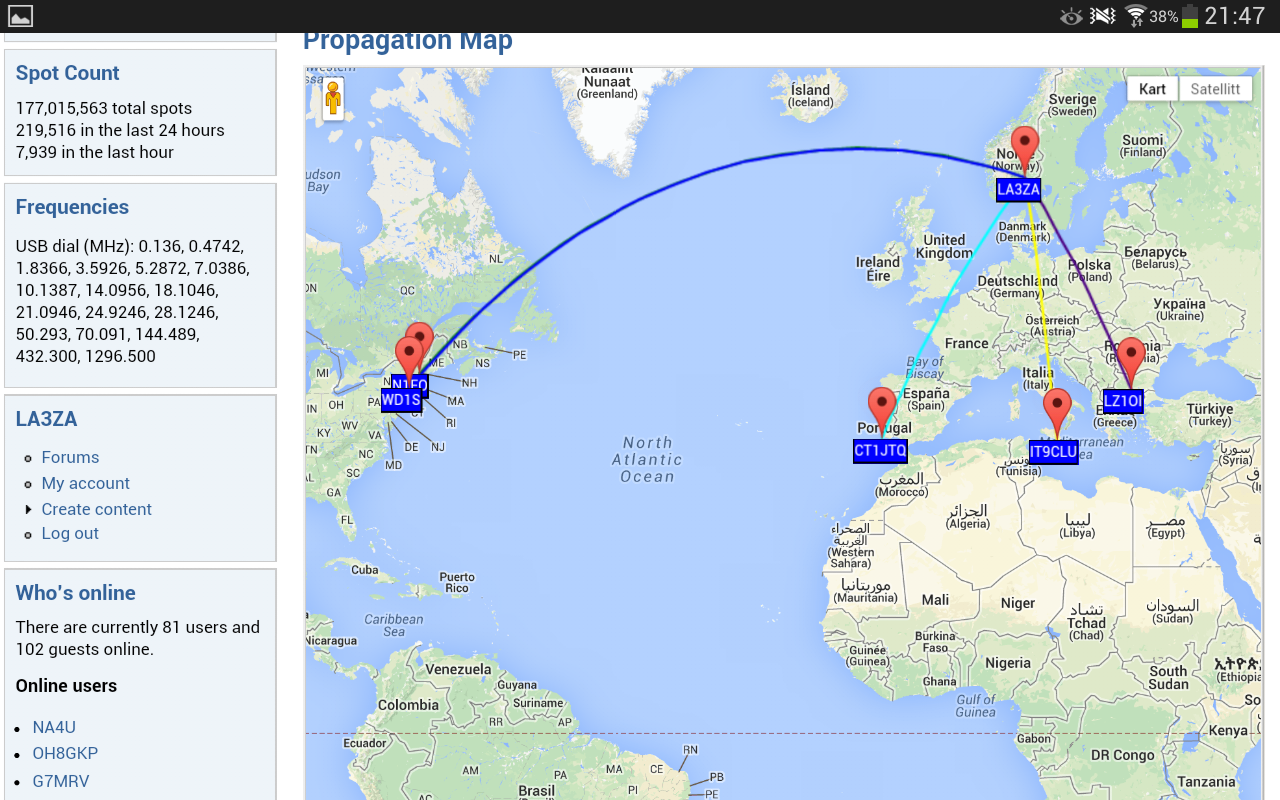
The last 24 hours on 10 m with a horizontal loop antenna, 80 m long, has caused my tiny signal to be decoded in the US several times as shown below.
See also “My first 24 hours on WSPR” and the G0UPL pages.
Sverre Holm, LA3ZA, is a regular contributor to AmateurRadio.com and writes from Norway. Contact him at [email protected].
 Ham Radio Deluxe |
 W5SWL Electronics |
 Ham Radio Prep |
 KB3IFH QSL Cards  Hip Ham Shirts  HamRadioAuctions HamRadioAuctions Reliance Antennas Reliance Antennas Enigma Shop Enigma Shop |  morseDX  Ni4L Antennas  R&L Electronics R&L Electronics antennas.us antennas.us QRV QRV |
- Matt W1MST, Managing Editor
