 |
 Call CQ
 21 May 2014 | by
 The other night I actually called CQ on 20 meters. In short order I had a nice pile-up of Europeans, then someone spotted me and the pile-up increased significantly. Everyone must be watching the cluster, thats why the bands are quiet. I think we should all make it a practice to call CQ with some regularity. Tune the bands to see how much DX you can pick up without the cluster. How long will it take you to work DXCC without the cluster, or how many countries can you work in month by calling CQ. If we all do a little of this, the lower end of 20m would came alive again.
Mike Crownover, AD5A, is a regular contributor to AmateurRadio.com and writes from Texas, USA. Contact him at [email protected].
That’s it
On 6 meter CW I worked EA6SA Josep from the Balearic Islands, we met every year here on 6 meter band.
Paul Stam, PC4T, is a regular contributor to AmateurRadio.com and writes from the Netherlands. Contact him at [email protected].
Dayton Hamvention 2014
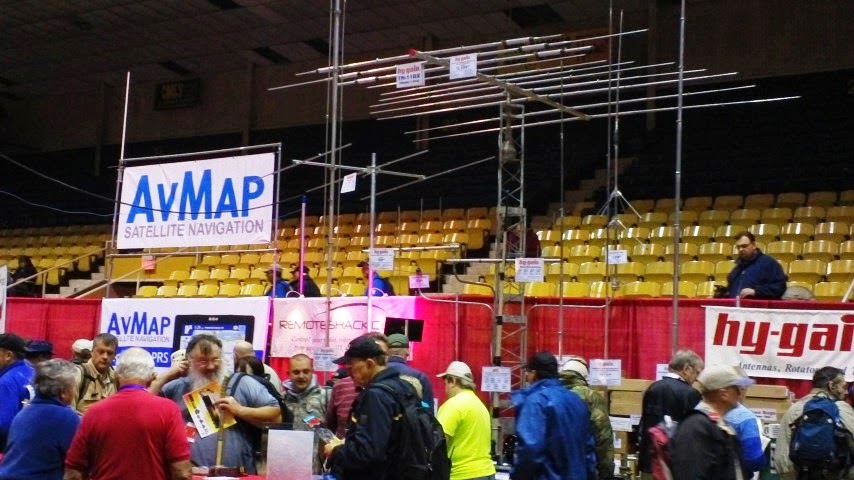
As difficult as it might seem, this year was my “first” trip to the Dayton Hamvention. No excuses….just sayin; but during my working life at the paint store, I seldom had a weekend “off”, and it’s a six hour (minimum) round tip from Charleston.
Our club member Eric (AC8LJ) needed to make the trip on Friday (up and back) due to work obligations, and asked me to ride along with him. It was a long day, but a very rewarding one.
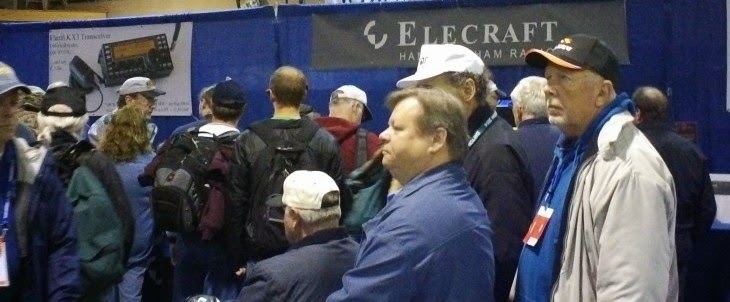
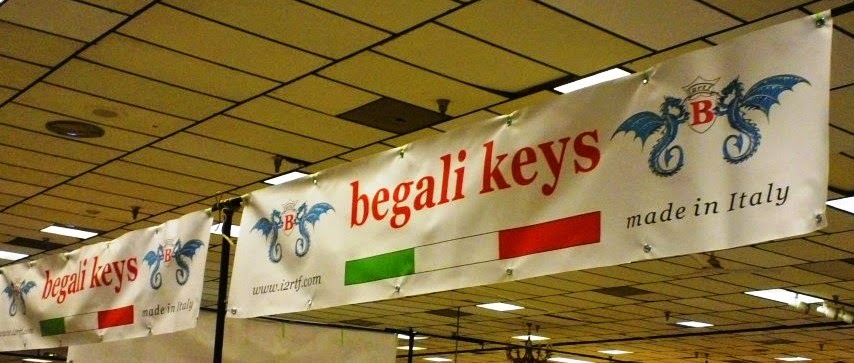
What caught my eyes while there? —Being a “Morse Code” buff, the popular attractions for me were, of course, QRP radios and “keys”. My mission at the event was to see “first hand” everything to do with this part of the hobby. Needless to say, the vendors I liked were Elecraft, TenTec, and Hendricks. On the “key” side, were Vibroplex, Begali, and Kent.
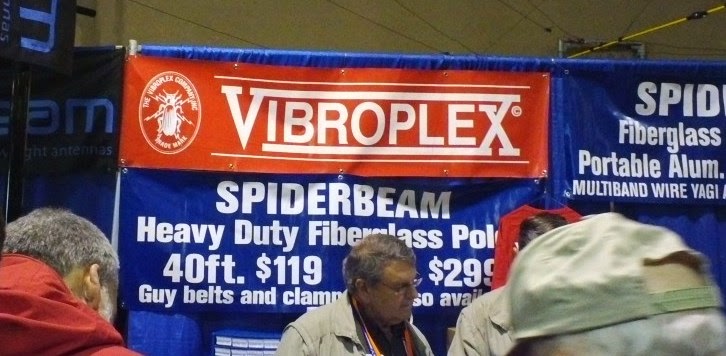
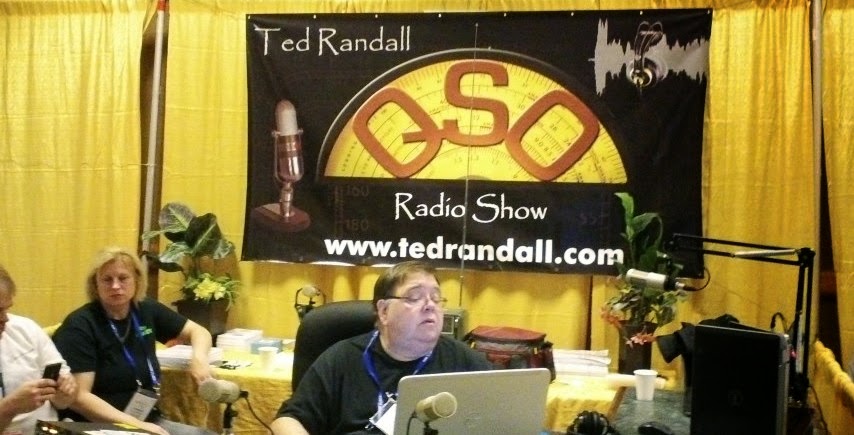
The ARRL was out in full force here with an assortment of information, testing, and forums. I particularly enjoyed talking to the “Boy Scout” group. West Virginia is home of the upcoming “World Jamboree“. Although I couldn’t work them, (after returning home) their “Special Event Station” was a popular attraction.
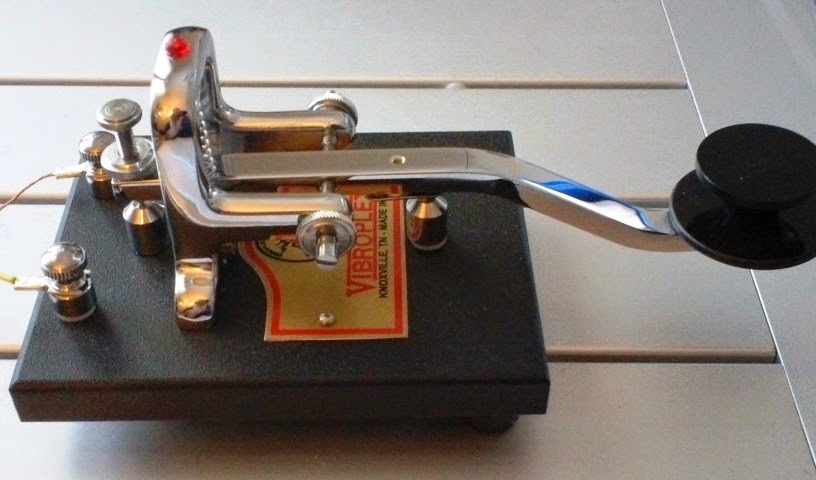
The Hamvention trip was a success for me. I saw what was interesting to me, although only a small segment of the hobby. A QRP CW operator can never have “too many keys”. My new Vibroplex Straight Key is my “fourth” from this company. One can never have too many keys……
John Smithson, Jr., N8ZYA, is a regular contributor to AmateurRadio.com and writes from West Virginia, USA. Contact him at [email protected].
Dayton!
After 30 years of amateur radio, I finally got to attend the Dayton Hamvention this year. It was quite an experience and I’m glad I made the long trip.

YL Sporting a Tower Hairdo
First off, I have to say that KE9V’s Dayton Survival Guide is spot on. I experienced most of what he wrote from hams expecting ADA parking spots without a reservation to repeater jerks to body odor in the crowded main arena. Anyone attending Dayton for the first time should memorize this article prior to going. The flea market was both impressive and a disappointment. It’s big, really big, but the quality of wares for sale was in two extreme categories: junk and expensive good stuff. Junk is junk and it’s what I was accustomed to seeing when going to local hamfests years ago. The expensive stuff was mainly very nice vintage gear and amplifiers, lots of amplifiers. There wasn’t much in between these two categories in my opinion. I was surprised there were very few HF rigs from the past five years for sale.

Assorted Crap

Smell My Junk

Merchandise or Canopy Anchor?
One Dayton ritual I avoided totally was using the outhouses. The bathrooms within Hara Arena were malodorous enough and the lines and foot traffic within them resembled a rare DX phone pileup.

Next Stop: 80 Meters
Inside the arena, of the major HF equipment companies, Kenwood had the most impressive booth, which was spacious and carpeted, though lacking anything new that I could see. Everyone crowded around the rig they can’t afford, the TS-990. Icom and Yaesu had nice booths as well, but not nearly as spacious. I eagerly went into the Yaesu booth searching for the rig that will replace the venerable but long in the tooth FT-817. But disappointingly they had the 817 on display along side the FT-857 and FT-897. The Elecraft booth was abuzz and continually crowded with a table of order takers on the side. Elecraft could load up vending machines dispensing K3s or just deploy drones to deliver them to peoples’ vehicles outside.

Walking in to the Main Arena
I was somewhat afraid to attend the Hamvention due to all the stories I heard about Hara Arena. Initially the condition of the place was a bit depressing, however after awhile you come to accept it as part of the Dayton experience. Every ceiling tile has water stains. The ballroom area is a wormhole back into the 70s. The bathrooms smell. The parking lot pavement is crumbling to dust. It’s Hara Arena. Get used it.

Hara
Let’s talk about the rental scooters. {Warning: Politically incorrect material} They were everywhere, and they were a big annoyance. Now, if you are really handicapped and need a scooter to get around, I’m fine with that. But I think many of the scooter users aren’t really handicapped. Arguably many of them are just overweight due to their own bad health choices and could benefit from the exercise and less trips to the concession area. Scooter jams were a frequent occurrence and everywhere you went you were either stuck behind one, had one at your heals, or had to yield to them so they could maneuver. Several scooter operators were like drunk drivers, especially out in the flea market area. If I never saw a scooter again, I would be a happy man.
The food was better than what I was expecting. Both days I ate pizza and actually enjoyed it, which is surprising as I’m a northeastern pizza snob. Out in the flea market there were vendors grilling beef, hot dogs, and chicken and across from the Hamvention there was a cool little barbeque stand run by a rather friendly dude. (Next time I’m getting a smoked salmon dinner from this stand.)

Yum Yum: Rib-N-It Bar-B-Q
The indoor exhibits were well worth the trip. The major equipment manufacturers and organizations were all there, with one notable exception being AES. I was told AES wasn’t there last year either. It’s really disappointing that such a major vendor doesn’t support this event, the largest hamfest in North America. This may make me reconsider using AES in the future and perhaps switch to HRO or DX Engineering.
I found the real crown jewel of Dayton to be the forums. I attended two forums, but I wanted to attend several more and plan to on the next pilgrimage to Dayton.

Standing Room Only in the AMSAT Forum
(To be continued….)

Anthony, K3NG, is a regular contributor to AmateurRadio.com.
HAB Talks
Last week I gave two talks and demonstrations at local radio societies on High Altitude Ballooning in the UK and how to track them.
The first was at South Kesteven ARS (SKARS) the club I am a member of. The second was at Spalding and District ARS (SDARS)
This was an updated version of the talk I gave last year at SKARS. Since then I have started work on my own tracker NERD-1. Sadly development has stalled and is still only at the prototype stage (NERDTEST) but I was able to use it to demonstrate reception and tracking using the UKHAS Habitat system spacenear.us/tracker
The SDARS venue had a projector and a decent WiFi Internet connection which allowed me to demonstrate how to set up DL-FLDIGI for a ground station and NERDTEST being received and both showing up on the map in real time.
My original PowerPoint presentation has been given a total makeover and I has included some videos of Felix Baumgartner, Dave Akerman’s Babbage Teddy Bear and wacky chef Heston Blumenthal's ‘Spud-in-space’ feature from his new television program.
To show a real tracker Steve Smith (G0TDJ) of Project Hab had been kind enough to loan me his VAYU-NTX unit.
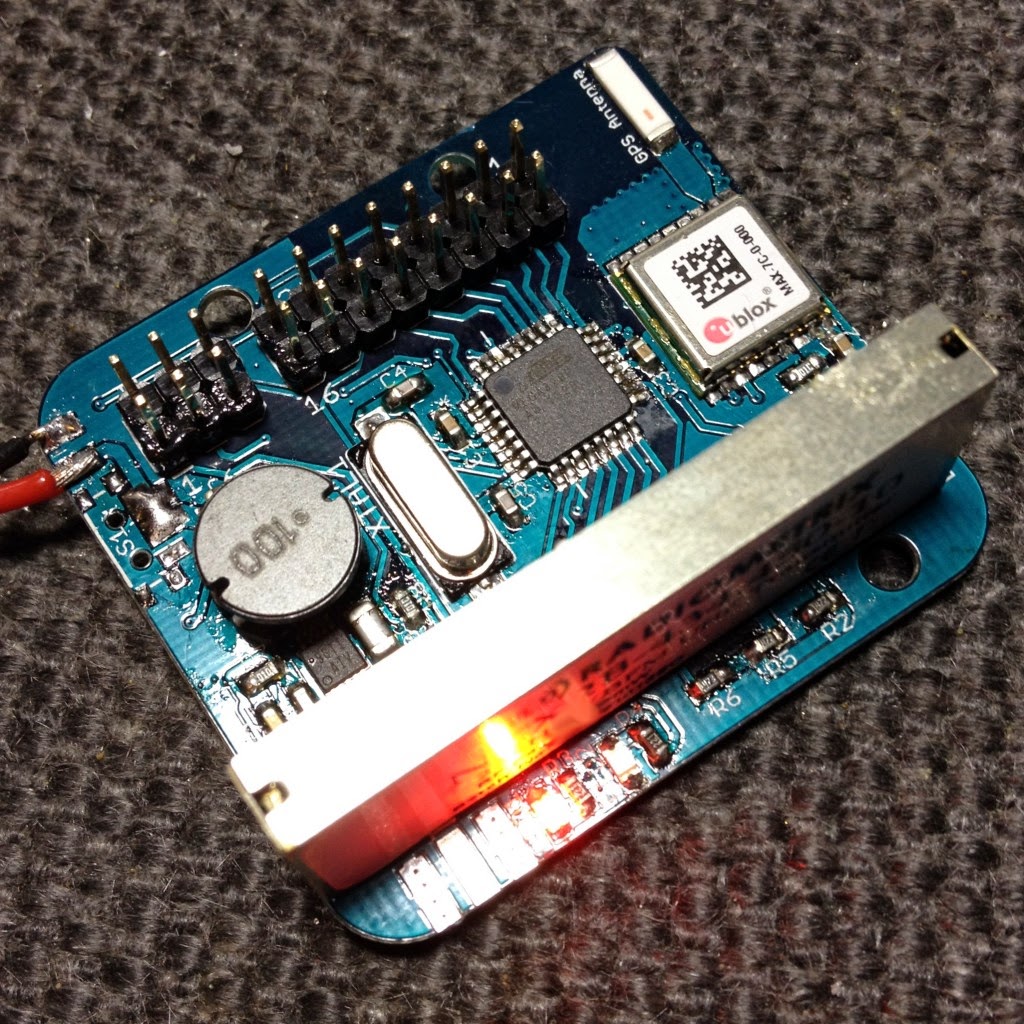
I am not the most confident of people when it comes to public interaction and it was encouraging to see people genuinely interested in what I was talking about and keen to have a look and I have had some very nice feedback.
Thanks @nerdsville for an excellent talk on High Altitude Balloons and telemetry, look forward to your launch. pic.twitter.com/H8AevMNQ13
— Spalding DARS (@SDARS) May 16, 2014
Excellent talk at Club tonight by @nerdsville on high altitude balloons and radio data. Andrew knows his subject and enthusiasm infectious.
— Jim Scott G0HGH (@photoimagery) May 16, 2014
Giving these talks has spurred me to pull my finger out and get on with actually flying something and finishing the payload!
Another mothballed project is my Ultimate3 beacon kit, still being only a Foundation licence means I cannot use it to transmit but that may be about to change as tomorrow I am sitting my Intermediate exam which will allow me to properly experiment with transmitters. The exam was arranged through SKARS by Chairman Nigel Booth and the date came through a little sooner than I was expecting so perhaps not quite as prepared as I really should be, but with a decent electronics background and some quick revision it should be fine....
My operating has been largely limited to the UKAC VHF contests, setting aside a few hours per week is manageable and my results are gradually improving, even getting some complements on my operating.
Two weeks ago I was able to attend the local Dambusters Hamfest at Thorpe Camp and managed to pick up a decent rotator, this has proved invaluable for the UKAC as I don’t have to keep going outside the shack to turn the antenna.
Now if I hear someone calling CQ and can monitor a QSO to get the locator and the bearing a quick turn of the dial and I have a better chance. The program I use is BD_2004 from W1GHZ, running in console window it is a simple case of setting up your own locator and then entering other locators the bearing and distance are given.
As well as the weeknight UKAC there have been a couple of weekend VHF contests, I managed a couple of hours this weekend on the RSGB 144MHz May Contest and I had the best DX ever and nearly every QSO was in a new locator square!

I wasn’t able to spend more time on the contest as we took the dogs on a sponsored dog walk on Sunday in aid of the local hospice and on Saturday I attended the British Astronomical Association, Radio Astronomy Group General Meeting at the National Space Centre.
The notion of amateur Radio Astronomy is something that has fascinated me, up to now the only dabbling I have done has been with meteor detection using reflections from the Graves space radar (blog entry). This year some of the talks dealt with using RTL-SDR and Arduino/Raspberry PI in low-cost observation. Also at the meeting was a number of demonstrations and stands from other projects we I was able to garner a great deal of useful information.
Being able to detect ‘Hydrogen-Line’ emissions to map the Galactic plane using a FUNCube or RTL-SDR dongle is astonishing, not to mention low cost VLF receivers to detect Sudden Ionospheric Disturbances SIDs and magnetometers to measure the effect of the solar wind on the earth’s magnetic field!
It is all on the to do list, but it was a great day with some really fascinating talks and some exciting plans by the group. It was a shame I had to leave earlier than I wanted as I did miss some of the later presentations.
Anyway best get an early night!
Andrew Garratt, MØNRD, is a regular contributor to AmateurRadio.com and writes from East Midlands, England. Contact him at [email protected].
Nice, watery CW signals from Alaska
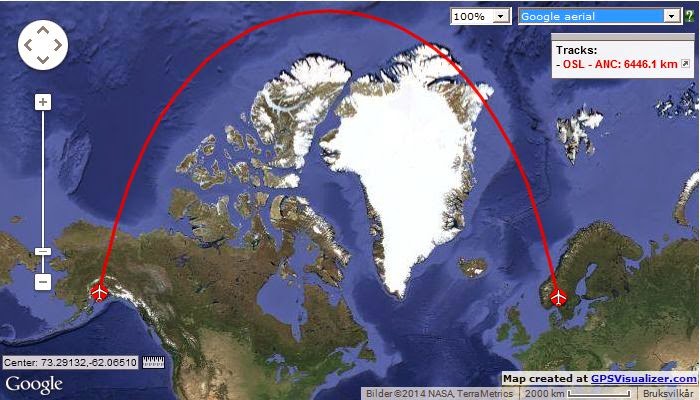 |
| Great circle path between Anchorage and Oslo |
Here’s what a transpolar signal sounds like (click here to listen) and looks like (below). This one has traveled from Anchorage, Alaska to Oslo, Norway.
The characteristic sound of a CW signal that has passed over a moderate geomagnetic disturbance (Kp = 2) isn’t too hard to recognize with a little practice. There is also some static on this short recording as we had a local thunderstorm coming in with the first summer days here.
The great circle distance between the two cities (actually their two airports) is 6446 km as illustrated by GPSVisualizer. Anchorage and Oslo are about at the same latitude, 61° N and 60° N, respectively. As they are at longitudes 149° W and 10° E, there is a difference of 159 ° – almost 180 ° – and this means that the signal almost passes directly over the North Pole, although a bit hard to see on the projection used in the map.
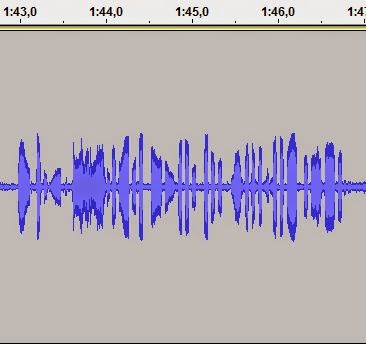 |
| “TU KL7SB UP“, 1550 UTC, 19 May 2014, 18 MHz |
There is rapid fading, or flutter, as seen e.g. from the large level difference between the two initial dots in “U”. Also the dah-dih-dah pattern of the “K” has more or less merged into each other in the image, but not in the audio, as this is caused by a static crash.
It was recorded just after my contact with KL7SB on 18 MHz today from my Elecraft K3 using Audacity® which is a free, open source, cross-platform software for recording and editing sounds.
Sverre Holm, LA3ZA, is a regular contributor to AmateurRadio.com and writes from Norway. Contact him at [email protected].
Happy Birthday, ARRL!
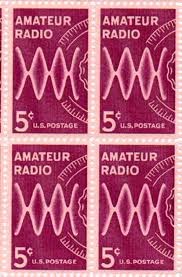
Happy 100th Birthday, ARRL! You don’t look a day over 50!
.jpg)
I wonder if there will be another special stamp issued this year?
72 de Larry W2LJ – Lifemember
QRP – When you care to send the very least!
Larry Makoski, W2LJ, is a regular contributor to AmateurRadio.com and writes from New Jersey, USA. Contact him at [email protected].
 Ham Radio Deluxe |
 W5SWL Electronics |
 Ham Radio Prep |
 KB3IFH QSL Cards  Hip Ham Shirts  HamRadioAuctions HamRadioAuctions Reliance Antennas Reliance Antennas Enigma Shop Enigma Shop |  morseDX  Ni4L Antennas  R&L Electronics R&L Electronics antennas.us antennas.us QRV QRV |
- Matt W1MST, Managing Editor
