 |
 Cuban Five Letter Stations
 25 May 2014 | by
Are there new changes in ham radio from Cuba now? I was under the impression their operators were limited to 10 watts of power and a simple wire antenna. To my surprise when I worked CO8RRM on 40 meters a few evenings ago, he said his power was 50 watts. He sounded great all along the east coast with his vertical dipole antenna.
Perhaps the extra letter in the call-sign is a designation for higher power and extra privileges? This is my first contact with a Cuban station with five letters……
License requirements in Cuba today resemble the challenges of early ham radio in the United States. My congratulations to Rafael from Baracoa, GITMO for his accomplishment and the great signal into West Virginia. Keep up the great work and I’ll be listening for more of those five letter call-signs.
John Smithson, Jr., N8ZYA, is a regular contributor to AmateurRadio.com and writes from West Virginia, USA. Contact him at [email protected].
K0NR June VHF Contest 2013
My award certificate for the 2013 ARRL June VHF Contest arrived in the mail this past week. The new VHF contest certificates look great, don’t you think? Nice job, ARRL! Similar to other years, I operated from the family cabin at 9600 feet elevation in DM78 near Trout Creek Pass with temporary antennas (see my previous blog posting.) I knew that I scored OK in the contest but I’ve had higher scores in the past. The June VHF results article is a good summary of the national activity.
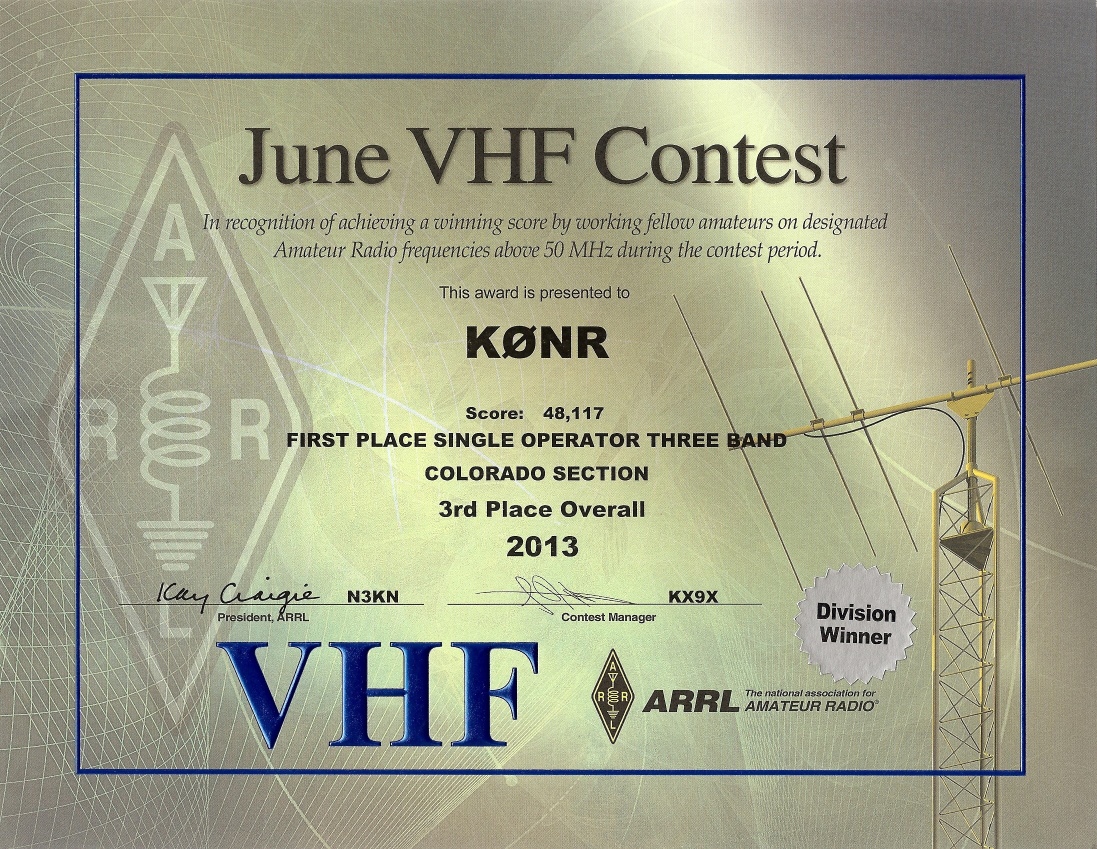
This was the first year for the Single Operator Three Band category, defined as operating on 50 MHz (100W limit), 144 MHz (100W limit) and 432 MHz (50W limit). I found this category to be very attractive because my interests are focused on VHF and not the higher bands. Often, I’ll just run 6m and 2m during VHF contests but with the three-band category it was not a big stretch to add in 70cm. The scoring system for the normal single operator categories provides a large incentive to operate on 1.2 GHz and higher, which makes it more difficult for a “VHF only” station to win in those categories. Some guys like the challenge of operating more bands and pushing the limits of going higher in frequency. I totally get that, so more power to them…it is just not that interesting to me.
It was not a big surprise that I took first place in Colorado and the Rocky Mountain Division because there were only a handful of entries in my category. I was pleased to place third in the overall contest. I expect that competition in this category will get more intense as other single-op stations realize they can win in this category. But limited to three bands and 100W, this competition will be more about propagation and operator skill, and less about deploying lots of gear.
The 2014 June VHF Contest is just around the corner (June 14-15), so time to get the station ready!
73, Bob K0NR
Bob Witte, KØNR, is a regular contributor to AmateurRadio.com and writes from Colorado, USA. Contact him at [email protected].
If the shirt I’m wearing had buttons, they’d all have popped!
My two kids, Joey and Cara had a half day at school today. A friend’s sister drove them home, so early this afternoon I started a text conversation with Joey:
Me: Home?
Joey: Now we r.
Me: Good! You got a ride.
Joey: Yes!
Me: I guess Cara’s happy.
Joey: Yes she is. Guess what place I got in science fair.
Me: 1st
At this point, I wasn’t getting an answer, so I texted again:
Me: ???
The reason I wasn’t getting an answer is that Joey was sending me this photo:

If this golf shirt that I’m wearing had buttons on it, they’d all have popped by now. I am so proud of Joey and Cara, they are both great kids. God has truly blessed me.
72 de Larry W2LJ
QRP – When you care to send the very least!
Larry Makoski, W2LJ, is a regular contributor to AmateurRadio.com and writes from New Jersey, USA. Contact him at [email protected].
HamRadioNow: ARISS to the MAX (a four part series)
ARISS to the MAX… a four part series
Have you ever participated in an ARISS contact? While they are common today (more than 30 so far this year, sometimes several in a single day), for any single school, club or ham, they are pretty rare. A Once-In-A-Lifetime experience is the phrase that keeps coming up.
I’ve been lucky enough to have been part of four of those once-in-a-lifetime experiences. So when the latest came up and I decided to do a HamRadioNow program about it, I wanted to do more than the typical video of the contact (plus maybe a quick interview and news story). I’m not deeply involved in ARISS, but I’ve learned a few things that don’t get discussed much. I wanted to get that story out, told by the people who lived it. My “Senior Executive Producer” Cliff Broughton W4FT and I drove down to Dixon Elementary School on April 21 to shoot the contact (giving it the full HamRadioNow three-camera video and top-notch audio treatment), and we grabbed a few quick interviews along with the rest of the media. That’s all in Part One.
And then we went back a week later to have a “panel discussion” with Betty Bigney, the STEM teacher who pulled it all together; Joey and Aubrey, two of Betty’s students who got to ask the questions; Frank Divinie W4UOR, President of the Onslow Amateur Radio Club and leader of the team of hams who made the contact happen; and Suzie Ulbrich and Janice Hopkins KJ4JPE, both Public Information Officers (Suzie for the Onslow County School System, and Janice for the ARRL NC Section covering coastal North Carolina). We got into this thing a lot deeper than you’ll hear in just about any video or news story about an ARISS contact. That’s Part Two and Three.
In Part Four, I dusted off some video from my vault that’s over 20 years old, and has never seen the light of YouTube. Before there was a Space Station (and ARISS), there was SAREX, the Shuttle Amateur Radio EXperiment that flew on many of the Space Shuttle flights. Like ARISS, there were some random contacts between astronauts on the Shuttle and hams on Earth, but the project was mostly for scheduled contacts with schools. The first was in late 1990, and they remained rare for several years. The one I was part of (as PIO for the Raleigh Amateur Radio Society) in 1992 may have been just the fifth SAREX contact ever (the list I saw on the ARRL web site doesn’t claim to be complete). I was a video editor for a small production company, so I assembled a volunteer crew to shoot the event (on VHS and Hi-8 video), and edited two videos using what’s now considered stone-age tools at my company. The first video is our “dry run” rehearsal, and the second covers the actual contact. That is, it covers the failed contact on day one, and the successful contact on day two.
So what did I learn?
For NASA, ARISS is very much a PR event. It’s not only a PR event – they do want to encourage STEM education and give schools and students a hand-on experience that will spur interest in space science. But they also want to get the word out. NASA doesn’t get a lot of publicity outside of disasters, scandals and funding issues. And while ARISS won’t bring them national headlines, it usually generates some great local publicity on TV, in the papers, and now online. There is a lot of competition for an ARISS contact, and a successful application hinges on being able to involve a lot more than one class of students. A whole school, and preferably a whole school system, needs to be engaged. And the school and the hams are encouraged to seek as much media attention as they can get.
So it’s a show, and NASA wants the show to go off well. Local hams are always involved, but ARISS provides mentors and sometimes equipment, so the local hams don’t have to reinvent the process every time. There are a lot of practice runs, for the hams and the students, including some full “dress rehearsals” with a ham simulating the astronaut as the students ask their questions over the air. You’ll see a little of that in Part One, and you’ll see the full (one and only) rehearsal from our 1992 event in Part Four.
Most ARISS events today involve about 10 to 20 students. They are usually selected by submitting the questions they’d like to ask, and perhaps by other criterion that’s not really specified (a reward for good scholarship?). Back in 1992, we didn’t have a good handle on the overhead pass time (in my voice-over, I speculated that the contact would last maybe 4 minutes – they are usually more like 10 minutes). So we selected only four students, and only one of those was chosen by a teacher. One was a ham already, and two were the children of hams in the club. Back then, SAREX was more ham-driven. The hams applied for the contact, and found a school to ride along. In Onslow County, teacher Betty Bigney applied (and was turned down twice before she was finally accepted… involvement and publicity were the key) and then she went hunting the local hams.
In 1992, we didn’t have a clue what the contact would be like. Each student was armed with two or three questions. When they used them up, they (and their parents) had to ad-lib. If you watch many ARISS contact videos, you’ll see some unique and unusual questions, but you’ll see many are variations of the same theme (medical emergencies and hygiene see to be popular topics).
In Part Two, I asked Aubrey and Joey what they studied in preparation for the contact. “We practiced the questions” was their ready answer. Betty Bigney supplied some more detail – they learned about the space station, orbits, etc. But “we practiced the questions” was a big deal. NASA wants the show to go well!
And it goes maybe a little too well. These days, the contact itself is very regimented. Students line up, and walk (or run) up to the mic to ask their quick question. As the astronaut is giving his quick answer, the next student is rushing up to the mic. The orbit dictates that there’s no time for a leisurely conversation, and involving a lot of students means no follow-up question or any real dialog. In fact, the astronaut has the list of questions in advance, so he or she can come up with quick replies.
All the students remember their question (it’s been drilled), but none of the students I asked had a clear memory of the answer they received. In this case, much of the reason was because Koichi’s voice was piped to the audience over the PA system, and the students on stage couldn’t hear him very well. Now I’m not saying that the students are just props in this play, but with all the attention to the performance, a little of that can creep in. Future ARISS contact participants might want to keep an eye on that.
I know that the discussion programs are a lot to digest. I’m pretty sure most of you will enjoy the contact (Part One), and the old SAREX contact (Part Four). I’d really like you to hear the kids at the top of Part Two. We hams don’t get to hear much about how we’re perceived by “the public,” especially the young public. You’ll hear some of that in this show.
73, Gary KN4AQ
Gary Pearce, KN4AQ, is the host of HamRadioNow.tv. If you enjoy this and other HamRadioNow programs, help keep them 'on the air' with a contribution. Contact him at [email protected].
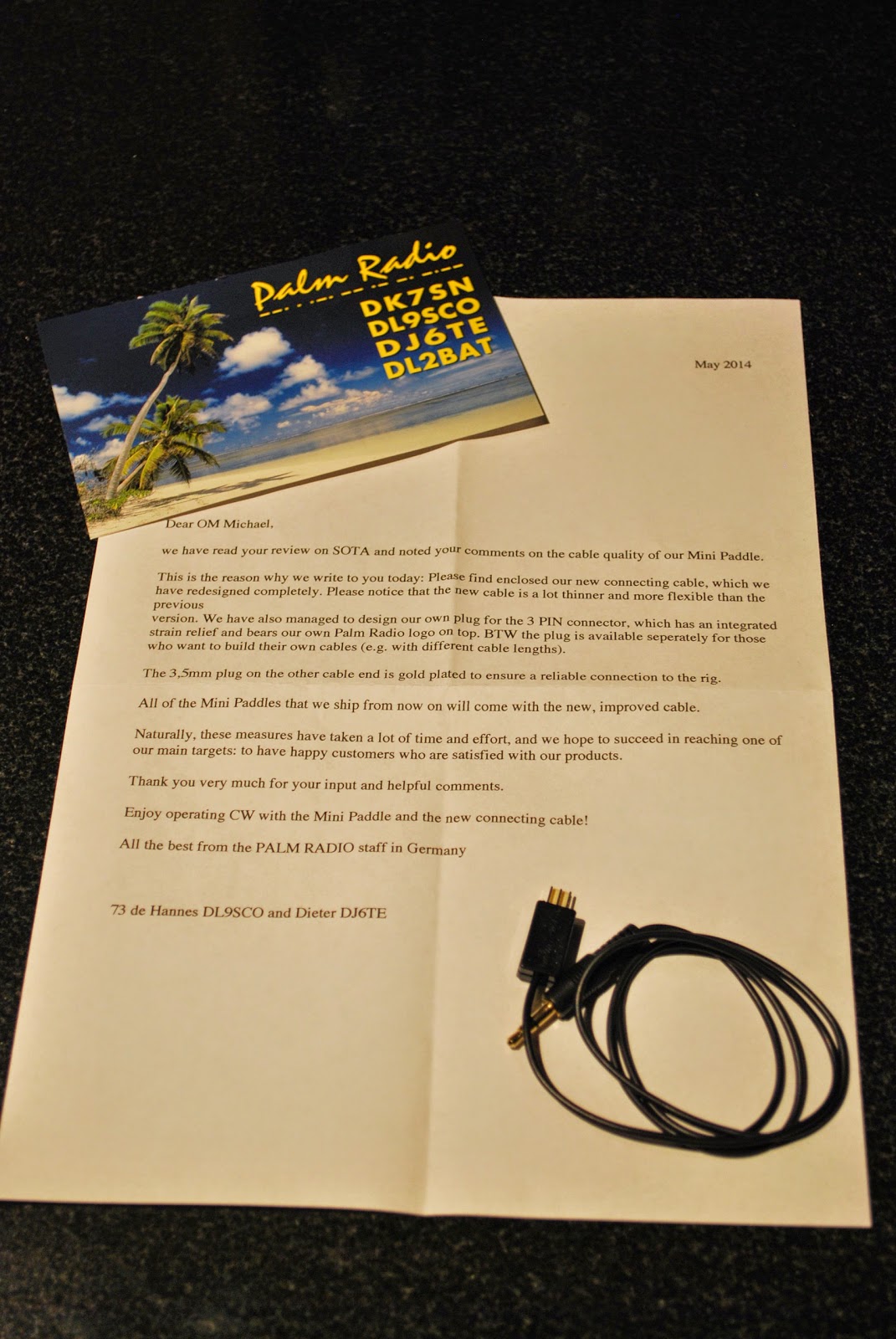
Hat’s off to Palm Radio!
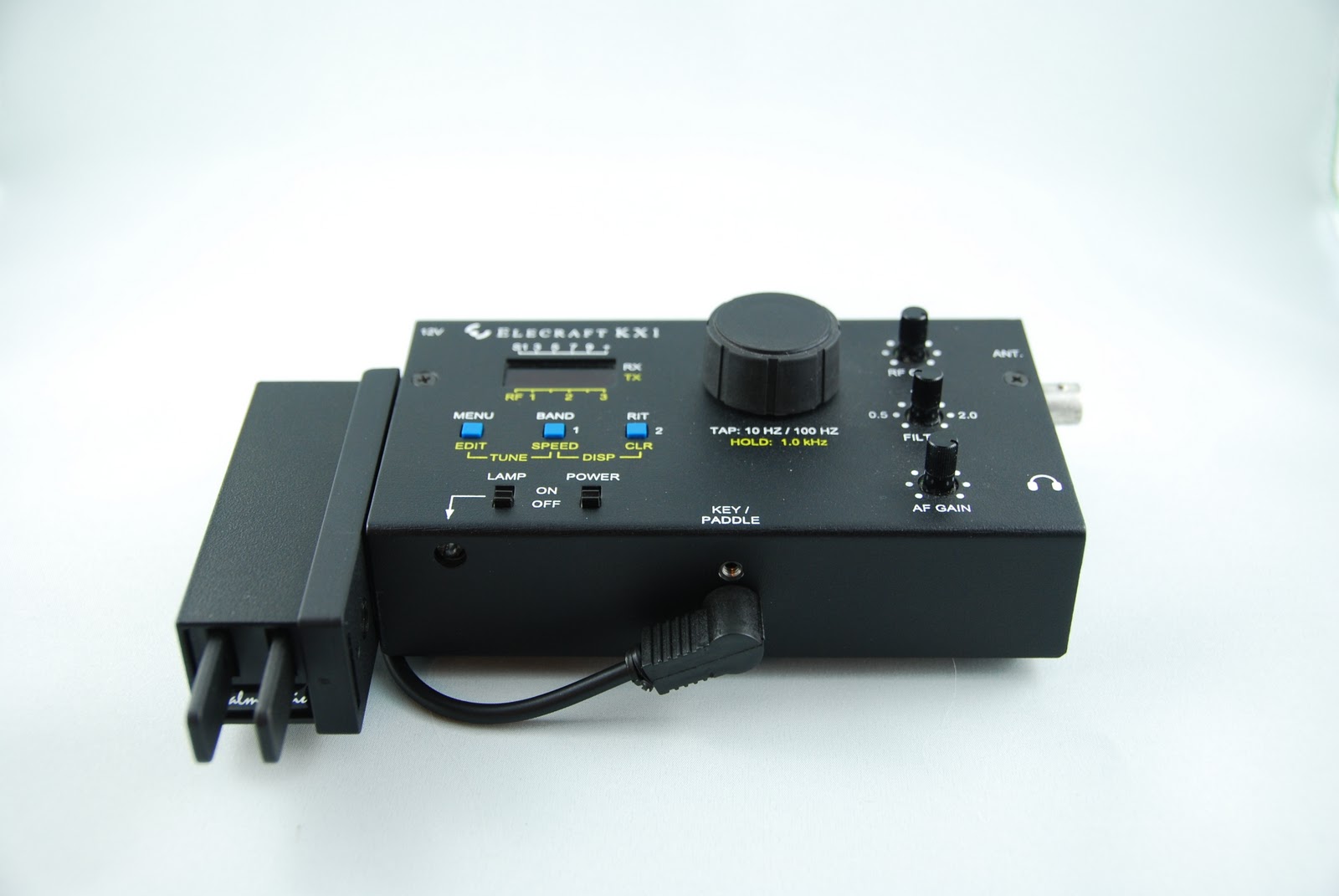 |
| Old cable on KX1 |
2. The new cable is more flexible.
3. The 3 pin connector ( the area of concern for me) now has an integrated strain relief.
4. The strain relief 3 pin plug is available on it's own so you can use your own cable to suit length.
5. A 3.5mm gold plated plug is added for a more reliable connection.
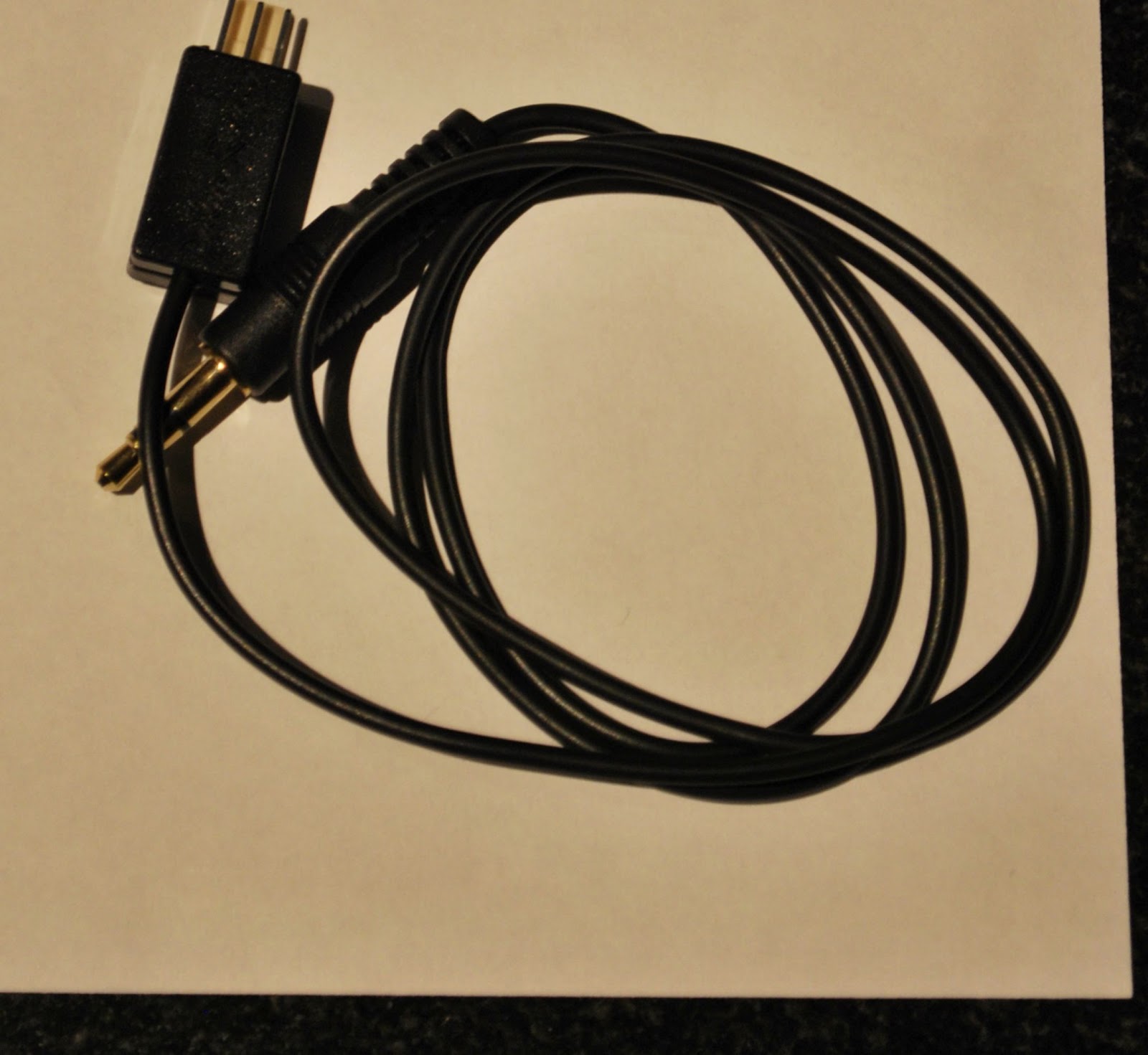 |
| The new cable |
Mike Weir, VE9KK, is a regular contributor to AmateurRadio.com and writes from New Brunswick, Canada. Contact him at [email protected].
Refurbed computers
In a recent post, I had mentioned how I had purchased two refurbished Windows 7 computers from the Blair Group via eBay. One was to replace the family computer that died, and the second was to replace my shack laptop that has seen better days and is in the throes of dying.
I just wanted to mention that so far, I am pretty well pleased with both machines. I spent $139 for each, which is a bargain when you take a look at the price of brand new computers today. But when you’re saving up for a new radio accessory (PX3), you have to save pennies when and where you can.
Each computer is a basic box with Windows 7 installed. You might consider them a bit behind the current OS curve, but for me, this was a step up from XP and Vista. These are very basic computers, with no fancy software bundles, and I like that. A lot.
I don’t need a fancy or overloaded desktop as everyone in the house does basic Web surfing and e-mail reading through tablets now, anyway. The family computer is now basically a homework and formal document machine and you all know what the shack computer is, more or less. If I get 4 or 5 years from each of these, I will be happy.
So if you’re in the market for an inexpensive, yet decent machine, check the Blair Group on eBay. They do a good job.
72 de Larry W2LJ
QRP – When you care to send the very least!
Larry Makoski, W2LJ, is a regular contributor to AmateurRadio.com and writes from New Jersey, USA. Contact him at [email protected].
Amateur Radio Newsline Report 1919 May 23 2014
- Dayton 2014 now history but everyone is talking positive about this years event
- Flagstaff, AZ says no to Coconino County cellphone law that bans mobile ham radio
- FCC Chairman Thomas Wheeler believes the agency could use more engineers
- Another new ROS based digital mode announced
- Fox News has some very nice words about amateur radio
 Ham Radio Deluxe |
 W5SWL Electronics |
 Ham Radio Prep |
 KB3IFH QSL Cards  Hip Ham Shirts  HamRadioAuctions HamRadioAuctions Reliance Antennas Reliance Antennas Enigma Shop Enigma Shop |  morseDX  Ni4L Antennas  R&L Electronics R&L Electronics antennas.us antennas.us QRV QRV |
- Matt W1MST, Managing Editor
