 |
 W3HC 100
 28 April 2024 | by
 My grandfather, W3HC (ex-W3HCW), is 100 years old.

Grandson Kevin, Mac W3HC, great-granddaughter Eliza, grandson K3NG.
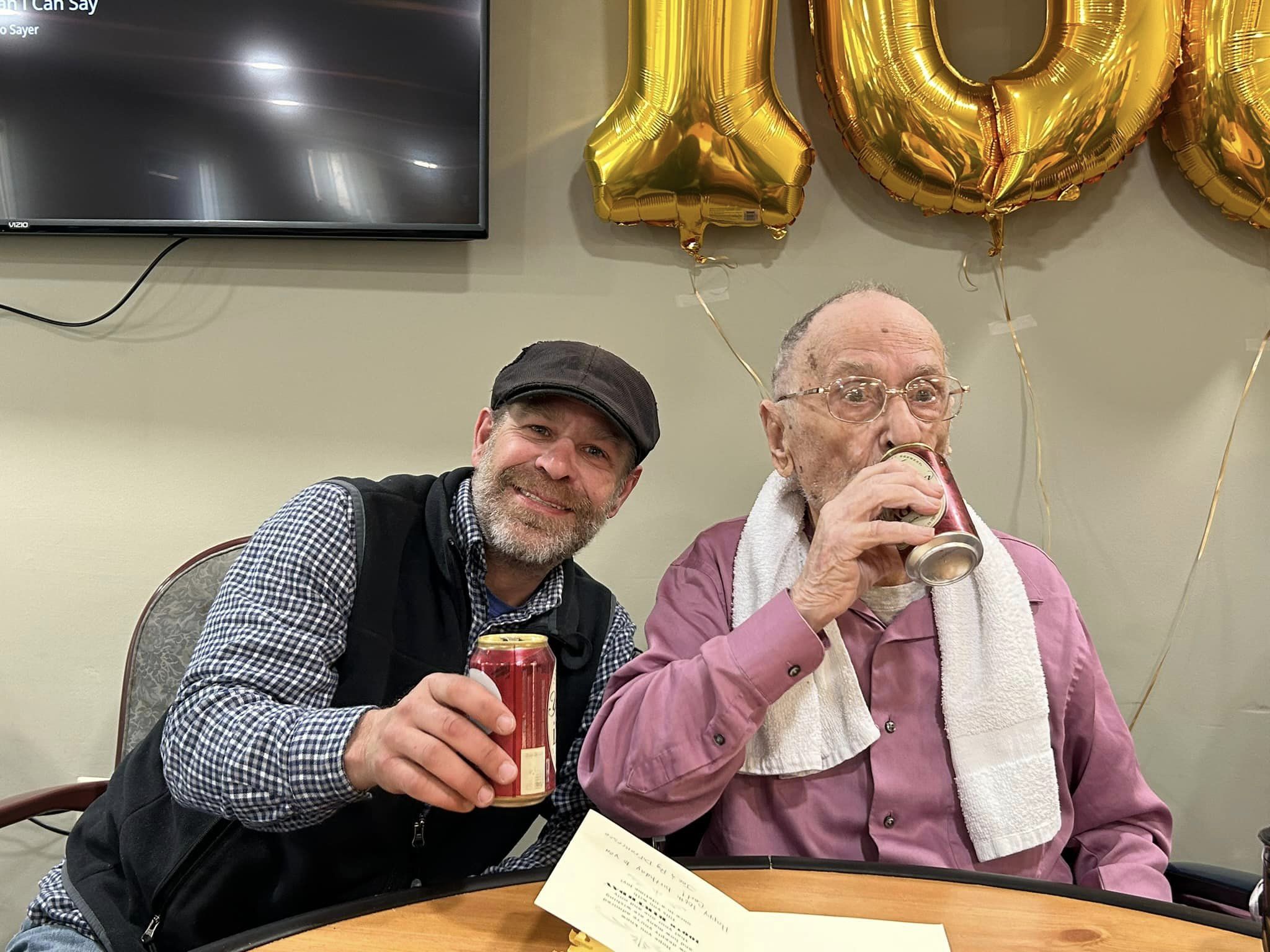
Grandson Kevin and W3HC having some 807s.

Mac (then W3HCW) in his shack in Williamsport, PA, USA sometime around 1956-57.
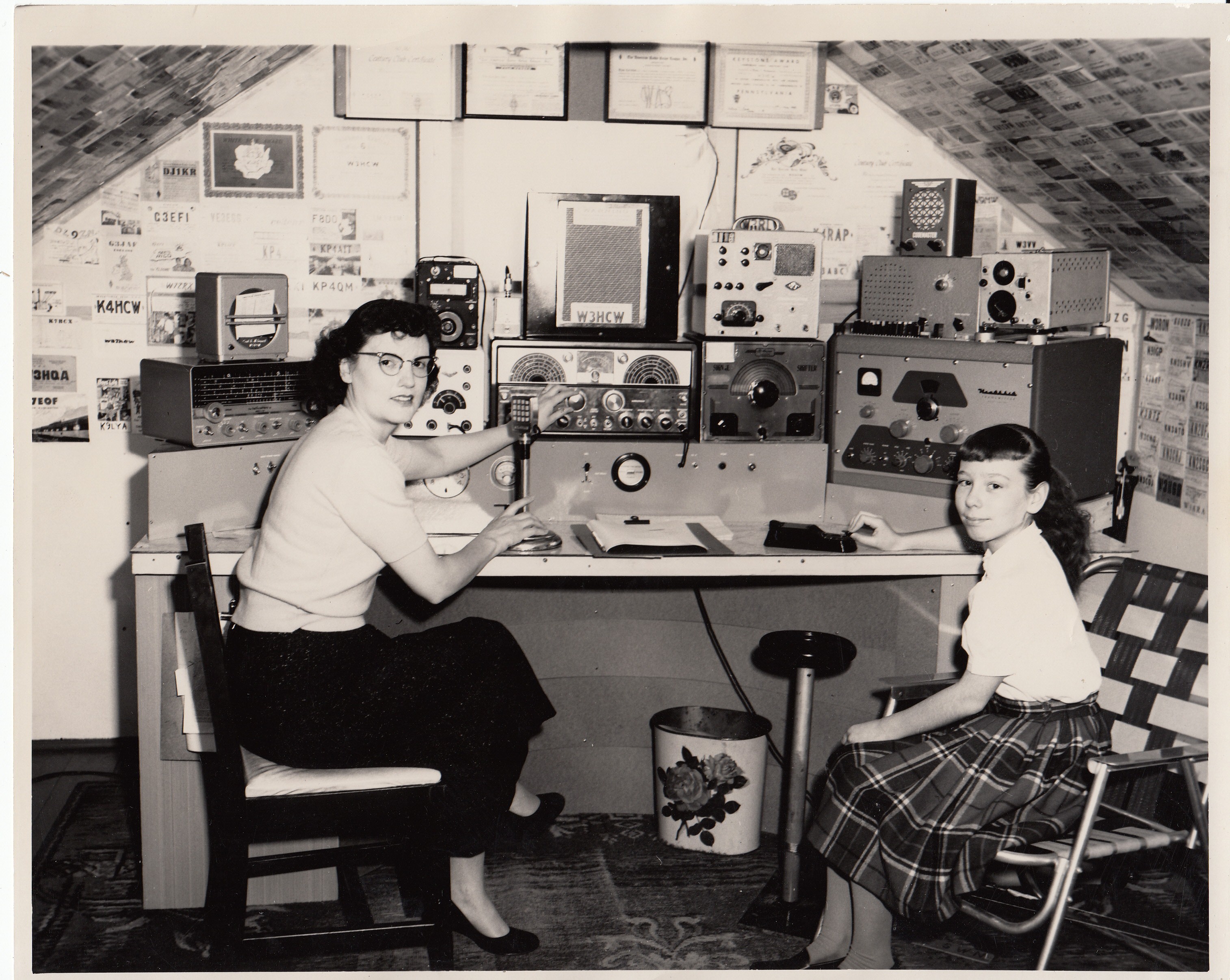
My grandmother, Gladys, K3JJN (SK), and my mother, Sherry, who passed away in 2000. Photo from around 1959 or 1960.

Mac in Whales, WWII, 1945.
Anthony, K3NG, is a regular contributor to AmateurRadio.com.
Ham College 112
Ham College episode 112 is now available for download.
Extra Class Exam Questions – Part 50
E9H Receiving Antennas: radio direction finding antennas, Beverage antennas, specialized receiving antennas, long-wire receiving antennas.
George Thomas, W5JDX, is co-host of AmateurLogic.TV, an original amateur radio video program hosted by George Thomas (W5JDX), Tommy Martin (N5ZNO), Peter Berrett (VK3PB), and Emile Diodene (KE5QKR). Contact him at [email protected].
Data on Amateur Radio Operating Habits
Most active hams know many other radio hams and we think we have a handle on what ham radio activity is occurring. But our look into the hobby is limited by who we hang out with and the sources of information we consume. Also, we can see that the ham population is aging which is going to have a significant effect on amateur radio activity but we may not have any reliable data.
In general, the amateur radio community lacks publicly available data on amateur radio operating habits and demographics. So I was excited to see the Operating Patterns Among Canadian Amateurs authored by my friend Frank Howell, K4FMH. This report analyzes the survey of Canadian hams done by Radio Amateurs of Canada (RAC) in 2021. Frank is a Real Researcher, so he applies generally accepted statistical techniques to aid in understanding the data. I would have preferred a study of US radio amateurs, but it seems reasonable that the operating habits of Canadian hams would be similar to US hams (and perhaps a good proxy for other developed nations). Anyway, it is the data we have and it is probably useful. I encourage you to download the report and read it for yourself, but I’ll comment on three findings from the report that strike me as significant.
Digital is really popular
The figure below is a chart that shows the popularity of different operating activities. No surprise, Casual Operating and Traditional Voice Modes score very high. But number three is Digital Modes, almost as high as Traditional Voice Modes. Depending on your operating habits, you may be thinking “well,of course, digital is very popular” but others may think “really, people like doing that?” The report also points out that digital operation is correlated with age, with younger hams using digital more than older folks.
 Ham careers can start at any age

Another interesting finding is that the classic stereotype of “young person discovers radio and pursues it as a lifelong hobby” is not universal. The report shows that people enter the hobby at a variety of ages and then pursue it with varying intensity. Quoting the report:
Thus, these data illustrate that our conventional image of the amateur who gets licensed early in life and maintains that hobby activity throughout is largely a stereotype. Although it is one based upon real-world examples who fit it ideally.
I see this when teaching Technician license classes. The ages of our students typically span a wide range, including youth, but many of them are over 40 years old, entering the hobby later in life. In addition, we have quite a few students around retirement age (60 or so) looking for an activity to engage in during retirement.
The ham population is aging
You are probably thinking: duh, of course it is aging. The report puts some numbers on it, comparing it to the general population in Canada (see figure below).
 Clearly, the ham population is over-represented in the age groups above 50 years. Often, the conventional thinking is “we have to get the kids involved,” which is a worthy thing to do. However, the report warns us that this won’t be enough:
This pattern has two clear implications for amateur radio in Canada. One is that the age groups of 60-80 years of age, now dominating amateur radio as the RAC Survey suggests, will simply disappear as they age-out to infirmity or becoming Silent Keys. Yet, their non-ham radio peers are scheduled to grow in number. (A recruitment focus on late-in-life hams is a clear policy for RAC to consider.) A second implication is that teens will be a relatively scarce recruitment commodity in terms of the age pyramid. There will simply not be enough of them to replace those Baby Boomers now dominating the hobby, regardless of the recruitment resources directed toward them.
This is not a call to give up on recruiting youth:
This should not be misconstrued to suggest that it would be a waste of time to expose young people to amateur radio as a recruitment method.
More to consider
This post highlights three findings that I found to be interesting. There is much more information included in this report and I encourage you to read and ponder it. I’d certainly like to see more of this kind of work published, especially for the ham population in the US, Europe and Japan. I find the demographic analysis compelling, indicating that we will see a decline in the number of radio hams in the next decade or so. We can probably reduce this decline but not stop it (my opinion, worth at least what you paid for it.). Perhaps the way to think about the challenge is to focus on having a smaller but more vibrant and active amateur radio community in the future.
These are my thoughts for today.
What do you think?
73 Bob K0NR
The post Data on Amateur Radio Operating Habits appeared first on The KØNR Radio Site.
Bob Witte, KØNR, is a regular contributor to AmateurRadio.com and writes from Colorado, USA. Contact him at [email protected].
Amateur Radio Weekly – Issue 329

A heavy sad heart
MFJ is ceasing its on-site production.
MFJ Enterprises
A QSL card revival for the 21st century
No printing involved. No mailing involved. No cost involved.
Ham Radio Outside the Box
Making an AllStarLink node with the URC
The following guide covers the steps to modify the Universal Radio Controller (URC) to use in an AllStarLink node.
G1LRO
QRadioLink
A GNU/Linux multimode (analog and digital) SDR (software defined radio) transceiver application using the Internet for radio to VOIP bridging (radio over IP), built on top of GNU radio.
QRadioLink
Radio frequency burns, flying a kite, and you
At half the signal’s wavelength, an antenna that long would capture plenty of energy from the nearby broadcast antenna.
Hackaday
DX-peditions collection
The California Historical Radio Society contributed this collection of DX-pedition material to the Digital Library of Amateur Radio and Communications.
DLARC
Trying a $15 70cm transceiver
Browsing Amazon I noticed a pair of 446MHz transceivers for $30 and I wondered what you get.
Marxy’s Musing on Technology
How to make emoijis in VarAC
Modify the VarAC.ini file.
PE4BAS
Excellent video series on RF amplifier design
A six part video series on how to design an HF 50 watt RF linear amplifier.
SolderSmoke
Video
Introduction to the Remote Radio Unit
Open source full duplex transceiver with RF isolators.
M17 Project
Watch electricity hit a fork in the road at half a billion frames per second
Measuring a wave of electricity traveling down a wire, and answer the question – how does electricity know where to go?
AlphaPhoenix
Get Amateur Radio Weekly in your inbox.
Sign-up here
Amateur Radio Weekly is curated by Cale Mooth K4HCK. Sign up free to receive ham radio's most relevant news, projects, technology and events by e-mail each week at http://www.hamweekly.com.
What CW recipe do you want to learn….part one?

Yes, you read it correctly......within the world of CW there are recipes that one finds they are following but before you follow a recipe you have to learn the ingredients for that recipe. The CW recipes that I am aware of are POTA including the other variations, conversational CW, DXpedition hunting and contesting. Most who want to learn CW do so with a particular interest in mind. Every recipe involves ingredients and each of the above CW recipes involves certain recipe ingredients that one needs to learn and get better and better at. So in part 1 let's begin with the one I am most familiar with....contesting. This was the main reason I wanted to learn CW.
If you are interested in contesting then what are the ingredients for CW contesting.... Letters, numbers, speed and accuracy. How serious you want to get will determine such areas as speed but letters, numbers and accuracy will always be a mainstay in the recipe. Once you have the letters and numbers down you are then good to go for call sign and number string practice. There are many call sign and number practice programs on the internet. There is LWCO, Morse Code World, Morse Code Ninja and then there are programs as well such as Morse Runner, G4FON contest and RUFZxp contest programs to name a few. Best of all there is the real deal and that is getting on the air and operating contests. Start out doing search and pouncing call signs in a contest. Avoid call sign spotting programs as these do not exercise recall, retention and eventually instant recognition. As you continue to practice you will find with some letters and numbers that instant recognition is happening.
There is a rhythm to CW contesting and you will find like all of us you will get used to the rhythm.....how do I know this you ask? Well in a contest when a station goes off script you can get lost. For example, you get asked to QSY to 14.023 or PSE UR CALL AGN not to worry as I have read even the seasoned contesters get thrown off now and then. In contesting you will only have to instantly recognize a few phrases. Such as NR?, TU, and AGN? (sometimes with or without "?") and that is about it.
There are some things if you choose you don't have to worry about in contesting. Because contesting programs such as N1MM+ do everything for you. Sending manual code is optional as macros within N1MM+ look after everything. You won't have to worry about recognizing common QSO words and phrases.
So what will contesting do for you......your code accuracy will improve, your speed will improve and instant recognition will happen. Also when you dip your toes in the big boy pool and call "CQ TEST" you will have the joy of multiple stations coming back to you. The brain is an amazing thing and I can attest to the fact that when you practice (using the above-named contest programs) multiple stations come back to you in time your brain will pull out one station. You may or may not get the complete call but you will have something to go back to them with.
In closing the recipe of CW contesting can include as many ingredients as you like. As you master one you can add another and so on. Not all like contesting and that is why in CW there are other recipes one can follow. Next time we are going to look at the CW conversational recipe. As a side note to have access to the G4FON program you need to join the Long Island CW club or LICW. I am a member and its an amazing group. Check out the link and see what they are all about.
Mike Weir, VE9KK, is a regular contributor to AmateurRadio.com and writes from New Brunswick, Canada. Contact him at [email protected].
LHS Episode #541: We’re on the Level
Hello and welcome to the 541st episode of Linux in the Ham Shack. In this short topics episode, the hosts discuss Ubuntu 24.04, the New England QSO Party, the GNU Radio Conference, alternatives to popular AI paradigms, systemd, FreeDV and much more. Thanks for listening and have a great week.
73 de The LHS Crew
Russ Woodman, K5TUX, co-hosts the Linux in the Ham Shack podcast which is available for download in both MP3 and OGG audio format. Contact him at [email protected].
ICQ Podcast Episode 428 – ICQPodcast Live
In this episode, we join Martin Butler M1MRB, Dan Romanchik KB6NU, Caryn Eve Murray KD2GUT and Edmund Spicer M0MNG to discuss the latest Amateur / Ham Radio news. Colin Butler (M6BOY) rounds up the news in brief and the episode's feature is ICQPodcast Live session
We would like to thank Pete Leng (ZL4TE) and our monthly and annual subscription donors for keeping the podcast advert free. To donate, please visit - http://www.icqpodcast.com/donate
- Amateur Radio Saves Family in Death Valley National Park
- NASA confirms ISS debris hit Florida home
- Programs for Disabled Amateurs marks 57 Years
- ESRG March 2024 Key Messages
- Hytera Communications Banned from Worldwide Sale of 2-Way Radios
- Ham’s Efforts Help Shed Light on Solar Eclipse
- Ohio NVIS Day 2024
- Club Grant Program to Return
- Radio Communications Foundation Recruiting New Trustees
Colin Butler, M6BOY, is the host of the ICQ Podcast, a weekly radio show about Amateur Radio. Contact him at [email protected].
 Ham Radio Deluxe |
 W5SWL Electronics |
 Ham Radio Prep |
 KB3IFH QSL Cards  Hip Ham Shirts  HamRadioAuctions HamRadioAuctions Reliance Antennas Reliance Antennas Enigma Shop Enigma Shop |  morseDX  Ni4L Antennas  R&L Electronics R&L Electronics antennas.us antennas.us QRV QRV |
- Matt W1MST, Managing Editor
