 |
 Solar decline
 28 June 2014 | by
 There is little doubt now that we have passed the solar peak and we are now on the way to the minimum. This is still years away mind you. This graph (located at http://www.solen.info/solar/images/solar.png) illustrates this well. As I said before, it is too early to say just how poor HF conditions will get.
 |
| http://www.solen.info/solar/images/solar.png |

Roger Lapthorn, G3XBM, is a regular contributor to AmateurRadio.com and writes from Cambridge, England.
In the shack
This is a photo of me in the shack just before lunch today. Since lunch, I have had to disconnect everything because of an approaching lightning storm. At the last count (flashes to thunder) it was about 2km away but I think the storm is now moving away.
 |
| G3XBM in the shack today |
For storm maps see http://www.lightningmaps.org/realtime?lang=en . The storm seems to have moved off: I can still hear thunder (to the east) but no nearby lightning. We have heavy rain, which will do the garden good.
Just a moment ago there was a flash and thunder almost overhead. This showed up on the lightning map. Storms still rolling around. I shall not reconnect the antennas and radio gear for a while yet.

Roger Lapthorn, G3XBM, is a regular contributor to AmateurRadio.com and writes from Cambridge, England.
630m….Our Newest Band’s Great Heritage
On winter nights with good propagation, I could often hear ships out near Hawaii or down in the Gulf of Mexico. Even better nights would produce ships along the eastern U.S. seaboard. Our new band has great potential for some exciting DX opportunities...much more so than the 2200m LF band. Hopefully the U.S. will get the band soon. In the meantime, it is up to Canadians to get the North American ball rolling!
Big signals from the land stations, particularly those operated by the USCG, dominated the band. Digging into my old QSL collection turned up a number of cards from '500'.

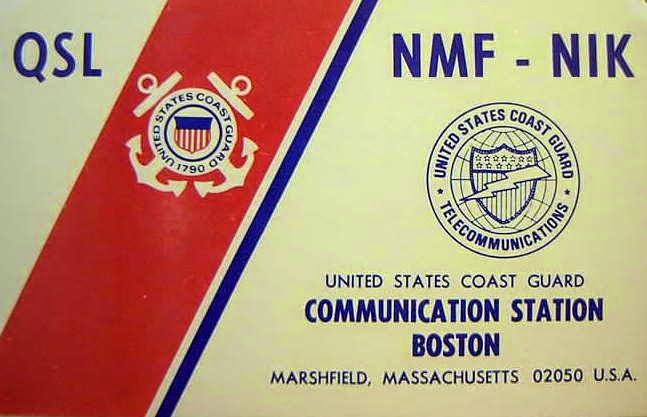
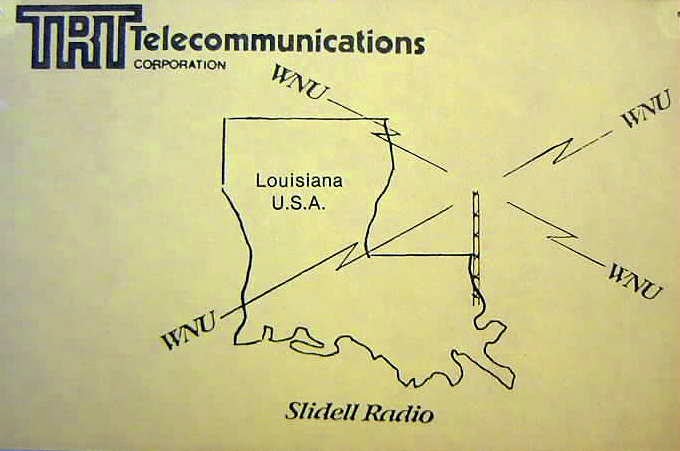 |
| WNU - Slidell Louisiana |
From what I could tell, most of the ship Radio Officers used a hand key on the MF transmitter while on HF, most used bugs or keyers. The quality of hand-keyed CW ranged from perfection to abysmal and some nights it sounded as though the ship's oiler had been strapped to the seat and told to send CW. Most traffic consisted of provisioning requests or berthing information, as ships usually only used MF when arriving or departing their port.
The ship's RO would often respond to a 'reception report' and happily fill in a prepared QSL. The cards were often returned with pictures and long handwritten letters, describing their radio equipment or life at home.
 |
| M/V Belforest - Bulk Carrier |
Although CW Maritime operations have long been discontinued, the 'Primary' user of the 630m band is still the Maritime Service!
In the US and in Canada, the 472-479 kHz band is part of the larger 435-495 kHz segment allocated on a primary basis to the Maritime Mobile Service and on a secondary basis for government Aeronautical Radionavigation.
I'm not exactly sure what the Maritime is doing on MF these days or what they plan to do, but I suspect it may be related to DGPS activity down the band. Canadian amateurs are Secondary users of 630m and as such, must not create interference with the primary user. I suspect that it might not be a great idea to create interference with the secondary users as well, although there are no NDB's in this section of the band in North America.
Steve McDonald, VE7SL, is a regular contributor to AmateurRadio.com and writes from British Columbia, Canada. Contact him at [email protected].
Maplin sold
That font of all knowledge 🙂 Steve G1KQH has just informed me that Maplin has changed hands for £85M. Although not a frequent customer, I do use their shop in the Beehive Centre, Cambridge.
Not sure what it will mean for the business. One of the two stores in Cambridge is always busy, the other less so. Maybe less profitable shops will close? A bit like Jessops?
Not sure if they still sell them,but I used to buy their small aluminium boxes for QRP projects.

Roger Lapthorn, G3XBM, is a regular contributor to AmateurRadio.com and writes from Cambridge, England.
Cashback on Yaesu products
It doesn’t surprise me but G1KQH has told me that Moonraker (and others?) is offering the FT817ND for just £459.95 after a Yaesu cashback deal. I paid £499 from MLS for cash a few months ago.
Based on the favourable change in exchange rate much lower prices should be expected soon. And, of course, the replacement for the FT817ND is nowhere to be seen.
BTW, I recommend you don’t buy patch leads from Moonraker – the ones I bought were useless at both ends with intermittent joints. I guess they just buy these in, but it would be good if they actually checked some as well! All I am saying is Moonraker (and others?) should periodically do quality checks on products they sell. There really is no excuse in the 21st century for selling poor quality goods. I did complain to Moonraker who offered me money back or exchange. Exchange for the same quality? No thanks. Andrew G6ALB kindly replaced the coax connectors at both ends – a decent solution. I guess buying a rig from them is low risk. Patch leads? Definitely dodgy unless you know the supplier checks stock for quality.

Roger Lapthorn, G3XBM, is a regular contributor to AmateurRadio.com and writes from Cambridge, England.
A contigious 60m band?
OFCOM is consulting on the agenda items for the World Radio Conference WRC2015 which takes place November 2015. See http://stakeholders.ofcom.org.uk/consultations/wrc15/ .
The proposal is to support moves to allocate 5250-5450kHz to the Amateur Service on a secondary basis. This would replace the messy channels currently available. I recommend you write to OFCOM to support this move, which would give us a new ham band at 60m – ideal as the current sunspot cycle declines.
If allocated, it could be a few years before available.

Roger Lapthorn, G3XBM, is a regular contributor to AmateurRadio.com and writes from Cambridge, England.
A day of variety: Legal AM/SSB CB, patchy 50MHz Es and fun on VO-52
Some would say it was 30 years too late, but here in the UK, today was the day that AM and SSB CB was made legal on the CEPT ‘mid’ band, with an output power of 4W AM and 12W SSB. Good news as far as I am concerned and it will give me the opportunity to make contact with various friends who are active on CB and not amateur radio.
Not much about in the way of Es today, although I did manage a late afternoon QSO with HA8IB on 50MHz. Pretty quiet apart from that.
Late in the afternoon, I caught a couple of VO-52 satellite passes. The first was a very low angle one, around 2 degrees over Russia. I had a nice snappy CW QSO with Imre HA1SE. I was pleased to find I could work a pass at that distance and elevation, as I’d love to try working UA9CS and potentially even UA0SUN.
The second pass was a bit higher and I had a sketchy exchange – I’m not going to call it a QSO with 4X1AJ, but we heard each other before some noise kicked in here and that was that. As we’re both reasonably regularly active, I’m hopeful of making a QSO before long.
Tim Kirby, G4VXE, is a regular contributor to AmateurRadio.com and writes from Oxfordshire, England. Contact him at [email protected].
 Ham Radio Deluxe |
 W5SWL Electronics |
 Ham Radio Prep |
 KB3IFH QSL Cards  Hip Ham Shirts  HamRadioAuctions HamRadioAuctions Reliance Antennas Reliance Antennas Enigma Shop Enigma Shop |  morseDX  Ni4L Antennas  R&L Electronics R&L Electronics antennas.us antennas.us QRV QRV |
- Matt W1MST, Managing Editor
