 |
 NPR: Celebrating 100 Years of Ham Radio
 1 July 2014 | by
To be able to go out to a park somewhere and literally throw a length of wire into a tree and sit down and talk with somebody in, say, Italy, is endlessly thrilling to me. – Sean Kutzko, KX9X
A recent NPR story with a visit to W1AW. Check it out here.
I’m a little envious of Sean Kutzko’s visit to W1AW.
I think this is a great characterization of the hobby that always inspires the imagination (well, at least mine)
…he’s contacted others all across the globe – coral atolls in the South Pacific, even a research station in Antarctica.
Makes me want to spark up the rig and see what I can find.
Scott Hedberg, NØZB, is a regular contributor to AmateurRadio.com and writes from Kansas, USA. Contact him at [email protected].
Field Day 2014 – Wow!
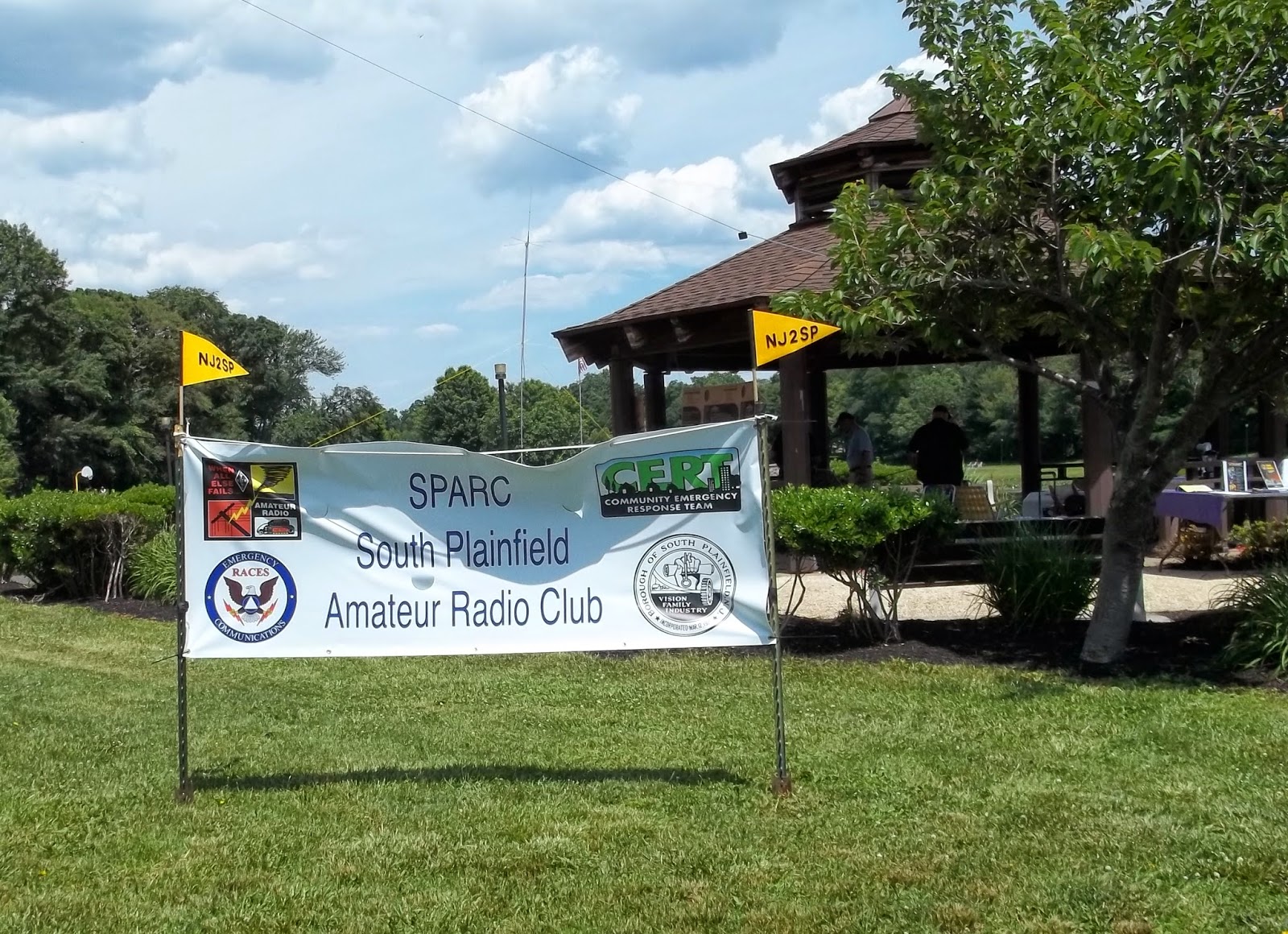
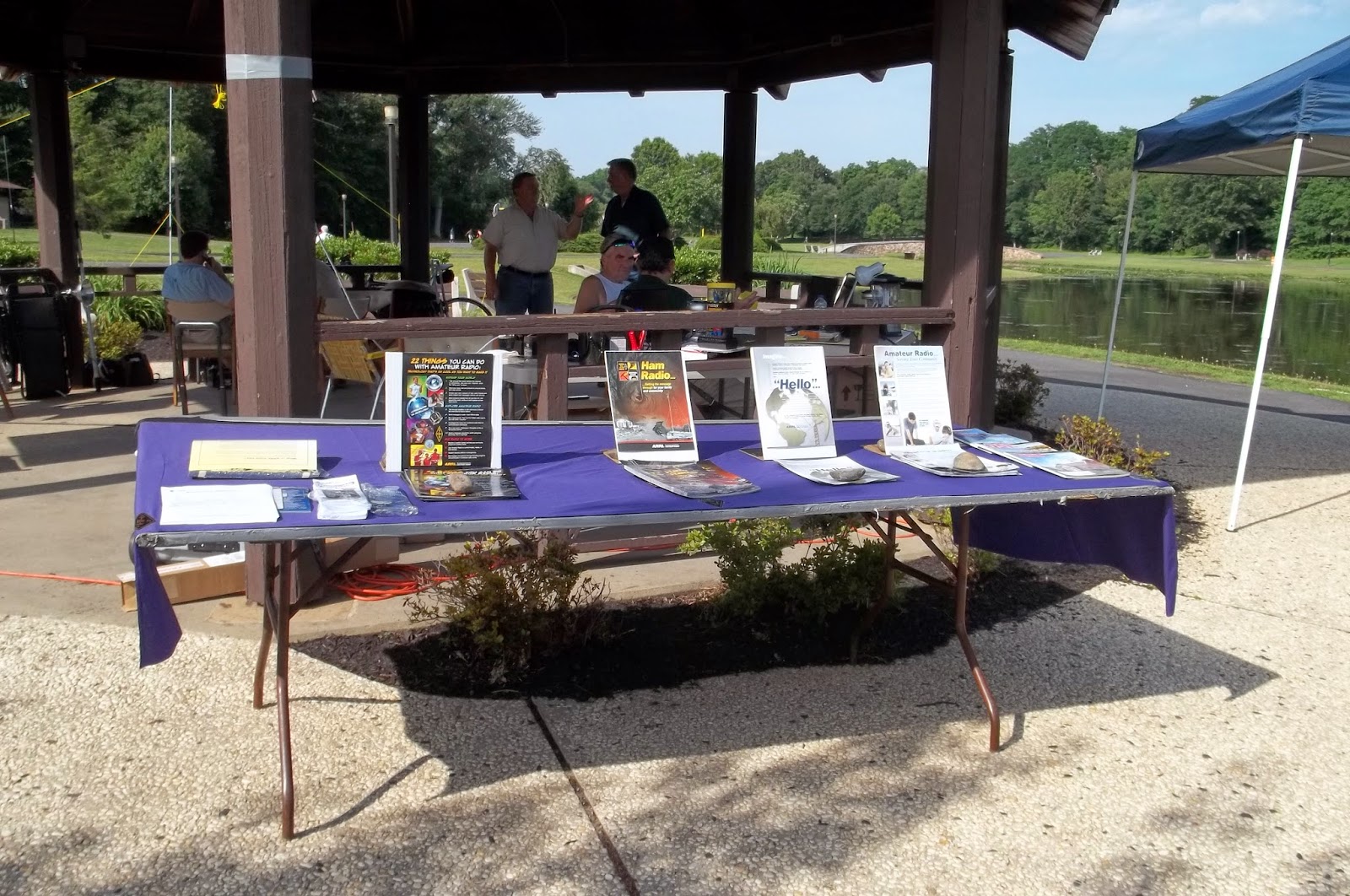
That’s all I can say – wow! A magnificent time was had at the first Field Day for the South Plainfield Radio Club. I posted the following to QRP-L, and I’ll insert some other thoughts at the end.
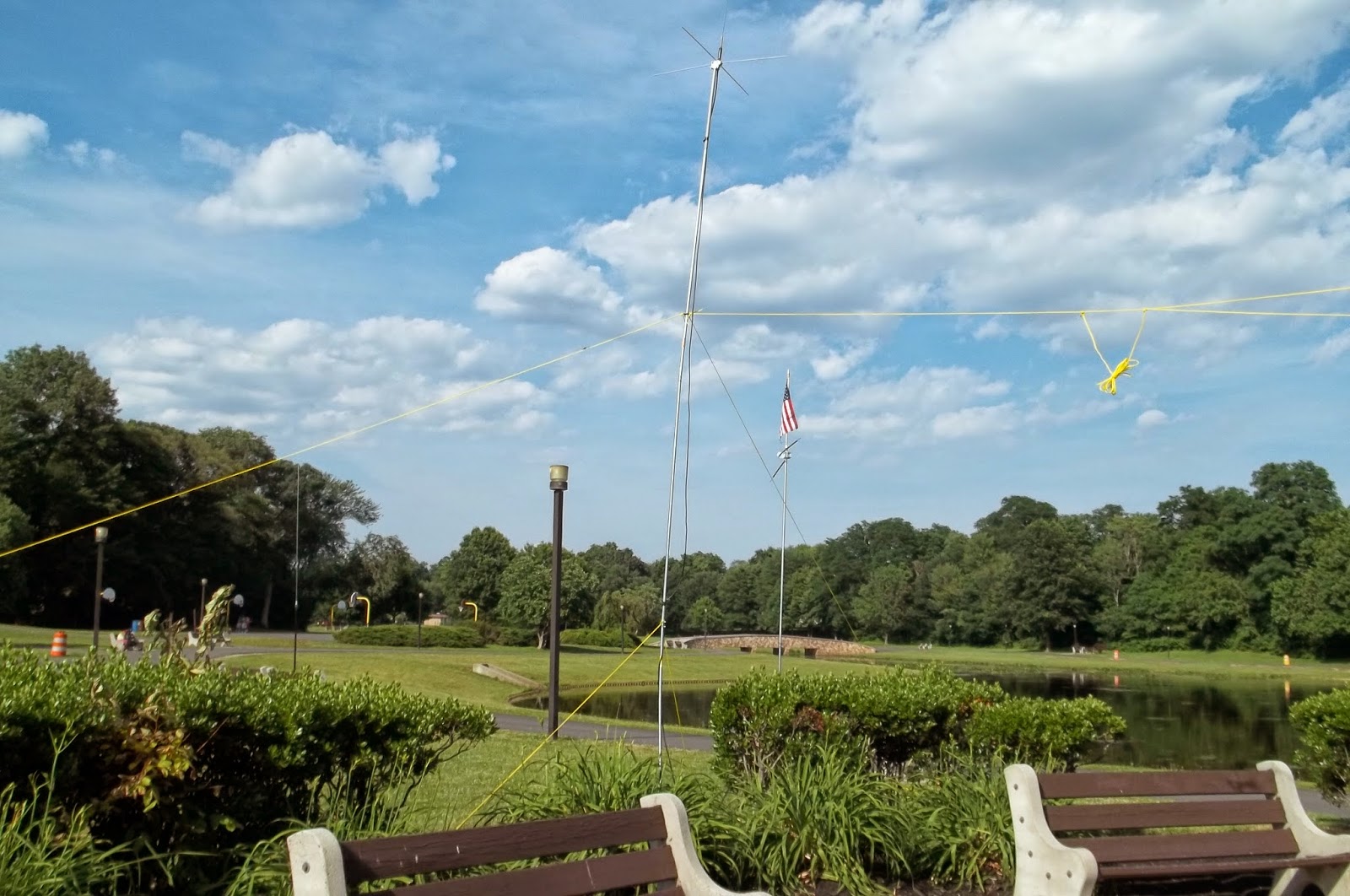
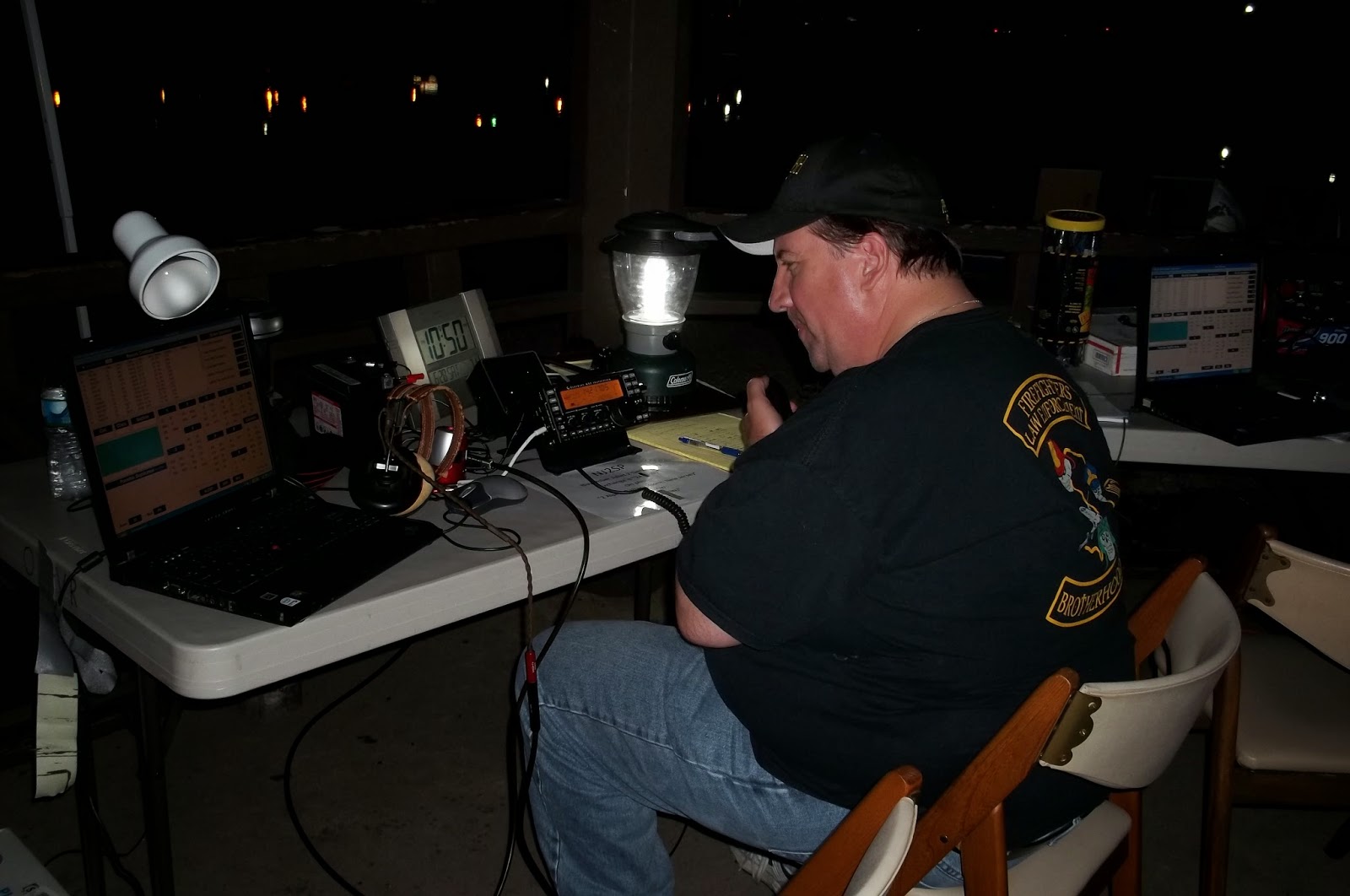
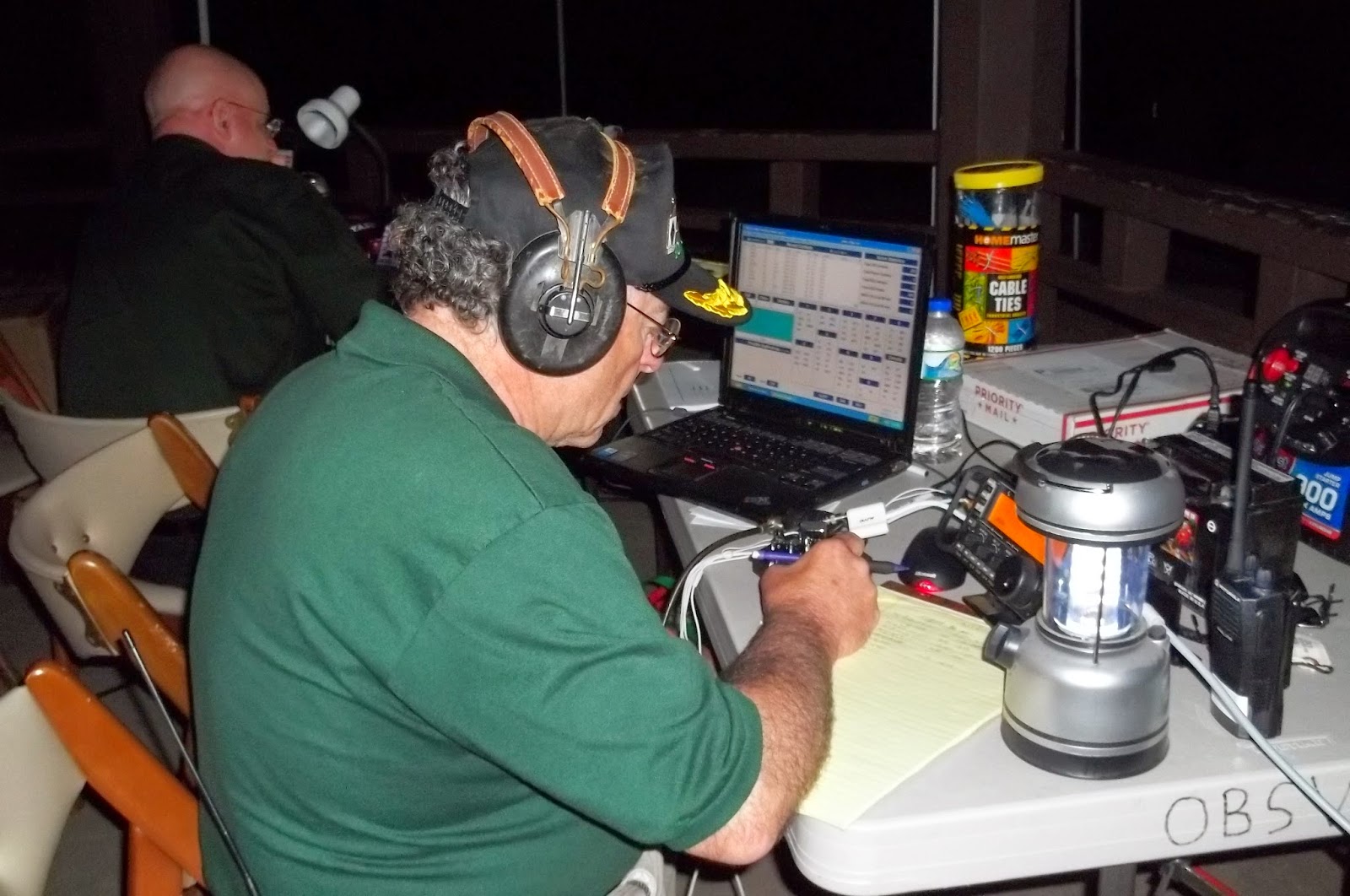
The South Plainfield Amateur Radio Club operated Field Day in Spring Lake Park in South Plainfield, NJ. We used Club call NJ2SP, and ran as 2A (Battery). The “2A” were two Elecraft KX3s. The CW station ran to a EARCHI antenna (53 foot radiator, 9:1 UNUN, 25 foot length of coax). The elevated end of the EARCHI was about 30-35 foot up in a tree. The SSB station used a G5RV, about the same height between two trees.
And if you look closely (click on the picture for a bigger image) you can see the EARCHI antenna sloping upward and away towards the tree it was anchored in.
The EARCHI antenna was a resounding success. The KX3’s internal tuner handled it exceedingly well on all bands. We made just a tad over 270 CW QSOs, with our best DX being Hawaii, Puerto Rico, the US Virgin Islands and the Cayman Islands.
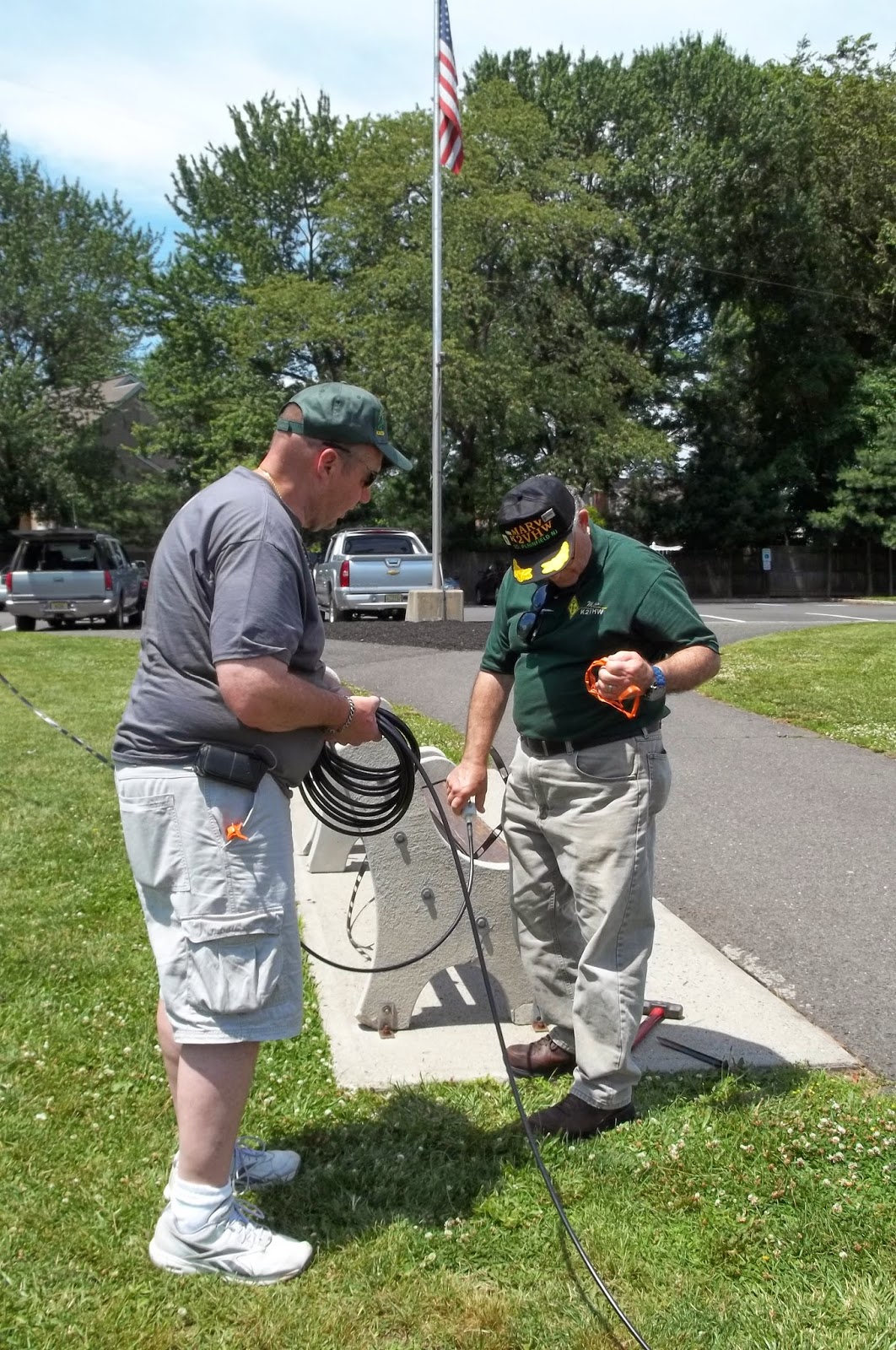
The G5RV worked exceeding well, also. The KX3 again tuned without a hiccup. The SSB team completed just over 100 SSB QSOs – these guys are all QRO ops and they were skeptical about completing even a single QRP SSB QSO. They ended up surprising themselves, and they ended up being quite amazed at what they were able to accomplish. Yes, it was not as easy as using 100W rigs, but even in keeping with the ARRL’s 5 Watt limit for the battery category, they were quite pleased.
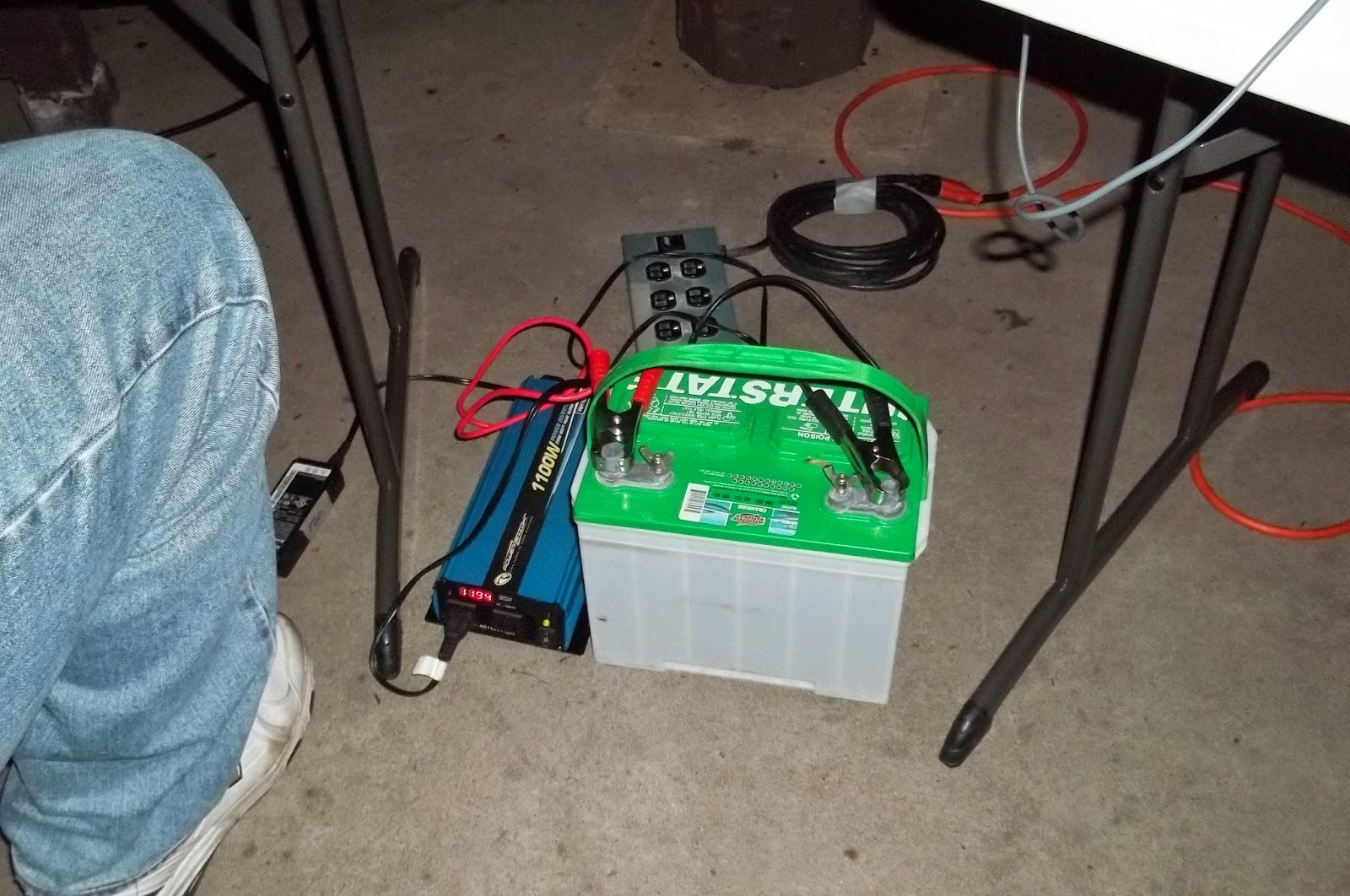
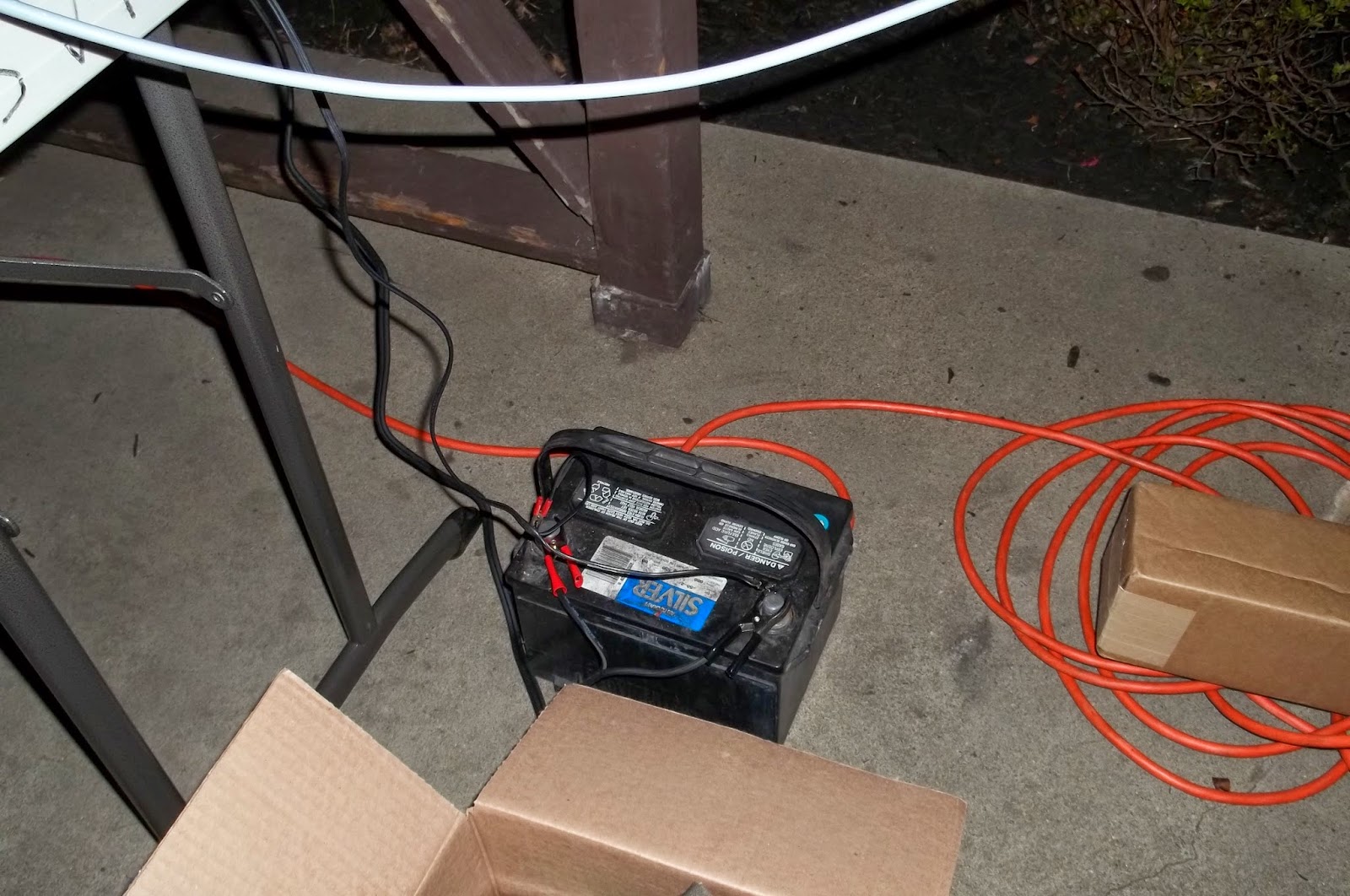
We operated on solar charged batteries all weekend without a hitch. The energy hogs for the weekend were the two laptops that we used for logging. The Field Day rules state that since we were not using the laptops for rig control, we could have powered them from mains (which we did not have) or a generator (which we had, but didn’t use). In keeping with our self imposed “severe emergency capability” theme in order to make this a drill as much as possible, we also powered them off a deep cycle battery using an inverter. We needed to switch the laptops over to a fresh battery somewhere in the mid morning hours, Sunday.
SPARC’s first Field day was an outstanding and unqualified success, and I think we ‘busted’ the myth that Field Day has to be QRO to be fun.
The EARCHI worked great and way better than I dared hope for. With less exceptions than I can count on one hand, I was able to work everyone that I tried to. Being on an energy budget because of the batteries and wanting them to last all weekend if possible, I didn’t try calling CQ or running a frequency (it was S&P all weekend). I will reserve that for FOBB and the Skeeter Hunt, which are only four hour events. I can afford to be a little “battery foolish” during those, and I expect the EARCHI to work just as well during those two events.
The other Godsend of the weekend? That Joplin ARC antenna launcher kit that I purchased and built up. We were able to place antenna lines pretty much exactly where we wanted with hardly any effort at all. That thing is one of the greatest things since sliced bread! One or two of the guys were skeptical about being able to place an antenna line so easily and accurately with such little effort. The old saying is “That seeing is believing”. They’re believers now!
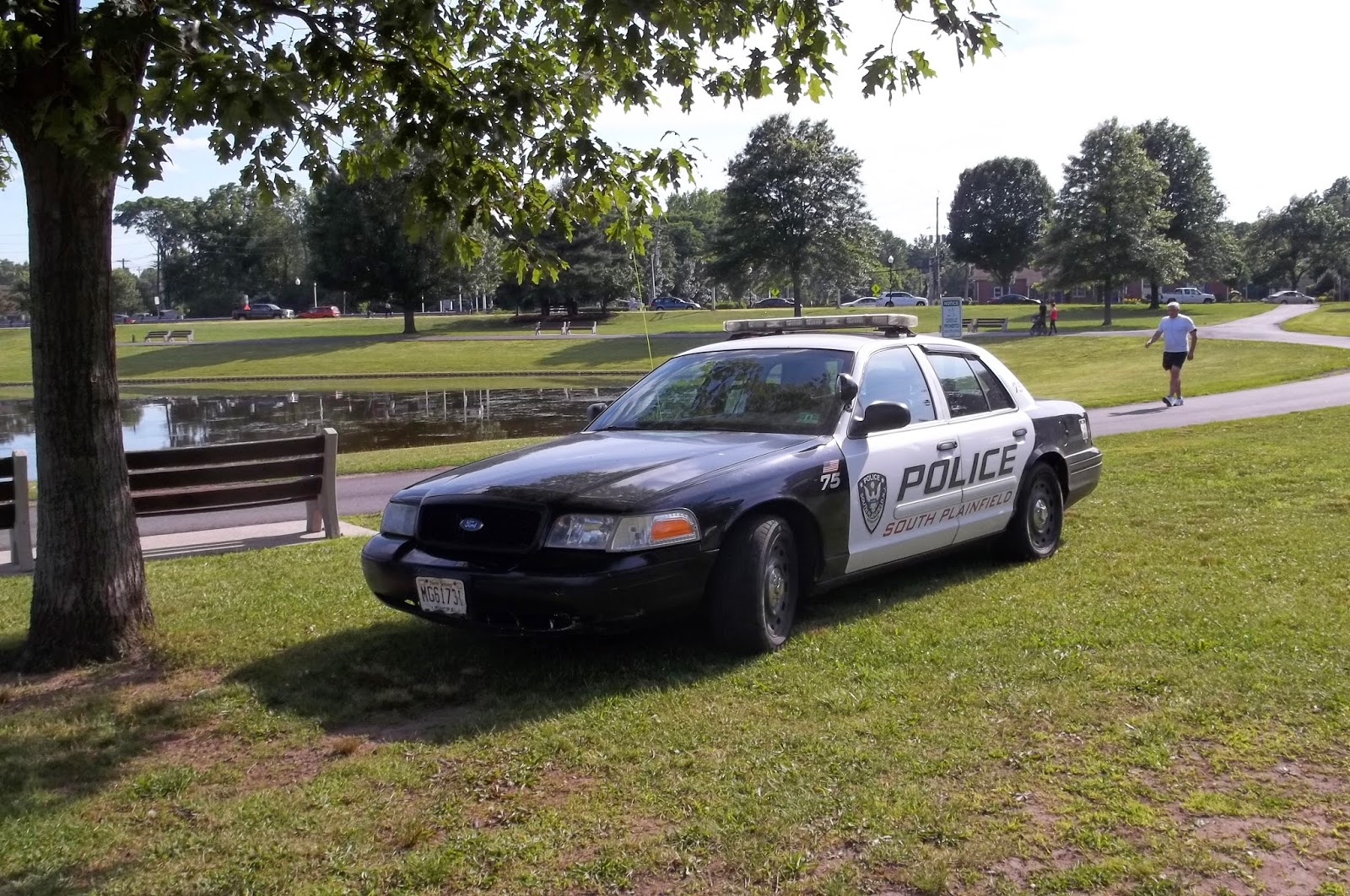

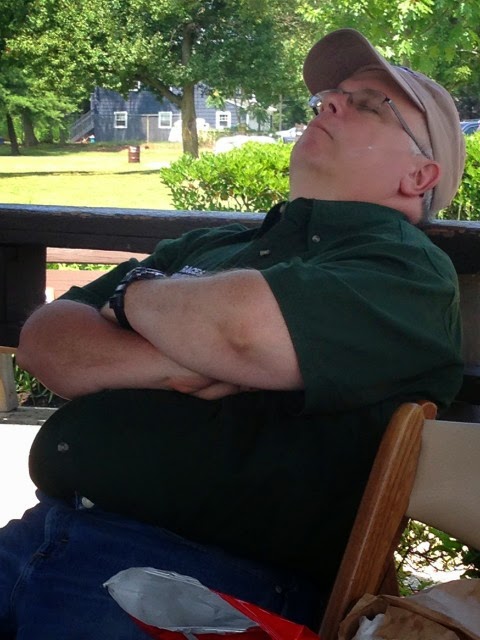
After being awake for 24+ hours, I fell asleep while waiting for the Mayor to show up late Sunday morning. I woke up in time for his visit, though!

In closing, I’ll answer a question that was posed to me by a member of the visiting public, the way I wanted to answer it. A woman asked me if it was a bit extreme staying awake throughout the 24 hours of Field Day. Of course, I gave her the answer of “In the event of an emergency or a natural disaster, sleep may very well be a luxury, …….” Yadda, yadda, yadda.
What I wanted to say was any of the following:
1) It’s Field Day! Sleep is overrated!
2) Heck no Lady! Field Day is fun!
Or I could’ve gotten all Clint Eastwood and said:
3) Ma’am? I’ll sleep when I’m dead!
One final, last added mention. Last year, Marv K2VHW introduced me to Deep Woods Off moist towelettes. They are a must for the Field Day Go Package. They worked extremely well, and I was not bothered by a single “Skeeter” (pesky little fellows, I should have had them pound brass!) all night long.
Larry Makoski, W2LJ, is a regular contributor to AmateurRadio.com and writes from New Jersey, USA. Contact him at [email protected].
Field Day 2014 in Texas

This past weekend was the ARRL Field Day, and was my first time to attend one of these events. I just upgraded my license to General last November, so I never had much interest in HF before now. Lots of hams would cringe to hear me say that, but I always enjoyed the VHF/UHF operations and building relationships with local hams who I could talk to on a normal basis.
However, I am very glad that I attended the Field Day Event this year. I was able to learn some good information about band limits, what times of day each band is better, etc. I was also able to try some digital contacts on PSK31 and RTTY, which I had never done before.
I spent this Field Day with the Hurst ARC out at Chisolm Park in Hurst. Our class was 3A and our section was NTX. The 3 stations we had setup were a Icom IC-7000 running 15-meters on a homebrew Buddistick Vertical; a Kenwood TS-2000 on a Fan Dipole, which could jump between 20-40-80-meters, and a Icom IC-7200 attached to a 3-half-wave (1.5 waves total, 102′) for 20-meters.
I must say, above all else, the 15-meter station on the vertical antenna made the most contacts, which also impressed me the most. I was expecting the 20-meter dipole to out-perform everything, and its performance was fantastic, but the 15-meter vertical station made more contacts than any station. Most of that was probably due to the operator, KE5SBP. He is quite good at finding contacts on HF, and is very experienced. But the performance of the vertical antenna astounded me.
I was a bit disappointed that 40-meters and 80-meters didn’t open up more-so during the night. We made several contacts on each of those bands, and 40-meters continued well into the next morning, but I was expecting more. Maybe that is just my lack of experience with these bands, though.
The farthest contact that I personally made was on 20-meters to the U.S. Virgin Islands. I also made 1 or 2 contacts into Puerto Rico, and several into Canada. I heard some DX stations on 20-meters, but I was never able to get back to them, due to the pile-ups. Hawaii was also a popular location, and while several others at our location made those contacts, I did not.
Next year, W5HRC is already talking about upgrading to 4 or 5 stations. I’d like to see a 6-meter station, as well as maybe 10 and 12 meters. If 10 and 12 are like 15, they should do well during the daytime.
Jason Johnston, KC5HWB, is a regular contributor to AmateurRadio.com and writes from Texas, USA. Contact him at [email protected].
Keep it simple: A creative case for the Ham It Up upconverter

KK4JDO’s son made a Lego enclosure for the Ham It Up upconverter
Richard, KK4JDO, shared a proud dad moment on Reddit. His son created a Lego enclosure for his Ham It Up upconverter board.
The lesson? Sometimes the simplest solutions are right in front of you (or at least in your kid’s toy box)! 🙂
Matt Thomas, W1MST, is the managing editor of AmateurRadio.com. Contact him at [email protected].
6m Action
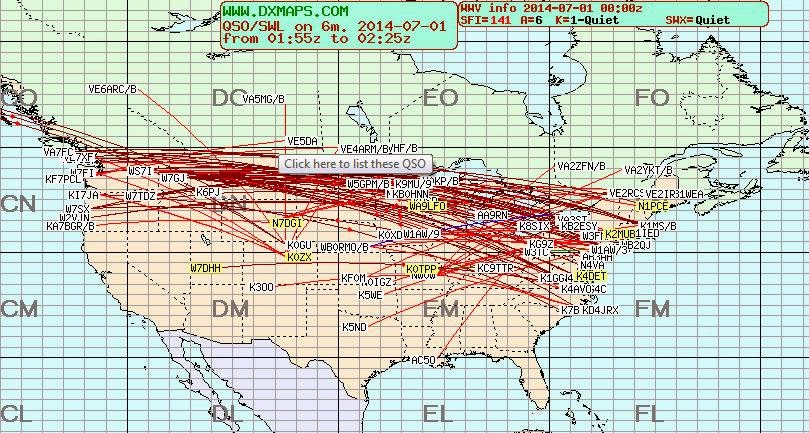 |
| Courtesy: DXMAPS.COM |
Steve McDonald, VE7SL, is a regular contributor to AmateurRadio.com and writes from British Columbia, Canada. Contact him at [email protected].
Gaining interest in radio
A big friendly welcome to my new readers who will be reading my blog entries via AmateurRadio.com – I hope my articles will provide insightful reading.
If you are not already “in the know” im based in the UK and provide distant learning course for UK amateurs alongside Steve (G0FUW) and Lewis (G4YTN) along with home based learning we also provide in class education as well.
 |
| PSK Receiver No. 001 with Raspberry Pi |
The education element of the hobby really interests me and not content with the 3 tier license, we also provide buildathons for anyone who is interested in electronics, radio or construction.
Our very successful PSK receiver kit (Instructions here) has now been used up and down the UK and orders are still coming in for the kit via the RSGB all over the world. Its a perfect kit for newcomers or students wanting to build a radio related project for their intermediate practical assesment.
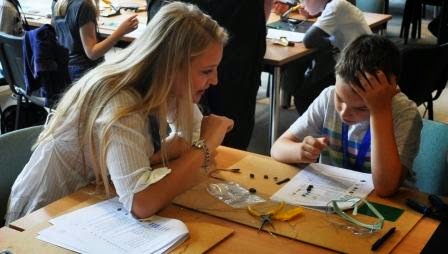
A couple of weeks ago we were asked to provide a buildathon for 21 young scientists at the BRLSI in Bath. And when I say young I really mean 8 – 14 years of age.
All but 3 kits went away working that afternoon and one of the first was a young 8yr old girl who had never held a soldering iron or had any clue what was really going on. But by the end of the day not only had she completed a build of the receiver but was decoding PSK signals on 20m in less than perfect conditions.
That was a particular highlight of mine on that day, seconded only by persuading her father to pop along to some of the in-class lessons and see what it was all about. It seems that there is a little bit of curiosity in radio in all of us. even today !!
Whereas we are keen to knock ourselves for not connecting with the youngsters, and gaining interest in the hobby, it actually seems to be that we are not that great at following up and converting the curious mind into a radio hobbyist.
Dan Trudgian, MØTGN, is a regular contributor to AmateurRadio.com and writes from Wiltshire, England. He's a radio nut, IT guru, general good guy and an all round good egg. Contact him him here.
First JT-65A Contacts!
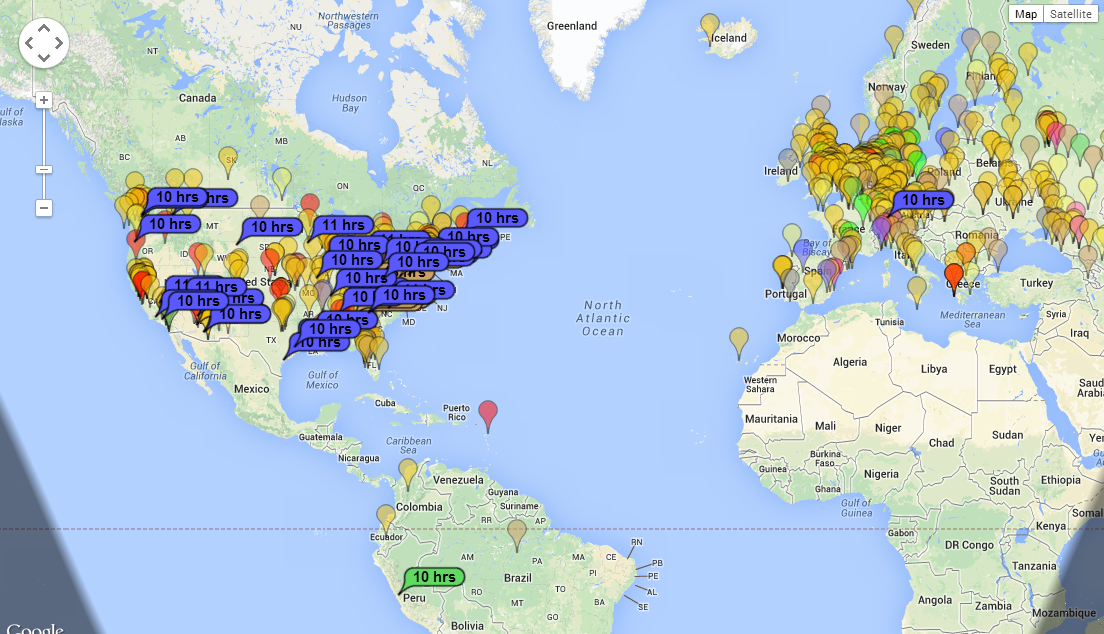 |
| JT-65 Spots on 40 Meter with 2 Watts |
Over the weekend I setup WSJT-X on my old XP computer. I let it do some decoding off and on over the weekend on several bands – and I was decoding well!
Burke Jones, NØHYD, is a regular contributor to AmateurRadio.com and writes from Kansas, USA. Contact him at [email protected].
 Ham Radio Deluxe |
 W5SWL Electronics |
 Ham Radio Prep |
 KB3IFH QSL Cards  Hip Ham Shirts  HamRadioAuctions HamRadioAuctions Reliance Antennas Reliance Antennas Enigma Shop Enigma Shop |  morseDX  Ni4L Antennas  R&L Electronics R&L Electronics antennas.us antennas.us QRV QRV |
- Matt W1MST, Managing Editor
