 |
 6m – past the best?
 7 July 2014 | by
 I am beginning to think that 6m is now past its best both for Es opportunities and, of course, for F2 propagation. Almost zero Es on 6m in the last few days, mainly locals and a little GDX. I may give it a few more days before QSYing back down to 10m where both Es and F2 DX are more plentiful.
10m conditions should be good for N-S F2. Sunspot count is 256 (high) and 20-30MHz propagation is forecast to be “normal”.
If anything, solar activity has staged a bit of a comeback lately, but this may be just a blip.
UPDATE 1545z: As if to persuade me to stay on 6m, CN8LI (2113km) was spotted at 1450z.
UPDATE 1810z: No more Es here since CN8LI at 1450z. One blog reader tells me that I should try JT65 as there is more activity. JT9-1 worked well for me on MF with international 2-way QSOs with very low mW ERP. I think JT65 is more commonly used on 6m?

Roger Lapthorn, G3XBM, is a regular contributor to AmateurRadio.com and writes from Cambridge, England.
Making Plans for the Colorado 14er Event
 The Colorado 14er Event (Aug 3) is less than a month away so it is time to get ready. This event was born out of the basic observation that many hiking hams were taking along their radios (typically, a VHF/UHF handheld) when they climbed the Colorado 14,000 foot mountains. So we thought “let’s all climb on the same day and see who we can contact.” The typical 2m FM contacts have expanded to other frequencies and modes, including the high frequency bands, with the potential for worldwide propagation. We’ve also embraced the Summits On The Air (SOTA) program, opening up over 1700 summits in Colorado for ham radio activity.
How can you join in the fun? The most active way to participate is to operate from a summit. If you are interested in climbing 14ers, then you may want to operate from one of the 54 14,000 foot mountains. In my opinion, all of the 14ers are strenuous hikes, so be sure to assess your ability and check out the challenge of any summit you attempt. There are a few that you can drive up, Pikes Peak, Mount Evans and Mount Bross (4WD only). Note that a “non-motorized final ascent” is required if you want to qualify as a SOTA activation, which is encouraged. See this web page for some great tips on activating a SOTA peak. If you want to try something less difficult, consider one of the easier SOTA peaks (more than 1700 in Colorado). Everyone can find a SOTA peak that fits their particular hiking ability.
If you can’t get out and operate from a summit, you can still have fun trying to contact the radio hams on the various summits. There will be quite a bit of activity on 2m FM, starting with 147.42 MHz and moving up from there using the standard Colorado band plan. You’ll want to be roughly within “line of sight” to as many peaks as possible for working them on VHF. Many radio operators will be on the HF bands, too. See the recommended frequency list here.
Summits On The Air has some great infrastructure that we can use during the event. The SOTAwatch web site is using for “spotting” SOTA stations so that you know who is on the air. Spotting yourself is encouraged and can be done from many peaks using a mobile phone. SOTA Goat is a great iOS app for making and tracking spots.
Take a look at this posting for some additional SOTA resources. There’s quite a bit of information out there so take advantage of it. Remember, the Colorado 14er Event is based on the fundamental purpose of ham radio: to have fun messing around with radios. But be careful out there, we don’t want anyone to get hurt.
Questions, comments, let me know.
73, Bob K0NR
Disclaimer: Climbing mountains in Colorado can be dangerous. Only you are responsible for your safety. In particular, be very aware of the lightning danger if you are hiking above treeline.
Bob Witte, KØNR, is a regular contributor to AmateurRadio.com and writes from Colorado, USA. Contact him at [email protected].
European Vacation – Friedrichshafen

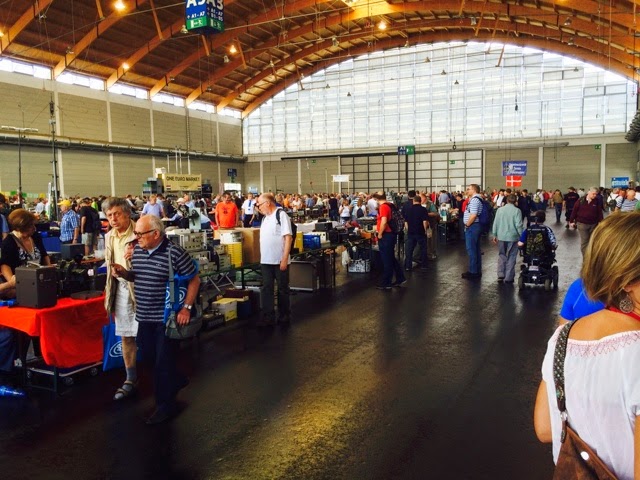
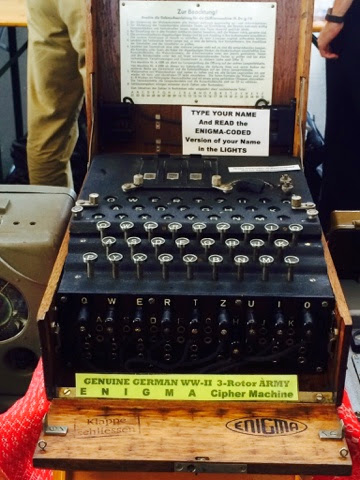
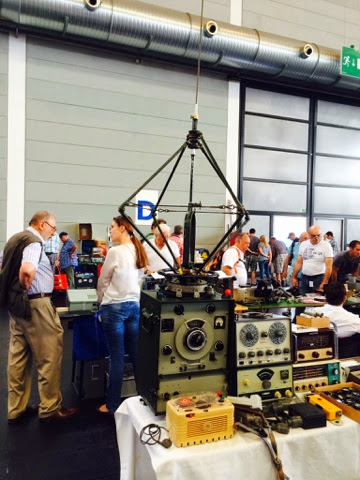
Mike Crownover, AD5A, is a regular contributor to AmateurRadio.com and writes from Texas, USA. Contact him at [email protected].
Pixie and Micro 80
These little QRP transceivers first made an appearance some 20 odd years ago. They are extremely simple transceivers that use the TX PA as the RX mixer to save parts.
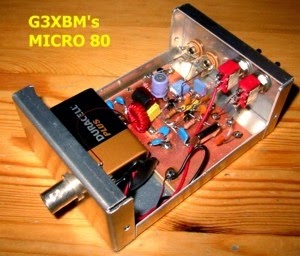
I built a Micro 80 some years ago and my best QSO was around 300km. Biggest issue (for me) was broadcast breakthrough from strong broadcasters just above the 80m band. Variations included the Pixie 2 which added some refinements at the expense of more parts. Kits are available, but the circuits are so simple it is not work paying over the odds for these. The Micro 80 uses all discrete components whereas the Pixie and Pixie 2 use an LM386 for the RX audio.
If you build one, be prepared to fight for contacts. It is not the TX power that is the problem: it is the receiver that is the limitation.Given good conditions and little broadcast breakthrough, these rigs work.
See https://sites.google.com/site/g3xbmqrp3/hf/pixie .
The same basic schematic will work on any HF band with changes to the output filter. Watch out for chirp on the higher HF bands: don’t be tempted to try to pull the crystal too much, especially on the higher HF bands.

Roger Lapthorn, G3XBM, is a regular contributor to AmateurRadio.com and writes from Cambridge, England.
West Coast Day For 6m
 |
| Courtesy DXMAPS.COM |
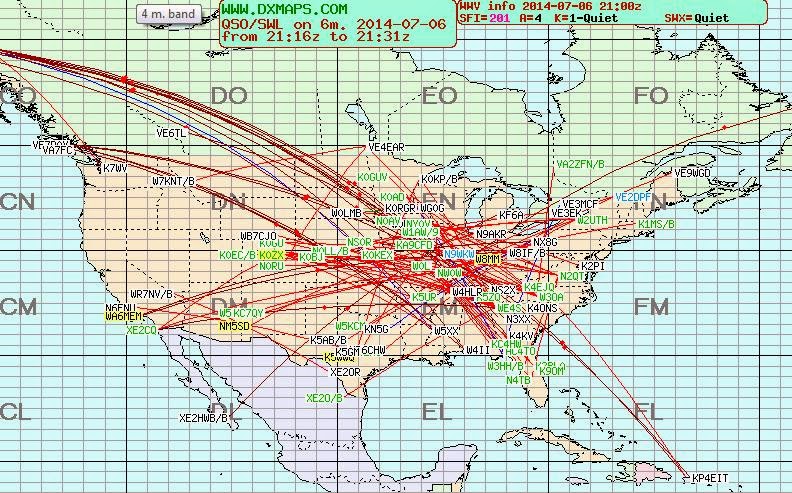
At 0700 I began to hear bits and pieces of CN8KD in Morocco while he was working 4's and 5's ...every once in a while his CQ's would briefly rise out of the noise but never long enough or loud enough for me to reply. He eventually faded and the band shifted to a more northerly path and at around 0900 local time, EA8DBM (Canary Islands, AF) showed up on SSB, while working into the SE U.S.A. He was much louder further to the south but at 1632z I was able to work him on phone and a few minutes later on CW, down the band. In over 40 years of being on 6m, this was only my second African QSO, with my other one also being into EA8.
The best part of the opening today was the number of west coast stations that were able to put rare Africa into the log....and, for a number of them, it was the completion of WAC on 50MHz....very tough from the left coast. VE7DAY, K7SS and NA6XX will all be celebrating today!
As I post this at 2130z, the KL7's are cashing-in on the magic while working across the U.S. as far south as Florida! I've always thought the first week of July to be the best of the season for 6m...lets hope it keeps going.
Steve McDonald, VE7SL, is a regular contributor to AmateurRadio.com and writes from British Columbia, Canada. Contact him at [email protected].
Distant learning
 Here we go again. We have just started a new 6 month distant learning course for the advanced exam. Our recent in class success of 100% pass rate for the intermediate license was a fantastic achievement for the students and tutors alike. And this time we had quite a spread of student ages from 12 to 60+ all scored very highly in the exam and have signed up for the advanced course.
This term we have again used an online free resource called Edmodo. Edmodo describes itself as a social learning platform, and it really fits with our classroom platform.

Our classroom works like this. Each week we set a set of questions based on learning material we have covered in previous weeks. The material can be video, text, powerpoint or audio segments. We follow this up with 3 weekly homework sessions and score each student individually.
Being distant home based learning its quite easy for the student to feel isolated. So to ensure the student is supported and has a mentor we assign each student a tutor who passes feedback and support to the student. Along with this we also set some motivational targets that can be gained when a student hits a particular milestone. It’s a system that really works. Our student retention rate for last term was fantastic. We have made a few minor adjustments to the classroom template – but it is pretty much the same as last time.
This term we have 80+ students signed up and already submitting responses and saying hello to other students.
If you run any training course I highly recommend it. Ok it takes a little bit of understanding but it is a fantastic FREE tool. And we all like things that are free don’t we.
Dan Trudgian, MØTGN, is a regular contributor to AmateurRadio.com and writes from Wiltshire, England. He's a radio nut, IT guru, general good guy and an all round good egg. Contact him him here.
Distant learning
Here we go again. We have just started a new 6 month distant learning course for the advanced exam. Our recent in class success of 100% pass rate for the intermediate license was a fantastic achievement for the students and tutors alike. And this time we had quite a spread of student ages from 12 to 60+ all scored very highly in the exam and have signed up for the advanced course.
This term we have again used an online free resource called Edmodo. Edmodo describes itself as a social learning platform, and it really fits with our classroom platform.
Our classroom works like this. Each week we set a set of questions based on learning material we have covered in previous weeks. The material can be video, text, powerpoint or audio segments. We follow this up with 3 weekly homework sessions and score each student individually.
Being distant home based learning its quite easy for the student to feel isolated. So to ensure the student is supported and has a mentor we assign each student a tutor who passes feedback and support to the student. Along with this we also set some motivational targets that can be gained when a student hits a particular milestone. It’s a system that really works. Our student retention rate for last term was fantastic. We have made a few minor adjustments to the classroom template – but it is pretty much the same as last time.
This term we have 80+ students signed up and already submitting responses and saying hello to other students.
If you run any training course I highly recommend it. Ok it takes a little bit of understanding but it is a fantastic FREE tool. And we all like things that are free don’t we.
Dan Trudgian, MØTGN, is a regular contributor to AmateurRadio.com and writes from Wiltshire, England. He's a radio nut, IT guru, general good guy and an all round good egg. Contact him him here.
 Ham Radio Deluxe |
 W5SWL Electronics |
 Ham Radio Prep |
 KB3IFH QSL Cards  Hip Ham Shirts  HamRadioAuctions HamRadioAuctions Reliance Antennas Reliance Antennas Enigma Shop Enigma Shop |  morseDX  Ni4L Antennas  R&L Electronics R&L Electronics antennas.us antennas.us QRV QRV |
- Matt W1MST, Managing Editor
