 |
 After 25 Years
 21 July 2014 | by
 As a teenager my cousin exposed me to shortwave listening. As many of us will say, it was magic to be able to sit in my bedroom and hear signals from around the world. I was mesmerized. I couldn't wait for the mailman each day to see if a QSL card might arrive. However, there were no local hams, learning morse code seemed impossilble, so I never pursued my ham license until years later, when I came across a Gordon West course in the local Radio Shack. The course cover proclaimed that a novice license was good for 10 years and you could talk on 10 meters. I bought the course, my 12 year son listened along as I did, we learned the code together.
So fast forward 25 years, what has changed? I supposed in many ways things have changed a lot. Things like:
- Internet
- Enhanced Digital Modes
- Online Confirmations
- Equipment functionality
I'm sure I'm missing a few things, but the efficient access to information is much easier now. QSL routes used to be one of the great mysteries of the world, in fact, INDEXA used to have a net on 14.236 that dipensed the lastest QSL route news. Setting schedules required weeks/months of letter writing. Increasing your DXCC count meant turning the dial, find the pile-ups and then back down to figure out the split, find which DX station might be on and then jumping into the fray . Logging was manual and data mining your log for forgotten contacts was a laborious task, but just as rewarding. DXing news came in weekly newletters not daily emails.
But there are some things that haven't changed:
- The concern over how to fund expensive expeditions
- Frequency cops
- QRMer's
- Complaining about the cost of getting a real QSL card
- The thrill of receiving that QSL card
- The excitement of a new one
- The magic of wirelessly communicating around the world
- Dayton, Friedrichshafen, DXCC, IOTA, WABA, etc....
Like some many things, the more things change, the more they stay the same.
Here is a toast to the next 25 years, God willing.
Mike Crownover, AD5A, is a regular contributor to AmateurRadio.com and writes from Texas, USA. Contact him at [email protected].
It was 45 years ago today ……
that “Men from the planet Earth first set foot upon the moon, July 1969 A.D. We came in peace for all mankind.”
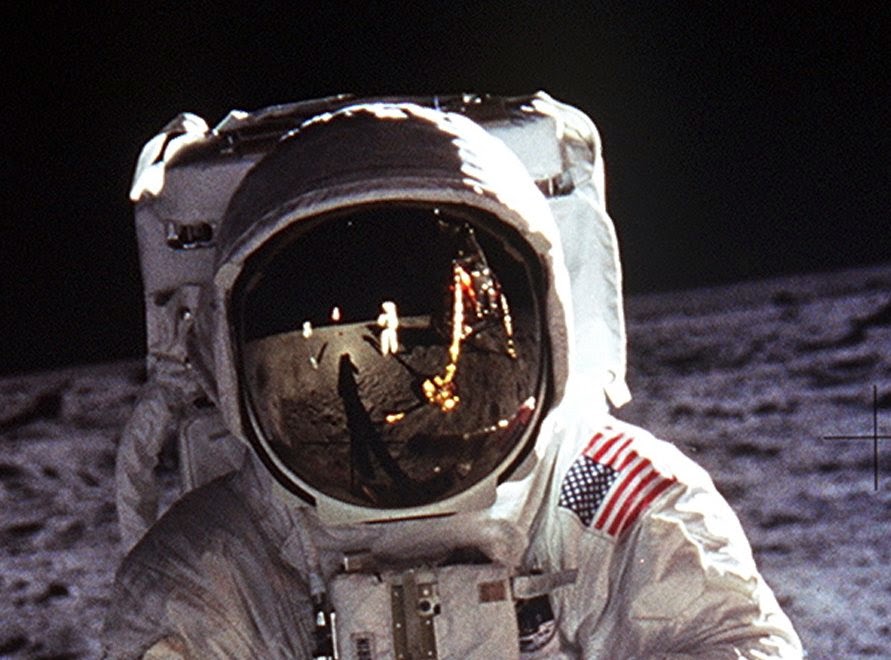
I was 12 years old and was obsessed with anything that had to do with the manned spaceflight program. Some of the earliest TV memories that I have included the launches of Alan Shepard and John Glenn during the Project Mercury days. As young as I was, I don’t think I missed a second of any live television coverage of Project Gemini (that didn’t occur while school was in session, that is!). My sister and I dutifully wrote to NASA requesting any free “NASA Facts” literature that they would send us. And they sent us plenty! I think I built every Revell model that there was that had anything to do with manned spaceflight,
On July 20th, 1969 my family and I were glued to the TV the entire day. I believe it was just around 4:00 PM when we heard those famous words, “Houston, Tranquility Base here. The Eagle has landed.” Walter Cronkite and Wally Schirra were the commentators. I had watched them so much that they felt like part of the family. I remember Walter removing his glasses and uttering “Wow!” when those famous words were relayed, finally announcing that men had successfully landed on the lunar surface.
Fast forward to that evening.
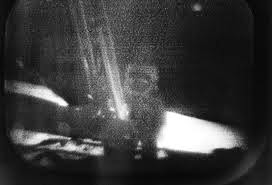
After a sufficient amount of pleading. my parents let me stay up past my bedtime in order to watch the first live TV from the moon. When Neil Armstrong pulled the cord that lowered the panel from the side of the LM, revealing the TV camera, we witnessed grainy, ghost like and upside down images from the moon. Someone at NASA quickly inverted the picture and we were able to clearly see the first human being take a fledgling step on celestial body that was not the Earth. For the next couple of hours, we sat before the TV and we didn’t go to sleep until Neil and Buzz had climbed back up into Eagle and had safely closed the hatch.
That was a wondrous time to be alive. To watch history being made – good history being made, is a wonderful thing. The national will to explore space may have died somewhat with the conclusion of Project Apollo, but countless youngsters learned that it really IS possible to dream big dreams, and to do great and wondrous things. All you have to do is have the will and ambition to get them done.
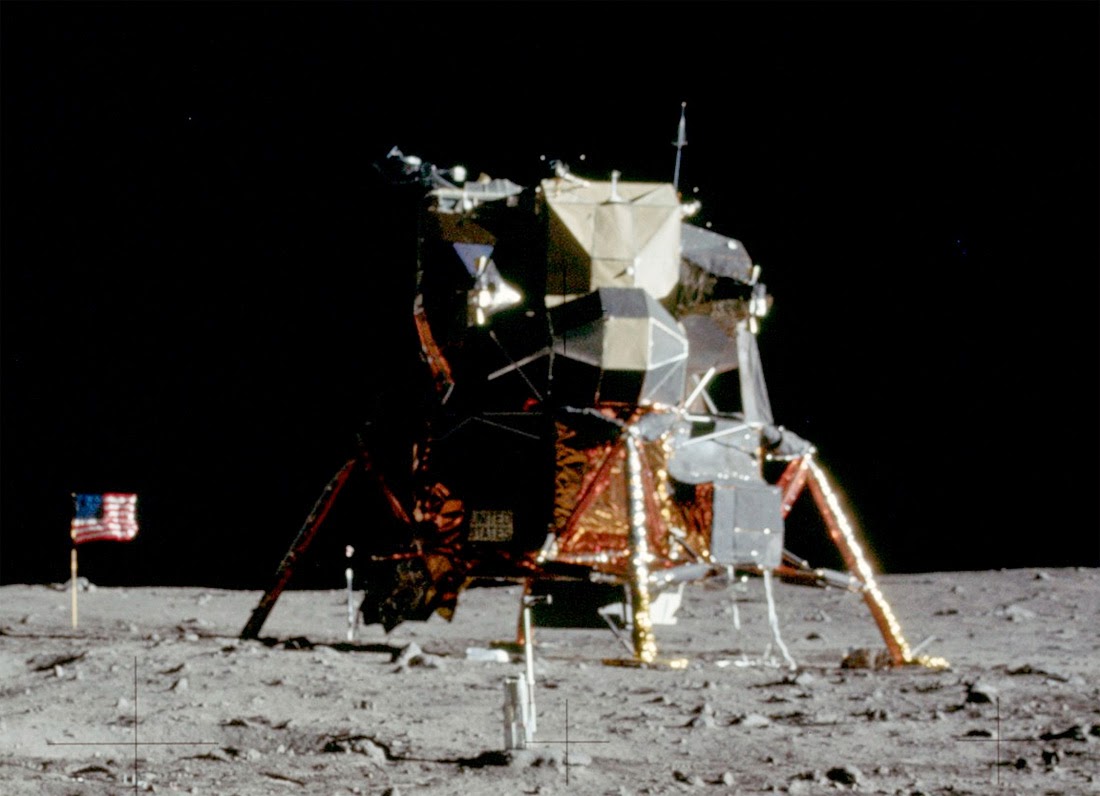
Earlier this afternoon I worked WA3NAN , the Goddard Spaceflight Amateur Radio Club station in Greenbelt MD, on 40 Meters Sideband (I know, I know!), in order to work one of the few Apollo 11 Special Event Stations that was on the air this weekend. I tried working N4A and N4R in Alabama, but it seemed like neither 20 or 40 Meters were allowing my signal the hop it needed to get the job done.
72 de Larry W2LJ
QRP – When you care to send the very least!
Larry Makoski, W2LJ, is a regular contributor to AmateurRadio.com and writes from New Jersey, USA. Contact him at [email protected].
What is This? Digital Modes on KX3
I have been having a blast lately with digital modes like PSK-31 and JT-65/JT-9. My little KX3 is doing a great job even without having run the temperature compensation. Of course I am keeping my power to 2 or 3 watts – which helps a lot.
I have noticed a strange thing for a while, but I am just now getting around to asking about it.
When I look at the waterfall there is an area that is basically blanked out – for lack of a better term.
Here is a screen shot of the waterfall in WSJTX (JT-65). You will notice the black area on the left.
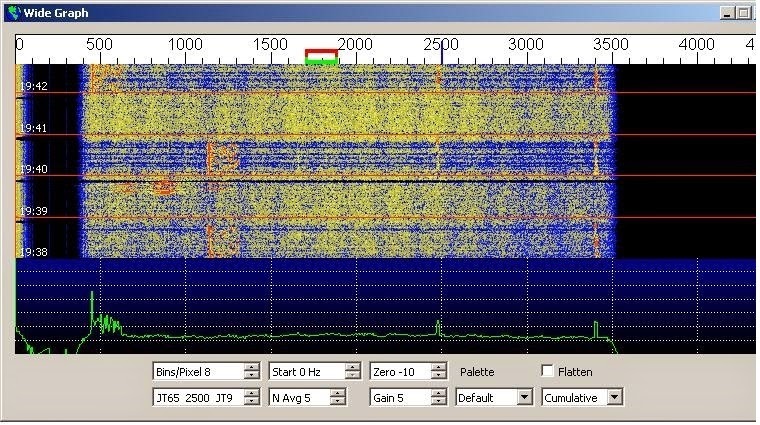 |
| Waterfall of WSJTX – What is “black” on left edge? |
As you can see there is an area on the left that is in the frequency range, but it is “blacked out”. I wonder how many signals are in this area?
Those if you with a KX3 or those of you that might know what this is – please let me know! If you know how to fix this, please let me know that as well!
I am looking forward to hearing the responses – I appreciate the help!
Burke Jones, NØHYD, is a regular contributor to AmateurRadio.com and writes from Kansas, USA. Contact him at [email protected].
News in Brief
SICK
After coming back from a tour of eastern Taiwan my leg felt very strange, I started to have a fever and began to vomit. In the hospital they diagnosed it as cellulitis and they kept me on an IV-drip for a week. Back home now and feeling a bit better, but I still need a lots of rest and take quite some meds to make sure it doesn’t resurface again.
OLD FRIEND
On our trip to eastern Taiwan I visited BX8AAD – Gene – in Taitung. I hadn’t seen him in over 17 years, so it was a happy reunion. Back in the 90s we were both avid shortwave DXers, now we’re both hams. Funny how things turned out the same for both of us.
DXCC
Opening my post office box I found 30 QSL cards, which brings my total confirmed DXCC entities to 100. Not that I want to apply for a certificate, because I don’t need another piece of wallpaper; but it is nice to know that I have reached this milestone.
OSTRICH
Now for some sad news. The curious, radial loving ostrich is no longer. He died of unknown causes, but most probably due to something that shouldn’t have been eaten by him. Despite him messing up my gear I did like the big bird and he will be missed.

ILLW
And lastly, on August 16 and 17 I will activate the Baishajia lighthouse here in Taoyuan for the International Lighthouse and Lightship weekend. This is the first time I will do something like this, so it will be fun to see how it works out. I just hope the sun cooperates and sparkles us with some spots.
That concludes the news brief for today. I hope to be back soon with more adventurous adventures. 73
Hans "Fong" van den Boogert, BX2ABT, is a regular contributor to AmateurRadio.com and writes from Taiwan. Contact him at [email protected].
Shut down two days in a row!
 |
| A foggy view of Toronto from my setup |
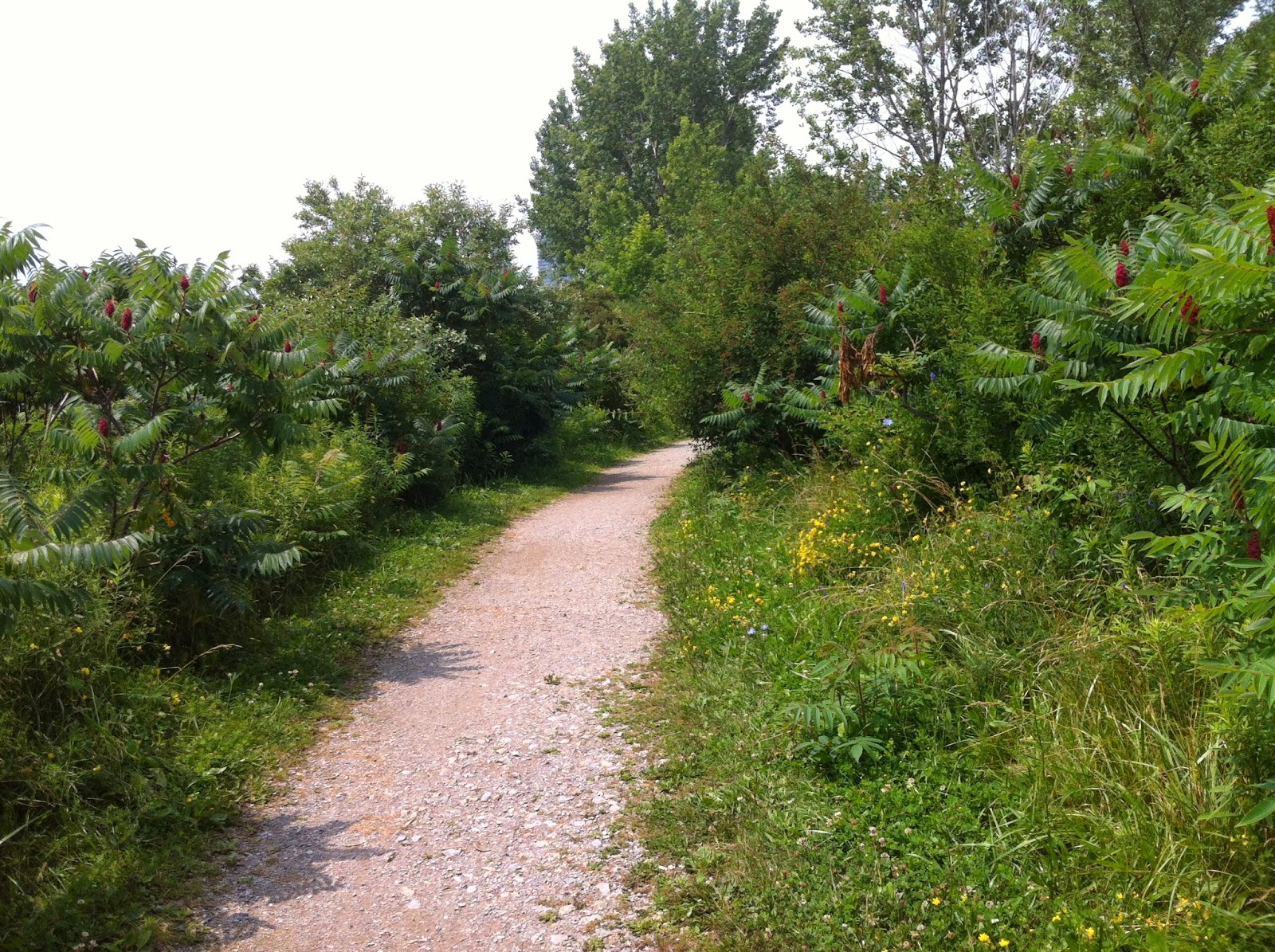 |
| Trail on the way there. |
 |
| Small river on my way home. |
 |
| One of the many beaches |
Mike Weir, VE9KK, is a regular contributor to AmateurRadio.com and writes from New Brunswick, Canada. Contact him at [email protected].
Solar activity
See http://www.solen.info/solar/ .
Looking at the data on this excellent page, it now looks pretty certain that we have started on the downwards part of the current cycle. This does NOT mean an end to decent HF conditions. For several years to come there will be good days and 15,12 and 10m will still support DX but far less easily than around the sunspot maximum years.
Even in the depths of the last minimum N-S DX was still there to be worked on QRP SSB, so expect some decent openings. This is really where regular WSPR operation will help, by seeing just how often 10m opens up. As I have said before, operating on the weaker parts of the solar cycle are, in many ways, more challenging and interesting. When 10m is wide open it becomes too easy.
Also, don’t forget Es (sporadic-E) which can produce some spectacular DX at the right time of the year – in the northern hemisphere this is usually May, Jun, July and August but Es can occur (more fleetingly) at other times times of the year. This is why regular WSPR operation will help.

Roger Lapthorn, G3XBM, is a regular contributor to AmateurRadio.com and writes from Cambridge, England.
Perturbation

There is good news in the blogosphere! Jeff Davis, KE9V (ex-N9AVG, WD9GCT), has re-established a blog and is now posting regularly. There is no doubt I am an avid fan of Jeff and it is always interesting to watch his online permutations. For a very long time he had a well established blog at ke9v.net. Yes, he frequently rebooted the blog and Jeff is not an online pack-rat. His blog reboots always cleaned away old posts to make room for the new. I encountered many of his short stories, ham radio based. From time to time, he would post the stories on his blog or put them into a post. 1,000 Marbles is the only one that I know of that is published as a book. I also believe that many of his stories were translated into Japanese by Leo, JJ8KGZ. I hope that with this reboot Jeff might again share some of these stories, or perhaps a new one? Or, I would ask him to publish his stories as a collection. I am sure many hams, like myself, would purchase a copy.
 Jeff also has been prodigious in producing engaging podcasts. Starting in ~2005, Long Delayed Echos featured over fifty episodes that delved deeply into the roots and history of amateur radio. Cornbread Road was another of Jeff’s podcasts. This 13 episode podcast (and an additional epliogue) not only highlighted Jeff’s talent in crafting ham radio based fiction, but also his storytelling abilities.
Jeff always pushes the capabilities of social media. He regularly uses twitter. After dabbling with Google+, Jeff took the plunge. He discontinued his blog and used Google+ to make frequent posts. Then, not that long ago, came Quintessence, a weekly email. Archives are available here (http://tinyletter.com/ke9v/archive). I personally believe this would make for a great, weekly RTTY bulletin. Far more interesting than the ARRL’s. Perturbation is the name of the latest reincarnation of his blog. He always manages to select interesting titles for each of his blog’s incarnations.
per·tur·ba·tion – a deviation of a system, moving object, or process from its regular or normal state of path, caused by an outside influence.
Bottom line – I am glad to see Jeff’s blog back up and hope it continues for some time. But, as Heraclitus of Ephesus says, “Everything changes and nothing stands still.”
Scott Hedberg, NØZB, is a regular contributor to AmateurRadio.com and writes from Kansas, USA. Contact him at [email protected].
 Ham Radio Deluxe |
 W5SWL Electronics |
 Ham Radio Prep |
 KB3IFH QSL Cards  Hip Ham Shirts  HamRadioAuctions HamRadioAuctions Reliance Antennas Reliance Antennas Enigma Shop Enigma Shop |  morseDX  Ni4L Antennas  R&L Electronics R&L Electronics antennas.us antennas.us QRV QRV |
- Matt W1MST, Managing Editor
