 |
 QRZCQ Launches Premium Version of Their Callsign Database
 16 August 2014 | by
 Daniel DO7FOX and Gregor DO5SSB have released a premium version of their QRZCQ callsign database. Attached below is the press release they sent.
If you’ve tried it out, I’d like to hear your thoughts. Will you be switching to it or are you happy with what you have now?

We are happy to tell you, that the QRZCQ Premium is now available!
| Features: | Standard | Premium |
| Supporting our work and effort | NO | YES |
| Unlimited own callsigns | YES | YES |
| Add unlimited amount of your additional callsigns, for example portable, mobile, maritim mobile, qrp, foreign countries, dxpedition, etc. | ||
| Managed callsigns | YES | YES |
| Manage club callsigns or those of your friends, dxpeditions, clubs, etc. | ||
| DX Cluster | YES | YES |
| Incredible DX Cluster, with advanced filtering and telnet access | ||
| Propagation | YES | YES |
| Resources | YES | YES |
| Email [callsign]@qrzcq.com | YES | YES |
| Standard use | YES | YES |
| Full featured online log | NO | YES |
| Our awesome full featured online log, click here for more info and here for a tour. You have never seen an online log like this one! | ||
| XML API access | NO | YES |
| XML API access for automated lookup, curently we are supported by UcxLog, Winlog32, Logger32 and MacLoggerDX, more pending | ||
| Visitors counter | NO | YES |
| Permanent visitor flag counters down on your page, grouped by country | ||
| Sell on Swapmeet | NO | YES |
| Sell your stuff on the swapmeet, VERIFIED status additionally required | ||
| DX notifications | NO | YES |
| Email notifications when new ones are on air, accesible from the online log | ||
| More images on your page | NO | YES |
| Additional 12 images on your page | ||
| Write articles on page | NO | YES |
| Write news on page | NO | YES |
| More extended search | NO | YES |
| Search the entire database and all archives | ||
| Manage dates in calendar | NO | YES |
| Create events, hamfests, contests etc. in calendar | ||
| Add videos with description | NO | YES |
| Extended propagation | NO | YES |
| Extended use | NO | YES |
There is already a widely compatible XML API. This XML API serves for the purpose of looking up call data for logbook programs. We’d like to invite all developers to implement the API in their code. The technical documentation is available at the XML API documentation page. If you have any futher quesions contact us at [email protected].
Some sizes and numbers of the site:
– Calls in database: 3.037.674
– Page views: 30.153.394
– Call views: 18.161.873
– Logbook QSOs: 27.899.334
– All time QSOs processed: 293.502.458
– Monthly visits: 1.400.000
– Video views: 240.834
– Users with picture: 21.748
– DX-Cluster spots via web interface: 151.324
– Max users on DX-Cluster via web interface: 176
– XML lookups: 404.215
– DX-Cluster spots in database: 12.613.267
We are about 75.600 users now and still growing fast! There is no advertising, no blink blink, no junk. Only ham radio put in a nutshell. A big THANK YOU to everyone who made our progress possible! Without your support, trust and goodwill throughout the years, QRZCQ would not be the same.
Visit us at QRZCQ.com, we look forward to see you there!
73 de Gregor, DO5SSB and Daniel, DO7FOX
Matt Thomas, W1MST, is the managing editor of AmateurRadio.com. Contact him at [email protected].
Wouxun KG-UV8D memory management
I have had this radio for about three months now. I have not found out how to program any of the memory channels. If anyone learned the secret please post a comment here.
Julian Moss, G4ILO, is a regular contributor to AmateurRadio.com and writes from Cumbria, England. Contact him at [email protected].
On Making Nanowaves – Part 3
Roger's adaptation, shown below, appeared to be getting excellent results when used in his over-the-horizon clear air scattering tests.
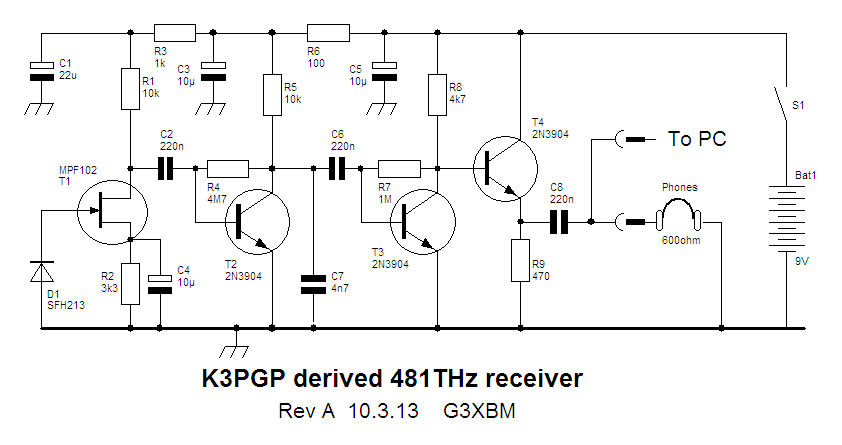
Although Markus, John and myself all built the same design, it is interesting to see the end results, as each used a different construction method.
John chose to use perfboard and point to point-to-point wiring:
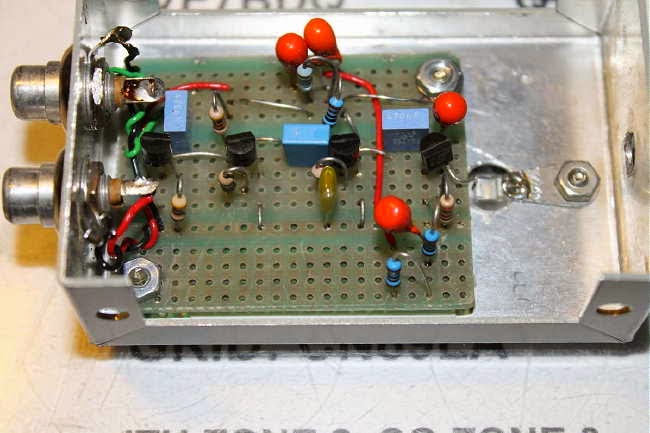 |
| VE7BDQ's Perfboard RX |
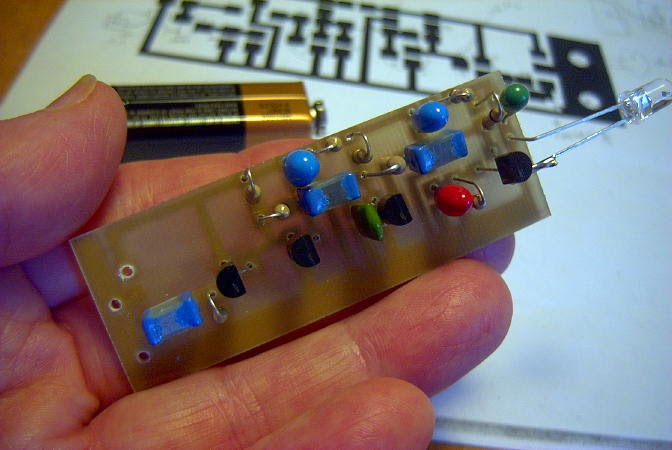 |
| VE7SL's PCB RX |
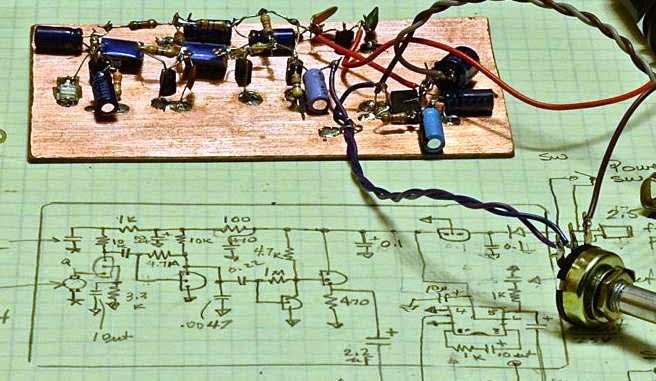 |
| VE7CA's Dead-Bug Style RX |
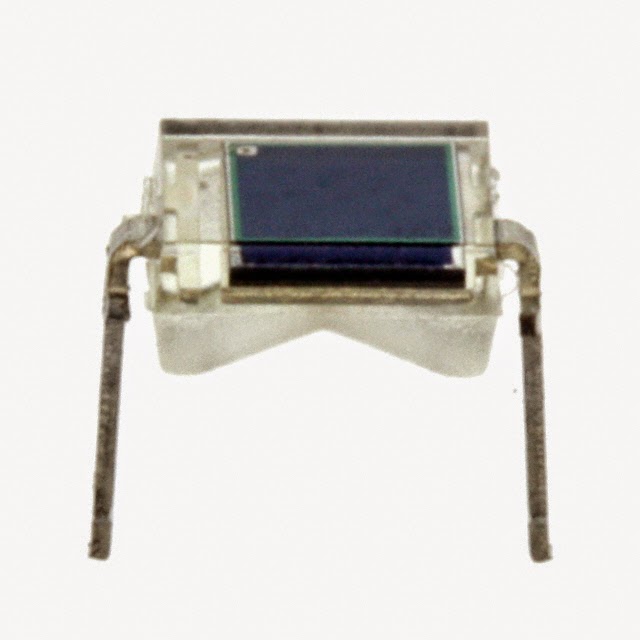 All of us used the Osram BPW34 PIN diode for the detector after having it recommended by Clint in e-mail 'detector discussions' as being a good performer . It is still readily available from the usual places, at around eighty-cents.
 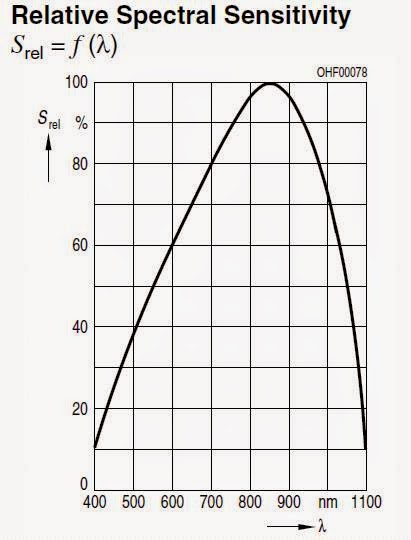 |
| BPW34 Spectral Range |
Many silicon PIN photodiode detectors are available with filters that let them achieve maximum sensitivity at the lower IR range while blocking the unwanted higher frequency visible light sources. Such is the case with this one, available as the BPW34FA. If you wanted to run an all IR system, reducing visible light QRM, this detector might be a better bet.
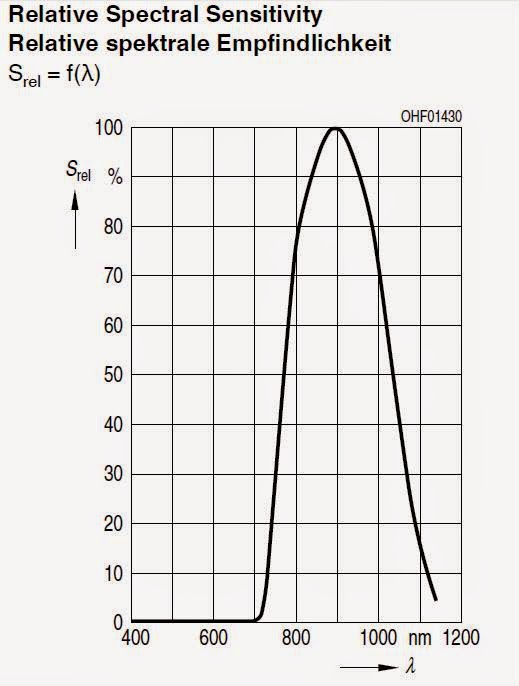 |
| BPW34FA Spectral Range |
When it comes to diode detectors, there are always new challengers appearing in the marketplace. There are still many opportunities for experimenting when it comes to optimizing the front-end of your receiver.
When coupled with its focusing lens in the final stage of construction, the receivers are amazingly sensitive. Even the slightest hint of a light source, often invisible by eye, would produce a response from the system....even starlight!
One of the first sounds detected was a low-pitched and repetitive 'thump-thump' which turned out to be the wingtip strobe lighting of jet aircraft activity approaching and departing Vancouver International Airport. After several nights of listening it was apparent that the strobe lighting could be detected from at least 70 miles out and from aircraft still above 10,000'. Panning over to the runway (about 25 miles away), I could often detect the strobes from departing aircraft even though they had not appeared above my sea-level horizon. Eventually I would see them rise above the horizon, about a minute after hearing them on the runway while on their takeoff roll. I suspect the propagation mode would be a form of clear-air scatter since there was no direct line-of-sight to the signal source when initially heard.
Panning the receiver slowly along the many miles of coastal mainland, on the other side of Georgia Strait, revealed many signals, most of them with different audio signatures. Some sounded rough and buzzy, like an unfiltered CW note, while others were T9 and very clean. Most had different repetition rates resembling radar sweep speeds but, once again, most sources were not visible to my eye...nor were they located when scanning the signal source with binoculars. I suspect that most signals were from various fixed lighting installations either strobe lighting or area flood lighting. Some targets appeared to be slowly moving and were found to be coming from tankers and container ships travelling along the far coast line. Hearing so many of these modulated lightwave signals was certainly an interesting experience and something I had not really expected. Even individual stars would produce a detectable 'hum' as the receiver/lens combination was aimed directly at them.
My one and only daylight test revealed extremely high levels of hum from the bright sky and, no doubt, front end overload desensitising....but the sudden sound of a buzzing bee in the headphones turned out to be just that, as the reflected light from its wings was being modulated by the rapid flap-rate....all very eye-opening to me and totally unexpected.
Here are some recent audio recordings made during a period of heavy cloud cover over Georgia Strait. All are on the far mainland coast or further inland and most sources were not visible to my eye.
- Landing aircraft strobes at Vancouver International ~ 30 miles.
- Aircraft over Georgia Strait, ~ 40 miles.
- Unidentified with odd repetition rate.
- Washington coast unidentified ~ 30+ miles.
- Washington coast unidentified 2.
- Washington coast unidentified 3.
I think such a system would make a wonderful 'science-fair' project for a budding student, complete with recordings....but perhaps it has all been done before!
For a very in-depth study of various current RX designs, see the Optical Receivers page of KA7OEI.
With all three receivers working well, the transmitters would be next....
Steve McDonald, VE7SL, is a regular contributor to AmateurRadio.com and writes from British Columbia, Canada. Contact him at [email protected].
KX3 troubles
 |
| A happy looking KX3 |
 |
| Not so happy KX3 |
Mike Weir, VE9KK, is a regular contributor to AmateurRadio.com and writes from New Brunswick, Canada. Contact him at [email protected].
Time Passages
Shortwave Broadcasting is Dead
Who among us didn’t get baptized in ham radio via shortwave listening? A special committee on the future of shortwave broadcasting paints a grim picture. “While there is still a critical need for shortwave in key countries, it is a medium of marginal and continuously declining impact in most markets.” The report said that even in countries where shortwave radio enjoys significant usage levels, “audiences will migrate to other platforms as they become more accessible.”
QRP Blog Ends Syndication
W2LJ decided to end the syndication of his ham radio blog on AmateurRadio.com, a popular blog aggregator. I don’t know how long his posts had been picked up and re-broadcast there, but it’s been available for quite some time. His explanation was guarded, though he did write that it was a decision he’s been mulling “since this past Easter”. He also mentioned that not all his musings are about ham radio, some of them detail his religious beliefs and that may have played a factor.
Larry says his blog will remain open for business.
Leaving TenTec
In other passages, Jim Wharton, NO4A has resigned from TenTec. He assumed day-to-day operation of the company as President in January of this year when Jack Burchfield, K4JU retired.
This is likely related to the new association with RF Concepts and the assessment of the need for multiple leaders as a result of the merger. Or Wharton found a better gig. Or maybe TenTec really is going belly-up. Hard to say as the situation there seems anything but predictable…
Filed under: Ham Radio Tagged: blog, tentec, w2lj 


Jeff Davis, KE9V, is a regular contributor to AmateurRadio.com and writes from Indiana, USA.
New gadget measures negative resistance
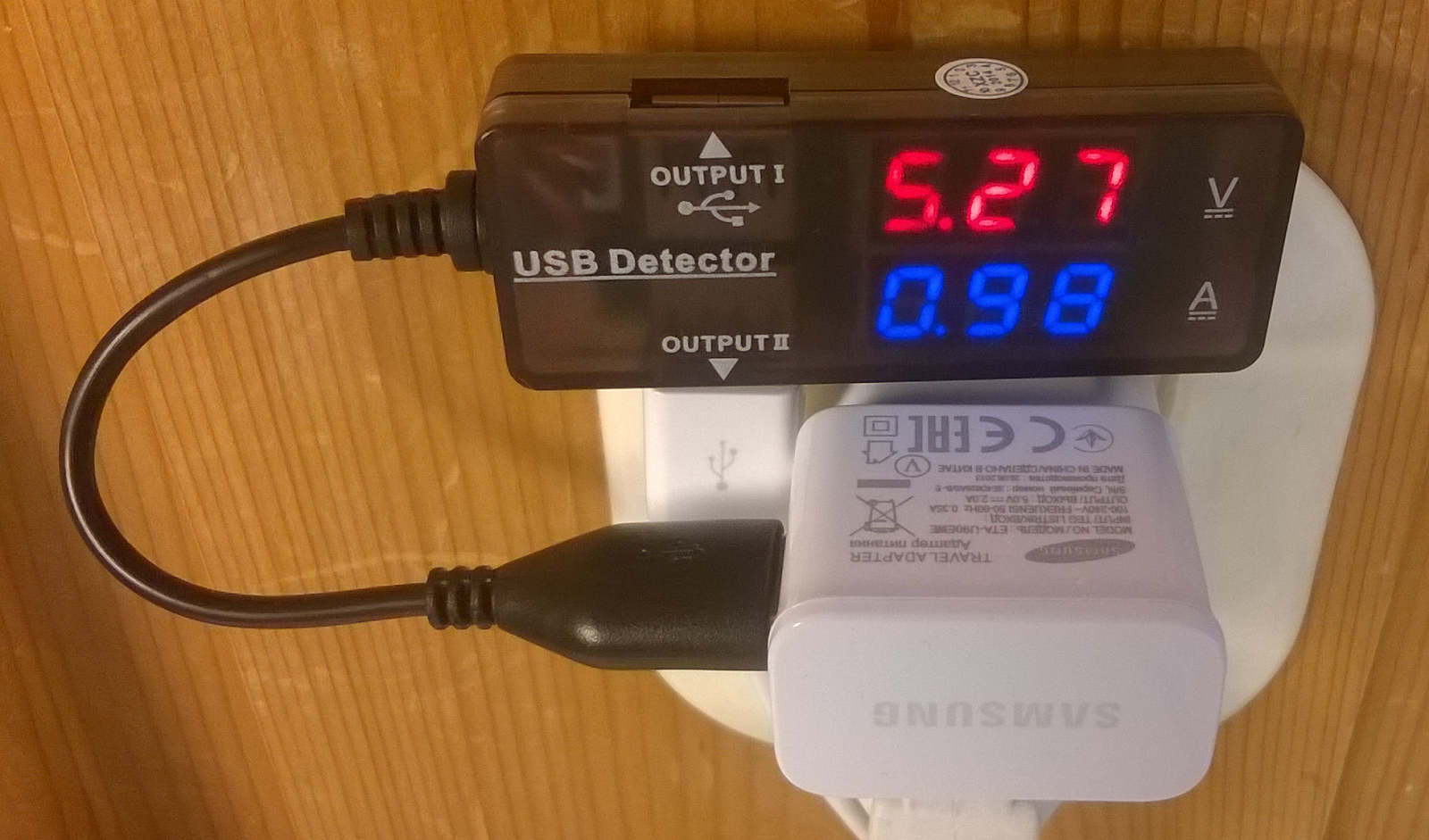
If you are like me, you appreciate electronic gadgets with dials and displays. So when I discovered this “USB detector”, I thought to myself that I really always wanted to know the voltage as well as the current consumption of my USB devices. And since it is more or less impossible to connect a multimeter, this is exactly what I need.
The device fully satisfied my curiosity. Actually one surprising result was that the charger for my Samsung Galaxy Note 8 has a negative output resistance.
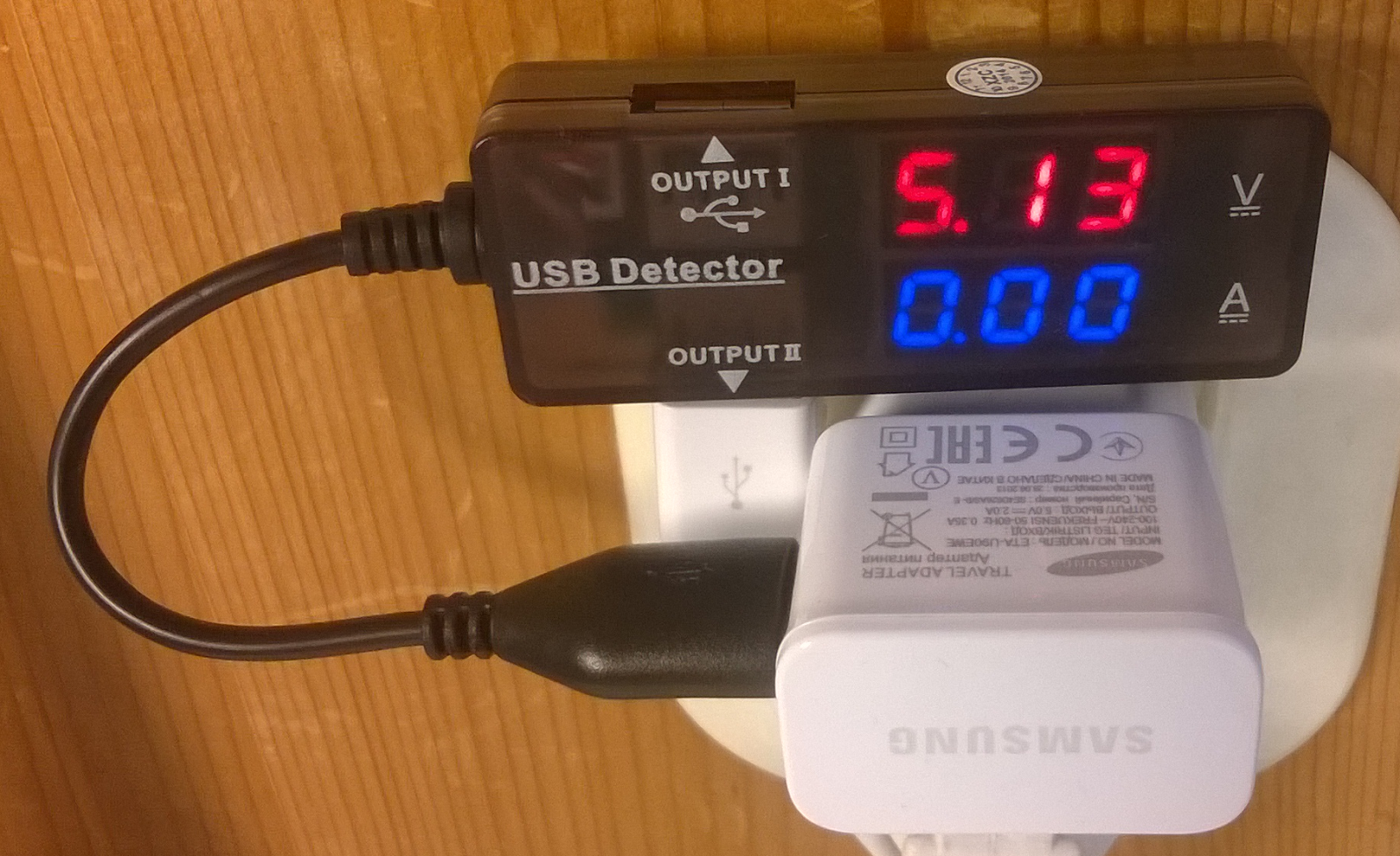
With a load it outputs 5.27 Volts as shown in the top image. Usually one expects the voltage to increase when the load is removed. But for this charger the voltage dropped instead to 5.13 Volts (second image). That should mean that there is the equivalent of a series resistance of (5.13-5.27)/0.98 which is about -0.14 Ohm.
I measured other chargers also, without finding a negative output resistance, so it seems as if it applies to this particular charger only. Out of curiosity, I also measured the current consumption of my Arduino Mega to 0.08 A without any shields connects.
The unit has two outputs which are different from each other. Output 1 is a fully functional USB port, while output 2 only connects DC power. What is that good for? Well, the epanoroma blog opened my eyes to the utility of this. If you charge your phone at some public place, then this feature isolates the data port of your phone. That may protect you from being hacked.
So there you see. The €5.13 were well spent and I even learnt something new by giving in to the temptation to click “Buy It Now” on Ebay.
But why does the Samsung charger have what amounts to a negative output resistance, is it by design or by accident?
Sverre Holm, LA3ZA, is a regular contributor to AmateurRadio.com and writes from Norway. Contact him at [email protected].
North America SOTA Activity Weekend, Setptember 13-14
North America SOTA Activity Weekend 2014, September 13ths and 14th, is a casual event involving tiny battery-powered radios on mountain summits. It i s not a contest but is intended to introduce "Summits on the Air" to newcomers with home stations who try to work summit operators during one or two days. There are no rules regarding power levels, modes or number of bands worked, but please be courteous when more than one station is trying to talk to a SOTA operator on a summit. The SOTA operators have just climbed mountains as high as 14,000 feet; they use low power; and they don't receive on split frequencies.
Mike Crownover, AD5A, is a regular contributor to AmateurRadio.com and writes from Texas, USA. Contact him at [email protected].
 Ham Radio Deluxe |
 W5SWL Electronics |
 Ham Radio Prep |
 KB3IFH QSL Cards  Hip Ham Shirts  HamRadioAuctions HamRadioAuctions Reliance Antennas Reliance Antennas Enigma Shop Enigma Shop |  morseDX  Ni4L Antennas  R&L Electronics R&L Electronics antennas.us antennas.us QRV QRV |
- Matt W1MST, Managing Editor
