 |
 Bonus Episode: Huntsville 2014
 25 August 2014 | by
AmateurLogic.TV Huntsville Bonus Episode is now available for download.
George and Wayne make their yearly pilgrimage to the Huntsville Hamfest. We visited with some old friends to find out what they’ve been up to and got some great stories you’ll enjoy.
1:11:47 Southern Amateur Fun
George Thomas, W5JDX, is co-host of AmateurLogic.TV, an original amateur radio video program hosted by George Thomas (W5JDX), Tommy Martin (N5ZNO), Peter Berrett (VK3PB), and Emile Diodene (KE5QKR). Contact him at [email protected].
Good lunchtime DX session
But the day heated up, and by lunchtime it was 84F (29C). Quite a warm up! And fortunately, it wasn't only the air temperature that had gotten hot. 17 and 15 Meters were hopping and hot - well, maybe not as hot as a few months ago, but hotter than just a few weeks ago. The sunspot number had risen to 128 making conditions better than they have been in days. I'll take it!
I worked 9Y4/AI5P on Trinidad/Tobago, RI4CWC/3 in Russia and PI4DX in the Netherlands, all on 17 Meters. The thought then occurred to me that if 17 Meters was working so well, then 15 Meters might be worth looking at. It was, and after switching over, I worked OQ4U in Belgium and SP2GUB in Poland. All the stations on both bands had excellent signal strengths and I got decent reports back, the lowest being 559.
I don't know how long these good band conditions will be able to maintain themselves. The way the Sun is throwing fits and starts, it may not be for that long. But if you get a chance, get on the air and make hay while the opportunity presents itself!
72 de Larry W2LJ
QRP - When you care to send the very least!
Larry Makoski, W2LJ, is a regular contributor to AmateurRadio.com and writes from New Jersey, USA. Contact him at [email protected].
Yaesu launches FT991 in Japan
Ever alert Steve G1KQH has spotted that Yaesu launched the new FT991 at the Tokyo Ham Fair in Japan as a replacement for the FT897D. See http://qrznow.com/yaesu-ft-
This looks a very neat, small, multi-band, multi-frequency rig, as long as the price is sensible. In Jaoan, they usually sell a QRP version too. It would be good to see a 20-30W version in Europe too. This would compete well with the (now stopped) IC703 rig by ICOM.
 |
| http://qrznow.com/yaesu-ft- |
The image is linked from the http://qrznow.com/yaesu-ft-
There is no sign of a replacement for the FT817ND rig. I think Yaesu must have abandoned plans, which is a shame.

Roger Lapthorn, G3XBM, is a regular contributor to AmateurRadio.com and writes from Cambridge, England.
On Making Nanowaves – Part 6
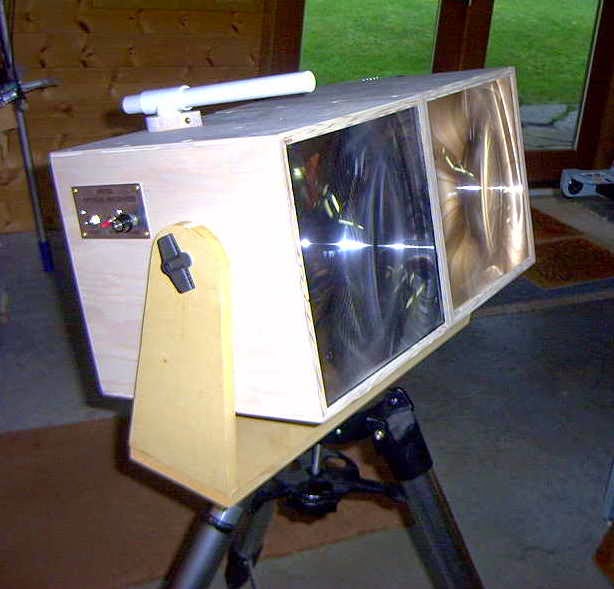
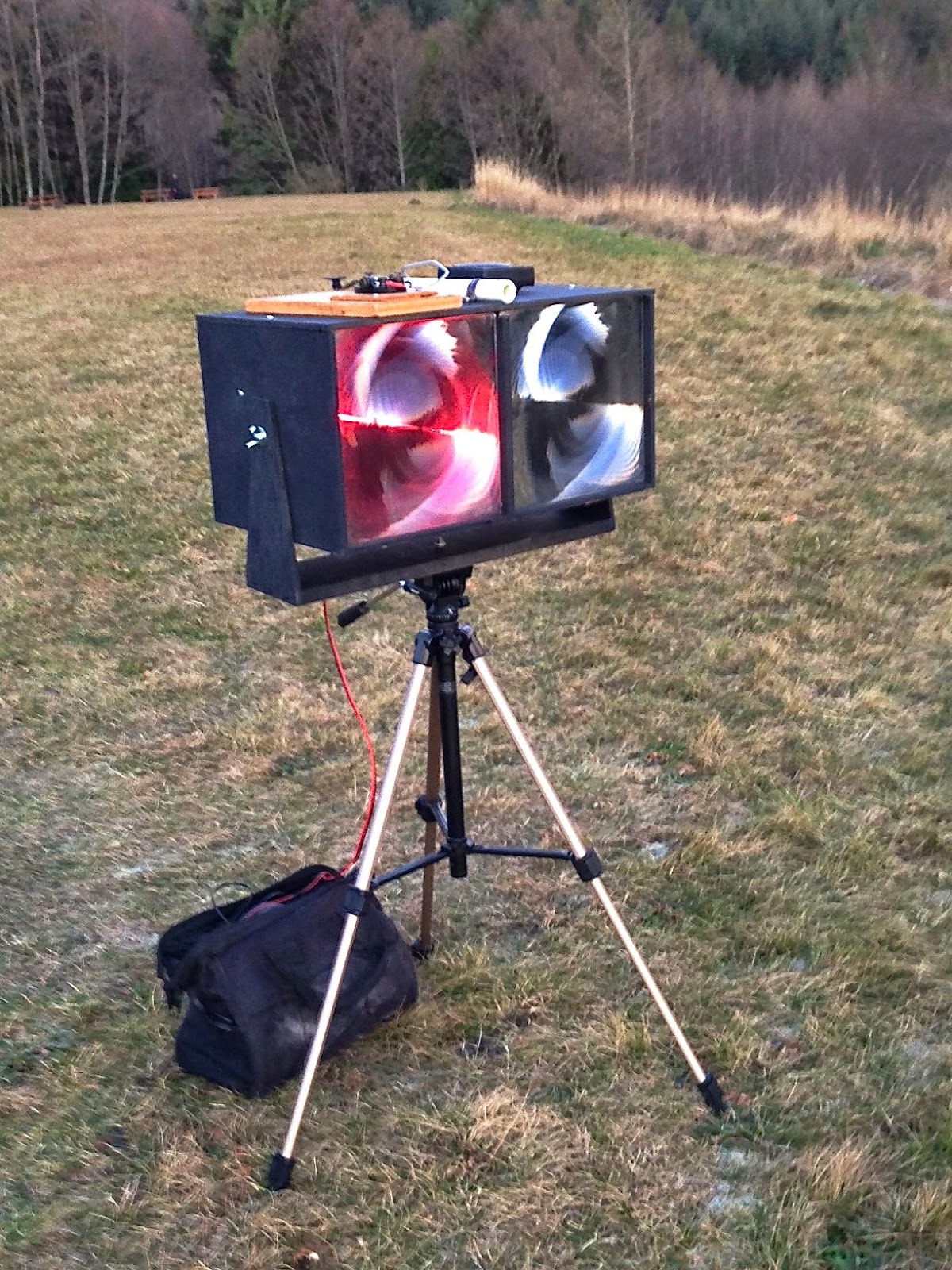
After the transmitter and the receiver had been accurately focused (the receiver's photodiode at the fresnel's focal point and the transmitter's secondary lens properly positioned) both enclosures were screwed together and mounted on a tripod.
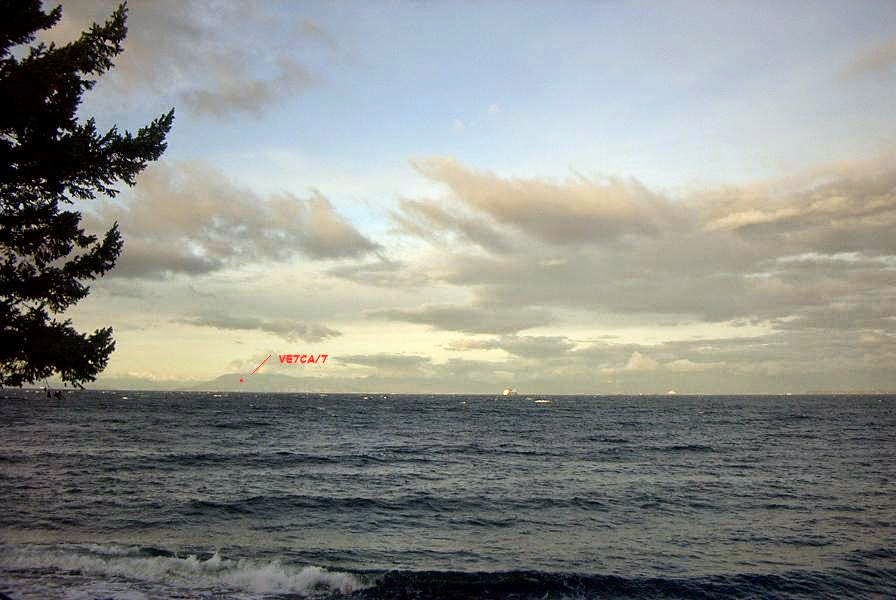
Markus, VE7CA, had checked-out a suitable location not far from his home QTH on the road to one of the local ski-hills. This gave him an unobstructed view to my location on Mayne Island, about 54km to the southwest. I had planned to set up in my front yard, about 15' above sea level and on the eastern shoreline with a direct shot to Markus.
Even though we were using LEDs rather than lasers, I still felt somewhat uneasy as our path crossed directly over the runways at Vancouver International (around the path midpoint) as well as the main ferry lane between Vancouver Island and the B.C. mainland. Considering the distances involved, I probably need not have worried as the light, although bright, would cause no physical harm other than possible momentary distraction or curiosity. If one of the ferries had been approaching the path, I had planned to shut down until it had passed as it would have been hard to convince authorities that the light really was not a laser, before they carted me away!
After waiting for the usual winter B.C. rain to subside, we finally had a promising evening shaping up, although somewhat cold. Markus, accompanied by Jim, VE7BKX, loaded his vehicle and headed for the mountains. With neither of us having 2m portable radios, we somewhat guiltily reverted to cellphones to announce setting-up status.
 |
| VE7CA/7 |
Almost immediately I heard his beacon signal although there was no visible sign of his light.
Before final alignment I made a quick recording of his signal.
Neither if us had any real idea of what type of signal strength to expect and we were both very surprised to hear how strong the signals were. Once we had both aligned and our lights were now visible, we switched to CW mode and proceeded to work each other in typical QSO mode.
Hear is a recording of Markus sending my RST report.
Signal reports as well as grid squares were exchanged just to make everything 'official'. We then settled into a nice twenty-minute ragchew until the cold winter air took its toll on our fingers forcing us both to close down and pack up for the night.
Markus grabbed a short cellphone video from his end which shows the still fairly bright twilight skies and the LED signal source:
Earlier, John (VE7BDQ) had made the decision to not build a transmitter as he preferred not to go portable. Both of us were interested in pursuing a possible non-line-of-sight (NLOS) path by using either 'cloudbounce' or 'clear-air scattering' which would allow John to set up in his backyard. The path between us is much shorter than the VE7CA/7 path as can be seen in the map below:
 |
| Courtesy: https://maps.google.ca/ |
For one-way beaconing, I plan to add a more accurate crystal-controlled tone module so that my CW signal's frequency is precisely known and can be watched for in the very narrow bandwidth window of Argo or Spectran over a given period of time. Even at these slower speeds, QSOs exchanging the minimum required information can still be made relatively quickly. Hopefully any reception at all of my signal at John's location will excite him into building a transmitter as well. Completing a two-way contact using the NLOS mode would be a very interesting challenge.
In the meantime, Markus and I have been seeking out possible new locations for his remote work, using "HeyWhat'sThat Path Profiler" web site. This site quickly indicates the distance and headings between any two points and draws a geographic contour of the path showing any obstructions.
 |
| Courtesy: http://www.heywhatsthat.com/profiler.html |
Markus hopes to get out to one such favourable location in the Fraser Valley mountains, before the weather turns nasty once again.
If there is anyone in the Vancouver lower mainland region that might be interested in building a lightwave station to join us in the fun, please do not hesitate to make contact with any of us...we would love to hear from you!
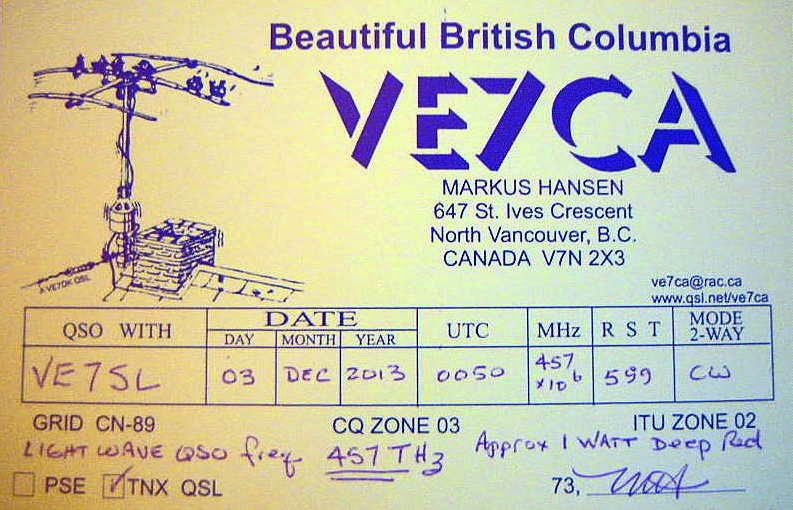
If you are a member of the Radio Amateur's of Canada (RAC) and receive their 'TCA' journal, please watch for our upcoming article in September's issue..."A West Coast Lightwave Project".
Steve McDonald, VE7SL, is a regular contributor to AmateurRadio.com and writes from British Columbia, Canada. Contact him at [email protected].
Series Seven Episode Seventeen – South London Roundtable (24 August 2014)
Series Seven Episode Seventeen of the ICQ Amateur / Ham Radio Podcast has been released. The latest news, Martin (M1MRB & W9ICQ) and Colin (M6BOY) discuss the ARRL protecting Amateur's with HR.4969 and Martin (M1MRB & W9ICQ) chairs a South London Amateur / Ham Radio Roundtable.
- GB2EMF at EMF 2014 Amateur Radio Village
- Ham radio goes around the Moon
- False health scare over radio ham's mast
- Updated Worldwide Amateur 5 MHz Allocation Chart
- Kerry Amateur Radio Group issued an additional callsign
- IARU R1 to discuss possible loss of 23 cm
- RFinder now finds repeaters over routes worldwide
- GB50LM Leighton Moss 50th Anniversary
- GB4JDF Special Event Station
Colin Butler, M6BOY, is the host of the ICQ Podcast, a weekly radio show about Amateur Radio. Contact him at [email protected].
Series Seven Episode Seventeen – South London Roundtable (24 August 2014)
Series Seven Episode Seventeen of the ICQ Amateur / Ham Radio Podcast has been released. The latest news, Martin (M1MRB & W9ICQ) and Colin (M6BOY) discuss the ARRL protecting Amateur's with HR.4969 and Martin (M1MRB & W9ICQ) chairs a South London Amateur / Ham Radio Roundtable.
- GB2EMF at EMF 2014 Amateur Radio Village
- Ham radio goes around the Moon
- False health scare over radio ham's mast
- Updated Worldwide Amateur 5 MHz Allocation Chart
- Kerry Amateur Radio Group issued an additional callsign
- IARU R1 to discuss possible loss of 23 cm
- RFinder now finds repeaters over routes worldwide
- GB50LM Leighton Moss 50th Anniversary
- GB4JDF Special Event Station
Colin Butler, M6BOY, is the host of the ICQ Podcast, a weekly radio show about Amateur Radio. Contact him at [email protected].
Portable All-Mode VHF Radio: FT-817 vs KX3
For truly portable mountaintop all-mode VHF operating, especially SOTA and VHF contests, the Yaesu FT-817ND has been my rig of choice. You might say that it is really the “only game in town” for a 6m/2m/70cm radio that fits in a backpack.
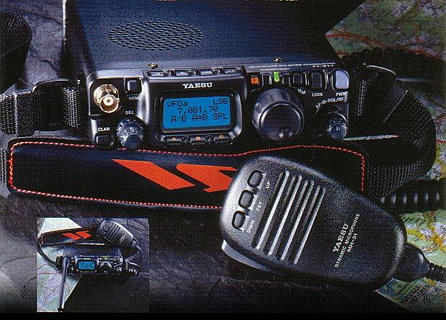
The Yaesu FT-817ND
I’ve had my eye on the Elecraft KX3 transceiver ever since it was introduced, but really I have been waiting for the 2m module to become available. (The KX3 has HF plus 6m standard.) After being announced over a year ago, the 2m module is now shipping and radio amateurs are getting their hands on the unit.
I do enjoy getting on the HF bands but my radio passion has always been centered on 50 MHz and higher. For my purposes, the manufacturers could have left off the HF bands and just designed a portable rig that does 6m, 2m and 70 cm (and maybe 1.25m, too). Or how about a dualband HT that does SSB?
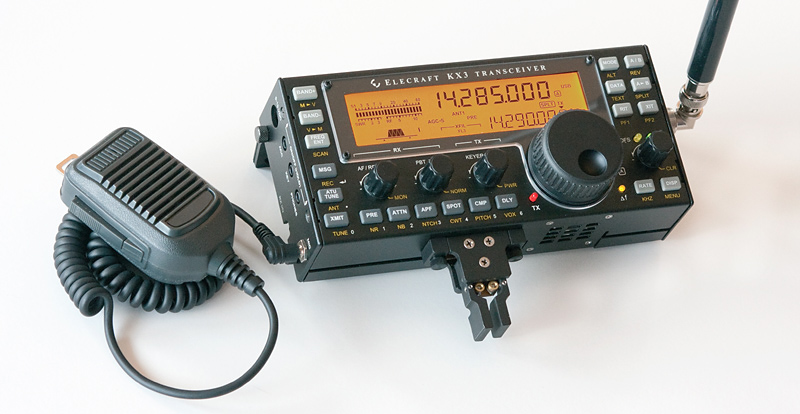
The Elecraft KX3
I’ve used my 817 for many portable operations, so I have quite a bit of stick time on that rig. I’ve not really used a KX3, other than to play with it at hamfests. I’ve also talked with a number of KX3 owners that really like the rig. I was a bit surprised that the KX3 power is only 2.5W minimum (3W typical), compared to 5W with the FT-817. (Yeah, I know, that’s only 3 dB difference, blah, blah, blah.) One of the big complaints on the 817 is that it is a bit of a battery hog on receive (450 mA) but the KX3 is not that much better at 300 to 350 mA. Here’s my comparison table for the two radios — with the emphasis on VHF operation.
| FT-817ND | KX3 with 2m Module | |
| Bands | HF + 6m, 2m, 70cm | HF + 6m, 2m |
| 6m Power Out | 5W | 8W |
| 2m Power Out | 5W | 2.5 -3W |
| Standby rx current (2m) | 450mA | 300 to 350 mA |
| Transmit current (2m) | 2A | 1.7A |
| Weight | 2.5 lbs, 1.2 kg | 1.5 lbs, 0.7 kg |
| Price | $690 | KX3 assembled $900 Hand mic $60 2m module $260 Total: $1220 |
The price comparison is a bit tricky because the KX3 can be purchased in kit form for $100 less. Many hams will actually see the kit assembly as a plus, since they get the satisfaction of building their own radio. A microphone is not standard on the KX3, so I added that to the list. Also, there are several different variations on the 2m module, depending on whether the automatic antenna tuner for HF is installed and whether the factory installs the option. I just picked a price that was in middle of the range.
The table would lead you to conclude that the FT-817ND is the clear winner mostly based on price (and the 70cm band). But its not that simple. There is a lot to like about the KX3, including the nice big display and the trail friendly layout. It also has more features for CW, PSK31 and RTTY.
For me, the answer is clear: keep on keepin’ on with the 817, since there is not enough of an advantage to go to the KX3. But I will probably keep lusting after it anyway. This also raises the question: what does Yaesu have coming to replace the aging 817?
What do you think?
73, Bob K0NR
Bob Witte, KØNR, is a regular contributor to AmateurRadio.com and writes from Colorado, USA. Contact him at [email protected].
 Ham Radio Deluxe |
 W5SWL Electronics |
 Ham Radio Prep |
 KB3IFH QSL Cards  Hip Ham Shirts  HamRadioAuctions HamRadioAuctions Reliance Antennas Reliance Antennas Enigma Shop Enigma Shop |  morseDX  Ni4L Antennas  R&L Electronics R&L Electronics antennas.us antennas.us QRV QRV |
- Matt W1MST, Managing Editor
