 |
 The PAØRDT Active Whip….On LF
 29 September 2014 | by
 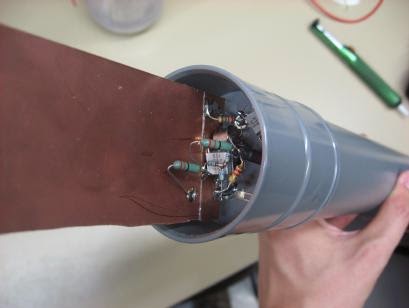 |
| The Mini-Whip at University of Twente's (Netherlands) Remote Receiver |
I think many hams believe that they need big antennas and lots of space to operate on 630m or even to listen on the band. I can assure you that big antennas are definitely not needed to listen or for that matter, even to transmit effectively.
You might be surprised at just how well you can hear on 630m using one of your low band antennas, such as an 80m or 40m dipole. Best results will be had with the coaxial feed's shield lifted from ground and connected to the center pin. This, in effect, allows your dipole to act as a top-loaded 'T', with the coaxial feedline now acting as the vertical element and the dipole section as a capacitive tophat. With a few ground radials, such an antenna can even be used for transmitting, if suitably resonated, but that's another topic altogether. Even untuned, this system will allow you to receive suitably on 630m providing your location is not inundated with high noise levels. High noise levels can often be overcome by using loops, either resonated or broadband. Loops can be very effective at nulling noise, particularly if it is coming from one direction, and vastly improving LF receive-capabilities.
Another popular solution and one that can be quite effective at lowering noise levels and improving overall signal-to-noise is the use of a short active (amplified) whip antenna. One very popular and proven design is that of Roeloff Bakker, PAØRDT. His simple-to-build active whip has been employed around the world and is being used by many LF'rs for dependable reception on the NDB band as well as on 630m. Roeloff himself operates from a noisy urban area yet manages to hear amazingly well on LF and MF with this simple antenna. Unlike a much larger wire antenna or large loop, the small active whip can be easily positioned in the quietest part of your backyard or rooftop. Often just moving such an antenna a few feet one way or the other can make a huge change in the noise level if you are operating from a typical city or suburb location....the PAØRDT whip may be all that you really need for long-term, reliable LF reception.
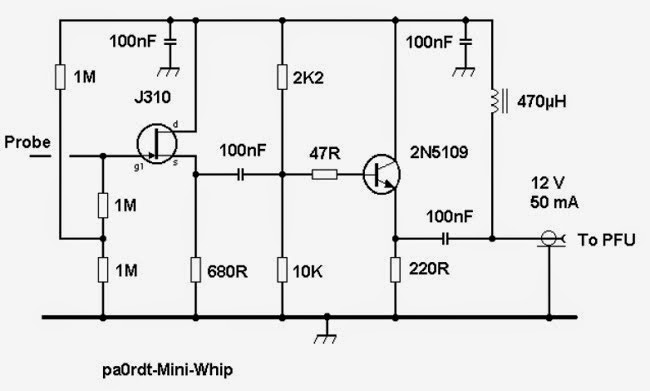 |
| Courtesy: PAØRDT |
Common practice is to mount the PCB inside a small weather-sealed PVC pipe and erect it atop a mast, after taking the time to "sniff-out" the quietest location for its placement.
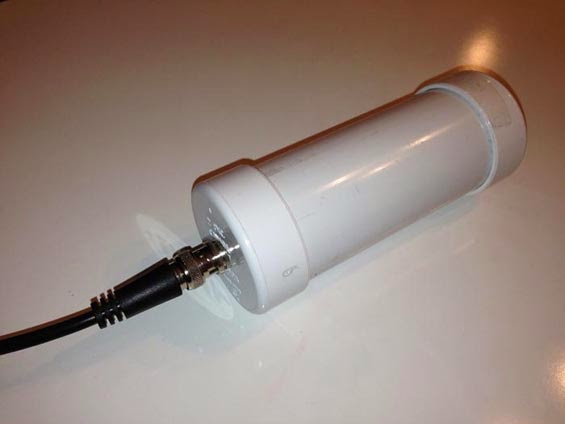 |
| Courtesy: http://www.leeszuba.com/projects/ |
With very few parts needed, the whip can be built for just a few dollars...even less with a good junkbox and the needed transistors.
 |
| Courtesy: http://www.leeszuba.com/ |
You can read Roeloff's own information on construction of the active whip here, with additional information here.
I even see the parts and PCB available on e-bay. As well, Roeloff himself, can provide finished units ready to mount in the air.
 |
| Courtesy: http://countingradios.blogspot.ca/2014_01_01_archive.html |
There are plenty of informative Mini Whip articles and construction stories on the web should you wish to learn more:
- Fundamentals of the Mini Whip by PA3FWM
- The PAØRDT Mini Whip by DL1DBC
- The Mini Whip Antenna by Lee Szuba
Steve McDonald, VE7SL, is a regular contributor to AmateurRadio.com and writes from British Columbia, Canada. Contact him at [email protected].
ZD9XF from the Pemi
It’s been Indian summer the last couple of days. That’s what we call it when we get a spell of summer weather during the cool fall days. It’s generally the last warm weather of the year.
I rode my bike along both sides of the Pemigewasset River yesterday and today. I worked Spain, Idaho, Madeira Island, Greece, Germany, Belgium and Tristan de Cunha.

Today was in the 80s! I rode my bike north along the Sanbornton side of the river. What a day… I rode about a mile and a half to the old bridge abutment and set up the KX3 under an oak tree in the shade. I tossed a 33 foot wire over a branch and started operating. I worked three stations in about 10 minutes on 17 meters.

First EG4ATB in Spain… it was a special event station and we exchanged 599s. The next was W1AW/7 in Idaho, and then I worked Madeira Island. Cedric CT3FT was just finishing up a QSO and I called him. He gave me a 579. “FB QRP WRKING VY NICELY,” he sent. He was running 500 watts to a 4 element beam.
The day was perfect. The trees are just starting to change color. The fields have recently been mowed and the scent of fresh hay fills the air.
On the Old Hill Side of the River
Yesterday, I was on the other side of the river. It was a beautiful day. I started out at Needle Shop Brook and headed south toward Franklin.

I rode south a couple of miles and set up at the edge of a large field in the sunshine just under a maple tree. I used the 33 foot wire and the KX3.
I started out on 15 meters and quickly worked SX7AMF, a special event station in Greece. We exchanged 599s and I tuned up a bit and worked W1AW/7 in Idaho. Then I switched to 12 meters and had the surprise of my life. There was ZD9XF in Tristan de Cunha calling CQ. This is a DXpedition on one of the most remote islands in the world! I got him on the second call and we exchanged 599s. I never expected that.
I switched to 17 meters and worked DJ9IE in Germany. Uli gave me a 579. He was 599. Before riding back, I worked one more… OP37AEF in Belgium.

These last few days of September are precious. There will be many months of snow and cold before we can enjoy the luxury of days like this again. I’m getting out every chance I have.
Jim Cluett, W1PID, is a regular contributor to AmateurRadio.com and writes from New Hampshire, USA. Contact him at [email protected].
APRS Maps
I’ve had a little play about whilst avoiding the household viewing of ‘Strictly come dancing’ aka ‘celebrity showing off’ with the APRS maps you can embed through APRS.fi
I’ve added a little map to the site here
Just a bit of fun but I do like APRS. Great for the fells.
Trouble is it seems to default to Helsinki regardless of the lat / long you put in the script
Alex Hill, G7KSE, is a regular contributor to AmateurRadio.com and writes from Cumbria, UK. Contact him at [email protected].
First impressions of the Noble Radio NR4SC 70MHz CW/SSB rig
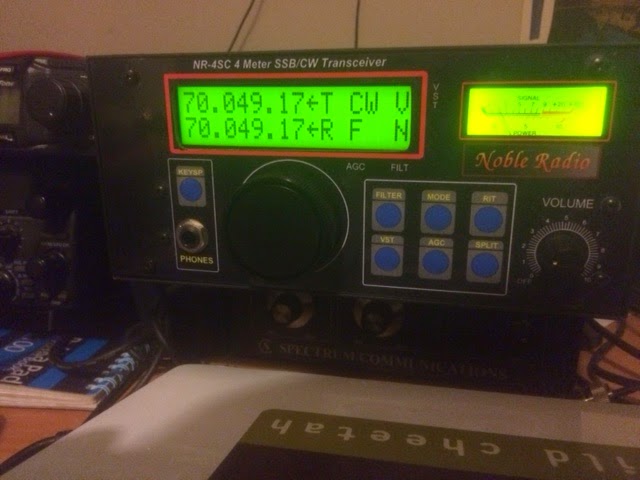
The first impression is of a solidly built radio. It’s quite chunky. When I posted a picture on Twitter, someone used the U word! But, I think the U word we should use is Utilitarian. It’s functional and reminds me of some of the Tentec styling.
Powering it up – I love the clear, big display of the frequency readout. Initially, I found the volume control a bit noisy. I mentioned this to Rob PE9PE and he said that some of the rigs did this, but a few quick rotations of the volume control would cure it. Sure enough it did. I hooked the rig up to my 70MHz vertical, which is what I normally use for working Es and the occasional tropo contact. Not ideal, but enough to make some contacts.
First tests were to listen to the GB3RAL 70MHz beacon. It was the same sort of signal strength that I expect with the Spectrum Transverter and HF rig, but interestingly, I felt the receiver was a lot quieter, which was nice.
The rig has a built in Iambic keyer for CW. I wanted to try that out as it seemed as if CW would probably be my best chance of making some contacts! The keyer socket on the rig is for a 3.5mm jack rather than a 1/4 inch jack – slightly pesty as all my other rigs have the larger size and I couldn’t immediately find an adapter. However, the Palm Paddle which I use with my FT-817 had the right size connector, so I decided to use that and plugged in and changed the mode to CW.
I discovered that the keyer jack is expected to have the dash on the tip, rather than the usual dot! Simple enough to resolve – I turned the paddle upside down and all then falls into place. The keyer is quite nice to use although I made the occasional mistake – which is just a question of getting used to the dot/dash memory.
The rig can also be supplied with a fist microphone and Rob had kindly included one of these with the package. Listening to the transmitted audio and the CW on a monitor receiver was fine and on a quick listen I didn’t hear anything I didn’t like the sound of.
Early this evening, Pete 2E0SQL kindly tried listening for me, although we didn’t manage a QSO – probably owing to our cross-polarised antennas. However, I did hear John M0UKD calling CQ on 70.200 from Hornchurch in Essex and was very pleased to be able to have a quick QSO with him. John was running 25W to a vertical compared to my 10W, so I was pleased to work him.
Tomorrow afternoon brings the Practical Wireless 70MHz contest, so I hope to make a few more contacts then.
In the meantime, the first impressions are positive. A rig which is simple to use, has a nice quiet receiver – and here’s the real plus – a rig with which you can monitor 70MHz without tying up an HF rig – no transverter needed.
I’m looking forward to playing some more, hopefully with some better antennas too and will post my further thoughts.
Tim Kirby, G4VXE, is a regular contributor to AmateurRadio.com and writes from Oxfordshire, England. Contact him at [email protected].
First impressions of the Noble Radio NR4SC 70MHz CW/SSB rig
The first impression is of a solidly built radio. It’s quite chunky. When I posted a picture on Twitter, someone used the U word! But, I think the U word we should use is Utilitarian. It’s functional and reminds me of some of the Tentec styling.
Powering it up – I love the clear, big display of the frequency readout. Initially, I found the volume control a bit noisy. I mentioned this to Rob PE9PE and he said that some of the rigs did this, but a few quick rotations of the volume control would cure it. Sure enough it did. I hooked the rig up to my 70MHz vertical, which is what I normally use for working Es and the occasional tropo contact. Not ideal, but enough to make some contacts.
First tests were to listen to the GB3RAL 70MHz beacon. It was the same sort of signal strength that I expect with the Spectrum Transverter and HF rig, but interestingly, I felt the receiver was a lot quieter, which was nice.
The rig has a built in Iambic keyer for CW. I wanted to try that out as it seemed as if CW would probably be my best chance of making some contacts! The keyer socket on the rig is for a 3.5mm jack rather than a 1/4 inch jack – slightly pesty as all my other rigs have the larger size and I couldn’t immediately find an adapter. However, the Palm Paddle which I use with my FT-817 had the right size connector, so I decided to use that and plugged in and changed the mode to CW.
I discovered that the keyer jack is expected to have the dash on the tip, rather than the usual dot! Simple enough to resolve – I turned the paddle upside down and all then falls into place. The keyer is quite nice to use although I made the occasional mistake – which is just a question of getting used to the dot/dash memory.
The rig can also be supplied with a fist microphone and Rob had kindly included one of these with the package. Listening to the transmitted audio and the CW on a monitor receiver was fine and on a quick listen I didn’t hear anything I didn’t like the sound of.
Early this evening, Pete 2E0SQL kindly tried listening for me, although we didn’t manage a QSO – probably owing to our cross-polarised antennas. However, I did hear John M0UKD calling CQ on 70.200 from Hornchurch in Essex and was very pleased to be able to have a quick QSO with him. John was running 25W to a vertical compared to my 10W, so I was pleased to work him.
Tomorrow afternoon brings the Practical Wireless 70MHz contest, so I hope to make a few more contacts then.
In the meantime, the first impressions are positive. A rig which is simple to use, has a nice quiet receiver – and here’s the real plus – a rig with which you can monitor 70MHz without tying up an HF rig – no transverter needed.
I’m looking forward to playing some more, hopefully with some better antennas too and will post my further thoughts.
Tim Kirby, G4VXE, is a regular contributor to AmateurRadio.com and writes from Oxfordshire, England. Contact him at [email protected].
One More Winter For The Tri-Tet-Ten?

Having completed the transmitter just in time for Cycle 24's hoped-for great 10m conditions, it turned out that only a couple of one-week periods over the past three winters where good enough to reach Europe. During the two "double-peaks" I worked many dozens of Europeans, all of them in response to my crystal-controlled CQ's, mostly on 28.042kHz.
 |
| Courtesy: http://www.noaa.gov/ |
Nobody was more excited than I, the first time I heard a reply from Europe....it was from G4RRA who, as fate would have it, recorded my signal on that early October morning.

There were a few mornings when I had long pileups and worked Europe for several hours, most of the time shaking my head in disbelief that such a simple transmitter could provide so much DX pleasure...but really of course, it was mostly the great performance of Ten....the "other magic band".
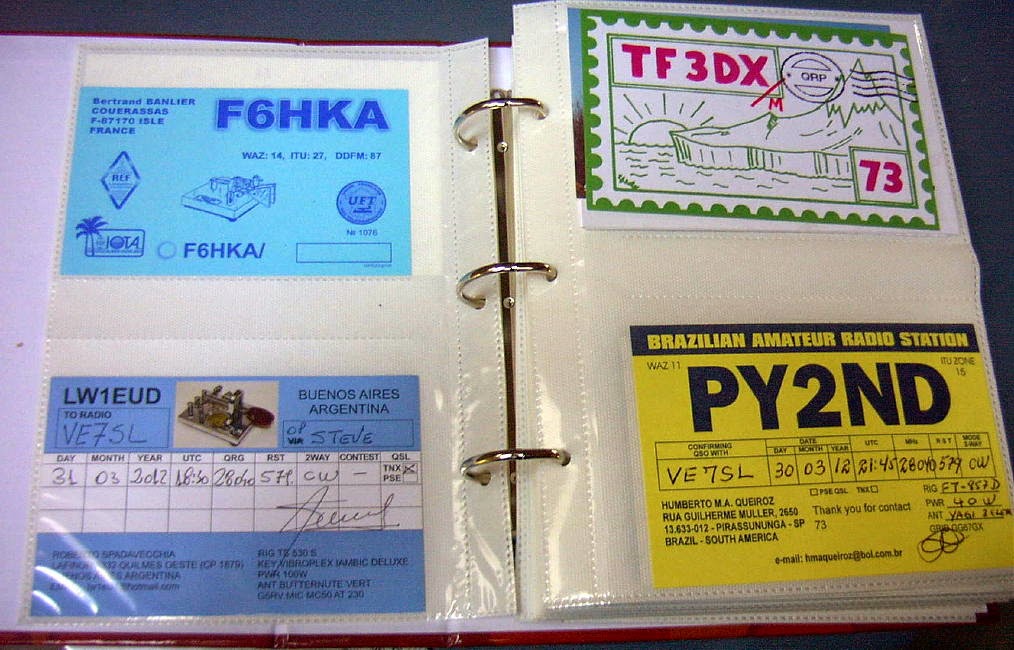
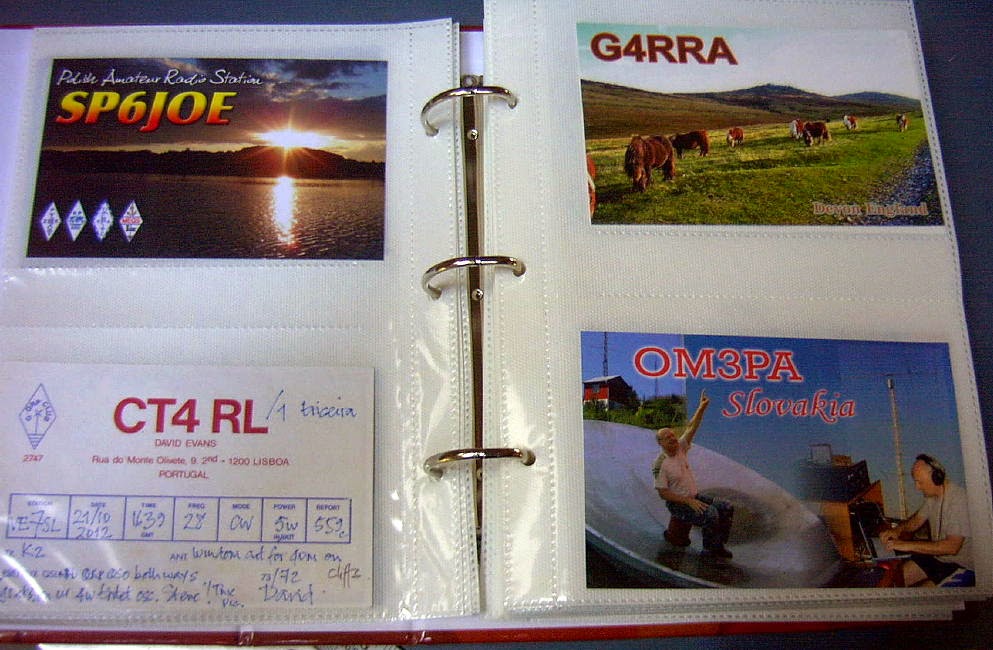
I really doubt that 10m will once again support European conditions good enough for my one-tuber but it's still fun to work the U.S. With Cycle 24 on the decline I was happy to see that F2 has returned to Ten once again and this week I sparked-up the tri-tet to enjoy the propagation.
My chirpy return to the band produced many enjoyable QSO's..... NG2T (NY), KD8IFJ (MI), K9DP (IN), KA2MLH (NY), W4NA (VA), N4OW (FL), K8NS (FL), N5AF (TX), WA5AFD (OK), K5TIA (TX), K9DX (IL) and VE3IKV/m, boldly travelling along the freeway at 120kph!
So....if you hear a chirpy CQ just a smidgen below 28.042, please.... give me a call!
Will I be lucky enough to squeeze out one last winter of tri-tet fun before having to move down to 15 or 20m? Time will tell....but somehow it won't be quite the same as riding that delicate 10m ether over the pole to Europe, on just one tube.
Steve McDonald, VE7SL, is a regular contributor to AmateurRadio.com and writes from British Columbia, Canada. Contact him at [email protected].
Bonus Episode: George’s Visit to the Land of Radios

George’s Visit to the Land of Radios is now available for download.
George visits with the Crew at Icom America for a fascinating tour of their new facilities. Up close interviews with different departments. Find out how they do what they do.
1:15:03
George Thomas, W5JDX, is co-host of AmateurLogic.TV, an original amateur radio video program hosted by George Thomas (W5JDX), Tommy Martin (N5ZNO), Peter Berrett (VK3PB), and Emile Diodene (KE5QKR). Contact him at [email protected].
 Ham Radio Deluxe |
 W5SWL Electronics |
 Ham Radio Prep |
 KB3IFH QSL Cards  Hip Ham Shirts  HamRadioAuctions HamRadioAuctions Reliance Antennas Reliance Antennas Enigma Shop Enigma Shop |  morseDX  Ni4L Antennas  R&L Electronics R&L Electronics antennas.us antennas.us QRV QRV |
- Matt W1MST, Managing Editor
