 |
 Launching Antennas With Right Guard
 9 November 2014 | by
  Dedicated LFer, K2ORS (Warren), posted a short video yesterday of his friend's attempted 'pre-antenna launch' test flight: "Attempted to use an 8 rotor U.A.V, to lift a string over the trees with
which an antenna wire could be pulled up. However, there were some
control issues..."
Dedicated LFer, K2ORS (Warren), posted a short video yesterday of his friend's attempted 'pre-antenna launch' test flight: "Attempted to use an 8 rotor U.A.V, to lift a string over the trees with
which an antenna wire could be pulled up. However, there were some
control issues..." 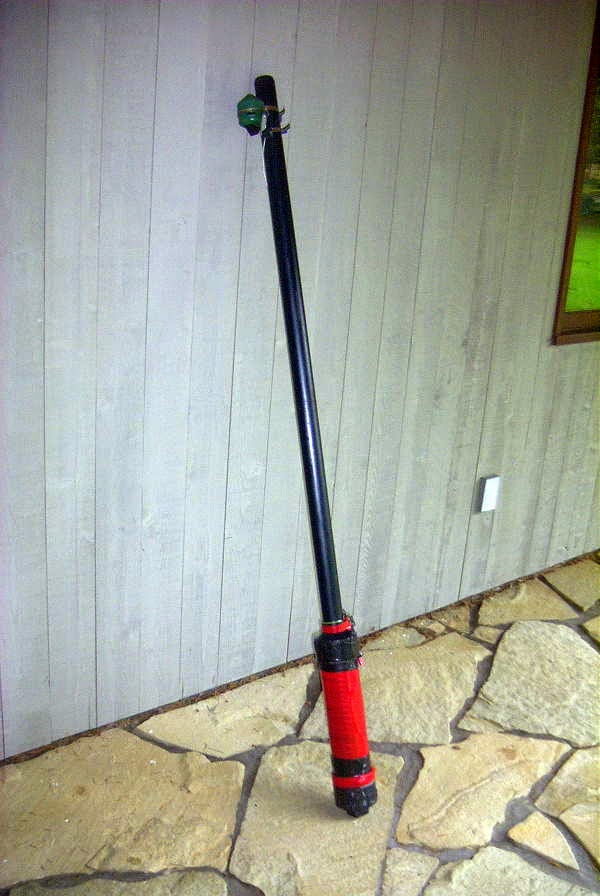
When I first fired it, I wrapped the breech in several layers of towelling, just in case it blew apart but felt confident enough to remove it after a few test shots.
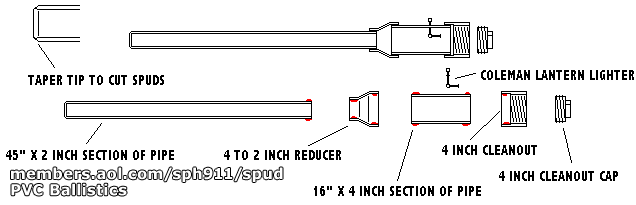
There are several websites describing spud gun construction and a quick Google-search will bring up some interesting plans. My system pretty much follows this design, found here at spudgunner.com.
The first few times I fired the gun I was shocked to hear how loud it was, with a loud 'BOOM' reverberating around the neighbourhood. After a few shots, I fully expected to see the local RCMP arriving but when enquiring a few doors away, I was told that they had not heard anything! Perhaps it is because the thing is right beside you at the time that makes it sound so loud but I have never had any enquiries about it.
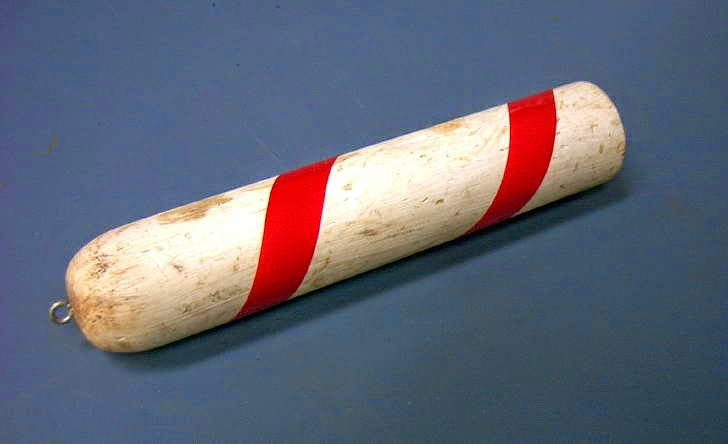
I have mounted an inexpensive (Walmart) spinning reel at the very top which has been loaded with a light (10lb) mono filament fishing line. This is attached to a homebrew lathe-turned wooden bullet, about 8" long, as shown below.
I have since used the gun many times, both here and at other ham's locations, to fire lines very high. It has always worked very well.
Should you choose to build something similar, be sure to build with caution and follow any safety instructions noted on the various websites. Most importantly, be sure to use the proper material.
Editor's Note: Using a combustion gun is inherently dangerous and can result in serious injury or death. Using the wrong materials, especially, can put the operator at risk. We cannot be responsible for personal injury or property damage resulting from use (or misuse).
Steve McDonald, VE7SL, is a regular contributor to AmateurRadio.com and writes from British Columbia, Canada. Contact him at [email protected].
Zombie Shuffle Recap – 2014

Larry Makoski, W2LJ, is a regular contributor to AmateurRadio.com and writes from New Jersey, USA. Contact him at [email protected].
Sourcing the semiconductors (1)
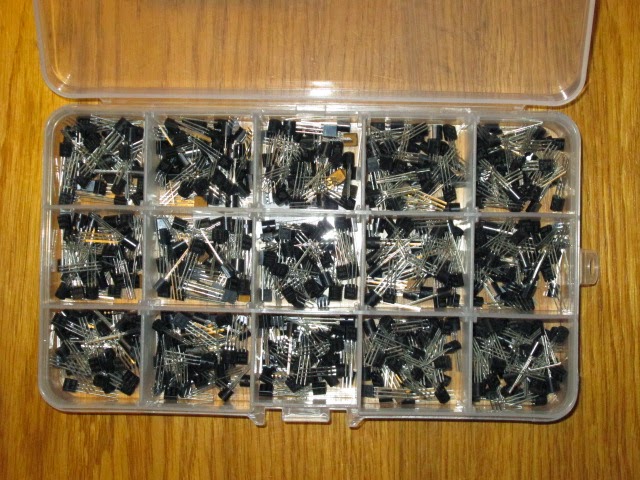
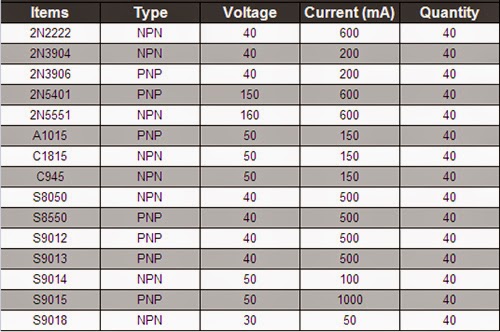
600 Pieces, 15 Different PNP & NPN, 40 of each. You can't really go wrong for £8.66 ($13 US) including shipping and the case too.
Values:
Down to Banggood again for the full details:
http://www.banggood.com/600-Pcs-15-Value-x-40-Pcs-Transistor-TO-92-Assortment-Box-Kit-With-Box-p-911338.html
Steve, G1KQH, is a regular contributor to AmateurRadio.com and writes from England. Contact him at [email protected].
More Resistors From China
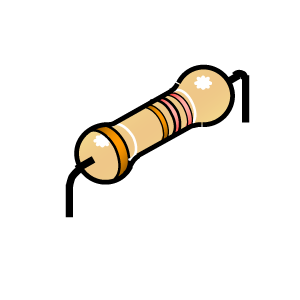 I suspect that, overall, very few hams actually take the time to read ham radio blogs. Of those that do, there is probably only a small percentage that take the time to read any post-blog 'comments' that might be made by others....so...if you missed the comments regarding my recent e-Bay resistor purchase, the following information may be of interest.
Steve, G1KQH, commented that he had found an even better deal on resistors from China at Banggood, in Guangzhou. I have heard good things about this company, which sells a large variety of items from electronic parts to the latest quadcopters. Steve reported a good buy on 1%, 1/4W resistors...50 different values and 50 of each....2500 resistors in total. The offering may be found here.
 |
| Courtesy: Banggood.com |
Steve adds: "The values of resistor are: 10M ,4,7M, 2M, 1M, 390K, 330K, 300K, 220K, 200K, 180K, 150K, 100K, 82K, 68K, 47K, 33K, 37K, 20K, 18K, 15K, 10K, 9K1, 8K2, 6K8, 5K6, 4K3, 3K9, 3K3, 3K, 2K7, 2K4, 2K, 1K5, 1K2, 1K, 680R, 470R, 300R, 270R, 180R, 91R, 68R, 56R, 47R, 20R, 10R, 6,6R, 1,8R, 1,2R , 1R.
They are five banded resistors inc one for the tolerance.
Arrived quick and you can use Paypal on Banggood, so no problem getting your money back if things go wrong."
With the free shipping, this is a super price and could be very difficult to beat! In addition, they offer smaller 1/4W resistor kits, a nice kit of 1/2W resistors, SMD kits and capacitor kits.
G1KQH maintains an interesting amateur radio blog, well worth a read. Thanks for the info Steve.
Steve McDonald, VE7SL, is a regular contributor to AmateurRadio.com and writes from British Columbia, Canada. Contact him at [email protected].
Martin Lynch & Sons to move store
Pop down to the link below for more details:
http://www.hamradio.co.uk/hogroast.php
I wish them well with the move and for the future..
Steve, G1KQH, is a regular contributor to AmateurRadio.com and writes from England. Contact him at [email protected].
Fire Destroys Hardened Power Systems Shop
A fire has destroyed the manufacturing facility of Hardened Power Systems, a research, design and fabrication facility in middle Tennessee. Popular among radio amateurs for their portable power hardware the DHAP, and other unique equipment. Current orders destroyed, but owner Bill Harrison says they will be back.
Filed under: Ham Radio Tagged: business, dhap 


Jeff Davis, KE9V, is a regular contributor to AmateurRadio.com and writes from Indiana, USA.
LHS Episode #135: A Mouthful of Potatoes
 In this fortnight’s episode of Linux in the Ham Shack, Pete (VE2XPL), returns to the land of the living. Your intrepid hosts discuss explosions in the sky, a “holiday” for ham radio operators, Linux vulnerabilities, caipirinhas, and ask the vital question: What is Allstar Link and does anyone use it? All that and more in this action-packed installment of LHS. Thanks for watching, and as always…
73 de The LHS Guys
Russ Woodman, K5TUX, co-hosts the Linux in the Ham Shack podcast which is available for download in both MP3 and OGG audio format. Contact him at [email protected].
 Ham Radio Deluxe |
 W5SWL Electronics |
 Ham Radio Prep |
 KB3IFH QSL Cards  Hip Ham Shirts  HamRadioAuctions HamRadioAuctions Reliance Antennas Reliance Antennas Enigma Shop Enigma Shop |  morseDX  Ni4L Antennas  R&L Electronics R&L Electronics antennas.us antennas.us QRV QRV |
- Matt W1MST, Managing Editor
