 |
 Twisted Phonetic Alphabet
 15 November 2014 | by
  Stu W0STU just posted an article on HamRadioSchool.com about the use of phonetic alphabets. I had previously posted a Shack Talk article on the same subject.
The “standard” phonetic alphabet is the ITU alphabet but I am starting to think that we might need to get a little more creative on our use of phonetics. Why not innovate in this area, just like we innovate on the technical front?
Towards that end, I was reminded of his phonetic alphabet listed over at netfunny.com:
        A  Are               N  Nine
        B  Bee               O  Owe
        C  Cite              P  Pseudonym
        D  Double-U          Q  Queue
        E  Eye               R  Rap
        F  Five              S  Sea
        G  Genre             T  Tsunami
        H  Hoe               U  Understand?
        I  I                 V  Vie
        J  Junta             W  Why
        K  Knot              X  Xylophone
        L  Lye               Y  You
        M  Me                Z  Zero
Even this creative alphabet can be improved on. For example, I think H should be Honor.
What do you think?
73, Bob
The post Twisted Phonetic Alphabet appeared first on The KØNR Radio Site.
Bob Witte, KØNR, is a regular contributor to AmateurRadio.com and writes from Colorado, USA. Contact him at [email protected].
TS940 back on the bench
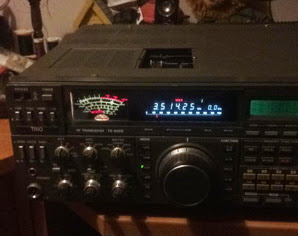
After its’ trip to James M1APC, the TS940 arrived back here on Thursday. I had a slight fright when it arrived back, when it needed a reset on switch on. And indeed, each time you switch on, you have to hold the A=B and power it on, which resets the microprocessor.
It didn’t do that when it left James, so I can only assume that it got shaken up somewhere. Anyway, it’s simple enough to do that, so no problem. Other than that it is working really well!
I checked the transmitter output and that looks good – even on AM! I was listening to various US stations on 29MHz AM this afternoon and although signals were fading up and down, it sounded very nice. It also sounds good on SSB and I’ve been listening a little on 7MHz where signals were good.
I haven’t tried it on CW. I don’t seem to have a working external morse keyer. I was hoping to use my old Morse Machine MM-3, but that seems to have stopped working in the years since I used it last and despite a quick poke and a prod, I couldn’t persuade it into life. I’ll find a small external keyer somewhere soon, I’m sure. I hope so, as the receive seems quite good on CW. I was listening to W1AW/5 on 21MHz this evening when I didn’t really expect the band to be open. Copy seemed a bit better on the 940 than on my IC740 which is currently making my HF CW contacts.
But it’s great to have the TS940 back and it does have a very nice feel to it. Thanks James for all your help in getting it going.
Tim Kirby, G4VXE, is a regular contributor to AmateurRadio.com and writes from Oxfordshire, England. Contact him at [email protected].
TS940 back on the bench
After its’ trip to James M1APC, the TS940 arrived back here on Thursday. I had a slight fright when it arrived back, when it needed a reset on switch on. And indeed, each time you switch on, you have to hold the A=B and power it on, which resets the microprocessor.
It didn’t do that when it left James, so I can only assume that it got shaken up somewhere. Anyway, it’s simple enough to do that, so no problem. Other than that it is working really well!
I checked the transmitter output and that looks good – even on AM! I was listening to various US stations on 29MHz AM this afternoon and although signals were fading up and down, it sounded very nice. It also sounds good on SSB and I’ve been listening a little on 7MHz where signals were good.
I haven’t tried it on CW. I don’t seem to have a working external morse keyer. I was hoping to use my old Morse Machine MM-3, but that seems to have stopped working in the years since I used it last and despite a quick poke and a prod, I couldn’t persuade it into life. I’ll find a small external keyer somewhere soon, I’m sure. I hope so, as the receive seems quite good on CW. I was listening to W1AW/5 on 21MHz this evening when I didn’t really expect the band to be open. Copy seemed a bit better on the 940 than on my IC740 which is currently making my HF CW contacts.
But it’s great to have the TS940 back and it does have a very nice feel to it. Thanks James for all your help in getting it going.
Tim Kirby, G4VXE, is a regular contributor to AmateurRadio.com and writes from Oxfordshire, England. Contact him at [email protected].
NAQCC Chapter Event From Hurricane WV

I’ve little doubt that when my fellow NAQCC club member Jim Stephens (NX8Z) and I (N8ZYA) decided to set up and operate from Hurricane WV on November 11, 2014, we might have caught the last day of warm sunshine in West Virginia; it was a good decision. Today, as I type this blog entry, it’s 18 degrees Fahrenheit (7.7 Celsius ) in the Kanawha Valley. That temperature is a bit on the chilly side.
Our West Virginia Chapter of the club operated from this nice park last year. This year, we both set up around the same shelter with the same antennas. Jim uses a Buddipole and I used my end fed Par cut for 40-20- and 10 meters. We both used Icom 703’s and we both were dressed appropriately for the warm sunshine with temperatures in the mid 70’s. (23.8 Celsius)
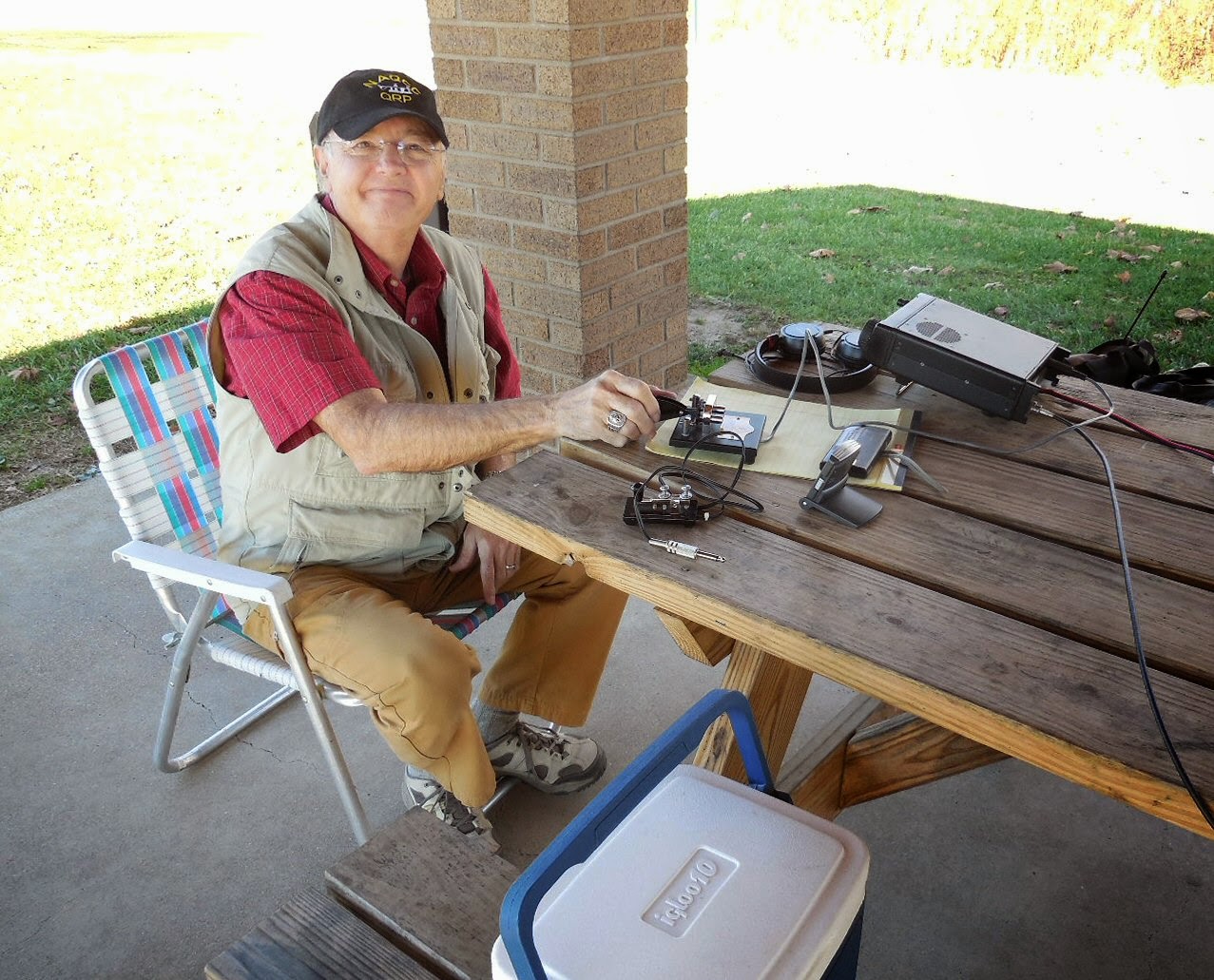
Living in the Kanawha Valley, even in Hurricane season, seldom brings the harsh weather that runs along the eastern coast. Those bad storms simply take the appropriate interstate exit and we’re left in the clear.
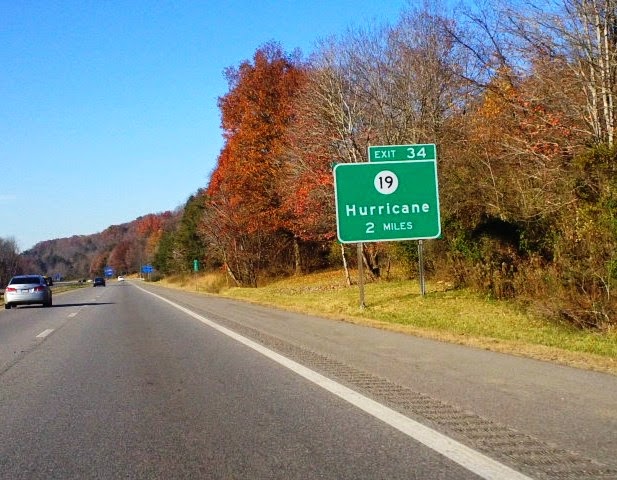
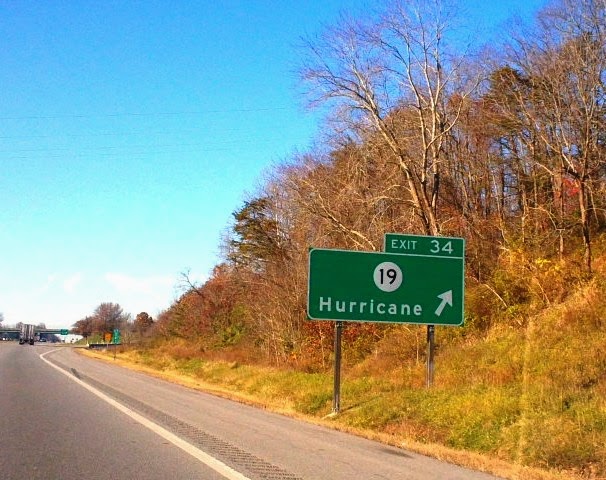
Don’t believe it?…..let me just say “look at the photos”. We’re both wearing short sleeve shirts and Jim was looking like a Florida resident sitting in the shade and wearing shorts under an umbrella.
All kidding aside, we had a beautiful day at this park and worked seventeen stations while sitting in the warm sun. I can’t imagine a more perfect day at a more perfect park.
We plan to use the Hurricane Wave Pool Park in the future for more of our radio outings.
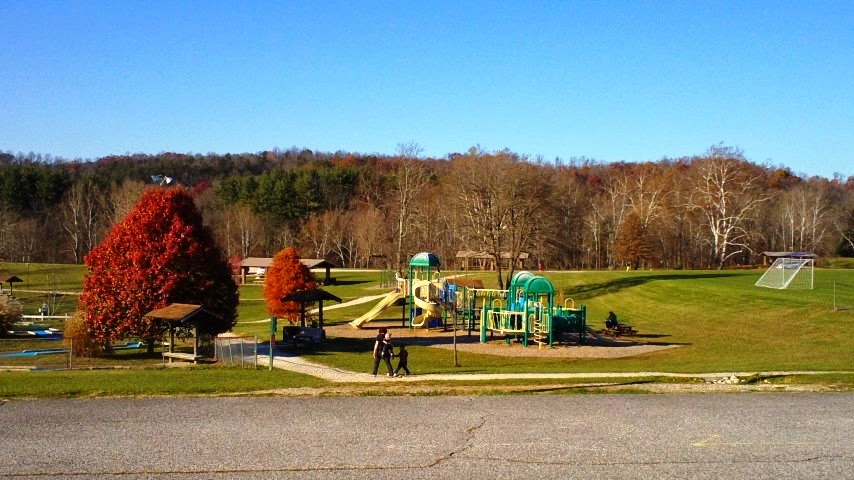
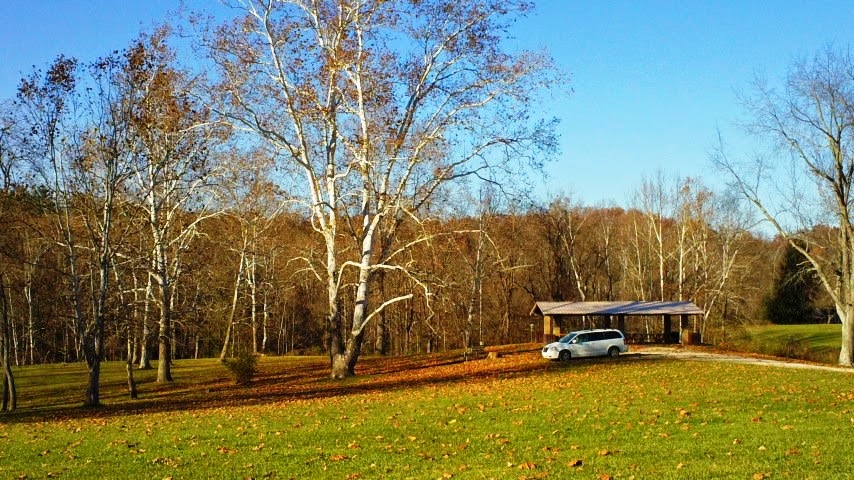
I had planned on using a new 31′ fiberglass pole for an antenna mount on this trip but didn’t want to take the chance of driving a steel stake in the ground to support the pole. There’s lots of “night lighting” in this area. I decided to err on the side of safety and use the existing trees. Perhaps on the next trip, I can shift shelters and use this one.
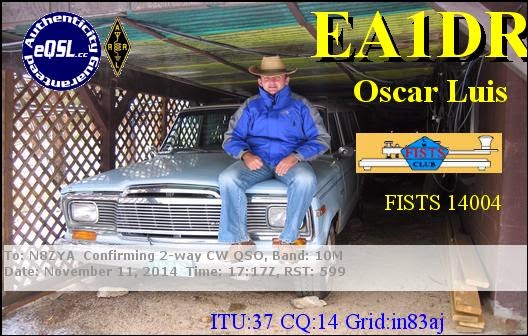
Before leaving the site we worked stations from Canada to Florida and I even managed to hear and work a couple of DX stations in Spain and Guernsey Island. Oscar (EA1DR) sent me his confirmation card from Spain.
The stations we worked were W8NNC in Ohio, W8GDP in Charleston WV (a member of our core WV Chapter group), VE3ED in Canada, WM3X in North Carolina, W2JEK in New Jersey, N4LTS in Florida, WA4WHV in North Carolina, KA0ENU in Tennessee, WA8ULB in West Virginia, K8SX in West Virginia (member of the WV Chapter group), EA1DR in Spain, W4DUK in Virginia, WB3T in Pennsylvania, WA8REI in Michigan, and W2LJ/P in New Jersey!
It was a real pleasure to work Larry (W2LJ/P ) as my last contact. Larry (W2LJ) is the Assistant Publicity Manager for the North American QRP CW Club and was operating “portable” from Warren New Jersey.
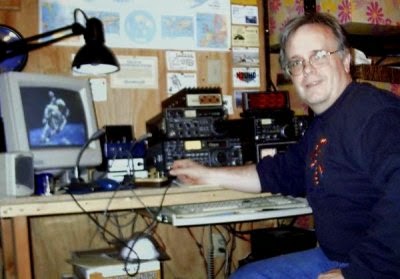
I also worked a station which I distinctly heard as GP6CW . I couldn’t find it on the data base. The only GP6 call I can find is GP6UW (my mistake)
There were several Special Event Stations commemorating Veterans Day on the air. I did something I rarely do and made a SSB contact with WW2COS in Georgia. This radio club is among a group that is slowly restoring a B-17G bomber.
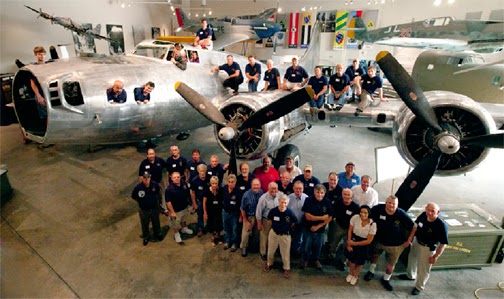
John Smithson, Jr., N8ZYA, is a regular contributor to AmateurRadio.com and writes from West Virginia, USA. Contact him at [email protected].
Yaesu FT 991 – all mode, all band transceiver
This rig does look like it will be popular, although at a stated UK price of £999 I have my doubts. This seems VERY high to me when the FT840D now sells for £619 before negotiation for a cash deal. UK exchange rates with Japan (£-Yen) have greatly improved, so rig prices should be falling dramatically. At £699, rather than £999 I can see it doing very well. Far less well at £999. In the USA expect to pay $999.
See http://qrznow.com/yaesu-ft-991/ for pictures and a video. I see the rig has now passed FCC testing . I have no news of CE approvals in Europe. Don’t expect we’ll see it in Europe before spring 2015.
I do hope dealers in the UK offer it at a sensible price. Get the price right and you deserve to sell lots of these units. Personally, I’d like to see a 10W or 30W version but doubt this will come in Europe or the USA. Of course, an FT817 replacement might be on the cards? We live in eternal hope.

Roger Lapthorn, G3XBM, is a regular contributor to AmateurRadio.com and writes from Cambridge, England.
Sourcing the Semiconductors (2)
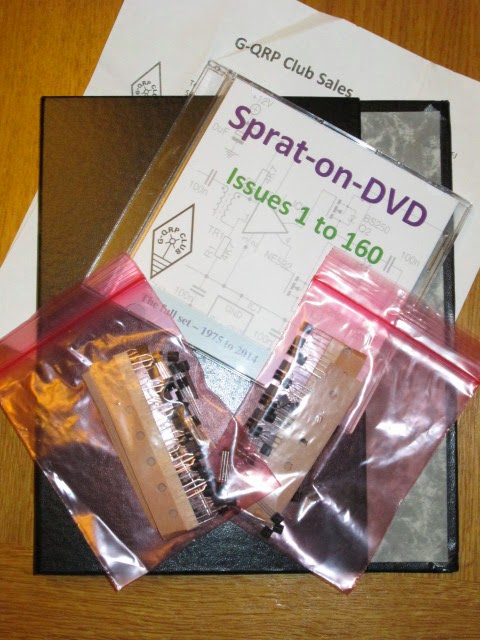
G-QRP Club runs an excellent component service for its membership at low cost, and I have been a member for quite a number of years now, and find the service great! Not only does the club stock common general purpose semiconductors, but also some obsolete parts like 2N3819 FET's that are becoming hard to obtain at the right price. Also hard to source Toroids, Crystals, and other passive components. Even technical books & the new DVD of all the back issues of the journal Sprat Issues 1-160 is available, again all at excellent prices and delivery to the membership.
My package arrived smartly this morning from Graham (G3MFJ), who looks after this side of the business for the club:
Of course you have to join the club to get the service, but for only £6 a year (UK) (£12 EU & £13 DX) you also get 4 issues per year of the excellent journal Sprat. That contains about 2/3rds of technical constructional content, ideas, and the rest devoted to members and news about the club etc.
To join contact Membership Sec Tony G4WIF [email protected]
Or step down to the G-QRP club Website for further details http://www.gqrp.com/
Steve, G1KQH, is a regular contributor to AmateurRadio.com and writes from England. Contact him at [email protected].
Amateur Radio Newsline Report 1944 November 14 2014
- FCC reverses revokes the amateur license of a convicted sex offender
- ARRL asks FCC to continue issuing paper amateur license documents
- Permanent access to 60 meters moves a bit closer for hams in Argentina
- 4M Lunar fly-by transponder goes QRT
- More non-ham intruders hit the amateur radio bands
- Radio helps capture first light that gives a look back in time
 Ham Radio Deluxe |
 W5SWL Electronics |
 Ham Radio Prep |
 KB3IFH QSL Cards  Hip Ham Shirts  HamRadioAuctions HamRadioAuctions Reliance Antennas Reliance Antennas Enigma Shop Enigma Shop |  morseDX  Ni4L Antennas  R&L Electronics R&L Electronics antennas.us antennas.us QRV QRV |
- Matt W1MST, Managing Editor
