 |
 MST SSB transceiver kits
 23 November 2014 | by
 See http://www.ozqrp.com/index.html
 |
| https://pbs.twimg.com/media/B2o8mpYIgAAX6Pc.png:large |
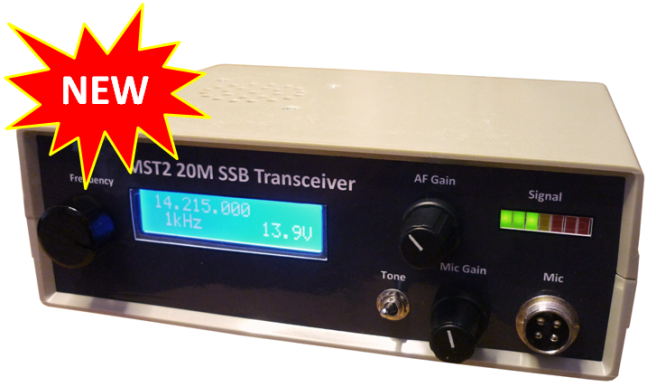
A nice line of SSB QRP transceivers for 80, 40 or 20m with power up to 5W. These kits come from Australia and payment is by PayPal. I have no experience of these kits so have no idea how they perform when bands are busy as in Europe.
It looks like these are easy to build kits.

Roger Lapthorn, G3XBM, is a regular contributor to AmateurRadio.com and writes from Cambridge, England.
ARRL propagation forecasts
For those of you who subscribe to the ARRL (not everyone does and I have no plans to renew my subs next year), the weekly propagation forecasts make interesting reading. Even more interesting are the archived old forecasts, so we can see just how good conditions are compared, for example, with the same time in 2007. As I mentioned before, if you are not an ARRL member you will not be able to follow the link, I believe.
ARRL members see http://www.arrl.org/w1aw-bulletins-archive/ARLP054/2007 .
Why am I not renewing my digital subscription with ARRL?
Earlier in the year I could not use my password and it took a week to sort it out. The online help was no help at all. It took several emails before anyone actually helped me. Most of QST seems to be ads similar to those in UK magazines. I cannot see the value in continuing ARRL membership. In summary, the ARRL seemed a pretty useless organisation. I was NOT impressed.
GQRP Club membership is much better value in my view.

Roger Lapthorn, G3XBM, is a regular contributor to AmateurRadio.com and writes from Cambridge, England.
DStar and Digital Networks
If your pockets are deep and your mind open then DStar offers some useful opportunities to connect to other amateurs via a very robust network. I on the other hand am a cheapskate with very shallow pockets and a healthy distrust of proprietary stuff. So how does one get involved in a changing view of amateur radio? There seem to be a few options that are more that dongles for your PC.
FreeDV is one way. It promises a way of connecting up your existing analogue radio to the digital networks. A very brief look at it this afternoon gave the impression that if there was a signal to be heard (On 14.236Mhz) then it would decode it and display the QSO on the screen. Trouble is there where no HF signals.
DV3000 bridge is another way to connect your radio to and existing set up (Analogue VHF)
Jonathan Naylor, G4KLX also has spawned a range of hardware and software that makes use of digital voice that appears through the link.
All these little bits of knowledge came from an a hour or so when the kids were at their quietest (which is not often) so there’s clearly a bit to learn. I hadn’t paid much attention to DStar or its friends as at face value it was asking me to buy more stuff at £300+ . That was a turn off. But if there are options at a lower price point then I could be persuaded to join in the digital voice game.
Alex Hill, G7KSE, is a regular contributor to AmateurRadio.com and writes from Cumbria, UK. Contact him at [email protected].
Milestone in blogging

Today the number of hits on my blog just exceeded a quarter of a million. When I converted my old web pages to a blog I didn’t really expect this many readers, so I thank you all for each and every hit on one of my 106 blog posts.
I have been blogging here since May 2011. But I have actually 23 posts which are older than that as I copied posts from my old web pages and gave them the original date of publication. The oldest post actually dates back to 2001 and is the first modification I published for my Elecraft K2. That was the year when I got my ham radio license
These are the most popular posts:
- How to make a very cheap VHF receiver (2011)
- The best of the Baofeng handhelds (2013)
- QRPp: Ultra low power operation with the Pixie (2011)
- Scratchy Tivoli Model One (2013)
- Temperature compensation for an Arduino ultrasonic distance sensor (2014)
- A regenerative receiver for the 40 m band (2011)
Sverre Holm, LA3ZA, is a regular contributor to AmateurRadio.com and writes from Norway. Contact him at [email protected].
Yet another shack clean up
As I've acquired more equipment I have found myself struggling for space and the cluttered workbench has prevented any proper construction.
Following a rearrangement in the house I had a spare 'desk' which I wanted to make of, so the plan was to move the workbench and put the new desk next to the existing desk. I had some bookshelves which were being used inefficiently and I almost threw them out but decided to make use of them by cutting them down and modifying to make new shelves to sit on the back of the desks.

I had another clean out and the remaining junk is now in large plastic storage boxes under the desk should it prove useful one day. It is still a little cluttered but I have much more room with proper access to my books and magazines.
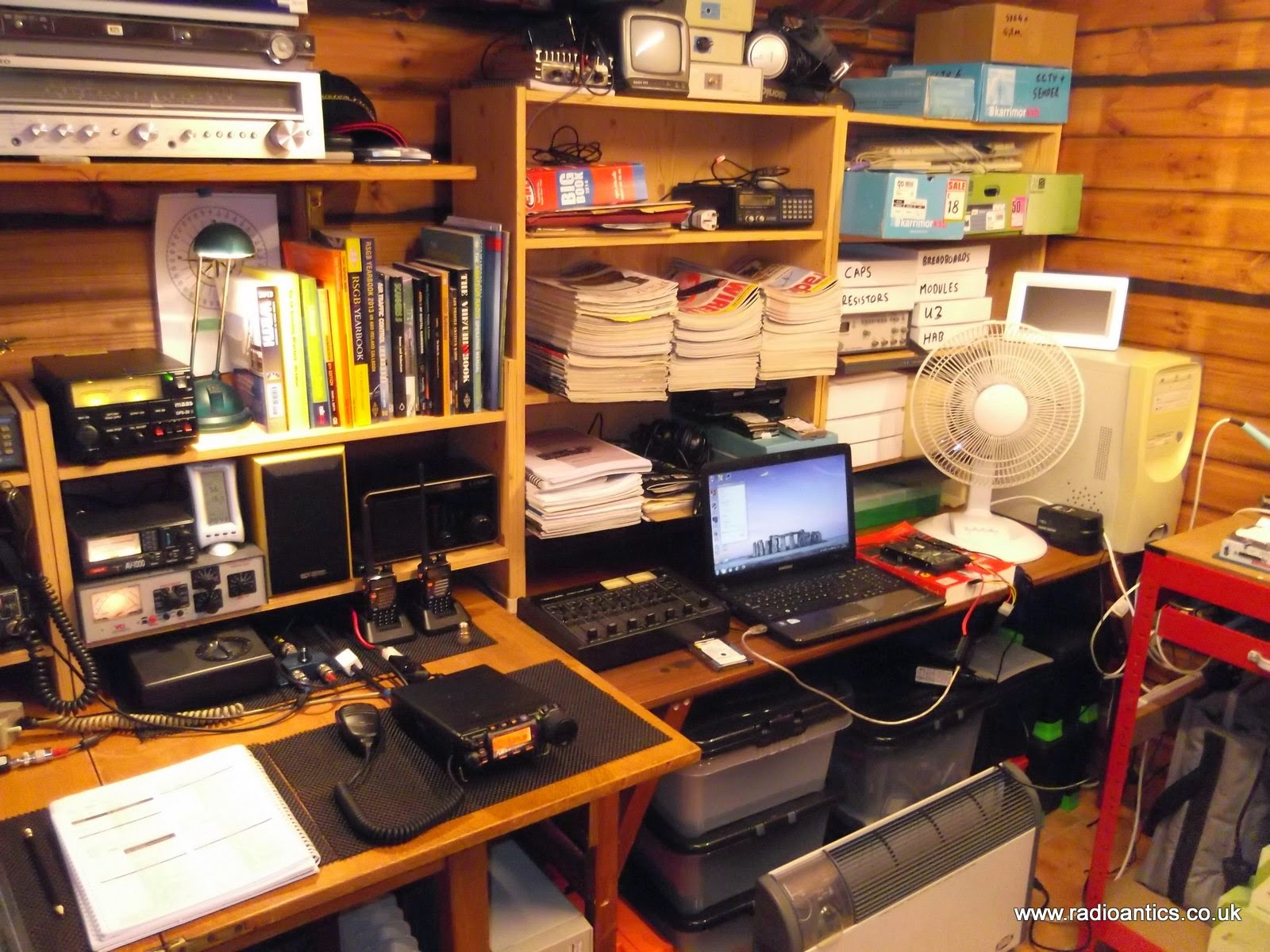
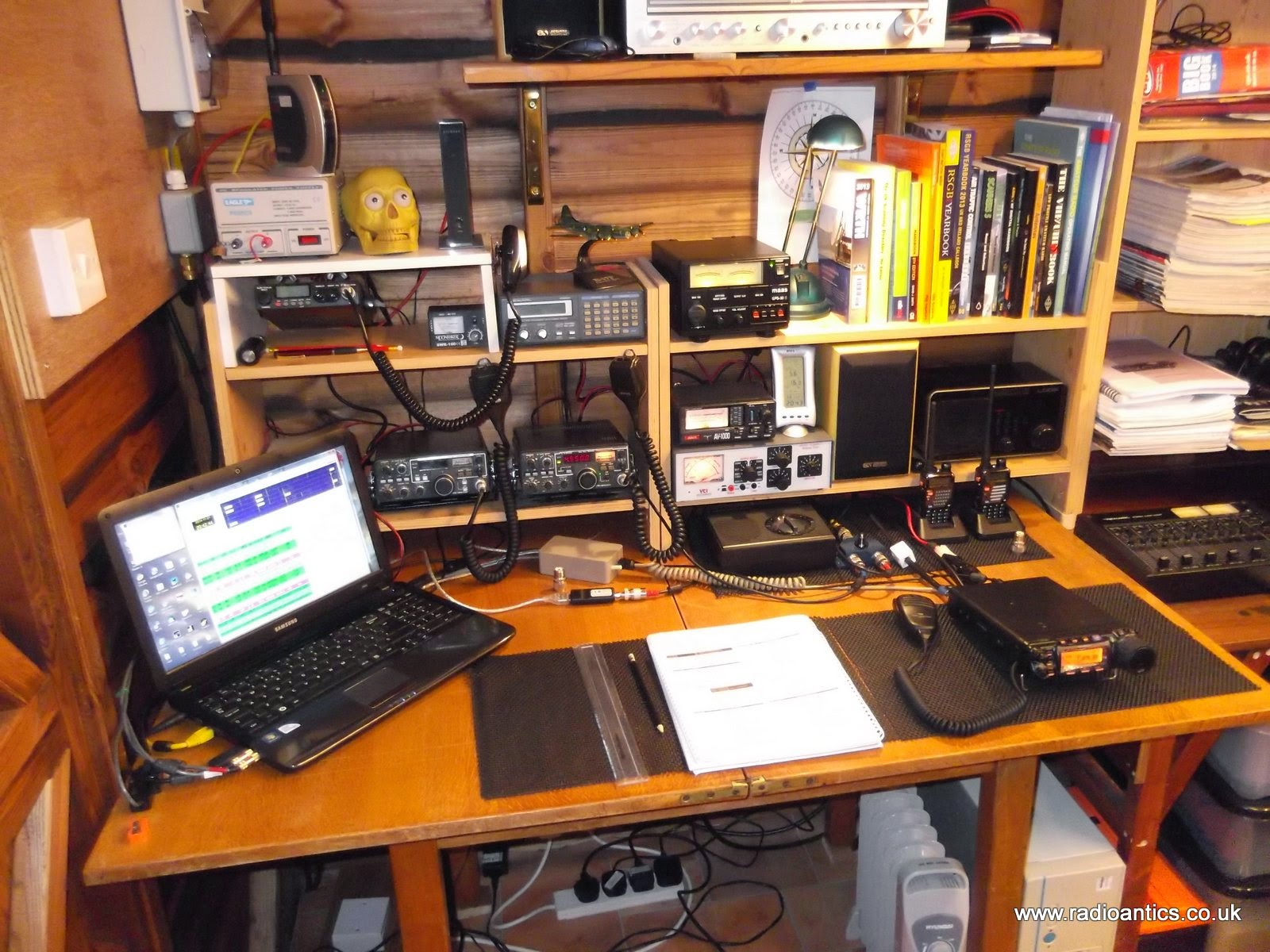
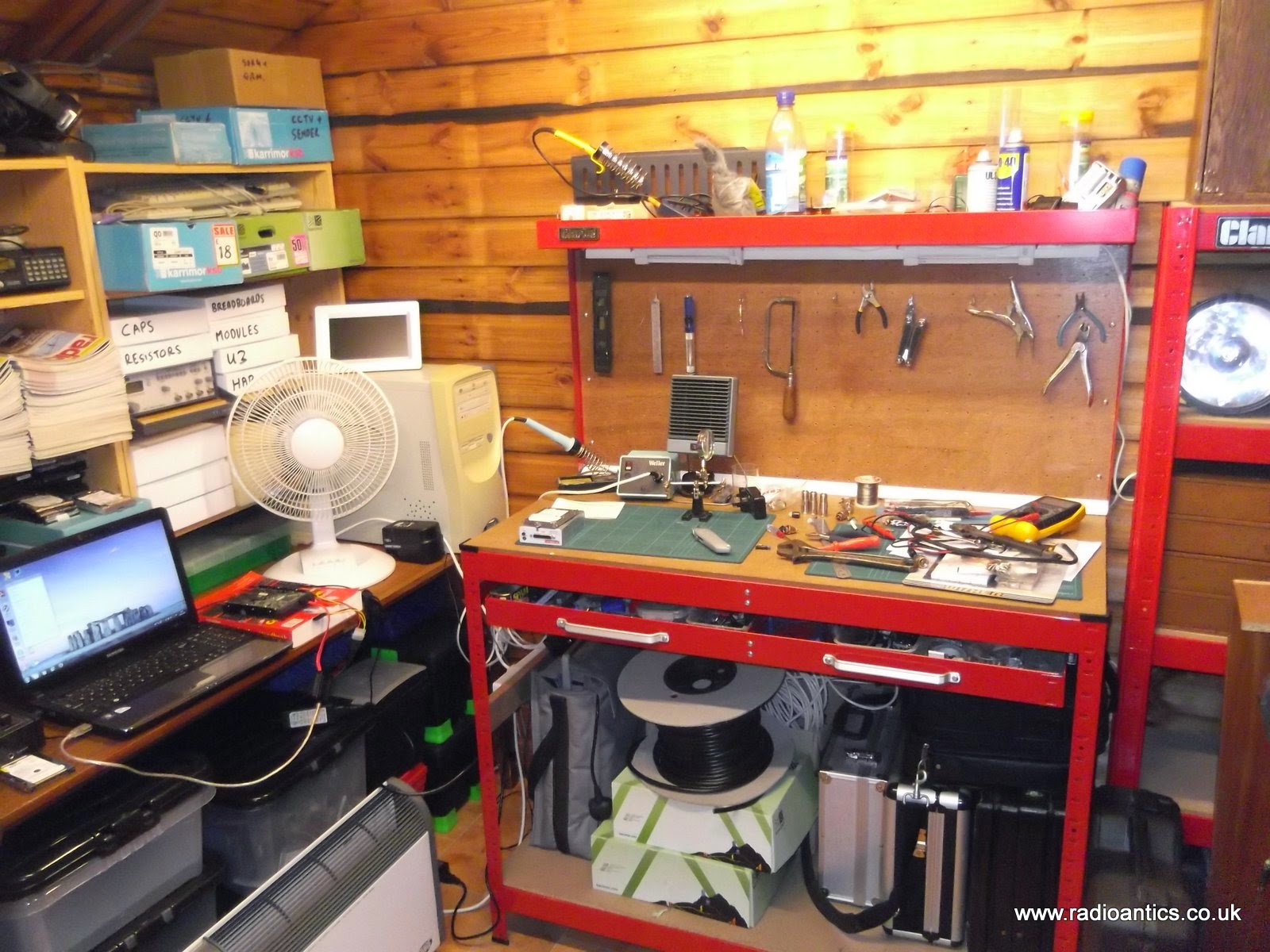
It is a work in progress, but it is a much better place to work and operate in.
Andrew Garratt, MØNRD, is a regular contributor to AmateurRadio.com and writes from East Midlands, England. Contact him at [email protected].
630m Resources – Part 1

If you're thinking about getting something going for our new 630m band, the following web resources may be of help to you.
There are a couple of 630m transmitters available on the commercial market that I know of.
JUMA , in Finland, offers the TX500, an extremely well engineered 60W Class D CW transmitter in kit form.
 |
| JUMA TX500 Transmitter: http://www.jumaradio.com/juma-tx500/ |
 |
| VK3XDK Linear Transverter: http://www.vk3xdk.net46.net/ |
From the U.S.A., WA3ETD offers a Class D transverter (non-linear) in either prebuilt or kit form.
At 13.2VDC, an output of 19-22W is claimed from the single FET final amplifier. Full details can be viewed here.
 |
| MF Solutions Transverter: http://njdtechnologies.net/ |
Roger's (G3XBM) has been widely reproduced in the UK and makes a nice way to get on the band on CW or with WSPR. Although the final amplifier is non-linear, with a little experimentation, it could be put into a linear mode for PSK or the JT modes. Perhaps that is what M1GEO did, as his video shows the transverter being used on SSB.
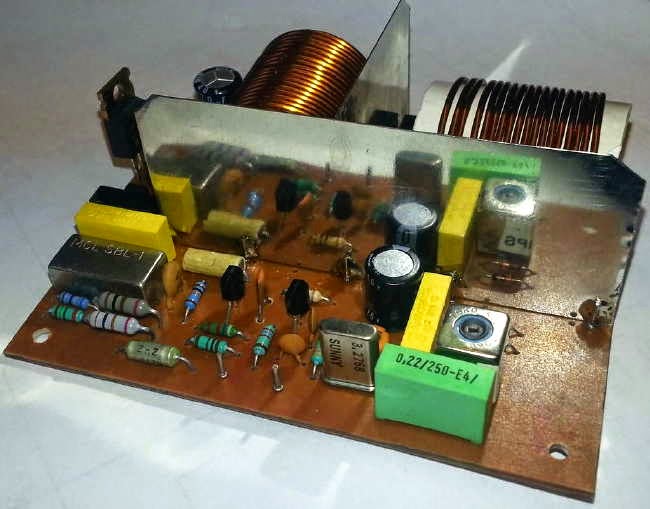 |
| M1GEO's Homebrew Version of the G3XBM Xvrtr |
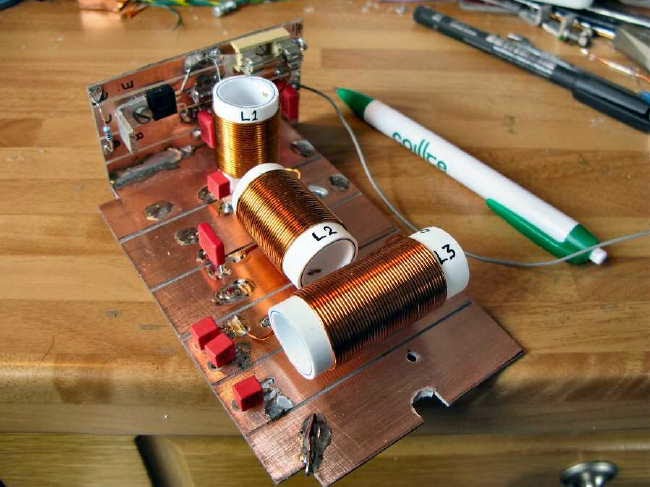 | ||
| Source: http://www.gw3uep.ukfsn.org/25W_QTX/QTX.htm |
Steve McDonald, VE7SL, is a regular contributor to AmateurRadio.com and writes from British Columbia, Canada. Contact him at [email protected].
RSGB
I have been a member of the Radio Society of Great Britain (RSGB) for 52 years now. When I first joined I was an SWL associate member – A3554 – as a young teenager. In those days you had to be proposed and seconded. Joining is much easier today. When I started there was just one licence. I took my RAE exam in 1966. It was on Friday 13th May as I recall. I attended RAE classes at Plymouth Tech every Monday night, catching the bus to Plymouth after school. Long gone days!
Over the years I have not always agreed with the RSGB’s decisions. In fact, quite recently, I did not like the decision worked up with OFCOM to allocate the 146-147MHz band to some UK amateurs by NoV. I think the RSGB could have got a much better deal for UK amateurs, but that is my personal view.
Despite this, the RSGB is our national society and deserves our support. Over the years they have supported UK amateurs very well and have a much better relationship with OFCOM than the ARRL has with the FCC in the USA where bands we have had access to for years are still not available! The monthly RadCom magazine is a good read with a mix of technical and non-technical articles.
So, if you are not an RSGB member and you live in the UK, may I encourage you to join?
See www.rsgb.org .


Roger Lapthorn, G3XBM, is a regular contributor to AmateurRadio.com and writes from Cambridge, England.
 Ham Radio Deluxe |
 W5SWL Electronics |
 Ham Radio Prep |
 KB3IFH QSL Cards  Hip Ham Shirts  HamRadioAuctions HamRadioAuctions Reliance Antennas Reliance Antennas Enigma Shop Enigma Shop |  morseDX  Ni4L Antennas  R&L Electronics R&L Electronics antennas.us antennas.us QRV QRV |
- Matt W1MST, Managing Editor
