 |
 Dad! What are those Pixies on our dining room table?
 21 February 2015 | by
 I got involved in this one with G3XBM recently, when he had ordered a kit from a different dealer at a slightly higher price, I was determined to get the price down by using various search method tricks I have come to learn over the years.
The kit(s) arrived from China, within 10 days of ordering. The PCB quality for the kit is excellent! Included is all the components, One Crystal (7.023MHz), and even the schematic and component list were supplied from this ebay dealer. All for a penny pinching £4.70p at the time I ordered! * Note the price has increased slightly to £5.20p ($8 US) as I write this. This does ask the question though, is this the worlds cheapest transceiver kit including delivery?
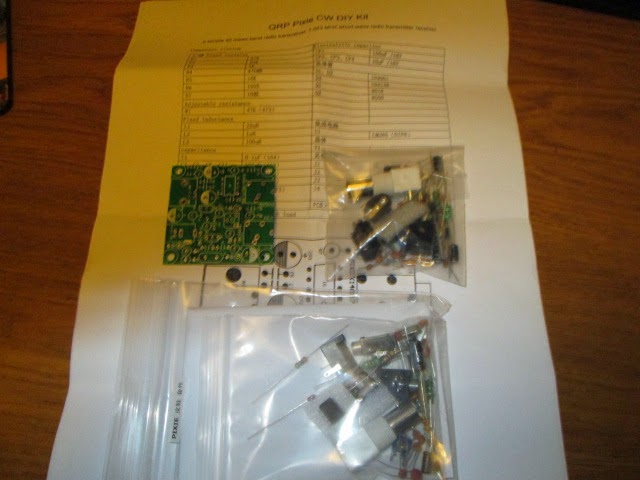
I intend to do a couple of mods to my Pixie as I build it, I will replace the 47K preset with a 47K Variable Pot so I can have a couple of KHz Frequency swing or pull to hand when I mount it inside a case. I will also switch in a couple more Crystals 7.030 & 7.040MHz so I can have a bigger spread of the 7MHz CW Band to work with..
The Pixie transceiver has a lot of history too its name, and various mods and developments have been done over the years. If you want the full facts, grab a copy of The_Sprat_Pixie_File from the G-QRP Club Website.
Think about joining the G-QRP club while you are there, as this club is well worthy of joining!
For those who are after full circuit details etc for the Chinese version of this kit try this link here.
Steve, G1KQH, is a regular contributor to AmateurRadio.com and writes from England. Contact him at [email protected].
2013 Ford F-150 Ham Radio Installation
After acquiring a Ford F-150 truck last year, I’ve been working on getting a ham radio installed in it. At times, I have loaded up my vehicle with multiple radios covering HF through 70 cm but lately I am content with just having a reasonable dualband 2m/70 cm FM rig in the mobile. Actually, I used a Yaesu FT-8900 that does FM on 10m, 6m, 2m and 70 cm but just set it up for the two bands.
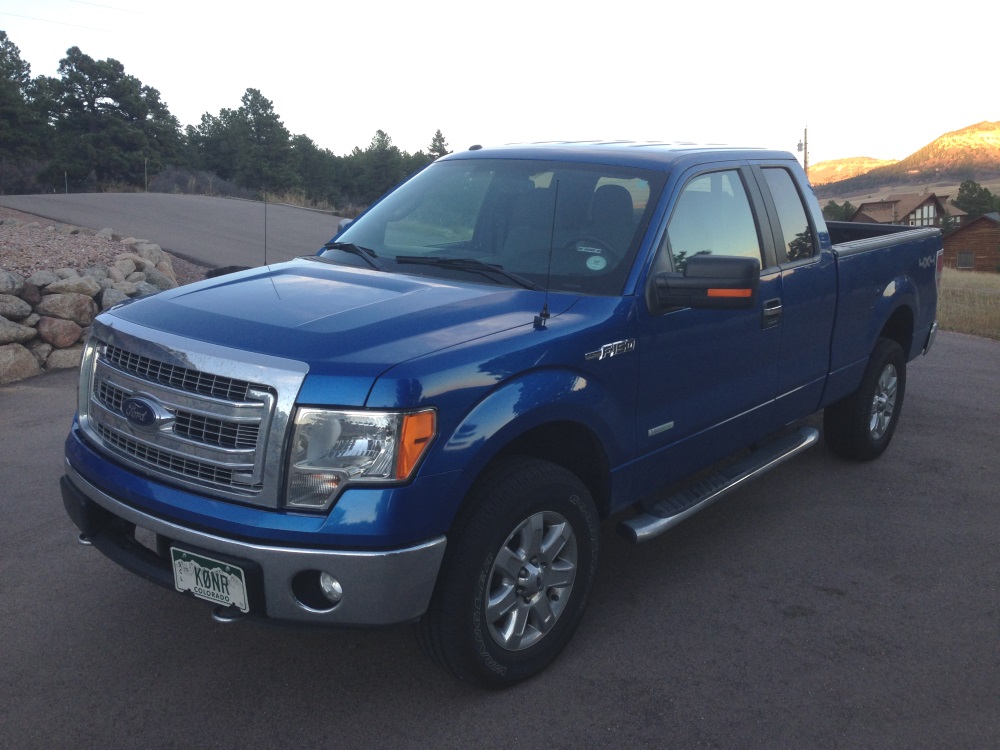
Ford F-150 with 2m/70cm antenna on the front fender
One of the most critical questions for a mobile installation is what kind of antenna to install and where to put it. In the end, the antenna is going to be the main determinant of mobile performance. Ideally, I’d like to have the antenna on the roof of the cab but the truck will not fit in my garage in that configuration. Another option I considered was mounting a longer dualband antenna using one of the stake pocket mounts from Breedlove. I prefer NMO mounts for VHF/UHF antennas and the stake pocket looked like a good way to go. However, a little measuring revealed that a 1/2-wave or 5/8-wave 2m antenna on the stack pocket was not going to clear my garage door. So it seemed that I was limited to a shorter antenna. I may still use the stake pocket mount for an additional antenna for road trips or to add 6m and 10m antennas.
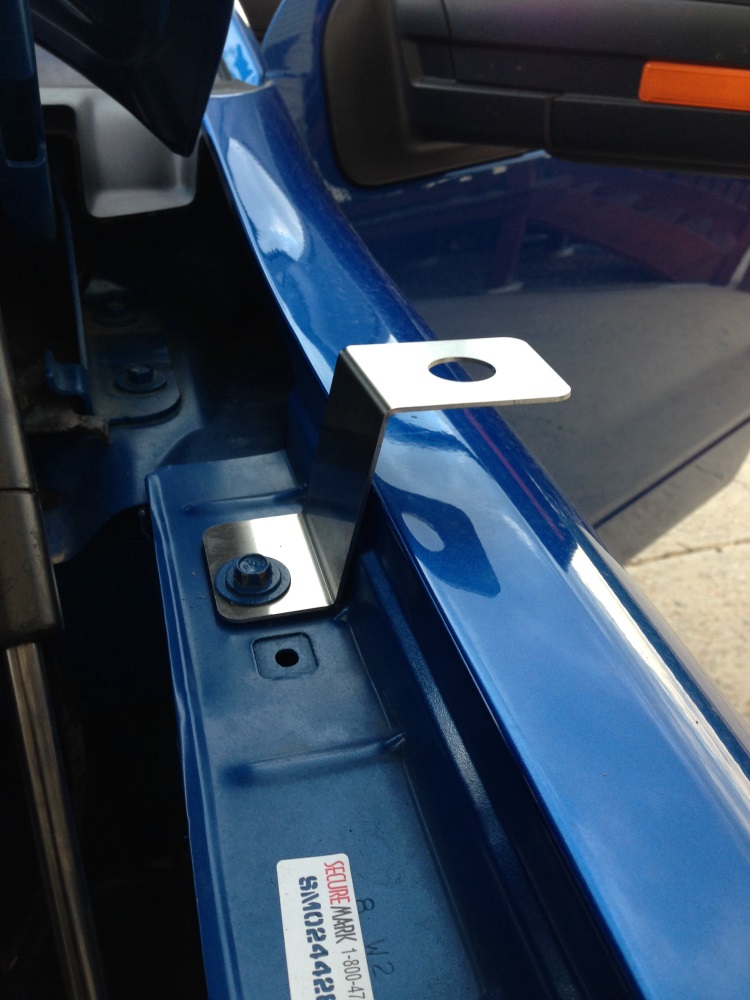
At this point, the F-150 bracket offered by The Antenna Farm looked like a good option. They have a number of these brackets made specifically for various vehicles, so check them out. This made the antenna installation quite simple. <click on any of the photos for a larger view>
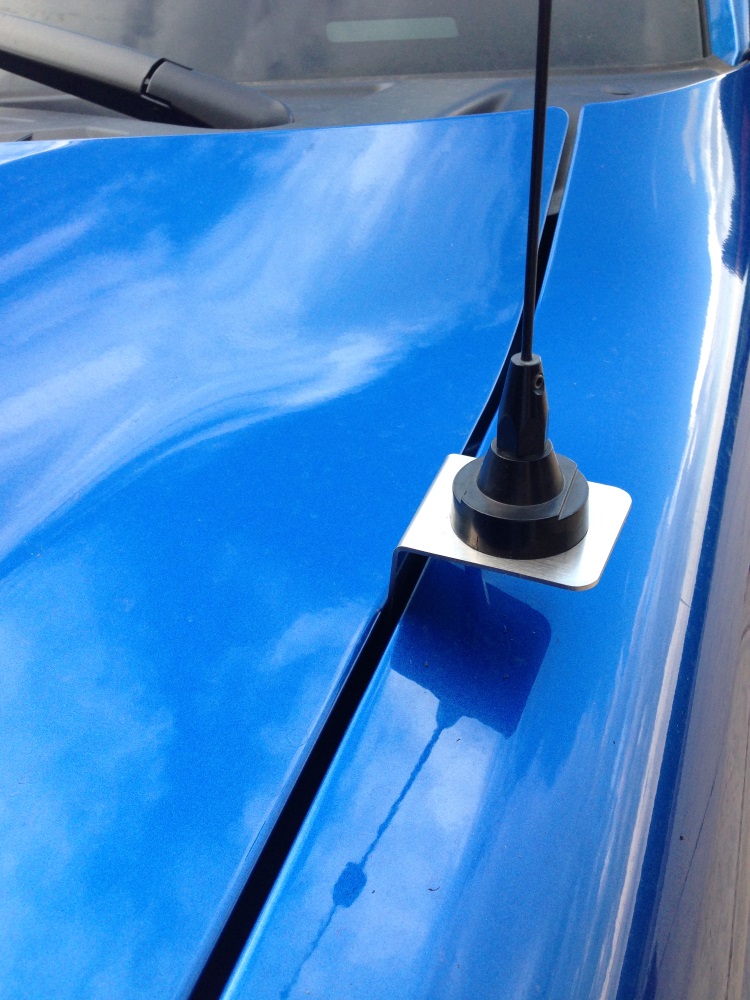
The antenna is an NMO-mount dualband that I had laying around the hamshack. I don’t recall the exact model number but these are very common, about 19-inch long for 1/4-wave operation on 2m and a small loading coil to make it work on the 70cm band.
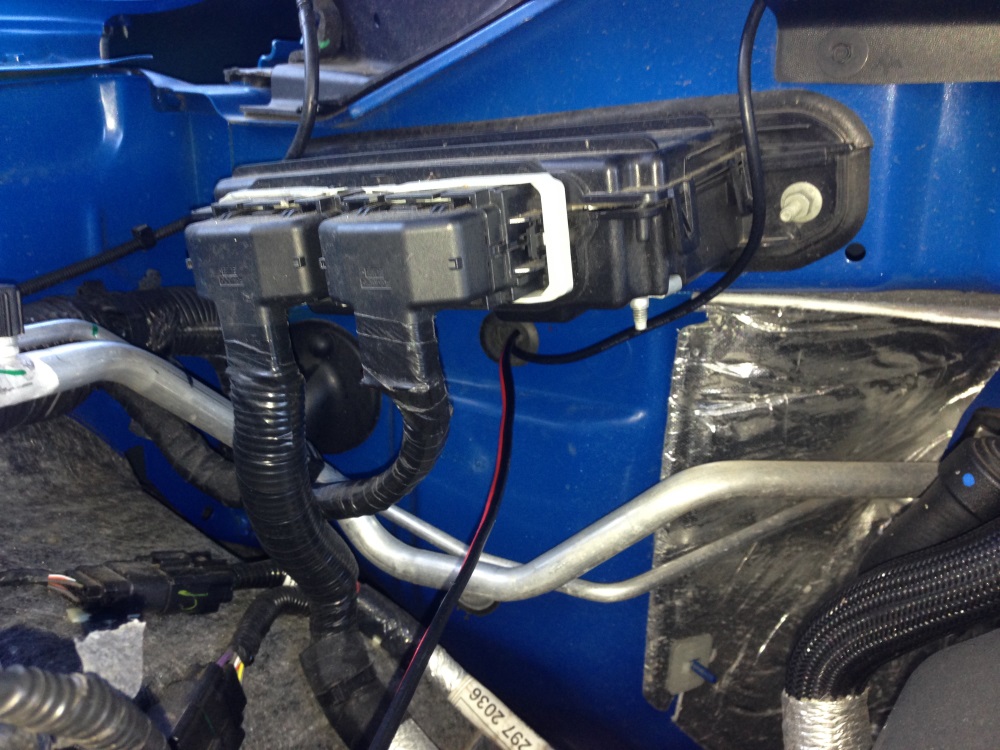
The F-150 has several precut holes for passing wires through the firewall. I used one that is on the passenger side just below a large module, as shown in the photo. It took a stiff wire and some force to punch my way through the rubber plug and into the cab compartment.
I don’t have a photo of the battery connection but I connected the positive lead right onto the battery terminal while the negative lead was attached to the truck chassis near the battery. You may have been told to always connect directly to the battery terminals but that advice no longer applies to some newer cars because there is a current monitoring device in the negative battery lead. To avoid confusing the vehicle battery monitoring system, the negative connection to your transceiver needs to be on the chassis side of the current monitor. Alan K0BG explains this issue on his web site. Actually, Alan has a wealth of information on mobile installations on his web site: www.k0bg.com. Oh, of course, I used inline fuses on both the positive and negative power cables.
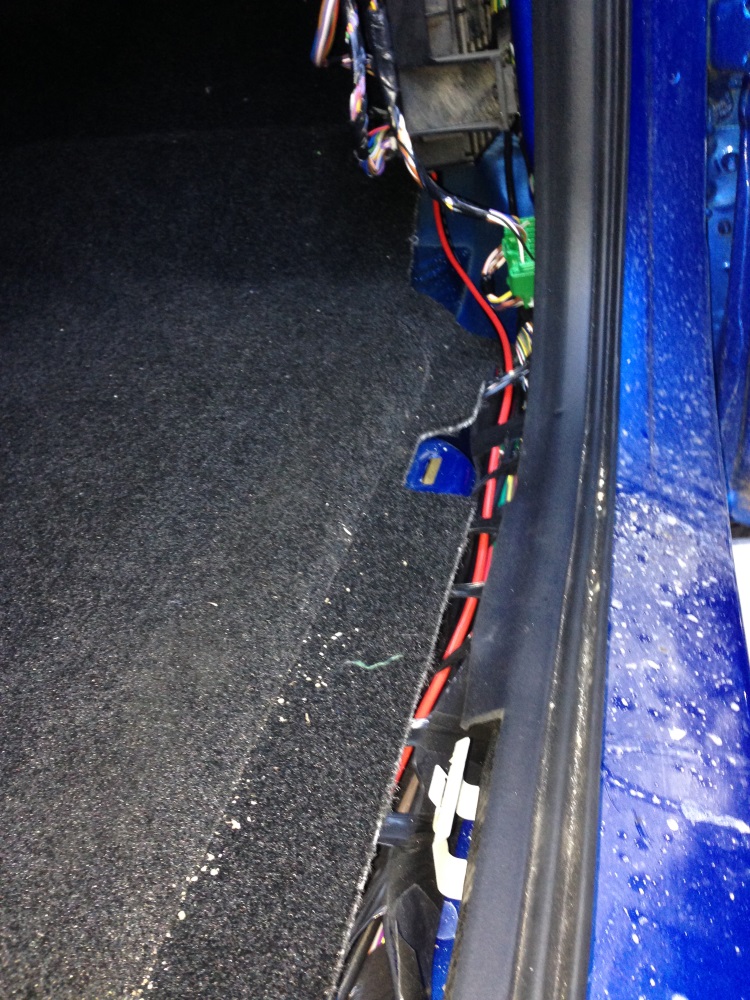
I mounted the FT-8900 transceiver on the floor under the back seat. To route the power cables and antenna coax, I pulled up the flat plastic trim piece that runs along the floor at the passenger door. I started from the front and did some careful prying (and praying) to remove the trim without breaking it. This exposes a trough with a factory wiring harness in it but there’s room for more. A few other plastic trim pieces were removed to get access to the wires coming through the firewall. All in all, this was not that difficult. (Yea, Ford!)
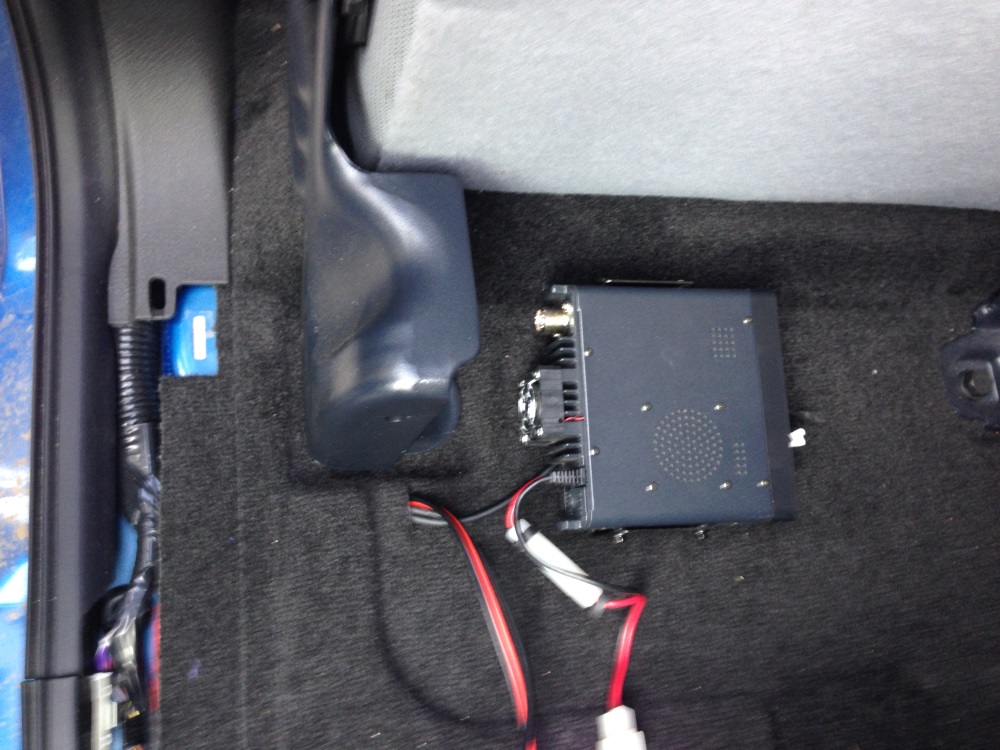
The photo to the left shows the FT-8900 radio installed under the passenger side rear seat. I drilled holes through the floor and mounted the radio with hefty sheet metal screws. The screws go right through the metal floor and and can be seen from under the truck. (Check that out before drilling!) Because the radio body is under the rear seat, I am using a small external speaker mounted near the drivers seat.
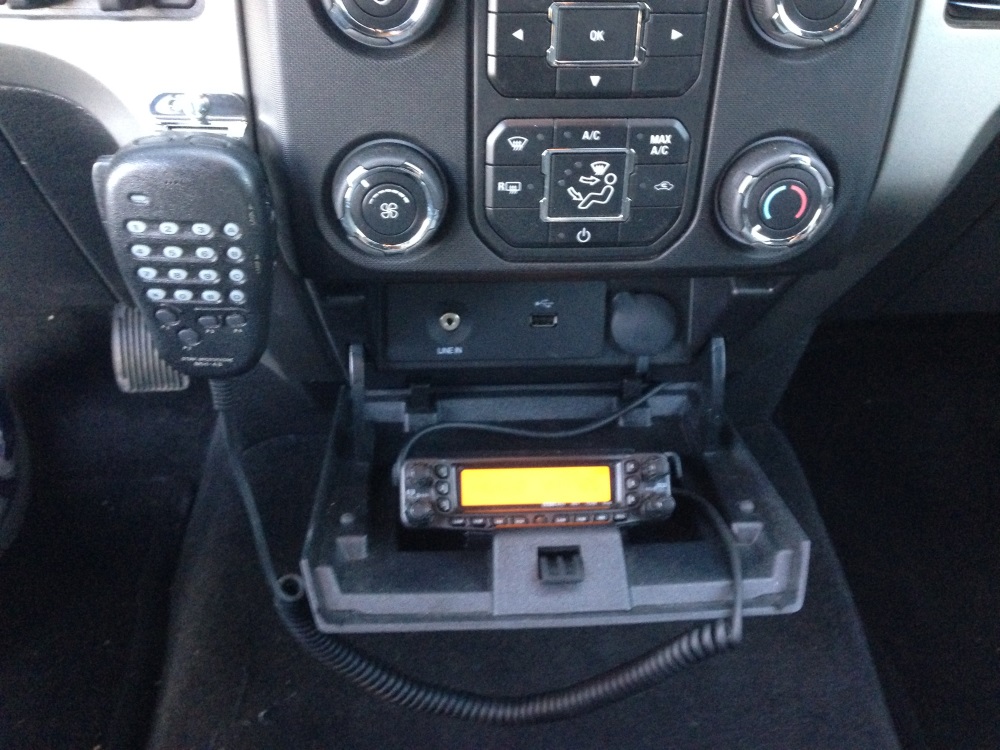
The radio control head is mounted inside a little door/shelf that normally pops open to reveal the USB port for plugging in a smartphone. (Note that Ford has multiple seat / dashboard configurations.)
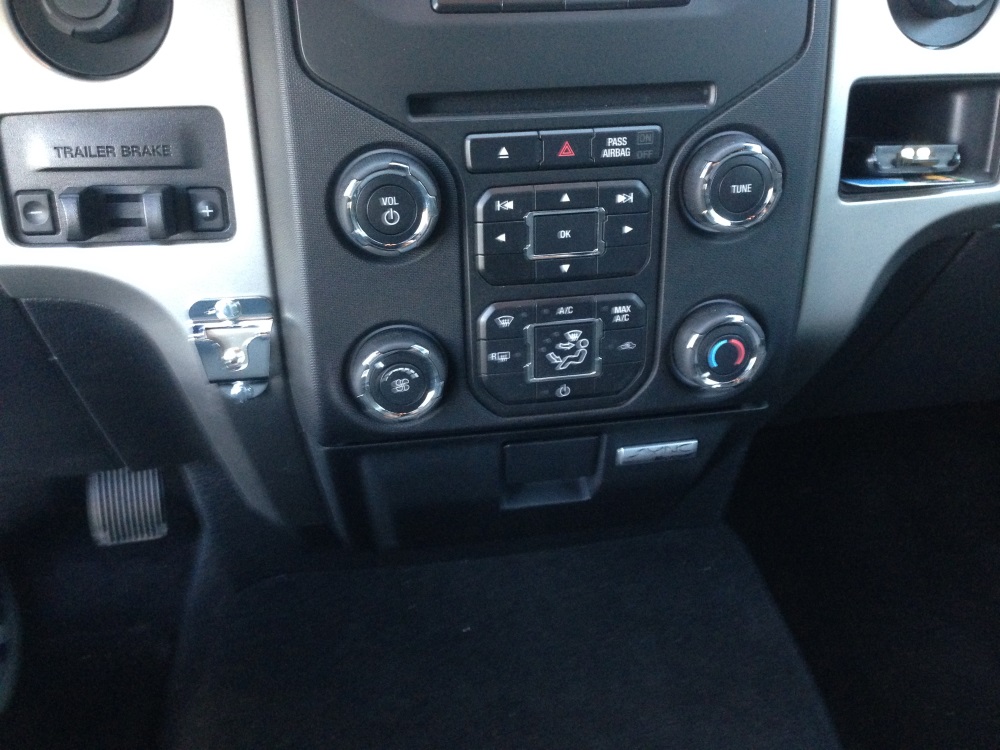 The FT-8900 control head just fits inside this little shelf, even when the door is closed (see photo). The microphone does have to be removed to close the door. I mounted a microphone hanger with a couple of sheet metal screws, as shown in the photo. I don’t like the crappy little hanger that usually comes with a ham transceiver so I bought some higher quality hangers on Amazon.
Overall, I am pleased with the radio install. The antenna location is clearly a compromise and I notice the performance is not as good as my previous vehicle (which was a small SUV with an NMO mount antenna in the middle of the roof.) But the antenna is “low profile” and sufficient for “around town” mobile operating. I am getting a little noise on the 2m band which needs some investigation. The 70cm band is very clean and is the band I use the most.
73, Bob K0NR
The post 2013 Ford F-150 Ham Radio Installation appeared first on The KØNR Radio Site.
Bob Witte, KØNR, is a regular contributor to AmateurRadio.com and writes from Colorado, USA. Contact him at [email protected].
What will solar cycle 25 look like?
We now seem to be, on average, on the downward slope to the next solar minimum. Some are predicting that the next peak will be almost a non-event with the sunspot number peak of just 7. Of course no-one really knows, but I think it is true that most experts now think cycle 25 will be very poor. Conditions on LF/MF are likely to improve but decent F2 propagation on 10m is likely to be rare, except perhaps with N-S paths over the equator. What is certain is no-one is really sure. Summer Es could well be the dominant DX mode on the higher HF bands.
UPDATE 2048z: I have now gone QRT (for the night) on 10m but I will be on 160m now and overnight. Back on 10m tomorrow morning after breakfast.

Roger Lapthorn, G3XBM, is a regular contributor to AmateurRadio.com and writes from Cambridge, England.
Cool map at N0HR.com
This is the world:
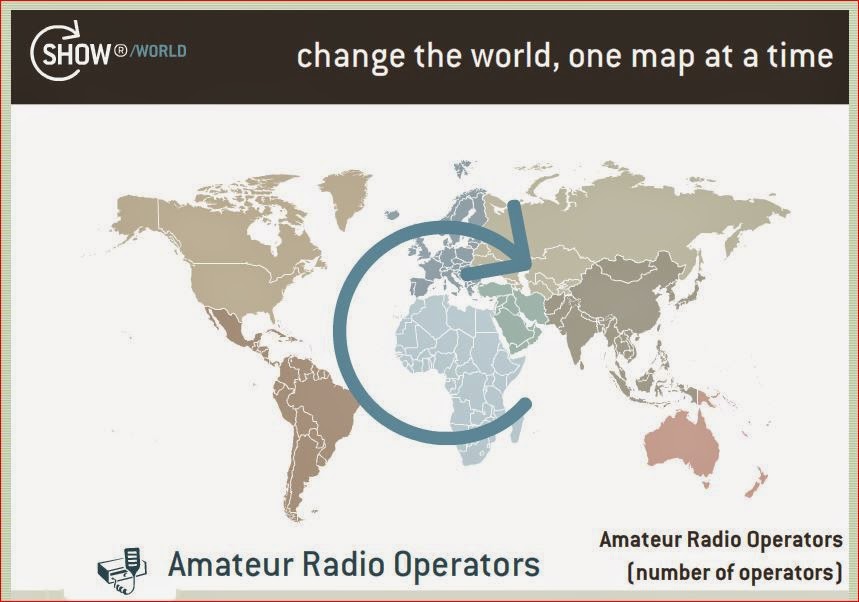
This is the world on Ham Radio:
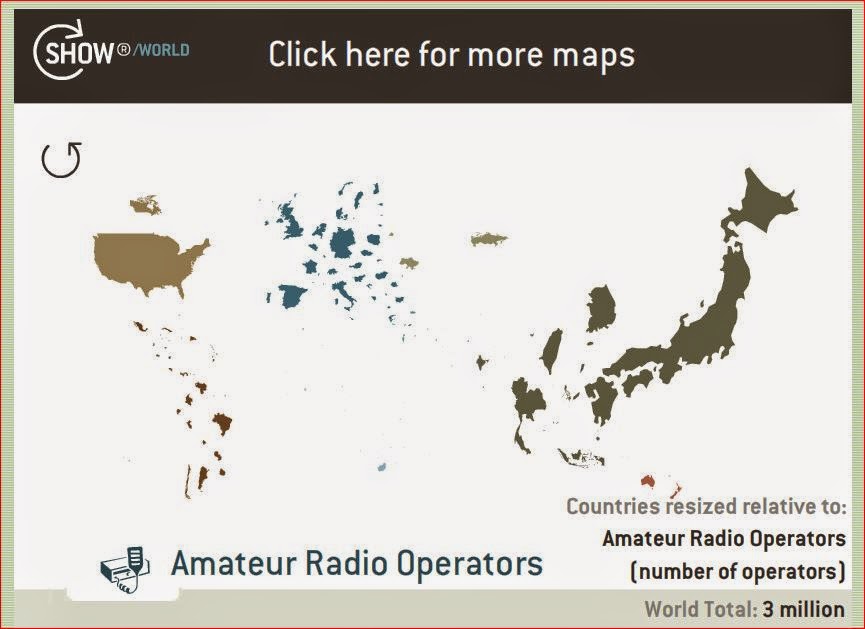
By clicking on each country, you can find out how many Amateur Radio Ops that country claims.
72 de Larry W2LJ
QRP - When you care to send the very least!
Larry Makoski, W2LJ, is a regular contributor to AmateurRadio.com and writes from New Jersey, USA. Contact him at [email protected].
Amateur Radio Newsline Report 1953 February 20 2015
- The IARU Region One Executive Committee meets to discuss issues affecting the future of ham radio
- The ARRL tells a broadband company to use caution experimenting on the High Frequency bands
- A radio club in Canada gets a government grant to expand its emergency repeater network
- The K1N Nevassa Island DXpedition comes to an end, so…now, which DXpedition moves up on the “Most Wanted” list?
THIS WEEK'S NEWSCAST
Steve WG0AT test Drives the new LNR QRP rig
Certainly sounds nice and looks good, doesn't it?
72 de Larry W2LJ
QRP - When you care to send the very least!
Larry Makoski, W2LJ, is a regular contributor to AmateurRadio.com and writes from New Jersey, USA. Contact him at [email protected].
CLE191 Addendum
 |
| WC-332KHz - White Rock, BC |
From Neil (WØYSE):
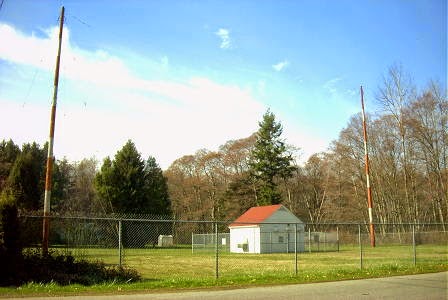
WG2XSV (experimental callsign) will be running a CW beacon on 475.475 kHz for this event.
(In fact it is already running as of 0001 UTC 20 Feb).
Power is ~1 watt ERP (+/- 1 dB) from SW Washington State.
Reports appreciated to wØyse [at] ARRL[dot] net
I'm sure Neil would be delighted to receive any heard reports from his weekend CW beacon. Remember that this CLE also covers the 630m band and CW beacons that may be operational there.
If you know of any other 630m CW beacons that will be activated, please let me know and I will post the information here.
Also, CLE reports may be mailed to either myself, the CLE Yahoo list or to Brain Keyte, CLE organizer. Brian's address is: [email protected]
Reports should include your exact location (Lat/Long preferred or exact Gridsquare), your full name and e-mail address in case Brian needs to send an enquiry regarding your log.
The finer-details of CLE191 may be found in Wednesday's blog.
Lets hope conditions stay nice and quiet as they appear to be doing.
Steve McDonald, VE7SL, is a regular contributor to AmateurRadio.com and writes from British Columbia, Canada. Contact him at [email protected].
 Ham Radio Deluxe |
 W5SWL Electronics |
 Ham Radio Prep |
 KB3IFH QSL Cards  Hip Ham Shirts  HamRadioAuctions HamRadioAuctions Reliance Antennas Reliance Antennas Enigma Shop Enigma Shop |  morseDX  Ni4L Antennas  R&L Electronics R&L Electronics antennas.us antennas.us QRV QRV |
- Matt W1MST, Managing Editor
