 |
 Fairly significant QRP News
 2 March 2015 | by
 It states that Doug will continue on as a consultant, but has decided to fully retire and will no longer be involved in the day-to-day operations of the company.
This is significant news and Doug has long been an advocate of bringing affordable, relatively easy to build kits to the QRP community. He has collaborated with Steve Weber and others in recent years to market such radios as the PFR-3, the Ft. Tuthill transceivers, and many other receivers, tuners, and useful accessories as well as pieces of quality, yet inexpensive test gear.
Best wishes to Doug KI6DS, as he embarks on his retirement. Maybe now he'll get more of a chance to get on the air more and enjoy the hobby he has supported for so many years.
On a similar note, when Dave Benson K1SWL ended his business, Small Wonder Labs a few years ago, it looked like a gloomy day for the QRP world. However, many of Dave's kits have been picked up by QRPMe and now I see Dave post to QRP-L every now and then about radio events that he is actually able to participate in and enjoy.
So we have the best of both worlds in that these long time QRP stalwarts are passing the torch to the next generation of QRP entrepreneurs. Not only are we not losing their life's work, but at the same time, we're actually getting the chance to meet and converse with these QRP icons on the air. Seems to be a win/win situation.
72 de Larry W2LJ
QRP - When you care to say the very least!
Larry Makoski, W2LJ, is a regular contributor to AmateurRadio.com and writes from New Jersey, USA. Contact him at [email protected].
40m Pixie measurements
 |
| Pixie harmonic measurements |
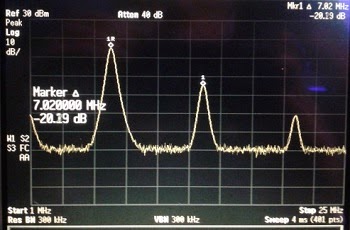
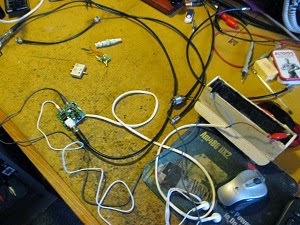
This afternoon I visited G6ALB to do some more accurate measurements of my completed 40m Pixie kit. Power out with the 12V battery was 400mW and with a fresh PP3 9V battery 200mW. On the 12V battery TX current is around 129mA and at 9V around 83mA. 2nd harmonic rejection was about 20dB. Even the 9V output is a useful level. Maybe the cased unit should include an internal 9V battery pack which is switched off when an external 12V pack is available?
 |
| Pixie on the bench |
To be more useful, I should add a 7.030MHz crystal and have a switch to select this or the original 7.023MHz one. 7.030MHz is the QRP frequency. My experience is this can be quite busy.
I should also case the unit! Drilling the case could be a challenge in my current state of health! Just doing the building and testing was exhausting.

Roger Lapthorn, G3XBM, is a regular contributor to AmateurRadio.com and writes from Cambridge, England.
What’s the difference between the Baofeng UV-3R, UV-5R, UV-82, UV-B5/UV-B6, etc.?
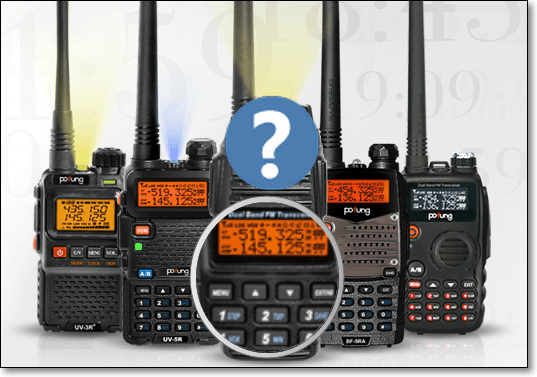
In China, there is a lot of passing around of designs, tweaking, improving upon, and re-branding.
In 2011 a company called VeroTelecom brought out a “UV-3R” radio which was picked up on by Baofeng and brought to a Western market where, eager for a bargain, it went down a storm. A year later, TYT made the TH-UV5R which again was picked up by BF and released in the West as the UV-5R. Initially meant as cheap SDR business band HTs, hams quickly noticed that they have a proper VFO making them perfect for our uses.
A year after that, Baofeng (now Pofung, internationally) designed and released their own radios based on the UV-5R; the UV-82, a more “professional” version of the UV-5R, and the UV-B5/UV-B6 with an entirely redesigned and far more selective RF front-end.
The first two are pants as radios go, with all kinds of weird bugs, overloading problems, and less-than-adequate phase noise and harmonic suppression performance.
The UV-82 crossed the line from “meh” into “good” with performance being on par with existing radios twice the price.
The UV-B5 blew all existing Baofengs out of the water, with on-air performance nearly matching that of Yaesu’s lower end Vertex (VX-**) series handhelds which cost five times the price. It has its quirks but for basic repeater ragchewing its value for money can’t be beaten.
The great thing is, all these radios can be had for under $35 if you know where to look: while not perfect they are a great way to get started, or to dip your toes into the hobby without spending too much. However, if you have the disposable income to put down on a more expensive radio, do – the Yaesu FT-60R is a good start.
If you’d like to read more about the differences between some of these radios, I go into a little more detail here.
Chris Northcott, 2M0FFY, is a special contributor to AmateurRadio.com and writes from Edinburgh, Scotland.
Pictures from KH8 (second trip)
I made another trip to American Sa’moa (KH8 for the radio amateurs in the audience) to deploy instrumentation. It was a tight timeframe but the instruments seem to work and I managed to make a few ham radio contacts as well.
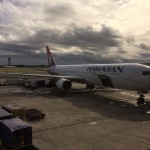
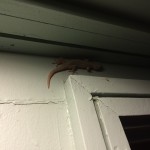


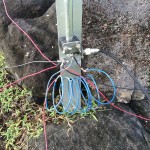

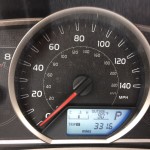
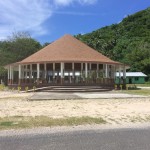

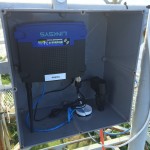
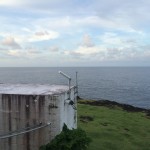
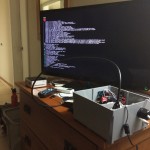

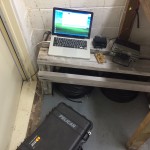
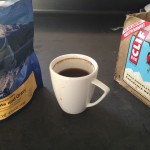
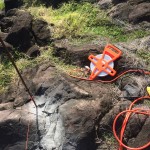
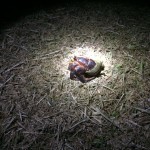
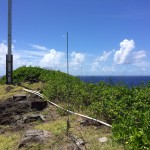
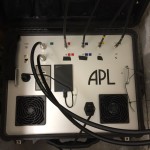
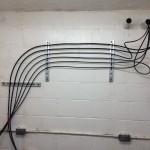

Ethan Miller, K8GU, is a regular contributor to AmateurRadio.com and writes from Maryland, USA. Contact him at [email protected].
First 40m Pixie QSO
At 1000z this morning I exchanged RST 579 reports with G6ALB who is 3km from me on my 40m Pixie on 7.023MHz CW. This was my first on-air QSO. Netting was perfect and I used the rig directly into my low Par triband antenna. An ATU might have helped. Andrew G6ALB said the channel was pretty busy but that I was a good RST579 with no hint of chirp. This afternoon we’ll put the rig on his spectrum analyser. I gave Andrew 579 probably reflecting the poorer MDS of the Pixie. I have no idea of his power or antenna.
My initial goals have been met: I built the kit and have managed a QSO on the air with it. With the fatigue associated with my brain bleed still very apparent (I am well and truly shattered currently), I was well pleased. A few more QSOs with the 40m Pixie would be good, HI.
$10 well spent. Excellent little kit. FB little transceiver. Works surprisingly well.

Roger Lapthorn, G3XBM, is a regular contributor to AmateurRadio.com and writes from Cambridge, England.
Ham Videos: So far I have only made one?
So far it is the only Amateur Radio video I have made. I find I can write about this stuff, quicker and better than I can make video's. However I have not ruled out future output if I find something decent to record and I have the time to edit the footage.
For now I will leave it to the likes of VK3YE and K7AGE etc, both who output some great "updated" interesting Video's over a wide area of various Ham Radio subjects.
Steve, G1KQH, is a regular contributor to AmateurRadio.com and writes from England. Contact him at [email protected].
LHS Episode #141: Keeping Sucrets
 Hello, dear listeners. Linux in the Ham Shack is pleased to bring you Episode #141 of our program. In this episode, we talk about topics like satellite communications software for Linux, the new Raspberry Pi, The Walking Dead and making a quick, hot breakfast--among may, many other things. We hope you enjoy this program. And if you can help send us to Hamvention by giving us a donation, our campaign is almost over. Please check it out. And thank you for listening!
73 de The LHS Guys
Russ Woodman, K5TUX, co-hosts the Linux in the Ham Shack podcast which is available for download in both MP3 and OGG audio format. Contact him at [email protected].
 Ham Radio Deluxe |
 W5SWL Electronics |
 Ham Radio Prep |
 KB3IFH QSL Cards  Hip Ham Shirts  HamRadioAuctions HamRadioAuctions Reliance Antennas Reliance Antennas Enigma Shop Enigma Shop |  morseDX  Ni4L Antennas  R&L Electronics R&L Electronics antennas.us antennas.us QRV QRV |
- Matt W1MST, Managing Editor
