 |
 The Pi Day Contrarian
 14 March 2015 | by
 I may be the only person on the Internet who, despite its namesake, finds “Pi Day” on March 14th completely irrational. Here’s why: It’s completely arbitrary. Only we in the U.S. write the date with the month before the day and year like mm/dd/yy. This violates everything sacred about significance in number systems. Normally, digits are ordered from most- to least-significant left to right or least- to most-significance. So, Pi Day including the year actually wouldn’t occur until 3141/59/27 or 31/41/5927, neither of which are real dates anyway. Therefore, Pi Day doesn’t actually exist. I propose a rational alternative definition of Pi Day to be July 22nd (22/7) of every year. Besides, red raspberries are in season in July and not in March so I can enjoy my favorite pie.
Ethan Miller, K8GU, is a regular contributor to AmateurRadio.com and writes from Maryland, USA. Contact him at [email protected].
LHS Episode #142: GQRX and More
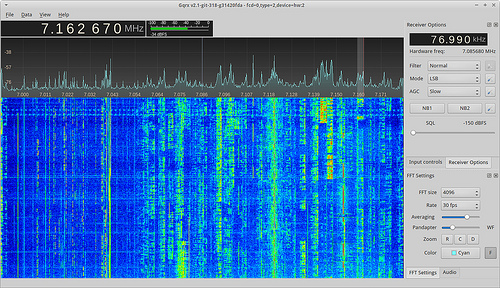 It's another installment of Linux in the Ham Shack! Yes, you heard right. In this episode we lose a co-host but gain a hacking cough. At the same time, we discuss a new digital mode, a new ham radio technology for cell phones, a new interface for SDRs and a lot more new stuff. Finally, we're down to the last two days for our
73 de The LHS Guys
Russ Woodman, K5TUX, co-hosts the Linux in the Ham Shack podcast which is available for download in both MP3 and OGG audio format. Contact him at [email protected].
Review Anytone OBLTR-8R
by John ‘Miklor’ K3NXU and Hans PD0AC
 I now get a chance to review the OBLTR-8R which is a slightly scaled down version of the TERMN-8R which is the top of the new 8R series offered by Anytone. The only outward difference between the two models is the absence of the orange keys on the left. Once again, when you get one in hand, it becomes very obvious that these radios are were not meant to be competition for the lower end brands, but more of a match for the Wouxun and existing Anytone radios.
This radio is FCC Part 90 certified (Commercial) applications, as well as Part 95A GMRS and 95J MURS services. For GMRS and MURS, the frequencies and power levels hard coded in the firmware. Anyone with dual licenses may now only need to carry a single radio.
What’s in the BOX
There you’ll find the radio, a nicely written and illustrated 104 page English manual, belt clip, wrist strap, Earpiece/Microphone, 7.25 inch (18cm) flexible antenna and hefty 2200mAh 7.4V battery with charger.

The side of the battery has a small charging jack for the optional 12V mobile charger is available for on the road charging.
First Impressions
The overall weight and feel of the radio is solid. The top of the radio has both a Volume/PowerOn switch and Channel Selector knob. The left side has the PTT button and well as two programmable function buttons. The right side has a 2 pin ‘K2’ Kenwood, Anytone, Wouxun, Baofeng style connector. Programming cables and Spkr/Micr for these radios will be totally compatible.
My prior Anytones have somewhat of a concave keypad, where the OBLTR-8R keypad buttons are level and easier to access. Also, the keypad numbers and definitions are illuminated making manual programming a bit easier.
Transmitter
The OBLTR-8R, like its big brother the TERMN-8R, also has 3 power levels that can be changed from the keypad. In the GMRS and MURS mode, the power levels are fixed, per certification requirements. Audio level and quality reports were excellent.
Receiver
The OBLTR-8R has a single Dual Watch receiver that covers
VHF – 136-174 MHz UHF – 400-520 MHz
FM Broadcast – 64-108 MHz (with 100 memory channels)
It incorporates Fast Scan with a scan rate of approximately 10 channels per second.
Some measurements
Power Levels on the test unit were as follows:
VHF – 5.6W, 1.9W, 0.9W
UHF – 4.75W, 2.3W, 1.2W
GMRS – 4.25W
MURS – 1.8W
Sensitivity
Sensitivity VHF (@ 145 MHz): -126 dBm (@ 50Ω, 12 dB SINAD).
Sensitivity UHF (@ 435 MHz): -125 dBm (@ 50Ω, 12 dB SINAD).
Harmonics
Good numbers: -57.54 dBm on VHF, -54.74 dBm on UHF.


When in the Dual Watch mode, the receiver continuously samples the main and sub-band for activity. To eliminate adjacent channel interference, the radio’s receiver reverts to true Narrowband when selected. A full 1W of audio makes the receive quality both loud and clear.
GMRS and MURS operation (FCC part 95A / 95J certified)
Like its big brother, the OBLTR-8R can be switched to operate on any of three modes. GMRS, MURS or Commercial/Normal. To eliminate the possibility of being on the wrong band, a Key Press at PowerOn selects either GMRS or MURS mode. Channel frequencies are hard coded in the firmware as well as their power levels, but allow for CTCSS/DCS tones can be added/changed via the keypad.
Commercial Application (FCC Part 90 certified)
For Commercial, Fire, EMS and EmComm use, the OBLTR-8R is fully certificated with 2.5kHz steps, and software which prevents Field Programming.
NOAA Weather Alert
The seven US NOAA weather alert frequencies are preprogrammed into the radio. There are 3 options to choose from. ON, OFF and ALERT. When WX Alert is chosen, the NOAA weather channel remains silent in the background until the 1050Hz emergency tone signal is received. This is especially useful in areas where severe weather conditions are prominent.
Dual PTT Capability / Programmable Function Keys
There are two PF keys below the PTT switch. Either can be programmed to function as a sub-channel (lower display) PTT button, while the PTT switch activates the upper channel.
The PF keys can also be used to select your choice of:
– Battery Voltage display
– Frequency display
– Tone Calling (DTMF/5TONE/2TONE)
– FHSS (Frequency Hopping)
– Tone Pulse (1750, 1450, 1000 or 2100Hz)
– Alarm Button
– Dual PTT
– MONI (Squelch off)
Channel Banks
The radio supports 200 channels and 10 memory banks. Scanning Group 0 will scan all programmed channels entered into the transceiver. Banks 1 > 9 can be assigned up to 32 channels each.
I found a nice added feature that isn’t on my 3318UV-A. If I want to remove a channel from a particular bank, I can dial in the channel, press two keys, turn the knob and it’s gone. Eliminates the need to me to use the computer to delete the bad ones.
2TONE Sequential Paging
This is extremely useful for the EMS user. I personally have used 2 tone pagers in the past. I can now monitor local EMS channels with one radio.
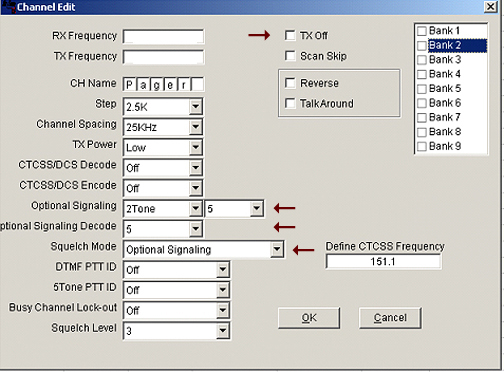 Detailed instructions on how to set up the 2-tone and 5-tone paging system can be found HERE.
Software
The OEM software is relatively easy to follow, and with a little practice, easy to navigate. Some areas may be a bit tricky, and I’ll try to address those area in the Miklor FAQ section. CHIRP developers are aware of the new Anytone 8R series, but it takes time to backward engineer a radios software.
As always, it is recommended to get a quality programming cable so you spend more time talking on the radio and less time loading special drivers to your PC. I personally use an FTDI cable that is Plug ‘n Play with no driver issues.
Upgradeable Firmware
The OBLTR-8R has Upgradeable Firmware. If features are added in the future, your radio is not obsolete. The firmware can be updated (re-flashed) by an authorized dealer so you will always be able to have the latest version available to you.
IMHO
The developers of the Anytone OBLTR-8R packed a lot of features in a small package. The inclusion of:
– Certified GMRS, MURS and Commercial in one radio
– Upgradeable Firmware
– 200 channels/10 Banks
– Dual PTT
– 2TONE / 5TONE / MSK Messaging
– Stun / Kill capability
at a price tag under $100 level is pretty darned impressive.
Comparison
There are four models in the 8R series. At the top is the TERMN-8R, followed by the OBLTR-8R, NSTIG-8R, and the ANILE-8R. Confusing? Here’s a hint. They are alphabetical. That’s the only way I can keep them straight.
For a comparison between the OBLTR-8R and the others in the 8R series, you can follow this LINK
Price: $98.89 USD (Amazon)
More Information: Anytone Tech, Miklor.com


Hans, PD0AC, is a regular contributor to AmateurRadio.com and writes from Almere, The Netherlands. Contact him at [email protected].
Review Anytone OBLTR-8R
by John ‘Miklor’ K3NXU and Hans PD0AC
I now get a chance to review the OBLTR-8R which is a slightly scaled down version of the TERMN-8R which is the top of the new 8R series offered by Anytone. The only outward difference between the two models is the absence of the orange keys on the left. Once again, when you get one in hand, it becomes very obvious that these radios are were not meant to be competition for the lower end brands, but more of a match for the Wouxun and existing Anytone radios.
This radio is FCC Part 90 certified (Commercial) applications, as well as Part 95A GMRS and 95J MURS services. For GMRS and MURS, the frequencies and power levels hard coded in the firmware. Anyone with dual licenses may now only need to carry a single radio.
What’s in the BOX
There you’ll find the radio, a nicely written and illustrated 104 page English manual, belt clip, wrist strap, Earpiece/Microphone, 7.25 inch (18cm) flexible antenna and hefty 2200mAh 7.4V battery with charger.
The side of the battery has a small charging jack for the optional 12V mobile charger is available for on the road charging.
First Impressions
The overall weight and feel of the radio is solid. The top of the radio has both a Volume/PowerOn switch and Channel Selector knob. The left side has the PTT button and well as two programmable function buttons. The right side has a 2 pin ‘K2′ Kenwood, Anytone, Wouxun, Baofeng style connector. Programming cables and Spkr/Micr for these radios will be totally compatible.
My prior Anytones have somewhat of a concave keypad, where the OBLTR-8R keypad buttons are level and easier to access. Also, the keypad numbers and definitions are illuminated making manual programming a bit easier.
Transmitter
The OBLTR-8R, like its big brother the TERMN-8R, also has 3 power levels that can be changed from the keypad. In the GMRS and MURS mode, the power levels are fixed, per certification requirements. Audio level and quality reports were excellent.
Receiver
The OBLTR-8R has a single Dual Watch receiver that covers
VHF – 136-174 MHz UHF – 400-520 MHz
FM Broadcast – 64-108 MHz (with 100 memory channels)
It incorporates Fast Scan with a scan rate of approximately 10 channels per second.
Some measurements
Power Levels on the test unit were as follows:
VHF – 5.6W, 1.9W, 0.9W
UHF – 4.75W, 2.3W, 1.2W
GMRS – 4.25W
MURS – 1.8W
Sensitivity
Sensitivity VHF (@ 145 MHz): -126 dBm (@ 50Ω, 12 dB SINAD).
Sensitivity UHF (@ 435 MHz): -125 dBm (@ 50Ω, 12 dB SINAD).
Harmonics
Good numbers: -57.54 dBm on VHF, -54.74 dBm on UHF.
When in the Dual Watch mode, the receiver continuously samples the main and sub-band for activity. To eliminate adjacent channel interference, the radio’s receiver reverts to true Narrowband when selected. A full 1W of audio makes the receive quality both loud and clear.
GMRS and MURS operation (FCC part 95A / 95J certified)
Like its big brother, the OBLTR-8R can be switched to operate on any of three modes. GMRS, MURS or Commercial/Normal. To eliminate the possibility of being on the wrong band, a Key Press at PowerOn selects either GMRS or MURS mode. Channel frequencies are hard coded in the firmware as well as their power levels, but allow for CTCSS/DCS tones can be added/changed via the keypad.
Commercial Application (FCC Part 90 certified)
For Commercial, Fire, EMS and EmComm use, the OBLTR-8R is fully certificated with 2.5kHz steps, and software which prevents Field Programming.
NOAA Weather Alert
The seven US NOAA weather alert frequencies are preprogrammed into the radio. There are 3 options to choose from. ON, OFF and ALERT. When WX Alert is chosen, the NOAA weather channel remains silent in the background until the 1050Hz emergency tone signal is received. This is especially useful in areas where severe weather conditions are prominent.
Dual PTT Capability / Programmable Function Keys
There are two PF keys below the PTT switch. Either can be programmed to function as a sub-channel (lower display) PTT button, while the PTT switch activates the upper channel.
The PF keys can also be used to select your choice of:
– Battery Voltage display
– Frequency display
– Tone Calling (DTMF/5TONE/2TONE)
– FHSS (Frequency Hopping)
– Tone Pulse (1750, 1450, 1000 or 2100Hz)
– Alarm Button
– Dual PTT
– MONI (Squelch off)
Channel Banks
The radio supports 200 channels and 10 memory banks. Scanning Group 0 will scan all programmed channels entered into the transceiver. Banks 1 > 9 can be assigned up to 32 channels each.
I found a nice added feature that isn’t on my 3318UV-A. If I want to remove a channel from a particular bank, I can dial in the channel, press two keys, turn the knob and it’s gone. Eliminates the need to me to use the computer to delete the bad ones.
2TONE Sequential Paging
This is extremely useful for the EMS user. I personally have used 2 tone pagers in the past. I can now monitor local EMS channels with one radio.
Detailed instructions on how to set up the 2-tone and 5-tone paging system can be found HERE.
Software
The OEM software is relatively easy to follow, and with a little practice, easy to navigate. Some areas may be a bit tricky, and I’ll try to address those area in the Miklor FAQ section. CHIRP developers are aware of the new Anytone 8R series, but it takes time to backward engineer a radios software.
As always, it is recommended to get a quality programming cable so you spend more time talking on the radio and less time loading special drivers to your PC. I personally use an FTDI cable that is Plug ‘n Play with no driver issues.
Upgradeable Firmware
The OBLTR-8R has Upgradeable Firmware. If features are added in the future, your radio is not obsolete. The firmware can be updated (re-flashed) by an authorized dealer so you will always be able to have the latest version available to you.
IMHO
The developers of the Anytone OBLTR-8R packed a lot of features in a small package. The inclusion of:
– Certified GMRS, MURS and Commercial in one radio
– Upgradeable Firmware
– 200 channels/10 Banks
– Dual PTT
– 2TONE / 5TONE / MSK Messaging
– Stun / Kill capability
at a price tag under $100 level is pretty darned impressive.
Comparison
There are four models in the 8R series. At the top is the TERMN-8R, followed by the OBLTR-8R, NSTIG-8R, and the ANILE-8R. Confusing? Here’s a hint. They are alphabetical. That’s the only way I can keep them straight.
For a comparison between the OBLTR-8R and the others in the 8R series, you can follow this LINK
Price: $98.89 USD (Amazon)
More Information: Anytone Tech, Miklor.com
Hans, PD0AC, is a regular contributor to AmateurRadio.com and writes from Almere, The Netherlands. Contact him at [email protected].
NDB Band Wakes Up
My nightly "go to" propagation indicators to the east are YLJ-406, in Meadow Lake, Saskatchewan and AA-365, in Fargo, on the ND/MN border. Their reported powers are 15W and 100W respectively.
YLJ's signal was a solid S9 as heard here, while AA, further to the south was also doing well, heard here.
Further to the east, 25W ZHD-399, in Dryden, Ontario, revealed itself here.
From near Montreal, ZHU-407, at 95W, made a rare appearance here, along with YMW-366, a 500-watter from Maniwaki, Quebec here.
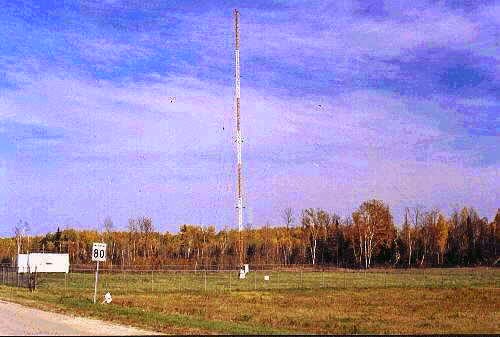 |
| YMW-366KHz Maniwaki, QC courtesy: http://www.ve3gop.com/pict.htm |
By far the highlight of the evening (and a new catch for me) was little OO-391, at the Ottawa Municipal Airport, Ontario ... last reported to be at just 7W output! Listen here carefully for the long dash followed by the 'OO'.
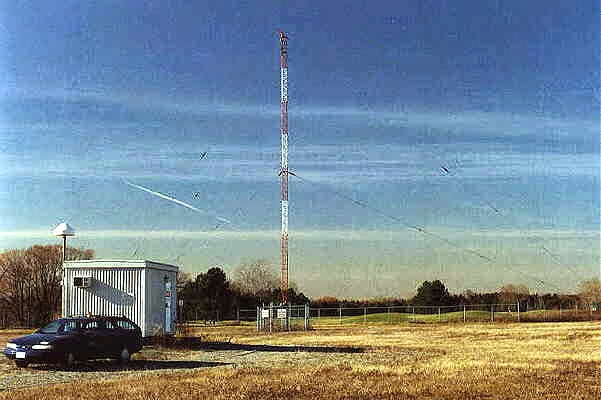 | ||
| OO-391KHz Oshawa, ON courtesy: http://www.ve3gop.com/pict.htm |
Yahoo Group's NDBlist member, VE3GOP, is the beacon maintenance man for OO and many others, and will check the power tomorrow.
All of these signals were heard at ~ 9PM local time, in a 6Hz filter using the Perseus SDR and my 10' x 20' active loop.
The previous morning had some of the year's best propagation to Alaska so far ... that direction has been dismal ... with the following NDB's heard (mostly 25-watters) in the pre-dawn hours:
03 10 1300 529 SQM Level Island AK CO36
03 10 1300 396 CMJ Ketchikan AK CO45
03 10 1300 391 EEF Sisters Island AK CO28
03 10 1300 372 FPN Fredericks Point AK CO36
03 10 1300 266 ICK Annette Island AK CO45
03 10 1300 414 IME Mt. Edgecumbe AK CO27
03 10 1300 394 RWO Kodiak AK BO37
03 10 1300 209 CYT Yakataga AK BP80
03 10 1300 390 HBT Sand Point AK AO95
03 10 1300 358 SIT Sitka AK CO26
03 10 1300 350 VTR McGrath AK BP22
03 10 1100 338 CMQ Campbell Lake AK BP41
03 10 1100 233 ALJ Johnstone Point AK BP60
03 10 1100 212 CGL Coghlan Island AK CO28
03 10 1100 223 AFE Kake AK CO36
03 10 1100 229 AKW Klawock AK CO35
03 10 1100 283 DUT Dutch Harbor AK AO63
03 10 1100 245 HNS Haines AK CO29
03 10 1300 347 DJN Delta Junction AK BP74
03 10 1100 411 ILI Iliama AK BO29
03 10 1100 277 ACE Homer AK BO49
03 10 1100 355 AUB King Salmon AK BO18
03 10 1100 524 MNL Valdez AK BP61
03 10 1300 382 JNR Unalakleet AK AP93
03 10 1100 281 CRN Cairn Mountain AK BP21
03 10 1100 385 EHM Cape Newenham AK AO88
03 10 1100 385 OCC Yakutat AK CO09
03 10 1300 390 AES Northway AK BP29
03 10 1100 404 GCR Cordova AK BP70
03 10 1100 525 ICW Nenana AK BP54
03 10 1300 251 OSE Bethel AK AP90
03 10 1100 341 ELF Cold Bay AK AO85
03 10 1300 248 GLA Gulkana AK BP72
03 10 1100 379 IWW Kenai AK BP40
03 10 1300 399 SRI St. George AK AO56
03 10 1300 393 TOG Togiak, AK AO99
03 10 1300 429 BTS Dillingham, AK BO08
03 10 1300 227 MHM Minchumina AK BP33
Unfortunately it looks like LF prop will be deteriorating rapidly, with the recent round of flares expecting to stir up absorption levels over the next several days ... however, HF should see the benefits of the increased sunspot activity ... maybe all is not lost after all!
Steve McDonald, VE7SL, is a regular contributor to AmateurRadio.com and writes from British Columbia, Canada. Contact him at [email protected].
FT4TA Expedition Book
You can see a preview of the book here: http://www.blurb.com/books/5999560-hamradio-dxpedition-to-tromelin-island-ft4ta-2014
I highly recommend it.
Mike Crownover, AD5A, is a regular contributor to AmateurRadio.com and writes from Texas, USA. Contact him at [email protected].
FT4TA Expedition Book
You can see a preview of the book here: http://www.blurb.com/books/5999560-hamradio-dxpedition-to-tromelin-island-ft4ta-2014
I highly recommend it.
Mike Crownover, AD5A, is a regular contributor to AmateurRadio.com and writes from Texas, USA. Contact him at [email protected].
 Ham Radio Deluxe |
 W5SWL Electronics |
 Ham Radio Prep |
 KB3IFH QSL Cards  Hip Ham Shirts  HamRadioAuctions HamRadioAuctions Reliance Antennas Reliance Antennas Enigma Shop Enigma Shop |  morseDX  Ni4L Antennas  R&L Electronics R&L Electronics antennas.us antennas.us QRV QRV |
- Matt W1MST, Managing Editor
