 |
 The W6FSM Bug Roundup!
 13 April 2015 | by
 Sponsoring the event is the Samuel F. Morse Amateur Radio Club (W6SFM) of Sacramento, CA. Detailed information may be found at their website, located here.
The club page describes the event as :
"a special time to bring bug operators together on the air. In the same spirit as ARRL's Straight Key Night, participants are encouraged to make simple, conversational, “chewing-the-fat” QSOs using their bug type key. This is an opportunity to exercise, share and exhibit your personalized fist. This is NOT a contest. Call "CQ BR" so folks know you are a Bug Roundup Participant."
You may have guessed by now that I love CW and always have, since learning the 'code' as an eleven-year old in Scouts! Our Scoutmaster had procured several sets of beautiful boxed Aldis signalling lamps, the same as shown below:
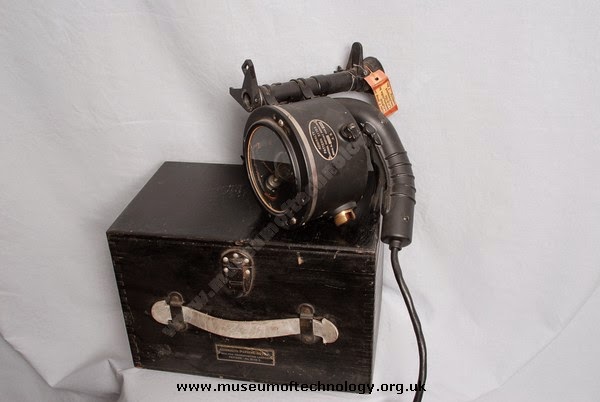 |
| Image Courtesy: http://www.museumoftechnology.org.uk |
Our leader worked in the Marine Building, the tallest building at the time, in downtown Vancouver.
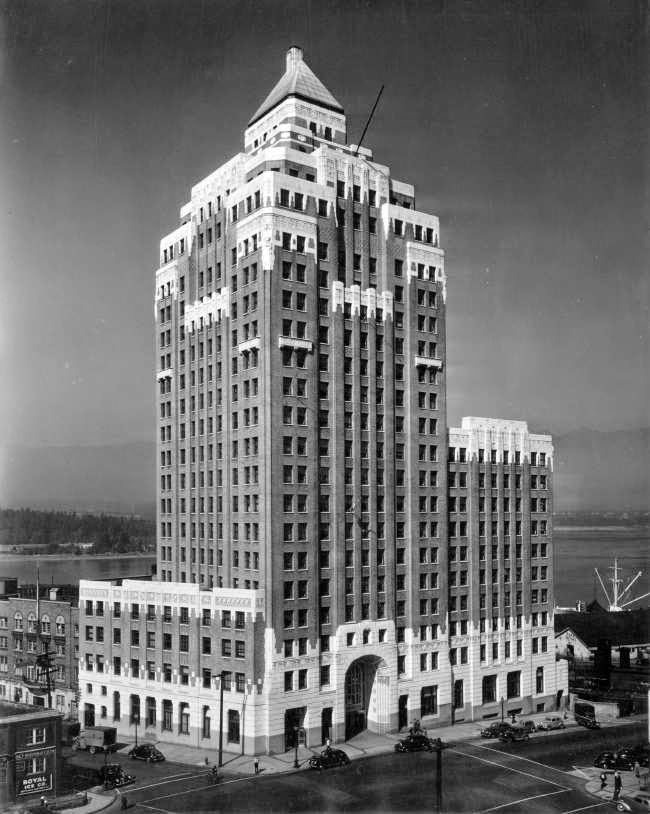 |
| Marine Building circa 1947. Courtesy: http://searcharchives.vancouver.ca/ |
It's nice to see events like this and the ARRL's "Straight Key Night" along with clubs like the, "SKCC" , "FISTS", "FOC" and "The CW Operators' Club", all doing their best to keep CW alive.
Hopefully you will have some time to play in the coming "BR".
Steve McDonald, VE7SL, is a regular contributor to AmateurRadio.com and writes from British Columbia, Canada. Contact him at [email protected].
Weekly Propagation Summary – 2015 Apr 13 16:10 UTC
Here is this week’s space weather and geophysical report, issued 2015 Apr 13 0314 UTC.
Highlights of Solar and Geomagnetic Activity
06 – 12 April 2015
Solar activity was at low to moderate levels throughout the period.
Region 2320 (S12, L=211, class/area=Dac/180 on 07 Apr) produced an
M1/1b flare at 1443 UTC on 08 April and Region 2321 (N13, L=094,
class/area=Ekc/610 on 12 Apr) produced a long-duration M1/Sf flare
at 0950 UTC on 12 April, which were the largest events of the
period. In addition to the R1 (Minor) radio blackouts, Regions 2320
and 2321 produced numerous low to mid-level C-class flares
throughout the week and were the most productive active regions of
the period. A coronal mass ejection (CME) associated with the M1/Sf
flare from Region 2321 was first observed in SOHO/LASCO C2
coronagraph imagery at 0948 UTC on 12 April, but was directed well
east of the Sun-Earth line.
Region 2320 produced a C3/1f flare at 1906 UTC on 06 April, with
associated Type-II and Type-IV radio emissions, which resulted in a
CME that was visible in coronagraph imagery beginning at 1936 UTC on
06 April. This CME impacted Earth early on 10 April, causing periods
of moderate geomagnetic storms. See "Geomag" portion below
for further information.
Toward the end of the period, Region 2320 produced a C6/Sf flare at
2329 UTC on 12 April with associated Type-II radio emissions. A
subsequent coronal mass ejection (CME) was first visible in
SOHO/LASCO C2 coronagraph imagery at 12/2348 UTC but analysis is
ongoing to determine if this event has an Earth-directed component.
No proton events were observed at geosynchronous orbit.
The greater than 2 MeV electron flux at geosynchronous orbit reached
moderate levels on 06-09 April and at normal levels for the
remainder of the period.
Geomagnetic field activity was at quiet to unsettled levels for
06-09 April under a nominal solar wind regime. The 06 April CME
impacted Earth just after 0000 UTC on 10 April, enhancing the
geomagnetic field. As the 06 April CME passed the Earth, 10 April
began with periods of G1 (Minor) geomagnetic storm conditions
between 0000-0300 UTC and 0600-0900 UTC and an isolated period of G2
(Moderate) geomagnetic storm period between 10/0300-0600 UTC. Active
conditions were observed between 10/0900-1500 UTC with quiet to
unsettled levels observed over the remainder of 10 April. Active
conditions were observed once again for the first half of 11 April
as residual CME effects continued to subside but the latter half of
11 April was quiet to unsettled. Quiet conditions were observed on
12 April.
Forecast of Solar and Geomagnetic Activity
13 April – 09 May 2015
Solar activity is likely to be at moderate (R1-R2/Minor-Moderate)
levels throughout the period, with the exception of 25-26 April, due
to the flare potential of Regions 2320 (S12, L=211) and 2321 (N13,
L=094).
No proton events are expected at geosynchronous orbit, barring any
significant flare activity.
The greater than 2 MeV electron flux at geosynchronous orbit is
expected to reach high levels on 21-24 April and 04-09 May, moderate
levels on 17-20, 25-28 April, and 01-03 May, and normal levels for
the remainder of the period.
Geomagnetic field activity is expected to be at G1 (Minor)
geomagnetic storm levels on 17 and 30 April with active conditions
expected for 16, 25, 29 April and 01 May, all due to coronal hole
high speed stream effects. Quiet to unsettled field activity
expected for the remainder of the period.
Don’t forget to visit our live space weather and radio propagation web site, at: http://SunSpotWatch.com/
Live Aurora mapping is at http://aurora.sunspotwatch.com/
If you are on Twitter, please follow these two users:
+ https://Twitter.com/NW7US
+ https://Twitter.com/hfradiospacewx
Get the space weather and radio propagation self-study course, today. Visit http://nw7us.us/swc for the latest sale and for more information!
We’re on Facebook: http://NW7US.us/swhfr
Visit, subscribe: NW7US Radio Communications and Propagation YouTube Channel
Elecraft surgery part 3 of 3
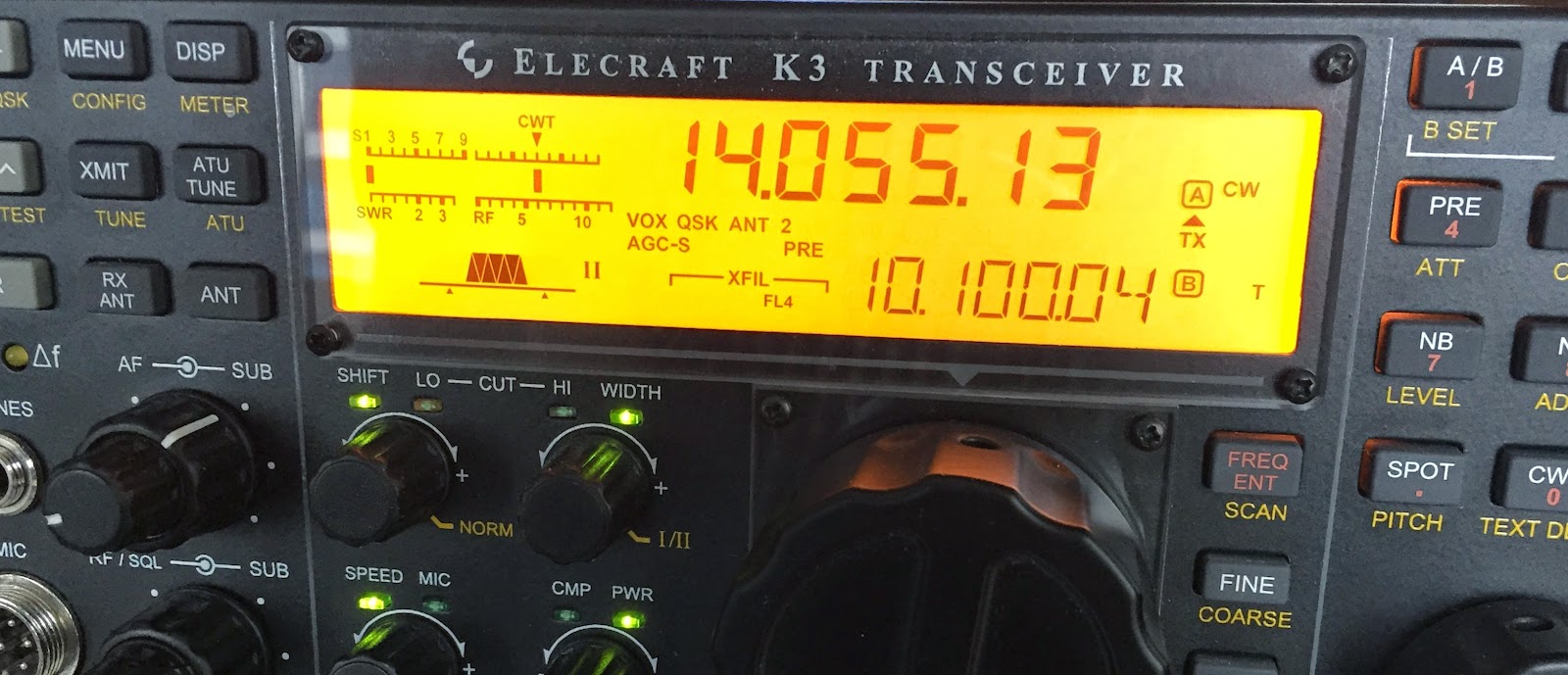 |
| Back to life again |
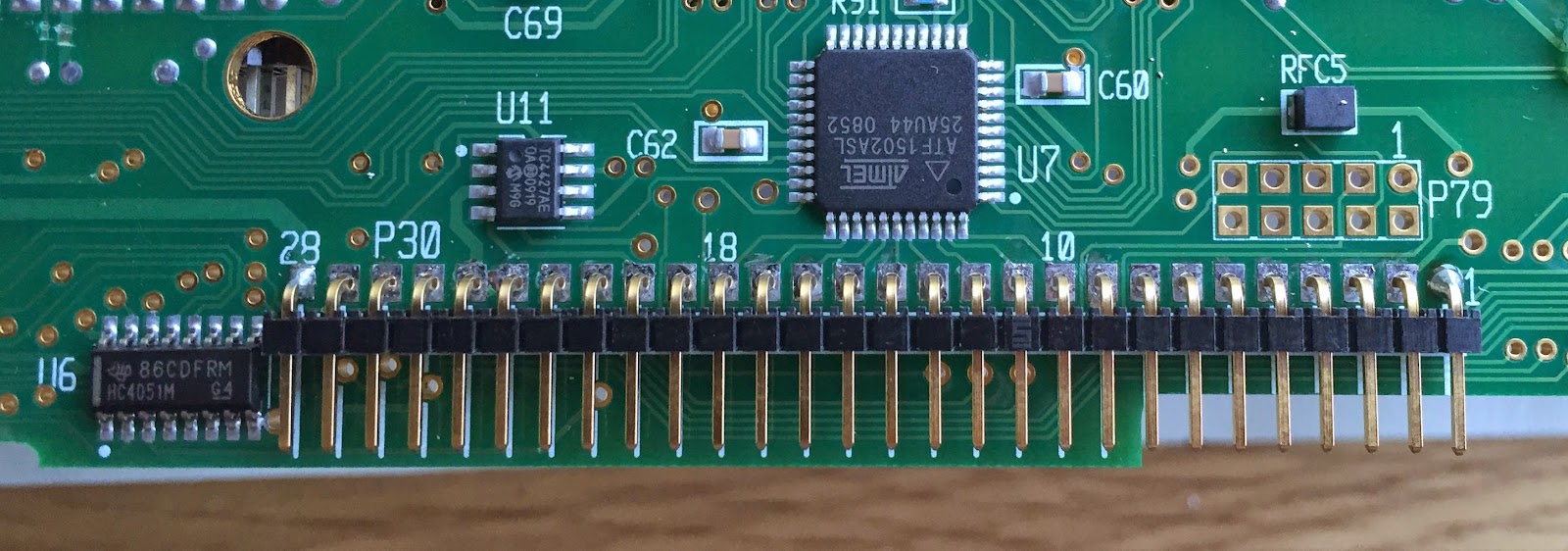 |
| Soldering end pins |
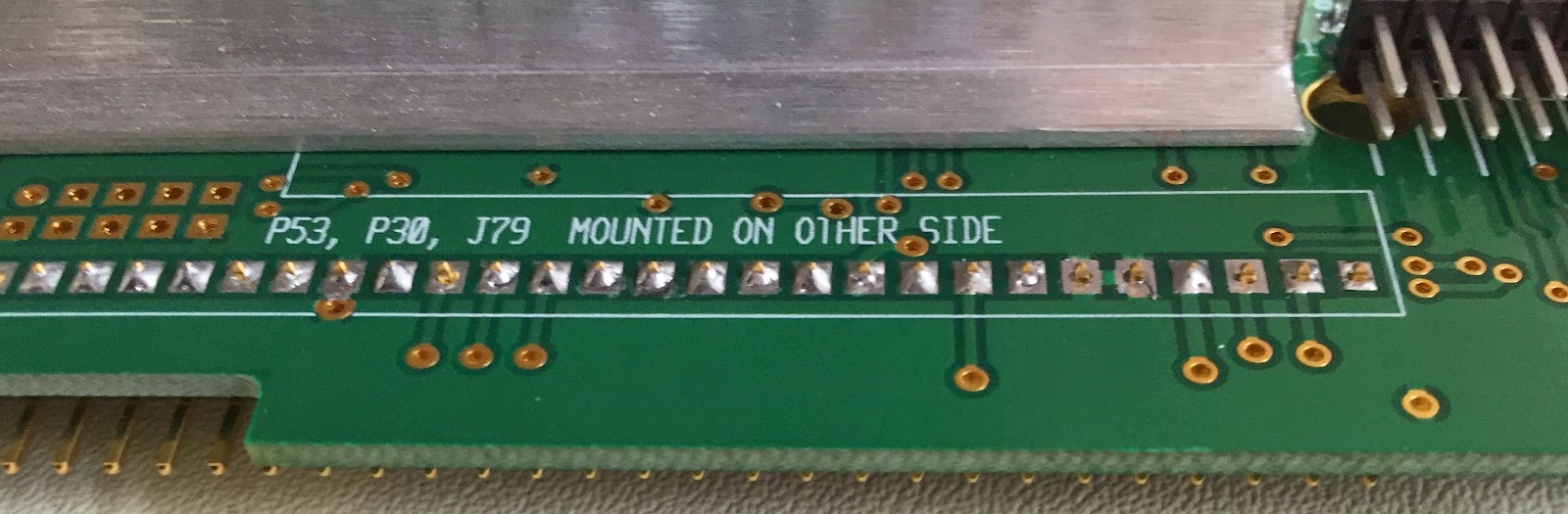 |
| Imports of checking both sides of board |
 |
| Flossing tool used to clean board |
 |
| New header lines up with front board. |
Mike Weir, VE9KK, is a regular contributor to AmateurRadio.com and writes from New Brunswick, Canada. Contact him at [email protected].
AmateurLogic 77: SkyPi, ThumbDV, Grid Square GPS

AmateurLogic.TV Episode 77 is now available for download.
George builds the SkyPi-40 QRP transmitter for RaspberryPi and sets a distance record. Tommy installs the new ThumbDV D-Star dongle. Peter creates the VK3PB Sota Box, a Grid Square GPS unit. Plus your viewer emails and more.
1:05:59
George Thomas, W5JDX, is co-host of AmateurLogic.TV, an original amateur radio video program hosted by George Thomas (W5JDX), Tommy Martin (N5ZNO), Peter Berrett (VK3PB), and Emile Diodene (KE5QKR). Contact him at [email protected].
Low cost oscilloscope kit (Bangood)
Steve G1KQH has tracked down yet another bargain. I think my SMA assembly skills are probably still not up to the task, but you can hardly go wrong at the price which includes free air-mail shipping. Another absolute bargain. I think Steve must have shares in Bangood!! If not, they ought to make him their UK agent, HI.
Here’s another one (kit), we could get our teeth into:
I have that many kits at the moment, I don’t know where to start next? If I come back in another life can we have a 48hour clock pse!73 Steve
http://www.g1kqh.talktalk.net/

Roger Lapthorn, G3XBM, is a regular contributor to AmateurRadio.com and writes from Cambridge, England.
Amateur Radio Weekly – Issue 56

RadioShack’s blueprint for a rebirth, planned by a hedge fund
“It’s time for a new day,” Mr. Kim said, his voice tense yet steady. “We’re here today because we know this can work.”
New York Times
South African Hams get 40MHz access
Amateurs have been given ‘propagation studies’ permission to transmit between 40.675MHz and 40.685MHz.
VE7SL
Amateur Radio and Ingress
Those of us licensed have found that taking radios out on missions is a real boon, and if you ever hear simplex chat talking about “portals,” “hacking” and “deploying,” that’ll be some of the local Ingress players.
Essex Ham
TEN-TEC and Alpha purchased from RF Concepts
Less than a year after TEN-TEC and Alpha Amplifiers merged under the RF Concepts banner, the companies have changed hands.
ARRL
Infrared light offers alternative for wireless charging
Wi-Charge’s wireless charging technology claims to deliver up to 10 W of power over 10 meters.
Southgate
Spurious emissions and harmonics on Baofeng radios?
If this were correct, the Baofeng UV-5R would be the most horrible design ever. But wait, we did this already a long time ago, and the UV-5R wasn’t too bad at all.
PD0AC
A Worked All States and DX Net
Amateur Radio’s Late Night Net on 40 Meters
hhhnet.net
Time and frequency station back on the air
Time and frequency standard station WWV silenced its 25 MHz signal in 1977, but it returned to the air on an “experimental basis” a year ago, and it’s still up and running.
ARRL
How to
DRA818: A weekend VHF/UHF Radio audio transceiver project
On the board you will also find a microphone preamplifier.
Jurij Mikeln
Video
Antenna testing using WSPR
You can use a website to view a map of the station that you have heard and stations that have heard you.
K7AGE
Yaesu FT-757GX II in action
YouTube
Review
Review: Atom 40S Mobile HF Antenna
My previous experiences with HF mobile antennas have not been so great.
M0SPN
Amateur Radio Weekly is curated by Cale Mooth K4HCK. Sign up free to receive ham radio's most relevant news, projects, technology and events by e-mail each week at http://www.hamweekly.com.
Amateur Radio Newsline Report 1960 April 10 2015
- ARRL tells the FCC that ham radio and vehicle radar can co-exist at 76 - 81 GHz
- UK hams get 70.5 to 71.5 MHz for digital experimentation by special permit
- South Africa hams gain full kilowatt power privileges
- NCDXF announces a grant of $50,000 to the VK0EK Heard Island DXpedition
- Radio tracking tiny birds as they fly south over the Atlantic
THIS WEEK'S NEWSCAST
Script
Audio
 Ham Radio Deluxe |
 W5SWL Electronics |
 Ham Radio Prep |
 KB3IFH QSL Cards  Hip Ham Shirts  HamRadioAuctions HamRadioAuctions Reliance Antennas Reliance Antennas Enigma Shop Enigma Shop |  morseDX  Ni4L Antennas  R&L Electronics R&L Electronics antennas.us antennas.us QRV QRV |
- Matt W1MST, Managing Editor
