 |
 CLE 193 Results
 28 April 2015 | by
 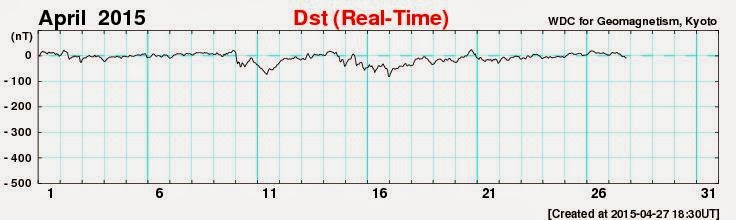 |
| http://wdc.kugi.kyoto-u.ac.jp/dst_realtime/presentmonth/index.html |
DD UTC kHz Call mi Location
-----------------------------------------
27 09:00 400 TRX 1572 Trenton Municipal Apt, MO, USA
25 07:00 400 QQ 97 Comox, BC, CAN
26 10:00 400 PPI 1449 Hopey - Cottage Grove-St Paul, MN, USA
25 09:00 400 FN 1071 COLLN - Fort Collins, CO, USA
27 09:00 400 ENS 1230 Ensenada Apt, MEX
25 07:00 400 CKN 1220 Crookston, MN, USA
26 10:00 400 AHQ 1396 Wahoo, NE, USA
25 07:00 401 YPO 1644 Peawanuck Apt, ON, CAN
25 07:00 402 M3 649 Kindersley Apt, SK, CAN
25 07:00 402 L4 888 Nipawin, SK, CAN
27 07:00 403 AZC 971 Colorado City Municipal Apt, AZ, USA
25 07:00 404 OLF 809 Wolf Point - L M Clayton Apt, MT, USA
25 07:00 404 MOG 495 Montegue, CA, USA
25 12:00 404 GCR 1185 Glacier River - Cordova Apt, ALS
25 07:00 405 9G 429 Sundre Municipal Apt, AB, CAN
25 07:00 405 2K 538 Camrose, AB, CAN
25 07:00 406 YLJ 725 Meadow Lake, SK, CAN
27 08:00 407 CHD 1230 Chandler, AZ, USA
27 09:00 407 PLT 1352 Platte Center - Columbus, NE, USA
27 07:00 407 HRU 1485 Herington, KS, USA
26 10:00 407 CO 1157 PETEY - Fountain, CO, USA
25 07:00 408 Z7 440 Claresholm, AB, CAN
25 07:00 408 MW 221 PELLY - Moses Lake, WA, USA
26 11:00 408 JDM 1270 Wheatfield - Colby, KS, USA
25 07:00 410 GDV 860 Glendive - Dawson Comm Apt, MT, USA
26 10:00 410 EGQ 1419 Emmetsburg, IA, USA
26 10:00 410 DAO 1371 Dragoo - Sierra Vista Muni Apt, AZ, USA
25 07:00 410 6Z 781 La Loche, SK, CAN
25 11:00 411 SDA 1466 Shenandoah Municipal Apt, IA, USA
26 11:00 411 ILI 1459 Iliamna Apt, ALS
25 07:00 412 1W 996 Sandy Bay, SK, CAN
25 07:00 413 YHD 1361 Dryden Regional, ON, CAN
25 07:00 414 YZK 186 Harper Ranch, BC, CAN
26 10:00 414 SU 1372 SALIX - Salix, IA, USA
25 07:00 414 LYI 357 Libby, MT, USA
25 12:00 414 IME 754 Mount Edgecumbe - Sitka Apt, ALS
26 10:00 414 GRN 1094 Gordon, NE, USA
27 09:00 414 8M 640 Elk Point Municipal Apt, AB, CAN
25 07:00 415 CBC 3129 Cayman Brac - West End, CYM
26 10:00 416 LB 1228 PANBE - North Platte, NE, USA
25 09:00 417 IY 1508 CHUKK - Floyd, IA, USA
27 07:00 418 CW 2029 MOSSY - Moss Bluff, LA, USA
26 09:00 419 RYS 1975 'Grosse Ile' Detroit / Grosse Ile, MI, USA
As usual, the equipment used was the Perseus SDR along with my 10' x 20' loop and Wellbrook preamp.
Steve McDonald, VE7SL, is a regular contributor to AmateurRadio.com and writes from British Columbia, Canada. Contact him at [email protected].
An FM pileup
Last night was a big drill night for us on the Heyworth fire department. We have a large gas terminal located in our fire district. A pipeline runs to a tank farm where fuel products are stored and then loaded onto semi-trailers for transportation to other storage areas, gas stations, or private tanks. We had the terminal owners and three other mutual aid departments participating in the drill.
Communications is almost always a problem when you get that many people on scene. Radio communications become clogged as 10 apparatus arrive on scene. “Where do you want us? Send me this….Can you go here?” These message repeat over and over, all the while the firefighters performing work are unable to get back to command. Why is this a problem? Because everyone wants to hear all traffic, we stay on ONE frequency. You’ve got 10 trucks and 25+ people all trying to talk on one VHF FM analog frequency.
If only more of our members were hams, maybe we wouldn’t have to discuss why talking over other transmissions doesn’t work. Or why putting 25 people on a single channel is not a good idea if we expect two-way communications between more than 5 of them! Nothing like a good ‘ole FM pileup to make you want to smack your head against the wall. If nothing else, maybe the single command officer trying to work the pileup WHILE managing the event would realize that we need to work differently.
Michael Brown, KG9DW, is a regular contributor to AmateurRadio.com and writes from Illinois, USA. Contact him at [email protected].
Weekly Propagation Summary – 2015 Apr 27 16:10 UTC
Here is this week’s space weather and geophysical report, issued 2015 Apr 27 0348 UTC.
Highlights of Solar and Geomagnetic Activity
20 – 26 April 2015
Solar activity was at low to high levels throughout the period.
Region 2322 (N11, L=116, class/area=Dac/60 on 21 April) grew and
intensified as it rotated to the western limb; producing numerous
low level C-class flares and five moderate level M-class flares on
21 April. Region 2322 also produced the largest flare of the period,
an impulsive M4/Sf at 22/1545 UTC. Region 2322 continued to produce
C-class and M-class flares until it rotated beyond the western limb
by 24 April, including a long-duration M1 flare at 23/1007 UTC with
an associated Type-II radio sweep and coronal mass ejection (CME)
from the western limb as observed in SOHO/LASCO C2 imagery. The CME
was not Earth-directed.
Regions 2325 (N05, L=050, class/area=Cai/220 on 19 April) and 2326
(N20, L=086, class/area=Cao/80 on 23 April) were the other most
prolific flare producers during the period. Region 2325 produced an
M1 flare at 21/2201 UTC and Region 2326 produced numerous C-class
X-ray flares with the most notable being a C7 flare at 23/1203 UTC.
Both flares were very impulsive and did not have any observed
optical flares nor notable radio signatures.
No proton events were observed at geosynchronous orbit.
The greater than 2 MeV electron flux at geosynchronous orbit was at
moderate to high levels during the week; reaching high levels on
20-21 April and 24 April with a peak flux of 2,620 pfu on 20 April.
Geomagnetic field activity was at quiet to unsettled levels on 20
April as Earth was in a background ambient solar wind environment.
On 21 April, Earth came under the influence of an isolated positive
coronal hole high speed stream (CH HSS) and solar wind speeds
increased to over 600 km/s as measured at the ACE satellite. This CH
HSS produced occasional periods of active levels of geomagnetic
activity from 21-24 April. The CH HSS rotated out of a geo-effective
alignment by midday on 24 April and the winds decreased to mainly
nominal solar wind conditions of about 375 km/s, returning Earth to
quiet to unsettled geomagnetic conditions.
During the week, ACE solar wind parameters measured a high wind
speed of 628 km/s on 21/0632 UTC and a low wind speed of 291 km/s on
26/1123 UTC. Total field (Bt) ranged from about 1 to 14 nT, while
the Bz component varied between +12 to -7 nT. The phi angle was
generally in a positive (away from the Sun) orientation with a short
period of negative (towards the Sun) sector to begin the week.
Forecast of Solar and Geomagnetic Activity
27 April – 23 May 2015
Solar activity is expected to be at very low to low levels through
03 May due to the low number of complex active regions. Solar
activity levels are expected to increase to low levels; with a
slight chance for moderate (R1-R2/minor-moderate) levels beginning
04 May with the return of Region 2322 (N11, L=116) and remain at low
levels, but increase to a chance for moderate (R1-R2/minor-moderate)
levels beginning 07 May as Region 2326 (N20, L=086) also rotates
back onto the disc. Solar activity level is expected to decrease
back to very low to low levels with the departure of Regions 2322
and 2326 beginning 17 May.
No proton events are expected at geosynchronous orbit.
The greater than 2 MeV electron flux at geosynchronous orbit is
expected to be at normal to moderate levels from 27 April-06 May,
normal levels from 07-12 May, moderate to high levels from 13-14
May, high levels from 15-18 May, moderate levels from 19-20 May, and
moderate to high levels from 21-23 May.
Geomagnetic field activity is expected to be at quiet levels from
27-28 April and increase to quiet to unsettled levels beginning 29
April due to CH HSS effects. Field activity is expected to begin
decreasing by 02 May, with overall quiet levels likely from 03-10
May. Field activity is expected to increase to unsettled to active
levels beginning late on 11 May and likely reaching active levels on
12-13 May due to CH HSS effects. Field activity is expected to
decrease to unsettled to active levels by 14 May as CH HSS effects
begin to wane; and return to quiet to unsettled conditions from
15-17 May. Field conditions are expected to increase to unsettled to
active levels on 18 May due to a CH HSS and return to quiet to
unsettled conditions as the CH HSS rotates out of a geo-effective
position by 21 May, and remain at quiet levels for the remainder of
the outlook period.
Don’t forget to visit our live space weather and radio propagation web site, at: http://SunSpotWatch.com/
Live Aurora mapping is at http://aurora.sunspotwatch.com/
If you are on Twitter, please follow these two users:
+ https://Twitter.com/NW7US
+ https://Twitter.com/hfradiospacewx
Get the space weather and radio propagation self-study course, today. Visit http://nw7us.us/swc for the latest sale and for more information!
We’re on Facebook: http://NW7US.us/swhfr
Visit, subscribe: NW7US Radio Communications and Propagation YouTube Channel
Happy Morse Code Day!
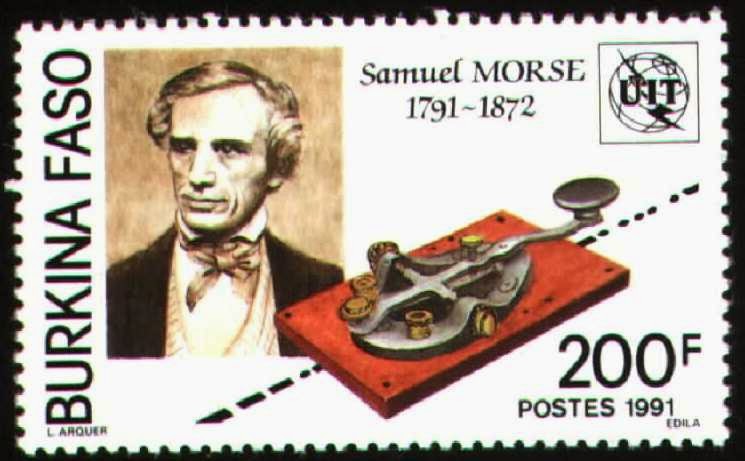
Does this make Samuel the original "Old Man"? Sorry Mr. Maxim*, I think Mr. Morse has seniority on you for that title, as Mr. Morse would be celebrating his 224th birthday today, were he of the kin of Methuselah.
Now that QRPTTF is over, except for e-mailing in my log summary, I thought I'd post where my signal was being heard on Saturday, according to the Reverse Beacon Network.
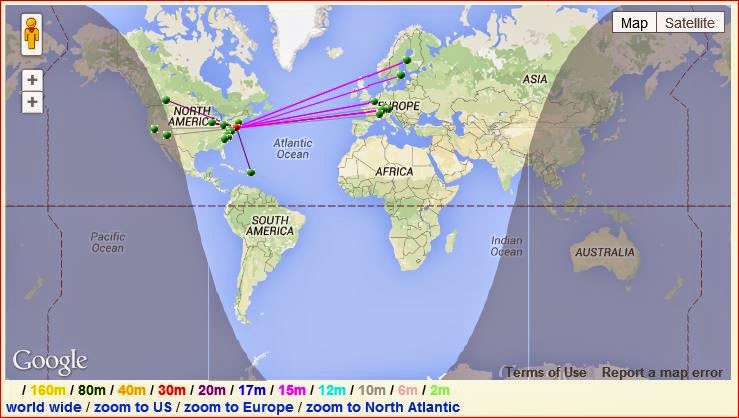
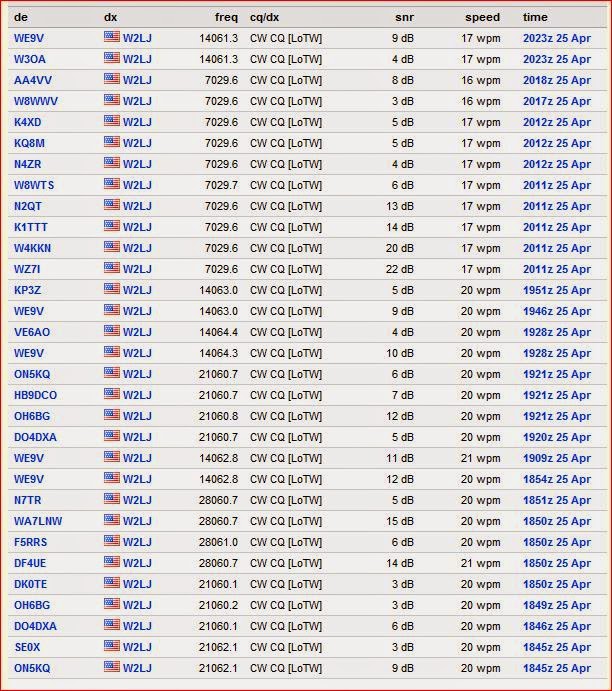
Bob W3BBO and I were discussing QRPTTF yesterday amongst ourselves, and it occurred to both of us that the western half of the nation seems to have reported larger QSO totals than the eastern half of the nation. This based on e-mails sent to QRP-L that we had read. Not sure what that means, but so far I haven't seen many e-mails from anyone east of the Mississippi with log summaries of around 40 QSOs or so. It will be interesting to see how it breaks down geographically once the results are in.
The EARCHI does get heard, and being on the top of a high hill (we call those mountains, here in NJ) sure makes a difference. And this makes for the other important lesson I've learned from events such as these. As nice as it would be to come in 1st place in a contest such as QRPTTF, the real prize won is enjoying a day outdoors, playing radio in the fresh air and sunshine, being able to forget about everyday worries, cares and concerns, even if it's just for a couple hours.
72 de Larry W2LJ
QRP - When you care to send the very least!
* - For those of you who are new to the Ham radio game, Hiram Percy Maxim who founded the ARRL, often wrote editorials under the pseudonym "The Old Man". Since HPM lived from 1869 - 1936. I guess that makes Mr. Morse the rightful holder of "The Old Man" title.
Larry Makoski, W2LJ, is a regular contributor to AmateurRadio.com and writes from New Jersey, USA. Contact him at [email protected].
The Dreaded Wall Wart
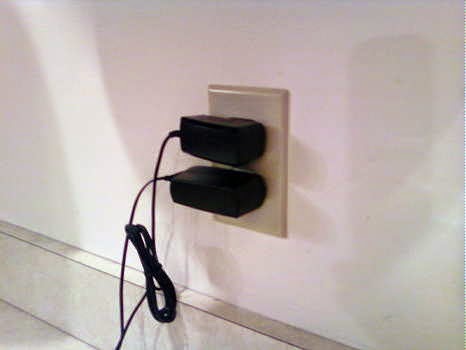
It seems that the ARRL has made it official ... well, maybe not, but at least Ed Hare, W1RFI has. In a recent interview on the HamRadioNow webcast, Hare said that he believed that switching-mode power supplies are a more common source of QRN than noisy power lines ... and I believe him. I have heard countless horror stories of amateurs having to go QRT for good (at least on HF) because of issues with neighbourhood switching supplies. It's one thing to be able to hunt these things down and remediate the problem within your own home but when it comes to the whole neighbourhood, it's an awfully large challenge. And it's not as if there's just the odd one around, here and there ... they are everywhere.
In Ed's own words:
“The old days of those iron transformers are gone,” Hare said. “Every single one of these is a switcher. We’re also seeing noise from pulse-width control motors.” Hare said the big culprits are “little wall warts,” not switching supplies designed to power Amateur Radio gear. “Every TV you own has a built-in switcher, almost every device has a wall-wart, and a lot of these are imported, not necessarily meeting the FCC rules, so we’re seeing more reports involving those.”
I've never personally had a problem with a wall wart, other than a cheap charger for my I-Pad, but that's not to say I haven't run into switchers. The charger emitted a low-level hash that I could hear only on a very quiet 6m band, not much of a real problem considering that I could unplug it at any time. A couple of problems here in the neighbourhood were eventually traced to the poorly designed or faulty switchers inside some CFL bulbs. These were emitting signals via the powerlines and being picked up by my antennas almost two blocks away. This was a problem only on LF however, where the powerlines make pretty efficient antennas.
Hare went on to say that some of the new LED-type lightbulbs have proven to be noisy as well. Not hard to understand when each one has its own low voltage switching power supply. What is hard to understand is why these device are even allowed on the market without having to undergo some type of noise-testing for approval. Another 'growing' threat are the lights used by neighbourhood grow-ops, legal or otherwise.
Hare also indicated that the ARRL lab can work with manufacturers to correct problems but that they need to know specific model numbers and information about the problems you are experiencing with the device.
Apparently, according to Hare, many issues can be resolved without involving enforcement from the FCC, the last step, should issues not be resolved by other methods.
You may be able to help by sending the needed information to the ARRL Laboratory for this and other types of RFI. Both Ed Hare and ARRL EMC Specialist Mike Gruber, should be contacted if you can supply information or have an unresolved problem.
The excellent 11-minute interview (Episode 196 'W1RFI's Tall Tales from the ARRL Lab') can be watched here, with thanks to HamRadioNow TV and to Gary Pearce, KN4AQ of HamRadioNow.
Steve McDonald, VE7SL, is a regular contributor to AmateurRadio.com and writes from British Columbia, Canada. Contact him at [email protected].
QRPTTF – 2015
As Mr. Lennon wrote, "Life is what happens when you're busy making other plans."
I had planned to get to Washington Rock State Park around Noon. The park, which is on the first ridge of the Watchung (Wach Unc in Lene Lanape) moutnains, meets the QRPTTF theme requirement for being a place somehow related to Native Americans. What actually happened was that my daughter was invited to a sleepover/birthday party, and I had to have her at her friend's house at 2:00 PM. So much for the early start.
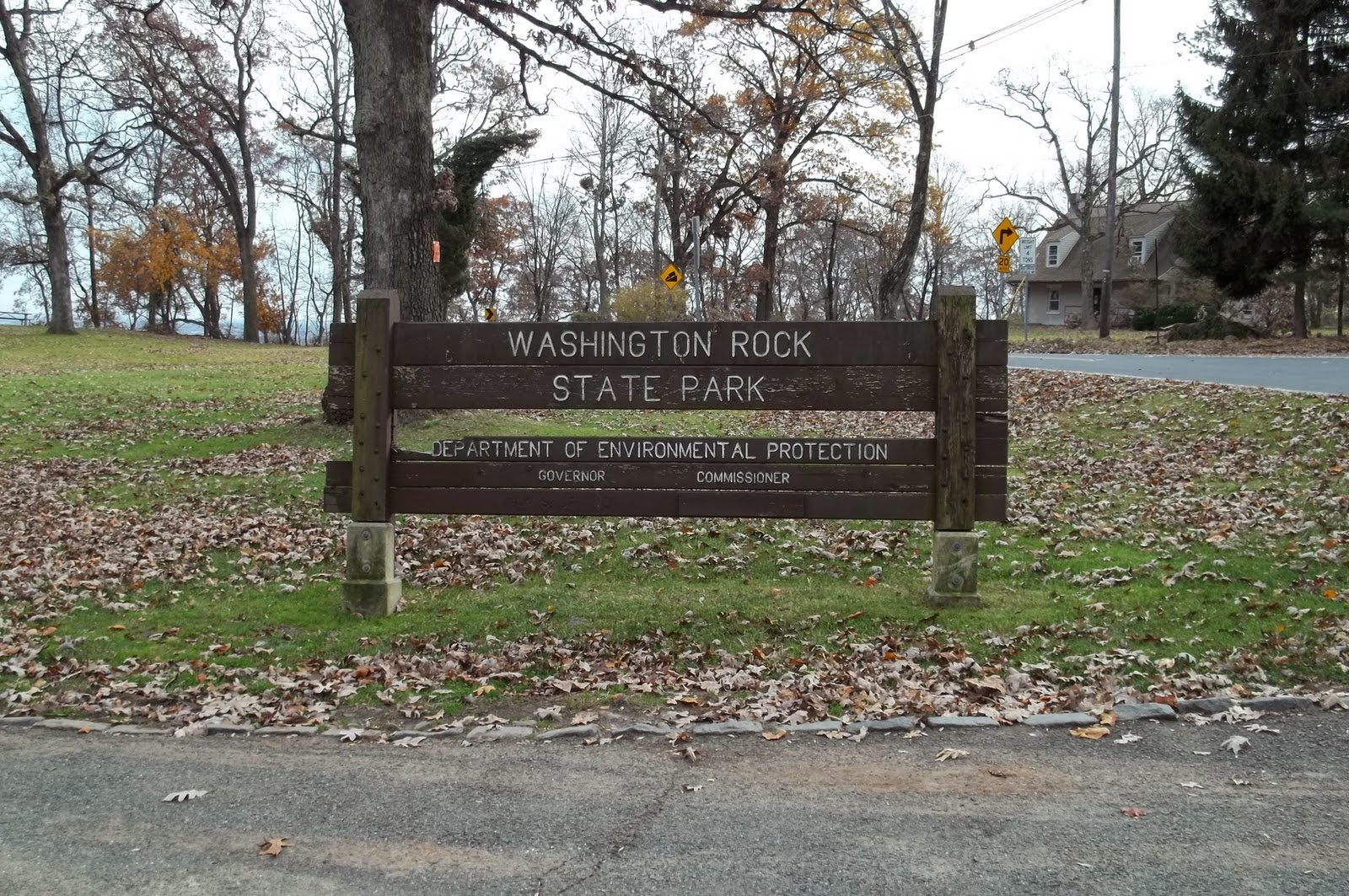
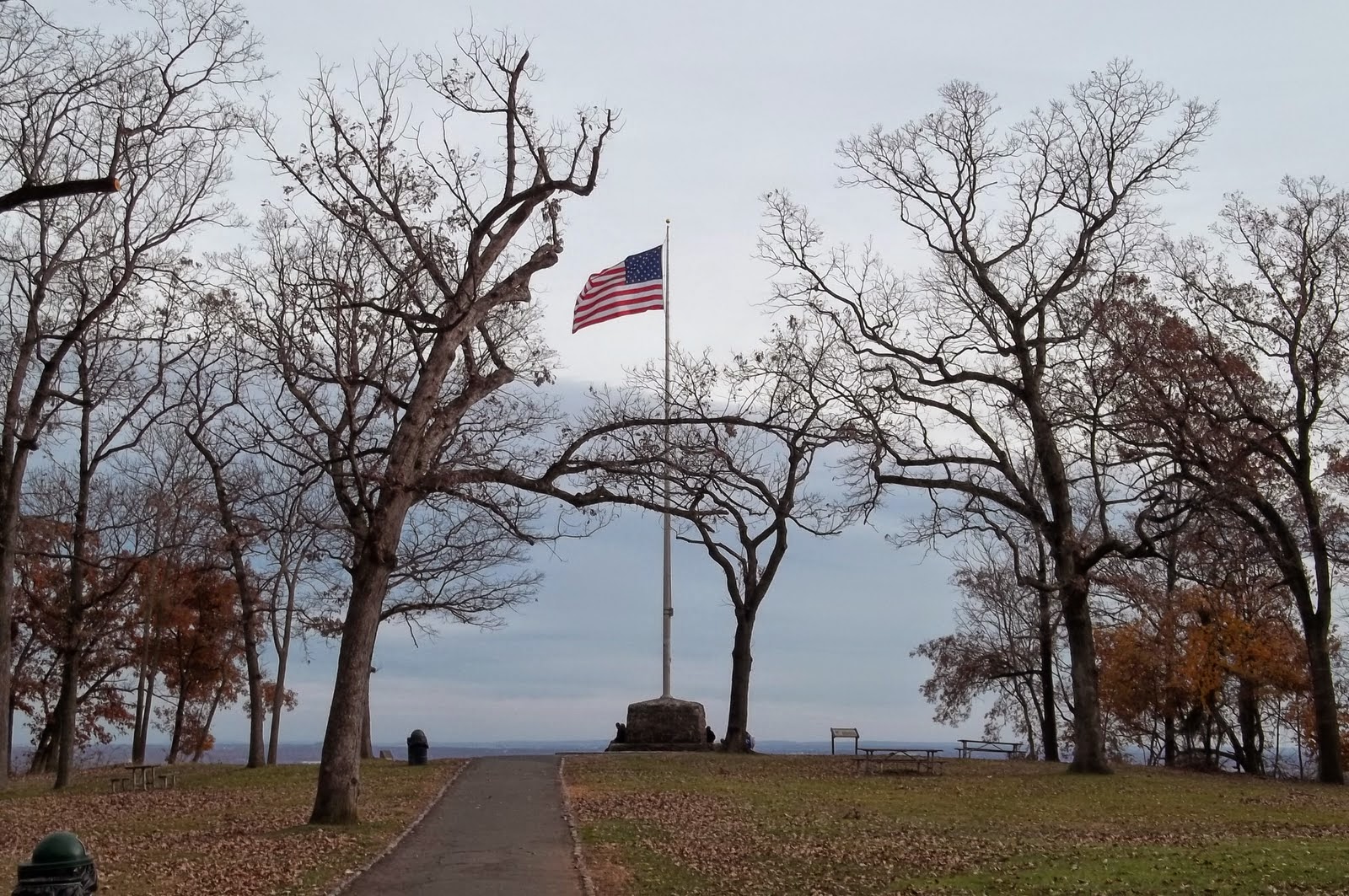
Set up did go like the knife through hot butter, after I made it to the park. The new Joplin ARC antenna launcher got my antenna hoist line up over a 40 foot high tree branch on the first shot. The EARCHI was up, literally in minutes.
I got on the air at about 1830 UTC and I spent about 15 minutes calling CQ QRP on 15 Meters with no takers. I had a feeling that 15 Meters was going to be good today. It wasn't, at least for me. So I meandered over to 20 Meters and was answered by Craig N8KMY at 1855 for my first QRPTTF QSO.
It didn't start out as a QRPTTF QSO. He called me because in his words, he couldn't believe that I was QRP. He is located in northern MI and told me that I was one of the loudest signals on the band for him. He repeatedly asked me to confirm that I was only running 5 Watts.
He was as loud to me as I was to him, so that's where the fun began. First he lowered his power from 40 Watts to 20 Watts, when I told him there was no difference in his signal, he continued to lower his power down to 10 Watts, and then, eventually 5 Watts. He was astounded when I told him (quite honestly) that there was no difference between his signal at 40 Watts or 5 Watts. A new QRP convert? I certainly hope so! Craig seemed enthusiastic enough.
Getting him down to 5 Watts qualified as a QRPTTF contact. We had a nice ragchew for about 25 minutes. A bit longer than I had intended, but it's never a bad thing to promote QRP, and bring a new soul into the fold, right? So it was worth it.
Besides, as it turned out, the bands weren't exactly rip-roaring with QRPTTF activity. I ended up making only 8 QSOs. Six on 20 Meters and two on 40 Meters.


I worked, in addition to N8KMY, NK9G, WQ8RP, K7RE, K4UPG (Kelly, my fellow QRP Polar Bear - Grrrrrrrr), WB3T, KS8M and AA5TB.
What made the day, was when my fellow SPARC members, Marv K2VHW (my official QRPTTF 2015 photographer) and Drew W2OU came for a visit. They kept me company in between QSOs and also stayed with me until I packed up for the return trip home. Around 5:00 PM, it started getting chilly again and QRPTTF signals were becoming about as scarce as hen's teeth. So only though I put in only 2 & 1/2 hours behind the key, I decided to call it an event and head home.
The important thing was that I had fun and enjoyed my time playing radio today. It feels like I don't get to do this anywhere near enough.
72 de Larry W2LJ
QRP - When you care to send the very least!
Larry Makoski, W2LJ, is a regular contributor to AmateurRadio.com and writes from New Jersey, USA. Contact him at [email protected].
Explaining Standing Waves
When we teach the Technician License Class, we provide a simple explanation of Standing Wave Ratio (SWR) that emphasizes the concept of impedance matching. An SWR of 1:1 is a perfect match; anything higher is less than perfect.
SWR is an important amateur radio concept, one that is not that easy to explain so I am always on the lookout for training materials. HamRadioNow just republished this video of excellent standing wave demonstration by Bill Hays, AE4QL. Bill actually goes well beyond just standing waves and shows some antenna and transmission line theory as well.
If you just want to learn about standing waves and basic antenna radiation, view the first 35 minutes. After that, it starts to get a little deep.
Grab a cup of your favorite beverage, settle in and get ready to learn from this video.
73, Bob K0NR
The post Explaining Standing Waves appeared first on The KØNR Radio Site.
Bob Witte, KØNR, is a regular contributor to AmateurRadio.com and writes from Colorado, USA. Contact him at [email protected].
 Ham Radio Deluxe |
 W5SWL Electronics |
 Ham Radio Prep |
 KB3IFH QSL Cards  Hip Ham Shirts  HamRadioAuctions HamRadioAuctions Reliance Antennas Reliance Antennas Enigma Shop Enigma Shop |  morseDX  Ni4L Antennas  R&L Electronics R&L Electronics antennas.us antennas.us QRV QRV |
- Matt W1MST, Managing Editor
