 |
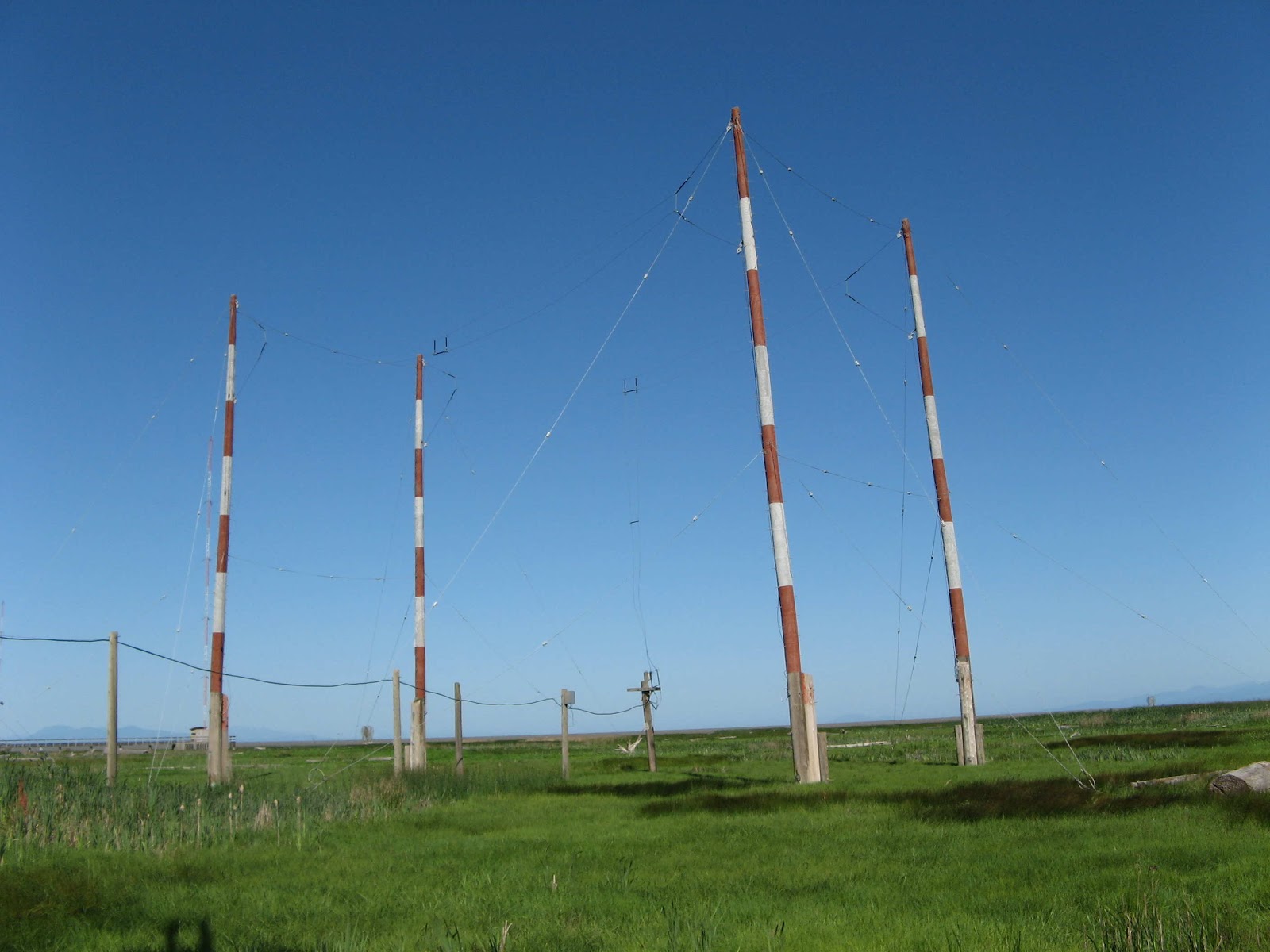
 CKZU – 6160 Close-Up
 8 June 2015 | by
  |
| courtesy: googlemaps.ca |
On a weekend bike ride along the West Richmond dyke, Mark (VA7MM) snapped this wonderful close-up view of the system:
 | ||||
| courtesy: VA7MM |
So the next time you are tuning around 40m, drop down a bit and see how their signal sounds at your location ... you may be pleasantly surprised.
Steve McDonald, VE7SL, is a regular contributor to AmateurRadio.com and writes from British Columbia, Canada. Contact him at [email protected].
Plagued with noise in radio room, culprit? Battery (Smart) Chargers
I do not do much operating in my radio room in the house, most of my operations are done portable. But for some time now I have been plagued with some major noise to my rigs, the noise is about S9 or more at times and varies on certain frequencies and sometimes with odd sounds.
Not too long ago I had rebuilt my 24v battery pack for my PRC-104 with NiMh batteries, what I had found when the charger was working was the noise was atrocious, once battery was charged the noise would subside but I guess it was never totally gone. So one day when all of our power was down for a tree on the line I tested the radios with battery and found zero noise levels, none what so ever, so it lead me to start searching a bit deeper, looking at TV noise, routers etc, but still no luck nailing the problem.
So I continued to do a bit of more pulling of plugs and seeing what and where the noise could be coming from. I own many types of battery packs and chargers, batteries for radios, cameras and scanners, so I had to start one at a time. I leave the chargers always plugged in ready to go, so never really anticipated that this would be my issue. But I was very surprised when I found two of my chargers that were the problem.
The one charger was indeed my smart charger for my NiMh battery pack for my PRC-104.
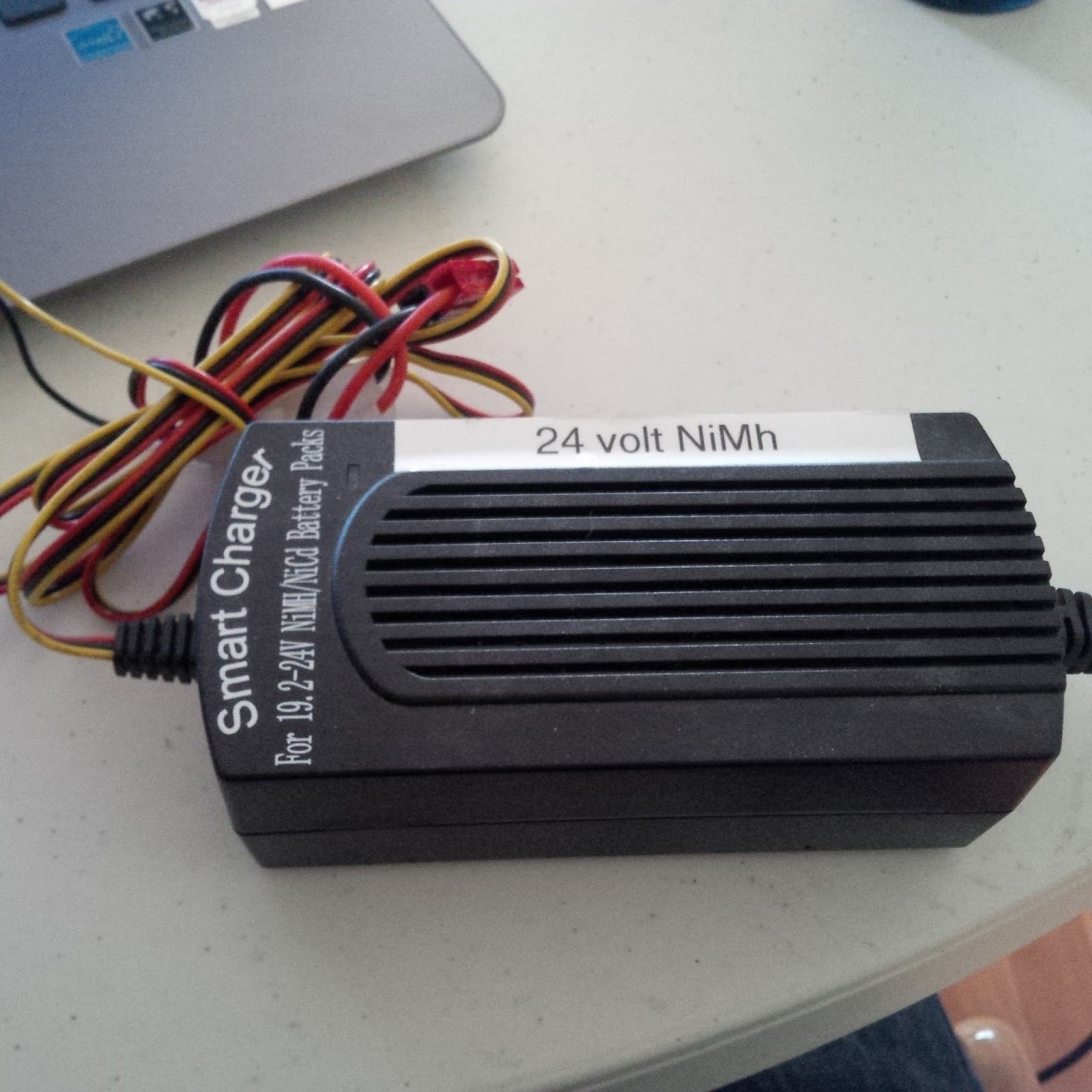
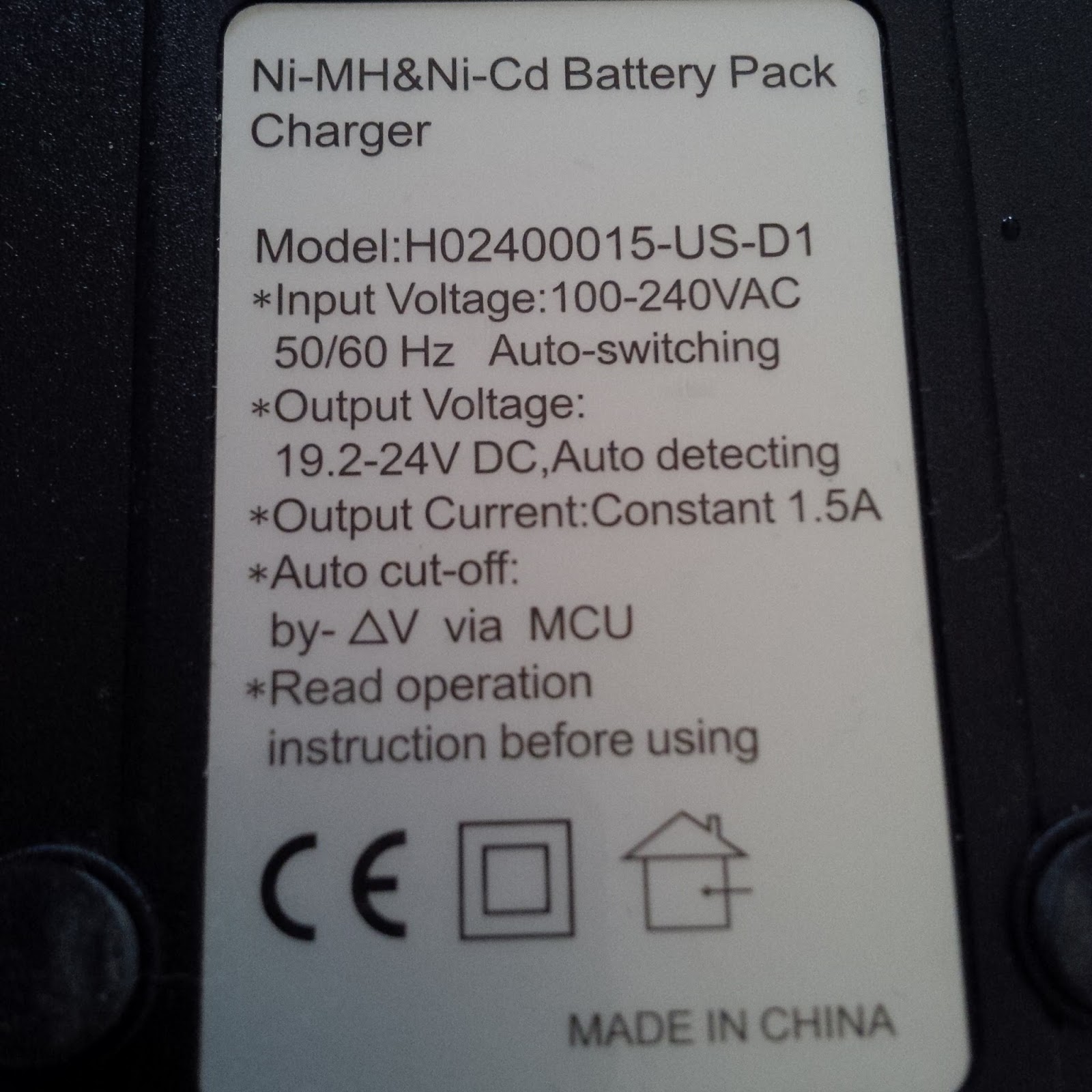
The other charger that turned out to be an issue was a Duracell battery charger that I use for my camera batteries. It was amazing at how quiet things got once they were unplugged. The noise on my VX-1700 with these chargers plugged in and not being used would be a solid 9 and more, once I unplugged both of these units the noise dropped to a 3 and I could hear stations once again. I need to look at some of the other chargers in the house that are used for routers and other items in the house.
The NiMH charger when charging makes all bands useless when it is actually charging, the charger for my VX-1210 is the same, very loud noise levels emitted from these units.
So I am glad I did a bit of unplugging and checking and have found some of the issues that have plagued the home shack. Many of today’s electronics is just plain noisy and does emit all kinds of stray RF and noise.
Fred Lesnick, VE3FAL, is a regular contributor to AmateurRadio.com and writes from Thunder Bay Ontario, Canada. Contact him at [email protected].
WISPY 10m WSPR rig

Some years ago (in my fit days) I build a simple DSB WSPR rig for 10m based around a low cost 14.060MHz crystal bought from the GQRP club. The idea was to pull and double this crystal and use it in a simple DSB TX and direct conversion RX. Both TX and RX have been built separately, but I was ill before I got around to combining the 2 into a 10m WSPR transceiver. Both parts worked well.
See https://sites.google.com/site/g3xbmqrp3/hf/wispytx .

Roger Lapthorn, G3XBM, is a regular contributor to AmateurRadio.com and writes from Cambridge, England.
Icom IC703
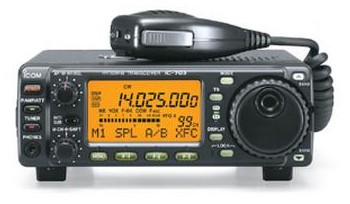
One of the best rigs I once owned was the 10W Icom IC703. This was a well equipped QRP radio with a decent receiver, DSP and auto ATU. I sold it to a local amateur who was a poor pensioner but I regret selling it now! No fan needed at 10W. Just a first class rig.
See https://sites.google.com/site/g3xbmqrp3/hf/ic703 .

Roger Lapthorn, G3XBM, is a regular contributor to AmateurRadio.com and writes from Cambridge, England.
CQ WPX made my day
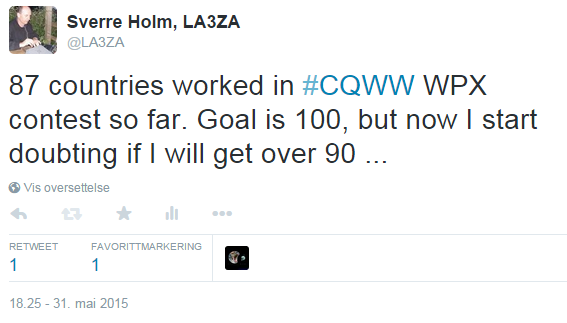
From time to time I have heard of those of who manage to contact 100 DXCC countries during one weekend. This past weekend it was my turn to try.
If you have a contest station with 1 kW and monoband yagi antennas, then this goal shouldn’t be too hard. But for my station with only an 80 m horizontal loop (loop skywire) circling its way through my garden from treetop to treetop and 100 W of transmitter power from my K3, the challenge was greater.
About 6 hours before the end of the test and with 87 countries, I had almost given up so I sent the tweet above. The status for the second day of the contest was that I had only worked two more countries.
 But then in the final hours I heard and then contacted Tunisia, Malaysia, Australia og Kosovo (Z6) to bring me to 91, and then Laos and Albania. But then it took a long while for some new ones: Spanish Africa (EA9) and Argentine. I also managed two more Caribbean stations (J3 and CO) and Peru and Sardinia.
Finally in the last hour of the contest two more Caribbean stations (PJ2 and VP9) and in the end Mexico 21 minutes before the end of the contest. That brought the total to 102. I think that was needed as Kosovo isn’t really an approved country and I also had contact with what was probably a pirate and not a station from Andorra. That signature was C31XR which most likely is the name of an antenna and not a real station.
My total was 47 European countries, 19 from Asia, 12 from North America, 10 from Africa, 9 from South America and 3 from Oceania. I think it helps to be in Europe as I had almost half of the countries quite close by, but it would be interesting to hear comments from North Americans on how realistic they consider this goal to be from their location.
Sverre Holm, LA3ZA, is a regular contributor to AmateurRadio.com and writes from Norway. Contact him at [email protected].
CQ WPX made my day
From time to time I have heard of those of who manage to contact 100 DXCC countries during one weekend. This past weekend it was my turn to try.
If you have a contest station with 1 kW and monoband yagi antennas, then this goal shouldn’t be too hard. But for my station with only an 80 m horizontal loop (loop skywire) circling its way through my garden from treetop to treetop and 100 W of transmitter power from my K3, the challenge was greater.
About 6 hours before the end of the test and with 87 countries, I had almost given up so I sent the tweet above. The status for the second day of the contest was that I had only worked two more countries.
But then in the final hours I heard and then contacted Tunisia, Malaysia, Australia og Kosovo (Z6) to bring me to 91, and then Laos and Albania. But then it took a long while for some new ones: Spanish Africa (EA9) and Argentine. I also managed two more Caribbean stations (J3 and CO) and Peru and Sardinia.
Finally in the last hour of the contest two more Caribbean stations (PJ2 and VP9) and in the end Mexico 21 minutes before the end of the contest. That brought the total to 102. I think that was needed as Kosovo isn’t really an approved country and I also had contact with what was probably a pirate and not a station from Andorra. That signature was C31XR which most likely is the name of an antenna and not a real station.
My total was 47 European countries, 19 from Asia, 12 from North America, 10 from Africa, 9 from South America and 3 from Oceania. I think it helps to be in Europe as I had almost half of the countries quite close by, but it would be interesting to hear comments from North Americans on how realistic they consider this goal to be from their location.
Sverre Holm, LA3ZA, is a regular contributor to AmateurRadio.com and writes from Norway. Contact him at [email protected].
Earth-Shrouding Plasma Tubes
What the implications might be when it comes to their influence on radio propagation, if any, remains to be seen but I suspect that astrophysicists all over the world are having a close examination of long-held theories and the implications on their own fields of study.
You can read more details about this exciting discovery here.
Steve McDonald, VE7SL, is a regular contributor to AmateurRadio.com and writes from British Columbia, Canada. Contact him at [email protected].
 Ham Radio Deluxe |
 W5SWL Electronics |
 Ham Radio Prep |
 KB3IFH QSL Cards  Hip Ham Shirts  HamRadioAuctions HamRadioAuctions Reliance Antennas Reliance Antennas Enigma Shop Enigma Shop |  morseDX  Ni4L Antennas  R&L Electronics R&L Electronics antennas.us antennas.us QRV QRV |
- Matt W1MST, Managing Editor
