 |
 DXing with crystal sets
 13 June 2015 | by
Yes, it is possible to hear a long way on a crystal set. The equipment needed can be extremely simple too. What is needed are a good pair of ears and sensitive headphones. My ears are getting old and if I can hear this DX then younger ears certainly can. I have found a low cost very high impedance crystal earpiece worked well. You may have better headphones?
Copying amateurs, most of whom use SSB, is more difficult. Remember, a simple crystal set is only able to envelope detect, although in the USA 75m AM signals are regularly copied at great range. Some SSB signals on 10m Es should be strong enough to envelope detect. Based on my tests, if stronger than 500uV to 1mV the signals should be copyable. Quite a few signals can be this strong.
See https://sites.google.com/site/g3xbmqrp3/hf/crystalset .

Roger Lapthorn, G3XBM, is a regular contributor to AmateurRadio.com and writes from Cambridge, England.
Amateur Radio Weekly – Issue 64

Newsline Co-Founder, Editor Bill Pasternak, WA6ITF, SK
A well-known voice in the Amateur Radio news media has gone silent.
ARRL
Icom IC-7851 HF/50MHz Transceiver
With the design of the IC-7851, Icom’s engineers focused on a new Local Oscillator (LO) that drastically reduces the phase noise. As a result of this design, the purity of the LO achieves a Reciprocal Mixing Dynamic Range (RMDR) of 110dB.
Icom
ARRL June VHF Contest this weekend
For amateurs in the US and Canada to work as many stations in as many different 2 degrees x 1 degree Maidenhead grid squares as possible above 50 MHz.
ARRL
How to work a VHF contest
This is a brief introduction to operating during a VHF contest.
KØNR
[Video] June VHF Contest in action
QRP portable on top of Slide Mountain in the Catskills of New York.
K2FR
Monitoring FBI survielence aircraft with ADS-B
From reports on the internet John found out that FBI aircraft squawked with 4414 or 4415 codes, and used call signs like JENNA or JENA.
RTL-SDR.com
Summertime CBer
Strong Es on 11 meters usually heralds the possibility of 6m also opening via the same mode.
VE7SL
TV signals used to track aircraft as alternative to radar
Using special receivers, researchers said they were able to track up to 30 planes simultaneously flying at altitudes of up to 10,000ft (3km).
BBC
Dayton Hamvention – R.I.P.
The “laws of the market place” are taking care of the “Dayton as a hell-hole” problem.
With Varying Frequency
Semaphore + Morse Code + SSB + Twitter = Art
On Saturday, June 20 artist Philippe Druez ON1PHD will be performing at the Academy of Fine Arts, Ghent, Belgium with the iSemaphore installation using Chappe semaphore, Morse code and Twitter.
Southgate
Video
Tracking & receiving the LightSail cube satellite
Showing how to track the LightSail CubeSat on your own PC with free software.
YouTube
Video tour of a CubeSat satellite
AMSAT Fox-1C Engineering Model 6/6/2015
YouTube
Amateur Radio Weekly is curated by Cale Mooth K4HCK. Sign up free to receive ham radio's most relevant news, projects, technology and events by e-mail each week at http://www.hamweekly.com.

Summertime CBer
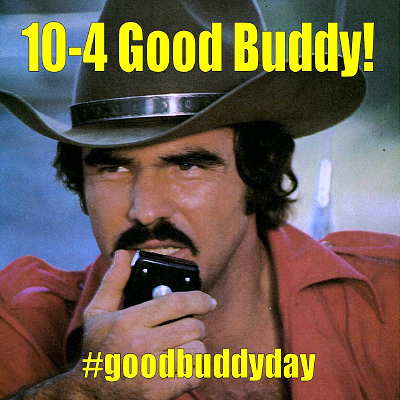
As much as I hate to admit it, for a few short weeks every summer, I become ... get ready for it now ... a CBer! Now I'm not talking about what might typically come to mind when thinking about CBers ... for me it's more of a love-hate relationship. You see, the 27MHz CB band, and 27.385MHz in particular, happens to make one of the best indicators of Sporadic-e openings on the face of the planet. Unlike the vast empty wasteland that 10m becomes during the summer, the 11 meter band is jam-packed full, with thousands of operators ... and some days it seems as if they are all on the 27.385 MHz (LSB) calling frequency.
With my receiver quietly running in the shack, the frequency can suddenly jump to life, with hundreds of stations calling each other in a matter of seconds. Sometimes it's like a switch has suddenly been thrown to 'ON'. This is not too hard to understand as the present suspected cause of Es is sudden high speed wind-shear within the E-layer. Have a quick listen to what the calling frequency can suddenly sound like:
Now the beautiful thing is that strong Es on 11 meters usually heralds the possibility of 6m also opening via the same mode ... usually 30 minutes or so later if it's going to happen. Often a CQ on a seemingly 'dead' 6m band in the direction of the 11m Es, will produce a response from an equally surprised operator at the other end.
I don't think I've ever heard Es on the 6m calling frequency without hearing Es on 11 meters beforehand. It's been my experience that the band always opens from low to high, in terms of frequency, so it just makes sense to listen lower (11m) to get a heads-up for what is likely soon to follow on the magic band. As well, knowing that there is 'zero' Es on 11m, can let you rest assured that nothing will be happening on 6m via Es ... at least for the time being.
If you haven't already tried it and have a second receiver that can be put to use as an 'Es-monitor', you might be pleasantly rewarded. Even though knowing that the band will soon open might rub a bit of the magic away, I think it's still well worth it!
Steve McDonald, VE7SL, is a regular contributor to AmateurRadio.com and writes from British Columbia, Canada. Contact him at [email protected].
WA6ITF – Bill Pasternak – SK
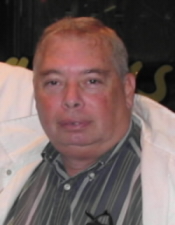
Bill was the founder and producer of Amateur Radio Newsline and founder and administrator of the Amateur Radio Newsline Young Ham of the Year Award (co-sponsored by CQ Magazine). Bill was the author of many columns for many Amateur Radio publications over the years.
Bill was an outspoken advocate for all thing Amateur Radio. His achievements in Amateur Radio and in the promotion of it are too numerous to mention. I met him a long time ago (on-line) back in the good ol' days of Prodigy. Bill was always friendly, outgoing and willing to help anyone in any way he could. He will be sorely missed, and he has left us with a very large pair of shoes to fill.
My condolences to his wife Sharon KD6EPW and the rest of his family.
73, OM.
Larry W2LJ
Larry Makoski, W2LJ, is a regular contributor to AmateurRadio.com and writes from New Jersey, USA. Contact him at [email protected].
We Call It “Tech Field Day”
For Field Day this year, the Tri-Lakes Monument Radio Association (WØTLM) is planning a one day event that combines our Tech Day training activities with normal Field Day radio operating. This Tech Field Day will have a strong emphasis on radio education and training, including an opportunity to make contacts on the HF bands under the supervision of an experienced radio ham.
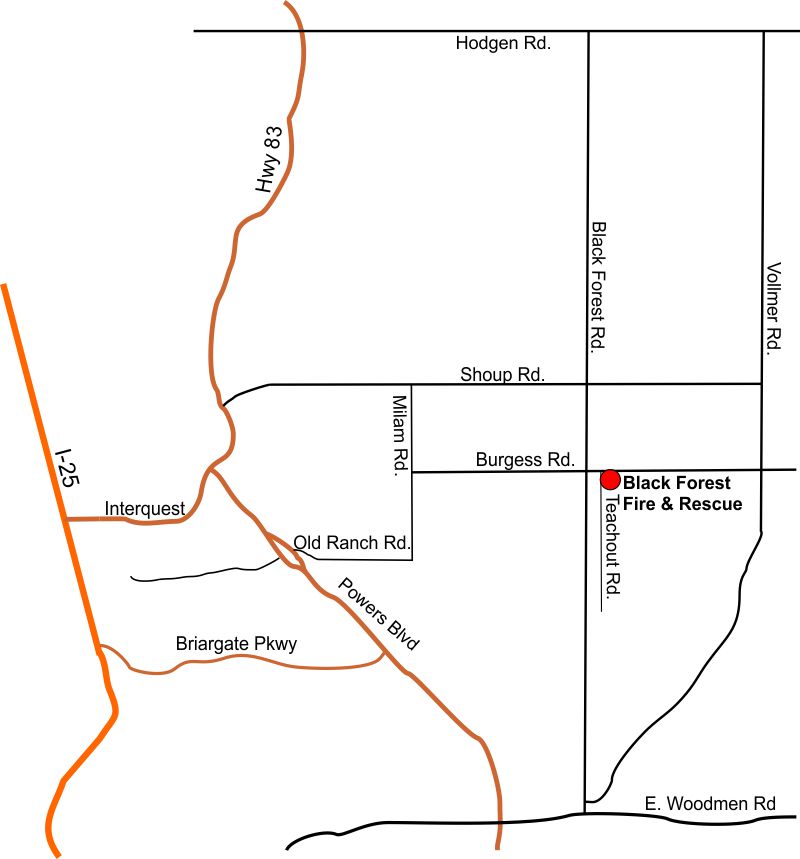
click to expand
Sat June 27th, 2015 (8:00 AM to 5 PM)
Location: Black Forest Fire Station 1
11445 Teachout Road, Colorado Springs
Come to our one-day education and radio operating event and learn from informative presentations of amateur radio topics. Operate a high frequency (HF) radio station with the helpful guidance of an experienced radio ham. Learn about emergency communications and public service. Most of all, have a bunch of fun messing around with ham radio stuff!
| Time | Activity | Presenter |
| 8:00 | Setup starts | |
| 8:30 | FM Simplex and Repeaters | Bob Witte, KØNR |
| 9:30 | Operating SSB on the HF Bands | Stu Tuner, WØSTU |
| 10:30 | Construction of Dipole Antennas | Larry Kral, NØAMP |
| 11:30 | Summits On The Air (SOTA) | Steve Galchutt, WGØAT |
| 12:00 | Start Field Day Operating | |
| 13:30 | Copper pipe antennas | Al Andzik, WBØTGE |
| 14:30 | Emergency Power for Ham Radio | Mike Hoskins, WØMJH |
| 15:30 | Ask an Elmer Panel | Bob Witte KØNR and crew |
| 17:00 | End of operations – tear down |
For more information, visit the W0TLM web site.
73, Bob K0NR
The post We Call It “Tech Field Day” appeared first on The KØNR Radio Site.
Bob Witte, KØNR, is a regular contributor to AmateurRadio.com and writes from Colorado, USA. Contact him at [email protected].
Mizuho QRP SSB rigs

I don’t think this company still exists.
At one time you could buy Mizuho single band SSB handhelds for many bands up to 2m including many HF bands. I owned the 2m 200mW pep version (MX2) and managed to work some decent SSB DX with mine mostly with a 1/2wave whip on the rig. The main issue was the poor battery life, so I tended to use an external 9.6V battery.
My rig was used in the main with a homebrew 2m-10m transverter and I worked all over the world on 10m with just the tiny Mizuho rig on the desk.
If I remember right I covered the CW and main SSB parts of 10m by having a couple of crystals in the transverter. Somewhere I still have the transverter, although it has not been used for years.
See https://sites.google.com/site/g3xbmqrp3/vuhf/mx2 .

Roger Lapthorn, G3XBM, is a regular contributor to AmateurRadio.com and writes from Cambridge, England.
 Ham Radio Deluxe |
 W5SWL Electronics |
 Ham Radio Prep |
 KB3IFH QSL Cards  Hip Ham Shirts  HamRadioAuctions HamRadioAuctions Reliance Antennas Reliance Antennas Enigma Shop Enigma Shop |  morseDX  Ni4L Antennas  R&L Electronics R&L Electronics antennas.us antennas.us QRV QRV |
- Matt W1MST, Managing Editor
