 |
 KL7 Tropo?
 3 July 2015 | by
 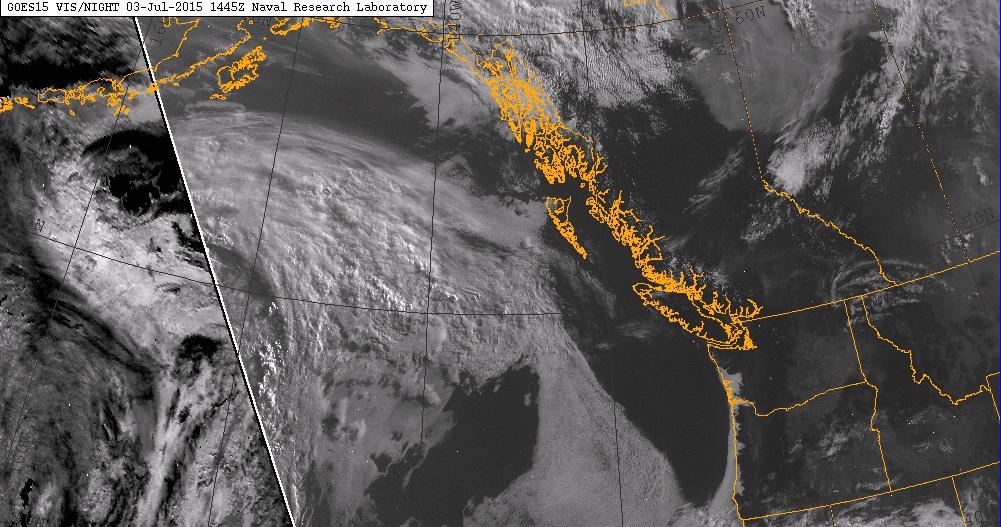 |
| courtesy: http://www.nrlmry.navy.mil/ |
Like our unprecedented early hot and stable weather pattern over the West coast, this path is fairly rare and has never really been explored ... this one appears to be forming a stable path towards Alaska. The predicted conditions can be viewed on Bill Hepburn's World Wide Tropospheric Ducting Prediction page. Select the Eastern North Pacific from the 'Region' drop-down menu and see the map for Saturday.
Perhaps there are some KL7s near the water, or not too far inland and with a clear shot towards the southeast, that would be interested in running some possible tropo tests over the next few days if the path shapes up as predicted in the Bill Hepburn maps for the weekend. Not ever having explored this possible path before might yield some interesting results ... and who knows how far south into Puget Sound a tropo signal from the north might reach? Maybe it's time to find out. Of course, any stations between here and northern KL7 (Prince Rupert?... Juneau? ... Ketchikan?) might also be interested in trying a possible 2m path.
Steve McDonald, VE7SL, is a regular contributor to AmateurRadio.com and writes from British Columbia, Canada. Contact him at [email protected].
2015 Field Day
I was able to get out and participate in local Field Day activities with my club, the Benton County Radio Operators. We were out at a private facility out in the country, and ran off of battery and generator power for the event. I worked PSK31 on 20 meters alternating with another club member all day on Saturday. This was the first time I have had my entire station out in the field since building my box. I was also able to use one of my homemade antennas. The chosen antenna for the day was my homemade Buddistick configured for 20 meters. The painters pole holding up the antenna was guyed using parachute cord and three cement blocks as the anchors. The setup was easy to put up and take down and worked well. Since this is the same station and antenna I also use at home, there was really nothing new to try out, so it all had been thoroughly tested before Field Day.


Wayne Patton, K5UNX, is a regular contributor to AmateurRadio.com and writes from Arkansas, USA. Contact him at [email protected].
The Spectrum Monitor — July, 2015

Radio Memories
By Lawrence E. DeMilner W1TA
The benefits of amateur radio would eventually pay lifelong dividends for a 12 year-old boy, sitting for his Novice license exam 62 years ago. After being interviewed on the Today Show as a Boy Scout, he would later spend seven months as an American ham in the USSR at the height of the Cold War. Later still, he would spend three years as one of the scarcest DX calls in the world. It was all because of amateur radio.
XER – King of the Mexican Border Blasters
By John Schneider W9FGH
From its inception, radio has attracted more than its share of schemers and outright con artists. The story of John Brinkley and his questionable medical services, which allowed him to mass a personal fortune, is the story of one man dodging lawsuits and legislation designed to bring him down. But, before that could happen, he had built the most powerful radio station in the Western Hemisphere and turned it into a cash-generating machine.
When Our Vintage Radios Fought in the Air War
By Richard Fisher KI6SN
From post-war radio frenzies, created by a massive military-surplus market, grew a thirst among shortwave listeners and radio amateurs to acquire the gear that served so admirably in the skies—especially during World War II. Most of these receivers, transmitters and their accessories were top performers, and yet they were quite inexpensive on the surplus market. They were golden back then, just as they are today. Richard charts the history of radio and aviation.
Watts Up? Line Voltage for Vintage Radios
By Rich Post KB8TAD
Recently, Rich Post measured the AC voltage in his home electric circuits: 123.5 volts. According to the American National Standards Institute (ANSI), that is well within the accepted service range of 114 to 126 volts for line voltage, which is nominally 120 plus or minus 5%; a range hasn’t changed since the original ANSI standard was published in 1954. He asks, “My refrigerator and microwave oven might be happy at 123.5 or even 126 volts, but what about my vintage radios?” Rich shows us how to safely reduce the voltage that our vintage sets work best at.
Multiple Satellite Reception from a Single Ku-Band Dish (Part 1)
By Mike Kohl
Direct Broadcast Satellites, such as DirecTV and DISH Network, are positioned close enough in the Clark Belt to allow several LNBFs mounted on a single dish to receive the satellites that make up their programming lineup of hundreds of channels. But, Free-to-Air satellites are spaced considerably further apart and transmit at considerably less power. Can FTA hobbyists employ this same technique? Mike has been experimenting with this for years and has achieved some pretty amazing results. He tells us how it’s done.
Scanning America By Dan Veenaman
EDACS, Talkgroups and RF Explorer
Federal Wavelengths By Chris Parris
FBI Aircraft in the News
Utility Planet By Hugh Stegman NV6H
U.S. Navy-Marine Corps MARS Closes
Digital HF: Intercept and Analyze
By Mike Chace-Ortiz AB1TZ/G6DHU
Swiss Diplomatic Network undergoes Changes
HF Utility Logs
By Mike Chace-Ortiz and Hugh Stegman
Amateur Radio Insights
By Kirk Kleinschmidt NT0Z
Six Meters: A New Twist on the Old Magic
Radio 101 By Ken Reitz KS4ZR
The Wi-Fi Scanner, SWL Option
Radio Propagation By Tomas Hood NW7US
The 10.7-cm Radio Flux
The World of Shortwave Listening By Keith Perron
Community-based Radio helps Nepal Recover after Earthquake
The Shortwave Listener By Fred Waterer
Sputnik Radio, BBC and the VOA
Maritime Monitoring By Ron Walsh VE3GO
Maritime Station Consolidation
The Longwave Zone By Kevin O’Hern Carey WB2QMY
BBB-4 Wrap-Up
Adventures in Radio Restoration By Rich Post KB8TAD
Powering the Zenith 5K037 “Farm” Set with AC and Forming a Dial Cover
The Broadcast Tower By Doug Smith W9WI
License? I don’t need no stinking license!
Antenna Connections By Dan Farber AC0LW
Round and Round, Part II: Jolly Green Delta Loop
Radio Horizons
Channel Master DVR+ Adds Streaming to OTA-TV
The Spectrum Monitor is available in PDF format which can be read on any desktop, laptop, iPad®, Kindle® Fire, or other device capable of opening a PDF file. Annual subscription (12 issues, beginning with the January 2015 issue) is $24. Individual monthly issues are available for $3 each.
Ken Reitz, KS4ZR, is publisher and managing editor of The Spectrum Monitor. Contact him at [email protected].
KH6 On VHF
 I notice that the long distance records for terrestrial QSO's on 2.3 and 3.4GHz were recently broken. The records were set by veteran VHFer N6NB, Wayne Overbeck and W6IT, Greg Campbell. N6NB was operating portable in Hawaii while W6IT was operating Wayne's home station near Orange, California. Both contacts were on SSB. In Overbeck's own words as posted on the Tropo Ducting Reports reflector:
I'd like to post something about my trip to Hawaii for the current tropo duct. This trip has really turned out well so far.
Last week the Hepburn forecast suggested that a duct might form in a few days. So I bought an airline ticket and packed a station for
all bands from 144 MHz through 10 GHz in two large suitcases plus a roll-aboard and a backpack (total weight: 150 pounds). When I got here, I rented a small SUV and built a station in/on it. I made several trips to Home Depot for parts to build a rotating roof platform.
When the duct began on Tuesday, I drove all over Mauna Loa while listening to my own 222.030 MHz beacon in Orange County, Calif. It was a thrill just to hear it 2,500 miles away. By Thursday, the duct seemed to be at its best. Greg, W6IT, activated my hilltop station near Orange, CA and we worked Thursday night on six bands, including 2304 and 3456 MHz, both for new world DX records. I heard Greg well on two more bands, 902 and 5.7 GHz, but so far local QRN in Orange County has prevented him from hearing me on those
two additional bands. Let's hope the duct continues for a little longer so we can try again and also work more stations on the west coast.
I intend to write at least a conference paper and create a PowerPoint show about what I've seen and heard in Hawaii. I've noticed that the KH6HME beacon site, as good as it is, sometimes seems to be above the cloud layer that forms the top of the duct. Thursday night it was about 2,000 feet above the cloud tops. Seeing that, I drove down to 5,200' elevation to work Greg on all those bands. (The beacon site is about 8,200 feet above sea level.) My 222 beacon was definitely louder at lower elevations than at the beacon
site at that time. Friday night I operated at 7,300', which was near the cloud tops and where my beacon seemed loudest then. The size and elevation of the duct seems to vary a lot, perhaps explaining the way the KH6HME beacons vary in relative signal strength, with 432 being a louder at certain times while the 144 beacon is louder at other times. There are some very interesting natural phenomena at work here.
If anyone would like to watch a video of the record-setting 2304 QSO with W6IT, it's online on my website:
www.n6nb.com/2304rcrd.mp4 Thanks to Greg, W6IT, for his able operating on the other end of these QSOs.
73, Wayne, N6NB/KH6
With the present extremely hot stable weather on the west coast, chatter on the PNWVHF reflector suggested that operators on the coast as far up as Washington state should be watchful of any possible DX opportunities should a suitable ducting pattern form between KH6 and the coast.
The difficult and rare path between Washington state and Hawaii has been worked in the past ... lastly in 1995, when some alert '7's' found themselves in KH6HME's logbook. Paul, K7CW and Merle, W7YOZ described an exciting day from Washington state:
Then the JA's on 6 the following evening was almost too much to believe.
Merle W7YOZ
Although the KH6HME VHF/ UHF beacons are still in operation, sadly, there appears to be no VHFers able to visit the beacon site and work the mainland, should an opening occur. Fred, KH7Y, the most recent beacon caretaker, has since moved back to California, leaving a giant hole in the VHF scene on the big island. I wonder if there is a replacement capable of activating the station?
Even without any operators at the far end, it would be exciting to just hear the VHF beacon(s) in this region. The 2m beacon, now on 144.277MHz, has even been heard here in BC, by Mike, VE7SKA, listening from his hilltop location on SaltSpring Island. Unfortunately no two-way contact was established at the time. Tropo of any kind is a rare event east of Vancouver Island's west coast because of the mountainous terrain.
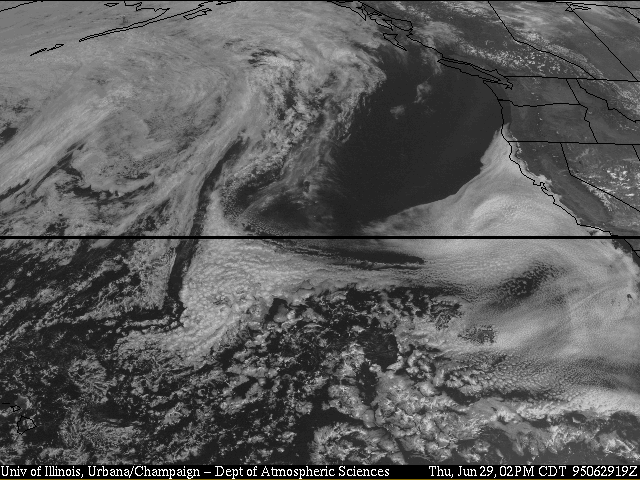
One of the best ways to follow the formation of favorable conditions is to watch the tropo prediction maps on Bill Hepburn's website as well as the visible west coast weather patterns available here.
An interesting summary of the 1995 openings, as well as the associated weather pattern pictures, makes for fascinating reading on the PNWVHF Society's website, A Brief History of the KH6 Duct Into The Pacific Northwest.
Steve McDonald, VE7SL, is a regular contributor to AmateurRadio.com and writes from British Columbia, Canada. Contact him at [email protected].
Field Day 2015 – Comprehensive Report
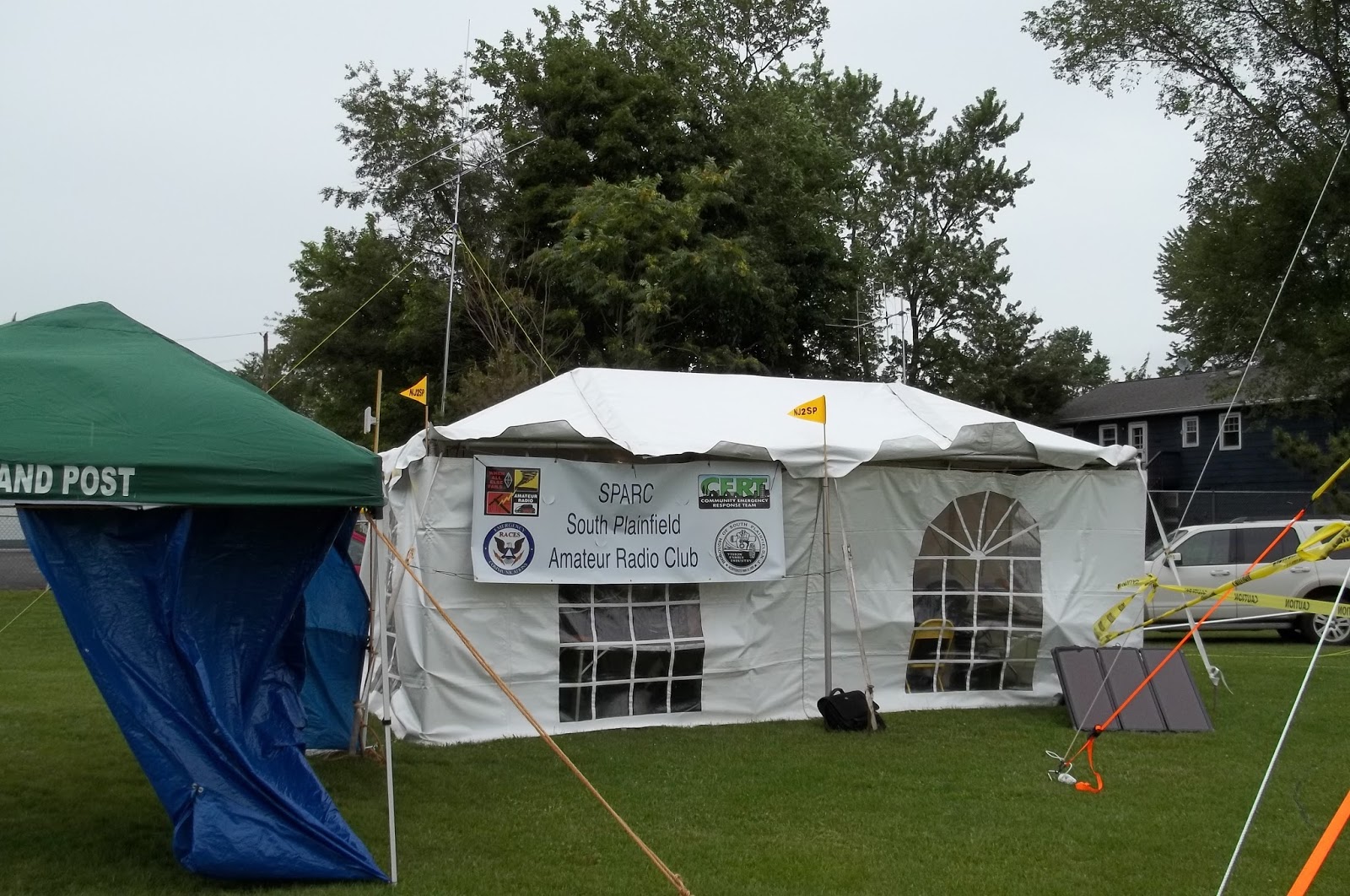
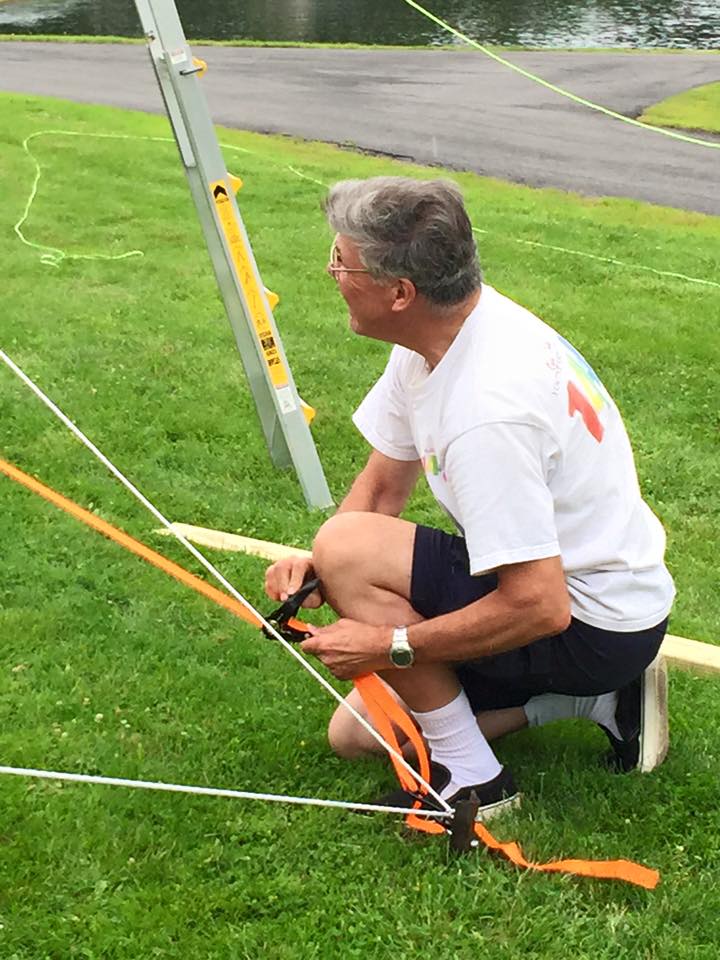
First - set up the antennas, and organize the tent - our "home" for the next 24+ hours.
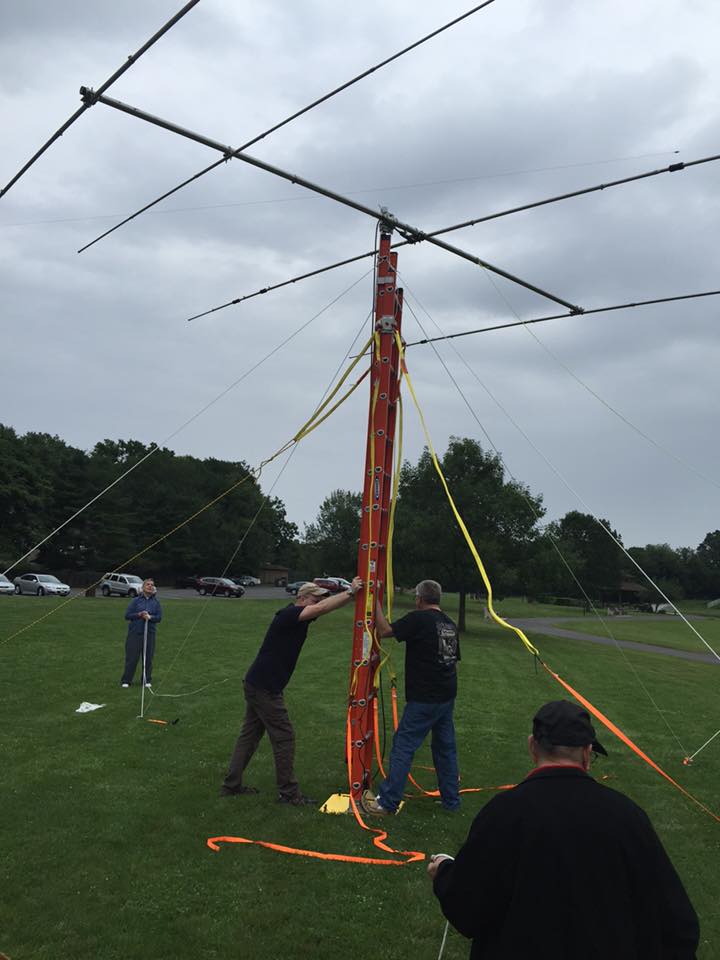
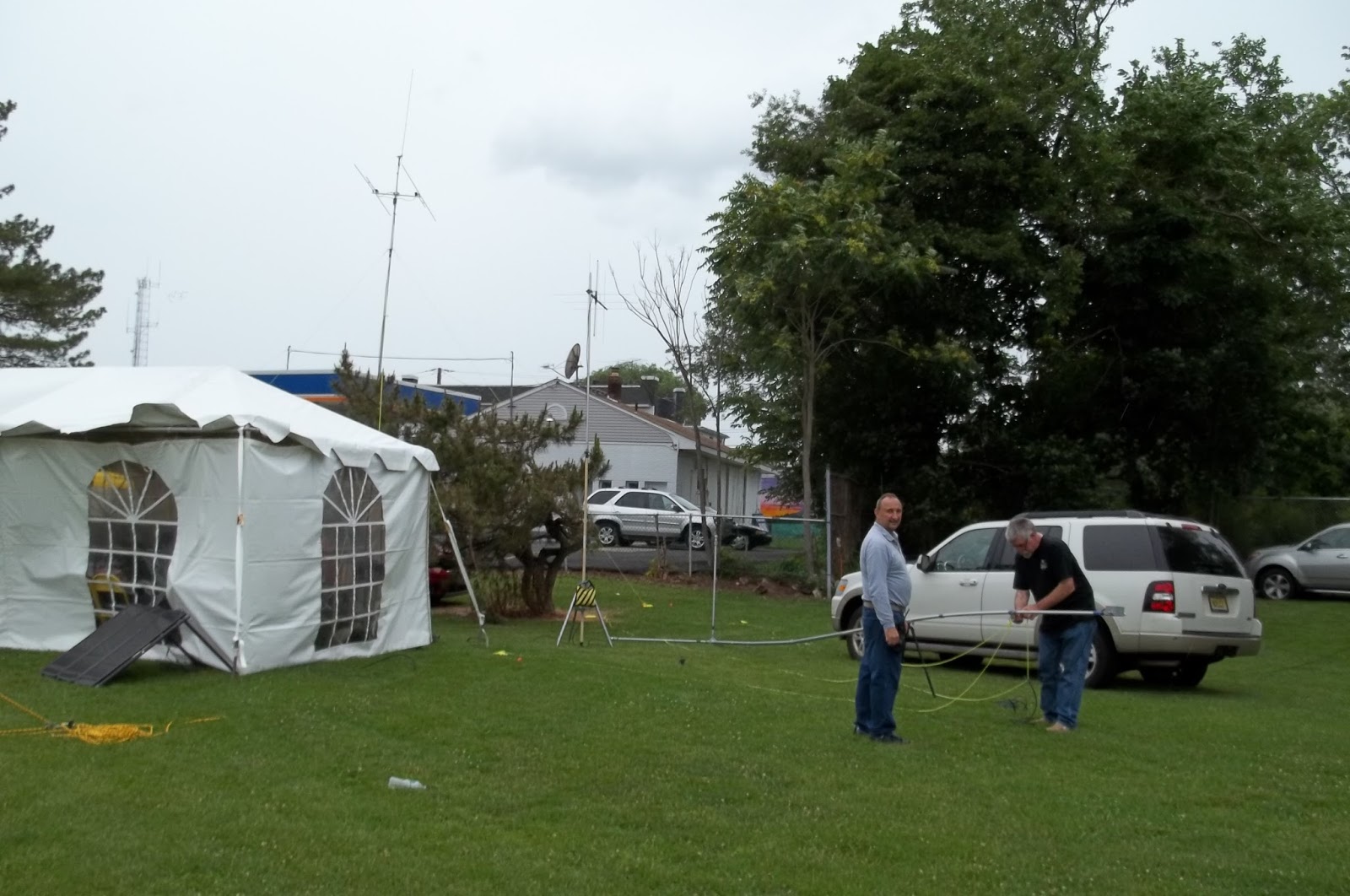
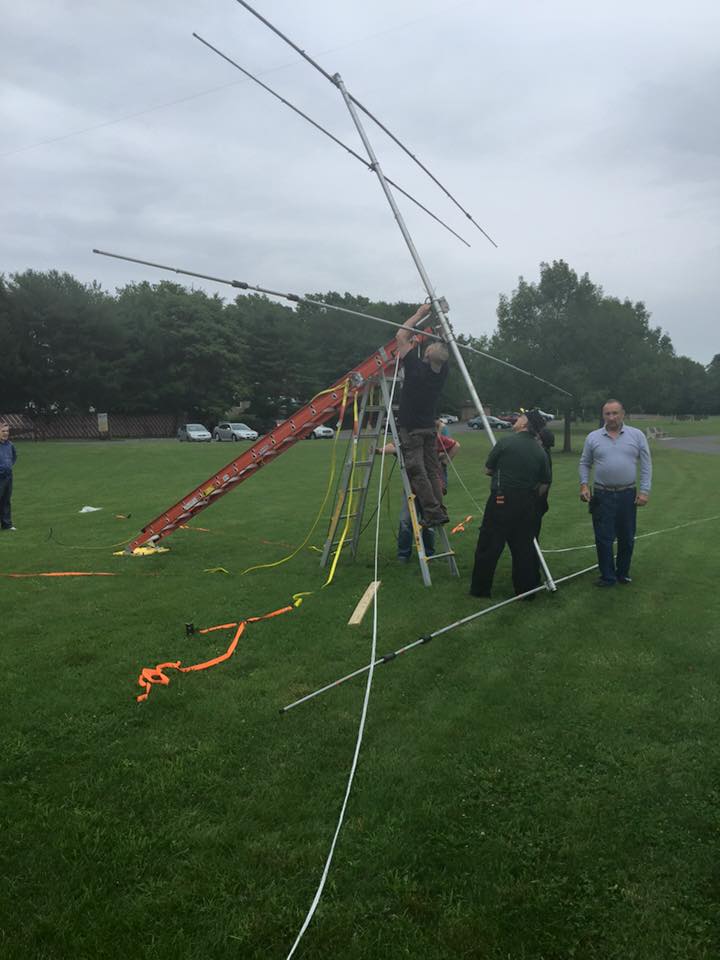
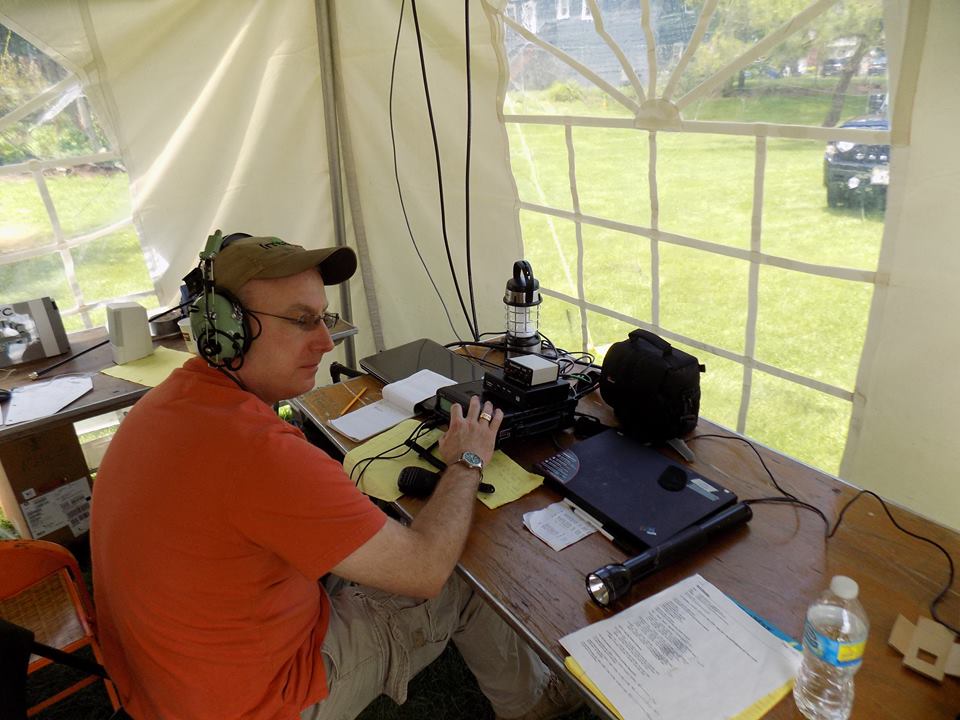
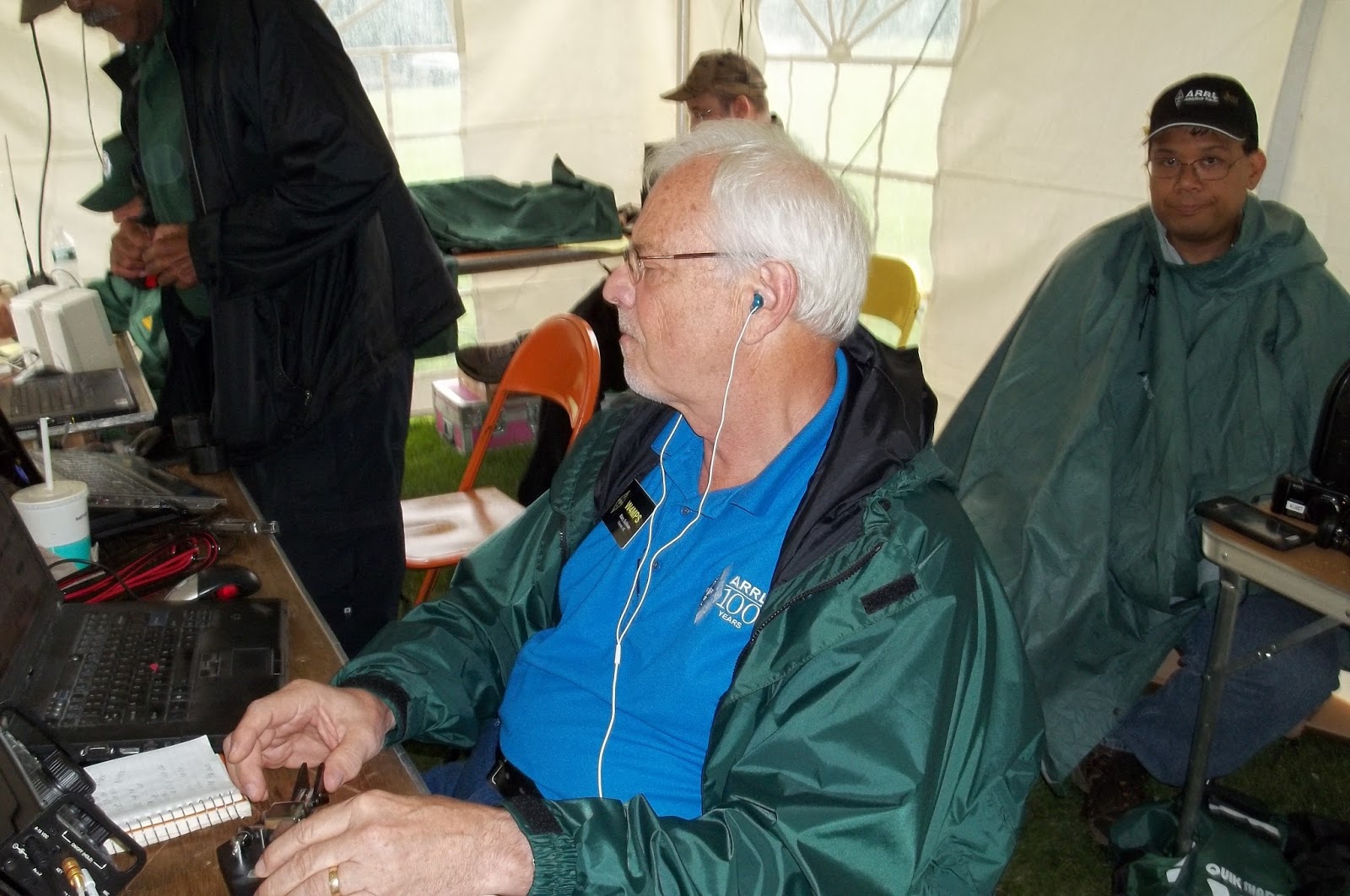
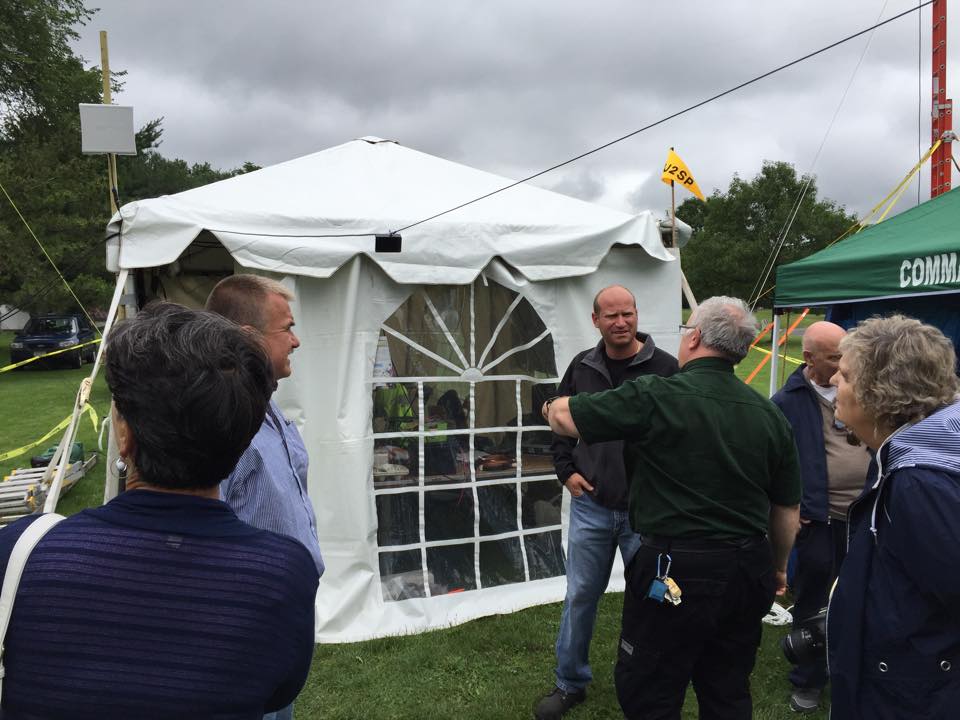
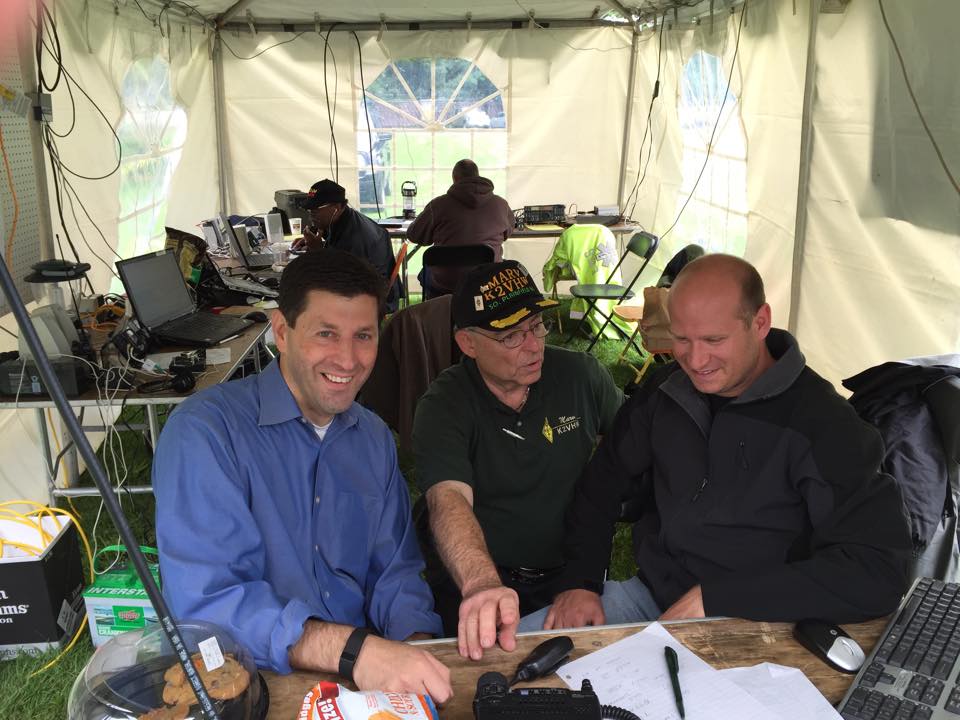
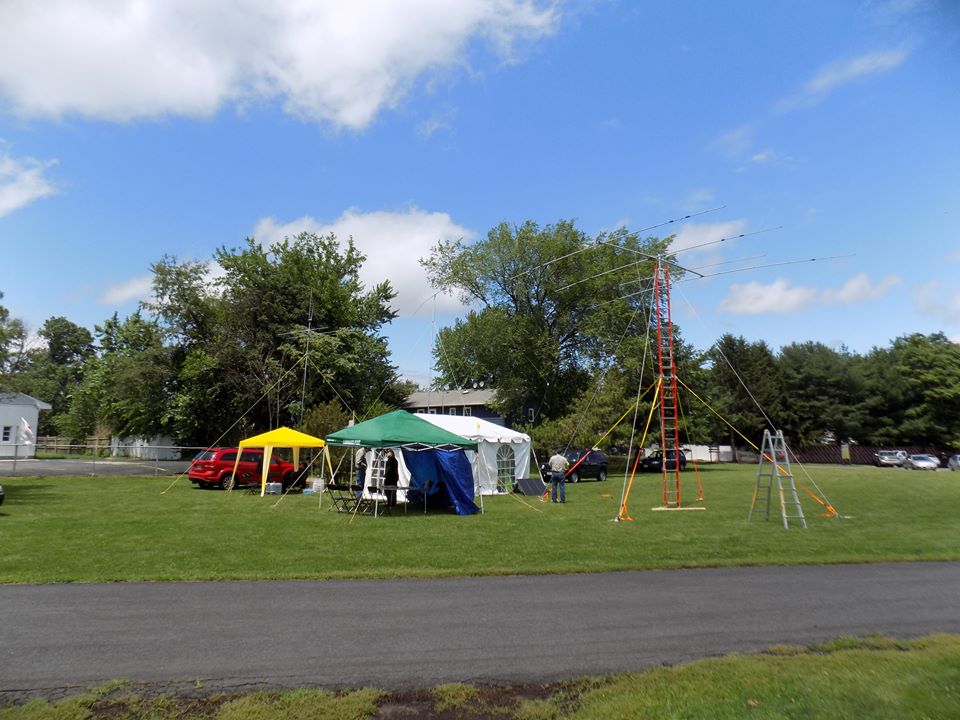

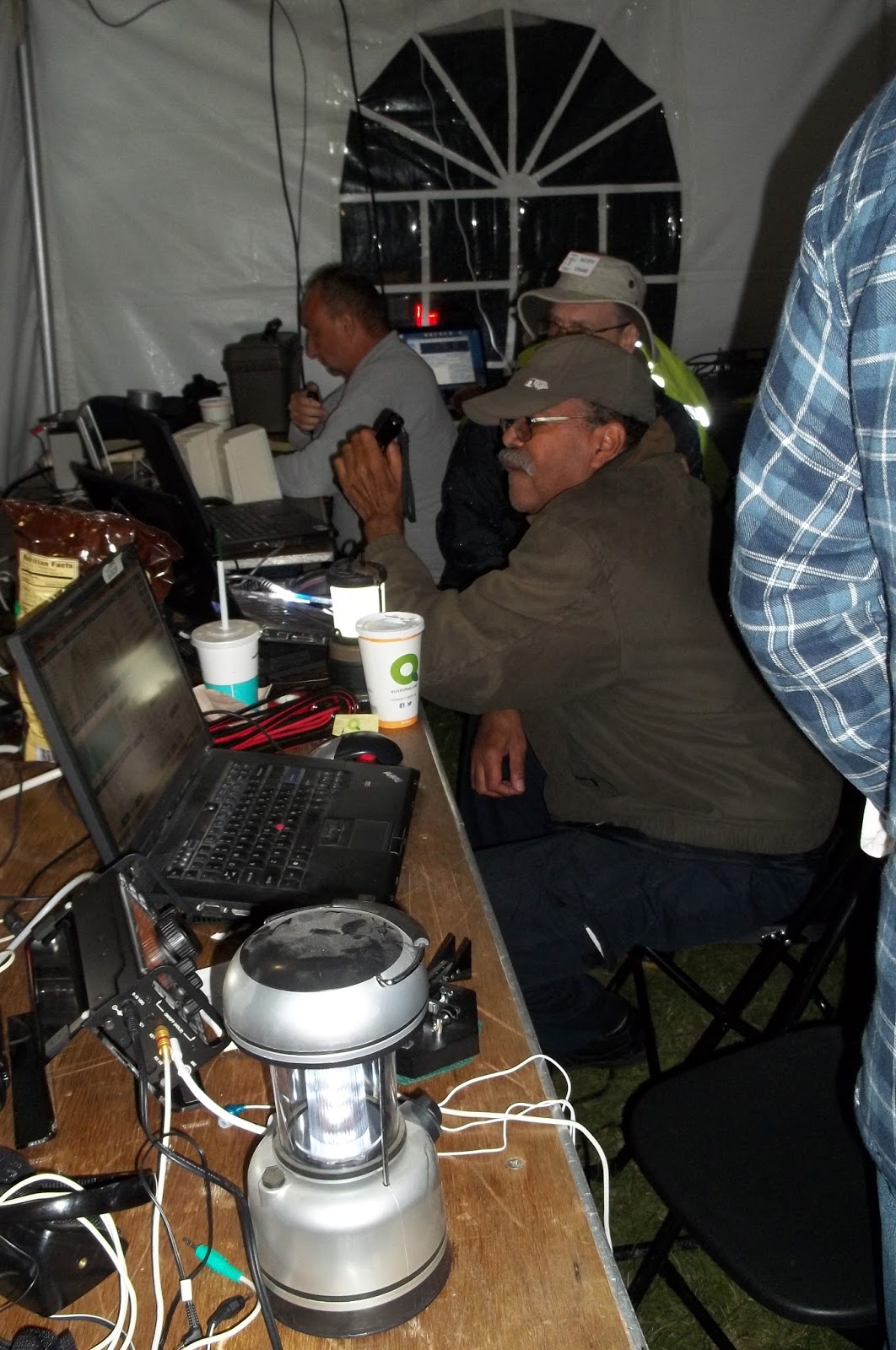
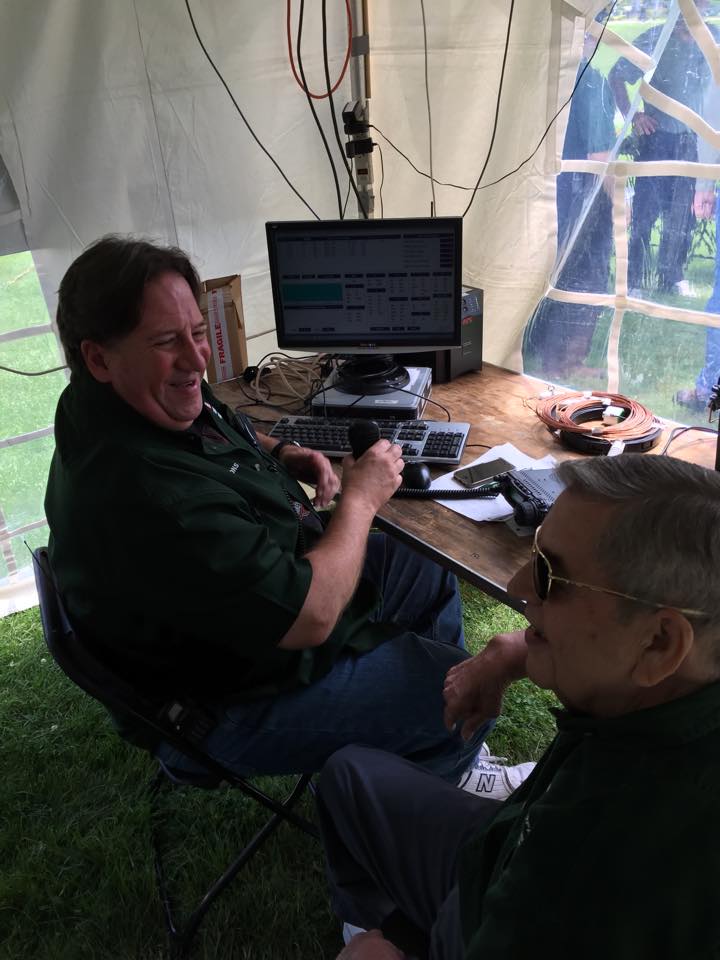
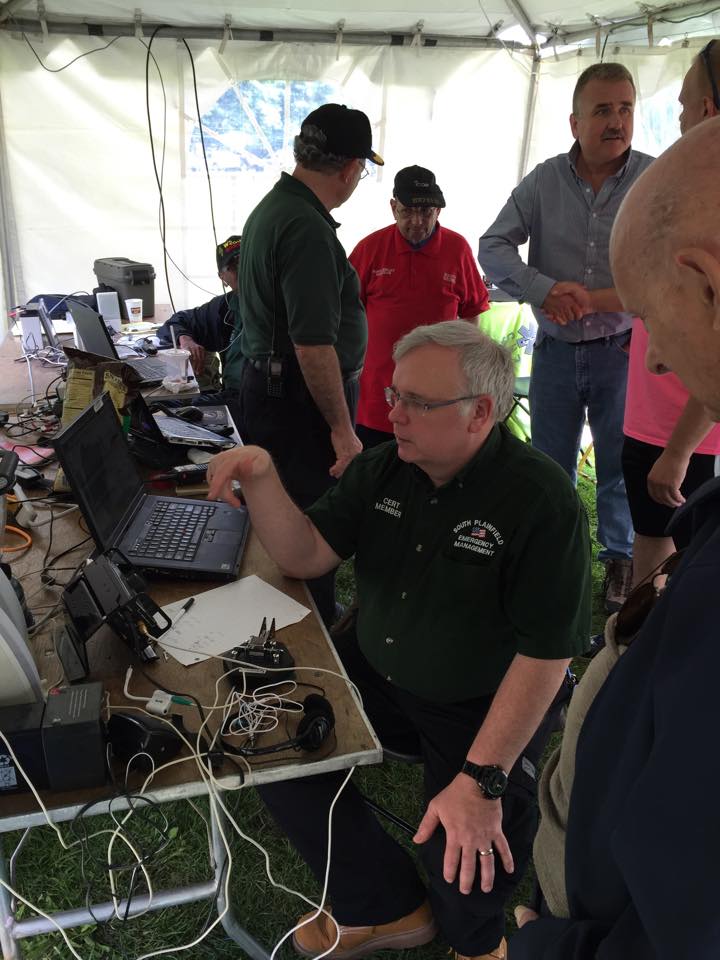
Larry Makoski, W2LJ, is a regular contributor to AmateurRadio.com and writes from New Jersey, USA. Contact him at [email protected].
Weekly Propagation Summary – 2015 Jun 29 16:10 UTC

Here is this week’s space weather and geophysical report, issued 2015 Jun 29 0647 UTC.
Highlights of Solar and Geomagnetic Activity 22 – 28 June 2015
Solar activity was at low to high levels. The period began at high levels when Region 2371 (N13, L=302, class/area Fkc/1180 on 21 June) produced an M6/2b flare at 22/1823 UTC with an associated Castelli-U spectral burst, Type II radio sweep (1480 km/s), 1000 sfu Tenflare, and a full halo coronal mass ejection (CME) with an approximate speed of 1047 km/s. Solar activity returned to high levels again on 25 June as Region 2371 produced a long-duration M7/3b flare at 25/0816 UTC with associated Type II (2056 km/s) and Type IV radio sweeps, 3800 sfu Tenflare, and an asymmetric full halo CME with an approximate speed of 1500 km/s. Region 2371 remained relatively quiet and stable after 25 June, only producing low-level C-class flaring for the rest of the period.
A greater than 10 MeV proton event was in progress at the beginning of the period. The event began at 21/2135 UTC, likely associated with an M2/1n flare at 21/0142 UTC from Region 2371, reached a maximum flux value of 1070 pfu at 22/1900 UTC and ended 24/0705 UTC. A brief enhancement to the S3 (Strong) levels was observed due to a shock enhancement from the arrival of the 21 June CME. Another greater than 10 MeV proton event began at 26/0350 UTC in association with an M7/3b flare at 25/0816 UTC from Region 2371, reached a maximum of 22 pfu (S1-Minor) at 27/0030 UTC and ended at 27/0755 UTC.
The greater than 2 MeV electron flux at geosynchronous orbit was high levels through the period with the exception of 23 June. A maximum flux of 26,376 pfu was observed at 24/1620 UTC.
Geomagnetic field activity ranged from quiet to severe storm conditions. At 22/0451 UTC, a small shock was observed at the NASA/ACE spacecraft. Total field increased from 8 nT to 17 nT with a corresponding solar wind increase from 360 km/s to 431 km/s. The shock was associated with the arrival of the 19 June CME caused by a filament eruption in the SE quadrant observed in SDO/AIA imagery beginning at 19/0500 UTC. A geomagnetic sudden impulse (SI) of 19 nT (Guam) was observed at 22/0545 UTC. The geomagnetic field responded with unsettled to active levels. At 22/1759 UTC, another shock was observed in ACE data from the 21 June CME associated with a double peak M2 flare from Region 2371 at 21/0142 UTC. Total field increased to a maximum of 41 nT at 22/1935 UTC, solar wind speed increased to 737 km/s and the Bz component went negative to -39 nT at 22/1850 UTC. A prolonged period of mostly southward Bz occurred between 23/0013 UTC and 23/1246 UTC reaching as high as -25 nT. An SI of 48 nT (Hartland) was observed at 21/1650 UTC. The geomagnetic field responded with minor to major storm levels with severe storm periods observed between 22/1800-2100 UTC and 23/0000-0600 UTC. At 24/1258 UTC, the 22 June CME associated with the M6/2b flare on 22 June was observed in ACE data. Solar wind speeds increased from approximately 550 km/s to around 760 km/s with a relatively weak increase in total field from 5 nT to 13 nT. The Bz component was mostly positive during this event with negative values reaching a maximum of -11 nT between 25/0547 UTC and 25/1357 UTC. The geomagnetic field responded with only quiet to active periods on 24 June, but increased to minor to major storm levels mid-period on 25 June. Another CME associated with the M7/3b flare on 25 June arrived at 27/0223 UTC at the ACE spacecraft. Solar wind speeds increased from near 475 km/s to 860 km/s before slowly decreasing to 480 km/s by the end of the day. Total field reached a maximum of 13 nT at 27/0304 UTC and the Bz component was variable between +9 nT and -7 nT. As a result, the geomagnetic field never increased beyond unsettled conditions.
Forecast of Solar and Geomagnetic Activity 29 June – 25 July 2015
Solar activity is expected to be at low levels with a chance for M-class flare (R1-R2, Minor-Moderate) activity from 30 June through 24 July with the return of old Regions 2365 (S13, L=079) on 30 June, 2367 (S20, L=002) on 05 July, and 2371 (N13, L=302) on 11 July.
There is a chance for a greater than 10 MeV proton event from 11 July through 24 July with the return of old Region 2371 to the visible disk.
The greater than 2 MeV electron flux at geosynchronous orbit is expected to be at high levels from 29-30 Jun and again from 08-19 July due to residual CME effects and recurrent coronal hole high speed streams (CH HSS).
Geomagnetic field activity is expected to be at active to minor storm (G1-Minor) levels from 06-08 July and again from 11-12 July due to recurrent CH HSS activity.
Don’t forget to visit our live space weather and radio propagation web site, at: http://SunSpotWatch.com/
Live Aurora mapping is at http://aurora.sunspotwatch.com/
If you are on Twitter, please follow these two users: + https://Twitter.com/NW7US + https://Twitter.com/hfradiospacewx
Get the space weather and radio propagation self-study course, today. Visit http://nw7us.us/swc for the latest sale and for more information!
Check out the stunning view of our Sun in action, as seen during the last five years with the Solar Dynamics Observatory (SDO): https://www.youtube.com/watch?v=zXN-MdoGM9g
We’re on Facebook: http://NW7US.us/swhfr
Visit, subscribe: NW7US Radio Communications and Propagation YouTube Channel
First HAB flights were a success
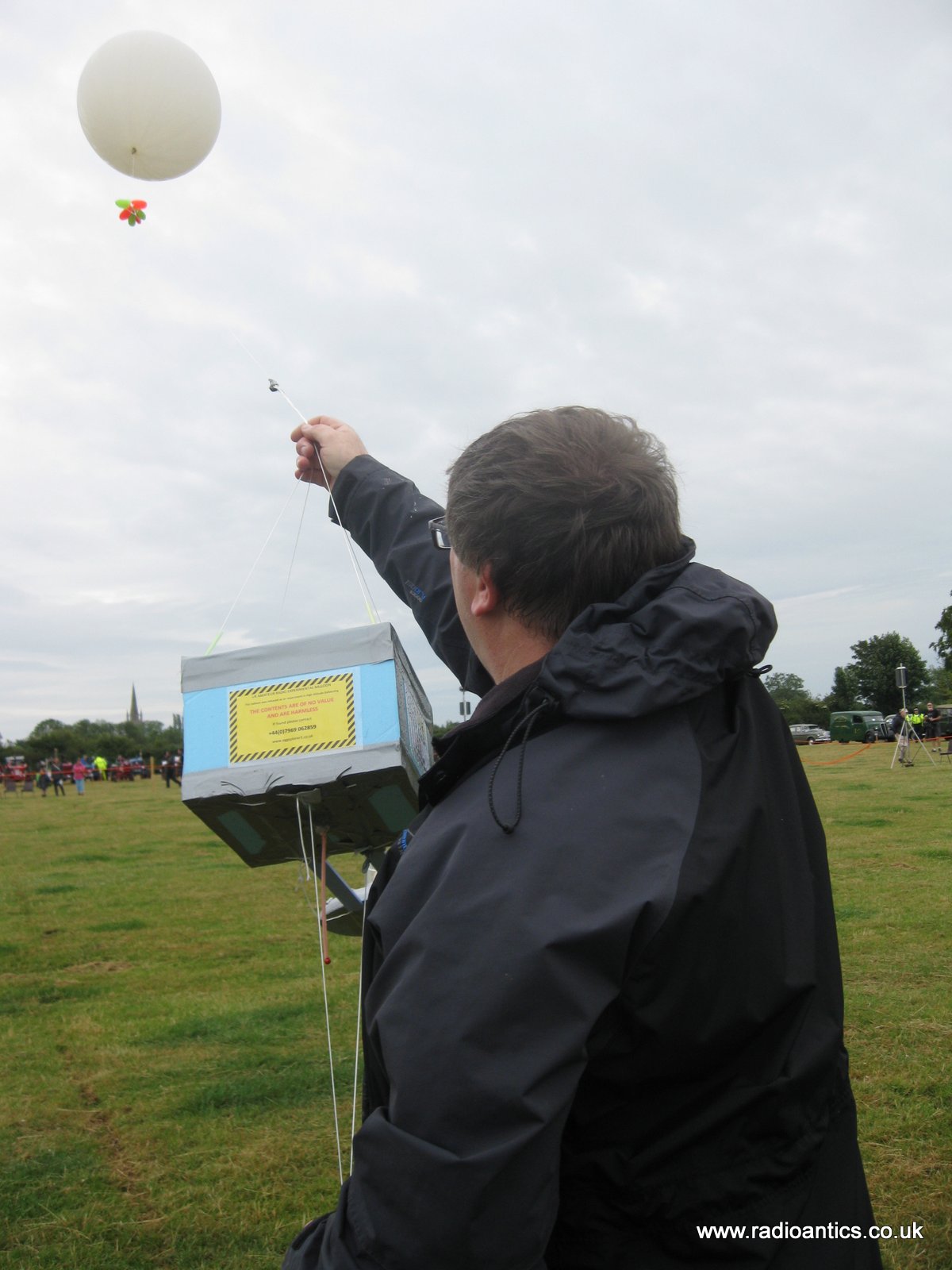 |
| Ready to launch |
South Kesteven ARS were going to hold a special event station with the call sign GB2EGG. During the planning stage I jokingly suggested throwing an egg in to space on board a balloon, I shouldn't have yoked...
The whole venture captured everyone's imagination, sadly putting the special event station in the shade but we certainly got a lot of publicity for the club and amateur radio in general.
 |
| Featured on front page of local paper |
There was certainly a lot to learn and get organised, not only did I have to design and build the flight computer which was the easy part but I had to build the payload containers get the balloon, parachute, cord the lifting gas (Helium) and build a filler assembly as well as getting official permission from the CAA for the launch.
The information on the UKHAS wiki as well as Dave Akerman's High Altitude Ballooning, From The Ground Up (and back again) were invaluable.
The cost of this venture was not insubstantial and thankfully MADHEN - The Ultimate Party Band agreed to sponsor the flight which helped greatly and I received a nice donation from fellow club member Mark Orbell (M0OBL)
Months of work and lots of last minute hitches but I was ready.
Two flights were planned an altitude 'burst' flight with a raw egg payload with a parachute decent. The main tracker MADHEN would broadcast SSDV images and telemetry with a telemetry backup tracker EGG1 suspended below it. The second flight was a foil party balloon 'floater' with a tracker kindly donated by Steve Smith G0TDJ of ProjectAVR
Both flights flew and were a great success, unfortunately the SSDV tracker failed early in the flight so no in flight images were received.
The main payload is pictured below before the flight resting on its side. The Styrofoam box contained the flight computer and radio transmitter with a camera attached to the Raspberry Pi and the "flying saucer" model which contained the egg was positioned to be visible.

As this test image shows the 'egg saucer' should have had the earth below it.
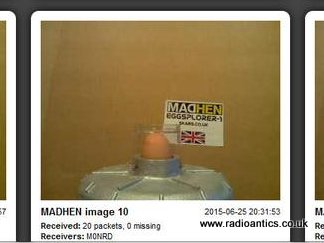
However the arduino based backup tracker which was suspended below it worked perfectly.
There were some issues with getting CAA approval because the sky was very busy on the day including the last remaining Vulcan Bomber VH-558 making its farewell flight in the area, cue jokes about the Vulcan getting scrambled... but approval was given for a morning flight, not ideal for the organisers but we were still a spectacle for the handful who were there early.
 |
| Starting the fill |
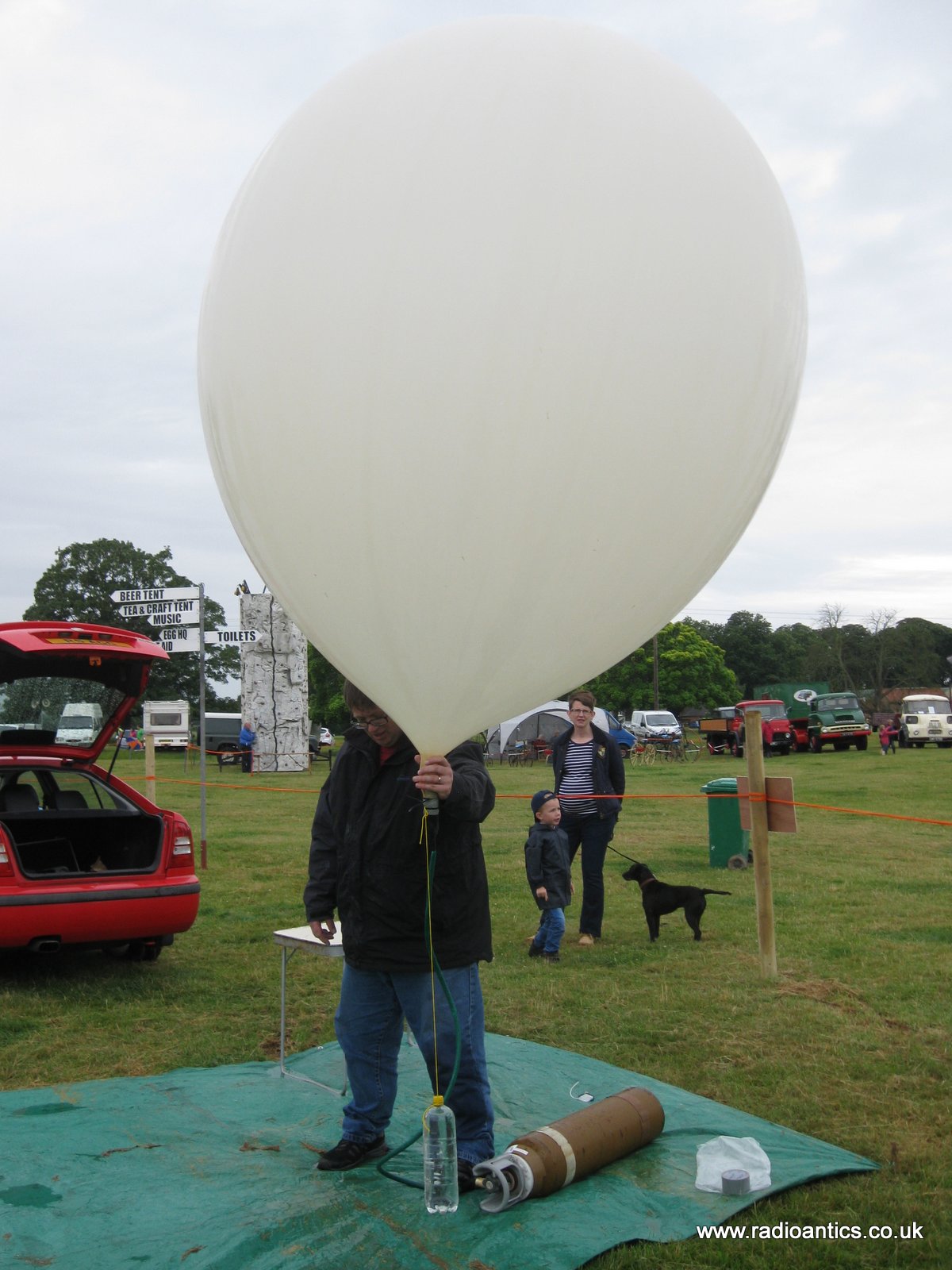 |
| Checking the neck lift, made difficult by the wind |
 |
| Stewart (M0SDM) helping me tie off the balloon and payload cord |
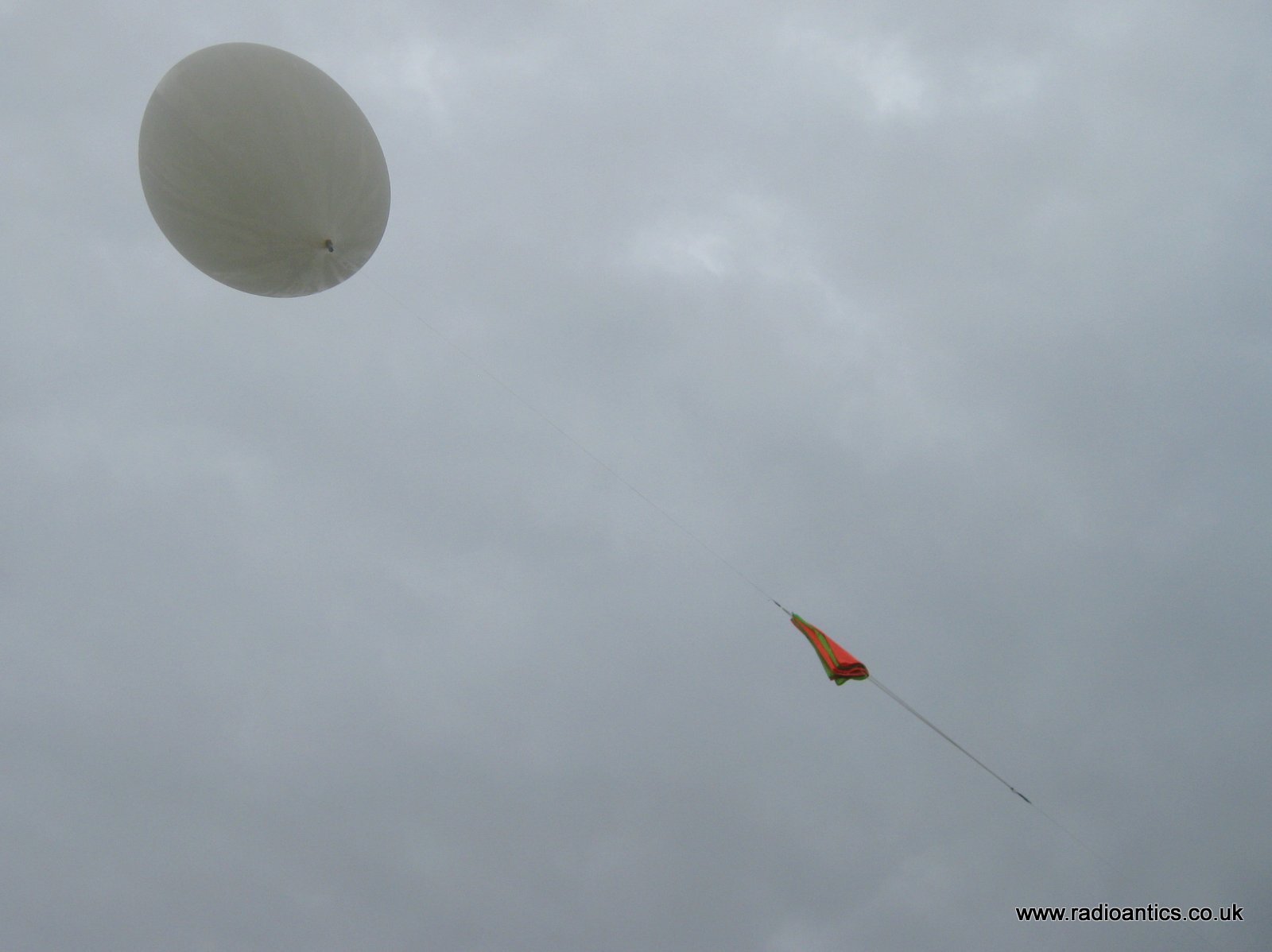 |
| The strong gusty wind made launch difficult |
 | |
| Me and Stewart making a dash to assist the launch |
It started so well, I was receiving telemetry and image packets and then transmission stopped
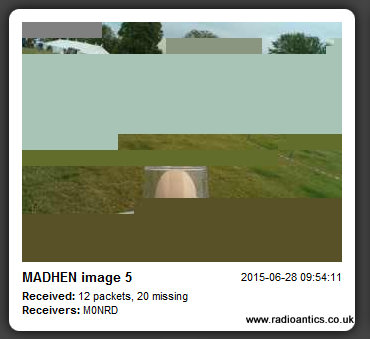
However as I said the other tracker worked brilliantly and this was the final flight path as visualised in Google Earth. The ascent and decent rate and the burst altitude were exactly as planned and predicted, so I know I got the neck lift measurement right even with the high wind on the day.
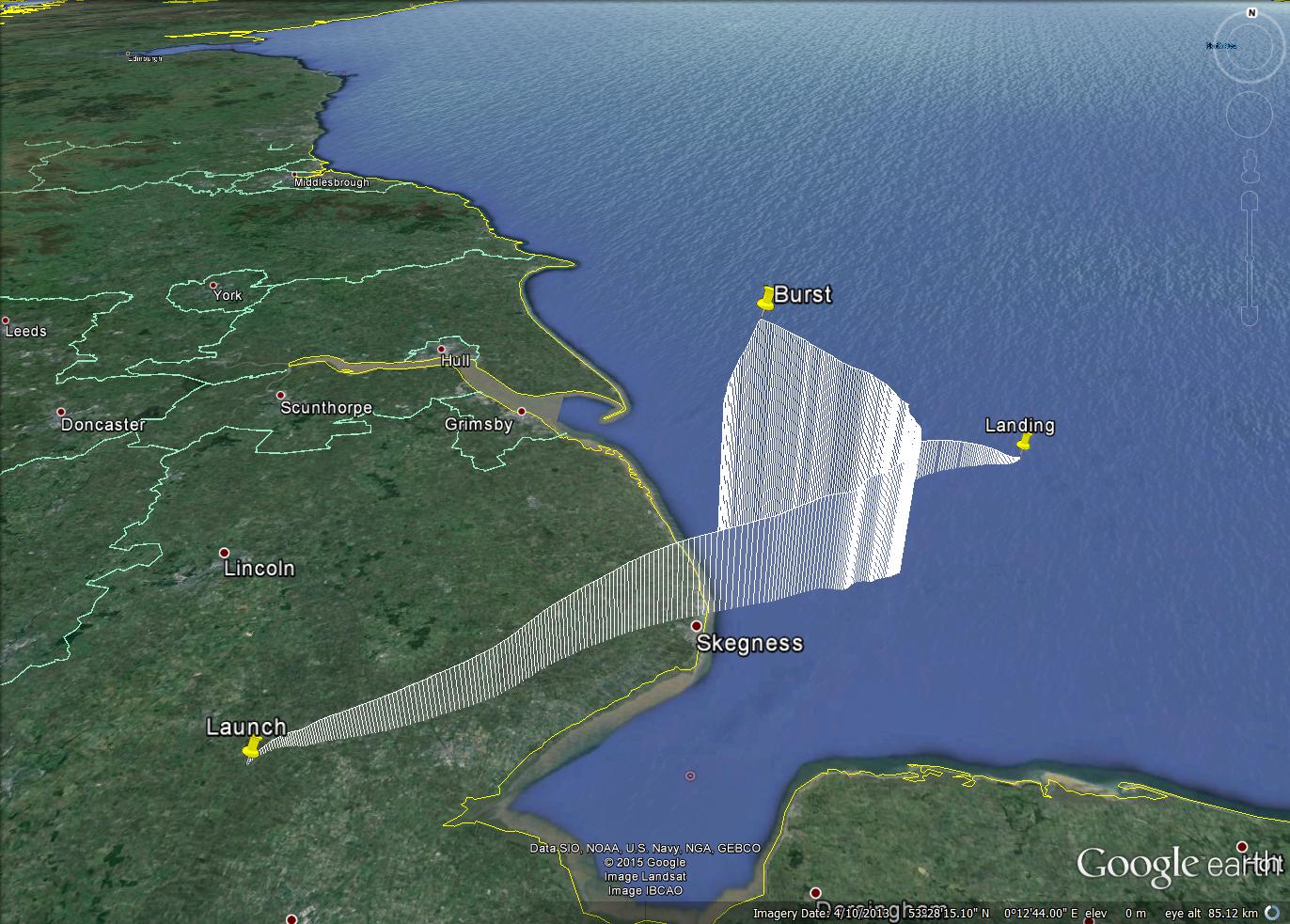 |
| Path of MADHEN/EGG1 |
A splashdown at sea was inevitable due to the wind conditions, hopefully it it survived the landing it may wash up on a beach somewhere and we can retrieve the images.
With what little Helium remained I was able to lightly fill and launch a foil party balloon carrying a blown egg shell as a 'floater' which made a valiant attempt to reach the continent at 6-7km high travelling at 120+km/hr where it reportably hit bad weather and was downed.
 |
| Path of EGGDX in comparison to MADHEN/EGG1 |
All in all an eggscellent day!
Andrew Garratt, MØNRD, is a regular contributor to AmateurRadio.com and writes from East Midlands, England. Contact him at [email protected].
 Ham Radio Deluxe |
 W5SWL Electronics |
 Ham Radio Prep |
 KB3IFH QSL Cards  Hip Ham Shirts  HamRadioAuctions HamRadioAuctions Reliance Antennas Reliance Antennas Enigma Shop Enigma Shop |  morseDX  Ni4L Antennas  R&L Electronics R&L Electronics antennas.us antennas.us QRV QRV |
- Matt W1MST, Managing Editor
