 |
 CW decoder – The electronics
 30 July 2015 | by
Dan Trudgian, MØTGN, is a regular contributor to AmateurRadio.com and writes from Wiltshire, England. He's a radio nut, IT guru, general good guy and an all round good egg. Contact him him here.
CW decoder – Introduction
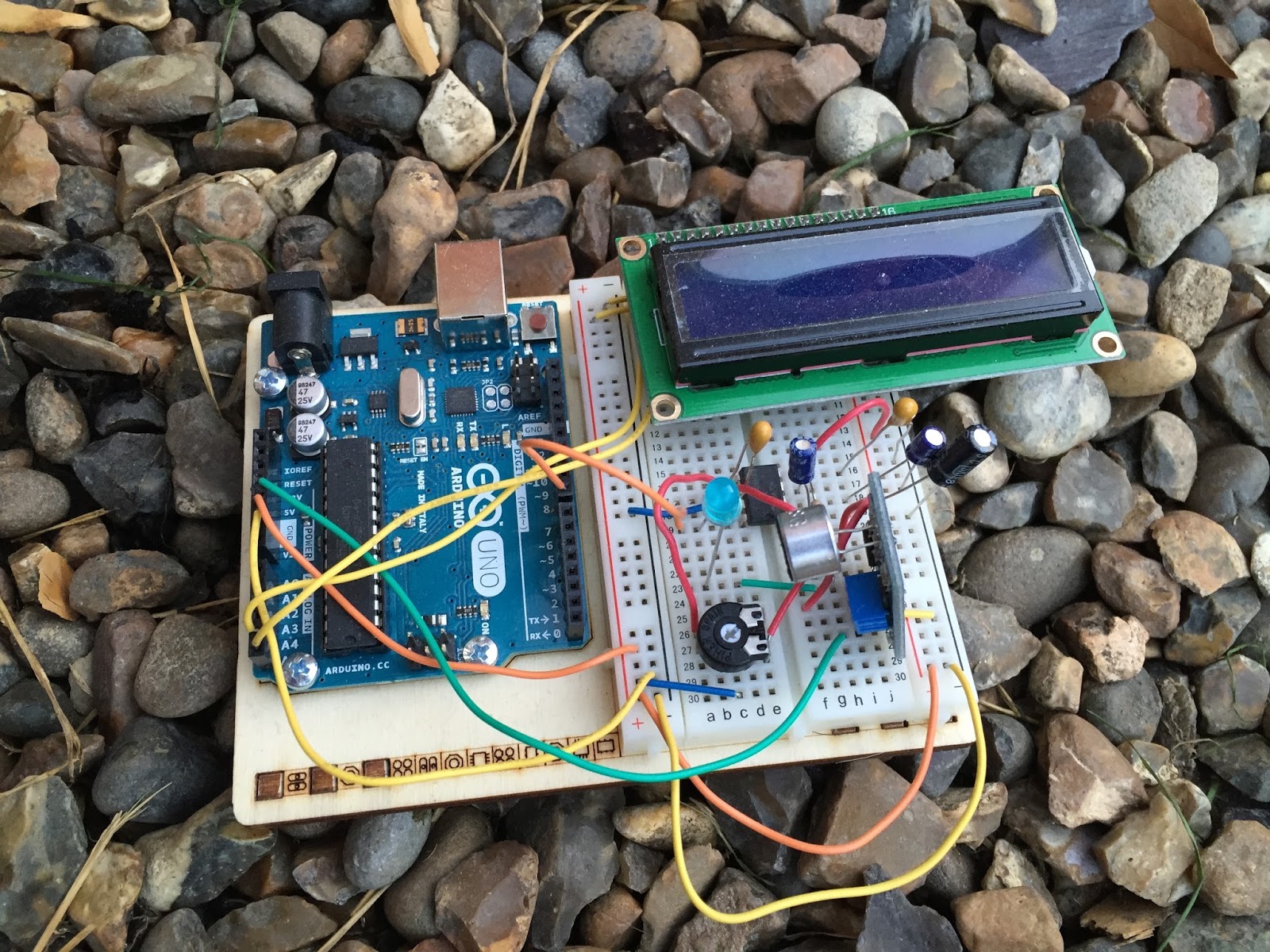 If you do follow me on twitter (and if you don’t – you really should) you will have no doubt seen my recent tweets about constructing a CW decoder. After a number of retweets, and favorites from other very interested hams – I did promise that I would collate all my knowledge into a blog posts and share the details with you all.
So, for those who have not been following me on twitter – here is the sales pitch. I recently started looking at some projects that I could get my Arduino Uno involved in with the radio hobby. I have a number of reasons why I want to combine radio, Arduino and some electronics – more about this later.
I stumbled across a video on YouTube where Budd Churchward showed his Arduino copying and decoding CW straight off the HF band and at a reasonably high speed. I ventured further and wanted to know what electronics Budd was using to achieve this excellent little project.
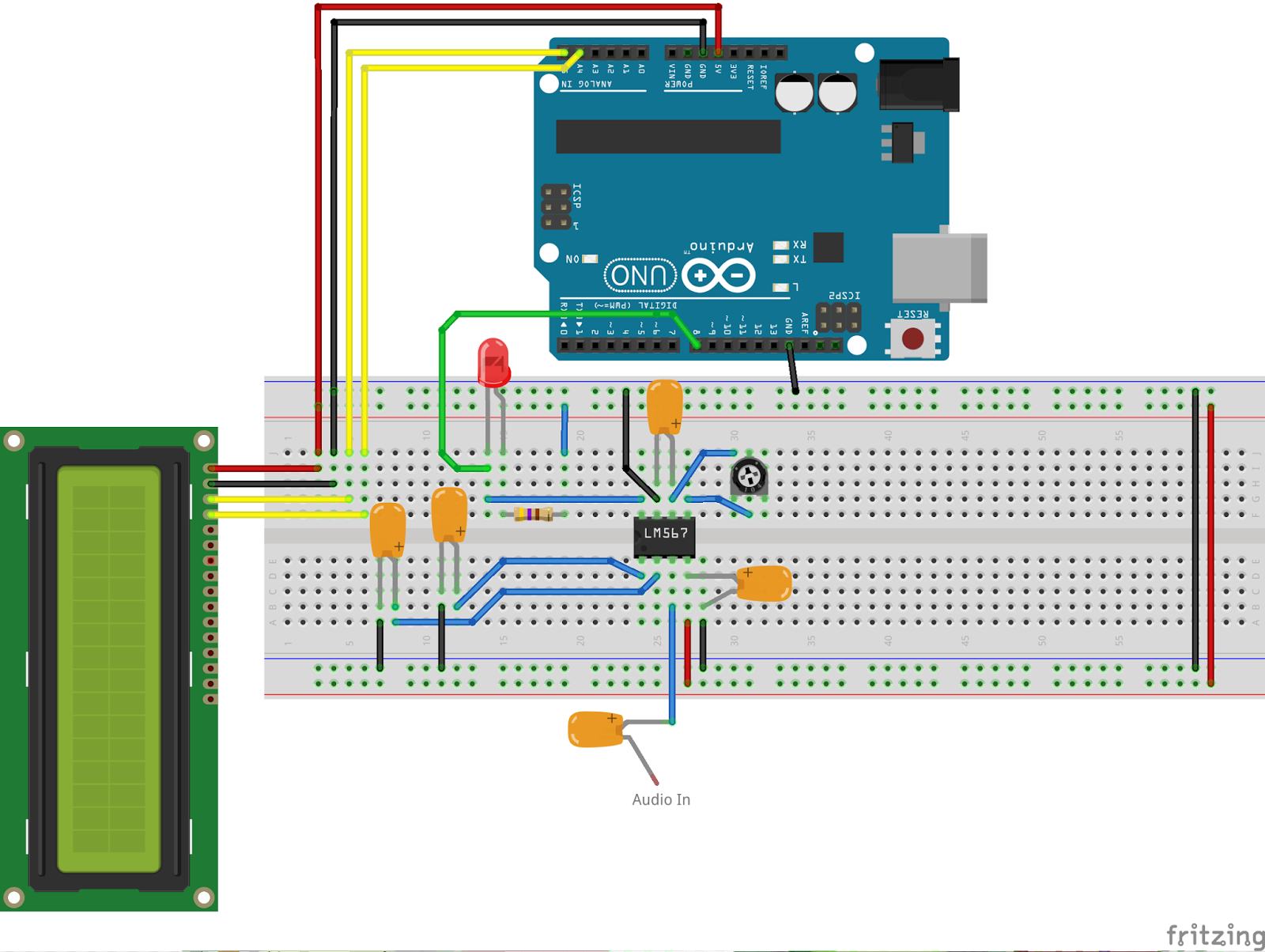
I used the limited shared knowledge and discovered that the electronics is basally a LM567 – Tone decoder chip that (I have since discovered the chip is used in the ARRL book for Arduino Projects) I discovered takes an audio input and converts this to a HIGH / LOW output suitable for the Arduino to use as a signal for decoding.
Finding a suitable project for the LM567 and trying to work out how fellow constructors had configured their LM567s was not an easy task. This did indeed take quite a lot of chasing and head scratching. I will go into more technical detail on the next post – but for the reason why I wanted to complete this ? very simple. I w
ant to create a project that would “inspire” young electronically minded students that might have an interest in radio – (i.e the morse code) some coding experience and some construction / electronic interest. This project covers all 3 areas, and only lightly covers each subject area.
In the next post – I show the LM567, the schematic and give you the list of parts required.
Dan Trudgian, MØTGN, is a regular contributor to AmateurRadio.com and writes from Wiltshire, England. He's a radio nut, IT guru, general good guy and an all round good egg. Contact him him here.
CW decoder – Introduction
If you do follow me on twitter (and if you don’t – you really should) you will have no doubt seen my recent tweets about constructing a CW decoder. After a number of retweets, and favorites from other very interested hams – I did promise that I would collate all my knowledge into a blog posts and share the details with you all.
So, for those who have not been following me on twitter – here is the sales pitch. I recently started looking at some projects that I could get my Arduino Uno involved in with the radio hobby. I have a number of reasons why I want to combine radio, Arduino and some electronics – more about this later.
I stumbled across a video on YouTube where Budd Churchward showed his Arduino copying and decoding CW straight off the HF band and at a reasonably high speed. I ventured further and wanted to know what electronics Budd was using to achieve this excellent little project.
I used the limited shared knowledge and discovered that the electronics is basally a LM567 – Tone decoder chip that (I have since discovered the chip is used in the ARRL book for Arduino Projects) I discovered takes an audio input and converts this to a HIGH / LOW output suitable for the Arduino to use as a signal for decoding.
Finding a suitable project for the LM567 and trying to work out how fellow constructors had configured their LM567s was not an easy task. This did indeed take quite a lot of chasing and head scratching. I will go into more technical detail on the next post – but for the reason why I wanted to complete this ? very simple. I w
ant to create a project that would “inspire” young electronically minded students that might have an interest in radio – (i.e the morse code) some coding experience and some construction / electronic interest. This project covers all 3 areas, and only lightly covers each subject area.
In the next post – I show the LM567, the schematic and give you the list of parts required.
Dan Trudgian, MØTGN, is a regular contributor to AmateurRadio.com and writes from Wiltshire, England. He's a radio nut, IT guru, general good guy and an all round good egg. Contact him him here.
The Spectrum Monitor — August, 2015

Stories you’ll find in our August, 2015 issue:
HF Air Monitoring: Understanding NOTAM Information
By Tony Roper
International air-route safety is everyone’s concern, no more so than with those who use the world’s air space daily—military, commercial and civilian aircraft. To help, the world’s aviation authorities make available Notice to Airmen (NOTAM) widely available. These notices tell all pilots what to expect along their regular routes across oceans and continents. But, they also give clues to air monitoring enthusiasts as to what type of aircraft may be in the air and on the air. Tony explains how to unravel NOTAM information to learn when and where to listen.
TSM Reviews: Whistler WS-1080 P-25 Phase I and II Scanner
By Chris Parris
The last few years have been revolutionary for the world scanning radios. In additional to the great technical strides that the manufacturers have pushed to the electronics market, some names in the scanner world have disappeared and new names have come to the forefront. One name new to the world of scanning is Whistler, of Bentonville, Arkansas. Prior to this, Whistler had previously been known for their line of radar detectors, GPS devices and power inverters, but no scanners. Chris takes a close look at this very capable scanner.
Advanced Radio Noise Filtering using DSP
By Geir Laastad LA6LU
Using the signal of a Norwegian Non-directional Aeronautical Beacon (NDB) Geir shows us how it is possible, in some cases, to achieve almost 100 percent noise-free radio reception with advanced use of Digital Signal Processing (DSP) technology. Using a combination of built-in filters and outboard DSP speakers, Geir describes techniques that are most effective for narrow band CW reception, but will also improve the reception of SSB or AM signals.
Digitally Speaking: Digital Voices on HF Part 1
By Cory GB Sickles WA3UVV
When most hams think of digital voice operation, they think of VHF and UHF repeaters. To be sure, that covers where the vast majority of digital voice QSOs take place. While simplex 2-meter and 70-cm activity is out there, in most areas it subsides once one or two repeaters are established in a given area. But, there are plenty of frequencies on HF where proponents of each digital methodology have established a foothold. Cory tells us where those frequencies are and what you need to get on the air.
Multiple Satellite Reception from a Single Ku-Band Dish (Part 2)
By Mike Kohl
Last month Mike walked us through the theory behind multiple feed horns on a stationary Ku-band dish for reception of Free-to-Air satellite signals. In Part 2 he shows how it’s done; crowding as many as 12 feed horns on one 1.8-meter Ku-band satellite dish that can see 12 satellites positioned from 89 degrees West to 119 degrees West. It requires making a custom feed support and takes meticulous adjustment to get it all right, but so worth it!
Scanning America By Dan Veenaman
Scanning Wisconsin; FCC Field Office Shuffle
Federal Wavelengths By Chris Parris
US Navy HYDRA Systems
Utility Planet By Hugh Stegman NV6H
What’s up with SKYKING?
Digital HF: Intercept and Analyze By Mike Chace-Ortiz AB1TZ/G6DHU
Irish Navy HF Operations
HF Utility Logs By Mike Chace-Ortiz and Hugh Stegman
Amateur Radio Insights By Kirk Kleinschmidt NT0Z
Gensets and UPSs: Play it Smart!
Radio 101 By Ken Reitz KS4ZR
2015 Field Day Report and the C64 Today
Radio Propagation By Tomas Hood NW7US
Sunspots Got You Down? You Can Still Work the World
The World of Shortwave Listening By Robert Wagner VK3VBW
Radio Verdad – Small Voice, Big Heart
The Shortwave Listener By Fred Waterer
Kid’s Shows, BBCWS and CRI
Amateur Radio Astronomy By Stan Nelson KB5VL
Noise in Radio Astronomy
The Longwave Zone By Kevin O’Hern Carey WB2QMY
You Have Questions…
Adventures in Radio Restoration By Rich Post KB8TAD
A Classic Pair of Heathkit Hi-Fi Twins
Part 1: the AJ-11 Tuner
The Broadcast Tower By Doug Smith W9WI
What Happened to WOWO
Antenna Connections By Dan Farber AC0LW
Soldiering on after a Microburst
The Spectrum Monitor is available in PDF format which can be read on any desktop, laptop, iPad®, Kindle® Fire, or other device capable of opening a PDF file. Annual subscription (12 issues, beginning with the January 2015 issue) is $24. Individual monthly issues are available for $3 each.
Ken Reitz, KS4ZR, is publisher and managing editor of The Spectrum Monitor. Contact him at [email protected].
HamRadioNow: Parity is in the Senate (and what you need to do about it)
In this episode you’ll learn:
- how really, really, really important your letters to your representatives are, but especially if you send them through ARRL HQ
- that your HOA rules and deed restrictions are not a ‘private contract’ being abrogated by the federal government through this bill
- how one ham in Mississippi was the catalyst for getting this bill into the Senate
- what the FCC thinks of anything that uses RF anymore
- but that Chris Imlay W3KD still needs to work with those guys, so he chooses his words carefully
- and more (yeah, sure, every pitch includes the words “and more,” but this time there’s a lot more)
HamRadioNow is available as an audio podcast. You’ll need to load this address into your podcast app:
http://HamRadioNow.tv/hrnrss.xml
73, Gary KN4AQ
Gary Pearce, KN4AQ, is the host of HamRadioNow.tv. If you enjoy this and other HamRadioNow programs, help keep them 'on the air' with a contribution. Contact him at [email protected].
National Hamfest Balloon Launch

Once again I will be assisted by the members of South Kesteven ARS and hopefully this time it won't end up splashing down and being lost at sea.
I intend to have a SSDV system running on a Raspberry Pi using the usual UKHAS RTTY protocol and possibly this time a LoRA transmitter which allows faster transmission and higher resolution, however this requires ground stations to use a LoRA receiver, this are straightforward to build. I have done some experiments with the code base developed by Dave Akerman but didn't implement them in the Eggsplorer-1
As to any special payload? Well following the yokes about "Ham n Eggs" following the sending of an egg in the stratosphere, who knows....?

Anyone interested in joining South Kesteven ARS and being involved then contact me via the club website at www.skars.co.uk or our facebook page
Andrew Garratt, MØNRD, is a regular contributor to AmateurRadio.com and writes from East Midlands, England. Contact him at [email protected].
National Hamfest Balloon Launch
Once again I will be assisted by the members of South Kesteven ARS and hopefully this time it won't end up splashing down and being lost at sea.
I intend to have a SSDV system running on a Raspberry Pi using the usual UKHAS RTTY protocol and possibly this time a LoRA transmitter which allows faster transmission and higher resolution, however this requires ground stations to use a LoRA receiver, this are straightforward to build. I have done some experiments with the code base developed by Dave Akerman but didn't implement them in the Eggsplorer-1
As to any special payload? Well following the yokes about "Ham n Eggs" following the sending of an egg in the stratosphere, who knows....?
Anyone interested in joining South Kesteven ARS and being involved then contact me via the club website at www.skars.co.uk or our facebook page
Andrew Garratt, MØNRD, is a regular contributor to AmateurRadio.com and writes from East Midlands, England. Contact him at [email protected].
 Ham Radio Deluxe |
 W5SWL Electronics |
 Ham Radio Prep |
 KB3IFH QSL Cards  Hip Ham Shirts  HamRadioAuctions HamRadioAuctions Reliance Antennas Reliance Antennas Enigma Shop Enigma Shop |  morseDX  Ni4L Antennas  R&L Electronics R&L Electronics antennas.us antennas.us QRV QRV |
- Matt W1MST, Managing Editor
