 |
 IC7300, FT991 or wait for the FT817 replacement?
 26 August 2015 | by
 At the moment I am looking for a new rig, but I am prepared to wait some time. I have never been keen on running high power and 5-10W would serve me well. I like that the new IC7300 is SDR based, but I like that the FT991 includes 2m and 70cm.
At the moment I think I’ll just wait for the FT817 replacement. I hope this includes 4m, but it sounds like it uses the same IF as the FT991, so I guess 4m is unlikely. Ideally I think the IC7300s (10W version) would be a good bet, especially if this comes out with 4m too.
I dislike fans, so I assume the IC7300S and FT817 replacement will not have these? Lets hope ICOM market the IC7300S as a QRP radio in Europe. 10W pep is a decent power. Certainly enough power for most occasions.
UPDATE 0934z: It would not surprise me if the FT817 replacement stayed at 5W but they also had a companion booster amplifier, maybe 20-50W. As we will be on the way down in the solar cycle next year (2016) this may be a reasonable compromise. What would they do about the auto ATU? I guess any bolt-on amp would have to have its own. I still think Yaesu seriously misjudged the market for this rig and the timing. There are so many FT817s out there and people have been gagging for a replacement/enhanced version for years. Now Yaesu is playing catch-up rather than leading. As I said yesterday, this new radio will need some seriously good features if it is to sell as well as the FT817 has done. Oh, expect some very good deals on the FT817ND early next year. The dealers will want to clear shelves in readiness of the new one.

Roger Lapthorn, G3XBM, is a regular contributor to AmateurRadio.com and writes from Cambridge, England.
MADHEN Eggsplorer-1 – We’ve got the data!

Following the euphoria of the Eggsplorer-1 payload being found six weeks after launch washed up and retrieved from the beach in Terschelling, Netherlands it has been an agonising wait to see what the Dutch police would send back. My impatience got the better of me last week and I contacted them directly to be told that unfortunately due to the awful smell and condition of the box they had simply removed the memory card and had posted that back as requested.
More days past and I was beginning to think irony was going to play a cruel trick and the card after its fantastical journey would end up lost in the post. I shouldn't have been so pessimistic as it arrived today! Along with the card was a detailed map showing the final location and labels from the side of the box.
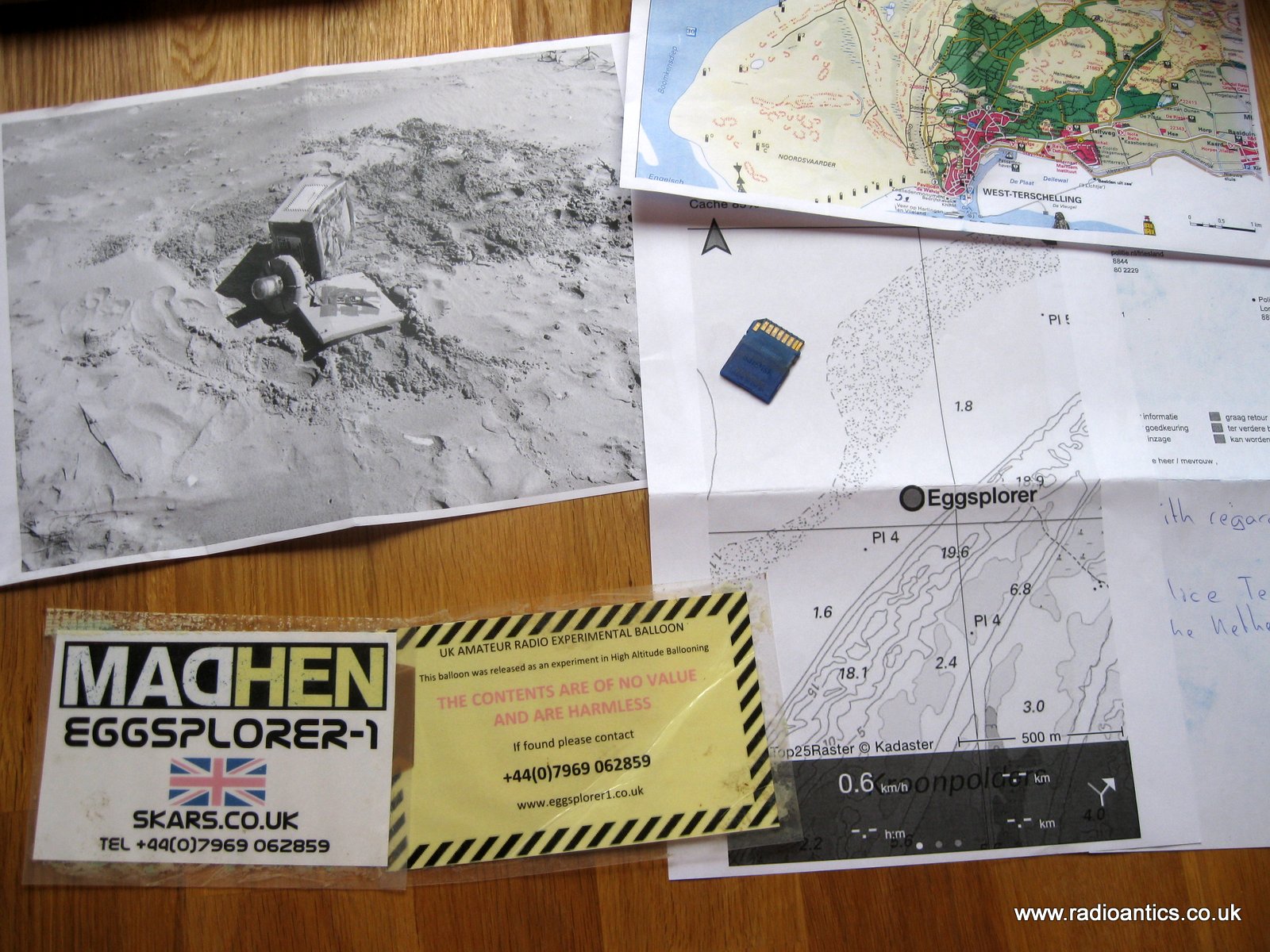

There was a nice note from the police.

The SD memory card seemed to have had survived more or less intact, though there was some corrosion on the contacts and crucially a small corner of the card was broken off.
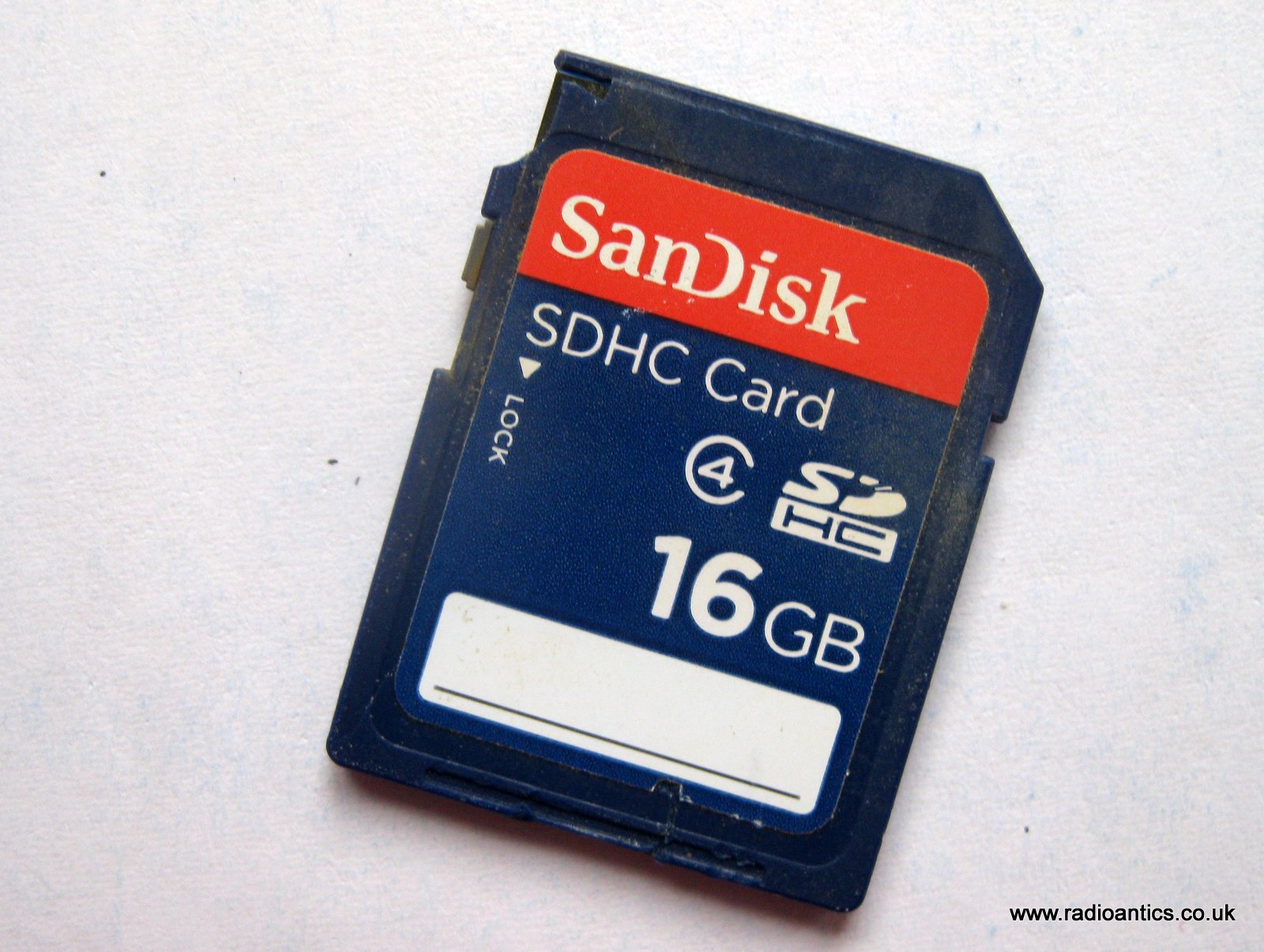
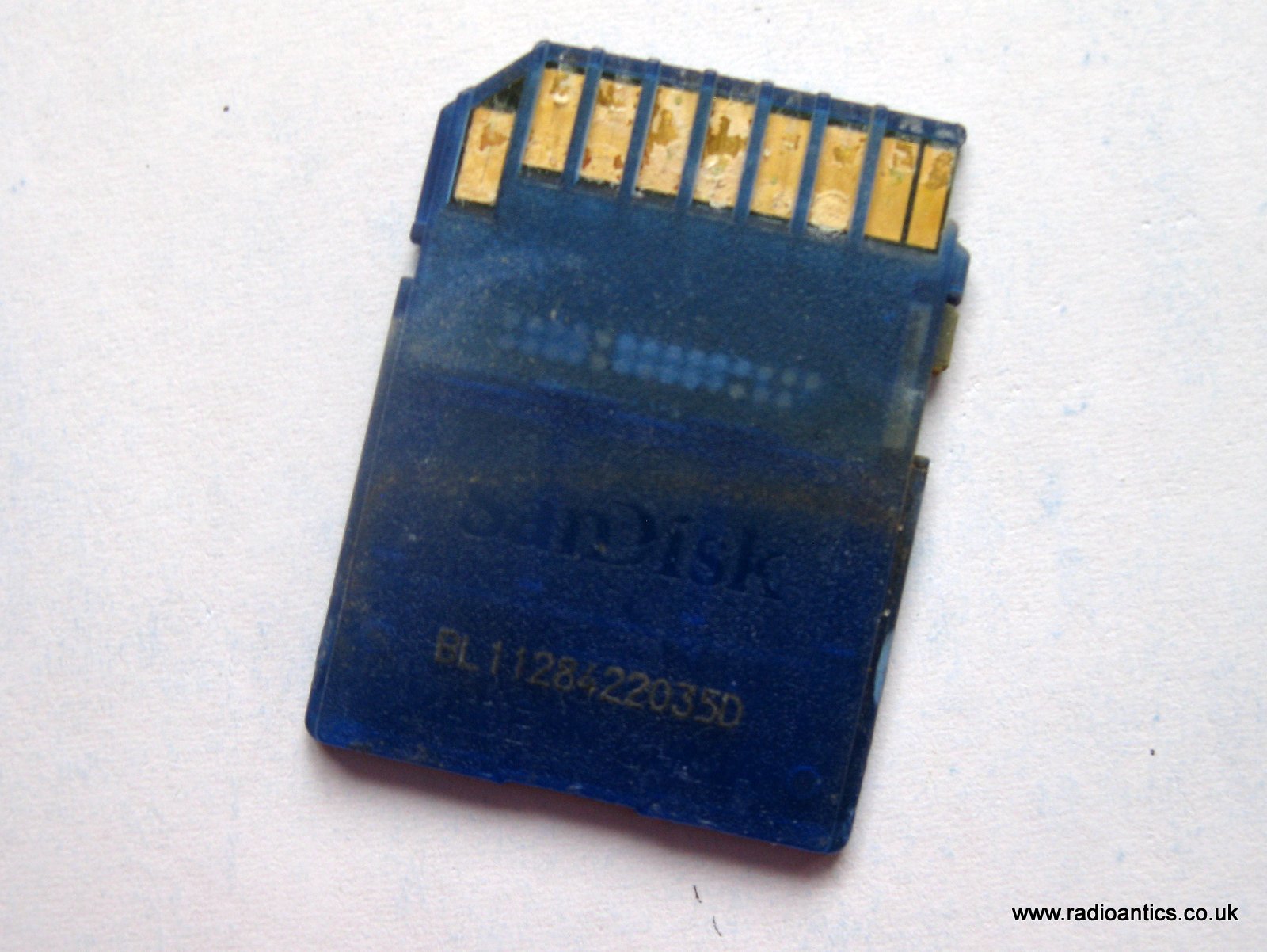
The plan was to use the Win32 Disk Imager program to make a direct raw image of the card and work on that copy. I first used a small wad of wire wool to gently clean up the contacts
I was encouraged when I inserted the card into my Microsoft Windows laptop and it was detected, however my heart sank when any attempt to access it or use the imager program was met with an error. I gave it another gentle going over with the wire wool and thankfully was then able to make a image file, the next stage was to extract the precious data.
The card of course contained the Linux based Raspberry Pi file system and in order to access it on a Windows machine I used the freeware linux-reader from DiskInternals which allows access to Ext2/Ext3/Ext4, HFS and ReiserFS file systems within Windows.
It was a simple case of using the "mount image file" option and the partitions were then accessible and everything appeared intact, there were images on the card unfortunately not the "egg in space" image I wanted, just some nice "egg in the clouds" shots.

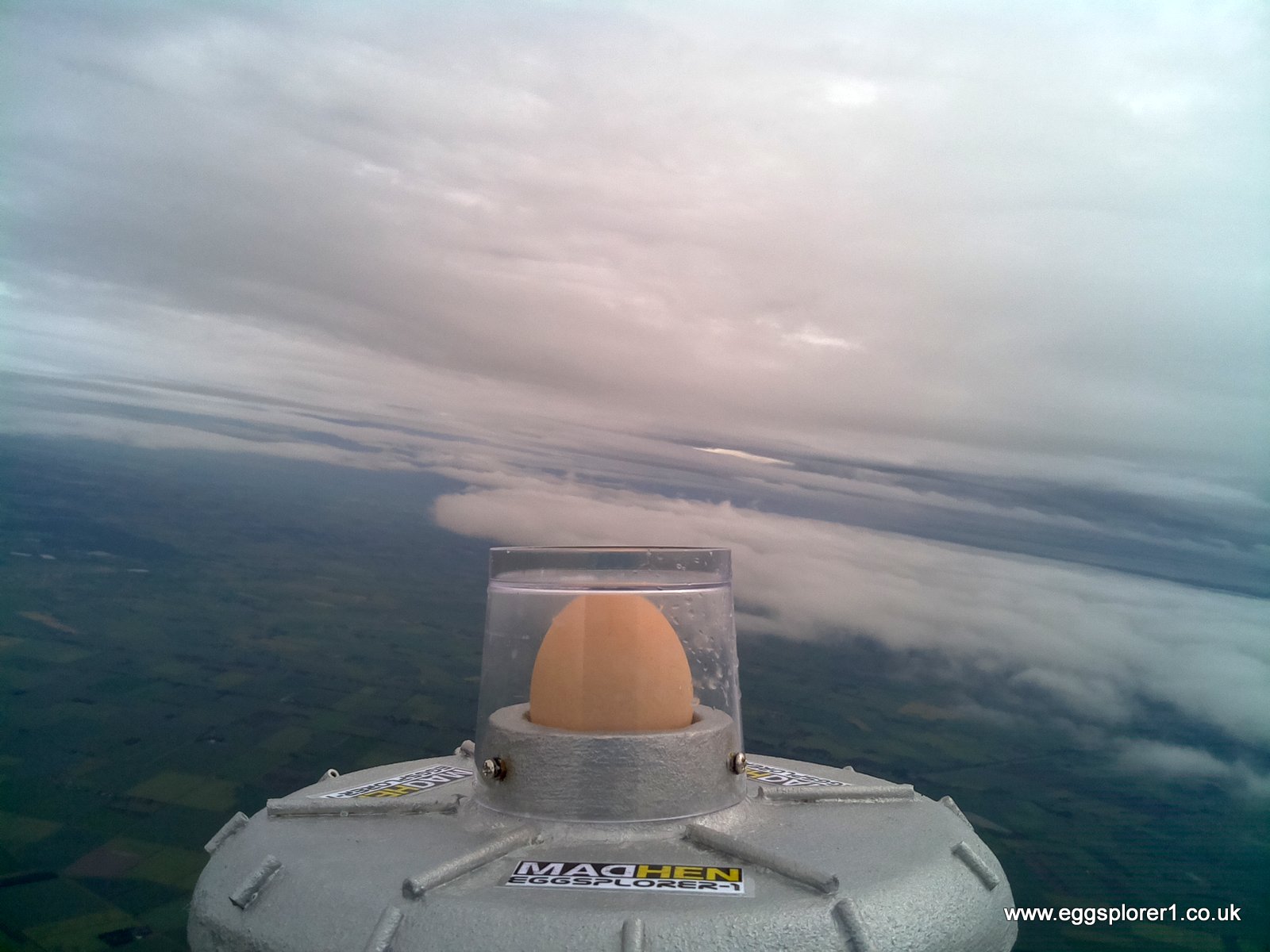
The telemetry log file confirmed the worst, the flight computer had indeed stopped/crashed at approx 2.5km up and no further images had been captured of the 31km accent into the stratosphere (confirmed by the backup tracker) I had hoped the transmission had stopped because of a fault in the antenna or the radio module board alas this wasn't the case.
On the day of the launch I did have problems with the payload not booting up. It had worked flawlessly under test the previous weeks and I had secured everything in the box ready for the flight. The day before the launch I had spotted there was another balloon going up in the UK at the same time and we had both opted for the same frequency. So at the eleventh hour I was forced to take out the SD card to change the configuration to prevent the transmission clash.
The launch day start up problem was the SD card. I had removed and reinserted it to get it to start up and secured it down with plenty of gaffa tape. Looking at the card now and the fact the broken corner is old damage I am convinced this is the reason for the failure as the card may well have become dislodged due to turbulence.
While slightly disappointed it is still a miracle I have any images at all and can only thank Jan and the Dutch Police again.
I have certainly learned a lot and hope the National Hamfest HAB that I and South Kesteven ARS are flying is more successful

Andrew Garratt, MØNRD, is a regular contributor to AmateurRadio.com and writes from East Midlands, England. Contact him at [email protected].
MADHEN Eggsplorer-1 – We’ve got the data!
Following the euphoria of the Eggsplorer-1 payload being found six weeks after launch washed up and retrieved from the beach in Terschelling, Netherlands it has been an agonising wait to see what the Dutch police would send back. My impatience got the better of me last week and I contacted them directly to be told that unfortunately due to the awful smell and condition of the box they had simply removed the memory card and had posted that back as requested.
More days past and I was beginning to think irony was going to play a cruel trick and the card after its fantastical journey would end up lost in the post. I shouldn't have been so pessimistic as it arrived today! Along with the card was a detailed map showing the final location and labels from the side of the box.
There was a nice note from the police.
The SD memory card seemed to have had survived more or less intact, though there was some corrosion on the contacts and crucially a small corner of the card was broken off.
The plan was to use the Win32 Disk Imager program to make a direct raw image of the card and work on that copy. I first used a small wad of wire wool to gently clean up the contacts
I was encouraged when I inserted the card into my Microsoft Windows laptop and it was detected, however my heart sank when any attempt to access it or use the imager program was met with an error. I gave it another gentle going over with the wire wool and thankfully was then able to make a image file, the next stage was to extract the precious data.
The card of course contained the Linux based Raspberry Pi file system and in order to access it on a Windows machine I used the freeware linux-reader from DiskInternals which allows access to Ext2/Ext3/Ext4, HFS and ReiserFS file systems within Windows.
It was a simple case of using the "mount image file" option and the partitions were then accessible and everything appeared intact, there were images on the card unfortunately not the "egg in space" image I wanted, just some nice "egg in the clouds" shots.
The telemetry log file confirmed the worst, the flight computer had indeed stopped/crashed at approx 2.5km up and no further images had been captured of the 31km accent into the stratosphere (confirmed by the backup tracker) I had hoped the transmission had stopped because of a fault in the antenna or the radio module board alas this wasn't the case.
On the day of the launch I did have problems with the payload not booting up. It had worked flawlessly under test the previous weeks and I had secured everything in the box ready for the flight. The day before the launch I had spotted there was another balloon going up in the UK at the same time and we had both opted for the same frequency. So at the eleventh hour I was forced to take out the SD card to change the configuration to prevent the transmission clash.
The launch day start up problem was the SD card. I had removed and reinserted it to get it to start up and secured it down with plenty of gaffa tape. Looking at the card now and the fact the broken corner is old damage I am convinced this is the reason for the failure as the card may well have become dislodged due to turbulence.
While slightly disappointed it is still a miracle I have any images at all and can only thank Jan and the Dutch Police again.
I have certainly learned a lot and hope the National Hamfest HAB that I and South Kesteven ARS are flying is more successful
Andrew Garratt, MØNRD, is a regular contributor to AmateurRadio.com and writes from East Midlands, England. Contact him at [email protected].
Peanut Power Sprint – September 27th.
The Bees have swarmed and the Skeeters have been hunted. Now it time for a snack - The Peanut Power Sprint!
Everyone plays... Outdoors, indoors, lo/hi power, ... there is even a QRO category.
http://www.hornucopia.com/contestcal/contestdetails.php?ref=571
Sponsored by the North Georgia QRP Club (NoGaQrP), this sprint will be held on Sept. 27, 2015 from 4PM to 6PM EDT (Sept. 27 - 2000z to 2200z). Full rules are on the NoGaQrP website - nogaqrp.org Your QSO will be worth more if you have a PEANUT number; assigned NEW each year (see below).
The club is making this one different from most other QRP QSO events.
1. It is open to all amateurs at any power level. This is to attract some new folks to QRP while running their comfortable power - QRO (<100 watts pls) All are welcome and there is a QRO category. This is a FUN event. Not cut-throat!
2. It is a short sprint lasting only two hours; not tying up the entire afternoon. Although brief, run reasonable CW speeds for all to copy.
3. It starts late in the day (right after close of TX QSO party!) which will mean those on the west coast will begin at 1PM PDT, later than most contests.
4. There are categories for all situations - the prestigious category is the Peanut Power category - 1w CW or less, 2W PEP SSB or less - operating from the field! This is the GOOBER CLASS! SOTA anyone?
5. Plaques will be awarded for each of 5 category winners (minimum 3 entries).
http://www.nogaqrp.org/PeanutPower/2014/PeanutPowerPlaques2014/plaques.php
6. Sprint encourages SSB as well as CW contacts. The exchange: RS(T), State/Province/Country(SPC) and your Peanut Number or Power. Call CQ NUT and have FUN!
7. Multipliers count each band/each mode. Work GA ( or any SPC) on 3 bands and 2 modes each = 6 multiplier. Puts emphasis on switching bands and modes during the event. Check SSB on the quarter hour. (SPC means State Province Country)
8. This will encourage activity on the 3 permitted bands - 40, 20, and 15M. There are suggested frequencies for each band/mode. Notice we are encouraging the now almost dead portion of 40M - 7061 khz and up.
9. Logs are not submitted - simply a score - but keep handy in case requested for verification. Watch website for results. There is an online score calculator. It's all on the website - nogaqrp.org
10. Work stations holding a Peanut Power Number (PPN) for 7 points. Stations worked who do not hold a PPN (will send their power) yield 3 points. Yes, QRO stations can request and receive a PPN. You do not declare your category until you decide to send in your entry. If you get halfway through and change your power, simply enter under a different category than you originally thought!
To request a PPN, send an email to NoGaNuT PeTe at [email protected] Requests for special numbers may no longer be accommodated. See the current list via the website. Or click here to see the latest list: http://byjimeny.com/PPN2015.pdf
Include the word PEANUT POWER NUMBER in the title of your request please.
Dang, those goobers are tasting great! http://tinyurl.com/olkg4za
NoGaNuT JiM, W4QO
This is a really fun Sprint/Operating Event. If you have EVER been intimidated by QRP Contesting, this is the contest for you!
I'd like to make a special request to all the Skeeters to please buzz on over to the NoGA site and request to become a peanut for an afternoon. I guarantee you will have a blast!
72 de Larry W2LJ - Peanut #43
QRP - When you care to send the very least!
Larry Makoski, W2LJ, is a regular contributor to AmateurRadio.com and writes from New Jersey, USA. Contact him at [email protected].
2014 September VHF Contest Certificate
The certificate for my entry in the 2014 ARRL September VHF Contest arrived in the mail last week. Given that it has been 11 months after the contest, I had pretty much forgotten about the effort. The ARRL VHF contest certificates look great, even if they do take a while to get issued. It turns out this contest entry was the combination VHF contest plus Summits On The Air (SOTA) activation from Mt Herman that I blogged about.
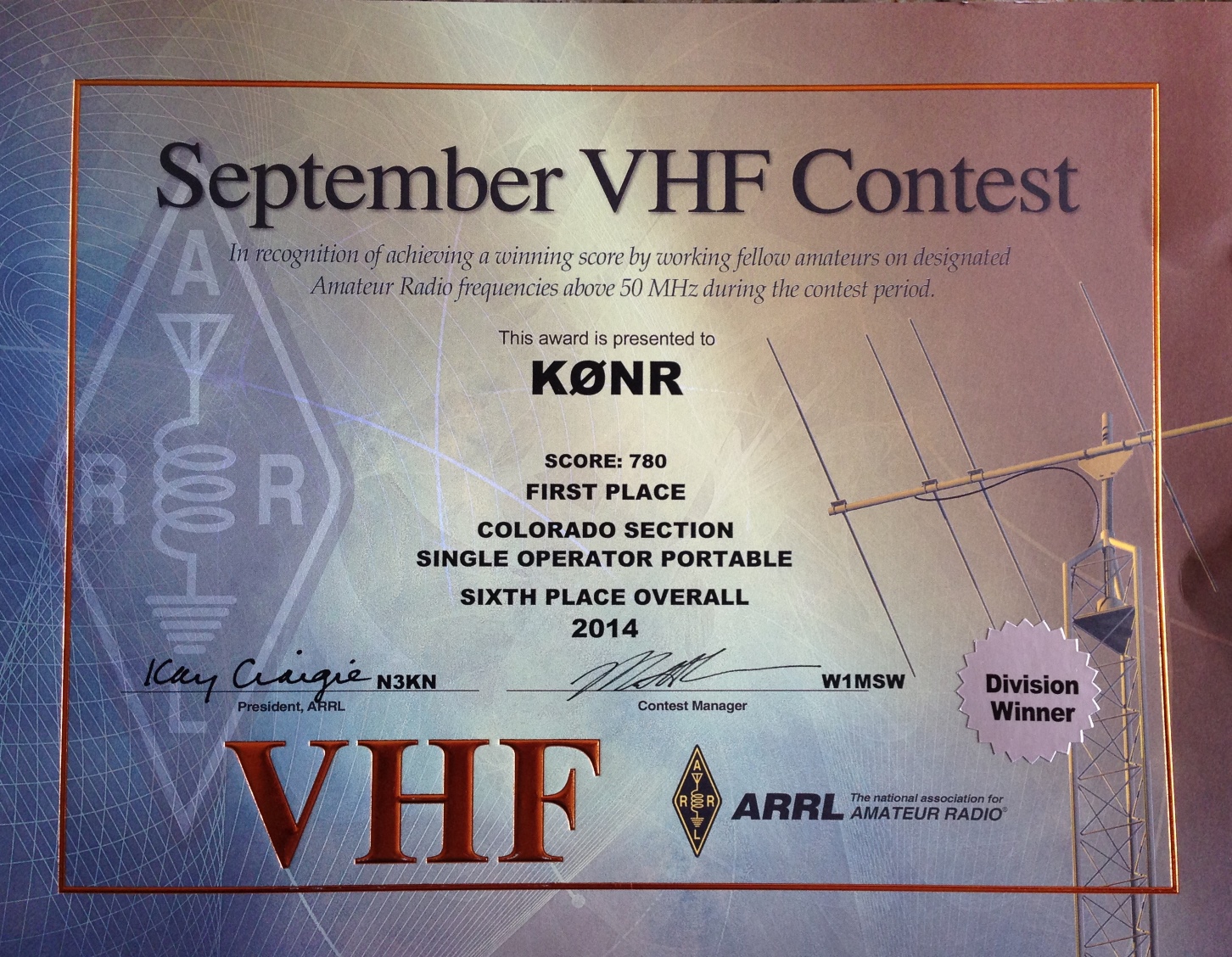 My blog posting said my score was 767 but the actual score was 780. Not a big score by any standard but not bad for ~4 hours of operating on a Saturday afternoon. As I suspected, this sets a new record for the Single Operator Portable category in the Colorado Section. What I did not expect is placing sixth in the overall contest (for my category). For the most part, this was just a really fun SOTA activation that included some VHF contest action.
Summary: The score doesn’t matter; any day having fun with ham radio is a good day.
73, Bob K0NR
The post 2014 September VHF Contest Certificate appeared first on The KØNR Radio Site.
Bob Witte, KØNR, is a regular contributor to AmateurRadio.com and writes from Colorado, USA. Contact him at [email protected].
ARRL Bulletin 25
ARLB025 FCC Universal Licensing System, Other Applications to be Down for Maintenance
ZCZC AG25
QST de W1AW
ARRL Bulletin 25 ARLB025
From ARRL Headquarters - Newington CT August 25, 2015
To all radio amateurs
SB QST ARL ARLB025
ARLB025 FCC Universal Licensing System, Other Applications to be Down for Maintenance
FCC website maintenance in early September will make the Universal Licensing System (ULS), the Electronic Comment Filing System (ECFS), the Electronic Document Management System (EDOCS) and other public applications unavailable for more than 5 days. The Commission said the outage will begin at 2200 UTC on Wednesday, September 2, and continue through the Labor Day weekend. The maintenance work should be completed by 1200 UTC on Tuesday, September 8. During the ULS outage, it will not be possible to file any Amateur Radio applications.
"[M]ost Commission resources normally accessible through the Commission's website, including access to all electronic filing systems and electronic dockets, will be inaccessible for the same period, with the exception of the Network Outage Reporting System (NORS), the Consumer Help Center (CHC), and the Disaster Information Reporting System (DIRS), which will remain available," an FCC Public Notice said on August 20. "The Commission's website will remain available, but with reduced content and limited search capabilities." According to the Public Notice, the FCC will follow its normal schedule of operation during the maintenance period, but voicemail will be offline, and most Commission staffers will not have access to e-mail. Static content webpages on the fcc.gov domain, such as the FCC consumer guides, should remain available during the outage.
The FCC will extend filing deadlines for all regulatory and enforcement filings that fall during the maintenance period. Filings due on September 2, 3, 4, or 8 now will be due on Wednesday, September 9. "Except for the due dates specified herein, we are not automatically extending the deadlines for any other comment or filing periods that will be running during this time period, but requests for extension of time will be considered consistent with the Commission's normal practice," the FCC Public Notice said. "To the extent the due dates for filings to which reply or responsive pleadings are allowed are affected by this Public Notice, the due dates for reply or responsive pleadings shall be extended by the same number of days."
In a blog, "Modernizing the FCC's IT," FCC CIO David Bray said that with the world and the technology we use are changing rapidly, "the information technology used by the Federal Communications Commission must change as well." Bray said the FCC has "made significant progress to upgrade and modernize our infrastructure, and we continue to work on modernizing the FCC's legacy IT systems with the resources we have available."
"We understand that this temporary downtime before and during the Labor Day Weekend may be inconvenient for some FCC stakeholders," Bray added.
NNNN /EX
72 de Larry W2LJ
QRP - When you care to send the very least!
Larry Makoski, W2LJ, is a regular contributor to AmateurRadio.com and writes from New Jersey, USA. Contact him at [email protected].
CLE197 Results
 It seems that our medium-frequency NDB CLE's (Co-ordinated Listening Event) go hand-in-hand with solar disturbances and wacky geomagnetic conditions. If you want to know when the next big geomagnetic upset will be, just check the date of the next CLE!
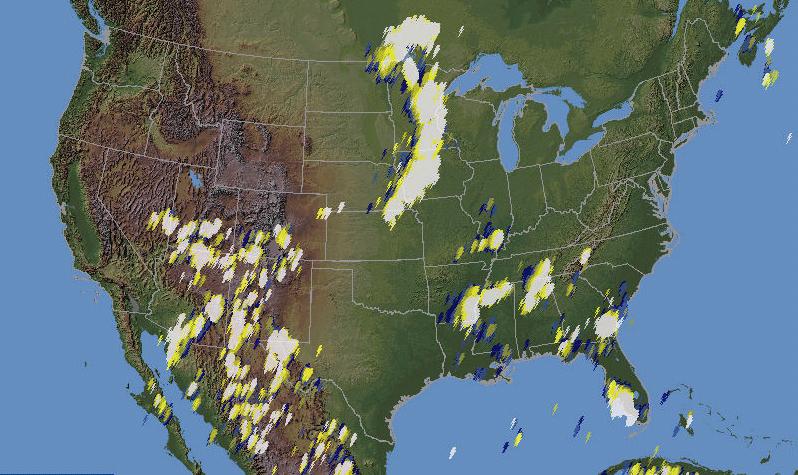
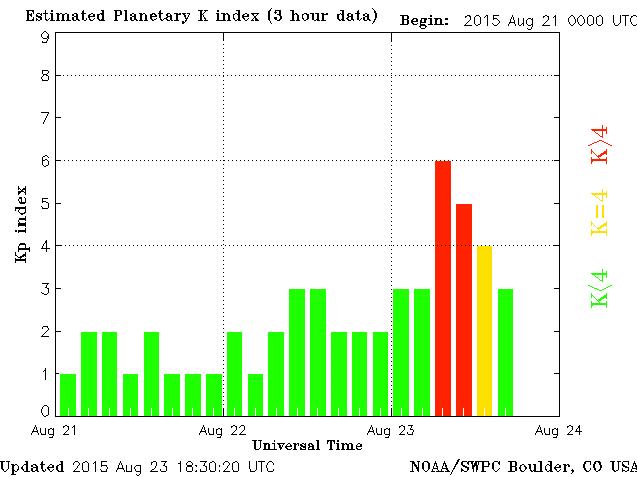
Along with a half dozen M-flares and auroral-producing 'K' indexes of 5-6, most of North America was blanketed with severe thunderstorm activity, always typical of this time of the year. In spite of the poor conditions, several signals did manage to find their way into my log. Sunday night provided the best conditions, with far less thunderstorm activity and a slight improvement in propagation. Saturday night's lightning map looked like this:
 |
| courtesy: http://thunderstorm.vaisala.com/explorer.html |
 |
| courtesy: http://www.noaa.gov/ |
Loggings in RED where made on Friday night, GREEN on Saturday night and BLUE on Sunday night.
All stations were heard on the Perseus SDR while using my LF 'inverted-L' resonated at 300KHz.
LOG:
DD UTC kHz Call mi Location
---------------------------------------------------------------------------
22 06:00 240 BVS 48 Burlington, WA, USA
22 10:00 241 YLL 648 Lloydminster Municipal Apt, AB, CAN
22 12:30 242 ZT 223 Port Hardy, BC, CAN
22 10:00 242 XC 342 Cranbrook, BC, CAN
22 10:00 244 TH 1166 Thompson, MB, CAN
23 07:00 245 YZE 1890 Gore Bay, ON, CAN
22 12:00 245 HNS 865 Haines, ALS
24 09:00 245 FS 1311 ROKKY - Sioux Falls, SD, USA
22 10:00 245 CRR 821 Circle Town County Apt, MT, USA
24 05:00 245 CB 1528 Cambridge Bay, NU, CAN
23 12:00 245 AVQ 1298 Marana Regional Apt, AZ, USA
22 09:00 246 ZXJ 517 Y'Taylor' Fort St. John, BC, CAN
22 09:00 248 ZZP 486 Dead Tree - Queen Charlotte Is, BC, CAN
22 09:00 248 QL 471 Lethbridge, AB, CAN
22 09:00 248 QH 811 Watson Lake, YT, CAN
22 09:00 250 FO 1002 Flin Flon Municipal Apt, MB, CAN
22 12:30 250 2J 220 Grand Forks Municipal Apt, BC, CAN
22 09:00 251 YCD 32 Nanaimo, BC, CAN
22 09:00 251 PWD 850 Plentywood, MT, USA
22 12:30 251 OSE 1708 Oscarville - Bethel Apt, ALS
23 11:30 251 AM 1445 PANDE - Amarillo, TX, USA
24 08:00 253 GB 1324 'Garno' Marshall, MN, USA
22 09:00 254 ZYC 441 Calgary, AB, CAN
22 09:00 254 SM 891 Fort Smith, AB, CAN
24 11:30 256 TQK 1322 Scott City Municipal Apt, KS, USA
22 12:30 256 LSO 188 Kelso - Rocky Point - Kelso, WA, USA
22 12:00 256 EB 537 Namao - CFB Edmonton, AB, CAN
22 09:00 257 XE 757 Saskatoon, SK, CAN
24 09:00 257 SAZ 1329 Staples, MN, USA
22 09:00 257 LW 192 Kelowna - Wood Lake, BC, CAN
22 09:00 258 ZSJ 1324 Sandy Lake Apt, ON, CAN
23 08:00 420 FQ 1422 MONTZ - East Chain, MN, USA
24 09:00 428 POH 1433 Pocahontas Municipal Apt, IA, USA
22 12:00 429 BTS 1571 Wood River - Dillingham, ALS
24 09:00 434 SLB 1410 Storm Lake Municipal Apt, IA, USA
------------------------------------------------------------------------------------
Thankfully, by this time next month and into October, quieter nights and better propagation will prevail ... fall often produces the best propagation of the year and has always been my favorite time of the year, outdoors and at the dials.
Steve McDonald, VE7SL, is a regular contributor to AmateurRadio.com and writes from British Columbia, Canada. Contact him at [email protected].
 Ham Radio Deluxe |
 W5SWL Electronics |
 Ham Radio Prep |
 KB3IFH QSL Cards  Hip Ham Shirts  HamRadioAuctions HamRadioAuctions Reliance Antennas Reliance Antennas Enigma Shop Enigma Shop |  morseDX  Ni4L Antennas  R&L Electronics R&L Electronics antennas.us antennas.us QRV QRV |
- Matt W1MST, Managing Editor
