 |
 Our hobby – very diverse
 19 October 2015 | by
 There can be few hobbies that embrace so much as amateur radio. Some enjoy QRP, often making their own simple gear and each QSO is a thrill. Others spend a great deal of money on rigs, towers and antennas and enjoy just talking to others around the world. Some like the challenge of microwaves or optical. The list is endless.
We are lucky that our hobby can be enjoyed by all ages and abilities and in so many different ways. It is very easy to be critical of how others enjoy the hobby – I know as I am guilty of this! We should be thankful we are a “broad church” and allow each of us to enjoy the hobby in the way that suits us best. I used to enjoy building and field work, but because of my stroke I have had to adapt. Thankfully, I enjoy the hobby as much as ever.

Roger Lapthorn, G3XBM, is a regular contributor to AmateurRadio.com and writes from Cambridge, England.
Xiegu X108G Outdoor Version at JOTA 2015
Took the X108G Outdoor Version out to JOTA this weekend outdoors near Neys Provincial Park near Marathon, Ontario, temps during the day were 3c and at night was -4c first night and second night was -7c. We operated from a dining tent outside and was running battery power and a windom at about 15′.
We had light snow and rain during our outing and Saturday morning we did a hike to The Crack which is a large path through the rugged rock in the area.
http://superiorhiking.com/the-crack-in-the-rock/
Here are a few pictures of the weekend and a few links to YouTube videos of the X108G in action:


Was a great weekend out in the bush and having the 1st Thunder Scout Troop again take part in JOTA
Fred Lesnick, VE3FAL, is a regular contributor to AmateurRadio.com and writes from Thunder Bay Ontario, Canada. Contact him at [email protected].
GQRP / Kanga receiver

I was sent a kit this week by Kanga UK, who supplied me a new regen receiver. The kit in question makes its debut at the GQRP convention at Rishworth UK this week. Its appearance is marked by the annual buildathon.
The buildathon is a great way for anyone who has an interest in electronics, radio or has indeed has no experience in construction, build a kit and walk away with a working radio. The step by step guide we supply with the kits allows easy installation of the components and instant gratification.
I wrote the instructions for this kit and whilst doing so, I managed to video the whole build. The video is sped up, but the build actually took about 2 hours, not rushing and includes the videoing & taking pictures.
Dan Trudgian, MØTGN, is a regular contributor to AmateurRadio.com and writes from Wiltshire, England. He's a radio nut, IT guru, general good guy and an all round good egg. Contact him him here.
GQRP / Kanga receiver
I was sent a kit this week by Kanga UK, who supplied me a new regen receiver. The kit in question makes its debut at the GQRP convention at Rishworth UK this week. Its appearance is marked by the annual buildathon.
The buildathon is a great way for anyone who has an interest in electronics, radio or has indeed has no experience in construction, build a kit and walk away with a working radio. The step by step guide we supply with the kits allows easy installation of the components and instant gratification.
I wrote the instructions for this kit and whilst doing so, I managed to video the whole build. The video is sped up, but the build actually took about 2 hours, not rushing and includes the videoing & taking pictures.
Dan Trudgian, MØTGN, is a regular contributor to AmateurRadio.com and writes from Wiltshire, England. He's a radio nut, IT guru, general good guy and an all round good egg. Contact him him here.
A wonderful weekend of JOTA
But this week I had to get my head straight since the South Kesteven ARS (of which I am Chairman) were involved for the second year in the Scouting Jamboree on the Air (JOTA) weekend operating GB5FSG for the 1st Foston Scouts.
But before that we were also involved with another local scouting group, the 1st Barrowby where we assisted in a class of 12 Cubs with their communication badge.
Together with Stewart (M0SDM), Sean (2E0ENN) and Konrad (2E0KVF) we spent an evening giving them a introduction to amateur radio. Konrad who is an ex-scout leader explained the hobby, Stewart and Sean helped them pass messages via a radio. There was also a timely visible pass of the International Space Station during the evening and I hoped they might be able to see it while I demonstrated transmitting APRS messages via the onboard digipeater.
Using my new dual band Yagi, laptop and FT857D in the boot of my car I did successfully get messages digipeated and igated however the cloud and rain prevented the cubs seeing the ISS pass overhead (I put the coordinates in slightly wrong, so are shown slightly south of where we were)
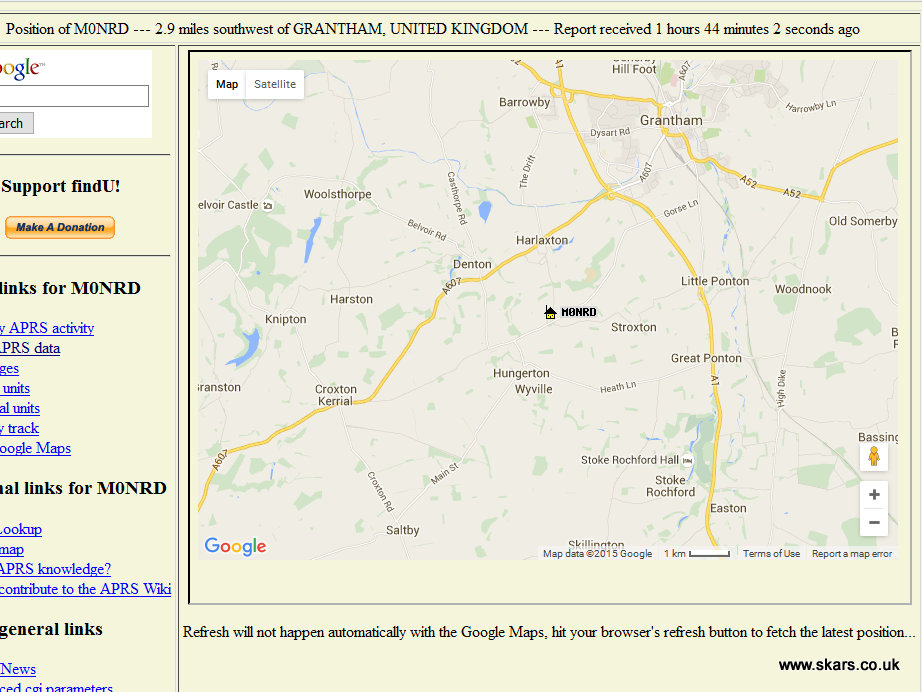

The evening was a great success and the enthusiasm shown by the Scout leaders hopefully means SKARS will be involved in more activities for the Barrowby Scout group. Interestingly we were not the first local club they approached to assist but after they were given the cold shoulder by them we were happy to take up the challenge. The Barrowby group were also interested in being involved in the Jamboree on the Air (JOTA) next year.
So on to the main event this week, the GB5FSG JOTA station, operated by Stewart, Sean and myself. It is exactly a year since I gained my full licence and this was my first Notice of Variation for a special event station, last year under the previous chairman we had run GB2FFC with some success but this year we hoped to improve the experience for the Cubs/Beavers and Scouts.
Firstly we had a much improved antenna installation, with Stewart's Land Rover and impressive pushup mast we had an excellent OCFD dipole, resonant on several bands including 40m along with another smaller pole holding up an end fed long wire for the datamode station. We also put up a collinear for a 2m VHF station.
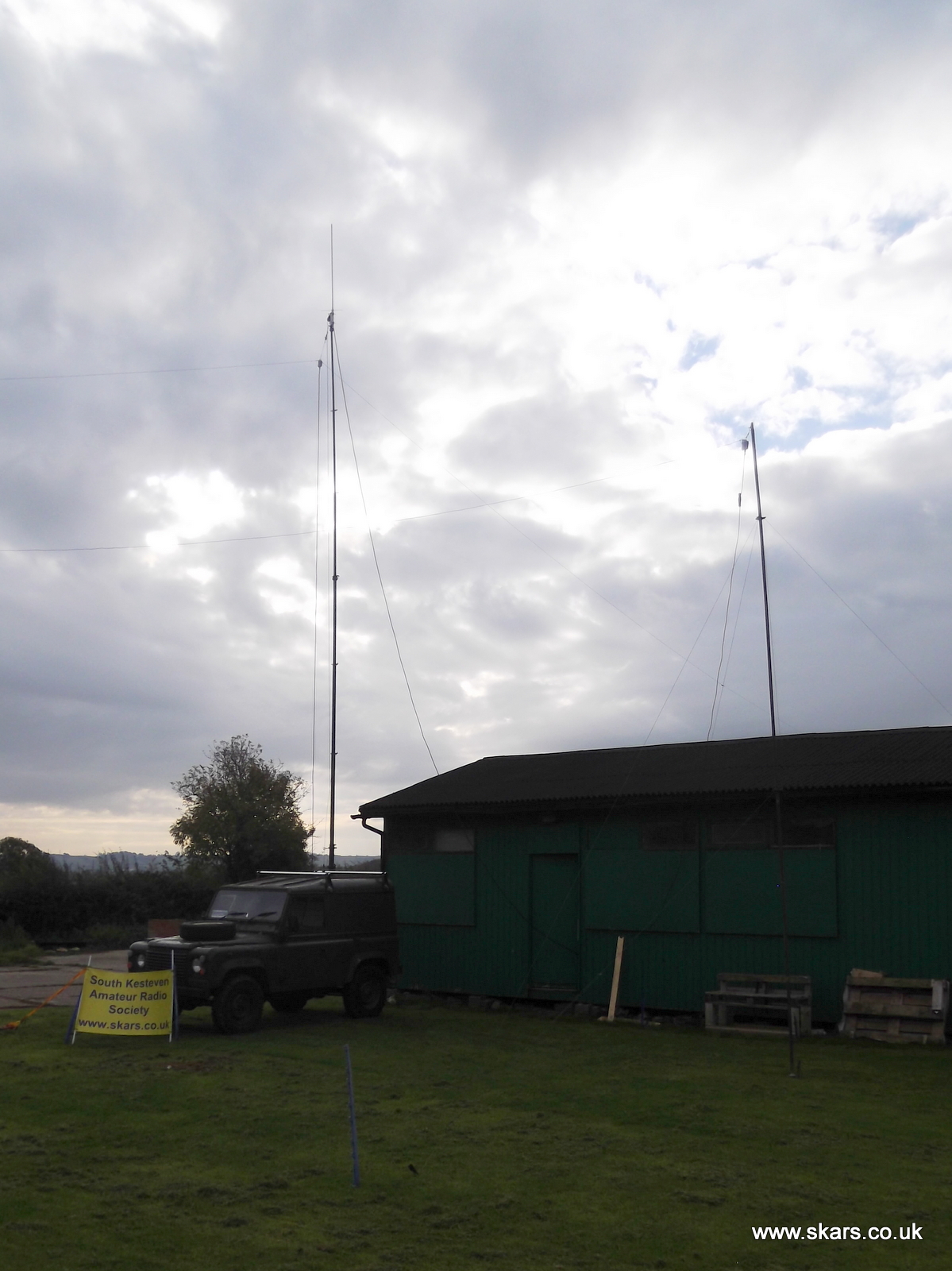
Last year we were hampered by the noise of excitable children in the main room of the scout hut which made operating and hearing contacts difficult. This year we asked for some separation from the hubbub and had planned to use a tent. Instead we setup in the storage area in the back of the hut which proved ideal as it allowed us to control the number of children and allowed easier working conditions - it was a little chilly but much warmer than a tent would have been.
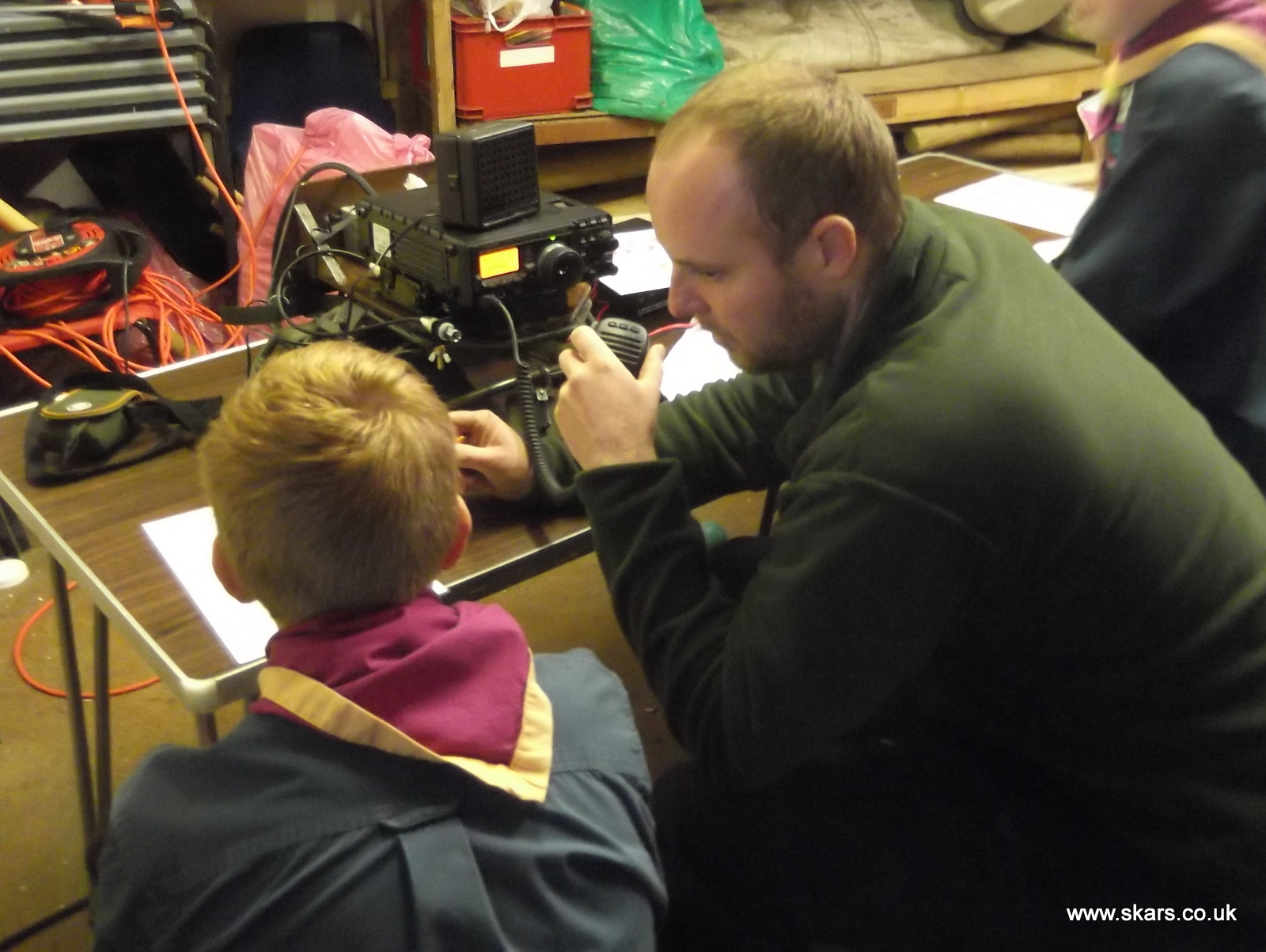
On Saturday we used Stewart's FT897 as the main HF rig, Sean operated a 2m meter station with a number of contacts. Like last year I had my FT857 operating a datamode (primarily PSK) but a damaged feeder issue curtailed this for most of the day and we soon concentrated on the HF SSB voice contact as conditions were good and the band was busy with other JOTA stations.
In keeping with the aims of JOTA we didn't chase numbers instead we had some lengthy quality contacts, including a marathon 30 minute plus contact with I believe was GB2WSG the 2nd Wellington Scout Group with lots of two-way greeting messages being sent to really give the children a full experience of using the radio.
The day before I had quickly constructed a Morse code oscillator (since I didn't have one) using an arduino board and an old computer speaker for added volume and this proved popular as the children tapped out their own names, their friends names, call signs, their ages and various words.
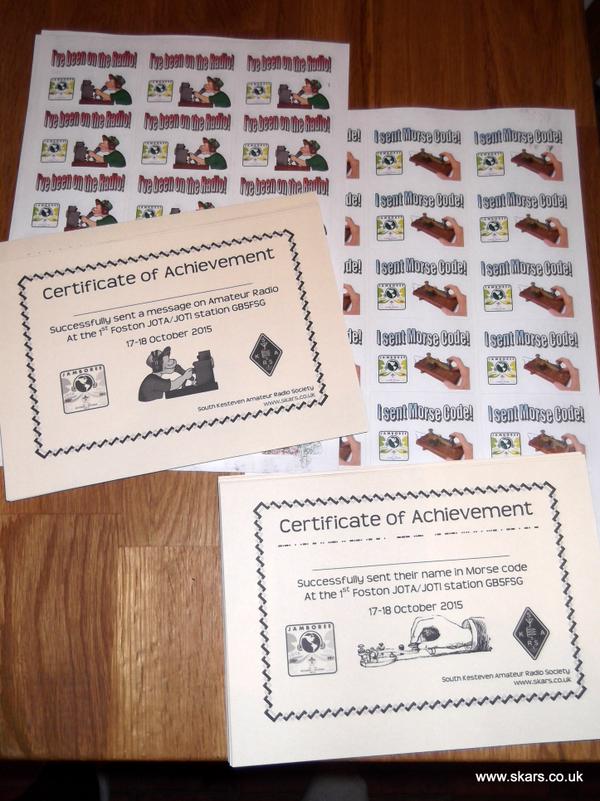
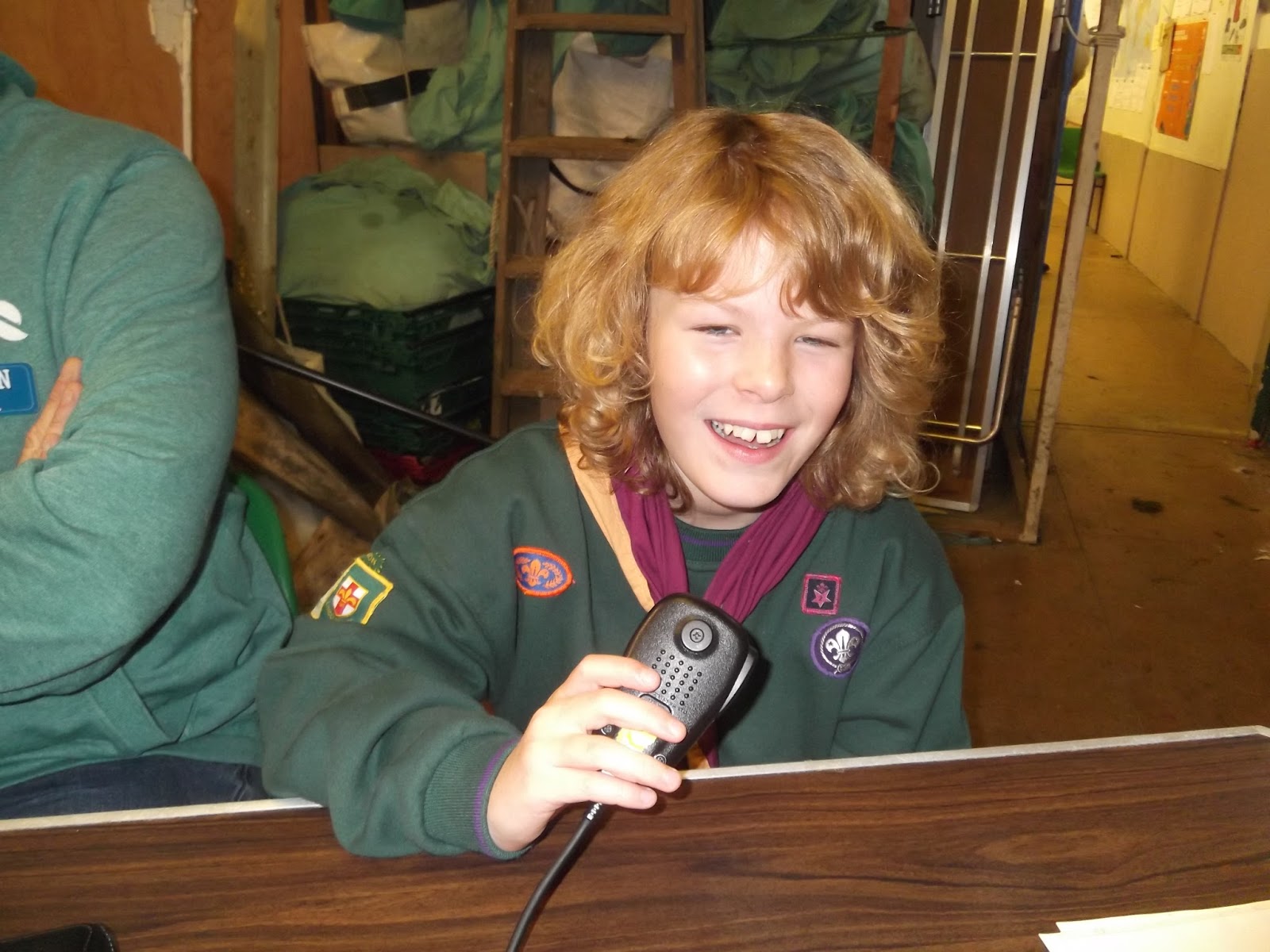
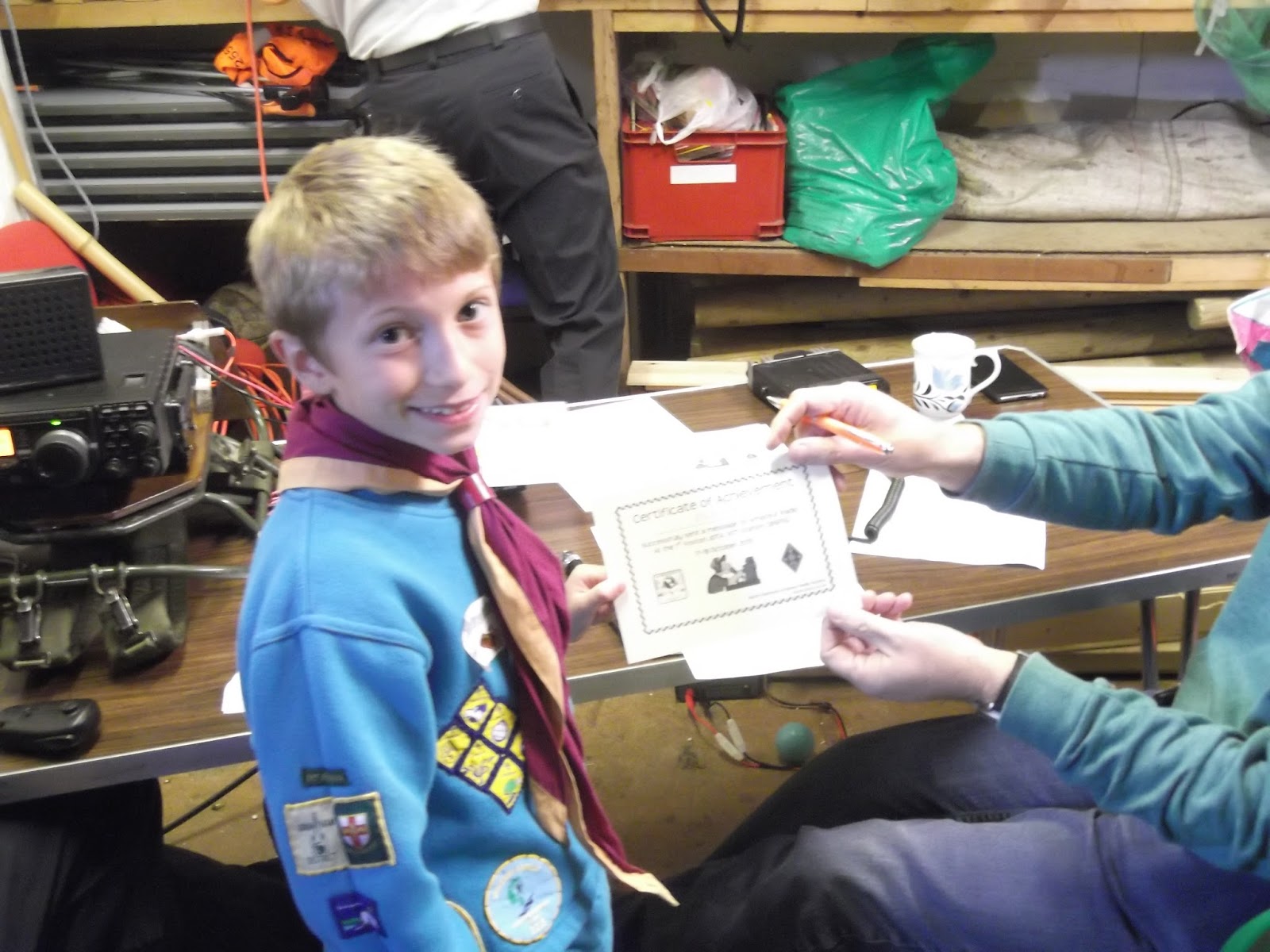
Working with the Scouts this week has really was a therapeutic exercise for my soul and made me glad I got licenced and was able to get involved with this. I am not naturally comfortable with children, since I am not a parent. But it was rewarding seeing the look of wonder on some of their faces as they passed messages.. like it was magic ;-)
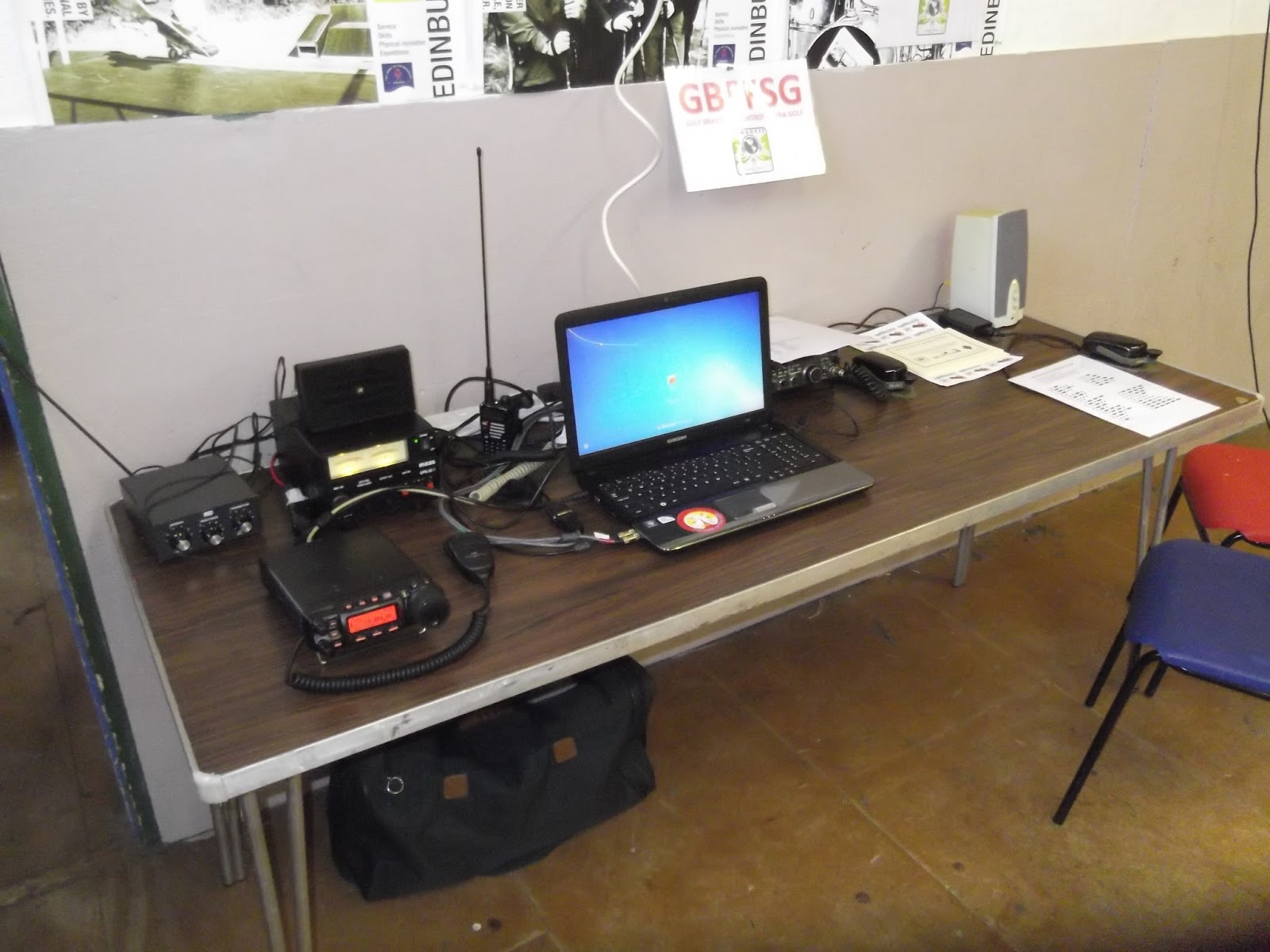
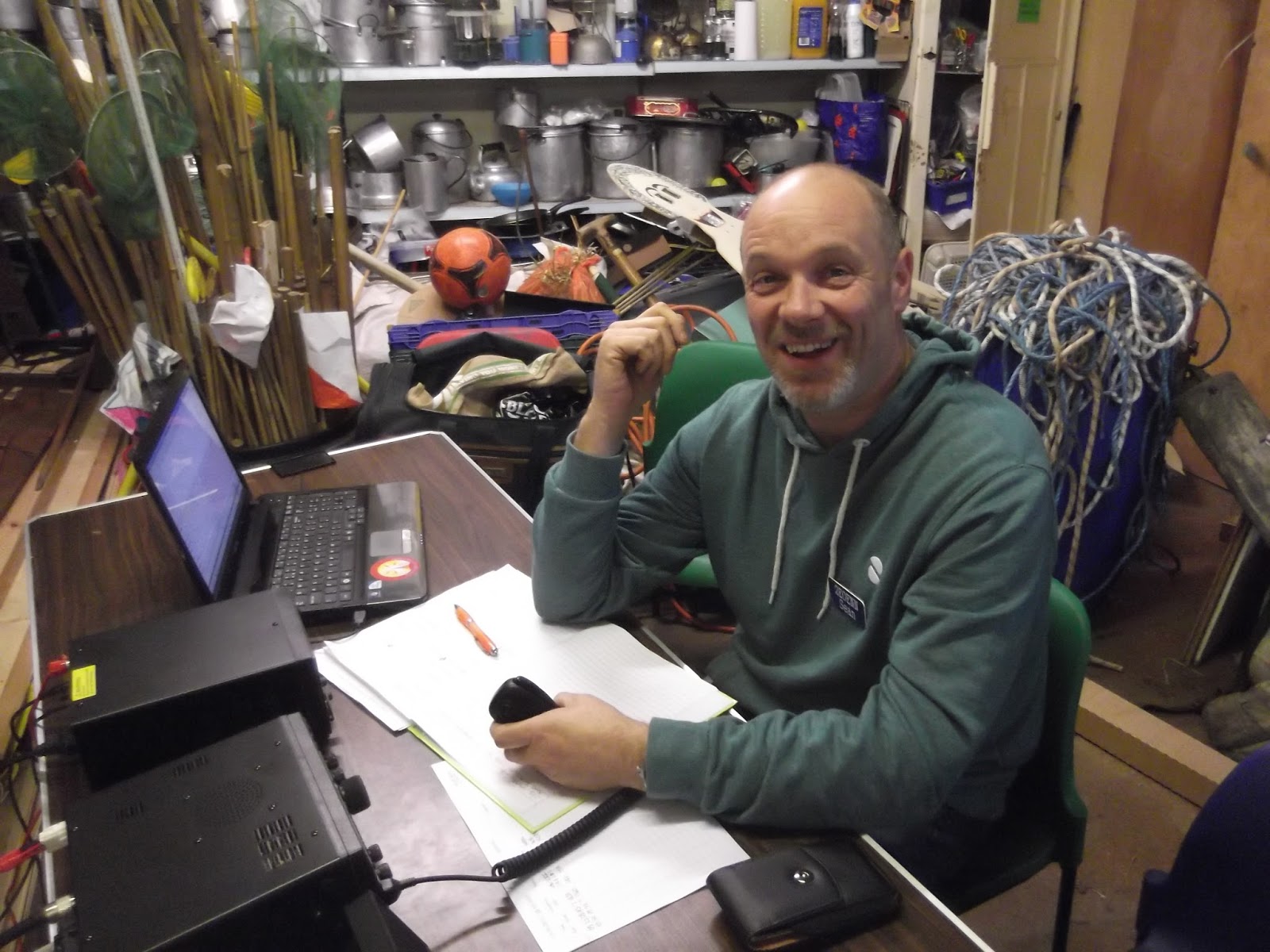
Andrew Garratt, MØNRD, is a regular contributor to AmateurRadio.com and writes from East Midlands, England. Contact him at [email protected].
A wonderful weekend of JOTA
But this week I had to get my head straight since the South Kesteven ARS (of which I am Chairman) were involved for the second year in the Scouting Jamboree on the Air (JOTA) weekend operating GB5FSG for the 1st Foston Scouts.
But before that we were also involved with another local scouting group, the 1st Barrowby where we assisted in a class of 12 Cubs with their communication badge.
Together with Stewart (M0SDM), Sean (2E0ENN) and Konrad (2E0KVF) we spent an evening giving them a introduction to amateur radio. Konrad who is an ex-scout leader explained the hobby, Stewart and Sean helped them pass messages via a radio. There was also a timely visible pass of the International Space Station during the evening and I hoped they might be able to see it while I demonstrated transmitting APRS messages via the onboard digipeater.
Using my new dual band Yagi, laptop and FT857D in the boot of my car I did successfully get messages digipeated and igated however the cloud and rain prevented the cubs seeing the ISS pass overhead (I put the coordinates in slightly wrong, so are shown slightly south of where we were)
The evening was a great success and the enthusiasm shown by the Scout leaders hopefully means SKARS will be involved in more activities for the Barrowby Scout group. Interestingly we were not the first local club they approached to assist but after they were given the cold shoulder by them we were happy to take up the challenge. The Barrowby group were also interested in being involved in the Jamboree on the Air (JOTA) next year.
So on to the main event this week, the GB5FSG JOTA station, operated by Stewart, Sean and myself. It is exactly a year since I gained my full licence and this was my first Notice of Variation for a special event station, last year under the previous chairman we had run GB2FFC with some success but this year we hoped to improve the experience for the Cubs/Beavers and Scouts.
Firstly we had a much improved antenna installation, with Stewart's Land Rover and impressive pushup mast we had an excellent OCFD dipole, resonant on several bands including 40m along with another smaller pole holding up an end fed long wire for the datamode station. We also put up a collinear for a 2m VHF station.
Last year we were hampered by the noise of excitable children in the main room of the scout hut which made operating and hearing contacts difficult. This year we asked for some separation from the hubbub and had planned to use a tent. Instead we setup in the storage area in the back of the hut which proved ideal as it allowed us to control the number of children and allowed easier working conditions - it was a little chilly but much warmer than a tent would have been.
On Saturday we used Stewart's FT897 as the main HF rig, Sean operated a 2m meter station with a number of contacts. Like last year I had my FT857 operating a datamode (primarily PSK) but a damaged feeder issue curtailed this for most of the day and we soon concentrated on the HF SSB voice contact as conditions were good and the band was busy with other JOTA stations.
In keeping with the aims of JOTA we didn't chase numbers instead we had some lengthy quality contacts, including a marathon 30 minute plus contact with I believe was GB2WSG the 2nd Wellington Scout Group with lots of two-way greeting messages being sent to really give the children a full experience of using the radio.
The day before I had quickly constructed a Morse code oscillator (since I didn't have one) using an arduino board and an old computer speaker for added volume and this proved popular as the children tapped out their own names, their friends names, call signs, their ages and various words.
Working with the Scouts this week has really was a therapeutic exercise for my soul and made me glad I got licenced and was able to get involved with this. I am not naturally comfortable with children, since I am not a parent. But it was rewarding seeing the look of wonder on some of their faces as they passed messages.. like it was magic ;-)
Andrew Garratt, MØNRD, is a regular contributor to AmateurRadio.com and writes from East Midlands, England. Contact him at [email protected].
The ‘Stew’
 Last night saw the October 'pre-Stew' 160 m CW contest. Technically, it's supposed to be a bit of a warm-up for the real 'Stew Perry Contest' (SP) in late December but it 's really just an excuse for 160m diehards to get back on their favorite winter-time band a bit earlier than normal. After a noisy summer with few DX opportunities, most topbanders are chomping at the bit for any kind of 160m action!
The 'Stew' is my favorite contest of the year and is probably one of the fairest in terms of scoring ... unlike many contests that favor location and ham density, everyone is on a level playing field in the SP. The contest exchange consists of Grid Locators only, and the number of points collected for each QSO is based upon the calculated distance between the two respective grids ... nothing could be fairer and it would be wonderful to see other contests adopt this scoring format.
Stew Perry, W1BB, was a very early proponent of the 'gentleman's' band and was instrumental in popularizing its recognition as a challenging part of the spectrum ... a part very capable of DX opportunities for those that liked to work for their reward. He organized regular Trans-Atlantic DX tests back in the 30's when few saw any merit in the 'topband' other than as a local ragchew band for phone operators. He produced a regular 'DX Bulletin', mailed free-of-charge to interested 160m operators, providing news and information on 160m activities around the world. He had a wonderful QTH, with his 160m station set up at a local lighthouse on the edge of the Atlantic ocean. Those that knew W1BB described him as a true 'gentleman', always willing to help out newcomers and share his vast knowledge of topband quirks with others. In 1976, W1BB was awarded 160m DXCC #1 ... proof that 160m was more than just a band for late night ragchewers.
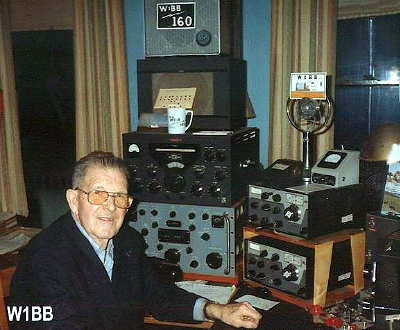 |
| courtesy: http://www.k1zm.com/w1bb |
If you've not tried 160m, the winter months offer several wonderful contesting opportunities ... the ARRL 160m CW test in December, followed by the real Stew Perry at the end of the month. To keep things rolling, January brings CQ's 160m CW weekend.
So there's still time to throw up an antenna and get your feet wet on the coming topband action. Perhaps a start on your 160m W.A.S. award ... a challenging place to begin and one that would likely bring a broad smile to 'Mr. 160' himself, Stew Perry.
Steve McDonald, VE7SL, is a regular contributor to AmateurRadio.com and writes from British Columbia, Canada. Contact him at [email protected].
 Ham Radio Deluxe |
 W5SWL Electronics |
 Ham Radio Prep |
 KB3IFH QSL Cards  Hip Ham Shirts  HamRadioAuctions HamRadioAuctions Reliance Antennas Reliance Antennas Enigma Shop Enigma Shop |  morseDX  Ni4L Antennas  R&L Electronics R&L Electronics antennas.us antennas.us QRV QRV |
- Matt W1MST, Managing Editor
