 |
 Amateur Radio Weekly – Issue 82
 24 October 2015 | by
The Yellow Box of Power
The Yellow Box of Power is a very yellow Pelican box (size 1550) loaded up with 36 amp-hours of 12-volt battery capacity that can be charged by way of normal 120V household power or through one or more solar panels.
GAD.net
Use of 146.52 MHz FM simplex frequency cleared for ARRL contests
The committee felt that permitting the use of 146.52 MHz would allow new/curious contesters possessing only FM-mode radios to stumble upon more contacts.
ARRL
How do lacquered boards stand up over time?
A query I hear from time to time about using copper-plated boards for construction is what they look like after a few months or years.
AA7EE
Unscientific spectral analysis of two Baofeng radios
This transmitter is all over the place. Tons of spurious emissions, some as little as 30dB down from the fundamental. This transmitter is definitely misbehaving or not properly filtered.
KD8TWG
Digital Voice Balkanization
Wouldn’t it be cool if we had one digital communications format for the VHF/UHF amateur bands?
AmateurRadio.com
All your modem are belong to us
Closed source and proprietary chipsets are nasty, a glaring problem in a cool geeky field that is otherwise open source. It’s got to be fixed.
ROWETEL
Spoken command injection on Siri, Google
It is possible to trigger Siri remotely by emitting an AM-modulated signal containing voice commands at 103 MHz.
University of Pennsylvania
Try FSQ for fast, simple QSOs
FSQ is a Fast Simple QSO mode designed specifically for HF. It works well under NVIS and sunrise/sunset conditions on the lower bands, and also works well for short skip and grey-line on higher bands.
KB6NU
Scripting Fldigi on OS X
With excellent support for executing external scripts, it is easy to set up Fldigi to log all recorded QSOs directly to one of the three major OS X logbook programs.
Mac Ham Radio
Good SWR and antenna resonance
Standing Wave Ratio (SWR) is an important concept that describes how good of a match exists between a transceiver and antenna system.
Ham Radio School
Video
VHF propagation timelapse
This is a timelapse of NG0E’s APRS VHF Propagation monitor.
YouTube
Fox 1A satellite beacon
“Hi, this is amateur radio satellite Fox 1.”
YouTube
Amateur Radio Weekly is curated by Cale Mooth K4HCK. Sign up free to receive ham radio's most relevant news, projects, technology and events by e-mail each week at http://www.hamweekly.com.
Amateur Radio Newsline Report 1982 October 23, 2015
- HAMS MOBILIZE IN STORM-STRUCK PHILIPPINES
- IARU: KEEPING AMATEUR RADIO YOUNG AND GROWING
- CELEBRATING ARTHUR COLLINS
- DEADLINE FOR ARISS CONTACTS IS NOV. 1
- UK HAM LICENSES,, GOING, GOING, GONE
- HAMS ARE BIG WHEELS AT BICYCLE FEST
- UN CELEBRATING 70
- UNPLUGGING THE HOTELS IN CALIFORNIA'S SAFETY NET
- A 'FIRST' FOR NEPAL
- INDIA: ELECTION HISTORY REPEATS ITSELF
- THE WORLD OF DX
- SCOUTING FOR ANSWERS
DX Spray …. it works!
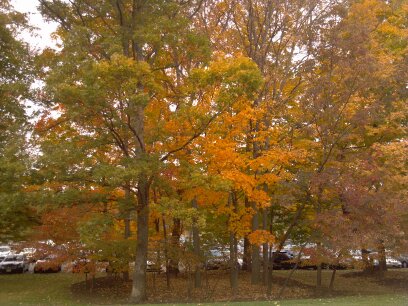

Not bad for a parking lot view, eh?
As I was setting up the station, I noticed that the "stick" part of my Buddistick was ......well, rather sticky. I happened to have a can of this in the trunk, so I applied a bit to the whip and then proceeded to rub it in using some 3" gauze bandage from my First Aid kit. Hey, you use what's on hand!
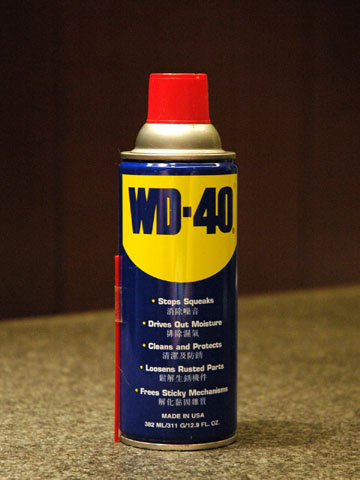
Little did I know that WD-40 actually stands for "Whopping DX - 40 Meters". I didn't get on 40 Meters, but the can didn't know that, and the DX Spray seemed to work equally well on 15 and 17 Meters. In short order, after applying this miracle spray to my Buddistick, I worked T47GDXC, SM3PZG, RA1AOB and TF4X all in the space of about 15 minutes.
Who knew? If I was aware of what WD-40 really stood for, I would have been applying it to my antennas years ago! Just think ..... all the wasted time, all the wasted opportunities! I could be on the DXCC Honor Roll by now.
Some would attribute my success today to the sun and something called "improved band conditions". But I, for one, know better. I have learned the secret of the magic "DX Spray".
Sob ....... weep!
72 de Larry W2LJ
QRP - When you care to send the very least!
Larry Makoski, W2LJ, is a regular contributor to AmateurRadio.com and writes from New Jersey, USA. Contact him at [email protected].
Adding a receive antenna
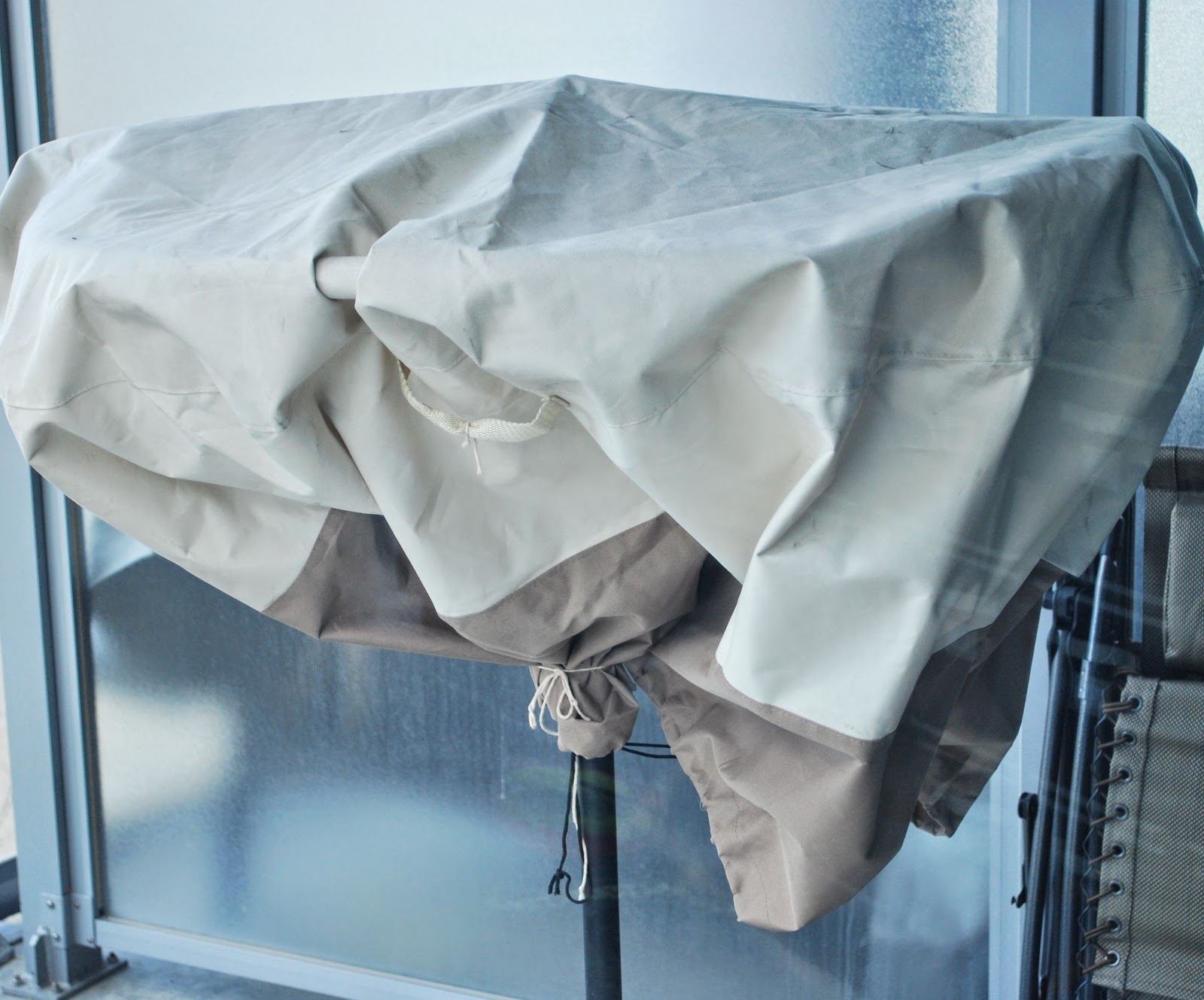 |
| My stealth MFJ 1788 |
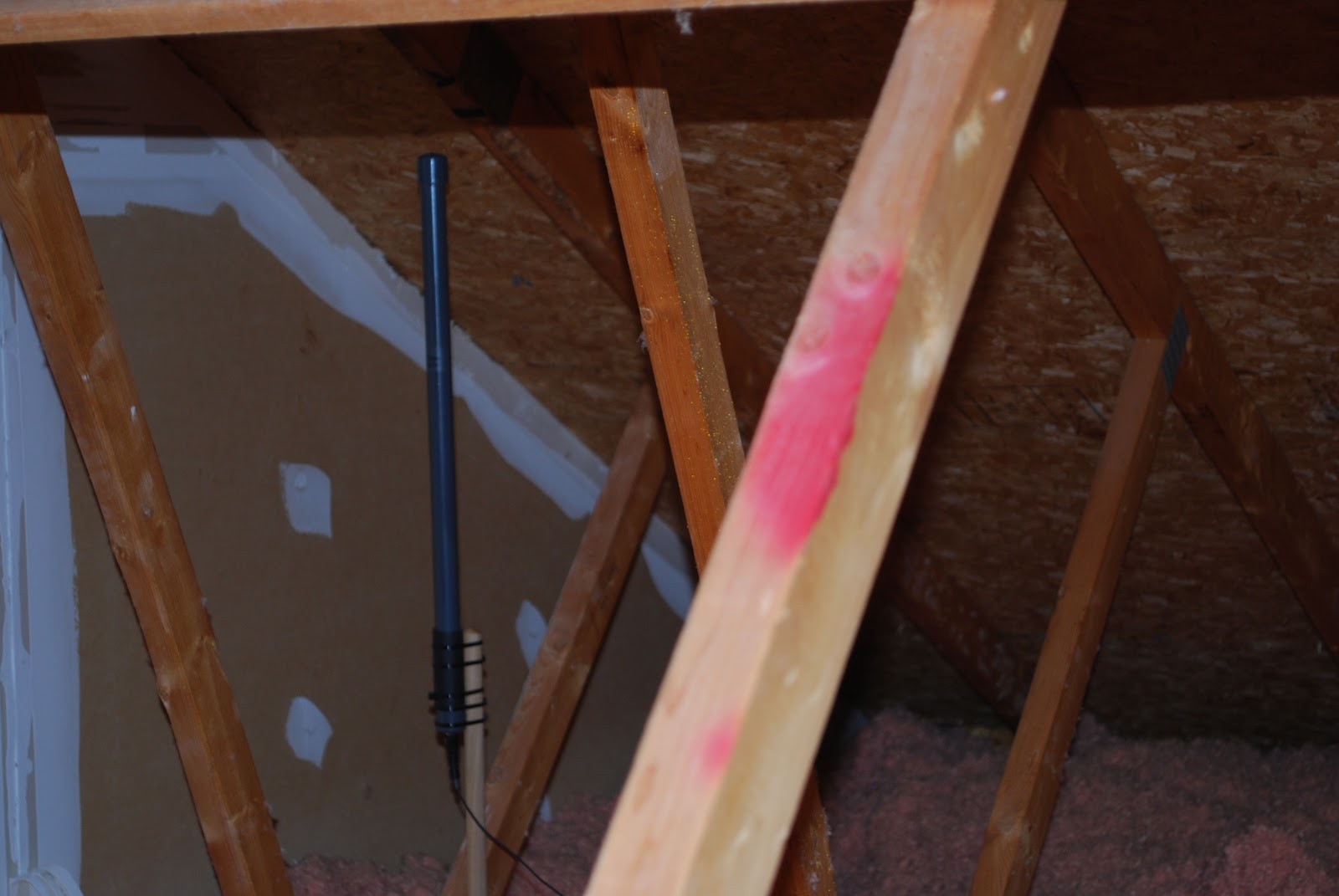 |
| LF Engineering H-900 that was sold |
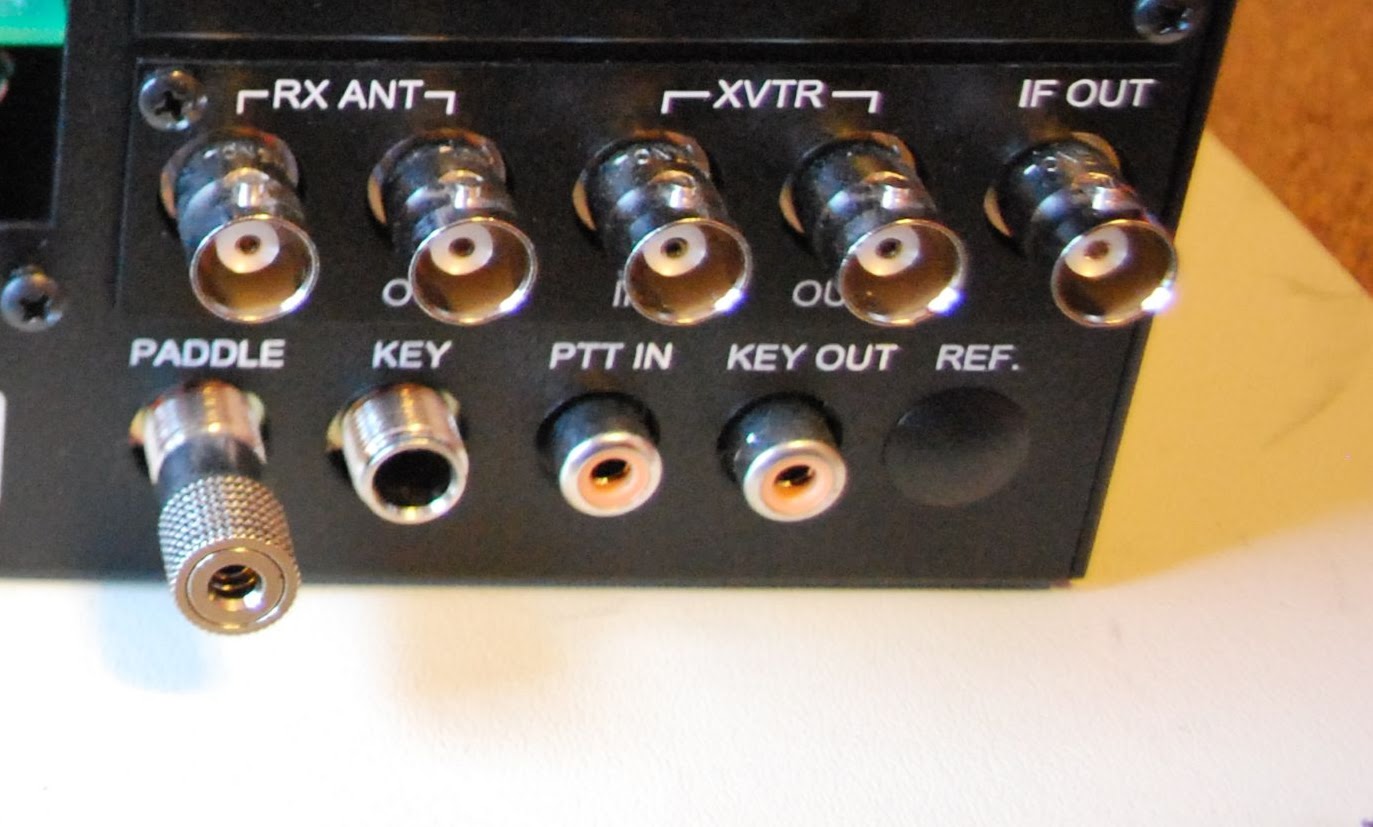 |
| KVX3 board in K3 |
Mike Weir, VE9KK, is a regular contributor to AmateurRadio.com and writes from New Brunswick, Canada. Contact him at [email protected].
The long drive
I’ll readily admit that I don’t mind driving. I’ve been fortunate to own some pretty nice vehicles. My latest is a Ford F150 that has my Diamond VHF/UHF antenna mounted at the back of the the bed and my ICOM 2820 D-STAR radio nicely tucked into the console. When an impromptu trip came up Tuesday, instead of taking the ultra fuel efficient Honda, I took the truck. The ride is so much more comfortable, I enjoy riding up higher on the road, and of course the radio is much better than any temporary installation I can swing into the Honda.
It’s around 9pm and no one is around on the repeaters. This isn’t a route I travel very often so maybe I’m not on the active repeaters. I tuned over to 146.52 simplex. A quick call (not a long winded CQ) returns no takers. So wait a few minutes and try again. Just a simple call…”KG9DW mobile on I-39 southbound, listening on 52″. And back comes a fine OM – WA9CEG, John in LaSalle. I’m about 20 miles north of LaSalle, so I know John has a fine station. Even in the flat lands of Illinois, working a mobile station 20 miles away does require more than a Ringo Ranger on a 10 foot pole.
Even at highway speeds, our QSO lasted a good 30 minutes. We talked about what we do (or in John’s case did) for a living, family, radio, the weather…everything except for medical history! John worked in a steel mill and then owned an ice cream shop before retiring. His 6 kids were spread out about the area, with one living about 10 miles from my home QTH. We spoke of friends, common areas we’ve traveled, and then of happiness. We talked about things John was proud of, and the impacts he has had on others.
Talking with such a fine man, it was hard not to remember my own grandfather who died last year. The voice was similar, and so were some of the stories and advice. It was even harder not to think of my friend Fred Slayback who passed away earlier in the day after a long health struggle. As I as headed further south, I said my 73s before I ran out of range. John was still running a strong S5 signal as I fell over the hill for the flat run into McLean county. I hope to meet John on the air again someday, but if I don’t I’ll certainly remember our QSO on a rainy fall night in Illinois.
They say that it’s all about the journey and not the destination. Likewise, in ham radio it isn’t about the radio or antenna; it isn’t about the mode or technology. It’s about the conversations.
Michael Brown, KG9DW, is a regular contributor to AmateurRadio.com and writes from Illinois, USA. Contact him at [email protected].
The long drive
I’ll readily admit that I don’t mind driving. I’ve been fortunate to own some pretty nice vehicles. My latest is a Ford F150 that has my Diamond VHF/UHF antenna mounted at the back of the the bed and my ICOM 2820 D-STAR radio nicely tucked into the console. When an impromptu trip came up Tuesday, instead of taking the ultra fuel efficient Honda, I took the truck. The ride is so much more comfortable, I enjoy riding up higher on the road, and of course the radio is much better than any temporary installation I can swing into the Honda.
It’s around 9pm and no one is around on the repeaters. This isn’t a route I travel very often so maybe I’m not on the active repeaters. I tuned over to 146.52 simplex. A quick call (not a long winded CQ) returns no takers. So wait a few minutes and try again. Just a simple call…”KG9DW mobile on I-39 southbound, listening on 52″. And back comes a fine OM – WA9CEG, John in LaSalle. I’m about 20 miles north of LaSalle, so I know John has a fine station. Even in the flat lands of Illinois, working a mobile station 20 miles away does require more than a Ringo Ranger on a 10 foot pole.
Even at highway speeds, our QSO lasted a good 30 minutes. We talked about what we do (or in John’s case did) for a living, family, radio, the weather…everything except for medical history! John worked in a steel mill and then owned an ice cream shop before retiring. His 6 kids were spread out about the area, with one living about 10 miles from my home QTH. We spoke of friends, common areas we’ve traveled, and then of happiness. We talked about things John was proud of, and the impacts he has had on others.
Talking with such a fine man, it was hard not to remember my own grandfather who died last year. The voice was similar, and so were some of the stories and advice. It was even harder not to think of my friend Fred Slayback who passed away earlier in the day after a long health struggle. As I as headed further south, I said my 73s before I ran out of range. John was still running a strong S5 signal as I fell over the hill for the flat run into McLean county. I hope to meet John on the air again someday, but if I don’t I’ll certainly remember our QSO on a rainy fall night in Illinois.
They say that it’s all about the journey and not the destination. Likewise, in ham radio it isn’t about the radio or antenna; it isn’t about the mode or technology. It’s about the conversations.
Michael Brown, KG9DW, is a regular contributor to AmateurRadio.com and writes from Illinois, USA. Contact him at [email protected].
Autumn = projects time
I usually cycle to work. Wow I hear you say, what a guy….Well thanks but I hadn’t finished the introduction. Cycling means you notice the seasons a lot more than if you drive. Its still the season for shorts and after some very mild days we’re definitely heading towards fully developed autumn. So what?
Well its time to spend fewer hours outside (because you’ll be blown across the street) and more time preparing for those murky days when projects are preferable to souwesters.
This year I have got a couple of PCB’s that need populating. 1 of them is the Budd Churchward Morseduino. The other is the Minima Transceiver.
Budd created a neat little barebones arduino and morse code decoder and he kindly gave me the gerbers. It is essentially a very simple device that will allow audio to pass through and it will give a reasonable decode of CW. I say reasonable because it is never going to be as good as your purists ears but it’ll help get the less talented on the air (hopefully). This video gives you a flavour
Project 2 it the Minima Transceiver, by Ashran Farhan of BitX fame. It is my first foray into complete rig build for the experimenter so I’m expecting some tinker time. Essentially it is a Arduino controlled simple transceiver (Any spot the link here?). This will be a lot more involved and I’m just getting my head around the schematic.
There seems to be a lot of useful information about so if I get stuck then google will no doubt be my friend! Here’s a little taster.
Alex Hill, G7KSE, is a regular contributor to AmateurRadio.com and writes from Cumbria, UK. Contact him at [email protected].
 Ham Radio Deluxe |
 W5SWL Electronics |
 Ham Radio Prep |
 KB3IFH QSL Cards  Hip Ham Shirts  HamRadioAuctions HamRadioAuctions Reliance Antennas Reliance Antennas Enigma Shop Enigma Shop |  morseDX  Ni4L Antennas  R&L Electronics R&L Electronics antennas.us antennas.us QRV QRV |
- Matt W1MST, Managing Editor
