 |
 630m Heating Up
 7 November 2015 | by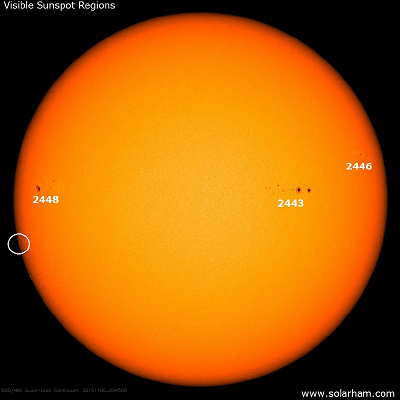
In spite of the sun's nasty and continual huffing and puffing, conditions on 630m continue to surprise many of the nightly diehards. It seems clear, that for the time being, the digital WSPR mode is the one chosen by the majority of operators. I suspect that this will change to a more proportionate mix of both CW and digital, as more Canadians get on the band but more particularly, when U.S. amateurs get permanent access to 630m as a ham band. At present, it's mostly listeners reporting beacons, demonstrating the propagational capabilities to be found at the bottom of the broadcast band.
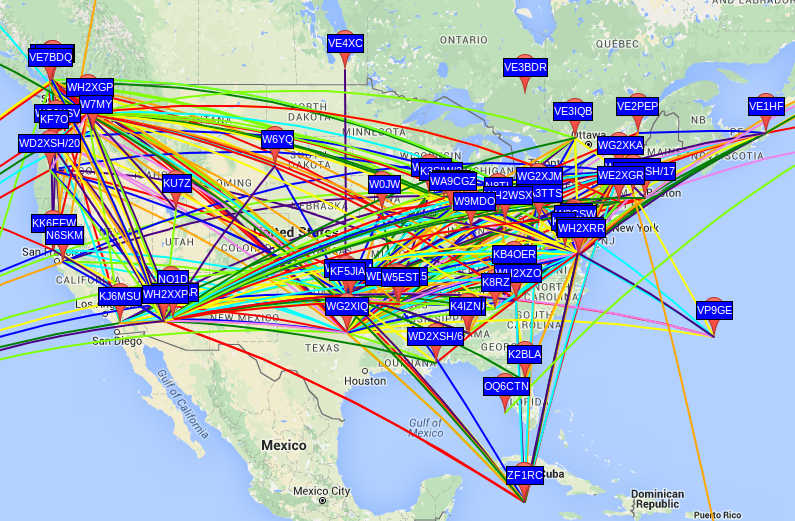
Last night saw over 80 stations worldwide, either listening or transmitting on 630m, with the majority of them in the 'listening mode' only.
 |
| courtesy: http://njdtechnologies.net/ |
It was particularly nice to see locals, VE7BDQ and VE7CNF being heard in the Cayman Islands and Hawaii, respectively ... both suburban backyard operations. The previous morning saw the experimental station run by Larry, W7IUV in Washington state, being heard in Japan by JA1NQI ... a first from the lower 48 into Japan.
Things over in Europe have also been heating-up and the nightly reports read more like a roster of 20m action. FR5ZX on Reunion Island in the Indian Ocean has been reporting many of the Europeans, making things more interesting for the dedicated in that part of the world. All of the reports were on the WSPR mode.
John (KB5NJD / WG2XIQ) in Texas, continues to post his amazingly-detailed nightly updates of 630m action. If you want to know what's been happening both here and in the rest of the world, his daily updates will keep you in the loop ... but be warned, as you will likely find yourself heading for 630m yourself to get in on the nightly activity. In addition, his blog contains a goldmine of information for those wanting to get started with building a 630m MF station. To really keep tabs of real-time happenings, the ON4KST MF chat page is the place to be.
Next weekend, the 630m CW crossband activity will take place, with 5 different Canadian CW stations CQing on 630m CW and listening for callers on various HF frequencies on 80 and 40m. I will have the details up here again shortly, but please give a listen for us on 630m as well as a call on HF, next Friday or Saturday (or both!) nights ... the more the merrier, and tell your friends too!
Steve McDonald, VE7SL, is a regular contributor to AmateurRadio.com and writes from British Columbia, Canada. Contact him at [email protected].
Portable Zero LLC, A Happy Customer
Portable Zero Accessories
http://www.portablezero.com/icom706.html
My first purchase was the IC706 Escort for my Icom IC703. I ordered the Escort directly from Mike and had it in my hand in only a few days. The product was as described, easy to install and attach to the radio. Service and shipping from Mike was fantastic.
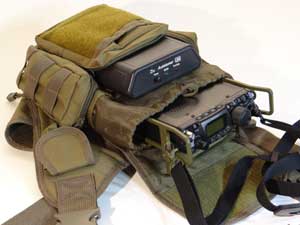
So I was looking for and in the market for a good bag for my Xiegu X108G, tuner and accessories. Well the X108G is not much larger then my FT817 so figured this would work just about right for the radio allowing me to take it out in the field. So looking at Mikes Portable Zero sight I was thrilled to see The Sherpa Bag.
Mike’s description for the bag is as follows:
“The 817 Sherpa Pack is the perfect way to transport your Yaesu FT-817 transceiver, tuner and accessories. Order item 817-SP”
I sent an email to Mike about my order, he replied asking what my address would be to ship the radio and then I was sent a PayPal Invoice in very short time. I replied to Mike and within a very short time I had confirmation that the bag was being shipped out Friday morning, it was just after 2:00PM on Thursday that I placed the order..
I look forward to the Sherpa Bag arriving and allowing me to take the X108G outdoors in a nice all in one ready to go kit.
I thank Mike at Portable Zero LLC for his efforts and his quick and speedy service and top quality gear.
Fred
VE3FAL
Fred Lesnick, VE3FAL, is a regular contributor to AmateurRadio.com and writes from Thunder Bay Ontario, Canada. Contact him at [email protected].
Morse Tutor kits – the details

Its been a few weeks since I last updated you on the progress of my Arduino Morse Tutor. Well I hope this blog post will satisfy those who have shown such a great interest with the project.
The project is being released as a kit for you to purchase, construct and enjoy. It will be available from Kanga Products and will be released in the upcoming weeks.
We have created 2 variations of the kit, based upon feedback we have received from our beta testers.
Standard Edition
The first “standard” kit is available without a display, and has 3 modes. It will generate Letters, Numbers and Mixed. In groups of 5 available from 4WPM to 34WPM and also allow you to insert a character space of between 0.01 and 4.5 seconds. There is the option of using headphones and also allowing you to connect a key to this kit. This kit will have about 3 to 4 hours of life in it based upon a standard PP3 battery and a moderate volume.
Deluxe edition
The deluxe version has everything the Standard Edition has, with the addition of a 4×20 LCD screen showing you all the characters that are generated and it also has the addition of a Contest Mode.

This mode will generate a call sign, an RST and either a serial number or a locator square. Again the kit will come with sockets for an telegraph key & headphones. Early tests have shown that this kit will last about 2.5 – 3 hours at a moderate volume again using a PP3.
The delay at present is finding a cost effective enclosure that is both rugged, small and suits your and our needs for a truly portable Morse Tutor.
You can register your interest by clicking here, and at the bottom of this post is a video of the 2 prototypes I have created.
Tech Specs
Fully silk screened PCB
Thru Hole components
65mA – 78mA current draw
9v – 12v power supply
Tone Frequency – 300Hz – 900Hz
Modes :
Letters
Numbers
Mixed
Calls *
Display 20×4 LCD *
Connections
Headphones
Telegraph Key (Straight – option of K1A iambic keyer)
(* = Available on the deluxe model only)
Dan Trudgian, MØTGN, is a regular contributor to AmateurRadio.com and writes from Wiltshire, England. He's a radio nut, IT guru, general good guy and an all round good egg. Contact him him here.
Morse Tutor kits – the details
Its been a few weeks since I last updated you on the progress of my Arduino Morse Tutor. Well I hope this blog post will satisfy those who have shown such a great interest with the project.
The project is being released as a kit for you to purchase, construct and enjoy. It will be available from Kanga Products and will be released in the upcoming weeks.
We have created 2 variations of the kit, based upon feedback we have received from our beta testers.
Standard Edition
The first “standard” kit is available without a display, and has 3 modes. It will generate Letters, Numbers and Mixed. In groups of 5 available from 4WPM to 34WPM and also allow you to insert a character space of between 0.01 and 4.5 seconds. There is the option of using headphones and also allowing you to connect a key to this kit. This kit will have about 3 to 4 hours of life in it based upon a standard PP3 battery and a moderate volume.
Deluxe edition
The deluxe version has everything the Standard Edition has, with the addition of a 4×20 LCD screen showing you all the characters that are generated and it also has the addition of a Contest Mode.
This mode will generate a call sign, an RST and either a serial number or a locator square. Again the kit will come with sockets for an telegraph key & headphones. Early tests have shown that this kit will last about 2.5 – 3 hours at a moderate volume again using a PP3.
The delay at present is finding a cost effective enclosure that is both rugged, small and suits your and our needs for a truly portable Morse Tutor.
You can register your interest by clicking here, and at the bottom of this post is a video of the 2 prototypes I have created.
Tech Specs
Fully silk screened PCB
Thru Hole components
65mA – 78mA current draw
9v – 12v power supply
Tone Frequency – 300Hz – 900Hz
Modes :
Letters
Numbers
Mixed
Calls *
Display 20×4 LCD *
Connections
Headphones
Telegraph Key (Straight – option of K1A iambic keyer)
(* = Available on the deluxe model only)
Dan Trudgian, MØTGN, is a regular contributor to AmateurRadio.com and writes from Wiltshire, England. He's a radio nut, IT guru, general good guy and an all round good egg. Contact him him here.
Portable from School
 Shortwave, in its many forms, has been part of my life for 35 years. And even though it is next to impossible to enjoy the high frequencies at home now it doesn’t mean I am ready to give them up. I still have my KX3 and MP1 to work portable and this years teaching schedule does leave me with some excess time to work the bands from my school ground. The funny thing is that I moved from PL04ou to PL04pv and my school is only a 10 minute walk away from my old home in PL04ou. At least my old QSL cards are still valid to confirm those portable QSOs then.
My school is located at the top of a plateau and the view is breathtaking when the sun is out. I am  usually able to set up my gear around 0800 UTC and have some 45 minutes of fun before heading back home. My KX3 shack-in-a-box and the MP1 can be set up in 5 minutes if I use a mag-mount on the car. Unfortunately the frequent autumn winds are very fierce, so then a stand with guy wires is needed which takes 10 to 15 minutes to set up.

What a joy to operate without any man-made interference. More than often I think either my KX3 or my antenna is not working properly; it is that quiet. If the sun has some spots then working Europe on CW is possible, but I am happy to work Asian stations as well. I even added the DXCC entry of Tuvalu to my list last month, working them split with 5 Watts on 20 meters.
0800 UTC is also the time that 40 meters start opening up and what a joy that is. Signals from all over Asia and the States are booming in. My MP1 tunes to 40 meters well, but it is still a coil-fed vertical without a proper set of radials and then the lack of some power means I can’t make a fist. I am still trying and hopefully one day I will send my puny signal on 40 meters all the way to the States.

Hans "Fong" van den Boogert, BX2ABT, is a regular contributor to AmateurRadio.com and writes from Taiwan. Contact him at [email protected].
So we bought this house….
 …last year December. A real fixer-upper: 35 years old and not maintained at all. But the price was right and it had a large size plot of land that came with it. Buy land, get old house for free. It is large plot for Taiwanese standards. In the States and Europe you would probably laugh at the size: 180 square meters. Most houses are here are built on a third of that. I will not complain, though, because having a garden, even though a very modest one, is a dream come true. We are already eating organic veggies from our own plot and those are yummy.
There was a lot of work to be done on the house. We put on a sheet metal roof against leaking, changed the layout inside to get the most efficient use of all the space and we added a utility room. All the water and electricity had to be refitted, too, so it was quite an undertaking. Unfortunately the end result was not what we had hoped for. I won’t say much about it, because the Internet never forgets, but these words from the main contractor sum it up quite nicely: “It’s not my house, so I don’t really care.” They took our money, ran and left us with sub-par work. Not one wall was ready for painting when we moved in last July. There was electricity and water, but most power outlets and faucets were fitted so poorly that I had to have a shout out with the sub-contractor before it was done a bit properly. Getting them to put in a good ground system was another big struggle. I need at least a year to finish the walls, ceilings, doors and the roof, fit all the lights, curtains, hang the paintings and get my shack in order.
Of course, not all Taiwanese are selfish rip-off artists and we did meet some really nice and honest people, too. The man who did all our metal work was made of pure gold (pun intended). Because of good connections we got a bargain on the solar water heater (one day of sun, three days of hot water) and the store where we get our paint gives us a steep discount, especially when we buy paint from Akzo-Nobel (a Dutch buying Dutch deserves a good deal).
So I have been very busy with plastering and sanding walls and ceilings and I’m getting pretty good at it. Work on my new shack is starting soon now that the living room is nearly done. But so many months without a radio fix was too much to bear and early September I quickly put up a 2×5 meter dipole. Unfortunately I was met with this…..
It seems things never go smoothly for me. Other people throw a wire into a tree and start enjoying the bands, I put up a decent dipole and get a bucket load of QRM. As you can see the noise blanker can filter out some of the noise, but not all. 7 MHz and below are fine, though, and oddly enough 17 meters also doesn’t suffer that much, either. But 20, 15 meters up to 6 meters are almost useless. An X-Phase noise eliminator might bring some relief here, but right now I don’t have time to build one.
My wife would say that this is the year of the sheep and as we are both born in the year of the sheep this is not our lucky year. She slid of her scooter two months ago and hurt her knee pretty badly, so she might be on to something. So….radio back in the box till next year? Or maybe time to reconsider what I am going to do with this hobby of ours. For DXing the top bands I need to build new antennas, VHF/UHF/SHF in Taiwan is all but dead, APRS is not that exciting either. So what is left? Satellites maybe?
Hans "Fong" van den Boogert, BX2ABT, is a regular contributor to AmateurRadio.com and writes from Taiwan. Contact him at [email protected].
The Spectrum Monitor — November, 2015

Stories you’ll find in our November, 2015 issue:
TSM Reviews: Electraft K3s—Another Step Forward
By Mark Haverstock K8MSH
If you already have a K3, you know you have one of the best, full-featured rigs around. It will serve you well for years to come. But many of us have the urge to keep up with the latest and greatest. Is it time to upgrade? A longtime kit builder and ham, Mark tells us why an Elecraft K3s should be in our future.
Current and Future Trends in Scanning Radio
By Chris Parris
The current models of digital scanners are now starting to resemble – no, they actually are small, self-contained computer systems, complete with networking, USB ports, removable media, built-in audio recording and updatable operating firmware. Some even offer the ability to remotely access and control these scanners over the Internet. Chris tells us which scanners are best for your local scanning situation.
TSM Reviews: EZ-Scan WS1095—Whistler’s Digital Scanning Receiver
By Chris Parris
With the introduction of the WS-1095, we get a look at a scanner design that was apparently conceived at GRE, but did not see the light of day until Whistler made it so. Now, Chris puts this multi-talented scanner through real-world paces. He notes, “Performance of the WS-1095 scanner in most respects matches the other radios in the GRE/Whistler line.”
TSM Reviews: Airspy SDR Receiver System
By Bob Grove W8JHD
In electronic communications, software defined radio (SDR) is becoming dominant. For radio hobbyists, a niche product is gaining momentum: the SDR dongle. Only slightly larger than a memory stick, when plugged into a USB port, it converts your computer into a flexible, wide-frequency-coverage receiver. Is this just another SDR dongle? Bob, tells us what really sets this diminutive receiver apart from the rest.
Digital Amateur Radio Roundup
By Cory Sickles WA3UVV
In the spirit of this month’s Radio Buyers’ Guide, Cory reviews the growing list of transceivers available for the digitally inclined ham. If you haven’t already transitioned into the digital domain, or you are looking for an additional model or methodology to try out, you will find this overview of use to you.
Toward a Glorious and Uncertain Future!
By Kirk Kleinschmidt NT0Z
With all evidence to date, the phenomenon we call amateur radio will have been born, matured, evolved and “died,” in a 150-250 year period. Period! Kirk shows us that there’s still hope for the future.
FTA Satellite-TV: The Heir to Shortwave Radio
By Ken Reitz KS4ZR
Originally, countries turned to shortwave to serve two specific purposes: promote their own cultural and political ideas worldwide and serve the expatriate community abroad. As shortwave declined throughout the 1980s to the present, many of those same broadcasters began appearing on geostationary satellites doing exactly the same thing, only this time with pictures (and now in HDTV format) as well as words and sound.
Scanning America
By Dan Veenaman
Tennessee Advanced Communications Network
Federal Wavelengths By Chris Parris
CBP OAM Changes
Utility Planet By Hugh Stegman NV6H
Goodbye HF911, Hello UrgentLink
Digital HF: Intercept and Analyze By Mike Chace-Ortiz AB1TZ/G6DHU
All About NAVTEX
HF Utility Logs By Mike Chace-Ortiz and Hugh Stegman
Amateur Radio Insights By Kirk Kleinschmidt NT0Z
Ham Radio on the Big Screen(s)
Radio 101 By Ken Reitz KS4ZR
License-Free Two-Way Radio: CB/FRS/GMRS/MURS
Radio Propagation By Tomas Hood NW7UST
The Sun Part 2: Coronas, Sunspots and SIDs
The World of Shortwave Listening By Thomas Witherspoon W4SWL
Buyer’s Guide to Shortwave Radios
The Shortwave Listener By Fred Waterer
Shortwave Listening via Internet Archives
Amateur Radio Astronomy By Stan Nelson KB5VL
Continuum Monitoring Using an SDR R820T Dongle
The Longwave Zone By Kevin O’Hern Carey WB2QMY
Miscou DXpedition and LF Resources
Adventures in Radio Restoration By Rich Post KB8TAD
Powering and Testing the Zenith Trans-oceanic G-500
The Broadcast Tower By Doug Smith W9WI
Why is that Tower where it is?
Antenna Connections By Dan Farber AC0LW
MFJ: Our Friend in the Radio Business
Radio Horizons
DXtreme Reception Log (V. 10,0); Klingenfuss 2016 Shortwave Frequency Guide
The Spectrum Monitor is available in PDF format which can be read on any desktop, laptop, iPad®, Kindle® Fire, or other device capable of opening a PDF file. Annual subscription (12 issues, beginning with the January 2015 issue) is $24. Individual monthly issues are available for $3 each.
Ken Reitz, KS4ZR, is publisher and managing editor of The Spectrum Monitor. Contact him at [email protected].
 Ham Radio Deluxe |
 W5SWL Electronics |
 Ham Radio Prep |
 KB3IFH QSL Cards  Hip Ham Shirts  HamRadioAuctions HamRadioAuctions Reliance Antennas Reliance Antennas Enigma Shop Enigma Shop |  morseDX  Ni4L Antennas  R&L Electronics R&L Electronics antennas.us antennas.us QRV QRV |
- Matt W1MST, Managing Editor
