 |
 Upcoming 630m Crossband Weekend
 8 November 2015 | by
  This coming weekend will see the annual '630m activity event' on Friday and Saturday night.
There will be a lot of activity from both the U.S. experimental stations and from a group of five Canadian amateurs who will be seeking two-way CW 'crossband' contacts.
The five Canadians will be transmitting on 630m CW but listening for answering stations on various HF (QSX) frequencies. Last year's one-night event was a great success ... hopefuly the two-night event this year will lead to even more participation by interested amateurs in both Canada and the U.S.
Unlike Canadian hams, American amateurs does not yet have access to 630m as a ham band but ... there will be a large number of U.S. 'experimental' stations (most of them operated by hams with an experimental licence) beaconing and working each other and seeking your 'heard' reports. The Canadian operation will give interested hams the actual opportunity to make a two-way MF to HF CW contact, via the crossband mode as well as provide the Canadians an opportunity to test their 630m systems.
Here are the details of the five Canadian crossbanders:
Station: VO1NA (Joe) GN37 Torbay, Newfoundland
Time: 2130Z - 0130Z both Friday night (Nov 13-14Z) / Saturday night (Nov
14-15Z)
TX Frequency: 477.7 kHz
RX (QSX) Frequency: 3562 kHz
Station: VE7SL (Steve) CN88 Mayne Island, B.C.
Time: 0200Z - 0700Z both Friday night (Nov 14Z) / Saturday night (Nov 15Z)
TX Frequency: 473.0 kHz
RX (QSX) Frequency: 3566 / 7066 kHz
Station: VE7BDQ (John) CN89 Delta, B.C.
Time: 0430Z - 0700Z both Friday night (Nov 14Z) / Saturday night (Nov 15Z)
TX Frequency: 474.0 kHz
RX (QSX) Frequency: 3536 kHz
Station: VA7MM (Mark) CN89 Coquitlam, B.C.
Time: 0500Z - 0700Z Friday (Nov 14Z)
0400Z - 0800Z Saturday (Nov 15Z)
TX Frequency: 475.0 kHz
RX (QSX) Frequency: 3570 kHz
Station: VE7CNF (Toby) CN89 Burnaby, B.C.
Time: 0300Z - 0700Z both Friday night (Nov 14Z) / Saturday night (Nov 15Z)
TX Frequency: 476.0 kHz
RX (QSX) Frequency: 3558 kHz / 7062 kHz
All stations will either call CQ or run "VVV" marker beacons while listening on their respective QSX frequencies. QSX frequencies will be included
in the CQ or marker beacons.
Last year's event saw many nice contacts, some of them from coast-to-coast! I really hope that as many amateurs as possible will have a listen and be able to answer our 'CQ's on the various QSX frequencies. Your participation on one (or both) of the two night's activity would be just great.
I will post a reminder of the event again at the end of the week ... in the meantime, try to see what you can hear on 630m (472-479kHz) and arrange your setup so that you can call us on HF as well.
For a more detailed description of the upcoming event, see the ARRL's announcement here.
Steve McDonald, VE7SL, is a regular contributor to AmateurRadio.com and writes from British Columbia, Canada. Contact him at [email protected].
Amateur Radio Weekly – Issue 84

How a group of neighbors created their own Internet service
Powered by radios in trees, homegrown network serves 50 houses on Orcas Island.
Ars Technica
Feds have plan in case we are hit with catastrophic solar flares
The White House bases contingency plan on the Carrington Event.
Digital Journal
DSTAR Parachute Mobile QSOs prove popular in Japan
Mark Meltzer, age 66, had an optimistic longshot QSO sked with hams in Japan hoping to work them on 28.425 KHz with a 5 watt SSB signal.
Southgate
QSO with W0RW from Knox Mountain
Every day is a surprise.
amateurradio.com
FCC, Justice Department investigate covert Chinese radio network
The Federal Communications Commission and the Justice Department are investigating a California firm whose U.S. radio broadcasts are backed by a subsidiary of the Chinese government.
Reuters
Secret radio stations by the numbers
There are actually several types of number stations, but the prototypical one is simply someone on the air reading lists of numbers.
Hack a Day
How good is the FT817’s MH-31 stock standard microphone?
Others reported improved results by substituting an electret insert. It seemed too simple not to try.
VK3YE
How to
SDR reception of Digital Amateur TV from the ISS
How to receive DVB-S digital video transmissions from the International Space Station with a bit of hardware and a lot of software.
pabr.org
Video
W1AW/6 Pacificon Special Event Station – All on one antenna
This video explains how they ran multiple stations using a single antenna. Watch and see how Rick engineered the radio system.
K7AGE
Why You Need Circulators in Repeaters
A discussion of circulators and a teardown of a 915 MHz circulator.
The Life of Kenneth
Amateur Radio Weekly is curated by Cale Mooth K4HCK. Sign up free to receive ham radio's most relevant news, projects, technology and events by e-mail each week at http://www.hamweekly.com.
630m Heating Up
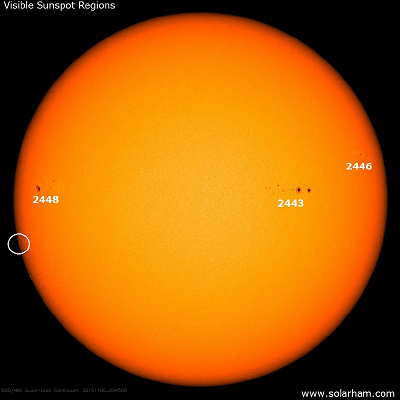
In spite of the sun's nasty and continual huffing and puffing, conditions on 630m continue to surprise many of the nightly diehards. It seems clear, that for the time being, the digital WSPR mode is the one chosen by the majority of operators. I suspect that this will change to a more proportionate mix of both CW and digital, as more Canadians get on the band but more particularly, when U.S. amateurs get permanent access to 630m as a ham band. At present, it's mostly listeners reporting beacons, demonstrating the propagational capabilities to be found at the bottom of the broadcast band.
Last night saw over 80 stations worldwide, either listening or transmitting on 630m, with the majority of them in the 'listening mode' only.
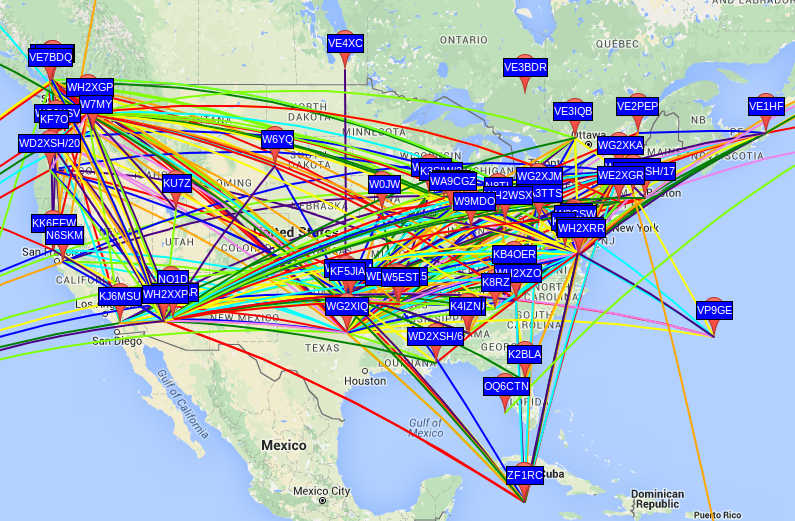 |
| courtesy: http://njdtechnologies.net/ |
It was particularly nice to see locals, VE7BDQ and VE7CNF being heard in the Cayman Islands and Hawaii, respectively ... both suburban backyard operations. The previous morning saw the experimental station run by Larry, W7IUV in Washington state, being heard in Japan by JA1NQI ... a first from the lower 48 into Japan.
Things over in Europe have also been heating-up and the nightly reports read more like a roster of 20m action. FR5ZX on Reunion Island in the Indian Ocean has been reporting many of the Europeans, making things more interesting for the dedicated in that part of the world. All of the reports were on the WSPR mode.
John (KB5NJD / WG2XIQ) in Texas, continues to post his amazingly-detailed nightly updates of 630m action. If you want to know what's been happening both here and in the rest of the world, his daily updates will keep you in the loop ... but be warned, as you will likely find yourself heading for 630m yourself to get in on the nightly activity. In addition, his blog contains a goldmine of information for those wanting to get started with building a 630m MF station. To really keep tabs of real-time happenings, the ON4KST MF chat page is the place to be.
Next weekend, the 630m CW crossband activity will take place, with 5 different Canadian CW stations CQing on 630m CW and listening for callers on various HF frequencies on 80 and 40m. I will have the details up here again shortly, but please give a listen for us on 630m as well as a call on HF, next Friday or Saturday (or both!) nights ... the more the merrier, and tell your friends too!
Steve McDonald, VE7SL, is a regular contributor to AmateurRadio.com and writes from British Columbia, Canada. Contact him at [email protected].
Portable Zero LLC, A Happy Customer
Portable Zero Accessories
http://www.portablezero.com/icom706.html
My first purchase was the IC706 Escort for my Icom IC703. I ordered the Escort directly from Mike and had it in my hand in only a few days. The product was as described, easy to install and attach to the radio. Service and shipping from Mike was fantastic.
So I was looking for and in the market for a good bag for my Xiegu X108G, tuner and accessories. Well the X108G is not much larger then my FT817 so figured this would work just about right for the radio allowing me to take it out in the field. So looking at Mikes Portable Zero sight I was thrilled to see The Sherpa Bag.
Mike’s description for the bag is as follows:
“The 817 Sherpa Pack is the perfect way to transport your Yaesu FT-817 transceiver, tuner and accessories. Order item 817-SP”
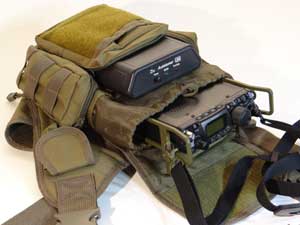
I sent an email to Mike about my order, he replied asking what my address would be to ship the radio and then I was sent a PayPal Invoice in very short time. I replied to Mike and within a very short time I had confirmation that the bag was being shipped out Friday morning, it was just after 2:00PM on Thursday that I placed the order..
I look forward to the Sherpa Bag arriving and allowing me to take the X108G outdoors in a nice all in one ready to go kit.
I thank Mike at Portable Zero LLC for his efforts and his quick and speedy service and top quality gear.
Fred
VE3FAL
Fred Lesnick, VE3FAL, is a regular contributor to AmateurRadio.com and writes from Thunder Bay Ontario, Canada. Contact him at [email protected].
Morse Tutor kits – the details

Its been a few weeks since I last updated you on the progress of my Arduino Morse Tutor. Well I hope this blog post will satisfy those who have shown such a great interest with the project.
The project is being released as a kit for you to purchase, construct and enjoy. It will be available from Kanga Products and will be released in the upcoming weeks.
We have created 2 variations of the kit, based upon feedback we have received from our beta testers.
Standard Edition
The first “standard” kit is available without a display, and has 3 modes. It will generate Letters, Numbers and Mixed. In groups of 5 available from 4WPM to 34WPM and also allow you to insert a character space of between 0.01 and 4.5 seconds. There is the option of using headphones and also allowing you to connect a key to this kit. This kit will have about 3 to 4 hours of life in it based upon a standard PP3 battery and a moderate volume.
Deluxe edition
The deluxe version has everything the Standard Edition has, with the addition of a 4×20 LCD screen showing you all the characters that are generated and it also has the addition of a Contest Mode.

This mode will generate a call sign, an RST and either a serial number or a locator square. Again the kit will come with sockets for an telegraph key & headphones. Early tests have shown that this kit will last about 2.5 – 3 hours at a moderate volume again using a PP3.
The delay at present is finding a cost effective enclosure that is both rugged, small and suits your and our needs for a truly portable Morse Tutor.
You can register your interest by clicking here, and at the bottom of this post is a video of the 2 prototypes I have created.
Tech Specs
Fully silk screened PCB
Thru Hole components
65mA – 78mA current draw
9v – 12v power supply
Tone Frequency – 300Hz – 900Hz
Modes :
Letters
Numbers
Mixed
Calls *
Display 20×4 LCD *
Connections
Headphones
Telegraph Key (Straight – option of K1A iambic keyer)
(* = Available on the deluxe model only)
Dan Trudgian, MØTGN, is a regular contributor to AmateurRadio.com and writes from Wiltshire, England. He's a radio nut, IT guru, general good guy and an all round good egg. Contact him him here.
Morse Tutor kits – the details
Its been a few weeks since I last updated you on the progress of my Arduino Morse Tutor. Well I hope this blog post will satisfy those who have shown such a great interest with the project.
The project is being released as a kit for you to purchase, construct and enjoy. It will be available from Kanga Products and will be released in the upcoming weeks.
We have created 2 variations of the kit, based upon feedback we have received from our beta testers.
Standard Edition
The first “standard” kit is available without a display, and has 3 modes. It will generate Letters, Numbers and Mixed. In groups of 5 available from 4WPM to 34WPM and also allow you to insert a character space of between 0.01 and 4.5 seconds. There is the option of using headphones and also allowing you to connect a key to this kit. This kit will have about 3 to 4 hours of life in it based upon a standard PP3 battery and a moderate volume.
Deluxe edition
The deluxe version has everything the Standard Edition has, with the addition of a 4×20 LCD screen showing you all the characters that are generated and it also has the addition of a Contest Mode.
This mode will generate a call sign, an RST and either a serial number or a locator square. Again the kit will come with sockets for an telegraph key & headphones. Early tests have shown that this kit will last about 2.5 – 3 hours at a moderate volume again using a PP3.
The delay at present is finding a cost effective enclosure that is both rugged, small and suits your and our needs for a truly portable Morse Tutor.
You can register your interest by clicking here, and at the bottom of this post is a video of the 2 prototypes I have created.
Tech Specs
Fully silk screened PCB
Thru Hole components
65mA – 78mA current draw
9v – 12v power supply
Tone Frequency – 300Hz – 900Hz
Modes :
Letters
Numbers
Mixed
Calls *
Display 20×4 LCD *
Connections
Headphones
Telegraph Key (Straight – option of K1A iambic keyer)
(* = Available on the deluxe model only)
Dan Trudgian, MØTGN, is a regular contributor to AmateurRadio.com and writes from Wiltshire, England. He's a radio nut, IT guru, general good guy and an all round good egg. Contact him him here.
Portable from School
 Shortwave, in its many forms, has been part of my life for 35 years. And even though it is next to impossible to enjoy the high frequencies at home now it doesn’t mean I am ready to give them up. I still have my KX3 and MP1 to work portable and this years teaching schedule does leave me with some excess time to work the bands from my school ground. The funny thing is that I moved from PL04ou to PL04pv and my school is only a 10 minute walk away from my old home in PL04ou. At least my old QSL cards are still valid to confirm those portable QSOs then.
My school is located at the top of a plateau and the view is breathtaking when the sun is out. I am  usually able to set up my gear around 0800 UTC and have some 45 minutes of fun before heading back home. My KX3 shack-in-a-box and the MP1 can be set up in 5 minutes if I use a mag-mount on the car. Unfortunately the frequent autumn winds are very fierce, so then a stand with guy wires is needed which takes 10 to 15 minutes to set up.

What a joy to operate without any man-made interference. More than often I think either my KX3 or my antenna is not working properly; it is that quiet. If the sun has some spots then working Europe on CW is possible, but I am happy to work Asian stations as well. I even added the DXCC entry of Tuvalu to my list last month, working them split with 5 Watts on 20 meters.
0800 UTC is also the time that 40 meters start opening up and what a joy that is. Signals from all over Asia and the States are booming in. My MP1 tunes to 40 meters well, but it is still a coil-fed vertical without a proper set of radials and then the lack of some power means I can’t make a fist. I am still trying and hopefully one day I will send my puny signal on 40 meters all the way to the States.

Hans "Fong" van den Boogert, BX2ABT, is a regular contributor to AmateurRadio.com and writes from Taiwan. Contact him at [email protected].
 Ham Radio Deluxe |
 W5SWL Electronics |
 Ham Radio Prep |
 KB3IFH QSL Cards  Hip Ham Shirts  HamRadioAuctions HamRadioAuctions Reliance Antennas Reliance Antennas Enigma Shop Enigma Shop |  morseDX  Ni4L Antennas  R&L Electronics R&L Electronics antennas.us antennas.us QRV QRV |
- Matt W1MST, Managing Editor
