 |
 Curing amnesia on the 10 MHz GPS reference
 19 November 2015 | by
  |
| Just good enough 10 MHz GPS reference with u blox Neo-7M GPS module to the upper right, 10 MHz output buffer lower right, USB interface to the upper left, CR2032 lithium battery center left, GPS antenna in the center, and SMA output connector lower left. |
My just good enough 10 MHz GPS reference which drives the external clock input on my Elecraft K3 kept losing its configuration if power was off for a day or so. I have therefore fitted a CR2032 3V lithium battery as seen to the left in this image.
It is connected in series with a 1N4148 diode in order to prevent attempts at charging the lithium cell. The connection goes to pin 22 (V_BCKP) as described by G4ZFQ on his website. The diode is visible to the upper left of the battery.
With this, I consider the 10 MHz reference to be finished.
Earlier related posts:
Sverre Holm, LA3ZA, is a regular contributor to AmateurRadio.com and writes from Norway. Contact him at [email protected].
Xiegu Firmware Updates for X108G OLED Version

Xiegu has come through once again with their latest firmware update to take care of a few small problems that were on the latest version of the X108G OLED outdoor version.
The first fix about a month ago was to address the issue with the Iambic keyer adding extra characters in while trying to send code. That was fixed and all is good now when using a paddle.
This newest firmware update takes care of a few things:
1) Fixed the A=B issue
2) Split mode-You can now work cw on on one VFO and voice on another for working nets when no microphone is available.
3) Split band is also working now so you can operate cross band if required
4) SQL adjustable levels also added to menu
One can now send code using the microphone PTT button while in CW mode in the event a key is not present, there is however no sidetone heard when doing this.
From what I read or what I think I read it looks like maybe one could send code while in USB mode, the rig does key up but there is very little RF going out, you can hear a carrier on another radio but no power deflection is visible.
This is a direct copy from the Xiegu Firmware Folder:
- I. Update description
[A=B]
A=B functions are available
[Split screen] mode
Update the transceiver switching logic, both two VFO in any mode, split screen mode are effective.
- The PTT switch is no longer disabled in CW mode. Ignoring automatically key settings when PTT is pressed (by pressing the manual key logic), enter the sending State and CW tone generated (microphone effective at this time), release the PTT to produce a state of setting CW the delay time of switching and quit sending.
- When not in CW mode, no longer disable keying. Keying action and the VFO key were setup consistent (hand keys left / right automatic key). At this point, the carrier is related to the current VFO mode( Into the launch logic will open the carrier switch).
Key behavior in CW mode is not affected.
PTT behavior is not affected when there is not in CW mode.
- [SQL]
Updated SQL code
- SQL=0, invalid squelch;
- SQL=1~10, the squelch invalid when S signal is greater than the SQL value, otherwise, squelch effectively.
- [SQL]
When the user upset the X108G data, you can press the RST key, so that the X108G to restore the calibration data.
- II. Firmware update tutorial:
- Press the frequency knob (keep the action), turn on, connect the USB cable to the computer.
- Open “ My computer”, there is a Update X108 (*:) mobile storage device.
- Open Update X108 (*), delete the file, this time on the radio will show delete progress (waiting for progress to complete 100%).
- Copy the latest firmware to the Update X108 (*:) to wait for replication to complete, and then disconnect the USB and the computer.
- Restart X108G, firmware update is completed!
Xiegu Tech
Fred Lesnick, VE3FAL, is a regular contributor to AmateurRadio.com and writes from Thunder Bay Ontario, Canada. Contact him at [email protected].
5MHz amateur band – it is now official
WRC-15 has ratified the first new HF amateur allocation since 1979. Although only 15kHz wide it was agreed internationally. I hope that CEPT allows a wider contiguous allocation. I am sure I cannot be alone in finding all these non-contiguous 5MHz allocations very confusing.
From the RSGB report on WRC-15:
“Z8 has now officially been agreed as the prefix for South Sudan and will be formally entered into the Radio Regulations. Meanwhile the revised Radio Regulations from WRC-15 will officially come into effect from the 1st January 2017. “

Roger Lapthorn, G3XBM, is a regular contributor to AmateurRadio.com and writes from Cambridge, England.
The Waiting is the Hardest Part
My buddy Shannon took his first amateur radio licensing test last Tuesday. We spent weeks trying to find him an exam session, jumping from club to club. We successfully found a VE session 50 miles from him. He passed both the Tech and General exams with flying colors! The VEs told him it would take 7 to 10 days before the FCC would post his license on their website. That was surprising to me, as I had seen the W5YI group get me a club call in two days within the last year. Oh well, technology does change and sometimes not for the better.
And then, 7 days later, Shannon sends me this link this morning: FCC not processing test results
What bum luck he has! Hopefully the fine folks in IT will get the problem solved quickly. A new ham awaits his call!
Michael Brown, KG9DW, is a regular contributor to AmateurRadio.com and writes from Illinois, USA. Contact him at [email protected].
The Waiting is the Hardest Part
My buddy Shannon took his first amateur radio licensing test last Tuesday. We spent weeks trying to find him an exam session, jumping from club to club. We successfully found a VE session 50 miles from him. He passed both the Tech and General exams with flying colors! The VEs told him it would take 7 to 10 days before the FCC would post his license on their website. That was surprising to me, as I had seen the W5YI group get me a club call in two days within the last year. Oh well, technology does change and sometimes not for the better.
And then, 7 days later, Shannon sends me this link this morning: FCC not processing test results
What bum luck he has! Hopefully the fine folks in IT will get the problem solved quickly. A new ham awaits his call!
Michael Brown, KG9DW, is a regular contributor to AmateurRadio.com and writes from Illinois, USA. Contact him at [email protected].
The 1929 ‘BK’ QSO Party
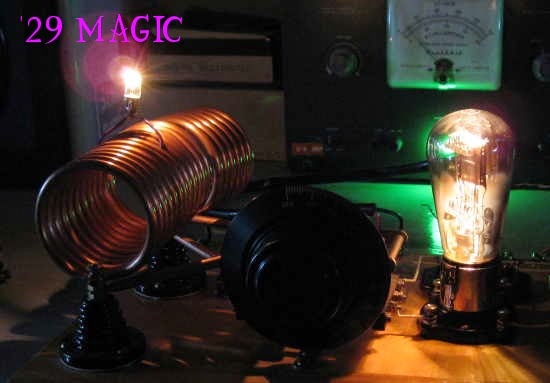 The month of December will soon be upon us and that means it's 'BK' time once again! The Bruce Kelley 1929 QSO Party is the annual two-weekend event celebrating the sound of amateur radio as it was in 1929.
At no other time of the year can you tune across the bands and hear the melodic sound of radio as it once was ... before the days of crystal-control, when most hams were using self-excited one or two-tube transmitters.
With antennas blowing in the wind, these directly-coupled oscillators often make the band sound like a musical symphony gone wrong ... the wonderful whooping, chirping, buzzing, clicking, drifting, swishing, swaying, warbling, and other interesting sounds of '29, when amateur radio was in its infancy.
If you've ever considered joining-in on the fun, then you still have a few weeks to slap something together for the party ... it need not be 'pretty', but it must be 'compliant'. That is, the tube (or tubes) that you use, must have been available in 1929 or earlier. For receiving, use anything you like ... modern or vintage, as there are no restrictions.
I've penned several blogs on popular circuits and tubes that are commonly used among the BK regulars and they can be viewed here:
Building '29 Style
Building '29 - What To Build? - PT.1
Building '29 - What To Build? - PT.2
More BK Building
With the usual propagation of early December, it is not surprising that many transcontinental QSO's are made every year, even with the little two or three watters. Considering the 10 watt power input rule, it is surprising how strong some signals from across the country can become on the lower bands, especially on 40m.
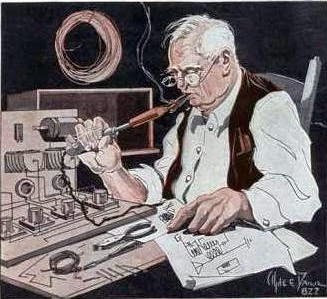
Please consider rolling-up your sleeves, heating up your soldering iron and putting something together for the BK fun, especially if you are on the left coast ... and don't be the least concerned about how it looks!
For a gallery of inspiration from individuals that were too weak to resist the temptation, have a look at some previously built '29 time machines.
For the first time, I'll be using my newly constructed MOPA, a two-tuber that will hopefully reduce my annual BK windstorm angst. It seems that every BK weekend, I have gale-force winds here on the island, making my signal a little bit 'too musical', although some '29 diehards still claim to love the sound ... for them, there is no hope.
Steve McDonald, VE7SL, is a regular contributor to AmateurRadio.com and writes from British Columbia, Canada. Contact him at [email protected].
A semi-annual rant about learning CW

Please take my word for it! As I've told so many times before, I know the frustration of not being able to learn CW. I put off getting my license for at least five years (maybe more), because I could not wrap my brain around the code. And one of the major reasons for that lack of brain wrapping was because someone thought that they were doing me a good turn by handing me a chart similar to the one above.
From personal experience, I can tell you that making the jump from audio input to visual input to brain is the perfect recipe for frustration and resignation. I made the mistake of hearing, trying to visualize and then decode. What you need to do is skip that visual step. Morse Code is a heard language, and unless you're in the Navy operating signal lamps, it's primarily an aural language. To this day, I have extreme difficulty (in fact, I don't even bother) when people "type" out cutsie messages using periods and hyphens to make dits and dahs in print. I have to hear it to de-code. No ifs, ands or buts ..... I have to hear it.
Think about it for a second. When you were a baby, how did you learn to talk - by reading, or by listening to your parents and siblings?
So thanks be to God for the Hams who taught my Novice class. They handed me a set of ARRL Morse Code cassettes with only one word of instruction - LISTEN! And in the end, that's what did it, but the damage had already been done. I had to "unlearn" my past efforts and had to re-learn the direct step of "hear, then de-code". For me, that damage lasted well past 5 WPM. I was stuck at the 10 WPM barrier for a long time, and it was only by the Grace of God that I was able to get up to 13 WPM within 6 months in order to earn my General ticket.
So my advice for those wishing to learn Morse?
1) Ditch any visual aids, as if they were a rattlesnake or the plague.
2) Listen to letters being generated at a speed of anywhere from 13-18 WPM. Let the spacing between the letters determine the code speed. If you listen to Morse being generated slowly and drawn out, you're more than likely going to suffer the 10 WPM plateau like I did.
3) Limit your dedicated practice sessions to no more than 15-20 minutes a pop - two sessions a day, max. At other times, I find it helpful to have Morse playing quietly, almost subliminally in the background while driving, doing chores, etc. IMHO, it gets your brain used to hearing it, and before you know it, you're going to be picking out characters without even realizing it. Lastly, I never liked the concept of listening to random characters once I learned the alphabet. From then on, I found it most useful to listen to actual words and not letter groups. Let's face it, unless you're a spy, you're going to be on the air making conversation - not sending clandestine messages.
4) Once you've learned all the characters and numbers and basic punctuation, and feel somewhat confident in being able to de-code, then get on the air and make QSOs. Real live QSOs are without a doubt, the best vehicle towards increasing your code speed. You can find a lot of beginners hanging out in the 7.120 MHz neighborhood of 40 Meters.
5) Relax, and don't get down on yourself. We all learn things at different speeds. Some people are quick studies and then there are people like me. But if you stick with it, you will get it - I promise.
6) Make full use of W1AW code practice and all the free CW learning software that's out there. Personally, I keep "Morse Trainer" by Wolphi on my phone. It's not a free app, you have to pay for it, but it will generate Morse at speeds up to 60 WPM. I keep it set at 40 WPM. Can I de-code Morse that fast? No way in heck! But I can tell you that after listening (JUST listening - not even trying to decipher) code at that speed for 15 minutes .... code sent at 25 or 28 WPM sounds a lot slower than it used to.
I suffered the double whammy. I had to "unlearn" the aural to visual to brain process; and then once I actually learned the code, I had to unlearn the "code letters sent at 5 WPM" error. Look at me now - CW is my most preferred mode and I am comfortable anywhere around the 25 WPM mark! On a good day, if I don't tense up, I can go for short bursts of 30 -35 WPM. The bottom line is, that learning and becoming proficient with Morse Code is not impossible, in most cases.

Take it from someone who thought it was.
72 de Larry W2LJ
QRP - When you care to send the very least!
Larry Makoski, W2LJ, is a regular contributor to AmateurRadio.com and writes from New Jersey, USA. Contact him at [email protected].
 Ham Radio Deluxe |
 W5SWL Electronics |
 Ham Radio Prep |
 KB3IFH QSL Cards  Hip Ham Shirts  HamRadioAuctions HamRadioAuctions Reliance Antennas Reliance Antennas Enigma Shop Enigma Shop |  morseDX  Ni4L Antennas  R&L Electronics R&L Electronics antennas.us antennas.us QRV QRV |
- Matt W1MST, Managing Editor
