 |
 Ham Radio & PLT devices
 21 November 2015 | by
Over the past few years and again recently I have heard a lot of chatter regarding PLT interference. Especially with Ham radio and shortwave bands. These devices plug into a power wall socket in your house and allow you to create a wired network via your mains wiring in the property. It’s a perfect solution for properties that cannot send a wireless signal from one end to another (Just like mine). It does however have a draw back. In creating a wired network these PLT devices create a lot of mains born interference and this can effectively block out any amateur radio bands.
In recent stories I have heard audio samples and read stories of how these devices can create S9+20db of noise. Thus reducing the amateur bands unusable.
I wanted to see for myself the effect of using PLT devices in my property. So I visited PC World and purchased 2 devices from NetGear. The Powerline 500 promise 500Mbit/s and this would solve a huge problem I have in my home right now, but feared for what it would do to my beloved radio.
The results were interesting and nothing what I expected. You can see my full test in the video below – but for a spoiler alert keep reading….
The moral ? – Don’t believe the hype.
Dan Trudgian, MØTGN, is a regular contributor to AmateurRadio.com and writes from Wiltshire, England. He's a radio nut, IT guru, general good guy and an all round good egg. Contact him him here.
Ham Radio & PLT devices
Over the past few years and again recently I have heard a lot of chatter regarding PLT interference. Especially with Ham radio and shortwave bands. These devices plug into a power wall socket in your house and allow you to create a wired network via your mains wiring in the property. It’s a perfect solution for properties that cannot send a wireless signal from one end to another (Just like mine). It does however have a draw back. In creating a wired network these PLT devices create a lot of mains born interference and this can effectively block out any amateur radio bands.
In recent stories I have heard audio samples and read stories of how these devices can create S9+20db of noise. Thus reducing the amateur bands unusable.
I wanted to see for myself the effect of using PLT devices in my property. So I visited PC World and purchased 2 devices from NetGear. The Powerline 500 promise 500Mbit/s and this would solve a huge problem I have in my home right now, but feared for what it would do to my beloved radio.
The results were interesting and nothing what I expected. You can see my full test in the video below – but for a spoiler alert keep reading….
The moral ? – Don’t believe the hype.
Dan Trudgian, MØTGN, is a regular contributor to AmateurRadio.com and writes from Wiltshire, England. He's a radio nut, IT guru, general good guy and an all round good egg. Contact him him here.
Rock ‘N Radio — QRP Style
Operating QRP
Can mean operating from a "Quiet Restful Place"
I had the day off today and it was a beautiful morning. I decided to spend part of it at Lake Wheeler Park in Raleigh, NC operating QRP from a stone bench under a tall oak tree. |
| rock 'n radio |
I threw a line over a tree using a throwing weight. I hit my mark the first time, untied the weight, tied on the end of the antenna, and hoisted the 31 foot end-fed up exactly where I wanted it with the feed point a couple of feet off the ground.
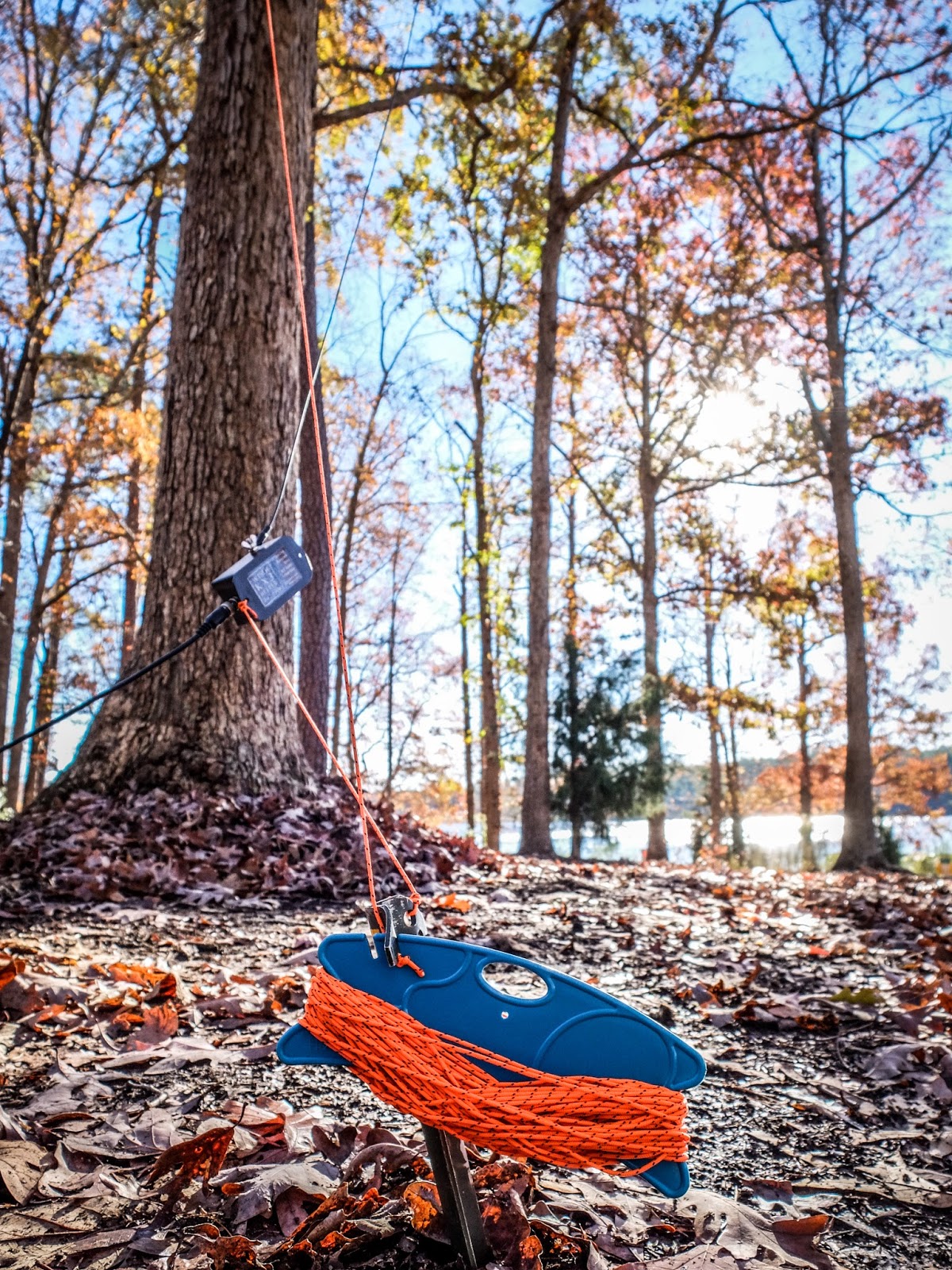 |
| 31 feet of wire end-fed by a 9:1 balun. A kite string winder holds the throwing line A metal stake with a bit of rope anchors the balun and the other end of the rope |
 |
| Another view of the end-fed with 9:1 balun, stake and coax |
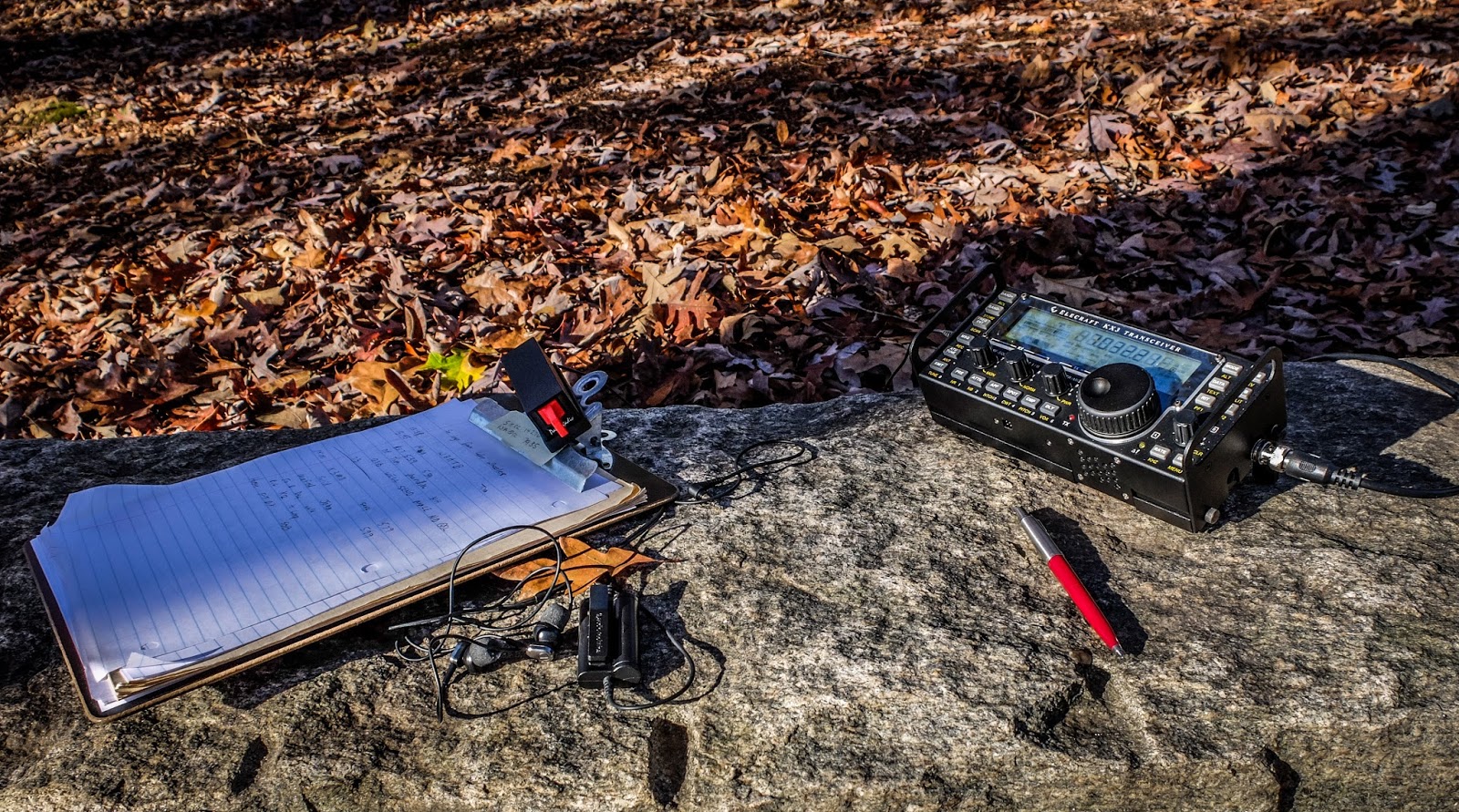 |
| QRP operating position |
I called CQ on the 20m QRP calling frequency (14.060) and had a brief QSO with a lot of QSB (fading). I didn't hear much activity that early in the morning on 20m so I dropped down to 40m and worked the QRP calling frequency (7.030) and had my call answered right away. After that QSO another station jumped in there calling for a specific station so I moved on. 40m was busy. Every time I thought I'd found an open frequency someone would jump back in or if I called QRL? I'd get an R R.
The Palm key has a clip-on, magnetic base which I use to temporarily attach it to my clipboard when I'm not sending. When I'm ready to send I simply pull it off the clipboard and hold it in my left hand. As I noted in an earlier review of the Palm Single Paddle it can be used as a straight key if you turn it on its side. The long ragchew I had on 30m was with a gentlemen who sent me his SKCC number in the first exchange so I quickly turned off the electronic keyer in the KX3's and turned the Palm Single on its side. That station sent me a nice compliment on my straight key FIST; so the little Palm Single key can serve duty as a paddle into a keyer or (in a pinch) as a straight key. I far prefer to use my Kent Hand Key if I'm operating manual key but it's too big to bring along for portable operations and I can't quite picture myself trying to hold onto the giant Kent Hand Key with one hand whilst operating it with the other like I can the Palm Single.
 |
| The Palm Single Paddle works great in portable operating positions |
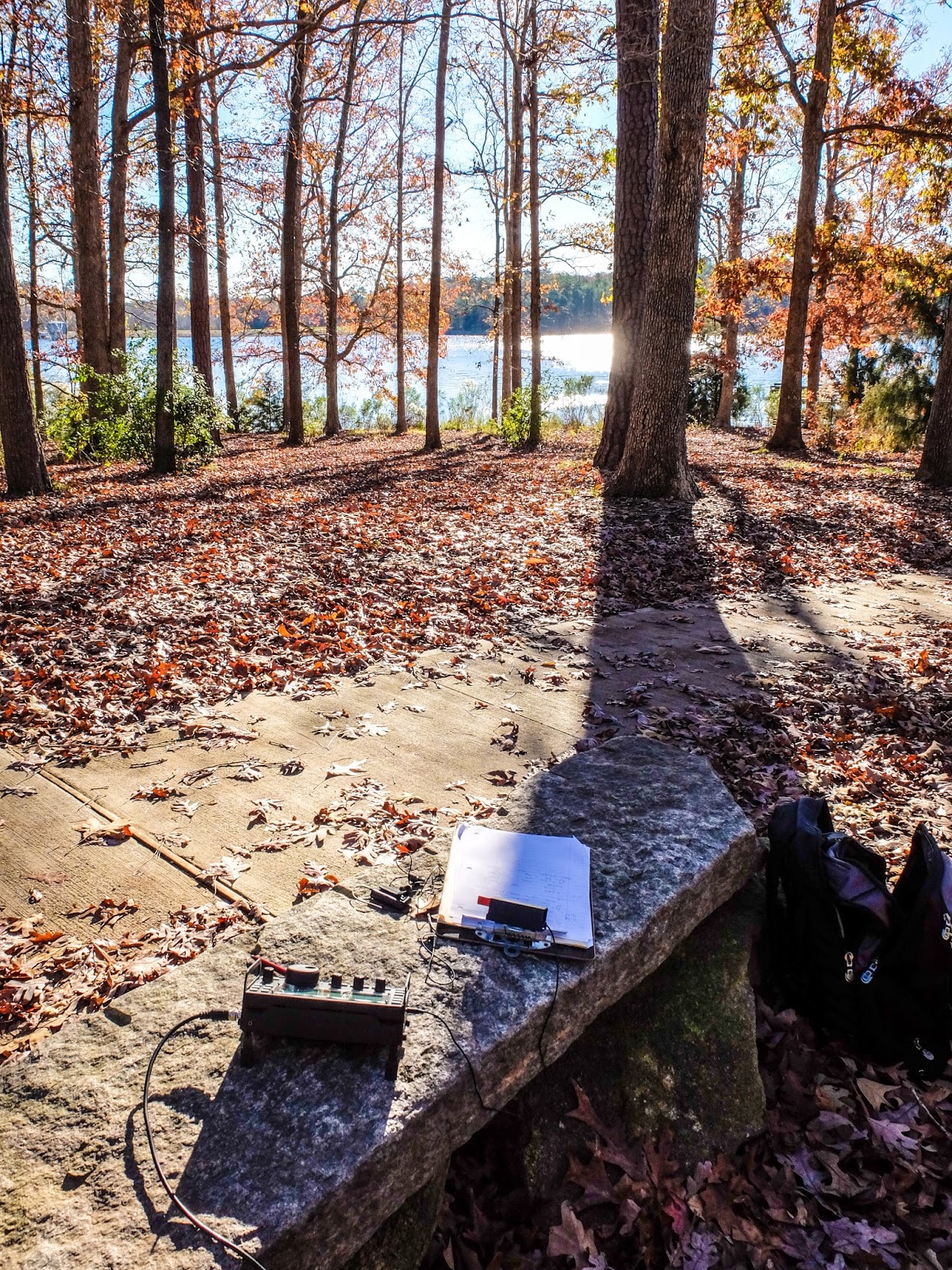 |
| What could be finer than to be in Carolina in the Mooo-oor-ning |
 |
| Enjoying the last nice days of our Fall... birds singing and morse code beeping |
Richard Carpenter, AA4OO, is a regular contributor to AmateurRadio.com and writes from North Carolina, USA. Contact him at [email protected].
What is the big deal with amateur radio? What is it that you hear? (Part 1)

Shortwave radio has been a source for great sci-fi plots, spy intrigue novels, movies, and so on, since radio first became a “thing.” But, what is the big deal, really? What is it that amateur radio operators listen to?
In this video, I share some of the types of signals one might hear on the high frequencies (also known as shortwave or HF bands). This is the first video in an on-going series introducing amateur radio to the interested hobbyist, prepper, and informed citizen.
I often am asked by preppers, makers, and other hobbyists, who’ve not yet been introduced to the world of amateur radio and shortwave radio: “Just what do you amateur radio operators hear, on the amateur radio shortwave bands?”
To begin answering that question, I’ve taken a few moments on video, to share from my perspective, a bit about this shortwave radio thing:
Link to video: https://youtu.be/pIVesUzNP2U — please share with your non-ham friends.
From my shortwave website:
Shortwave Radio Listening — listen to the World on a radio, wherever you might be. Shortwave Radio is similar to the local AM Broadcast Band on Mediumwave (MW) that you can hear on a regular “AM Radio” receiver, except that shortwave signals travel globally, depending on the time of day, time of year, and space weather conditions.
The International Shortwave Broadcasters transmit their signals in various bands of shortwave radio spectrum, found in the 2.3 MHz to 30.0 MHz range. You might think that you need expensive equipment to receive these international broadcasts, but you don’t! Unlike new Satellite services, Shortwave Radio (which has been around since the beginning of the radio era) can work anywhere with very affordable radio equipment. All that you need to hear these signals from around the World is a radio which can receive frequencies in the shortwave bands. Such radios can be very affordable. Of course, you get what you pay for; if you find that this hobby sparks your interest, you might consider more advanced radio equipment. But you would be surprised by how much you can hear with entry-level shortwave receivers. (You’ll see some of these radios on this page).
You do not need a special antenna, though the better the antenna used, the better you can hear weaker stations. You can use the telescopic antenna found on many of the portable shortwave radios now available. However, for reception of more exotic international broadcasts, you should attach a length of wire to your radio’s antenna or antenna jack.
I’m on Twitter, Facebook, and YouTube.
Visit, subscribe: NW7US Radio Communications and Propagation YouTube Channel
Latest antics
I was acutely aware that since the end of September my wife had become a radio widow so promised not to lock myself away in the shack for a while and have been doing some much needed painting and decorating around the house.
I haven't been in much of a radio mood anyway as I have been unwell and am still not fully over my last wobble. Band and weather conditions have been rubbish with a sustained period of high wind and rain including storms Abigail and Barney. As a precaution I dropped the pole and it became apparent I had some maintenance to do on the OCFD.

The shack too had been in need of some sorting out, which I thankfully I did muster enthusiasm to tidy up.
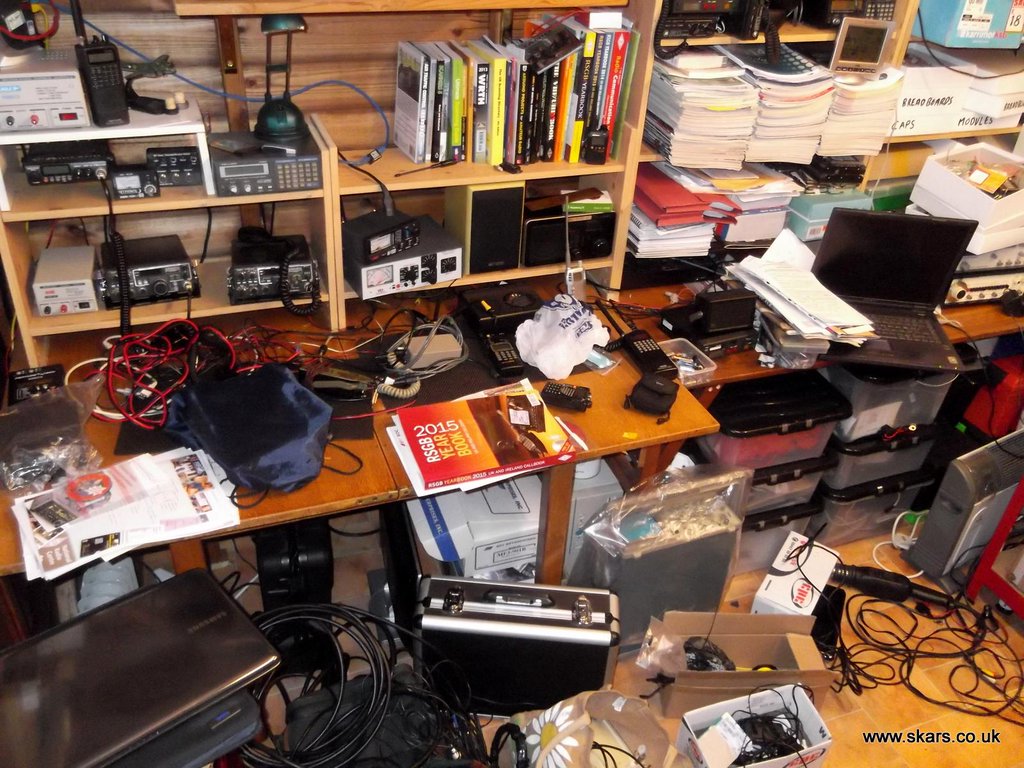
While being largely uninspired I haven't been completely radio silent, I did get on air for the South Kesteven ARS 2m net but found myself suffering some QRM again
It isn't the first time I've seen this sort of signal, but I had thought it had gone away, it seems it is back and stronger! This was an ARISS contact I monitored back in 2013 before I was licensed with a similar noise.
After using the SDR to identify the noise I realised I have been neglecting the FUNCube Dongle for far too long. So ordered some new SMA adapters from HamGoodies and pressed it back into service. I have been using it to decode the telemetry from the FOX-1A (AO-85) satellite with the updated software and have now got myself on the leader board even if the collinear is currently horizontal about four feet off the ground!
South Kesteven ARS had a talk in October by Sean Burton 2E0ENN about amateur DMR where he demonstrated some handsets and the new DV4Mini which allows gateway and internet linking.
I remembered I dabbled a few years ago with decoding PMR DMR using the SDR and a scanner with a discriminator tap using various programs but they were very hit and miss at the time. I reacquainted myself with the various projects and had a go at decoding some amateur transmissions.
I downloaded the latest program called DSDPlus (support at RadioReference.com) and monitoring the nearby GB7RR DMRPlus repeater managing to get some clear decodes with little effort.
Finally this week I gave a presentation at SKARS on the subject of HABs and how to plan a HAB launch. Following on from the Eggsplorer-1 and Hamfest "Pigs In Space" HAB launch I decided to try to explain everything I had learned for anyone else contemplating giving it a go!
It was a long talk (perhaps too long) as I covered everything from building the electronics, software, making the payload box, getting the right balloon, parachute, gas, obtaining permission and then the prediction, launching tracking and recovery.
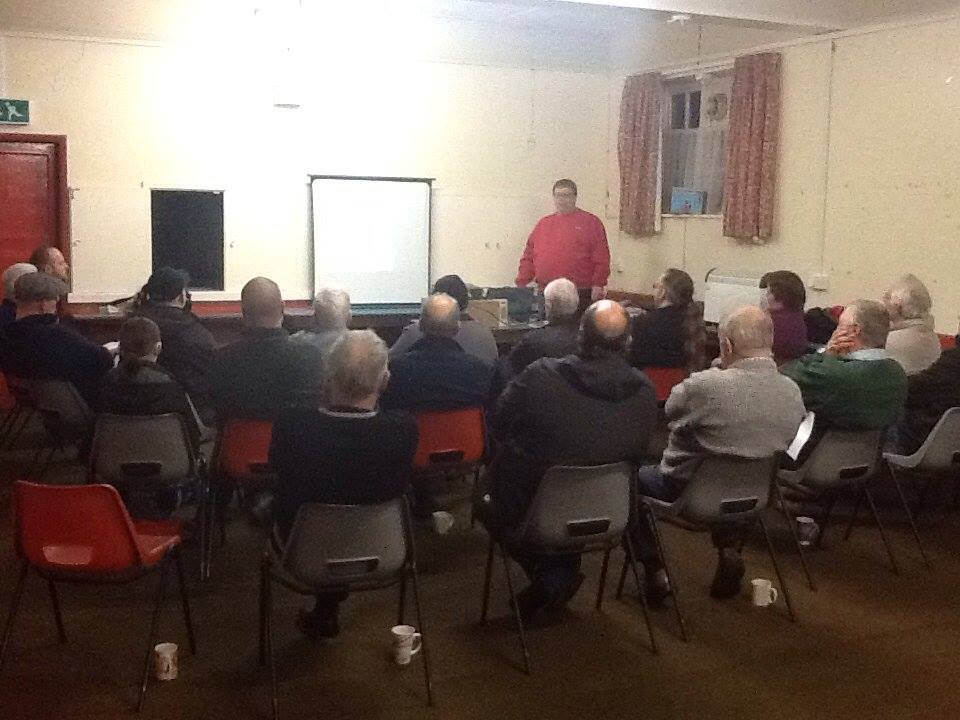
It was a great turnout with a lot of interest.
Andrew Garratt, MØNRD, is a regular contributor to AmateurRadio.com and writes from East Midlands, England. Contact him at [email protected].
Latest antics
I was acutely aware that since the end of September my wife had become a radio widow so promised not to lock myself away in the shack for a while and have been doing some much needed painting and decorating around the house.
I haven't been in much of a radio mood anyway as I have been unwell and am still not fully over my last wobble. Band and weather conditions have been rubbish with a sustained period of high wind and rain including storms Abigail and Barney. As a precaution I dropped the pole and it became apparent I had some maintenance to do on the OCFD.
The shack too had been in need of some sorting out, which I thankfully I did muster enthusiasm to tidy up.
While being largely uninspired I haven't been completely radio silent, I did get on air for the South Kesteven ARS 2m net but found myself suffering some QRM again
It isn't the first time I've seen this sort of signal, but I had thought it had gone away, it seems it is back and stronger! This was an ARISS contact I monitored back in 2013 before I was licensed with a similar noise.
After using the SDR to identify the noise I realised I have been neglecting the FUNCube Dongle for far too long. So ordered some new SMA adapters from HamGoodies and pressed it back into service. I have been using it to decode the telemetry from the FOX-1A (AO-85) satellite with the updated software and have now got myself on the leader board even if the collinear is currently horizontal about four feet off the ground!
South Kesteven ARS had a talk in October by Sean Burton 2E0ENN about amateur DMR where he demonstrated some handsets and the new DV4Mini which allows gateway and internet linking.
I remembered I dabbled a few years ago with decoding PMR DMR using the SDR and a scanner with a discriminator tap using various programs but they were very hit and miss at the time. I reacquainted myself with the various projects and had a go at decoding some amateur transmissions.
I downloaded the latest program called DSDPlus (support at RadioReference.com) and monitoring the nearby GB7RR DMRPlus repeater managing to get some clear decodes with little effort.
Finally this week I gave a presentation at SKARS on the subject of HABs and how to plan a HAB launch. Following on from the Eggsplorer-1 and Hamfest "Pigs In Space" HAB launch I decided to try to explain everything I had learned for anyone else contemplating giving it a go!
It was a long talk (perhaps too long) as I covered everything from building the electronics, software, making the payload box, getting the right balloon, parachute, gas, obtaining permission and then the prediction, launching tracking and recovery.
It was a great turnout with a lot of interest.
Andrew Garratt, MØNRD, is a regular contributor to AmateurRadio.com and writes from East Midlands, England. Contact him at [email protected].
KX3 portable Olivia
It’s unseasonally warm this fall. Still wearing a summer outfit, running the AC at night and temperatures up to 30 degrees Celsius during the day. Makes for good portable operation weather and yesterday I had another one. It was the first time that I hooked up a laptop to my KX3 because I wanted to have some digital fun. I really miss my Olivia chat sessions, exspecially with Ken, JA1RZD. My KX3 comes with the stock heat sink, so I turned the power down to 3 Watts and even with long transmissions the KX3 only warmed up a little. Ken had no problem copying me, but that is also due to the power of Olivia and the beautiful view to the north. My school is situated on top of a low mountain range and the elevation of 290 meter ASL really helps in propagating my puny signal.

The wonderful view from our parking lot towards Japan.
Today a rare lunch session as I wanted to catch VK9WA, a new DXCC entity for me. It took some effort, but the dual receiver function of the KX3 helped me quite a bit. After logging them on 17 and 10 meters I went back to work with a T-shirt drenched with sweat. DXing can be so arduous, hi hi.

The KX3 and Fldigi happily working together.
Hans "Fong" van den Boogert, BX2ABT, is a regular contributor to AmateurRadio.com and writes from Taiwan. Contact him at [email protected].
 Ham Radio Deluxe |
 W5SWL Electronics |
 Ham Radio Prep |
 KB3IFH QSL Cards  Hip Ham Shirts  HamRadioAuctions HamRadioAuctions Reliance Antennas Reliance Antennas Enigma Shop Enigma Shop |  morseDX  Ni4L Antennas  R&L Electronics R&L Electronics antennas.us antennas.us QRV QRV |
- Matt W1MST, Managing Editor
