 |
 KX3 Shield installation
 24 November 2015 | by
 Amongst many deliveries this week, one very welcome package was side plate covers for the KX3. Ive noticed on recent trips that the soft pouch that I use to hold the KX3 is offering very little protection to the knobs.
The side plates allow the installation of a clear cover that is intended to give protection to the delicate front panel.
Installation is easy. It takes less than 10mins and also comes with a Heat sink to help the PA transistors stay cooler for longer. I didn’t want to fit the heat sink at first – I thought it wouldn’t allow the radio to fit in the carry pouch. But as you will see the case I use was able to take both the radio and heat sink. To complete the installation you will need 10minutes of spare time, a screwdriver and a 10mm spanner.
If you own a KX3, use it out and about – this is a quick and simple upgrade you should seriously consider.
Dan Trudgian, MØTGN, is a regular contributor to AmateurRadio.com and writes from Wiltshire, England. He's a radio nut, IT guru, general good guy and an all round good egg. Contact him him here.
Hunting For NDBs IN CLE 200
 |
| XX - 344 Abbotsford, BC |
This month's frequency range covers 335.0 - 349.9 kHz.
Conditions have been very good this week ... hopefully this will continue.
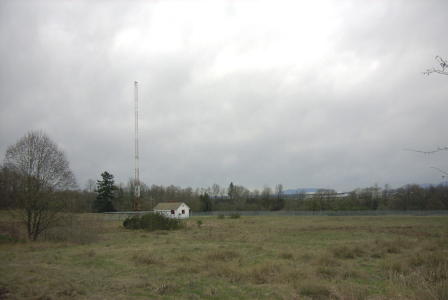
A good CLE target this time is 'XX' on 344 kHz near Abbotsford, B.C. It has been heard throughout North America and can be a good prop-indicator for eastern listeners.
From CLE coordinator Brian Keyte (G3SIA), comes the following reminder:
Hi all:
Our 200th Co-ordinated Listening Event is only a few days away.
Just a normal CLE using a busy range of frequencies which usually
attracts a lot of interest.
First-timers' CLE logs will also be very welcome, as always.
Days: Friday 27 November - Monday 30 November
Times: Start and end at midday, your LOCAL time
Range: 335.0 - 349.9 kHz
Please join us wherever you are - just log the NDBs you can identify
having their nominal frequencies in the range (it includes 335 kHz
but not 350 kHz) and any UNIDs that you come across there too.
(A good way for some of us to unwind after Thanksgiving?)
We last concentrated on these frequencies in CLE185 in Aug. 2014.
Please send your CLE log to the List (no attachments and ideally in a
plain text email) with CLE200 at the start of its title. Show on each line:
# The Date (or Day No: 27 to 30)
# The Time in UTC
# kHz - the nominal published frequency, if known.
# The Call Ident.
Please show those main items FIRST. Any other optional details such
as Location and Distance go LATER in the same line.
If you send any interim logs, please also send a 'Final' (complete) one.
And, of course, tell us your own location and brief details of the
equipment that you were using during the Event.
You can find full details about current and past CLEs from the CLE page
http://www.ndblist.info/cle.htm including access to the CLE200 seeklists
for your part of the World prepared from the loggings on Rxx.
Good listening - enjoy the CLE.
Brian
----------------------------------------------------------
From: Brian Keyte G3SIA: <ndbcle'at'gmail.com>
Location: Surrey, SE England (CLE co-ordinator)
----------------------------------------------------------
(If you would like to listen remotely you could use any one remote
receiver such as http://websdr.ewi.utwente.nl:8901/ for your
loggings, stating its location and owner and with their permission
if required. A remote listener may NOT also use another receiver,
local or remote, to make further loggings for the same CLE)"
These listening events serve several purposes. They:
- determine, worldwide, which beacons are actually in service and on-the-air so the online database can be kept up-to-date
- determine, worldwide, which beacons are out-of-service or have gone silent since the last CLE covering this range
- will indicate the state of propagation conditions at the various participant locations
- will give you an indication of how well your LF/MF receiving system is working
- give participants a fun yet challenging activity to keep their listening skills honed
Final details can be found at the NDB List website, and worldwide results, for every participant, will be posted there a few days after the event. If you are a member of the ndblist Group, results will also be e-mailed and posted there.
The very active Yahoo ndblist Group is a great place to learn more about the 'Art of NDB DXing' or to meet other listeners in your region. There is a lot of good information available there and new members are always very welcome.
If you are contemplating getting started on 630m, listening for NDBs is an excellent way to test out your receive capabilities as there are several NDBs located near this part of the spectrum.
You need not be an ndblist member to participate in the CLEs and all reports, no matter how small, are of much value to the organizers. 'First-time' logs are always VERY welcome!
Reports may be sent to the ndblist or e-mailed to either myself or CLE co- ordinator, Brian Keyte (G3SIA), whose address appears above.
Please ... do give the CLE a try ... then let us know what NDB's can be heard from your location! Your report can then be added to the worldwide database to help keep it up-to-date.
Steve McDonald, VE7SL, is a regular contributor to AmateurRadio.com and writes from British Columbia, Canada. Contact him at [email protected].
Tiny APRS transceiver for PC
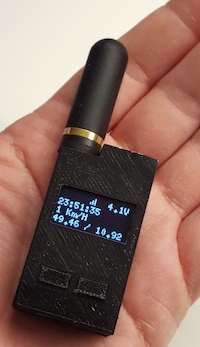
This transceiver looks like it should be possible to duplicate. A neat design. I think this connects via a USB socket so the PC acts as a node for digital modes like DSTAR.
See http://unsigned.io/forum/viewtopic.php?id=2

Roger Lapthorn, G3XBM, is a regular contributor to AmateurRadio.com and writes from Cambridge, England.
Weekly Propagation Summary – 2015 Nov 23 16:10 UTC
Here is this week’s space weather and geophysical report, issued 2015 Nov 23 0602 UTC.
Highlights of Solar and Geomagnetic Activity 16 – 22 November 2015
Solar activity was at very low to low levels over the period. Low levels occurred on 17-18 November and 21-22 November with Regions 2454 (N13, L=121, class/area Dac/130 on 22 Nov) and 2457 (N11, L=032, class/area Dsi/130 on 21 Nov) responsible for the C-class flare activity. The largest flares of the period were a pair of C5/Sf flares at 22/0210 UTC and 22/0538 UTC originating from Region 2454 which was in a growth phase after 21 November.
Two filament eruptions were observed at the beginning of the period that resulted in coronal mass ejections (CMEs). The first was an approximate 21 degree long filament, centered near S11W17, that lifted off around 15/2114 UTC. The second was an approximate 19 degree filament, centered near S26W24 that lifted off around 16/0114 UTC. Two CMEs were observed lifting off the SW limb in SOHO/LASCO C2 imagery at 15/2336 UTC and 16/0312 UTC, respectively. Analysis of these CMEs indicated a likely glancing blow early on 19 November. Later in the period, another filament eruption, centered near S20E10, occurred around 22/0600 UTC. An associated CME, observed in C2 imagery beginning at 22/0836 UTC, was mostly directed off the east limb. Subsequent analysis of this CME indicated a very low chance for a glancing blow.
No proton events were observed at geosynchronous orbit.
The greater than 2 MeV electron flux at geosynchronous orbit was at high levels on 16 November with a maximum flux of 3,129 pfu at 16/1525 UTC. Normal to moderate levels were observed from 17-22 November.
Geomagnetic field activity ranged from quiet to minor storm periods over the period. Solar wind conditions began the period near nominal levels with prolonged periods of southward Bz near -6 nT on 16 November. Subsequently, the geomagnetic field responded with unsettled to active periods. Quiet to unsettled levels were observed on 17 November. At approximately 17/1941 UTC, a solar sector boundary crossing to a mostly negative (towards) sector occurred followed by an increase in solar wind speed from 370 km/s to around 530 km/s by early on 19 November. An abrupt increase in total field from 6 nT to 12 nT occurred at 18/1925 UTC with a maximum southward deflection of the Bz component to -11 nT indicating the likely arrival of the CMEs from 15-16 November coupled with influences from a negative polarity coronal hole high speed stream (CH HSS). A geomagnetic sudden impulse (70 nT at the Wingst magnetometer) was observed at 18/2010 UTC. The geomagnetic field responded with (G1) minor storming late in the period on 18 November with quiet to active conditions on 19 November. Solar wind speed continued a slow decay over the rest of the period to background levels resulting in quiet to unsettled levels on 20-21 November and quiet conditions on 22 November.
Forecast of Solar and Geomagnetic Activity 23 November – 19 December 2015
Solar activity is expected to be low with a chance for M-class (R1-R2, Minor-Moderate) flares from 23-25 November due to flare potential from Region 2454. Very low to low levels are expected from 26 November through 07 December. There is also a chance for M-class flare activity from 08-19 December with the return of old Region 2454 (N13, L=121).
No proton events are expected at geosynchronous orbit.
The greater than 2 MeV electron flux at geosynchronous orbit is expected to be at normal to moderate levels with high levels likely from 26-28 November and again from 06-13 December due to CH HSS influence.
Geomagnetic field activity is expected to be at unsettled to active levels from 25-26 November and 05-12 December with (G1) minor storming likely on 06-07 December due to recurrent CH HSS activity.
Don’t forget to visit our live space weather and radio propagation web site, at: http://SunSpotWatch.com/
Live Aurora mapping is at http://aurora.sunspotwatch.com/
If you are on Twitter, please follow these two users: + https://Twitter.com/NW7US + https://Twitter.com/hfradiospacewx
Get the space weather and radio propagation self-study course, today. Visit http://nw7us.us/swc for the latest sale and for more information!
Check out the stunning view of our Sun in action, as seen during the last five years with the Solar Dynamics Observatory (SDO): https://www.youtube.com/watch?v=zXN-MdoGM9g
We’re on Facebook: http://NW7US.us/swhfr
Visit, subscribe: NW7US Radio Communications and Propagation YouTube Channel
DX seems to operate in the fast lane
DX for new CW operators
How to copy those high speed ops?
 |
| EA8TL's Hexbeam in the Canary Islands |
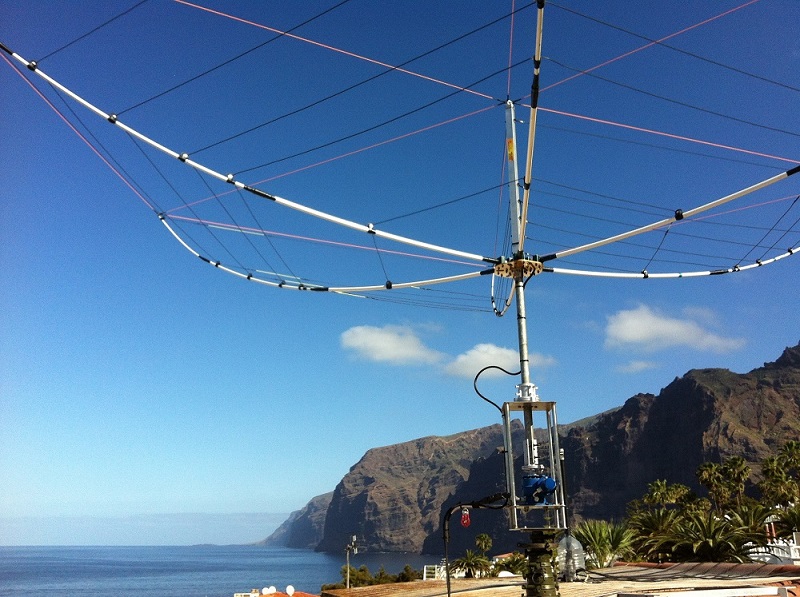
Anyway I was happy to get the response. I know (or surmise) that my 80m Windom has some fairly pronounced gain nodes in different directions on the higher bands but I didn't know which directions they pointed. I guess one of the nodes points toward Africa (yaaay!)
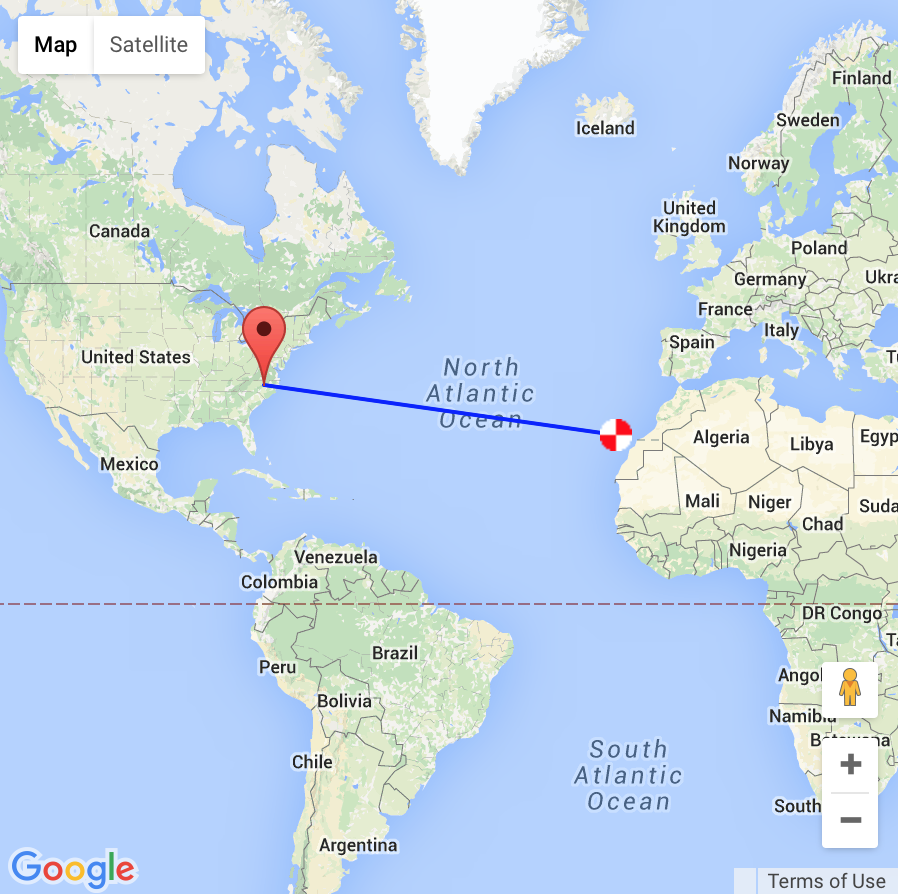 |
| Path from N4PBQ to EA8TL in the Canary Islands |
Do DX operators just not want to bother with newbies such as myself? I wonder. I'd appreciate suggestions in the comments section.That's all for now
So lower your power and raise your expectations
73/72
Richard N4PBQ
Richard Carpenter, AA4OO, is a regular contributor to AmateurRadio.com and writes from North Carolina, USA. Contact him at [email protected].
Kids are Not the Future of Ham Radio
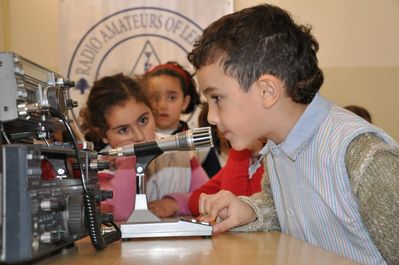 You’ve heard it a million times: our kids are the future. That statement gets applied to almost everything, including amateur radio. How can you argue with an obvious fact like that?
But I am starting to think it is incorrect.
We’ve had really good success on creating new hams of all ages in our Technician License Class (at the Tri-Lakes Monument Radio Association). We’ve been doing this for a while now and I think I am seeing a pattern emerge. We’ve been able to attract middle schoolers to the class and help them get their ham radio license. I’ve talked to many of them on the air. They’ve helped out with public service events. They seem to have fun playing with radios.
Then this thing called high school happens. The high school phase in the US is filled with tons of stuff to do: studying, homework, AP classes, science competitions, sports, dating, movies, driving and after school jobs. Way too much stuff. Ham radio starts to take a backseat to these normal high school activities. Then we don’t see the kids at the radio club meetings or chatting on the local repeater because they are busy doing other things. Have we lost them forever? Not sure.
High school is often followed by college which has its own set of challenges: a totally new environment, away from home, a new set of people, new studies, etc. There might be a ham radio club on campus but maybe not. If a kid is not off to college they are (hopefully) out doing something to establish themselves in this world. Eventually they emerge on the other side, get a job, get themselves established, sometimes with a spouse and maybe a kid or two. By this time they are 25 to 30 years old, depending on the individual.
I recently posted about the demographics of our students in the Tech License Class. The chart below shows the age distribution of our students from our most recent class. Hmmm, clearly most of our students are 30 or older. (Sorry, we have not collected age data with finer resolution.) This particular class is light on the under 18 crowd…sometimes we have a clump of kids in the mix.
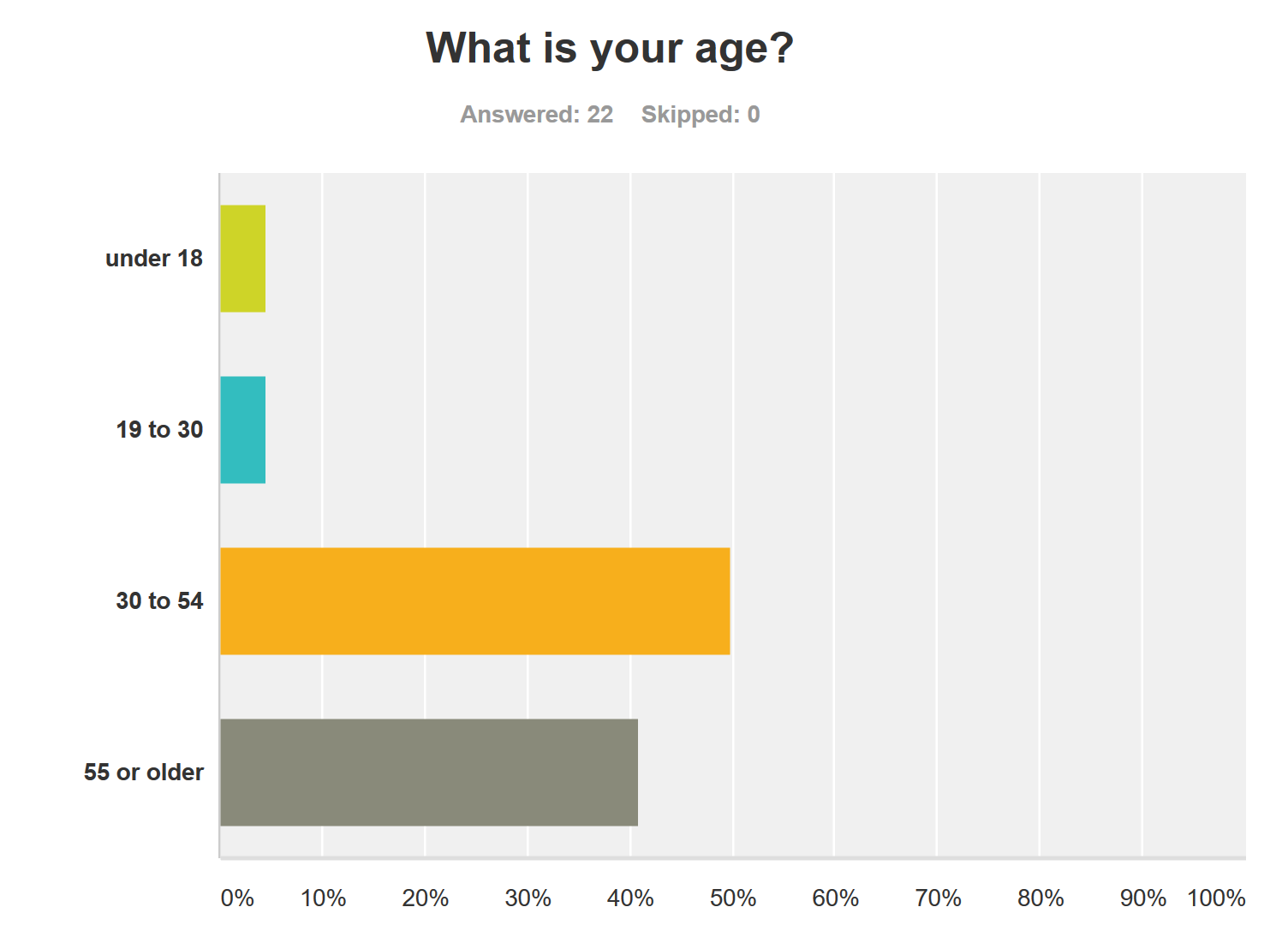 For whatever reason, it seems that most people find themselves in a situation as an adult that causes them to say “I want to get my ham radio license.” When asked why they want to get their ham license, the top response is always emergency/disaster communications, followed by backcountry communications, pursuing electronics as a hobby and learning about radio communications. I suspect that starting to be established in a community and having some disposable income also play a role.
My hypothesis is that the most effective way of growing a vibrant ham radio community is to target adults ages 25 to 40.
This age range is more equipped and ready to be ham radio operators and are still young enough that they will be around for a while. Of course, we still want to work with all age groups, including kids and retirees. We’ve all seen very young hams get the bug for ham radio early and carry it throughout their life. And we also see plenty of older folks get interested in the hobby as they approach or enter retirement. We don’t want to miss out on either of those groups.
So that’s my read on the situation. I’ve got some data to support my theory but I can’t really prove it. What do you think? What are you seeing in your ham radio community?
73, Bob KØNR
The post Kids are Not the Future of Ham Radio appeared first on The KØNR Radio Site.
Bob Witte, KØNR, is a regular contributor to AmateurRadio.com and writes from Colorado, USA. Contact him at [email protected].
CW Practice With RufzXP
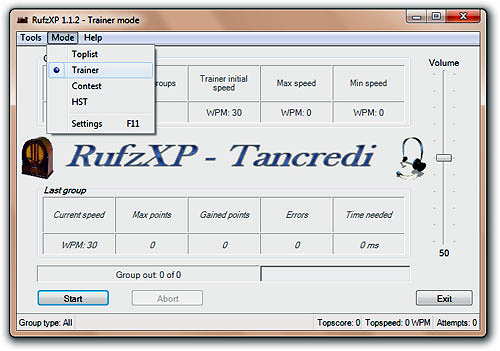
Lately I've been playing with a very helpful piece of CW-training freeware called 'Rufz', an abbreviation of a German word meaning 'Listening to Callsigns'. Rufz is the brainchild of Mathias Kolpe (DL8MM) and Alessandro Vitiello (IV3XYM).
RufzXP is the latest version, compatible with most operating systems from Windows 98 to Win 8.1.
RufzXP is not a contest simulator with QSB and QRM. The program simply sends 50 calls at random, one at a time, starting at your chosen speed. If you correctly type the call, it will increase speed slightly to send the next call. The speed will continue to increase as long as you correctly copy and type the call ... if not, the speed will decrease to the previous level.
This pattern continues until all 50 calls have been sent. The program then displays all of the calls sent, along with the calls that you typed, as well as the speed. You very soon realize the threshold level between copying comfortably at near 100% and where you start to drop off quickly. It really is a great eye-opener and a wonderful way to increase your copying (and typing) ability.
The highest that I have been able to log a few correct calls is at 54 WPM but I can see that with a few minutes of practice each day, this number should continue to improve. Hopefully my ability to type the calls will also improve as my present keyboarding skills are probably being stifled by my 'hunt and peck' style of typing ... I really should have taken typing in high school and have regretted it ever since.
The website for RufzXP contains a wealth of inspiring data, from sound files of various speeds to lists and photos of various high-speed aficionados ... with an impressively large number being European teenagers. It seems that High Speed Telegraphy World Championships are very popular in Europe and many of the champions are quite young. Have a look at some of the teens, aged 16 or younger (both boys and girls) who are copying over 100 WPM ... several of them not even hams.
A particularly interesting page lets you play the word 'PARIS' at various speeds.
Here it is at 20 WPM:
PLAY
... and again at 50 WPM:
PLAY
... yet again at 100 WPM:
PLAY
Now....listen to 'PARIS' being sent at the present record-holding speed of 200 WPM:
PLAY
I have no idea how anyone could copy CW at this speed but apparently YT7AW was able to correctly copy one call out of seven, sent at this speed ... incredible! Perhaps it is the subconscious mind operating at this level.
You may be interested to see someone copying at just over 140 WPM!
If your CW skills need honing, RufzXP might be just the thing you need.
Steve McDonald, VE7SL, is a regular contributor to AmateurRadio.com and writes from British Columbia, Canada. Contact him at [email protected].
 Ham Radio Deluxe |
 W5SWL Electronics |
 Ham Radio Prep |
 KB3IFH QSL Cards  Hip Ham Shirts  HamRadioAuctions HamRadioAuctions Reliance Antennas Reliance Antennas Enigma Shop Enigma Shop |  morseDX  Ni4L Antennas  R&L Electronics R&L Electronics antennas.us antennas.us QRV QRV |
- Matt W1MST, Managing Editor
