 |
 Chasing NDB’s In The Haida Gwaii
 18 December 2015 | by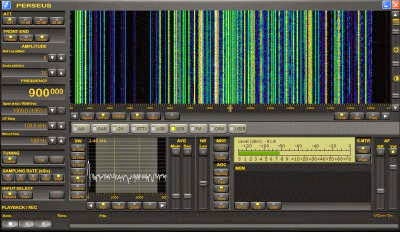
Over the past two weeks, I have spent some time reviewing several Perseus SDR recordings sent to me by Walter Salminaw in Victoria, B.C.
Walter is a hard core, mainly BCB DXer, who has a winterized vacation home in the remote Haida Gwaii Archipelago region of north west British Columbia, formerly known as the Queen Charlotte Islands.
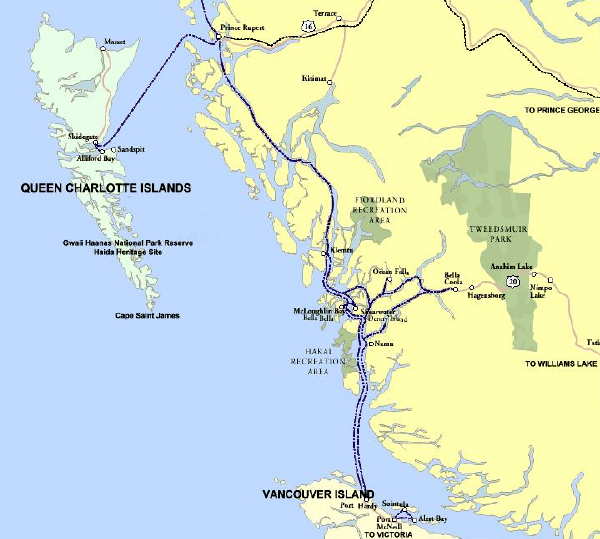
He has built several permanent antennas, including loops and various beverages, mainly favoring Asia, the Pacific and over-the-pole. Some of his BCB recordings reveal mind-numbing signals from all parts of Asia ... not S9, but S9+++ and simply amazing.
I had asked Walter for some of his files that covered the NDB band, during periods of good propagation, so that I might be able to determine if my selected list of Alaskan beacons were actually on-the-air or not. There are several NDBs in Alaska that seem to be active, according to FAA information, but have never been heard by NDB DXers. Using Walt's recordings, along with his NW-pointed beverage, allowed my to have a deep listen into Alaska and finally get some answers.
It was exciting to tune through the very quiet band, from a northern perspective, and to hear many of the more 'difficult' (normally weak here) Alaskan targets at S9 levels. Unfortunately, going through my list of suspects, turned-up no sign of activity from any of them and explains why I have never been able to hear them from here! Like so many regions around the world, it seems that the once huge network of Alaskan NDBs is quickly being phased out up there as well.
An unexpected side benefit of going through Walt's files, turned up several instances of beacons in the Canadian north, that had been reported shut down, several years ago. It was surprising to hear them still as active as ever. Additionally, one NDB in Alaska, unheard here for two years and thought to be gone for some time, was found to be still happily keying away.
I've sent these findings to the RNA database for updating ... but it would have been nice to hear some of my long-sought after Alaskan 'ghosts', which seem likely to have been off-the-air for several years.
I would like to thank Walter for taking the time to share his Perseus files with me and for his unexpected contribution to the RNA database. Here are a few of the log's highlights:
DD UTC kHz Call mi New Location
22 14:07 214 DA Dawson, YT, CAN ... RNA shows QRT as of 2008 ...0 deg bev best
22 14:07 245 CB Cambridge Bay, NU, CAN ... 0 deg bev best but betterr on ALA on 19th
--------------------------------------------------------------------------------------------------
 |
| courtesy: http://www.noaa.gov/ |
Steve McDonald, VE7SL, is a regular contributor to AmateurRadio.com and writes from British Columbia, Canada. Contact him at [email protected].
Get Ready: Month-long Special Event for SKCC, the 2016 K3Y Celebration
Are you ready for the annual, month-long special event by the Straight Key Century Club (SKCC)? The SKCC Group membership is free, and celebrates the longest tradition of amateur radio: Morse code. But, not just any Morse code. The manual creation of Morse code by “straight” keys means no electronic origin, only mechanical. This is a month-long event, during January 2016, modelled after the ARRL Straight Key Night.
Here’s a video that I made showing my activity as the control operator of the special event station, K3Y/0, during one of the many shifts during January (2015). K3Y is the special event callsign of the Straight Key Century Club (SKCC). The special event operates each January. I’ll be doing this again, this coming month, January of 2016.
K3Y, the Straight Key Century Club’s annual January celebration, commemorates the club’s founding in 2006 following the American Radio Relay League’s Straight Key Night. A small group of participants wanted to extend the fun of SKN throughout the year. The SKCC is the result.
For the first three years, the club’s founders used K1Y, K2A, and K3Y as the celebration’s special-event calls. But someone cleverly noticed that a 3 is nothing more than a backwards, curvaceous E. This “KEY” event has operated under the K3Y call ever since.
The on-air party is open to members and non-members alike. It runs from 0000 UTC Jan. 2 through 2359 UTC Jan. 31. It’s a great time to introduce others to the joys of hand-crafted Morse code using straight keys, bugs, and side swipers.
This year, January 2016, we’ll be fielding K3Y operators in each of the 10 US call areas, plus KH6, KL7 and KP4, along with specially scheduled stations in each of six IARU continental regions. Your QSOs with event operators in all these 19 areas will be tabulated in the Statistics section and can be confirmed with a K3Y QSL card and Sweep Certificate.
+ The SKCC website is at http://skccgroup.com
+ The K3Y special event page is http://www.skccgroup.com/k3y/
73 de NW7US
dit dit
Visit, subscribe: NW7US Radio Communications and Propagation YouTube Channel
Sorry, I’ve Been On 2m FM Again
This recycled post from 2008 is still accurate, but I do have my HF antenna up and recently used it for the CQ WW SSB Contest.
 I was looking out the window the other day and noticed that my wire HF antenna is laying on the ground. Hmmm, probably doesn’t radiate very well that way. But if I put a long, lossy coaxial cable in line, the SWR will still be good at the transmitter. And I can tell my buddies that it works just fine because “I can work everyone that I hear.” (What a dumb thing to say.)
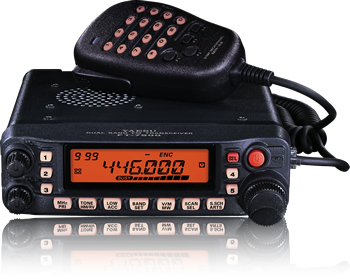
This made me realize that most of my ham radio activity lately has been on 2m FM. Actually it has been on 2m and 70cm FM, as I tend to lump these two activities together. These days, my VHF/UHF FM rigs have at least 146 MHz and 440 MHz in them (FT-7800, FT-8900, etc.). I cruise down the road and flip on the rig, talk to the locals, talk to the XYL, etc. It is just too easy and too convenient. It fits the mobile lifestyle, whether it means operating a mobile rig in the car or grabbing an HT to take along on a business trip. (I used to run HF and SSB VHF mobile but found that the rigs were rarely used, so I removed the gear from my vehicle.)
Of course, I need to apologize to the rest of the ham community for this failure to act according to accepted social norms. You know how it is…Real Hams operate HF, weak-signal VHF, microwaves, etc……almost anything that is not 2m FM. Every so often I hear that comment about “well, those techs just hang out on 2m FM,” implying that those guys are permanently stuck in ham radio middle school, unable to graduate to the next level. Or sometimes the FM operators are referred to as having “shacks on the belt” which are dependent on the “box on the hill.” The main message is that 2m FM is just too easy, too plug-n-play, too much like an appliance….too convenient. We certainly can’t have that!
Don’t get me wrong…I enjoy HF, DXing, contesting, digital modes, almost anything to do with amateur radio. That’s the cool thing about the hobby…so many bands, so many modes. One of my favorite activities is operating the major VHF contests. (I’ve even been known to make a few CW contacts.) But on a day-to-day basis 2m FM just seems to fit in better.
Some people call 2m FM the Utility Mode, because it is the mode that gets the job done. Last week, we had a weather net activated to track thunderstorms and a few tornadoes. Did this happen on 40m? I don’t think so. Two meters carried the load. Where do most of the ARES and RACES nets meet? Two meters. How is most public service communications handled? Two meter FM. Even some hard core HF DX enthusiasts are known to flip over to 2m FM to tell their buddies that the DXpedition to a rare country is on the air. It is the Utility Mode.
Over the weekend, I was driving through the mountains and heard an aeronautical mobile working stations simplex on 146.52 MHz…lots of fun. Another time, I heard a station calling about 80 miles away (I was in a high spot) and I had the pleasure of making that contact….again, on 2m FM. A few weeks ago, I operated in the Colorado 14er Event from the summit of Pikes Peak. Since many of the mountaintop stations had hiked up, the most popular mode of the day was (you guessed it) 2m FM.
So sorry, I have been hanging out on 2m FM. I’ll try to get that HF antenna back in the air one of these days.
73, Bob K0NR
The post Sorry, I’ve Been On 2m FM Again appeared first on The KØNR Radio Site.
Bob Witte, KØNR, is a regular contributor to AmateurRadio.com and writes from Colorado, USA. Contact him at [email protected].
’29 BK QSO Party – Night #2
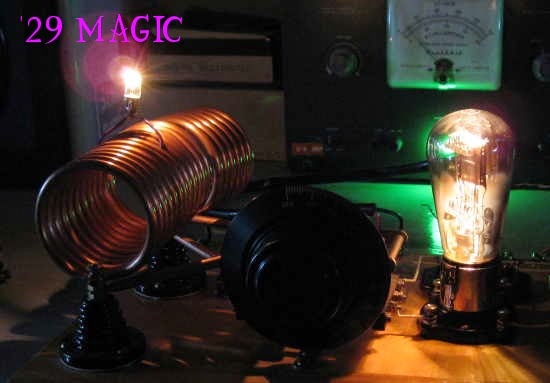
Weekend #2 for the 1929 Bruce Kelley QSO Party found propagation even poorer than the first weekend.
With the 'K' index rising to level 4 along with the arrival of high speed solar winds, it was an uphill battle once again. And as usual, the terrestrial winds were relentless at 60-90km/h here for the entire event ... the worst winds I have experienced during any previous BK's.
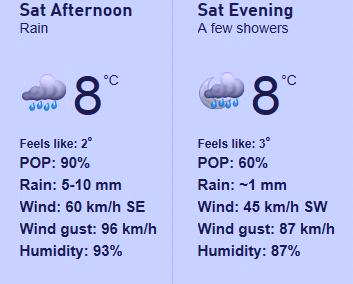
The new MOPA did not suffer from the same level of frequency jumping as my previously used Hartley or TNT oscillators but the high winds were still able to cause some melodic pulling of the oscillator. Apparently there is still enough trickle-down coupling from the PA to the oscillator when high winds cause sudden shifts in impedance or resonance of the antenna ... but generally I was much happier with the new BK transmitter.
This year's BK QSO total was the lowest I have had, with just 29 QSO's. A few more were added on Saturday night as well as early Sunday morning, including one QSO on topband.
KK7UV, Steve in Montana, can always be counted on for a clean-sweep and working him on 160m completed that task again this year. Steve's extensive fall antenna work has really payed off as his '29 signal was always impressive up this way. His 160m Hartley signal was a solid 579.
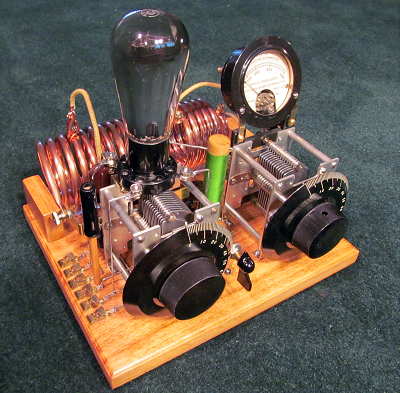 |
| KK7UV - Hull Hartley |
Hats off to Bill, K4JYS in North Carolina, as once again his signal seemed to be the one most consistently heard here, on both 40m and 80m. Bill runs a single-wire off-center fed Hertz at 40', as described in December 1929 QST and it seems to work very well.
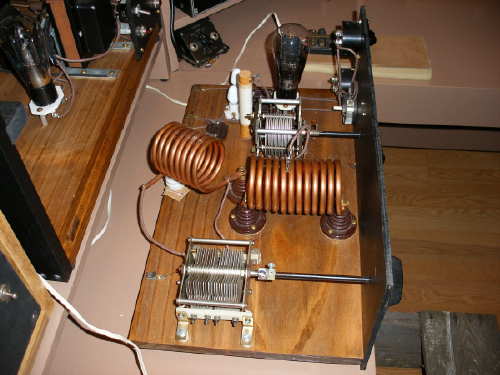 |
| K4JYS - 210 Hartley |
George, N3GJ in Pennsylvania was worked along with Larry, W2LB in New York. Larry's 5W Hartley signal was an amazing 559 and solid copy. His breadboard '29 rig is proof that it doesn't have to be pretty to do the job and join the fun!
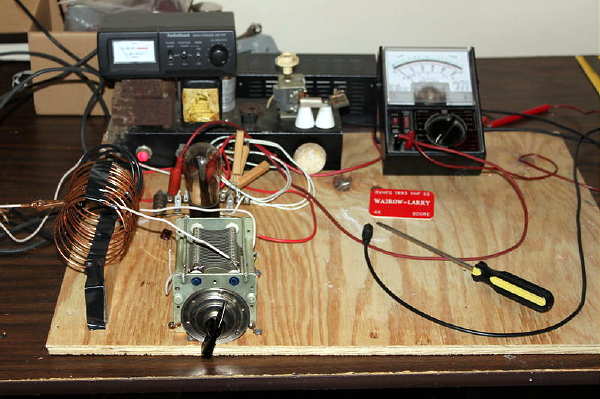 |
| W2LB - 227 5W Hartley |
Another one of the night's highlights was working Lou, VE3AWA, on 80m, who I had missed the previous weekend. So far, Lou and I have never failed to work each other on 80m but it was looking rather dire until his signal suddenly popped-up shortly before 8PM, keeping our record intact.
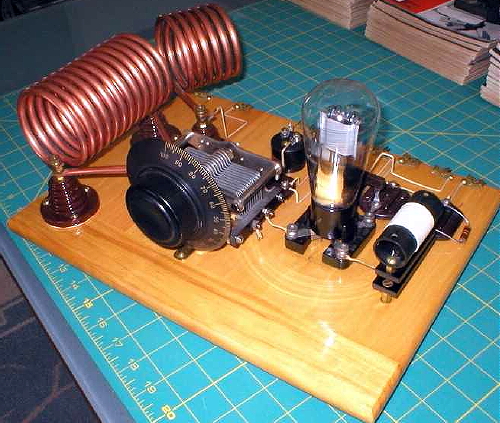 |
| VE3AWA - 210 TNT |
These stations were worked on weekend #2 ... Hartley oscillators having the edge once again.
40m
W7LNG TNT 10w OR
W8KGI MOPA 10w NM
N2BE Hartley 10w NJ
W2LB Hartley 5w NY
80m
VE3AWA TNT 10w ON
N3GJ Hartley 9w PA
W2LB Hartley 5w NY
KØKP Hartley 10w MN
KØKCY MOPA 10w MN
160m
KK7UV Hartley 10w MT
Please do consider putting something together for next year's BK Party as more new activity, particularly from the western side of the continent, is always wonderful to see and adds much more excitement to the party.
You might find the three-part 'Building '29 Style' links on the right sidebar of some interest should you be planning on joining the fun and ... if you are looking for help, you will find many '29 ops willing to do what they can to get you BK-ready on Yahoo's AWAGroup. Everyone would love to work you next year!

Steve McDonald, VE7SL, is a regular contributor to AmateurRadio.com and writes from British Columbia, Canada. Contact him at [email protected].
AmateurLogic 85: 2015 Christmas Extravaganza
AmateurLogic.TV Episode 85 is now available for download.
The 2015 AmateurLogic Christmas Extravaganza. Peter troubleshoots his Ugly Balun. Tommy shows us a cheap, small, efficient voltage regulator. Emile demonstrates the Cheap Spectrum Analyzer. Mike, VE3MIC joins us to introduce some new ALTV products just in time for the holidays.
1:20:25
George Thomas, W5JDX, is co-host of AmateurLogic.TV, an original amateur radio video program hosted by George Thomas (W5JDX), Tommy Martin (N5ZNO), Peter Berrett (VK3PB), and Emile Diodene (KE5QKR). Contact him at [email protected].
Weekly Propagation Summary – 2015 Dec 14 16:10 UTC
Here is this week’s space weather and geophysical report, issued 2015 Dec 14 0121 UTC.
Highlights of Solar and Geomagnetic Activity 07 – 13 December 2015
Solar activity was at low levels and only C-class flare activity was observed throughout the period, the largest of which was a C7 flare at 12/1346 UTC from Region 2470 (N13, L=087, class/area=Dkc/270 on 13 Dec). No Earth-directed coronal mass ejections (CMEs) were observed this period.
No proton events were observed at geosynchronous orbit.
The greater than 2 MeV electron flux at geosynchronous orbit reached high levels every day of the summary period with a peak flux of 10,700 pfu observed at 09/1455 UTC.
Geomagnetic field activity was quiet to active levels on 07-08 Dec due to waning coronal hole high speed stream effects prior to the summary period. Unsettled to active field conditions were observed on 10-11 Dec, with an isolated period of G1 (Minor) geomagnetic storm levels observed between 10/0300-0600 UTC, due to the influence of a positive polarity coronal hole high speed stream.
Forecast of Solar and Geomagnetic Activity 14 December – 09 January 2016
Solar activity is expected to be at low levels throughout the outlook period with only C-class flare activity expected.
No proton events are expected at geosynchronous orbit.
The greater than 2 MeV electron flux at geosynchronous orbit is expected to reach high levels on 14-20, 29-31 Dec and 03-09 Jan. Low to moderate electron flux levels are expected throughout the remainder of the period.
Geomagnetic field activity is likely to reach G1 (Minor) geomagnetic storm levels on 16 Dec and 06 Jan due to the influence of recurrent coronal hole high speed streams. Active field conditions are likely on 15, 17-18, 27-28 Dec and 01, 03-04, 07-08 Dec due to coronal hole high speed stream effects. Quiet to unsettled levels are expected for the remainder of the period.
Don’t forget to visit our live space weather and radio propagation web site, at: http://SunSpotWatch.com/
Live Aurora mapping is at http://aurora.sunspotwatch.com/
If you are on Twitter, please follow these two users: + https://Twitter.com/NW7US + https://Twitter.com/hfradiospacewx
Get the space weather and radio propagation self-study course, today. Visit http://nw7us.us/swc for the latest sale and for more information!
Check out the stunning view of our Sun in action, as seen during the last five years with the Solar Dynamics Observatory (SDO): https://www.youtube.com/watch?v=zXN-MdoGM9g
We’re on Facebook: http://NW7US.us/swhfr
Visit, subscribe: NW7US Radio Communications and Propagation YouTube Channel
LHS Episode #157: Canada Goes Dark
 Hello, everyone! Welcome to the latest installment of Linux in the Ham Shack. Today your hosts discuss a new, incredibly inexpensive single-board computer, an ARRL contest slated to last all of 2016, politics vs. emcomm, a re-written DOS-based contest logger and much, much more. Thanks as always for tuning in and we hope you have a safe and happy holiday season.
73 de The LHS Crew
Russ Woodman, K5TUX, co-hosts the Linux in the Ham Shack podcast which is available for download in both MP3 and OGG audio format. Contact him at [email protected].
 Ham Radio Deluxe |
 W5SWL Electronics |
 Ham Radio Prep |
 KB3IFH QSL Cards  Hip Ham Shirts  HamRadioAuctions HamRadioAuctions Reliance Antennas Reliance Antennas Enigma Shop Enigma Shop |  morseDX  Ni4L Antennas  R&L Electronics R&L Electronics antennas.us antennas.us QRV QRV |
- Matt W1MST, Managing Editor
