 |
 BM-800 Mic something to talk about.
 10 April 2016 | by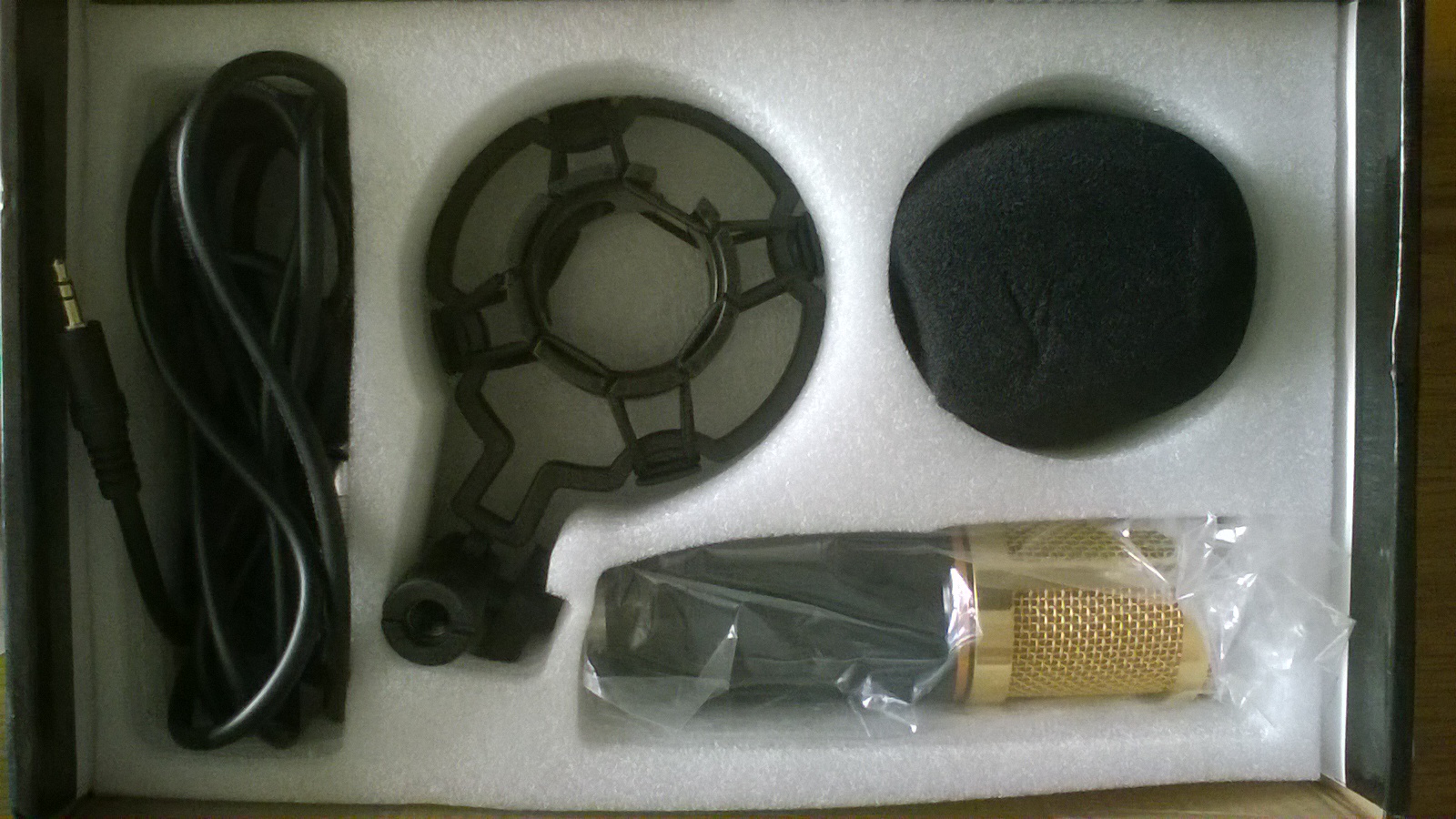
Until recently there were two types of the BM-800 available, one version was badged Shengyue BM-800, this had the advantage of an onboard 1.5V battery to feed the condensor insert. Thus the great advantage of this no external supply was required. This model has now become as rare as hens teeth and we are left with the 48V version. This type however requires an external 48V voltage fed up the cable to charge the insert. Some have overcome this problem using the microphone with an external audio mixer and feeding it using the 48V phantom power supply from the mixer. There is also another problem, the audio output is balanced, and again if not using a mixer you have got to find a method of changing it's output to unbalanced to feed your rig.

I have a couple of these microphones still wrapped up in their boxes and have been thinking for sometime how I could match them straight into my radio's without using a mixer etc.

Until recently there had been very few modification ideas around for this model, but a few nights ago I stumbled across a website from Pete G4IZH who has not only done all that is required to convert the mic from 48V to around 9V that can be taken from your radio's external mic socket supply, or even using a 9V battery, which could be made to fit inside the BM-800 case. The board has then been hacked, to get rid of the balanced output and then fed directly into a filter to tame the HF and LF response ranges, making it more ideal for Amateur requirements. Of course you don't have to do it quite the same, especially if you want to fit a PP3 battery inside the case a bit more room will be required, but all the information is now there to customize the idea to your own requirements.
Reference G4IZH BM-800 modifications here
Steve, G1KQH, is a regular contributor to AmateurRadio.com and writes from England. Contact him at [email protected].
TIS DX
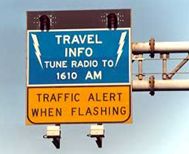 Have you ever wondered where those odd stations found at the ends of the AM broadcast band might be located and what they're all about? These are 'Traveller Information Stations' or 'TIS's and, 'Highway Advisory Radio' (HAR) stations. Because of their low power (100mw - 10W), they make challenging DX targets if you can catch the ID on their continually- repeated audio loop.
These stations are located throughout Canada and the USA at places such as highway intersections, border crossings, ferry terminals, airports and parks ... just about any place that needs to advise travellers (vehicles) with up-to-date directions or information. From here on Mayne Island, the farthest TIS I have been able to identify was WPTC509, located in Carbon County, Wyoming.
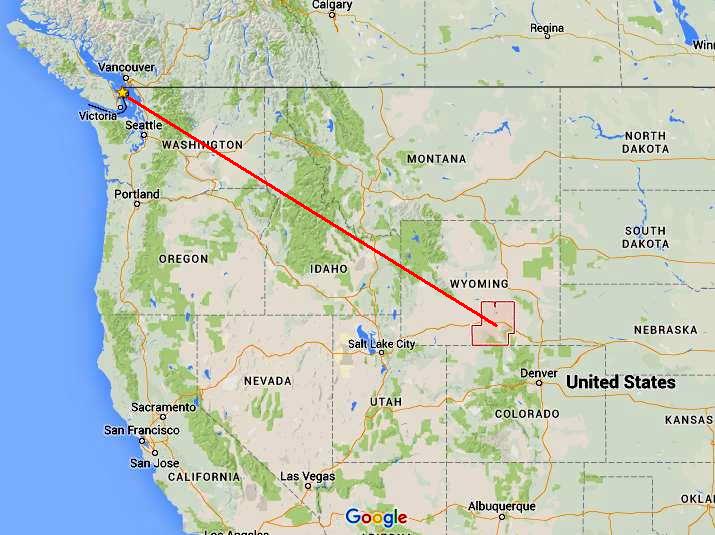 |
| courtesy: https://www.google.ca/maps |
IRCA TIS/HAR LIST (Winter 2016)
The IRCA TIS/HAR LIST lists all US and Canadian TIS/HAR stations, by frequency, including call letters, state (province,) city, county, licensee, address, coordinates, expiration date and dates of DXM/DXN reports/sources. It has been updated with FCC data, DXM, DXN and DXer reports, and on-line listings through March 1 2016.
The 2016 IRCA TIS/HAR LIST is posted on the IRCA website for all to download. The link is: http://www.ircaonline.org/TIS_2016.pdf.
For those preferring a hard copy, one can be ordered from the IRCA.
As well, this page on regulations, permitted content and TIS history has some interesting info.
IRCA is one of the oldest clubs dedicated to DXing the broadcast bands and members receive a monthly journal of members loggings as well as other relevant articles. A trip to the IRCA website might get you hooked on this part of the radio hobby as it's probably the way that most amateurs discovered the 'magic of radio', on late winter nights! Just in case you need it, the mwlist will help you identify any stations heard in the AM broadcast band, worldwide.
Steve McDonald, VE7SL, is a regular contributor to AmateurRadio.com and writes from British Columbia, Canada. Contact him at [email protected].
Part 2: What to bring for portable operations?

- An HF radio……….DUH well of coarse……I’m bringing my Elecraft KX3 it has internal rechargeable batteries and you can plug in an external power source, internal antenna tuner, CW paddles attached to the radio, up to 15 watts of power thanks to the recent firmware upgrade but I will stick with 5 watts and many more portable friendly features.
- The antenna……..I have chosen to use mono band whip antennas. I have the Workman HF whips from 10m to 40m and a great carry case for them. I’m able to Velcro strap them to the rear rack and to the front bar on the bike.
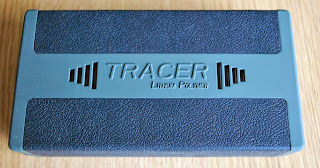
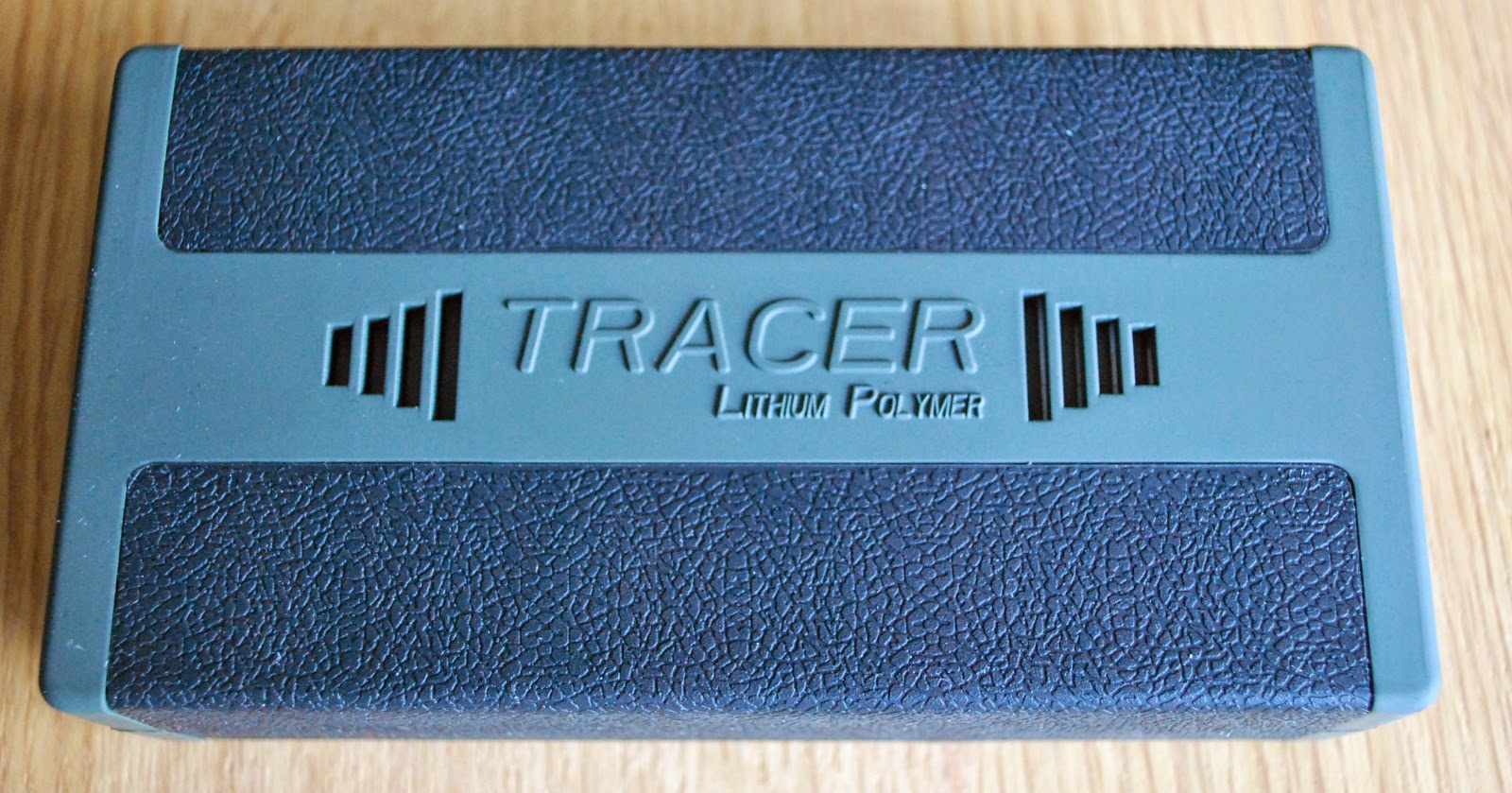
- Spare external battery and I have already the Tracer 4Ah rechargeable battery. I was looking at other batteries but I figured “use what you already have”.
- 3x5 cards with some of the common command functions of the KX3. Such things as setting up CW Keyer memories and playing them,memory setup and recall and dual watch if needed.
- Bring some info on the contests that may be going on that day as I can scoop some contacts that are in a contest. It’s handy to know the exchange they are looking for in the contest.
- Make a list ahead of time that what to bring………there has been to many times to count when I thought I could remember everything only to find out I missed something and I was not able to operate because of it.
Mike Weir, VE9KK, is a regular contributor to AmateurRadio.com and writes from New Brunswick, Canada. Contact him at [email protected].
Amateur Radio Weekly – Issue 106

Final Days of VK0EK (ATNO Days)
One of our objectives is to give an All-Time New One (ATNO) to as many DXers as possible.
VK0EK
April 18th: World Amateur Radio Day
World Amateur Radio Day is the day when IARU Member-Societies can show our capabilities to the public and enjoy global friendship with other Amateurs worldwide.
IARU
Radio amateurs in the quest for geostationary satellites
In the next few years radio amateurs will have access to two geostationary platforms.
EE Publishers
The Doctor is In: New podcast from ARRL
Hosted by QST Editor In Chief Steve Ford, WB8IMY, the ARRL The Doctor is In podcast is a twice-monthly audio podcast that answers your questions.
ARRL
D-STAR satellite to launch from Kourou
OUFTI-1 from the University of Liege, Belgium, will be the first satellite to carry a D-STAR Digital Voice transponder.
AMSAT UK
Fuses: Make sure you can trust them
The Dollar Store fuse turns out to be the worst: running several minutes at 20A, double the rated current.
Noisebridge
Field guide to communications towers
Technically speaking, they are called Base Transmitter Stations (BTS). You might see ‘cell site’ and ‘cell tower’ used interchangeably, but these terms are not synonymous.
Hack A Day
Meteor Scatter season gets underway
Meteor Scatter season has started with the April meteor showers and will continue until the beginning of January next year.
Southgate
Morse News: Get your news the old fashioned way
It’s an application that pulls RSS feeds and translates them to Morse.
Ham Radio QRP
Video
Demolition: Voice of America Radio Towers
The final 48 “quad” towers were felled in a single explosives sequence on Monday, April 4, setting a new World Record in this category.
DCI
Rainy SO-50
From the 2016-03-27 2111Z SO-50 pass over North America.
Space Comms
Amateur Radio Weekly is curated by Cale Mooth K4HCK. Sign up free to receive ham radio's most relevant news, projects, technology and events by e-mail each week at http://www.hamweekly.com.
Portable Ops 14, 15, 16, 17/45: Catching up!
Well, I have been having a bunch of fun on the radio doing portable operations, but I have fallen behind on my blog!
I am going to condense this down with just dates and number of stations worked:
4/4/16 – 4 stations worked (3 of them were SKCC members)
4/5/16 – 3 stations worked (all of them were SKCC members)
4/7/16 – SKCC Europe Sprint:
I was able to get out of the office for a bit and work this sprint. Any station is welcome to participate, but it is setup so the time works better for SKCC European members. The band was in OK shape, and I managed to work 6 stations in 90 minutes.
F6HKA – France, awesome signal here in Kansas, and a great Op!
K1PUG – Connecticut
WH6LE – North Carolina
KG6MC – South Carolina
KD6SX – Oregon
F6EJN – France
So I began the Sprint in France and ended in France! Fun times!
I plan on working SKCC Weekend Sprintathon this weekend. I don’t know how much time I will actually have but will give it a good go when I have time!
Burke Jones, NØHYD, is a regular contributor to AmateurRadio.com and writes from Kansas, USA. Contact him at [email protected].
Portable Ops 14, 15, 16, 17/45: Catching up!
Well, I have been having a bunch of fun on the radio doing portable operations, but I have fallen behind on my blog!
I am going to condense this down with just dates and number of stations worked:
4/4/16 – 4 stations worked (3 of them were SKCC members)
4/5/16 – 3 stations worked (all of them were SKCC members)
4/7/16 – SKCC Europe Sprint:
I was able to get out of the office for a bit and work this sprint. Any station is welcome to participate, but it is setup so the time works better for SKCC European members. The band was in OK shape, and I managed to work 6 stations in 90 minutes.
F6HKA – France, awesome signal here in Kansas, and a great Op!
K1PUG – Connecticut
WH6LE – North Carolina
KG6MC – South Carolina
KD6SX – Oregon
F6EJN – France
So I began the Sprint in France and ended in France! Fun times!
I plan on working SKCC Weekend Sprintathon this weekend. I don’t know how much time I will actually have but will give it a good go when I have time!
Burke Jones, NØHYD, is a regular contributor to AmateurRadio.com and writes from Kansas, USA. Contact him at [email protected].
Backup Your Shack PC
We recently passed World Backup Day on March 31st. These days there seems to be a day for everything, important or not. Backing up your computer data is more important than a lot of people think. I don’t know how many times someone has brought me their computer asking for help when they can’t access something on it. My first question is usually “Do you have a backup?” And the response is more often than not “No! That’s why I need help”. Occasionally I am able to save their data but if their disk drive is too far gone, then it’s lost.
Consider what’s on your computer. I have years and years of digital photos, purchased music files, and a lot of important documents. That doesn’t even begin to cover my ham radio related data. The important things as far as I am concerned that I would rather not lose are my logs, LOTW TQSL certificate files, data files for programming my radios and other data files like antenna plans and such.
Ask yourself this question . . . “Can I get all that stuff back if something terrible happens to my computer and the data is no longer accessible?”
You should be able to answer “Yes, I can!”
I am not going to go into all the possible ways to backup your data. There are USB drives, thumb drives, online services or you can build a home backup server. This article isn’t going to review all those possibilities and I am sure there is some method I left out of this short list.
Consider the 3-2-1 backup rule. The 3-2-1 strategy means having at least 3 copies of your data, 2 of which are on different mediums (i.e.: devices) and at least 1 copy off site. The key to this, is that all 3 copies need to be reasonably up to date. Having the offsite copy too old doesn’t do much good if that’s the one you need to use for a restore.
For my home computers, I use a network drive and an online service. So I have my original copy, my onsite network drive copy, and the offsite online service as my third copy. You don’t have to use an online service. I just like the automatic online, offsite backup.
Another important thing to consider, is the restore itself. Your backup is only as good as your ability to restore it. Occasionally restoring a specific file is a nice test. Backing things up in some super-duper format isn’t any good if it’s too difficult to restore. Also think about how you would restore the operating system and not just your data. You likely don’t need to backup the operating system as most people have restore disks that shipped with their computer or some other install method for the OS.
So, please think about what and how you backup your data. Can you restore it? Do you have an offsite copy? What if I lose my main hard rive and it’s contents?
While those are not nice thoughts, it’s better to be prepared than not . . . . And it seems like a lot of the Ham Radio hobby/service is about being prepared in one form or another.


Wayne Patton, K5UNX, is a regular contributor to AmateurRadio.com and writes from Arkansas, USA. Contact him at [email protected].
 Ham Radio Deluxe |
 W5SWL Electronics |
 Ham Radio Prep |
 KB3IFH QSL Cards  Hip Ham Shirts  HamRadioAuctions HamRadioAuctions Reliance Antennas Reliance Antennas Enigma Shop Enigma Shop |  morseDX  Ni4L Antennas  R&L Electronics R&L Electronics antennas.us antennas.us QRV QRV |
- Matt W1MST, Managing Editor
