 |
 The ZL1SIX Ocean Floater
 14 May 2016 | by
For those of you that are fans of the low-powered "party balloon" floaters, such as the recent S-9 flight by VE3KCL, now comes a different kind of floater and one that really does float ... on the Pacific Ocean!
The "Ocean Floater" is the work of Bob, ZL1RS, who has been very active in tracking the other floaters from his excellent receiving site down-under. Like the balloons, Bob's beacon also utilizes the QRP Labs U3S hardware to transmit data in both WSPR and JT9 modes. The little beacon runs ~100mw on the 30m WSPR band and tracking this one will likely be a bit more challenging than following the high-flying balloons.
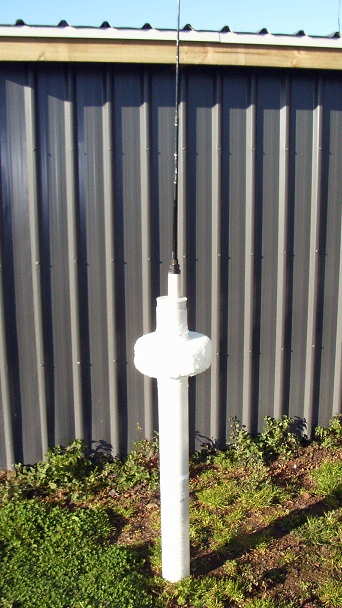 |
| Bob's 'Ocean Floater courtesy: http://www.qsl.net/zl1rs/oceanfloater.html |
Here is Bob's description as he posted to Yahoo Groups QRP Labs:
A small project inspired by Hans' Voyager ideas at
http://www.hanssummers.com/voyager.html ... the Floater is a 100mW
transmitter on the 30m band with a short base-loaded whip antenna
mounted on a buoy that will drift in the Pacific Ocean. It is sending a
standard WSPR transmission once and hour, followed by two JT9
transmissions giving its position, the temperature, and the battery voltage.
The project was deliberately kept very simple. A QRP-Labs U3S
transmitter and firmware made the electronics side easy. The U3S was
rebuilt on a board with a more open layout to allow experimentation and
the addition of a PICAXE controller to switch things on/off as required
to reduce overall battery consumption. Most of the "hard work" was in
the buoy body and antenna. More information about how this went
together can be found at http://www.qsl.net/zl1rs/oceanfloater.html
Today the Floater left on the yacht Windflower to be released into the
south-west Pacific Ocean in a few days time. This will ensure the
Floater is well clear of the coastal currents around ZL that would
otherwise have 'beached' it along the coast if it been launched from the
shore. Unlike balloon flights, things will happen very very slowly, so
updates to the webpage and tracking map will probably only be made on a
daily basis. WSPRnet spots will show the 4 character Maidenhead
locator position, and the JT9 decodes have a 6 character Maidenhead
resolution. Any JT9 decodes you receive will be appreciated via e-mail
to [email protected]
73, Bob ZL1RS
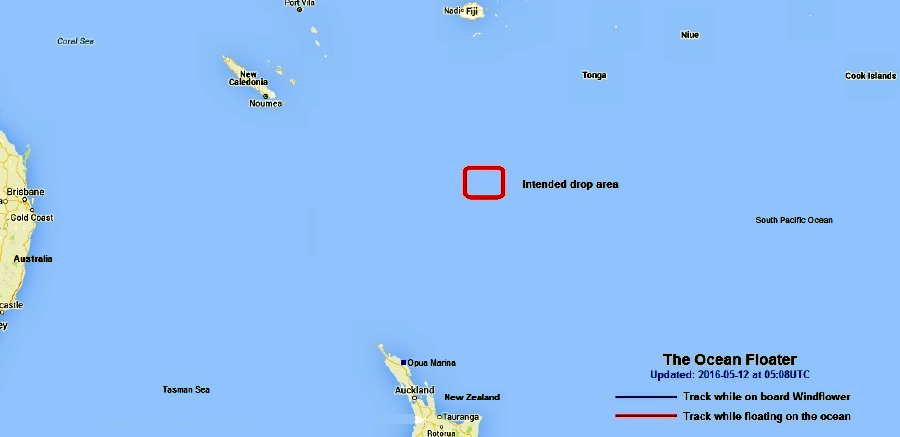
The beacon will use the call "ZL1SIX" and will be launched shortly, near Minerva Reef. Watch Bob's website for tracking and updates and ... good luck Bob!
Steve McDonald, VE7SL, is a regular contributor to AmateurRadio.com and writes from British Columbia, Canada. Contact him at [email protected].
Summits On The Air – Colorado Style
 Summits On The Air – Colorado Style is the title of my presentation at Hamcon Colorado, 2 pm Friday May 13th. I will be discussing the Summits On The Air program and the Colorado 14er Event.
The slides are available here:
Summits On The Air -Colorado Style
The conference will be excellent. I hope to see you there!
73, Bob KØNR
The post Summits On The Air – Colorado Style appeared first on The KØNR Radio Site.
Bob Witte, KØNR, is a regular contributor to AmateurRadio.com and writes from Colorado, USA. Contact him at [email protected].
IC-7300 LF / MF Receive Performance
 | ||
| courtesy: Icom's youtube |
Finbar recently had the opportunity to borrow and test-drive a spanking new Icom IC-7300. Like many of those interested in the LF / MF bands, he was particularly curious about its receiving performance in this part of the spectrum. His present mainstay LF receiver is the Icom R-75, which by any standard, is an excellent performer on the broadcast band and below.
Here are Finbar's anecdotal observations made with a borrowed IC-7300:
" ... my nearest radio amateur friend really surprised
me yesterday by telling me he had bought the new Icom 7300 SDR
transceiver. He offered me a quick loan to try it out. I drove the 9 km
straight away and getting home set it up side by side with my Icom R75.
3 hours later I returned it to it's owner having gained a valuable
chance to test it.
First off, he forgot to give me the instruction manual, but after a
short interval I had it sorted out, having seen the numerous videos, on line.
I disabled the MW attenuation and made sure not to have the Pre-amps
on, otherwise, within the medium wave band, it becomes very messy,
as one would expect.
Basically my R75 produced sharper, more sensitivity in the NDB band,
with some signals on the Icom 7300 being very weak to unreadable,
whereas the Icom R75 gave a much more solid signal, on those very weak
signals.
I did not test the rig on short wave, nor did I transmit or even key
it up, in any mode. I was much more interested in it's apparent receive
capabilities.
I will not be buying an Icom 7300, my Icom R75 is just fine and a
great receiver.
Don't get me wrong, the 7300 is a fine set, but as I see it, it
is the first of this new generation of non PC based SDR sets, and very welcome, at that. However the screen is just too small and crowded. Anyone used to a Perseus screen would be irritated by the sheer volume of screen and sub screen, all of which deserve a proper amount of space.
The subsequent new SDR based transceivers by both Icom and other
set makers, will I expect, contain a larger screen, together with an
ability to feed the video screen into to a PC type monitor, yet
allowing the user to use an SDR type transceiver or receiver without being tied down to a PC.
I look forward to these more comprehensive sets coming on the market.
This is just the beginning of a new phase in receiver and transceiver
SDR technology, integrated in the sets without a lumbering PC having to be
run alongside. This will be a breath of fresh air. Bring it on."
Although I don't believe this is the first non-PC based SDR transceiver, it may be the first 'entry-level' radio of this type. These are one ham's observations made over a short period with one particular unit and your experiences may be much different.
Finbar would be very interested in comments on his observations as well as comments on your own experience with the IC-7300's receiver on the LF bands.
The R-75, although now discontinued, still remains one of the best performing LF receivers, dollar-for-dollar, if you're still looking.
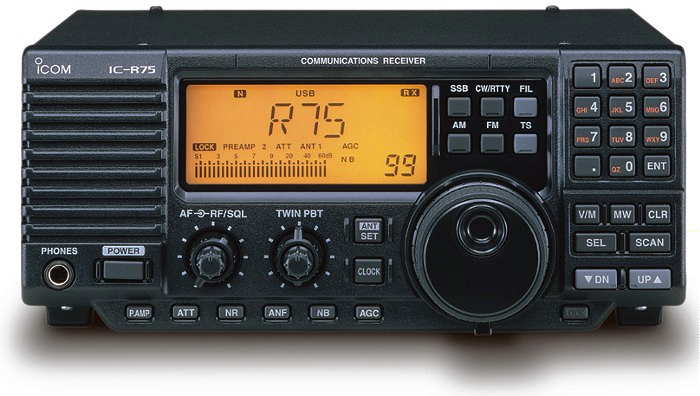 |
| Icom R-75 |
As well, from my own experience, I can vouch for the superb receive performance of the Icom 756 PRO III on the LF and MF bands.
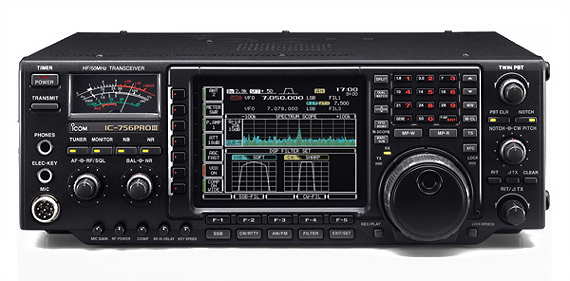 |
| courtesy: http://www.icomcanada.com |
Steve McDonald, VE7SL, is a regular contributor to AmateurRadio.com and writes from British Columbia, Canada. Contact him at [email protected].
Portable Ops 23/45: 20 Meters Was Fun Today!
 |
| KM4ICI – a Virginia Tech Student I worked today on 20 meters |
You never seem to know these days how the bands are going to treat you! After working just 4 stations in the SKCC WES this weekend – mostly due to only being able to operate for 2 hours – but the bands stunk for me, I was hoping today would be better.
I tuned around on 20 and heard a few signals so I dove right in and started calling CQ with my 5 watt signal from the KX3 into my vertical portable antenna.
I immediately starting working stations….
WJ2L – Bill was near Nashville, TN and was very weak – I couldn’t copy all the QSO, so I don’t know if he was QRP or not, but I think he was. He also would sign WJ2L/4, which adds to my suspicion he was QRP.
KM4ICI – This was a quick contact, Xiaoyu was working the club station of K4KDS. He is from China but studying Electrical Engineering at Virginia Tech. K4KDS is the club station of Virginia Tech Amateur Radio Association. He is a really new General, and it was fun to work him!
N9ZXL (7114T) – A new SKCC contact for me – Dave was in Illinois and has a couple of Elecraft rigs as well.
W9AKS – Bobby was in Wisconsin and had a booming signal here to Kansas. He was sending a bit fast for me, but I got the important info!
KE5AL (12776S) – Another new SKCC number for me, Jim answered my QRZ after wrapping up with W9AKS and had a great 599 signal to Kansas today from Texas. He was running 90 watts, and I asked him to slow down for me as I was only copying about everyother character – and he graciously did! He said QSB was heavy on his end, but it was not happening on my end.
NT9L (7328S) – Also a new SKCC number for me, John was in Colorado and was running QRO, but after I told him I was QRP he switched over and we completed the QSO both using low power! He was 599 here, even QRP – his signal sounded a bit different, but still 599. Thanks John!
So it was a fun time on the radio today from the park. I have just 10 more unique SKCC numbers to collect and I will finally be a Centurion! I am having a blast working these guys, and with the sun spots diminishing, keeps things very interesting and fun.
Burke Jones, NØHYD, is a regular contributor to AmateurRadio.com and writes from Kansas, USA. Contact him at [email protected].
Portable Ops 23/45: 20 Meters Was Fun Today!
|
| KM4ICI – a Virginia Tech Student I worked today on 20 meters |
You never seem to know these days how the bands are going to treat you! After working just 4 stations in the SKCC WES this weekend – mostly due to only being able to operate for 2 hours – but the bands stunk for me, I was hoping today would be better.
I tuned around on 20 and heard a few signals so I dove right in and started calling CQ with my 5 watt signal from the KX3 into my vertical portable antenna.
I immediately starting working stations….
WJ2L – Bill was near Nashville, TN and was very weak – I couldn’t copy all the QSO, so I don’t know if he was QRP or not, but I think he was. He also would sign WJ2L/4, which adds to my suspicion he was QRP.
KM4ICI – This was a quick contact, Xiaoyu was working the club station of K4KDS. He is from China but studying Electrical Engineering at Virginia Tech. K4KDS is the club station of Virginia Tech Amateur Radio Association. He is a really new General, and it was fun to work him!
N9ZXL (7114T) – A new SKCC contact for me – Dave was in Illinois and has a couple of Elecraft rigs as well.
W9AKS – Bobby was in Wisconsin and had a booming signal here to Kansas. He was sending a bit fast for me, but I got the important info!
KE5AL (12776S) – Another new SKCC number for me, Jim answered my QRZ after wrapping up with W9AKS and had a great 599 signal to Kansas today from Texas. He was running 90 watts, and I asked him to slow down for me as I was only copying about everyother character – and he graciously did! He said QSB was heavy on his end, but it was not happening on my end.
NT9L (7328S) – Also a new SKCC number for me, John was in Colorado and was running QRO, but after I told him I was QRP he switched over and we completed the QSO both using low power! He was 599 here, even QRP – his signal sounded a bit different, but still 599. Thanks John!
So it was a fun time on the radio today from the park. I have just 10 more unique SKCC numbers to collect and I will finally be a Centurion! I am having a blast working these guys, and with the sun spots diminishing, keeps things very interesting and fun.
Burke Jones, NØHYD, is a regular contributor to AmateurRadio.com and writes from Kansas, USA. Contact him at [email protected].
Announcing: 25th Annual Colorado 14er Event
Amateur Radio operators from around Colorado will be climbing many of Colorado’s 14,000-foot mountains and Summits On The Air (SOTA) peaks to set up amateur radio stations in an effort to communicate with other radio amateurs across the state and around the world. Join in on the fun during the 25th annual event and see how many of the mountaintop stations you can contact. This year the event is expanded to include the entire weekend. However, many mountaintop activators will hit the trail early with the goal of being off the summits by noon due to lightning safety concerns.
See the very cool 25 Year Anniversary t-shirts available at http://www.cafepress.com/wg0at
The 14er event includes Summits On the Air (SOTA) peaks, which add over 1700 potential summits! If you aren’t up to climbing a 14er, there are many other summits to choose from (with a wide range of difficulty). See the W0C SOTA web page at w0c-sota.org
Radio operators who plan to activate a summit should post their intent on the ham14er Yahoo Group. To subscribe to the “ham14er” email list, visit the Yahoo groups site at http://groups.yahoo.com/group/ham14er/ . Also, be sure to check out the event information at http://www.ham14er.org It is also a great idea to post an ALERT on the SOTAwatch.org website.
Frequencies used during the event
Activity can occur on any amateur band including HF and VHF. The 2m fm band plan uses a “primary frequency and move up” approach. The 2m fm primary frequency is 147.42 MHz. At the beginning of the event, operators should try calling on 147.42 MHz. As activity increases on that frequency, move on up the band using the 30 kHz steps. Don’t just hang out on 147.42 MHz…move up! The next standard simplex frequency up from 147.42 MHz is 147.45 MHz, followed by 147.48 and 147.51 MHz.
| Frequency (MHz) | Comments | Frequency (MHz) | Comments |
| 147.42 | Primary 2m FM Frequency, then up in 30 kHz steps | 14.060 | 20m CW Frequency |
| 147.45, 147.48, 147.51 | Alternate 2m FM frequencies | 14.345 | 20m SSB Frequency |
| 446.000 | Primary 70 cm FM frequency | 18.092 | 17m CW Frequency |
| 446.025 | Alternate 70 cm FM frequency | 18.158 | 17m SSB Frequency |
| 144.200 | 2m SSB calling frequency | 21.060 | 15m CW Frequency |
| 50.125 | 6m SSB calling frequency | 21.330 | 15m SSB Frequency |
| Other Bands/Modes | Standard calling frequencies and/or band plans apply. | 28.060 | 10m CW Frequency |
| 28.350 | 10m SSB Frequency |
Warning: Climbing mountains is inherently a dangerous activity.
Do not attempt this without proper training, equipment and preparation.
Sponsored by The Colorado 14er Event Task Force
Here’s the event flyer in pdf format: Colorado 14er Event Flyer 2016
The post Announcing: 25th Annual Colorado 14er Event appeared first on The KØNR Radio Site.
Bob Witte, KØNR, is a regular contributor to AmateurRadio.com and writes from Colorado, USA. Contact him at [email protected].
Weekly Propagation Summary – 2016 May 09 16:10 UTC
Here is this week’s space weather and geophysical report, issued 2016 May 09 0436 UTC.
Highlights of Solar and Geomagnetic Activity 02 – 08 May 2016
Solar activity was low and only C-class flare activity was observed. Region 2540 (N21, L=068, class/area=Hrx/20 on 01 May) produced a C3 flare at 02/0842 UTC which was the largest event of the period. Region 2535 (N05, L=124, class/area=Hax/60 on 24 Apr) produced a C1 flare at 04/1531 UTC that had an associated Type II radio sweep (est. shock speed 560 km/s) and coronal mass ejection (CME). This CME was first observed in LASCO/C2 coronagraph imagery beginning 04/1412 UTC and likely arrived at Earth early on 08 May (see geomag section below for additional information). A pair of filament eruptions centered near N22E39 and N31E42 were observed in GONG imagery beginning at around 07/1515 UTC. The associated CME was first observed in LASCO/C2 imagery at 07/1648 UTC but analysis indicated that this CME was not Earth-directed.
No proton events were observed at geosynchronous orbit.
The greater than 2 MeV electron flux at geosynchronous orbit reached high levels on 03-06 May and moderate levels on 02, 07-08 May.
Geomagnetic field activity was at unsettled to G1 (Minor) geomagnetic storm levels on 02 May with quiet to active levels on 03 May due to the influence of a negative polarity coronal hole high speed stream (CH HSS). Quiet levels were observed on 04 May and quiet to unsettled levels were observed on 05 May under a nominal solar wind regime. The onset of a positive polarity CH HSS caused quiet to G1 (Minor) storm levels on 06 May and quiet to active levels on 07 May. On 08 May G1-G3 (Minor-Strong) geomagnetic storms were observed and analysis suggested that a CME (likely from 04 May as mentioned in solar activity section) was embedded in a CIR preceding a negative polarity CH HSS.
Forecast of Solar and Geomagnetic Activity 09 May – 04 June 2016
Solar activity is expected to be at very low (B-class flares) to low (C-class flares) levels throughout the outlook period.
No proton events are expected at geosynchronous orbit.
The greater than 2 MeV electron flux at geosynchronous orbit is expected to reach very high levels on 10-13 May and high levels on 09, 14, and 30 May-02 Jun. Moderate flux levels are expected for the remainder of the period.
Geomagnetic field activity is expected to be reach G3 (Strong) geomagnetic storm levels on 09 May and G1 (Minor) storm levels on 10 May due to the influence of a negative polarity coronal hole high speed stream (CH HSS). G1 (Minor) storm levels are likely on 20 May due to the influence of a positive polarity CH HSS as well as on 29 May and 04 Jun due to the influence of negative polarity CH HSSs.
Don’t forget to visit our live space weather and radio propagation web site, at: http://SunSpotWatch.com/
Live Aurora mapping is at http://aurora.sunspotwatch.com/
If you are on Twitter, please follow these two users: + https://Twitter.com/NW7US + https://Twitter.com/hfradiospacewx
Get the space weather and radio propagation self-study course, today. Visit http://nw7us.us/swc for the latest sale and for more information!
Check out the stunning view of our Sun in action, as seen during the last five years with the Solar Dynamics Observatory (SDO): https://www.youtube.com/watch?v=zXN-MdoGM9g
We’re on Facebook: http://NW7US.us/swhfr
Visit, subscribe: NW7US Radio Communications and Propagation YouTube Channel
 Ham Radio Deluxe |
 W5SWL Electronics |
 Ham Radio Prep |
 KB3IFH QSL Cards  Hip Ham Shirts  HamRadioAuctions HamRadioAuctions Reliance Antennas Reliance Antennas Enigma Shop Enigma Shop |  morseDX  Ni4L Antennas  R&L Electronics R&L Electronics antennas.us antennas.us QRV QRV |
- Matt W1MST, Managing Editor
