 |
 LHS Episode #166: American Top 40
 11 April 2016 | by
  Hello, fellow amateur radio and Linux enthusiasts. Welcome to the latest edition of Linux in the Ham Shack. In this episode, your intrepid hosts discuss spy radios, the Heard Island DXpedition, the physics of antennas, new Linux releases and more. We've even thrown in an interview with John Hays, K7VE, of Northwest Digital Radio about their great new Pi hat. There's so much information it's a double episode. Don't miss a single action-packed second.
73 de The LHS Crew
Russ Woodman, K5TUX, co-hosts the Linux in the Ham Shack podcast which is available for download in both MP3 and OGG audio format. Contact him at [email protected].
DX, Artificial Scarcity and The List
 Economists see scarcity, supply and demand as fundamental forces in a market. Items that are scarce demand a higher price while items that are easy to obtain tend to have a lower price. A diamond is an example of something that is relatively scarce (and in demand) so it commands a high price. In contrast, wood is generally available and is much less expensive than diamonds.
Then there’s the concept of artificial scarcity. If some items can be made scarce (or even just appear scarce), the price will tend to increase. For example, if I own all of the banana trees on an isolated island, I could reduce the available supply of bananas and command a higher price from all of the banana eaters there. Or maybe I start screening bananas for quality and I put a special sticker on them to brand them as special.
 We have a case of artificial scarcity in ham radio, called the DXCC list. This list defines what is considered a separate country when chasing DX. (Actually, the correct term is entity, not country.) For example, Hawaii (KH6) and Alaska (KL7) are considered separate entities even though they are part of the United States. (See Is Alaska a Country?) For someone chasing DXCC entities, because Alaska is on The List, a radio contact with Alaska becomes more desirable. It’s kind of like putting a “premium sticker” on a banana to indicate that it is special.
In my imagination, the DXCC list resulted from a bunch of hams sitting around drinking beer and bragging about how many countries they had worked. One guy, Larry says he just worked Hawaii, bringing his total to 125 countries. His buddy Leroy says, “You can’t count Hawaii because it’s part of the US of A.” To which Larry says, “You bet I can count Hawaii…and Texas too. It’s a whole ‘nuther country.” Clearly, we are going to need an official list to keep track of what counts as a country. A more credible version of how the list got established is captured in this article from the October 1935 QST.
Of course, the two main factors that drive scarcity of DXCC entities is the ham radio population and ease of access. Radio contacts are easy to make with entities that have an active ham population. If an entity doesn’t have many active hams but is easy to get to, someone will probably put that location on the air once in a while. On the other hand, some locations are unpopulated and really difficult to get to. These are not only on The List, they are on The Most Wanted List.
Kingman Reef (KH5) was just deleted from The List, instantly changing it from one of the most desired contacts in amateur radio to a big giant Why Bother. You see, there used to be 340 countries on the list but now there’s only 339. Kingman Reef will now be considered part of Palmyra/Jarvis, so it still has value for DXCC, just a lot less.
As I write this article, there is a major DXpedition (VKØEK) operating from Heard Island, an unpopulated island near Antartica. The only reason those guys are there is that Heard Island is on The List. Take a look at their web site and you’ll see how much time and energy has gone into activating this lonely island. Drop it from the list and suddenly a radio contact with this location is a lot less in demand.
So try to keep this all in perspective. There are lots of radio contacts out there to be made, some more interesting and desirable than others. It is appropriate and necessary that we have the DXCC list, to provide consistency in how we count countries, I mean entities. But really, it all traces back to Larry and Leroy arguing about who worked the most countries.
Thanks to the dedicated DXpeditioners that put these rare locations on the air.
73, Bob K0NR
The post DX, Artificial Scarcity and The List appeared first on The KØNR Radio Site.
Bob Witte, KØNR, is a regular contributor to AmateurRadio.com and writes from Colorado, USA. Contact him at [email protected].
Never heard Heard
And I would guess I'm in the minority as I'm not in any of their logs. In fact, I never even heard them decently well enough to work them. There were a couple of times that I could tell they were on a given frequency, but they never loud enough that I would be able to hear my own call come back to me, on the off-chance that they would have heard me. It didn't seem right to just add to the QRM.
Am I disappointed? You're darn tootin' I am! Working VK0EK would have been an ATNO for me and I sure as heck would love to have them in my DXCC tally. But I'm not depressed about it.
It all goes back to that post a few weeks ago about balance. Yes, I do not have Heard Island as an entity worked. However, the sun is still shining, the birds are still chirping, our solar system is still plowing its way throughout the galaxy. I still have to go to work tomorrow and earn a living.
And while I didn't work them, and life goes on, I still applaud their effort. It's not easy to go to a remote island near Antarctica, and brave the elements and hardships to provide the rest of us Amateur Radio ops with a bunch of excitement and fun.
Thank you Team VK0EK - even though I'm not in your log - thank you for a job very well done, indeed!
72 de Larry W2LJ
QRP - When you care to send the very least!
Larry Makoski, W2LJ, is a regular contributor to AmateurRadio.com and writes from New Jersey, USA. Contact him at [email protected].
Never heard Heard
And I would guess I'm in the minority as I'm not in any of their logs. In fact, I never even heard them decently well enough to work them. There were a couple of times that I could tell they were on a given frequency, but they never loud enough that I would be able to hear my own call come back to me, on the off-chance that they would have heard me. It didn't seem right to just add to the QRM.
Am I disappointed? You're darn tootin' I am! Working VK0EK would have been an ATNO for me and I sure as heck would love to have them in my DXCC tally. But I'm not depressed about it.
It all goes back to that post a few weeks ago about balance. Yes, I do not have Heard Island as an entity worked. However, the sun is still shining, the birds are still chirping, our solar system is still plowing its way throughout the galaxy. I still have to go to work tomorrow and earn a living.
And while I didn't work them, and life goes on, I still applaud their effort. It's not easy to go to a remote island near Antarctica, and brave the elements and hardships to provide the rest of us Amateur Radio ops with a bunch of excitement and fun.
Thank you Team VK0EK - even though I'm not in your log - thank you for a job very well done, indeed!
72 de Larry W2LJ
QRP - When you care to send the very least!
Larry Makoski, W2LJ, is a regular contributor to AmateurRadio.com and writes from New Jersey, USA. Contact him at [email protected].
BM-800 Mic something to talk about.
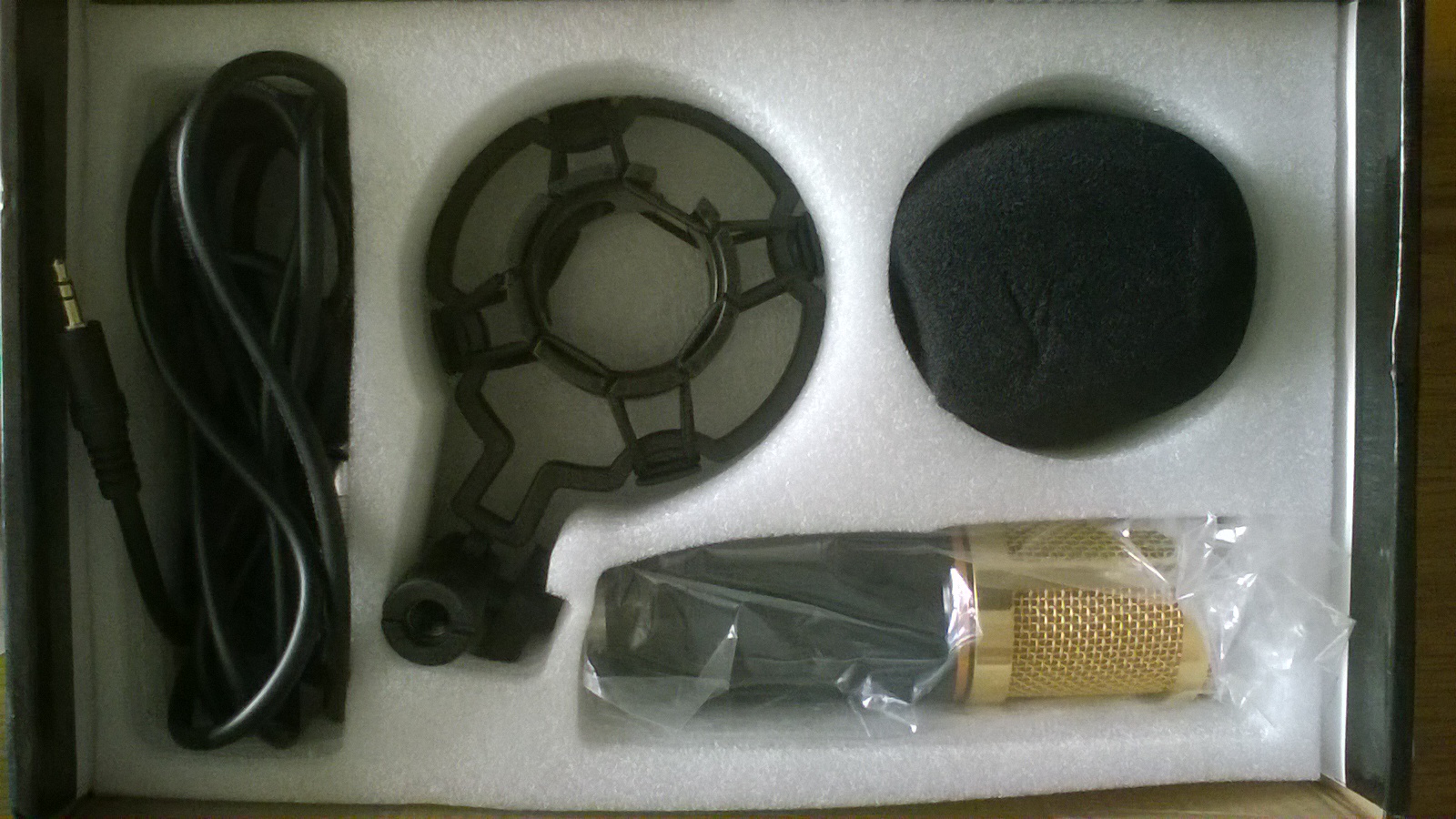
Until recently there were two types of the BM-800 available, one version was badged Shengyue BM-800, this had the advantage of an onboard 1.5V battery to feed the condenser insert. Thus the great advantage of this no external supply was required. This model has now become as rare as hens teeth and we are left with the 48V version. This type however requires an external 48V voltage fed up the cable to charge the insert. Some have overcome this problem using the microphone with an external audio mixer and feeding it using the 48V phantom power supply from the mixer. There is also another problem, the audio output is balanced, and again if not using a mixer you have got to find a method of changing it's output to unbalanced to feed your rig.

I have a couple of these microphones still wrapped up in their boxes and have been thinking for sometime how I could match them straight into my radio's without using a mixer etc.

Until recently there had been very few modification ideas around for this model, but a few nights ago I stumbled across a website from Pete G4IZH who has not only done all that is required to convert the mic from 48V to around 9V that can be taken from your radio's external mic socket supply, or even using a 9V battery, which could be made to fit inside the BM-800 case. The board has then been hacked, to get rid of the balanced output and then fed directly into a filter to tame the HF and LF response ranges, making it more ideal for Amateur requirements. Of course you don't have to do it quite the same, especially if you want to fit a PP3 battery inside the case a bit more room will be required, but all the information is now there to customize the idea to your own requirements.
Reference G4IZH BM-800 modifications here
Steve, G1KQH, is a regular contributor to AmateurRadio.com and writes from England. Contact him at [email protected].
BM-800 Mic something to talk about.
Until recently there were two types of the BM-800 available, one version was badged Shengyue BM-800, this had the advantage of an onboard 1.5V battery to feed the condensor insert. Thus the great advantage of this no external supply was required. This model has now become as rare as hens teeth and we are left with the 48V version. This type however requires an external 48V voltage fed up the cable to charge the insert. Some have overcome this problem using the microphone with an external audio mixer and feeding it using the 48V phantom power supply from the mixer. There is also another problem, the audio output is balanced, and again if not using a mixer you have got to find a method of changing it's output to unbalanced to feed your rig.
I have a couple of these microphones still wrapped up in their boxes and have been thinking for sometime how I could match them straight into my radio's without using a mixer etc.
Until recently there had been very few modification ideas around for this model, but a few nights ago I stumbled across a website from Pete G4IZH who has not only done all that is required to convert the mic from 48V to around 9V that can be taken from your radio's external mic socket supply, or even using a 9V battery, which could be made to fit inside the BM-800 case. The board has then been hacked, to get rid of the balanced output and then fed directly into a filter to tame the HF and LF response ranges, making it more ideal for Amateur requirements. Of course you don't have to do it quite the same, especially if you want to fit a PP3 battery inside the case a bit more room will be required, but all the information is now there to customize the idea to your own requirements.
Reference G4IZH BM-800 modifications here
Steve, G1KQH, is a regular contributor to AmateurRadio.com and writes from England. Contact him at [email protected].
TIS DX
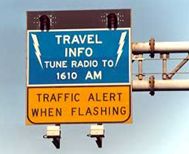 Have you ever wondered where those odd stations found at the ends of the AM broadcast band might be located and what they're all about? These are 'Traveller Information Stations' or 'TIS's and, 'Highway Advisory Radio' (HAR) stations. Because of their low power (100mw - 10W), they make challenging DX targets if you can catch the ID on their continually- repeated audio loop.
These stations are located throughout Canada and the USA at places such as highway intersections, border crossings, ferry terminals, airports and parks ... just about any place that needs to advise travellers (vehicles) with up-to-date directions or information. From here on Mayne Island, the farthest TIS I have been able to identify was WPTC509, located in Carbon County, Wyoming.
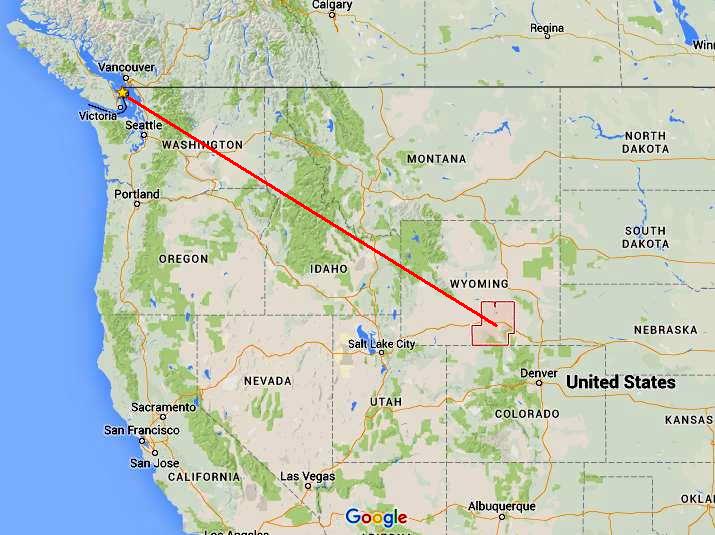 |
| courtesy: https://www.google.ca/maps |
IRCA TIS/HAR LIST (Winter 2016)
The IRCA TIS/HAR LIST lists all US and Canadian TIS/HAR stations, by frequency, including call letters, state (province,) city, county, licensee, address, coordinates, expiration date and dates of DXM/DXN reports/sources. It has been updated with FCC data, DXM, DXN and DXer reports, and on-line listings through March 1 2016.
The 2016 IRCA TIS/HAR LIST is posted on the IRCA website for all to download. The link is: http://www.ircaonline.org/TIS_2016.pdf.
For those preferring a hard copy, one can be ordered from the IRCA.
As well, this page on regulations, permitted content and TIS history has some interesting info.
IRCA is one of the oldest clubs dedicated to DXing the broadcast bands and members receive a monthly journal of members loggings as well as other relevant articles. A trip to the IRCA website might get you hooked on this part of the radio hobby as it's probably the way that most amateurs discovered the 'magic of radio', on late winter nights! Just in case you need it, the mwlist will help you identify any stations heard in the AM broadcast band, worldwide.
Steve McDonald, VE7SL, is a regular contributor to AmateurRadio.com and writes from British Columbia, Canada. Contact him at [email protected].
 Ham Radio Deluxe |
 W5SWL Electronics |
 Ham Radio Prep |
 KB3IFH QSL Cards  Hip Ham Shirts  HamRadioAuctions HamRadioAuctions Reliance Antennas Reliance Antennas Enigma Shop Enigma Shop |  morseDX  Ni4L Antennas  R&L Electronics R&L Electronics antennas.us antennas.us QRV QRV |
- Matt W1MST, Managing Editor
