 |
 Project collaboration
 19 May 2016 | by
 During my working life I collaborate with a large groups on multiple sites and we do stuff together. When I am attempting a radio projects I take on a different tack. I attempt to be either an expert in many things or I follow sets of instructions slavishly. Most of the time it takes a long time and there are numerous failures or dead ends along the way. I’m not sure why I do this.
There are many websites that will offer support to the frustrated builder or keen expert. But few that offer hobby collaboration (or at least I haven’t looked too hard but a quick trawl didn’t really yield much). I wonder why that is? A probably misquoted quote goes along the lines of ‘Travel alone, travel fast. Travel together, travel further’. You could argue that sites such as forums offer support and collaboration by using a project management analogy, I can not agree with that. Tasks are not identified, resources are not defined and task durations are not agreed. Expertise is sought, sometimes this results in no responses.
A local ham was at the centre of a project that has now become a major SDR rig. He worked from home, in the evenings with a group spread around the world. They have developed a really astounding product that is now sold as part of the Apache Labs brand. Why is this approach not prevalent?
I’m not offering a solution, just a question. Does a place exist or am I right in assuming that there are some international superstars that produce lots of ‘things’ from 3D designs through to circuit boards and kits that hobbyists use? I think there ought to be a place where we can go to collaborate. I just don’t know where it is or how to engage with it….yet.
Alex Hill, G7KSE, is a regular contributor to AmateurRadio.com and writes from Cumbria, UK. Contact him at [email protected].
And so far from Dayton…
While I’m not at Dayton, I have been able to follow some of the announcements. Here’s a quick list of the interesting ones so far!
The Elecraft KX2 – a smaller version of the KX3, 80 through 10m and fits in your hand, $750!
The DV4Home and D4Mobile radios – built from the DV4mini adapters, but full function radios. No prices or availability yet, but a great concept. I’ll be interested in the reports from the show floor.
I’m not expecting anything big from Icom. Yaesu might announce something in an HF QRP rig, but I’m not that interested (I think they are still covered up trying to get Fusion/WIRES-X going like they want). I would think Flex will have something new to show, and there is still the nagging rumor that Kenwood will do something with a D-STAR radio. Even if you don’t make the trek to Dayton, you can certainly find out a lot with a few Google searches or watching the Twitter feed!
Michael Brown, KG9DW, is a regular contributor to AmateurRadio.com and writes from Illinois, USA. Contact him at [email protected].
And so far from Dayton…
While I’m not at Dayton, I have been able to follow some of the announcements. Here’s a quick list of the interesting ones so far!
The Elecraft KX2 – a smaller version of the KX3, 80 through 10m and fits in your hand, $750!
The DV4Home and D4Mobile radios – built from the DV4mini adapters, but full function radios. No prices or availability yet, but a great concept. I’ll be interested in the reports from the show floor.
I’m not expecting anything big from Icom. Yaesu might announce something in an HF QRP rig, but I’m not that interested (I think they are still covered up trying to get Fusion/WIRES-X going like they want). I would think Flex will have something new to show, and there is still the nagging rumor that Kenwood will do something with a D-STAR radio. Even if you don’t make the trek to Dayton, you can certainly find out a lot with a few Google searches or watching the Twitter feed!
Michael Brown, KG9DW, is a regular contributor to AmateurRadio.com and writes from Illinois, USA. Contact him at [email protected].
This Spewed Out of the Internet #32
 It has been a while since I’ve done one of these Internet Spewing posts, so I’ve got some catching up to do.
Twitter is heating up with rumors and reports of new ham gear to be introduced at the Dayton Hamvention. Elecraft is introducing the KX2 QRP HF transceiver. I know this one is real because Steve WGØAT got a chance to try out a unit, shown here in this video. Also, see the short review by Frank KØJQZ.
VA3XPR broke the news about a VHF/UHF radio that does DMR, D-STAR and C4FM digital modes. This is exciting stuff but we’ve been here before and nothing materialized. It is definitely achievable…someone just has to do the work.
K3NG comments on the most recent innovation from Heathkit, the Pipetenna. Leixen recently introduced a 25 W UHF handheld radio. Now who thinks THAT is a good idea?
The FCC is thinking about making amateur radio licenses last for a lifetime. See the KB6NU blog and comments on the topic.
The ARRL announced that the August UHF Contest is cancelled, thereby ticking off the hams that like to work that contest. It seems they also ticked off the many hams that have been contemplating participating in the contest for the last decade but just haven’t gotten around to it yet.
Not cancelled but expanded is the Colorado 14er Event, which will go the whole weekend (August 6-7). Check out the ham14er web site for the latest info. Its our 25th year and its going to be fun!
The Atlantic published a decent article on ham radio, focusing on the emergency communication aspect of the radio service. Yay!
Don’t forget to participate in the National Pizza Ovens On The Air (NPOOTA) event. Unfortunately, there’s been some partisan bickering about Obama’s recent activation. In related news, here’s a proposal to abolish the use of Q codes. To which I say, QSL!
After one of our Tech Licensees asked “just how many antennas do I need to cover all these bands?”, I wrote this article at HamRadioSchool.com: Antennas… How Many Do I Need?
Another important question is How Many Digits of Pi Do I Need? It turns out that JPL has figured this out using actual math and the answer is 16 digits. You don’t need anymore than that. Ever.
OK, that’s it for now. No, I am not going to be at Dayton. All of the Cool Kids went to Hamcon Colorado instead.
73, Bob KØNR
The post This Spewed Out of the Internet #32 appeared first on The KØNR Radio Site.
Bob Witte, KØNR, is a regular contributor to AmateurRadio.com and writes from Colorado, USA. Contact him at [email protected].
LHS Episode #169: The Fukutoku Bank Robbery
 Hello, listeners! We're putting out our latest episode of Linux in the Ham Shack just before Hamvention. We have great topics tonight including hams suing hams, the fight between Oracle and Google, antenna and kit building, mobile operation and so much more. Don't forget that we WILL be at the Dayton Hamvention this year in the East Hall, booth 625. Also, please note that we could still use your help in defraying some of our Hamvention expenses. If you'd like to donate (and maybe pick up some cool LHS swag in the process), please click on our Generosity Campaign link. See you there!
73 de The LHS Crew
Russ Woodman, K5TUX, co-hosts the Linux in the Ham Shack podcast which is available for download in both MP3 and OGG audio format. Contact him at [email protected].
My One and Only ‘Almost’ S.O.S.
 When I tell people I’m a former shipboard radio operator, they always ask if I ever sent an SOS. Well, almost…
I was working on a car carrier, essentially just a big shoe box on a hull, with living quarters on top. We had just loaded cars straight out of the factory in Nagoya. You could still smell the paint. The ship has big blowers to ventilate the cargo holds and cars are packed in just 6 inches apart, strapped down (with the transmission in ‘park’ if auto or first gear if a standard with the parking brake on for extra hold).
The was a typhoon offshore and we were making full speed to get ahead of it. The ship was surging (also called pitching) and we were banging into a heavy head sea. it was nothing the ship couldn’t handle but it is annoying to feel a huge bang every 30 seconds as you hit the waves.
We had just come up from our 10:15 coffee break when all the alarms went crazy. The fire control panel on the bridge lit up like a Christmas tree. We had fire in five decks and we all went to our fire stations.
First we shut off the ventilation for the cargo holds so we wouldn’t fan the flames. The captain took control and sent the chief mate to close up all the ventilation hatches while they opened the hatch door to try and fight the fire with the hoses. Acrid black smoke and flames came roaring out. The AC power was going off and on as circuit breakers tripped all over the ship — but somehow they kept the power on despite heavy smoke in the engine room.
The fire was incredibly hot and the deck began to melt and sag in places. I could feel cars exploding in the hold like popcorn in a kettle. The water was just making steam and things weren’t looking good. I went to the chart room and got our last position at 10:15. I couldn’t send an SOS without the captain’s order because that would expose the shipowners to salvage claims. Instead I sent a PAN notice XXX in Morse code advising ships we were on fire and dead in the water, and our position.
In just a few minutes I had 3 QSL’s and ships were standing by in case we had to abandon ship. On car carriers you can’t just lower the boats because you would bang against the ship and break the lifeboats. You have to swing out the boat, jump in and fasten a 4-point seat restraint and just pull the release and free fall 90 ft. The captain said they did it in the shipyard for the Coast Guard inspection and it wasn’t too bad, but doing it in heavy seas is another matter. Fortunately by then the chief mate had secured all the open ventilators and they fought the fire until they could reach the fire control room. There they released thousands of gallons of CO2 into the holds and eventually the fire was out.
I cancelled the XXX broadcast but it was nice to know that we had help nearby if we needed it. The age old system worked just as it was meant to. In all we burnt up over 5,000 cars out of 7,800 on board and the ship was a wreck.
It would take a month to repair it. The fire investigator believed that the surging of the ship had caused a defective starter to engage on a vehicle with a standard transmission. With straps holding it and the parking break on it couldn’t move and the wire to the starting motor became red hot. The wire in turn was secured to the fender well with a clamp. The fender well was made of a composite material and caught fire and burned very hot triggering a runaway “domino effect” as car after car caught fire.
It was a nice ship and it came to Boston not far from my home but after the fire I gave up the job. I knew I’d never be at ease on a car carrier again, and that was my one and only almost SOS.
Andy Bourassa, W1LJJ, is a special contributor to AmateurRadio.com and writes from New Hampshire, USA.
Windows 7 says it’s last goodbye!
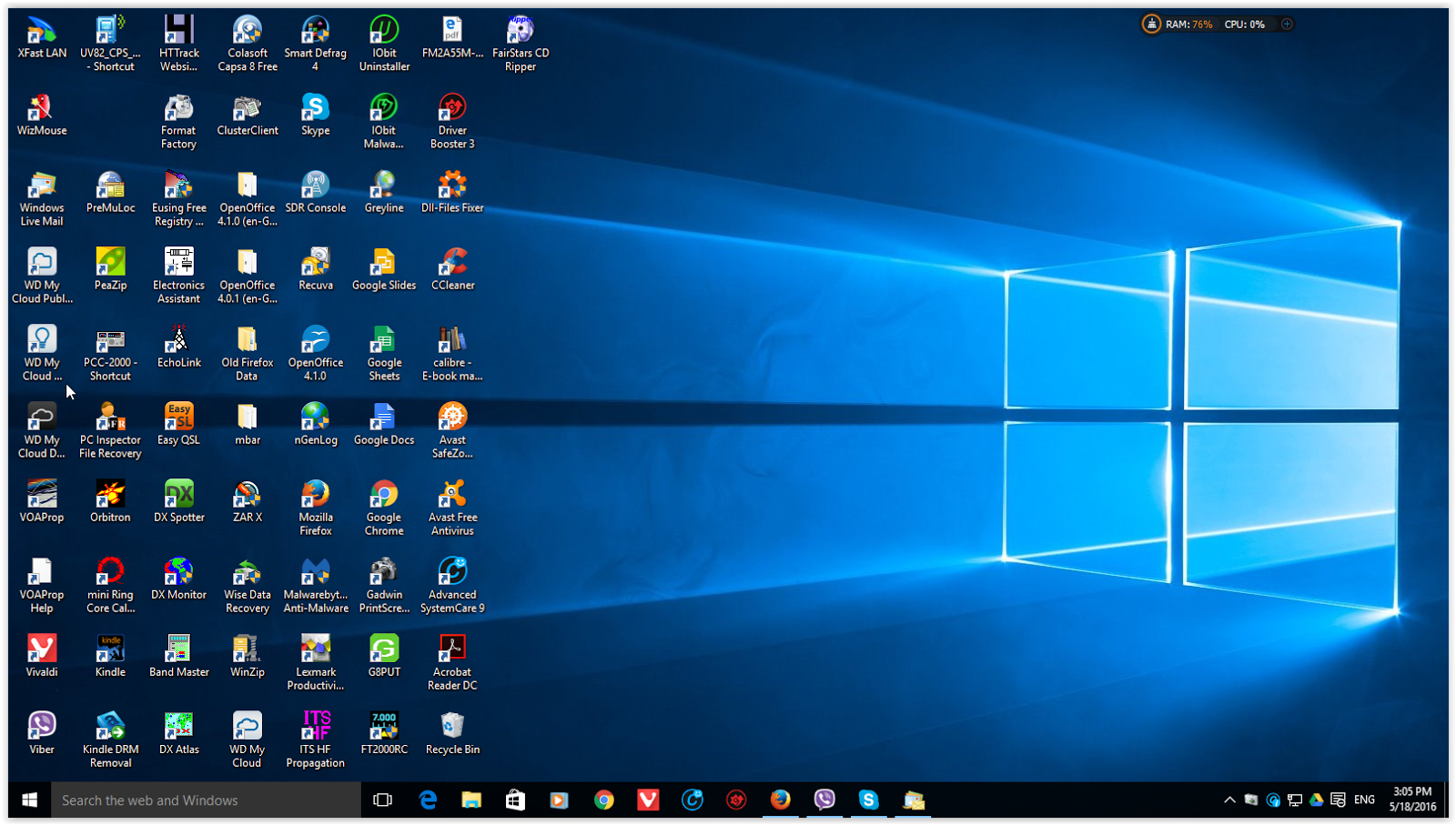
Unknowing to me Windows 10 had downloaded in the background and installed itself on my PC without even informing me. Yes, Microsoft can take over your machine without you even knowing! It appears if you have got your settings set for auto updates it will do this. Beware! Big brother is really alive! Would Microsoft like it if I came in through the back door and took over their servers and PCs, I think not!
I must admit though, there were only a couple of little hiccups which I sorted in an hour or so, everything seems to have gone over clean. It appears you can revert back to your previous operating system but only within 30 days of the install.
Steve, G1KQH, is a regular contributor to AmateurRadio.com and writes from England. Contact him at [email protected].
 Ham Radio Deluxe |
 W5SWL Electronics |
 Ham Radio Prep |
 KB3IFH QSL Cards  Hip Ham Shirts  HamRadioAuctions HamRadioAuctions Reliance Antennas Reliance Antennas Enigma Shop Enigma Shop |  morseDX  Ni4L Antennas  R&L Electronics R&L Electronics antennas.us antennas.us QRV QRV |
- Matt W1MST, Managing Editor
