 |
 Weekly Propagation Summary – 2016 May 09 16:10 UTC
 9 May 2016 | by
Here is this week’s space weather and geophysical report, issued 2016 May 09 0436 UTC.
Highlights of Solar and Geomagnetic Activity 02 – 08 May 2016
Solar activity was low and only C-class flare activity was observed. Region 2540 (N21, L=068, class/area=Hrx/20 on 01 May) produced a C3 flare at 02/0842 UTC which was the largest event of the period. Region 2535 (N05, L=124, class/area=Hax/60 on 24 Apr) produced a C1 flare at 04/1531 UTC that had an associated Type II radio sweep (est. shock speed 560 km/s) and coronal mass ejection (CME). This CME was first observed in LASCO/C2 coronagraph imagery beginning 04/1412 UTC and likely arrived at Earth early on 08 May (see geomag section below for additional information). A pair of filament eruptions centered near N22E39 and N31E42 were observed in GONG imagery beginning at around 07/1515 UTC. The associated CME was first observed in LASCO/C2 imagery at 07/1648 UTC but analysis indicated that this CME was not Earth-directed.
No proton events were observed at geosynchronous orbit.
The greater than 2 MeV electron flux at geosynchronous orbit reached high levels on 03-06 May and moderate levels on 02, 07-08 May.
Geomagnetic field activity was at unsettled to G1 (Minor) geomagnetic storm levels on 02 May with quiet to active levels on 03 May due to the influence of a negative polarity coronal hole high speed stream (CH HSS). Quiet levels were observed on 04 May and quiet to unsettled levels were observed on 05 May under a nominal solar wind regime. The onset of a positive polarity CH HSS caused quiet to G1 (Minor) storm levels on 06 May and quiet to active levels on 07 May. On 08 May G1-G3 (Minor-Strong) geomagnetic storms were observed and analysis suggested that a CME (likely from 04 May as mentioned in solar activity section) was embedded in a CIR preceding a negative polarity CH HSS.
Forecast of Solar and Geomagnetic Activity 09 May – 04 June 2016
Solar activity is expected to be at very low (B-class flares) to low (C-class flares) levels throughout the outlook period.
No proton events are expected at geosynchronous orbit.
The greater than 2 MeV electron flux at geosynchronous orbit is expected to reach very high levels on 10-13 May and high levels on 09, 14, and 30 May-02 Jun. Moderate flux levels are expected for the remainder of the period.
Geomagnetic field activity is expected to be reach G3 (Strong) geomagnetic storm levels on 09 May and G1 (Minor) storm levels on 10 May due to the influence of a negative polarity coronal hole high speed stream (CH HSS). G1 (Minor) storm levels are likely on 20 May due to the influence of a positive polarity CH HSS as well as on 29 May and 04 Jun due to the influence of negative polarity CH HSSs.
Don’t forget to visit our live space weather and radio propagation web site, at: http://SunSpotWatch.com/
Live Aurora mapping is at http://aurora.sunspotwatch.com/
If you are on Twitter, please follow these two users: + https://Twitter.com/NW7US + https://Twitter.com/hfradiospacewx
Get the space weather and radio propagation self-study course, today. Visit http://nw7us.us/swc for the latest sale and for more information!
Check out the stunning view of our Sun in action, as seen during the last five years with the Solar Dynamics Observatory (SDO): https://www.youtube.com/watch?v=zXN-MdoGM9g
We’re on Facebook: http://NW7US.us/swhfr
Visit, subscribe: NW7US Radio Communications and Propagation YouTube Channel
LHS Episode #168: Nerdgasm
 It's a brand new episode of Linux in the Ham Shack! We know you're excited. We have a shiny new co-host in this episode and we talk about a whole bunch-a stuff: 100-year-old ham, high-power amplifiers, people who make more money than we do, SDR, broadcasting software, Ubuntu, DMR and so so so so much more. Thanks for listening. Qapla'!
73 de The LHS Crew
Russ Woodman, K5TUX, co-hosts the Linux in the Ham Shack podcast which is available for download in both MP3 and OGG audio format. Contact him at [email protected].
Bureau QSL Batch
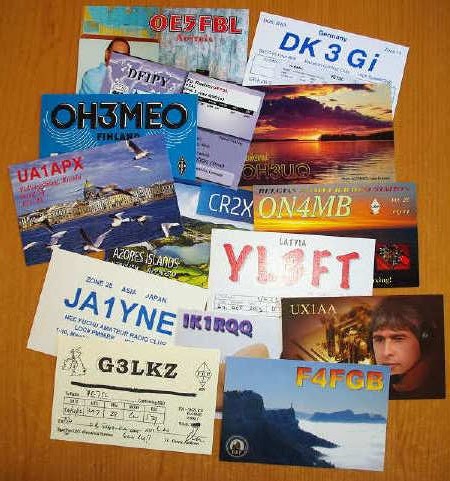
The batch of bureau cards last week included several cards from Europe and were probably the last I'll get for my Cycle 24 10m fun, using the homebrew Tri-Tet-Ten.
As mentioned previously, this rig was the culmination of wondering, for many many years, if I could get a single 6L6 to work well enough on 10m CW, using a 40m crystal ... quadrupling to 10m ... and still have enough useful output to work Europe! As well, the note would have to be 'acceptable' as I realized that any crystal chirping would be multiplied four times, during the quadrupling process.
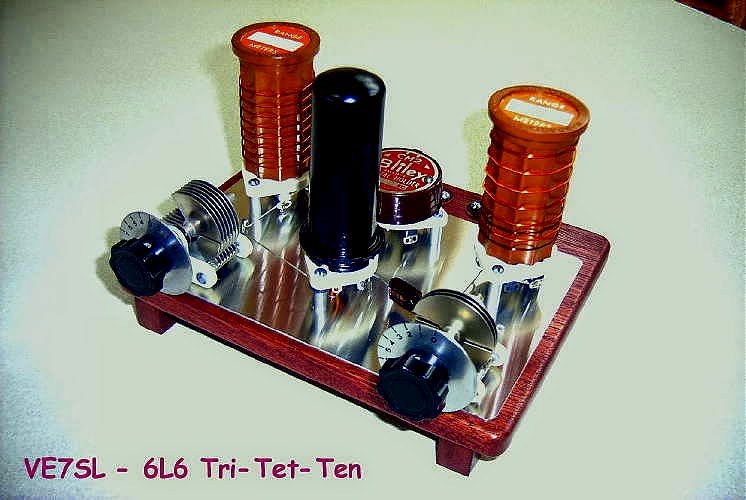
The evolution of my eventual transmitter, is described in more detail here, where you can also hear what the tone sounds like. Suffice to say, the results were much more than I had ever hoped for and during the peak years of this past cycle, many enjoyable hours were spent on 10m CW with my one tube tri-tet crystal oscillator.
I guess I could always move down to 20m CW but, for me, this just doesn't have the same appeal or sense of satisfaction as using it on 10m or what I like to call, "the other magic band". Who knows what Cycle 25 will bring to 10m? I may get another chance yet, if the solar prognosticators are all wrong!
Steve McDonald, VE7SL, is a regular contributor to AmateurRadio.com and writes from British Columbia, Canada. Contact him at [email protected].
It’s not supposed to be like this!
Not much to report from me lately. The weather was not suitable for portable operations, otherwise too busy or too tired to do anything “radio”. We decided to spend our last money on a trip to Europe this summer (necessary family visits, long overdue) and I am one to prepare way in advance.
“What radio shall I bring along?” was of course the first question I asked myself. But being wise I quickly changed it into: “What antenna shall I use?” Since I never worked with end-fed antennas I thought it would be a good opportunity to learn about them and try them out.
Let’s start with buying stuff: a seven meter fishing rod that fit in my suitcase cost US$20. A length of 30 meter strong light Teflon coated copper wire was about the same. Cut in two lengths of 20 and 10 meter it would cover 20 and 40 meters, hence End Fed Half Wave. For the impedance coupler I turned to M0UKD’s excellent website . End fed antennas are no rocket science: the high impedance of a half wave length of wire has to be turned into a low impedance that matches the radio. A tank circuit is used to optimize the power transfer of the transformer used for this. So I build a tank circuit with a 1:8 air core transformer and a 9-50 pF variable capacitor.
After another hard days work at school I went to the parking lot to do some initial tests before going home. I shot this impromptu video with my phone to show you the result.
So I built myself a Full Wave End Fed! It’s not supposed to be like this! With the 10 meter wire I got the same result: on 20 meters I got a dip, but the SWR wouldn’t get below 2.2:1. I didn’t check the performance on 10 meters, but I guess I will get a near perfect SWR there, too. Of course, on my workbench, using a 3300 ohm resistor as dummy load, I had no problem matching 40 and 20 meters.
I’m a bit baffled and unsure what to do next. I already tried some transformers using ferrite cores from my junk box, but non were giving me a tuned tank circuit (inductance too high). I want coverage from 40-20 meters and my capacitor has a range of 9-50 pF. The inductor should be 11 uH then and with a 1:8 ratio the transformer should make 3300 ohm into 51 ohm. The only thing I can think of right now is that my wire is not suitable, but why? As I said in the video, any suggestions are welcome. In the mean time….I’ll keep studying about EFHW antennas.
Hans "Fong" van den Boogert, BX2ABT, is a regular contributor to AmateurRadio.com and writes from Taiwan. Contact him at [email protected].
Amateur Radio Weekly – Issue 110

FreeDV 2400A and 2400B demos
This digital voice mode will run on any legacy FM analog radio.
Rowetel
FCC action anticipated on ARRL’s “Symbol Rate” petition
ARRL seeks to change the Amateur Service Part 97 rules to delete the symbol rate limit in §97.307(f) and replace it with a maximum bandwidth for data emissions of 2.8 kHz.
ARRL
Review: Leixen NOTE 25 Watt HT
The NOTE is a 16 Channel UHF transceiver, the likes of which I have never seen before.
Miklor
10 Milliwatt WSPR Beacon
The Etherkit Si5351A Breakout Board combined with the Si5351Arduino library provides a low-cost, wide range PLL with excellent frequency resolution.
Etherkit
RF coverage tool
VE2DBE
Listen more than you send
Make the most of your opportunities to listen to live QSOs from your home station.
Ham Radio QRP
Pirate from Baghdad
Hassan has bootleged multiple calls for several years.
Southgate
2016 Digital Mode Most Wanted Survey
These surveys help DXpedition planners and are of interest to all digital operators.
Southgate
BridgeCom releases 220 MHz Mobile Radio
Features include 30 watt Mitsubishi power amplifier, Bluetooth option, and included programming cable.
BridgeCom
How to
Decoding APRS packets with SDR Dongle
S55MA Ham Blog
Dashboard for MMDVM DMR relay
F5KMY
Video
Digital Amateur TV in action
Rpidatv is a program that allows a Raspberry Pi to transmit DATV without the need for any additional hardware.
RTL-SDR.com
HackRF replay attack on Jeep Patriot
Demo of a replay attack on a Jeep Patriot’s keyless entry system.
YouTube
Amateur Radio Weekly is curated by Cale Mooth K4HCK. Sign up free to receive ham radio's most relevant news, projects, technology and events by e-mail each week at http://www.hamweekly.com.
You have two ears but only one mouth
Listen more than you send
Listen more than you talk because God gave you two ears but only one mouth
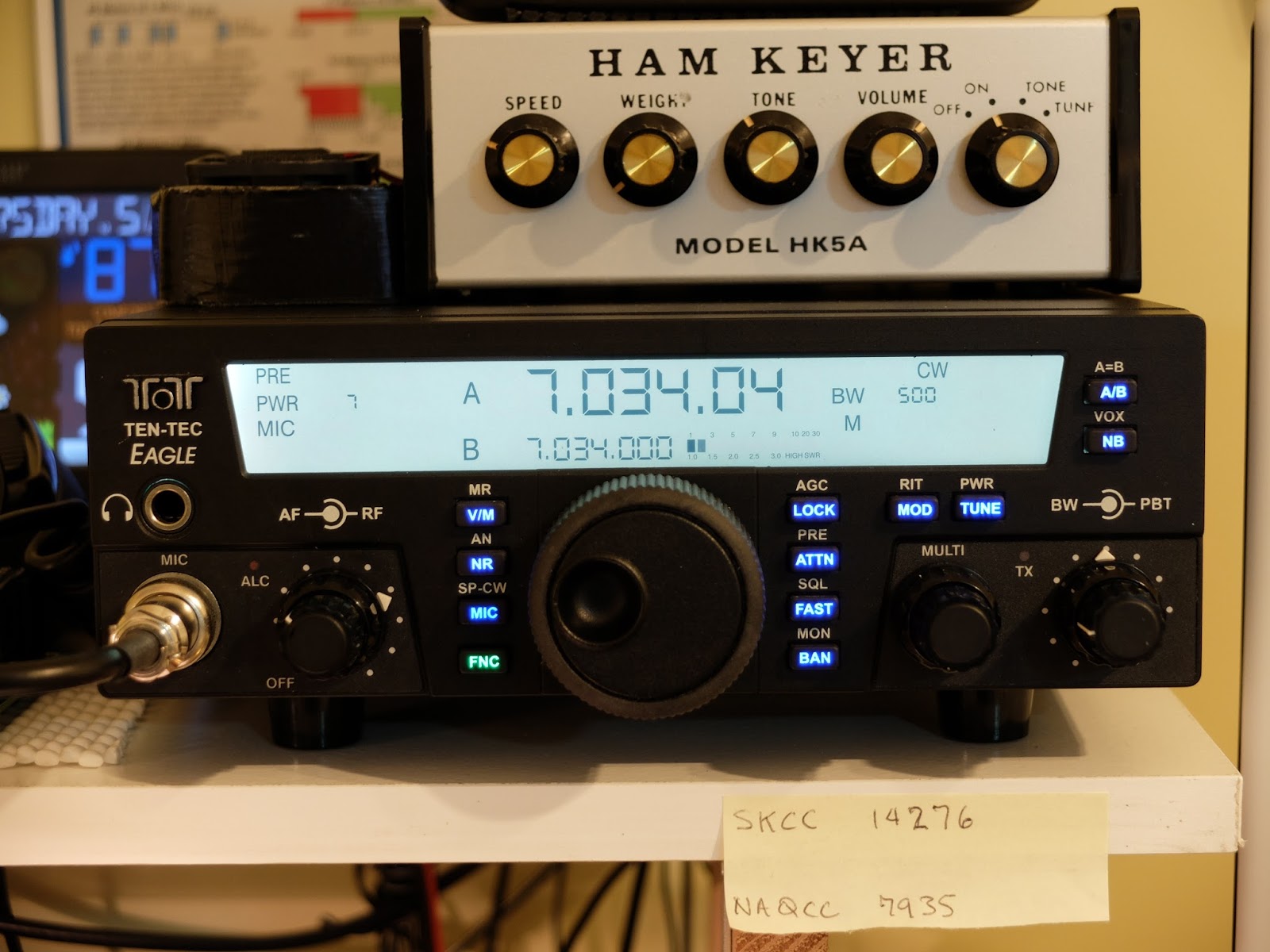
Listening to on air CW QSOs using your own HF radio...
Find conversations that are at different speeds for your practice copy. In my experience, when I only practice copying higher speed CW for a time, my ability to recognize slower CW gets rusty so practice copying all speeds. I was worked by a station some months back when I was sending at only 13wpm who came back on the second exchange and replied that I was too slow to copy and he quit the QSO. I don't want to be like that.
Along with copying QRS stations, practice copying stations that are well above your comfortable copy speed in order to stretch yourself. You will likely miss much of the conversation but your ability to start recognizing common words and abbreviations will increase. Another side effect I find is that when I listen to a 25wpm (well above my present copy speed) exchange between two operators who have equally strong signals, I'll usually copy one station better than the other. I try to figure out why that's the case. Something about that operator's style is easier to copy and when I discern why that is, I try to emulate it.
I want to be able to copy all speeds of CW; both to encourage new QRS operators and ragchew with the QRQ old-timers.
 |
| On Air Practice |
Listen to on air CW QSOs using remote radios
Web SDR stations are accessible from http://websdr.org and allow you to listen to CW anytime you have access to the internet. Web SDR stations are available from around the world, potentially from countries you haven't been able to regularly hear from your QTH. So it allows you to hear different sending styles from around the world.
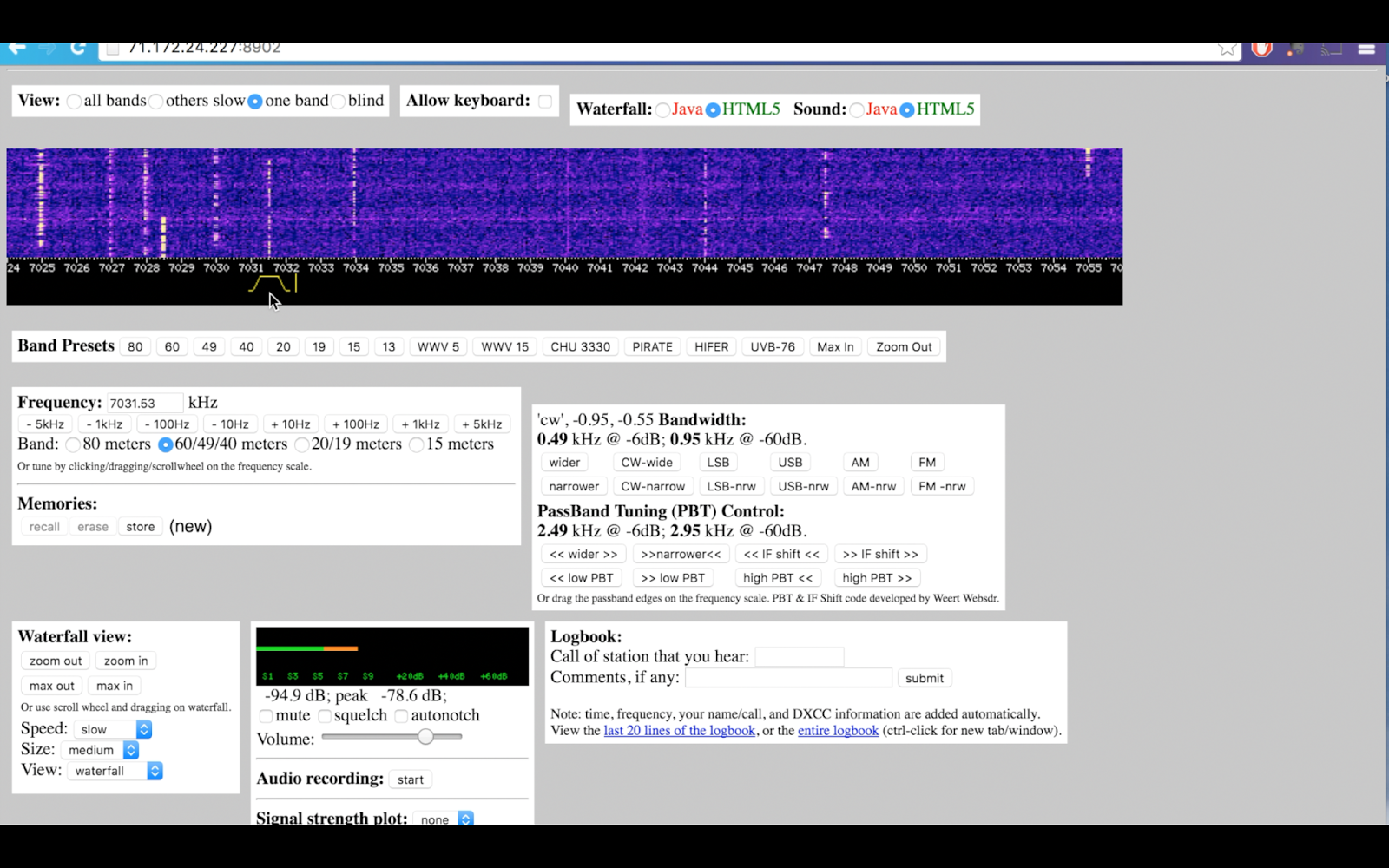 |
| Web SDR station |
Listen to machine generated CW
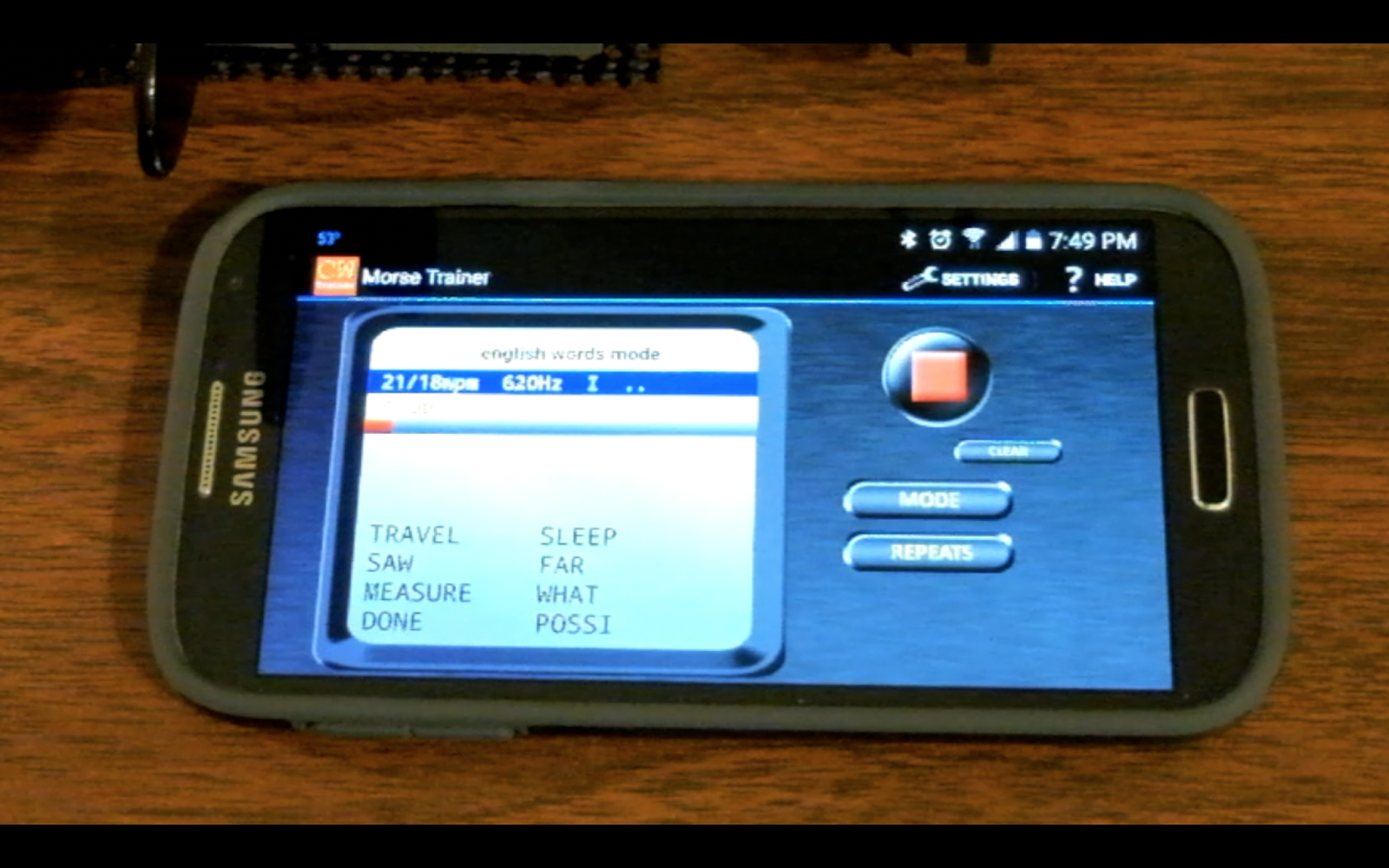 |
| Morse Trainer app for Android |
Sights and sounds
Richard Carpenter, AA4OO, is a regular contributor to AmateurRadio.com and writes from North Carolina, USA. Contact him at [email protected].
When you backup it’s not all about going in reverse!

- Why even bother with a backup, it’s not a business computer, I have no crucial financial documents, I don’t store any pictures on my PC………let me stop here and say “have you EVER had to re-install you amateur radio software?” I just did and have done in the past, all I can say is “it can be a real pain in the ass”. You find a new respect for….
- Getting your software to seamlessly work with your rig again.
- Hoping your Eqsl, LOTW or Clublog is up to date so you don’t lose contacts.
- Sending out emails to get passwords so downloaded programs I paid for will work again.
- All your software’s niffy macros you worked so hard to tweak are now gone.
- Revisiting the virtual comport software program that worked well and now you have to figure it out again….the problem being you forgot how you got it to work great last time.
- So answering a loud and clear “YES” to the above question it’s time to check out the backup programs out there. I found lots of them and as stated earlier I wanted to avoid at all costs complicated ones. I chose Acronis 2016 and there are lots out there that I imagine are better or just as good but this is the one I chose. For me Acronis was easy to understand, walked you through your backup in detail and it worked!
- Where was I going to back up too……….my new hard drive is partitioned but it makes no sense to back up on the same drive that could end up failing? I have a second drive in my PC (Seagate 1TB) and that was my choice.
- Step 3 just seemed too easy and the more reading I did the more it was driven home……backup to more than one place and preferably 3 places! I ended up choosing my network Western digital 3TB external drive and a Western Digital passport USB drive. Oh and just for the record I have no connection to Western Digital…..:) From my readings one choice should be a “cloud” type storage. For me it was just too pricey and I have these drives at home and ready to use.
- I did a full backup of the drive including system reserve portion. This backup will always be kept as is, this way I have a copy of the drive just after a clean install of the OS and all programs.
- I have scheduled an incremental backup for once per month as I don’t change too much on my PC over the course of a month so I felt this length of time should be fine. I use Log40m and configured it to auto upload my QSO’s to club log, Eqsl and LOTW so I will not have uto be concerned with updating my log file it will be store in 3 places online.
- Each time a back is done the program will perform a “validation” of the backup. Having said this I have found when a failed validation has happened and I run it again the backup will then pass? Not too sure what’s up with that and may need more investigation.
- The PC is set to shut down once the backup is completed, this way I can leave and go to work.
- I receive an email once the backup is done along with a report.
- I did have the software set to repeat the backup if the validation fails but I found the software can get into a “loop” of backing up all day if a continued failed validation persists.
Mike Weir, VE9KK, is a regular contributor to AmateurRadio.com and writes from New Brunswick, Canada. Contact him at [email protected].
 Ham Radio Deluxe |
 W5SWL Electronics |
 Ham Radio Prep |
 KB3IFH QSL Cards  Hip Ham Shirts  HamRadioAuctions HamRadioAuctions Reliance Antennas Reliance Antennas Enigma Shop Enigma Shop |  morseDX  Ni4L Antennas  R&L Electronics R&L Electronics antennas.us antennas.us QRV QRV |
- Matt W1MST, Managing Editor
