 |
 GMRS: The Other UHF Band
 10 December 2016 | by
 I’ve always had a liking for the General Mobile Radio Service (GMRS). It’s a licensed radio service but does not require a technical exam so it works great for basic personal communications. When our kids were young we made good use of GMRS communications. This was back in the Pre-Cellphone Era, shortly after the dinosaurs left the earth. I still have my GMRS license: KAF1068
GMRS uses frequencies in the general vicinity of 462 and 467 MHz. When the FCC created the Family Radio Service, they intermingled the FRS and GMRS channels, creating a real mess. See this page for a good explanation of how FRS and GMRS frequencies are arranged. Many of the low cost walkie-talkie radios sold in stores are combination FRS/GMRS radios.
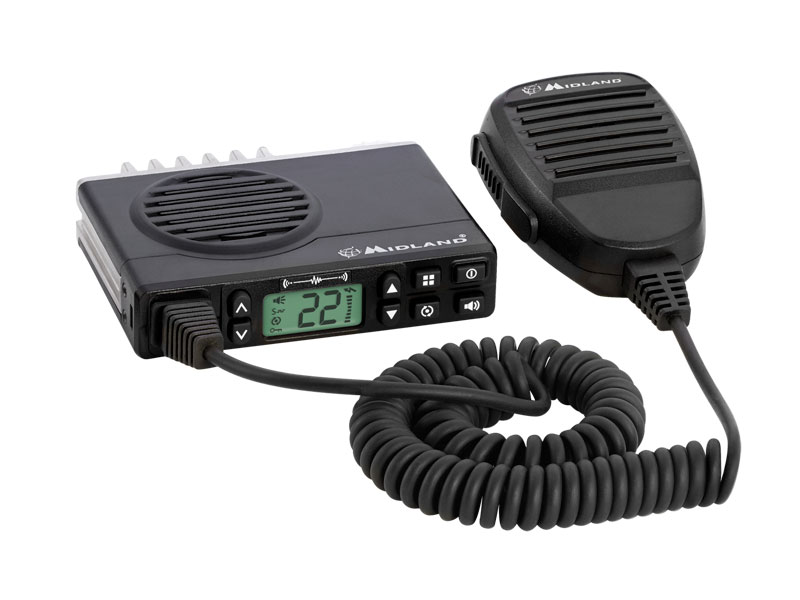
I recently came across this really sweet little GMRS rig, the Midland MXT-100 Micro Mobile GMRS Radio. This thing is nice and small with an external mag-mount antenna for the roof of the car. It only has 5W of output power, which is not much more than a typical FRS/GMRS handheld radio but the external antenna should help a lot. (I’ve heard there are newer models on the way so stay tuned for that.)
I’ve encountered 4WD / Jeep clubs that use FRS radios for on the trail communications. This Midland radio would be a good upgrade for that kind of use, providing additional radio range. Some of these 4WD enthusiasts have gotten their ham ticket via our Technician license class. Ham radio provides a lot more capability but not everyone in their club is likely to get their ham license. GMRS is a great alternative…the other UHF band. It will work for other outdoor, community and club activities that involve “non radio” people.
FCC recently reduced the cost of the GMRS license to $65 for 5 years. I suspect that most people don’t bother with getting a license…but they should. For more detail on GMRS, see the FCC GMRS Page or for some good bedtime reading see the FCC Part 95 Rules.
73, Bob KØNR
The post GMRS: The Other UHF Band appeared first on The KØNR Radio Site.
Bob Witte, KØNR, is a regular contributor to AmateurRadio.com and writes from Colorado, USA. Contact him at [email protected].
Amateur Radio Weekly – Issue 137

Amateur Radio Parity Act stalled
The legislation will be reintroduced in both houses of Congress after the 115th Session begins in January.
ARRL
Pearl Harbor Attack: Monitoring American radio traffic
IJN beefed up its radio-intelligence coverage of the American military presence in Hawaii. Two more stations, on Saipan and near Tokyo, now covered the communications of the Pacific Fleet and the U.S. Army Air Corps in Hawaii.
U.S. Naval Institute
28MHz high hopes monitoring
This blogpost is about monitoring 28MHz just before the ARRL 10m contest this weekend. It will be updated regularly till the weekend.
PE4BAS
ABC Ditches Shortwave Services
The ABC will end its shortwave transmission service in the Northern Territory and to international audiences from 31 January.
Radio Today
Five common mistakes new Hams make
This short list comes from working with a gaggle of new hams over the years and trying to help them get started in ham radio.
Ham Radio School
Where does 9600 bps come from?
We use serial communication all the time. But why are we using multiples of 300?
SparkFun Electronics
Reverse engineering traffic lights with an RTL-SDR
To reverse engineer these new lights he made a recording of the signals in GQRX and then opened them up in Inspectrum.
RTL-SDR.com
Creating a 2m repeater with a Raspberry Pi and RTL-SDR dongle
I will be using an RTL-SDR dongle to receive an input signal on 70cm. The receiver signal will then be demodulated and retransmitted using a GPIO pin on the Raspberry as a transmitter.
ZR6AIC
An unusual night for CB
For the most part, AM is used on most of the channels but you’ll find LSB activity on Channel 36 (27.365 MHz). And when the band gets busy and crowded, you’ll hear LSB QSOs from Channels 36 – 39 (27.365 – 27.395 MHz).
The SWLing Post
Video
TYT MD-398 power test
It is rated at 10W on high, let’s see if it is true to its claims.
Ham Radio Reviews
Amateur Radio Weekly is curated by Cale Mooth K4HCK. Sign up free to receive ham radio's most relevant news, projects, technology and events by e-mail each week at http://www.hamweekly.com.
Remember An Old Friend This Holiday Season
Today, I think I may have started a tradition, something that put the holiday season into a little clearer perspective, I contacted an old friend, a ham radio buddy that I haven't communicated with in at least a couple of decades. He was IOTA chasing buddy and fellow activator. I used to visit him on business trips to Calgary and we would meet up and share a Molson and talk the hours away. We did a couple of Canadian Islands together and genuinely enjoyed each others company. Then I changed jobs and don't get back to Calgary and eventually our friendship faded from a lack of use. Today I wondered how he was doing. He is 34 years older than me, I thought I should check on him., he is about to turn 93 years old.
I sent him an email, not sure of a response, but let him know that I was thinking about him and those old memories were as fond now as they ever were. To my surprise, in a couple of hours he responded. He was clearly happy to be communicating with someone and to renew our friendship and hopefully to refresh a few good memories from the past. He still ties fishing flies and trout fishes, mainly with the sons of his fishing buddies. He still volunteers in his community and has been recognized for his volunteer work. He lost his wife of 69 years in 2013 and misses her dearly. He still gets on the radio and told me of his latest exploits on air. He wants to stay in touch and wished me a healthy 2017.
It made my day, my week, my month. I need to do this sort of thing way more often and it made me think about how good it feels to be remembered. After you read this look up an old friend, someone you haven't seen or heard from in years and let them know that you remember and that you were thinking of them. It will do you a world of good.
Merry Christmas and Happy New Year
Mike Crownover, AD5A, is a regular contributor to AmateurRadio.com and writes from Texas, USA. Contact him at [email protected].
Remember An Old Friend This Holiday Season
Today, I think I may have started a tradition, something that put the holiday season into a little clearer perspective, I contacted an old friend, a ham radio buddy that I haven't communicated with in at least a couple of decades. He was IOTA chasing buddy and fellow activator. I used to visit him on business trips to Calgary and we would meet up and share a Molson and talk the hours away. We did a couple of Canadian Islands together and genuinely enjoyed each others company. Then I changed jobs and don't get back to Calgary and eventually our friendship faded from a lack of use. Today I wondered how he was doing. He is 34 years older than me, I thought I should check on him., he is about to turn 93 years old.
I sent him an email, not sure of a response, but let him know that I was thinking about him and those old memories were as fond now as they ever were. To my surprise, in a couple of hours he responded. He was clearly happy to be communicating with someone and to renew our friendship and hopefully to refresh a few good memories from the past. He still ties fishing flies and trout fishes, mainly with the sons of his fishing buddies. He still volunteers in his community and has been recognized for his volunteer work. He lost his wife of 69 years in 2013 and misses her dearly. He still gets on the radio and told me of his latest exploits on air. He wants to stay in touch and wished me a healthy 2017.
It made my day, my week, my month. I need to do this sort of thing way more often and it made me think about how good it feels to be remembered. After you read this look up an old friend, someone you haven't seen or heard from in years and let them know that you remember and that you were thinking of them. It will do you a world of good.
Merry Christmas and Happy New Year
Mike Crownover, AD5A, is a regular contributor to AmateurRadio.com and writes from Texas, USA. Contact him at [email protected].
1929 QSO Party Weekends
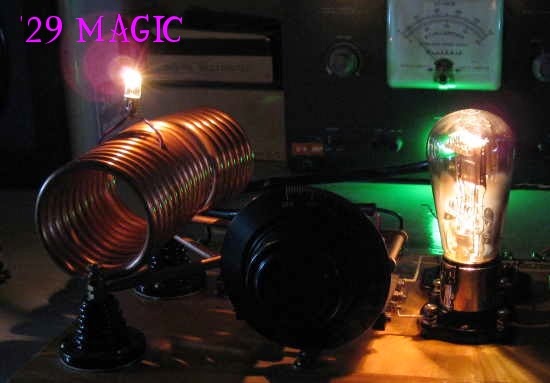
This Saturday as well as the next will be the annual Bruce Kelley 1929 QSO Party, otherwise known as the '1929 BK'.
It's the once a year opportunity to celebrate the sounds of early amateur radio ... only transmitters that are 'era-appropriate' are allowed to be used. More specifically, transmitters must employ tubes that were available in 1929 or earlier, and transmitters must be self-excited. No crystals allowed! Crystals were new and largely unaffordable for most hams back in the depression days.
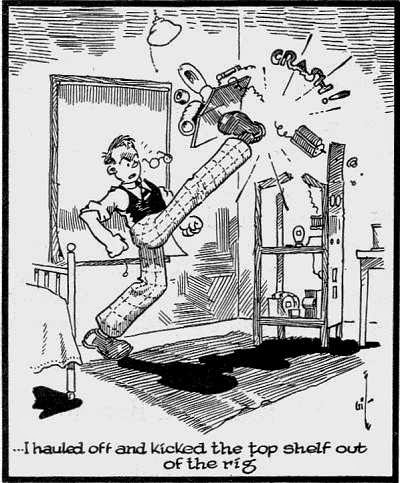
1929 marked a real turning point in amateur radio as governments finally cracked-down on things such as frequency stability, out of band operations and re-alignment of call districts. In short, hams were henceforth required to behave themselves and to clean up their signals and methods of operation.
 |
| courtesy: http://www.arrl.org/ |
If you tune across the CW bands during the next two Saturday nights, you will have the rare opportunity to hear exactly what the bands must have sounded like back in the early '30s'.
For the most part you will hear single tube Hartley, Colpitts or TNT oscillators with a few two-tube MOPAs' thrown in. Many of them will suffer the same problems encountered by the boys of '29 ... chirp, drift, buzzy notes and frequency instability from antennas swaying in the wind. The MOPAs' will sound much better but some surprisingly nice-sounding signals can be heard coming from properly tuned and optimised single-tube oscillators. I recall being blown away by the lovely sounding signal I heard from such a rig when first tuning into the BK activity several years ago, only to learn that it was a self-excited Hartley using 1/4" copper tubing for the oscillator tank circuit!
The '29 watering-hole on 80m will be around 3550-3580 kilocycles (be careful not to confuse this with kilohertz!) while the early afternoon to sunset 40m activity will be found from 7100-7125 kc. There may even be a few on the very low end of 160m, later on the first Saturday night only. Although many of these transmitter styles were used on 20m and higher, BK rule-makers have wisely decided not to inflict these sounds on the present populace as it would likely keep the 'Official Observer' guys busy for several days writing pink-slips.
You can learn more about amateur radio happenings leading up to and following the 1929 crackdown in my earlier series of 'Why '29' blogs here:
Part 2
Part 3
Part 4
Those wishing to put something together for next year's event can find everything needed here:
Building '29-Style - Part 1
Building '29-Style - Part 2
Unfortunately due to a number of coinciding events, I'll not be on-the-air for the event this year, the first one I've missed since getting in on the fun several years ago.
Steve McDonald, VE7SL, is a regular contributor to AmateurRadio.com and writes from British Columbia, Canada. Contact him at [email protected].
LoRa LoRa Laughs!
Until recently the preferred method was to use RTTY transmissions, however the advent of the IoT (Internet Of Things) has seen manufacturers of radio modules develop devices to increase both the range and reliability of communication between 'connected' embedded devices.
One such development are LoRa devices, primarily for devices to connect to a global wide-area network LoRaWAN, more information can be found at the LoRa Alliance in addition there are some open hobbyist networks such as The Things Network using these devices.
Using chirp spread-spectrum modulation these LoRa devices are marketed as being capable of robust, interference and fade resistant communication over longer distances and higher data rates.
The UK HAB community has begun experimenting with these devices and one of their keen proponents is Dave Akerman (M0RPI). Dave has developed both payload software for the "Pi In The Sky" PITS tracker along with Anthony Stirk (M0UPU) and gateway software in collaboration with Robert Harrison M0RJX. The 'gateway' is the necessary receiver element to upload the data to the tracking system. (all software is on the PITS Github page)
Dave gave an informative presentation on LoRa at the UKHAS 2016 Conference which is now available online (starts around 3 minutes in)
I had intended to fly a LoRa transmitter on my 2015 Hamfest balloon but it stopped working at the eleventh hour and hadn't done anything else with LoRa till recently.
Spurred on by the conference presentation and the fact more and more flights are carrying LoRa I invested in one of the Raspberry Pi expansion boards sold by Uputronics and built up another prototype tracker with a working LoRa module.
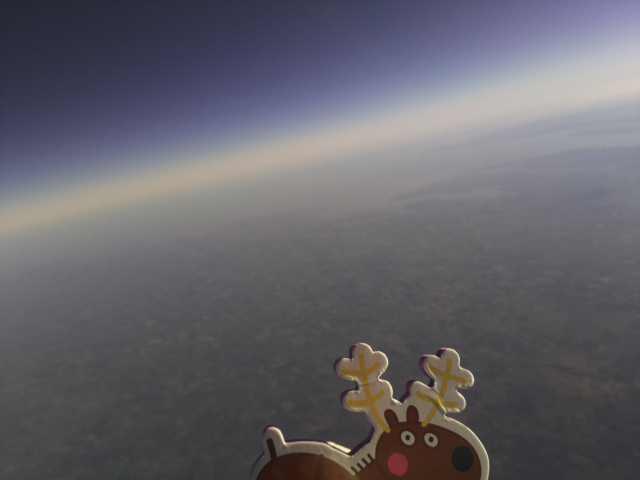
I have done talks at various radio clubs and societies and demonstrated it working but hadn't actually received a 'real flight' as opportunities have been scarce due to the weather. However in the few weeks I have tracked a couple of flights receiving both telemetry and image data, getting a couple of complete images from the imaginatively named 'SPACE' flight.
Dave Akerman also flew a flight experimenting with multiple payloads using Time-division multiplexing (TDM). It had 10 small of "AVRLoRaNut" trackers (of Anthony M0UPU's design) all set to the same frequency (434.450MHz) and same transmission mode. The trackers took turns to transmit, with each one allocated a particular transmission slot in a 20-second cycle. The cycle was GPS-timed but, if any tracker lost GPS lock then it derived timing from the transmissions from the other trackers (the LoRa devices are also receivers) All 10 trackers were suspended from the same balloon. This was in preparation for the 'Operation Outward' re-enactment next year (Steve Randall gave a presentation on it in the above conference video starts 1 hour 16 mins in)
I successfully received telemetry despite the flight not being local and constantly heading away from me as can be seen in the screen shots.
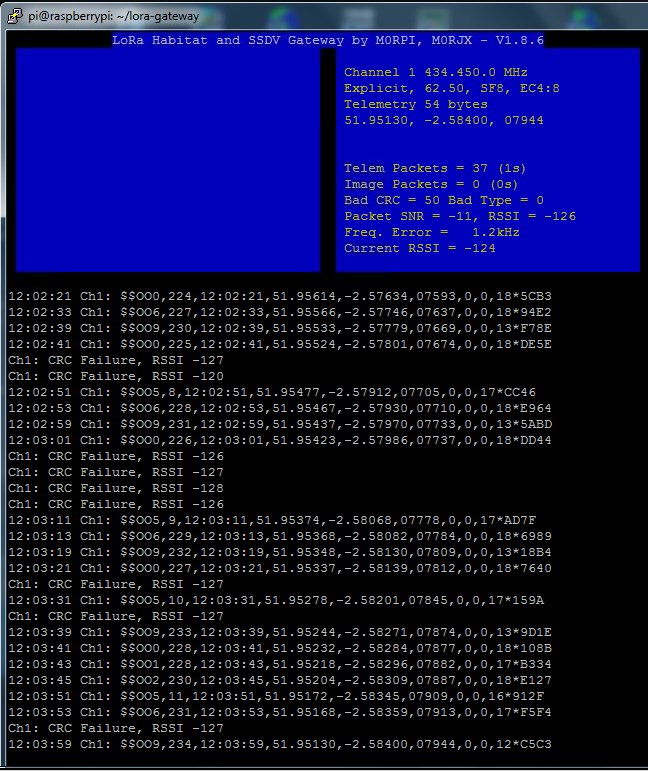
Always a busy man Dave also flew a flight with an experimental camera setup. The SSDV images this time came from a Nikon compact camera, connected to the Raspberry Pi via USB, and using gphoto2 software to take and transfer images to the Pi where they were stored, resized and converted to SSDV format for transmission. These were large images with a high quality SSDV setting so lots of packets per image, approx 1400 per image in testing.
This flight was using a 868MHz LoRa device, rather than the usual 434MHz due to the IR2030 restriction on bandwidth and duty cycle. Dave was using his Turbo-X or Mode 4 setting which is as fast as LoRa will go within IR2030 bandwidth restrictions (approx 8 packets / 2k bytes per second)
I hastily ordered a 868MHz device and soldered it in the spare slot on my gateway and built a collinear for 868MHz similar to the one I built for ADB-S reception (see video here).

You can see it lashed up just below the dual-band collinear - not ideal mounting and it wasn't tested in anyway, built blind! The less than optimal setup at UHF, the insane data rate and the distance (>100miles) were going to make reception difficult, so I was pleased I did manage to receive telemetry and image packets.

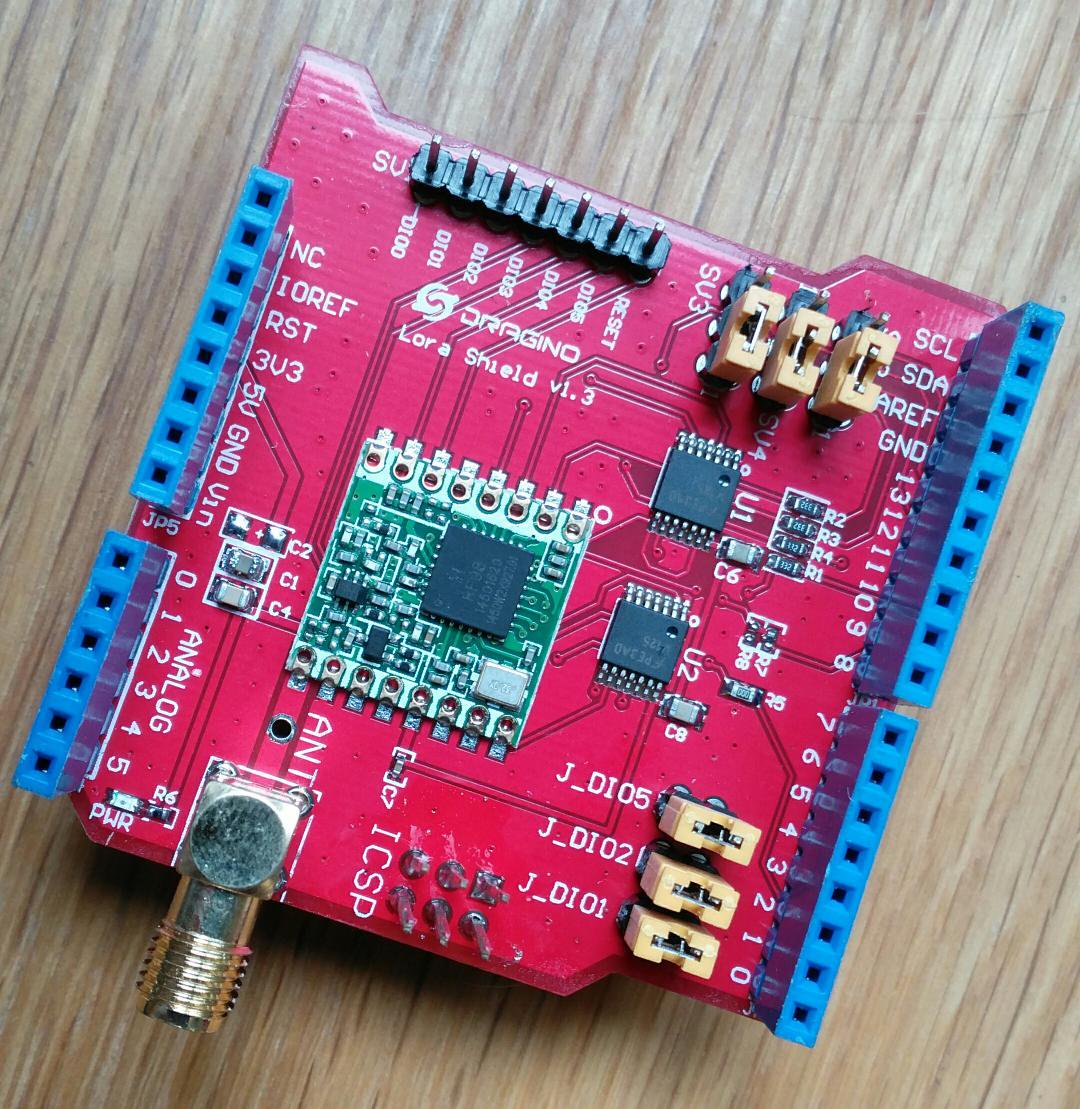
Most of the current LoRa development in the HAB community has tended to be on the Raspberry Pi due to the use with SSDV and the easy availability of cameras and ready built kit. LoRa is of course available on the Arduino platform and I had purchased a couple of 'Dragino' shields (pictured below) with a LoRa device on.
Dave has done some work on a AVR tracker software and a simple Arduino 'Serial' LoRa receiver. The receiver connects to a host PC appearing as a serial port and by running some gateway software the receiver can be configured via the serial link and received data is sent back to the gateway to be uploaded to the Habitat tracking system and SSDV system - the software can be seen here during the 'Operation Outward' test flight.

This gateway software is written in Pascal using Delphi and is not as functional as the Raspberry Pi Gateway software. Dave has made the source code available but I am not au fait at all with Delphi however I installed the free development IDE and intended to get in and make modifications but it seems to require a non-free(?) library for the serial comms so ditched the idea.
Instead I have spent the last few days developing a C# .NET version using Microsoft Visual Studio (the community version is free) and also have been modifying the Arduino code in the receiver to add functionality, such as storing the SSDV images locally.
It is still a work in progress but I have made a video showing the current state
Anyway as Cilla Black would say it's been a Lorra Lorra Laughs!

Andrew Garratt, MØNRD, is a regular contributor to AmateurRadio.com and writes from East Midlands, England. Contact him at [email protected].
LoRa LoRa Laughs!
Until recently the preferred method was to use RTTY transmissions, however the advent of the IoT (Internet Of Things) has seen manufacturers of radio modules develop devices to increase both the range and reliability of communication between 'connected' embedded devices.
One such development are LoRa devices, primarily for devices to connect to a global wide-area network LoRaWAN, more information can be found at the LoRa Alliance in addition there are some open hobbyist networks such as The Things Network using these devices.
Using chirp spread-spectrum modulation these LoRa devices are marketed as being capable of robust, interference and fade resistant communication over longer distances and higher data rates.
The UK HAB community has begun experimenting with these devices and one of their keen proponents is Dave Akerman (M0RPI). Dave has developed both payload software for the "Pi In The Sky" PITS tracker along with Anthony Stirk (M0UPU) and gateway software in collaboration with Robert Harrison M0RJX. The 'gateway' is the necessary receiver element to upload the data to the tracking system. (all software is on the PITS Github page)
Dave gave an informative presentation on LoRa at the UKHAS 2016 Conference which is now available online (starts around 3 minutes in)
I had intended to fly a LoRa transmitter on my 2015 Hamfest balloon but it stopped working at the eleventh hour and hadn't done anything else with LoRa till recently.
Spurred on by the conference presentation and the fact more and more flights are carrying LoRa I invested in one of the Raspberry Pi expansion boards sold by Uputronics and built up another prototype tracker with a working LoRa module.
I have done talks at various radio clubs and societies and demonstrated it working but hadn't actually received a 'real flight' as opportunities have been scarce due to the weather. However in the few weeks I have tracked a couple of flights receiving both telemetry and image data, getting a couple of complete images from the imaginatively named 'SPACE' flight.
Dave Akerman also flew a flight experimenting with multiple payloads using Time-division multiplexing (TDM). It had 10 small of "AVRLoRaNut" trackers (of Anthony M0UPU's design) all set to the same frequency (434.450MHz) and same transmission mode. The trackers took turns to transmit, with each one allocated a particular transmission slot in a 20-second cycle. The cycle was GPS-timed but, if any tracker lost GPS lock then it derived timing from the transmissions from the other trackers (the LoRa devices are also receivers) All 10 trackers were suspended from the same balloon. This was in preparation for the 'Operation Outward' re-enactment next year (Steve Randall gave a presentation on it in the above conference video starts 1 hour 16 mins in)
I successfully received telemetry despite the flight not being local and constantly heading away from me as can be seen in the screen shots.
Always a busy man Dave also flew a flight with an experimental camera setup. The SSDV images this time came from a Nikon compact camera, connected to the Raspberry Pi via USB, and using gphoto2 software to take and transfer images to the Pi where they were stored, resized and converted to SSDV format for transmission. These were large images with a high quality SSDV setting so lots of packets per image, approx 1400 per image in testing.
This flight was using a 868MHz LoRa device, rather than the usual 434MHz due to the IR2030 restriction on bandwidth and duty cycle. Dave was using his Turbo-X or Mode 4 setting which is as fast as LoRa will go within IR2030 bandwidth restrictions (approx 8 packets / 2k bytes per second)
I hastily ordered a 868MHz device and soldered it in the spare slot on my gateway and built a collinear for 868MHz similar to the one I built for ADB-S reception (see video here).
You can see it lashed up just below the dual-band collinear - not ideal mounting and it wasn't tested in anyway, built blind! The less than optimal setup at UHF, the insane data rate and the distance (>100miles) were going to make reception difficult, so I was pleased I did manage to receive telemetry and image packets.
Most of the current LoRa development in the HAB community has tended to be on the Raspberry Pi due to the use with SSDV and the easy availability of cameras and ready built kit. LoRa is of course available on the Arduino platform and I had purchased a couple of 'Dragino' shields (pictured below) with a LoRa device on.
Dave has done some work on a AVR tracker software and a simple Arduino 'Serial' LoRa receiver. The receiver connects to a host PC appearing as a serial port and by running some gateway software the receiver can be configured via the serial link and received data is sent back to the gateway to be uploaded to the Habitat tracking system and SSDV system - the software can be seen here during the 'Operation Outward' test flight.
This gateway software is written in Pascal using Delphi and is not as functional as the Raspberry Pi Gateway software. Dave has made the source code available but I am not au fait at all with Delphi however I installed the free development IDE and intended to get in and make modifications but it seems to require a non-free(?) library for the serial comms so ditched the idea.
Instead I have spent the last few days developing a C# .NET version using Microsoft Visual Studio (the community version is free) and also have been modifying the Arduino code in the receiver to add functionality, such as storing the SSDV images locally.
It is still a work in progress but I have made a video showing the current state
Anyway as Cilla Black would say it's been a Lorra Lorra Laughs!
Andrew Garratt, MØNRD, is a regular contributor to AmateurRadio.com and writes from East Midlands, England. Contact him at [email protected].
 Ham Radio Deluxe |
 W5SWL Electronics |
 Ham Radio Prep |
 KB3IFH QSL Cards  Hip Ham Shirts  HamRadioAuctions HamRadioAuctions Reliance Antennas Reliance Antennas Enigma Shop Enigma Shop |  morseDX  Ni4L Antennas  R&L Electronics R&L Electronics antennas.us antennas.us QRV QRV |
- Matt W1MST, Managing Editor
