Going cold turkey
I smoked for a very brief period of time (maybe 1/2 a year) when I was in college and to this day, I'll enjoy a cigar at a wedding, if they're being offered; but I never smoked to the point where it became a habit. I can imagine though, for a hard core chain smoker, the thought of going "cold turkey" probably produces cold sweats and chills down the spine.
Thanks to the ARRL, many of us have become addicted to National Parks on the Air. I say that in a teasing and friendly manner. But the fact remains that for the past 12 months we have really enjoyed chasing and activating the over 400 National Park System entities.
A lot of folks went in whole hog and seemed to make it their mission to activate as many entities as possible. Some made it a family affair, taking their spouses and children on a tour of the USA. Some seemed to take a sabbatical from work in order to satisfy their craving. Some slept in cars, hopping from site to site, alternately activating and then hunting for a spot with WiFi so they could upload their logs to Logbook of the World. A lot were like me, activating sites that were relatively close to home when chores and family commitments allowed some of that seemingly rare commodity - free time. One thing seemed certain, though, whether you were a hard core NPOTA'er or just an occasional dabbler ...... everyone who got involved had a good time.
So it is with mixed emotions that I anticipate the end of NPOTA 2016. I will always have fond memories of my activations, and of how I incorporated NPOTA into the 2016 NJQRP Skeeter Hunt, and of the many hours I spent behind the key (and microphone) as a chaser. I think I spent more time behind the microphone this year than in all my 38 years of Amateur Radio combined.
I will also fondly remember the friendships that have formed with many activators and fellow chasers on the air and through the NPOTA page on Facebook. Call signs have become names and faces instead of just random letter/number combinations. In a few instances, Hams that I have known for years and have only worked via Morse Code have now become familiar voices! And when was the last time a fellow Ham gave you cookies or a pizza for working them? Chalk up those innovative ideas for fellowship to NPOTA!
For many, NPOTA became an opportunity for us to rethink how we thought about Amateur Radio. A lot of us had to shed all previous notions and start thinking outside the box. For many it was the first time they ever operated outside the home Shack other than Field Day. NPOTA became a fantastic opportunity to learn about what works and what doesn't. Many of us became more in tune with our equipment, using it in ways we never had before, expanding our capabilities and experiences. It was an opportunity for many to build and experiment with new antenna systems, new power systems, new ways of doing things that were previously taken for granted. For many of us, it also became a school for learning (real fast!) how to improvise when piece of equipment was forgotten; or how to make quick (and sometimes not so pretty) repairs when something would break or malfunction. Through it all, we became better Amateur Radio Operators because of it; and there's no amount of money you can place on that.
It will be very hard for all NPOTA'ers when 23:59:59 UTC rolls around on December 31st and it's all gone; and we're all going "cold turkey". As far as this particular event is concerned, microphones and keys will go silent and we'll only have the sweet memories of the past 12 months to comfort us. It will seem strange not to turn on the rig and twiddle the dial looking for that new entity to work - looking for familiar call signs that we could count on to be activating some new place of historical significance.
So many thanks go out. To Sean Kutzko KX9X and Norm Fusaro W3IZ from the League, who did a magnificent job tending and managing the NPOTA program. To the ARRL for sponsoring the event and making the resources available that are necessary to run something of this magnitude. Web space and server space don't grow on trees, so the next time you're ready to grouse about "What does the ARRL do for me?" ....... well, here's a good example.
Thanks to the many before mentioned activators, who provided me with so many moments of fun as well as so many moments of anticipation, and yes, even some moments of frustration. Many thanks to the chasers who worked me (and will work me tomorrow during my two, final activations). Without all you fine folks, this NPOTA concept would have been just that - a concept. You all breathed life into what may well go down in history as the most fondly remembered activity the ARRL ever sponsored.
Lastly, so many thanks to the National Park System and its employees. You have been the most kind and gracious hosts to all of us these past twelve months. You not only were knowledgeable and competent guides, you also became good friends. We are in your debt for your generous hospitality.
72 de W2LJ
QRP - When you care to send the very least!
Larry Makoski, W2LJ, is a regular contributor to AmateurRadio.com and writes from New Jersey, USA. Contact him at [email protected].
Going cold turkey
I smoked for a very brief period of time (maybe 1/2 a year) when I was in college and to this day, I'll enjoy a cigar at a wedding, if they're being offered; but I never smoked to the point where it became a habit. I can imagine though, for a hard core chain smoker, the thought of going "cold turkey" probably produces cold sweats and chills down the spine.
Thanks to the ARRL, many of us have become addicted to National Parks on the Air. I say that in a teasing and friendly manner. But the fact remains that for the past 12 months we have really enjoyed chasing and activating the over 400 National Park System entities.
A lot of folks went in whole hog and seemed to make it their mission to activate as many entities as possible. Some made it a family affair, taking their spouses and children on a tour of the USA. Some seemed to take a sabbatical from work in order to satisfy their craving. Some slept in cars, hopping from site to site, alternately activating and then hunting for a spot with WiFi so they could upload their logs to Logbook of the World. A lot were like me, activating sites that were relatively close to home when chores and family commitments allowed some of that seemingly rare commodity - free time. One thing seemed certain, though, whether you were a hard core NPOTA'er or just an occasional dabbler ...... everyone who got involved had a good time.
So it is with mixed emotions that I anticipate the end of NPOTA 2016. I will always have fond memories of my activations, and of how I incorporated NPOTA into the 2016 NJQRP Skeeter Hunt, and of the many hours I spent behind the key (and microphone) as a chaser. I think I spent more time behind the microphone this year than in all my 38 years of Amateur Radio combined.
I will also fondly remember the friendships that have formed with many activators and fellow chasers on the air and through the NPOTA page on Facebook. Call signs have become names and faces instead of just random letter/number combinations. In a few instances, Hams that I have known for years and have only worked via Morse Code have now become familiar voices! And when was the last time a fellow Ham gave you cookies or a pizza for working them? Chalk up those innovative ideas for fellowship to NPOTA!
For many, NPOTA became an opportunity for us to rethink how we thought about Amateur Radio. A lot of us had to shed all previous notions and start thinking outside the box. For many it was the first time they ever operated outside the home Shack other than Field Day. NPOTA became a fantastic opportunity to learn about what works and what doesn't. Many of us became more in tune with our equipment, using it in ways we never had before, expanding our capabilities and experiences. It was an opportunity for many to build and experiment with new antenna systems, new power systems, new ways of doing things that were previously taken for granted. For many of us, it also became a school for learning (real fast!) how to improvise when piece of equipment was forgotten; or how to make quick (and sometimes not so pretty) repairs when something would break or malfunction. Through it all, we became better Amateur Radio Operators because of it; and there's no amount of money you can place on that.
It will be very hard for all NPOTA'ers when 23:59:59 UTC rolls around on December 31st and it's all gone; and we're all going "cold turkey". As far as this particular event is concerned, microphones and keys will go silent and we'll only have the sweet memories of the past 12 months to comfort us. It will seem strange not to turn on the rig and twiddle the dial looking for that new entity to work - looking for familiar call signs that we could count on to be activating some new place of historical significance.
So many thanks go out. To Sean Kutzko KX9X and Norm Fusaro W3IZ from the League, who did a magnificent job tending and managing the NPOTA program. To the ARRL for sponsoring the event and making the resources available that are necessary to run something of this magnitude. Web space and server space don't grow on trees, so the next time you're ready to grouse about "What does the ARRL do for me?" ....... well, here's a good example.
Thanks to the many before mentioned activators, who provided me with so many moments of fun as well as so many moments of anticipation, and yes, even some moments of frustration. Many thanks to the chasers who worked me (and will work me tomorrow during my two, final activations). Without all you fine folks, this NPOTA concept would have been just that - a concept. You all breathed life into what may well go down in history as the most fondly remembered activity the ARRL ever sponsored.
Lastly, so many thanks to the National Park System and its employees. You have been the most kind and gracious hosts to all of us these past twelve months. You not only were knowledgeable and competent guides, you also became good friends. We are in your debt for your generous hospitality.
72 de W2LJ
QRP - When you care to send the very least!
Larry Makoski, W2LJ, is a regular contributor to AmateurRadio.com and writes from New Jersey, USA. Contact him at [email protected].
CQ – 630m Crossband Anyone?

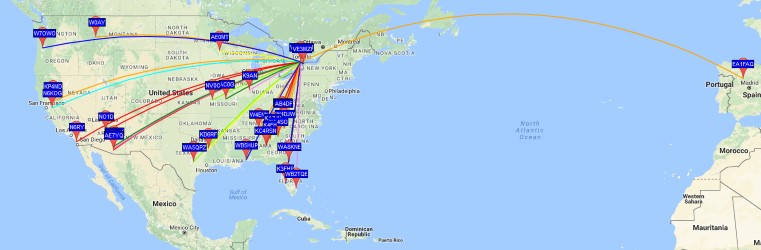
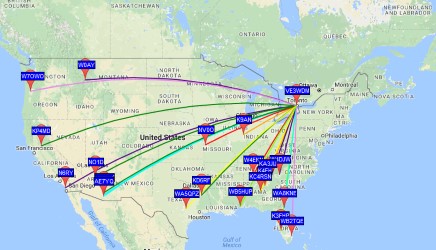
A very beautiful QSL arrived in the mail last week, confirming my 630m crossband contact with Harry, WØLS, in Minnesota.
According to Harry's card, this was the first time he had ever listened on 630m and was very surprised to hear me, let alone complete the two-way contact.
Harry was transmitting on 80m CW while I was transmitting on 630m, on 473.00 kHz. It really does not take too much to be able to hear signals on 630m, especially if you are not overwhelmed with a high noise floor ... most low band wire antennas will hear pretty well down there, when pressed into service.
This week, the card from Jeffrey, KGØVL in Iowa arrived. This one also confirmed a 630m crossband contact. Both of these QSO's were made during the November's 630m activity night.
Jeffrey was transmitting on 160m while listening to my signal on 473.00 kHz with his 160m inverted-L.
It's not really necessary to wait for another activity night to have some fun, so ... if you would be interested in trying a crossband CW contact, I would be more than excited to give it a shot.
I can listen on 160, 80 or 40m for you, if you can listen on 630m for me! If we can arrange a sked, I could probably talk a few of the other local 630m VE7's into tagging-along so that you end up with a double or triple-header of VE7's in the logbook.
Please e-mail if you would like to try... ve7sl at shaw.ca
Steve McDonald, VE7SL, is a regular contributor to AmateurRadio.com and writes from British Columbia, Canada. Contact him at [email protected].
CQ – 630m Crossband Anyone?

A very beautiful QSL arrived in the mail last week, confirming my 630m crossband contact with Harry, WØLS, in Minnesota.
According to Harry's card, this was the first time he had ever listened on 630m and was very surprised to hear me, let alone complete the two-way contact.
Harry was transmitting on 80m CW while I was transmitting on 630m, on 473.00 kHz. It really does not take too much to be able to hear signals on 630m, especially if you are not overwhelmed with a high noise floor ... most low band wire antennas will hear pretty well down there, when pressed into service.
This week, the card from Jeffrey, KGØVL in Iowa arrived. This one also confirmed a 630m crossband contact. Both of these QSO's were made during the November's 630m activity night.
Jeffrey was transmitting on 160m while listening to my signal on 473.00 kHz with his 160m inverted-L.
It's not really necessary to wait for another activity night to have some fun, so ... if you would be interested in trying a crossband CW contact, I would be more than excited to give it a shot.
I can listen on 160, 80 or 40m for you, if you can listen on 630m for me! If we can arrange a sked, I could probably talk a few of the other local 630m VE7's into tagging-along so that you end up with a double or triple-header of VE7's in the logbook.
Please e-mail if you would like to try... ve7sl at shaw.ca
Steve McDonald, VE7SL, is a regular contributor to AmateurRadio.com and writes from British Columbia, Canada. Contact him at [email protected].
Santa came with radio stuff !!
Mike Weir, VE9KK, is a regular contributor to AmateurRadio.com and writes from New Brunswick, Canada. Contact him at [email protected].
Santa came with radio stuff !!
Mike Weir, VE9KK, is a regular contributor to AmateurRadio.com and writes from New Brunswick, Canada. Contact him at [email protected].
Top Five K0NR Blog Posts For 2016
As we approach the end of the year, it is fun to look back to see which blog posts were read the most. It turns out these five blog postings were written in previous years but they are the ones that got the most hits in 2016.
The most read post on k0nr.com was Choose Your 2m Frequency Wisely, an article I wrote that explains the 2m band plan in Colorado. I wrote this one years ago after encountering quite a few folks that did not understand how the band plan is set up. (If you are outside of Colorado, see What Frequency Do I Use on 2 Meters? over on HamRadioSchool.com) The second most read post concerns the use of amateur gear outside the ham bands: Can I Use My Ham Radio on Public Safety Frequencies? Actually, I have two blog postings that cover the same topic but I’ve linked to the one that is up to date. This is a hot topic as many people still believe strongly that no ham gear is legal on Part 90 frequencies (read through the comments on that post). This is why I took the time to write about it, attempting to explain it and educate the ham community.
Another perennial favorite is: Solving the Baofeng Cable Problem. There is a really frustrating problem with how the Windows driver works with certain USB interface chips. Many folks who went out and bought low cost Baofeng (and other) radios got totally hosed up by this. Hence, the need for and the popularity of this blog posting.
Next up is my classic article FM/VHF Operating Guide, written many years ago and continually updated over the years. Mobile radio installations are always a bit of an exploration, so I try to share what I learn when doing one. People seem to appreciate this kind of article and often ask followup questions via email. For whatever reason, my 2012 Jeep Wrangler Radio Install post continues to be a popular post on my blog.
Hey, thanks for stopping by k0nr.com. Best of luck to you in the New Year.
73, Bob K0NR
The post Top Five K0NR Blog Posts For 2016 appeared first on The KØNR Radio Site.
Bob Witte, KØNR, is a regular contributor to AmateurRadio.com and writes from Colorado, USA. Contact him at [email protected].