 |
 Comparing two antennas with WSPR
 23 February 2017 | by
  |
| Ultimate 3S with 5-band relay module in front, variable LM2596 power supply (with voltmeter) for the power amplifier behind left, a variable LM2596 supply set for 5 Volts for the Ultimate 3S in the middle, and the antenna switch to the right in the back. |
WSPR – The system for Weak Signal Propagation Reporter makes it easy to compare antennas if your transmitter can easily switch antennas. The system shown here can send on antenna 1 for almost two minutes and then switch immediately to antenna 2 for the next transmission.
The Ultimate 3S already has software that supports that and application note 3 from QRPLabs (Controlling additional relays using the Ultimate3S “Aux”) describes how. I built mine following that note and the experience from EA1CDV.
The circuit is controlled from pin D7 and consists of a transistor, a relay, a resistor and an electrolytic capacitor. In addition I have two LEDs that indicate which antenna which is in use. In the first picture the green LED in the back right under the BNC antenna connector shows that antenna 1 is connected.
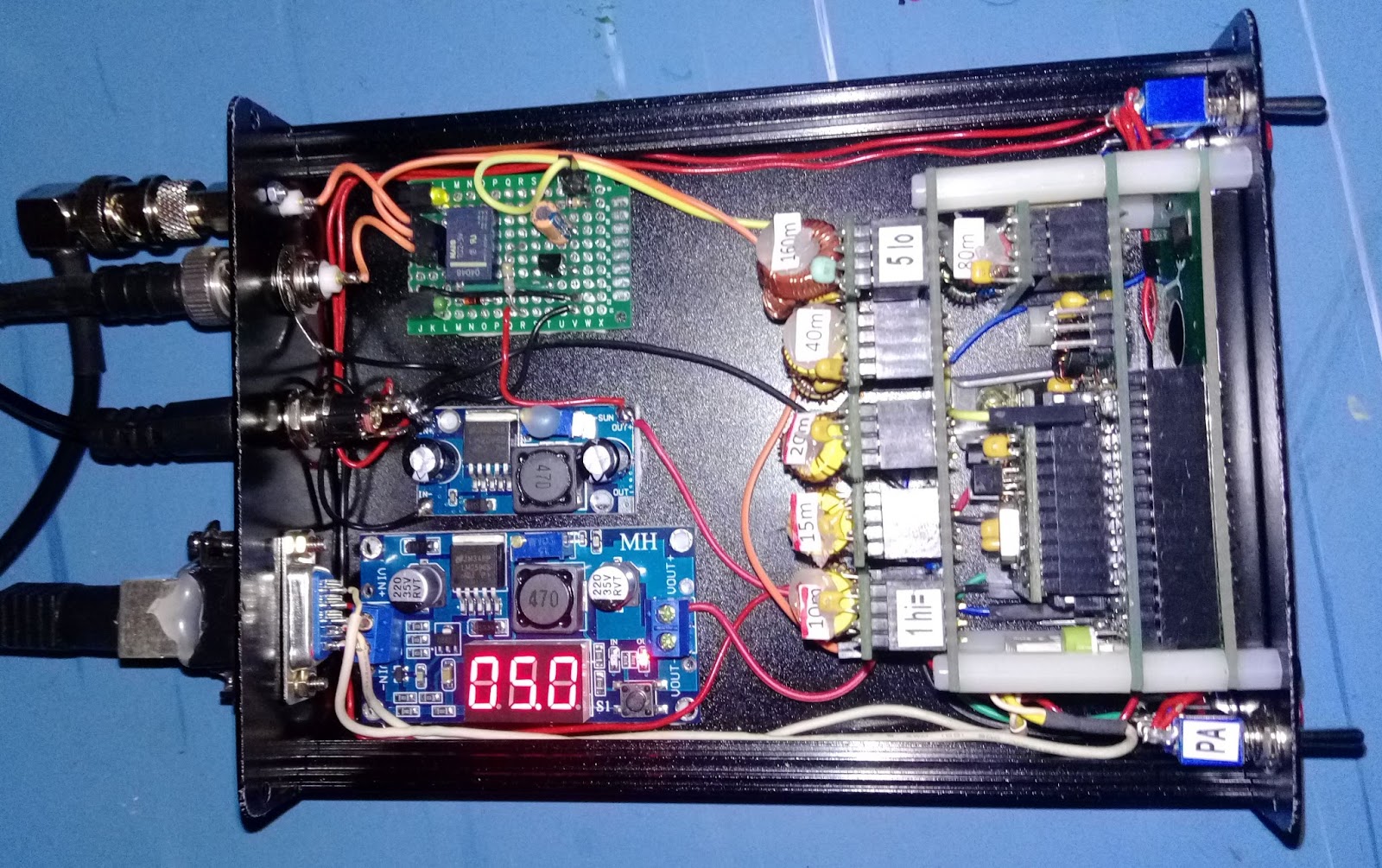
In the next picture, the whole layout is shown a little better. In this case LED 2 is lit, the faint yellow one. It sits right under the additional SMA antenna connector in the top left-hand corner that I had to fit.
I have used this setup for a few days now on 7, 10, 14, and 18 MHz with some crossed doublet antennas (somewhat like this setup, but not in the same location). I change the frequency between antennas, e.g. 50 Hz below the center frequency of the band for antenna 1 and 50 Hz above for antenna 2 in order to simplify discrimination between the transmissions.
The short 13 m antenna transmits best East-West, and the longer 26 m antenna North-South. The directivity is in general confirmed by the WSPR reports I see. Sometimes the difference can be more than 10 dB in SNR, but more often it is closer to 5 dB. But it also happens that only one of the transmissions is detected. This should make for some interesting analysis in the coming months.
The post “Comparing two antennas with WSPR” first appeared on the LA3ZA Radio & Electronics Blog.
Sverre Holm, LA3ZA, is a regular contributor to AmateurRadio.com and writes from Norway. Contact him at [email protected].
18 QSOs during Ski Outing
Judy and I went cross-country skiing down at the Pemigewasset River near Profile Falls. I brought the KX3 and made 18 QSOs (in the CWT sprint) including France, Italy and Germany. It was a bit over 50F.

What a fantastic day to be out. We went east from the road about a half a mile toward the river. Here it opens up into a large field. At the far edge are some picnic tables and the river.

I tossed my 30 foot wire over a pine branch and pulled the wire up over the picnic table. In the sun, it must have been over 70F, because I took off my coat and gloves and I was still hot.

I started out on 20 meters. The CWT sprint had been running for a half hour. Except for the sprint, the band seemed dead. I had no trouble making contacts. After making a dozen contacts on 20 meters, I switched to 40 meters and made another six. Here’s my log. I’ve changed the format to reflect a more normal log rather than using the CWT exchange format.
22 Feb-17 1930 14.026 N5ZO CW 599 599 CA Marko
22 Feb-17 1932 14.027 K0AD CW 599 599 MN Al
22 Feb-17 1933 14.035 F6HKA CW 599 599 France Bert
22 Feb-17 1935 14.036 DL2CC CW 599 599 Germany Frank
22 Feb-17 1936 14.040 KM0O CW 599 599 MN Tony
22 Feb-17 1938 14.032 N4ZZ CW 599 599 TN Don
22 Feb-17 1940 14.030 AC4CA CW 599 599 TX John
22 Feb-17 1942 14.029 WJ9B CW 599 599 NC Will
22 Feb-17 1943 14.030 IT9MUO CW 599 599 Italy Alf
22 Feb-17 1944 14.033 N4IQ CW 599 599 SC Bill
22 Feb-17 1947 14.035 K9UIY CW 599 599 Ill Vic
22 Feb-17 1950 7030 NA8V CW 599 599 MI Greg
22 Feb-17 1951 7031 K4HQK CW 599 599 VA John
22 Feb-17 1952 7036 K3WW CW 599 599 PA Chas
22 Feb-17 1953 7037 CG3KI CW 599 599 ON Rich
22 Feb-17 1954 7039 N3RS CW 599 599 PA Sig
22 Feb-17 1956 7039 VE3KP CW 599 599 ON Ken
22 Feb-17 1957 14.035 K4BAI CW 599 599 GA John
With this I packed up and headed back to the car. It’s been a long winter with plenty of snow during the last month. What a thrill to be outdoors again with a rig.

Jim Cluett, W1PID, is a regular contributor to AmateurRadio.com and writes from New Hampshire, USA. Contact him at [email protected].
Hunting For NDBs In CLE 216
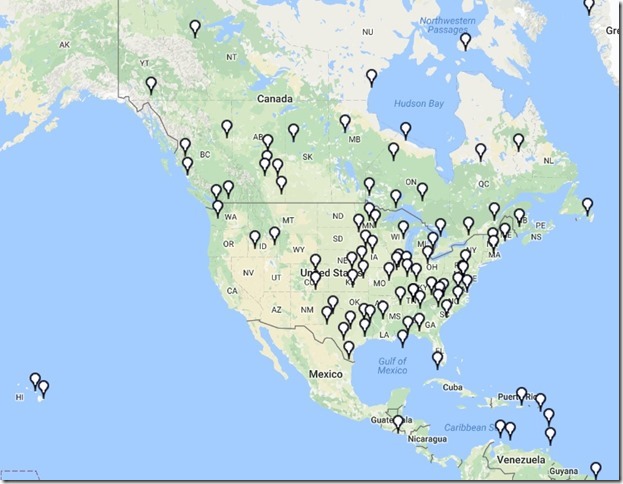 |
| CLE 216 NA Targets! |
This coming weekend will see another CLE challenge. This time the hunting grounds will be: 320.0 - 334.9 kHz.
A 'CLE' is a 'Co-ordinated Listening Event', as NDB DXers around the world focus their listening time on one small slice of the NDB spectrum.
A nice challenge in this one is to hear the White Rock NDB, 'WC', on 332 kHz. The 'WC' NDB is located just a few hundred feet from the Canada - U.S. border, about 25 miles south east of the Vancouver International airport and about 20 miles west of the Abbotsford airport.
The beacon is located on a quiet residential street, nestled between well kept homes and towering fir trees.
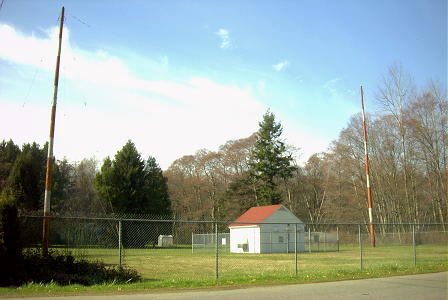 |
| 'WC - 332' White Rock, BC |
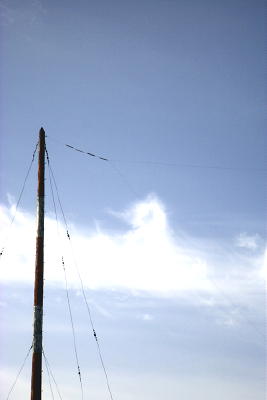 |
| Antenna at 'WC - 332' |
Heard regularly in California, 25 watt 'WC' is not as widely reported as is 'XX -344', especially from points east. As the system is similar to what a typical amateur LF installation might be, I would be very interested in any reception reports of 'WC' by DXers to the east. 'WC's upper sideband modulation frequency is ~ 423Hz so look for it on 332.423 kHz with your receiver in the CW mode.
From CLE organizer Brian Keyte, G3SIA, comes the usual 'heads-up':
Here are all the details for this weekend's co-ordinated listening event.
First time CLE logs too? Yes, please!
Short logs are always as welcome as long ones.
Days: Friday 24 February - Monday 27 February
Times: Start and End at midday, your LOCAL time
Range: 320.0 - 334.9 kHz
Please log the NDBs you can positively identify that are listed in the
frequency range (no DGPS please), plus any UNIDs heard there too.
Send your CLE log to the List, if possible as a plain text email and
not in an attachment, with CLE216 at the start of its title.
Please show on EVERY LINE of your log:
# The date and UTC (the day changes at 00:00 UTC).
# kHz - the beacon's nominal published frequency, if you know it.
# The Call Ident.
Show those main items FIRST on each line, before any optional details
such as the NDB's Location, Distance, Offsets, Cycle time, etc.
As always, make your log meaningful to everyone by including your
own listening location and details of your receiver, aerial(s), etc.
(It would be OK to use a remote receiver, with the owner's permission if
necessary, provided that ALL your loggings for the CLE are made using it).
I will send the usual 'Any More Logs?' email at about 18:00 UTC on Tuesday
so that you can check that your log has been found OK. Do make sure that
your log has arrived on the List at the very latest by 09:00 UTC on Wed. 1st
March. The combined results should be completed later that day.
Remember that you can find all CLE-related information from the Group's
CLE page ( http://www.ndblist.info/cle.htm ), including a link to the seek
lists provided for this Event from the Rxx Database.
Good listening
Brian
----------------------------------------------------------
From: Brian Keyte G3SIA ndbcle'at'gmail.com
Location: Surrey, SE England (CLE co-ordinator)
----------------------------------------------------------
(Reminder: You could use any one remote receiver for your loggings,
stating its location and owner - with their permission if required.
A remote listener may NOT also use another receiver, whether local or
remote, to obtain further loggings for the same CLE).
These listening events serve several purposes. They:
- determine, worldwide, which beacons are actually in service and on-the-air so the online database can be kept up-to-date
- determine, worldwide, which beacons are out-of-service or have gone silent since the last CLE covering this range
- will indicate the state of propagation conditions at the various participant locations
- will give you an indication of how well your LF/MF receiving system is working
- give participants a fun yet challenging activity to keep their listening skills honed
Final details can be found at the NDB List website, and worldwide results, for every participant, will be posted there a few days after the event. If you are a member of the ndblist Group, results will also be e-mailed and posted there.
The very active Yahoo ndblist Group is a great place to learn more about the 'Art of NDB DXing' or to meet other listeners in your region. There is a lot of good information available there and new members are always very welcome. As well, you can follow the results of other CLE participants from night to night as propagation is always an active topic of discussion.
If you are contemplating getting started on 630m, listening for NDBs is an excellent way to test out your receive capabilities as there are several NDBs located near this part of the spectrum.
You need not be an ndblist member to participate in the CLEs and all reports, no matter how small, are of much value to the organizers.
'First-time' logs are always VERY welcome!
Reports may be sent to the ndblist or e-mailed to either myself or CLE co-ordinator, Brian Keyte (G3SIA), whose address appears above.
Please ... give the CLE a try ... then let us know what NDB's can be heard from your location! Your report can then be added to the worldwide database to help keep it up-to-date.
Good hunting!
Steve McDonald, VE7SL, is a regular contributor to AmateurRadio.com and writes from British Columbia, Canada. Contact him at [email protected].
Hunting For NDBs In CLE 216
|
| CLE 216 NA Targets! |
This coming weekend will see another CLE challenge. This time the hunting grounds will be: 320.0 - 334.9 kHz.
A 'CLE' is a 'Co-ordinated Listening Event', as NDB DXers around the world focus their listening time on one small slice of the NDB spectrum.
A nice challenge in this one is to hear the White Rock NDB, 'WC', on 332 kHz. The 'WC' NDB is located just a few hundred feet from the Canada - U.S. border, about 25 miles south east of the Vancouver International airport and about 20 miles west of the Abbotsford airport.
The beacon is located on a quiet residential street, nestled between well kept homes and towering fir trees.
|
| 'WC - 332' White Rock, BC |
|
| Antenna at 'WC - 332' |
Heard regularly in California, 25 watt 'WC' is not as widely reported as is 'XX -344', especially from points east. As the system is similar to what a typical amateur LF installation might be, I would be very interested in any reception reports of 'WC' by DXers to the east. 'WC's upper sideband modulation frequency is ~ 423Hz so look for it on 332.423 kHz with your receiver in the CW mode.
From CLE organizer Brian Keyte, G3SIA, comes the usual 'heads-up':
Here are all the details for this weekend's co-ordinated listening event.
First time CLE logs too? Yes, please!
Short logs are always as welcome as long ones.
Days: Friday 24 February - Monday 27 February
Times: Start and End at midday, your LOCAL time
Range: 320.0 - 334.9 kHz
Please log the NDBs you can positively identify that are listed in the
frequency range (no DGPS please), plus any UNIDs heard there too.
Send your CLE log to the List, if possible as a plain text email and
not in an attachment, with CLE216 at the start of its title.
Please show on EVERY LINE of your log:
# The date and UTC (the day changes at 00:00 UTC).
# kHz - the beacon's nominal published frequency, if you know it.
# The Call Ident.
Show those main items FIRST on each line, before any optional details
such as the NDB's Location, Distance, Offsets, Cycle time, etc.
As always, make your log meaningful to everyone by including your
own listening location and details of your receiver, aerial(s), etc.
(It would be OK to use a remote receiver, with the owner's permission if
necessary, provided that ALL your loggings for the CLE are made using it).
I will send the usual 'Any More Logs?' email at about 18:00 UTC on Tuesday
so that you can check that your log has been found OK. Do make sure that
your log has arrived on the List at the very latest by 09:00 UTC on Wed. 1st
March. The combined results should be completed later that day.
Remember that you can find all CLE-related information from the Group's
CLE page ( http://www.ndblist.info/cle.htm ), including a link to the seek
lists provided for this Event from the Rxx Database.
Good listening
Brian
----------------------------------------------------------
From: Brian Keyte G3SIA ndbcle'at'gmail.com
Location: Surrey, SE England (CLE co-ordinator)
----------------------------------------------------------
(Reminder: You could use any one remote receiver for your loggings,
stating its location and owner - with their permission if required.
A remote listener may NOT also use another receiver, whether local or
remote, to obtain further loggings for the same CLE).
These listening events serve several purposes. They:
- determine, worldwide, which beacons are actually in service and on-the-air so the online database can be kept up-to-date
- determine, worldwide, which beacons are out-of-service or have gone silent since the last CLE covering this range
- will indicate the state of propagation conditions at the various participant locations
- will give you an indication of how well your LF/MF receiving system is working
- give participants a fun yet challenging activity to keep their listening skills honed
Final details can be found at the NDB List website, and worldwide results, for every participant, will be posted there a few days after the event. If you are a member of the ndblist Group, results will also be e-mailed and posted there.
The very active Yahoo ndblist Group is a great place to learn more about the 'Art of NDB DXing' or to meet other listeners in your region. There is a lot of good information available there and new members are always very welcome. As well, you can follow the results of other CLE participants from night to night as propagation is always an active topic of discussion.
If you are contemplating getting started on 630m, listening for NDBs is an excellent way to test out your receive capabilities as there are several NDBs located near this part of the spectrum.
You need not be an ndblist member to participate in the CLEs and all reports, no matter how small, are of much value to the organizers.
'First-time' logs are always VERY welcome!
Reports may be sent to the ndblist or e-mailed to either myself or CLE co-ordinator, Brian Keyte (G3SIA), whose address appears above.
Please ... give the CLE a try ... then let us know what NDB's can be heard from your location! Your report can then be added to the worldwide database to help keep it up-to-date.
Good hunting!
Steve McDonald, VE7SL, is a regular contributor to AmateurRadio.com and writes from British Columbia, Canada. Contact him at [email protected].
Hunting For NDBs In CLE 216
|
| CLE 216 NA Targets! |
This coming weekend will see another CLE challenge. This time the hunting grounds will be: 320.0 - 334.9 kHz.
A 'CLE' is a 'Co-ordinated Listening Event', as NDB DXers around the world focus their listening time on one small slice of the NDB spectrum.
A nice challenge in this one is to hear the White Rock NDB, 'WC', on 332 kHz. The 'WC' NDB is located just a few hundred feet from the Canada - U.S. border, about 25 miles south east of the Vancouver International airport and about 20 miles west of the Abbotsford airport.
The beacon is located on a quiet residential street, nestled between well kept homes and towering fir trees.
|
| 'WC - 332' White Rock, BC |
|
| Antenna at 'WC - 332' |
Heard regularly in California, 25 watt 'WC' is not as widely reported as is 'XX -344', especially from points east. As the system is similar to what a typical amateur LF installation might be, I would be very interested in any reception reports of 'WC' by DXers to the east. 'WC's upper sideband modulation frequency is ~ 423Hz so look for it on 332.423 kHz with your receiver in the CW mode.
From CLE organizer Brian Keyte, G3SIA, comes the usual 'heads-up':
Here are all the details for this weekend's co-ordinated listening event.
First time CLE logs too? Yes, please!
Short logs are always as welcome as long ones.
Days: Friday 24 February - Monday 27 February
Times: Start and End at midday, your LOCAL time
Range: 320.0 - 334.9 kHz
Please log the NDBs you can positively identify that are listed in the
frequency range (no DGPS please), plus any UNIDs heard there too.
Send your CLE log to the List, if possible as a plain text email and
not in an attachment, with CLE216 at the start of its title.
Please show on EVERY LINE of your log:
# The date and UTC (the day changes at 00:00 UTC).
# kHz - the beacon's nominal published frequency, if you know it.
# The Call Ident.
Show those main items FIRST on each line, before any optional details
such as the NDB's Location, Distance, Offsets, Cycle time, etc.
As always, make your log meaningful to everyone by including your
own listening location and details of your receiver, aerial(s), etc.
(It would be OK to use a remote receiver, with the owner's permission if
necessary, provided that ALL your loggings for the CLE are made using it).
I will send the usual 'Any More Logs?' email at about 18:00 UTC on Tuesday
so that you can check that your log has been found OK. Do make sure that
your log has arrived on the List at the very latest by 09:00 UTC on Wed. 1st
March. The combined results should be completed later that day.
Remember that you can find all CLE-related information from the Group's
CLE page ( http://www.ndblist.info/cle.htm ), including a link to the seek
lists provided for this Event from the Rxx Database.
Good listening
Brian
----------------------------------------------------------
From: Brian Keyte G3SIA ndbcle'at'gmail.com
Location: Surrey, SE England (CLE co-ordinator)
----------------------------------------------------------
(Reminder: You could use any one remote receiver for your loggings,
stating its location and owner - with their permission if required.
A remote listener may NOT also use another receiver, whether local or
remote, to obtain further loggings for the same CLE).
These listening events serve several purposes. They:
- determine, worldwide, which beacons are actually in service and on-the-air so the online database can be kept up-to-date
- determine, worldwide, which beacons are out-of-service or have gone silent since the last CLE covering this range
- will indicate the state of propagation conditions at the various participant locations
- will give you an indication of how well your LF/MF receiving system is working
- give participants a fun yet challenging activity to keep their listening skills honed
Final details can be found at the NDB List website, and worldwide results, for every participant, will be posted there a few days after the event. If you are a member of the ndblist Group, results will also be e-mailed and posted there.
The very active Yahoo ndblist Group is a great place to learn more about the 'Art of NDB DXing' or to meet other listeners in your region. There is a lot of good information available there and new members are always very welcome. As well, you can follow the results of other CLE participants from night to night as propagation is always an active topic of discussion.
If you are contemplating getting started on 630m, listening for NDBs is an excellent way to test out your receive capabilities as there are several NDBs located near this part of the spectrum.
You need not be an ndblist member to participate in the CLEs and all reports, no matter how small, are of much value to the organizers.
'First-time' logs are always VERY welcome!
Reports may be sent to the ndblist or e-mailed to either myself or CLE co-ordinator, Brian Keyte (G3SIA), whose address appears above.
Please ... give the CLE a try ... then let us know what NDB's can be heard from your location! Your report can then be added to the worldwide database to help keep it up-to-date.
Good hunting!
Steve McDonald, VE7SL, is a regular contributor to AmateurRadio.com and writes from British Columbia, Canada. Contact him at [email protected].
Pre-production X5105 SSB Test at 5 watts

Worked David W5WAZ on 14.300 today just after 1600z. Took a bit for him to hear me in his noise, but he got me and we had a qso after that. Used the MFJ whip and counterpoise facing south direction.
Fred Lesnick, VE3FAL, is a regular contributor to AmateurRadio.com and writes from Thunder Bay Ontario, Canada. Contact him at [email protected].
ICQ Podcast Episode 231 – Ed’s 2017 Predictions
In this episode, Martin M1MRB / W9ICQ is joined by Dan Romanchik KB6NU and Ed Durrant DD5LP to discuss the latest Amateur / Ham Radio news. Colin M6BOY rounds up the news in brief, and this episode’s features is Ed Durrant DD5LP predictions for 2017.
We would like to thank Michael Casavant, N1XRR and our monthly and annual donors for keeping the podcast advert free. To donate, please visit - http://www.icqpodcast.com/donate
- Amateur / Ham Radio Licence Status
- VHF/UHF DX Book Replica Edition
- NOSintro Book
- ACMA Reverses CB Decision
- Online UK Advanced Exam
- ARES Volunteers Support Oroville Dam Evacuation
- Making VHF/UHF Contests Better
- Ivory Coast DXpedition
- SOTA Summit to Summit VK-EU Event
Colin Butler, M6BOY, is the host of the ICQ Podcast, a weekly radio show about Amateur Radio. Contact him at [email protected].
 Ham Radio Deluxe |
 W5SWL Electronics |
 Ham Radio Prep |
 KB3IFH QSL Cards  Hip Ham Shirts  HamRadioAuctions HamRadioAuctions Reliance Antennas Reliance Antennas Enigma Shop Enigma Shop |  morseDX  Ni4L Antennas  R&L Electronics R&L Electronics antennas.us antennas.us QRV QRV |
- Matt W1MST, Managing Editor
